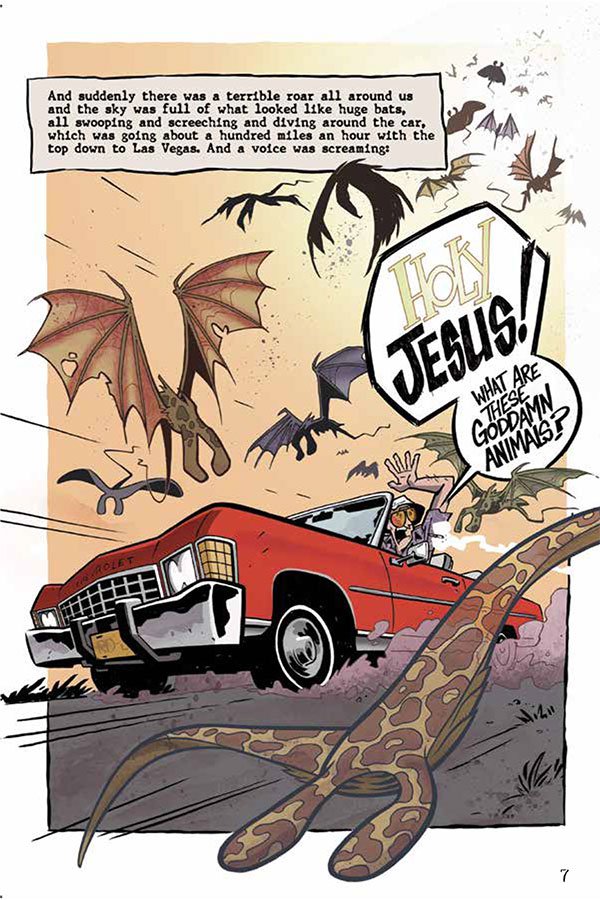
Joe Lucas — or, more accurately, the company bearing his name — engineered electrical bits for pretty much everything emanating from the UK, and the notorious unreliability of Lucas components played a key role in tanking the British car industry in the early 1980s. Make the jump for “If Lucas made guns, wars would not start,” and other classics.
- The Lucas motto: “Get home before dark.”
- Lucas is the patent holder for the short circuit.
- Lucas — Inventor of the first intermittent wiper.
- Lucas — Inventor of the self-dimming headlamp.
- The three position Lucas switch — Dim, Flicker and Off.
- The Original Anti-Theft Device — Lucas Electrics.
- Lucas is an acronym for Loose Unsoldered Connections and Splices
Andrew Stoy, “Joe Lucas, Prince Of Darkness: British Electrical System Jokes”, Jalopnik, 2008-08-04.
March 25, 2021
QotD: Lucas, the Prince of Darkness
March 21, 2021
QotD: Expressions of love
Love is a delicate plant that needs constant tending and nurturing, and this cannot be done by snorting at the adored object like a gas explosion and calling her friends lice.
P.G. Wodehouse, Jeeves and the Feudal Spirit.
March 20, 2021
History RE-Summarized: The Age of Augustus
Overly Sarcastic Productions
Published 19 Mar 2021Many Romans had conquered the Republic, but nobody could keep it, until Augustus. In the half century after the assassination of Caesar, his adoptive son would fundamentally transform the Roman state: expanding it, reforming it, and bringing it under the control of one man. The Age of Augustus found Rome a Republic and left it an Empire.
This video is a Remastered, Definitive Edition of three previous videos from this channel — History Summarized: “Augustus Versus The Assassins”, “Augustus Versus Antony”, and “How Augustus Made An Empire”. This video combines them all into one narrative, fully upgrading all of the visuals and audio. If you want more Histories to be Re-Summarized, please comment and let me know!
SOURCES & Further Reading: The Age of Augustus by Werner Eck, Augustus and the Creation of the Roman Empire by Ronald Mellor, Cleopatra: A Life by Stacy Schiff, Virgil’s Aeneid, Polybius’ Histories, Livy’s Ab Urbe Condita, Plutarch’s Parallel Lives, SPQR by Mary Beard, Rome: A History in Seven Sackings by Matt Kneale, (and also my degree in Classical Studies).
SECTION TIME-CODES:
0:00 1 — Octavian V. the Assassins
07:40 2 — Octavian V. Antony
17:36 3 — Augustus as EmperorOur content is intended for teenage audiences and up.
PATREON: https://www.Patreon.com/OSP
PODCAST: https://overlysarcasticpodcast.transi…
DISCORD: https://discord.gg/osp
MERCH LINKS: http://rdbl.co/osp
OUR WEBSITE: https://www.OverlySarcasticProductions.com
Find us on Twitter https://www.Twitter.com/OSPYouTube
Find us on Reddit https://www.Reddit.com/r/OSP/
March 16, 2021
QotD: Combat accounting
… for the pilots and crew of one such helicopter, the law of averages caught up to them, and the helicopter, being test-flown well out over the ocean, disappeared without a trace. No mayday, no clue, just a helo and several souls gone, amidst a war that was eating both like a ravenous beast.
Enter the flexible and utilitarian morals and institutional larceny that allows the best-run military machines to cope with the insanity of war. Because a squadron, roughly comparable in size to an infantry battalion, is several hundred men, and even at 1960s prices, multiple millions of dollars worth of machines, tools, parts, equipment, and miscellany, from nuts and bolts to aircraft engines, and everything in between. Canteens, machine guns, flak jackets, toilet seats, high explosive ordnance, and everything else you can imagine, and a million things you cannot, in quantities normally only encountered at a Wal-Mart or Target store, or aboard a 100-car freight train.
And not to put the point too finely, 8000 miles away from home, in a war zone where things were destroyed daily by tons of bombs, rockets, mines, shells, bullets, and of course, the finest pilfering skills of one of the most thriving black market economies of all time. Anything not guarded 24/7 would disappear in minutes in Vietnam, up to and including entire aircraft and other major end-user items. (Think things like APCs, tanks, artillery pieces, jeeps, etc.)
And senior NCOs and junior officers are responsible for all that stuff, as well as every commanding officer having to personally sign for and accept responsibility for everything down to the last door knob and belt buckle. Which, amidst such widespread theft and combat destruction, was sheer insanity coupled with practical impossibility.
Until the helicopter went missing.
Because after a dutiful search for survivors yielded nothing whatsoever, a report had to be filed, and items accounted for. Whereupon some shifty but brilliant NCO or senior NCO pointed out to a junior officer that it would be rather convenient to cover for all the tons of things blown up, stolen, lost, pilfered, etc., to just include them on the manifest and equipment carried on that now gone-forever helicopter.
And so, in rapid order, every crew chief, maintenance shop, and officer from warrant to XO certified, in detail, the manifest of tools, spare parts, and military miscellany that had been aboard the doomed flight, and the CO signed off on it, immediately bringing the reality of property on hand into line with what was actually able to be found, touched, and wielded by that squadron.
This boon to military accounting had, of course, the obvious flaw.
Someone higher up in the hierarchy, presented with the dozens of pages of missing gear on the missing aircraft, did some napkin math, and observed deftly that the weight of the missing items would be roughly twenty times the maximum lifting capacity of the helicopter in question, and the only way a craft actually so burdened could have achieved aerial flight was if someone had detonated an explosive device under the skids in the mid-teen kiloton range. Otherwise, it would have been like trying to get an elephant off the ground using a pair of hummingbird wings.
But the military being the military, no one wanted to rock the boat, and so the obviously fraudulent work of fiction was funneled right back to the gaping maw of Pentagon reports, where it disappeared like the Ark of the Covenant at the end of Raiders Of The Lost Ark, and the cosmic scales were in balance.
Raconteur, “Squadron Property and Cultural Rubicons”, Raconteur Report, 2018-09-27.
March 13, 2021
Confederate Soldiers DIDN’T Fight for SLAVERY!! (Or Did They?)
Atun-Shei Films
Published 20 Sep 2019Checkmate, Lincolnites! Debunking the Lost Cause myth that Johnny Reb, the common Confederate soldier, didn’t fight to preserve the institution of slavery.
Support Atun-Shei Films on Patreon ► https://www.patreon.com/atunsheifilms
Leave a Tip via Paypal ► https://www.paypal.me/atunsheifilms (All donations made here will go toward the production of The Sudbury Devil, our historical feature film)
Buy Merch ► teespring.com/stores/atun-shei-films
#CheckmateLincolnites #CivilWar #AmericanHistory
Reddit ► https://www.reddit.com/r/atunsheifilms
Twitter ► https://twitter.com/atun_shei
March 12, 2021
QotD: The modern university campus
If you haven’t been on campus lately, visit your local citadel of learning. Don’t just drive through; spend some time there. On the surface, things look lovely — ivy covered walls, dorms like 5 star hotels, trendy boutiques selling stuff you can’t afford to buy, undergraduates wearing more than your week’s take-home pay. Light poles and store walls are covered with flyers for causes only the very wealthy and very idle could possibly care about. In short, it’s heaven …
… but pretty soon you’ll notice that it’s a very battered, grimy sort of heaven. Nobody’s from there, nobody stays there, everyone’s just passing through on the way to something better. Certainly including the faculty: Every single professor not currently at Harvard
thinksknows xzhe deserves to be at Harvard, and will get there someday. Everything’s on-demand in a college town, because everything’s rented. That “distressed” look hipsters love so much isn’t an affectation on campus; it’s a logical outcome of the transient lifestyle. Why fix a pothole, paint a building, trim a tree, teach a class anyone could ever actually use? Anyone who complains will be gone next semester anyway.Get yours before it’s gone, and if that means skipping town one day ahead of the bill collectors, remember: Capitalism is evil.
It’s not just campus, either. The rest of the lifestyle is just as evanescent, just as ugly. Think of the food. Whatever you do, you can’t eat what the Normals eat, drink what the Normals drink. Here again, foodie culture isn’t a hipster affectation on campus. It’s deadly serious status-jockeying with your temporary — always temporary — peers. You’ve got to win now, because next semester they’ll be gone, probably to Harvard, those cheating, ass-kissing bastards. Sure, it looks, smells, and tastes like cold dog puke, but at least you’re the first to eat it!
Severian, “Politics for Fugly People”, Rotten Chestnuts, 2018-08-24.
March 11, 2021
QotD: Microsoft PowerPoint
There were plenty of irritations with life with Microsoft. I am still astonished how bad PowerPoint is from a design point of view. With these multiples, Microsoft could have hired Louise Fili or Milton Glazer, and the virtual world of the corporation would now be vastly more visual. Actually, because form is content, America would now actually be vastly more conceptual. But, no. The PowerPoint templates were clearly designed by that special someone who did Travelodge napkins and match books in the 1960s. Talk about a difference that makes a difference! Talk about critical path dependency! PowerPoint reproduced Microsoft’s limitations, and helped to install them in the American mind.
Still, PowerPoint was an improvement on the Lotus equivalent. I forget what this was called but it was so utterly unpredictable that I discovered belatedly that presentations would not be forthcoming unless you got a group of people to lay their hands on the printer and chant in Latin. (This was not in the manual, unless it was cunningly secreted there in invisible ink, perhaps on the page that read “this page left deliberately blank.”)
Grant McCracken, “Brands that bind … and when they slide”, This Blog Sits at the, 2005-03-10
March 10, 2021
QotD: Honest mottoes for university majors
Art: One of the best majors for entry into fun, exciting, aesthetically interesting and intellectually engaging jobs, assuming that you’re a woman in the seventies and also independently wealthy.
Art History: Spending 4 years of your life getting wasted and bullshitting about the art of dead white men is less fun than it sounds. Less employable than philosophy.
Biology: All the stresses and high workloads of a STEM major, none of the employability of a STEM major. On the plus side, very little math.
Biomedical Engineering: 90% of your peers are here because they want to become doctors. Statistically, most of them will flunk out by sophomore year or change to easier majors. But you’re different, right? Right?
Business: Easy major that sounds practically relevant (Hint: it isn’t).
Chemistry: I hope you like graduate school.
Communications: The second best major for joining a dying field.
Computer Science: Is programming your passion? Want to learn how to write good, maintainable, bug-free programs? Want to be up to date on the latest frameworks and debugging tools? LOL. What is this, a trade school? Nah, you’ll spend 4 years of your life doing actually important stuff, like proving the Turing Completeness of your toaster. Still employable, for some reason.
Creative Writing: You can communicate your angst in a lot of creative and interesting ways! Don’t worry, you won’t run out of angst anytime soon.
Economics: The least Marxist of the social sciences. Come because you want to learn how the world actually works. We don’t teach undergrads that, but we do teach you to solve fun puzzles with hard math! If by “fun puzzles” you mean “IS-LM models” and by “hard math” you mean “basic calculus.”
Education: The less said, the better.
English: Please tell me you double-majored in Education.
Geology: Come because you like rocks and “saving the planet,” leave to join a petroleum company.
History: Those who don’t know history are doomed to repeat it. Those who do know history are unlikely to do much better, since they have the decision-making prowess of the type of person who majored in history.
Kinesiology: Enter, ye of absolutely non-existent academic ambition.
Mathematics: I hope you didn’t take this major because you liked numbers. Most of your professors can’t count past 10.
Nursing: All the stresses of med school, minus all the prestige. But hey, you can actually get a job!
Philosophy: Come in as a freshman asking dumb, ill-formed questions like “What is the meaning of life?” Come out 4–6 years later asking deep, sophisticated questions like: “What is ‘is’ in the Hegelian dialectic of the Kantian framework in a postmodern age?”
Physics: You get to do a lot of math.
Pre-Law: Statistically, the major that leads to having one of the lowest possible LSAT scores.
Psychology: A recent study (n = 13, p = .04999) says that psychology majors are smarter, hotter, richer and more statistically savvy than every other major. That study will probably fail to replicate, but hey. So will just about everything else you remember from class.
Sociology: Learn about how society is fucked. Also, Marx is great.
Linchuan Zhang, “If college majors had honest mottos, what would they be?”, Quora, 2018-01-08.
March 8, 2021
QotD: Wall Street
Wall Street is a street with a river at one end and a graveyard at the other. This is striking, but incomplete. It omits the kindergarten in the middle.
Fred Sched, Where Are the Customers’ Yachts?, 1940.
March 7, 2021
QotD: Rudeness among the civilized
Civilized men are more discourteous than savages because they know they can be impolite without having their skulls split, as a general thing.
Robert E. Howard, “Tower Of The Elephant”, Weird Tales, 1933-03.
March 6, 2021
History-Makers: Sappho
Overly Sarcastic Productions
Published 5 Mar 2021It’s no use, dear algorithm, I cannot research, for Sappho has crushed me with longing for lost poetry!
SOURCES & Further Reading: Sappho: fragments by Jonathan Goldberg, “Girl, Interrupted: Who Was Sappho?” for The New Yorker by Daniel Mendelsohn (https://www.newyorker.com/magazine/20…), “Sappho” from The Poetry Foundation (https://www.poetryfoundation.org/poet…)
Our content is intended for teenage audiences and up.
PATREON: https://www.Patreon.com/OSP
PODCAST: https://overlysarcasticpodcast.transi…
DISCORD: https://discord.gg/osp
MERCH LINKS: http://rdbl.co/osp
OUR WEBSITE: https://www.OverlySarcasticProductions.com
Find us on Twitter https://www.Twitter.com/OSPYouTube
Find us on Reddit https://www.Reddit.com/r/OSP/
March 5, 2021
QotD: P.G. Wodehouse’s Jeeves and Wooster
During the first lockdown, I often found myself going to bed with two especially charming gentlemen. The first was a boisterous Old Etonian called Bertie, who took understandable pride in his aptitude for theology (and, indeed, won the prize for Scripture Knowledge at his prep school), and whose conversation usually involved reference to his club, the Drones, and the unfortunate incident where he served a night in the cells for knocking off a policeman’s helmet during Boat Race festivities. And the other man – Reginald, though he preferred to be known as Jeeves – was of a more sombre and serious mien. Quieter and more reserved than his companion, he was less free with his opinions and chatter, but what he said revealed a serious and deep intellectual commitment and purpose, albeit one leavened with a degree of good-humoured and entirely understandable exasperation at his charge’s more whimsical and mercurial antics.
Everybody has those books, and authors, that they go to when they are in need of escapism. For me, PG Wodehouse’s Jeeves and Wooster series have always been these tales. Nightly incursions into their pages during the pandemic made the misery and boredom of those long days and weeks considerably more bearable. He wrote 35 short stories and 11 novels featuring the duo, beginning in 1915 with Extricating Young Gussie (although purists prefer to begin with Leave it to Jeeves which appeared the following year and features the most recognisable incarnation of the characters), and ending shortly before his death in 1975 with 1974’s Aunts Aren’t Gentlemen. Undoubtedly, if Wodehouse had somehow lived another five or ten years, there would have been more stories, but his prolific dedication to “the graft” has left us with a truly splendid collection of tales, all revolving around a pre-lapsarian world that was always a fantastical creation, even when Wodehouse began writing. By the time of the last book’s publication, when Britain was immersed in the three-day week and the dying days of the Heath government, the events depicted bore as much relation to readers’ everyday lives as if Wodehouse had been writing about events on Mars.
This was, of course, the point from the beginning. As Evelyn Waugh, a great admirer, famously said, “Mr. Wodehouse’s idyllic world can never stale. He will continue to release future generations from captivity that may be more irksome than our own. He has made a world for us to live in and delight in.” Nobody has ever sat down to read about the adventures of Jeeves, Bertie, Bingo Little, Gussie Fink-Nottle, the terrifying Aunt Agatha and Roderick Spode (to say nothing of his black short-wearing followers) and expected gritty social realism.
Instead, they have come to marvel at the twentieth century’s greatest comic prose stylist’s apparently endless invention, in which matrimony is a predicament to be averted at all costs, where the distaste of one’s gentleman’s gentleman for an ill-considered sartorial faux pas can lead to a (happily temporary) breakdown in amicable relations, and where the sole work undertaken by Bertie is to contribute an article about “What the well-dressed man is wearing” to his aunt’s periodical. Like his prize for scripture knowledge, he remains proud of this modest achievement, and continually refers to it throughout his adventures.
Alexander Larman, “The enduring appeal of Jeeves and Wooster”, The Critic, 2020-10-16.
March 3, 2021
QotD: Big game hunting
It was a confusion of ideas between him and one of the lions he was hunting in Kenya that had caused A. B. Spottsworth to make the obituary column. He thought the lion was dead, and the lion thought it wasn’t.
P.G. Wodehouse, Ring for Jeeves.
March 2, 2021
QotD: “The List”
“The List” is the bane of testosterone-driven humans. “The List” is kept in the secret mental lock-box of human beings of the estrogen persuasion. Some believe that “The List” is a social construct, while others believe that “The List” is hard-wired into the DNA of the human female. I favor the latter theory since it seems to me that “The List” is merely a subset of “The Plan” — and “The Plan” is not only part and parcel of the basic makeup of the human female regardless of race, color, creed, national origin, or historical epoch, it is also the reason that — over time — women triumph over men. Women, in short, always have a life plan while men are stuck with something that looks like a cross between a spreadsheet without a recalc button and a really slick marketing idea.
In short, men might have a plan for making a rocket-propelled street luge, but they have none at all when it comes to human activities that stretch across decades — unless it involves such trifles as national defense or energy policy. Men seem to see items like this as actually important, but women know that what is really important is the command and control of male behavior. Hence, “Your Permanent Conduct Record” aka “The List.”
Women reading this essay are, of course, not the type to ever keep an indelible list of male transgressions, large and teeny-tiny. But trust me, there are many that do. Why? Because it works.
“The List” is a means of male-control through negative feedback. Positive male actions towards a woman are expected, perhaps noted at the time, perhaps not — but always in pencil. A brief pat and nod of encouragement and then the woman goes back into the default mode of “what have you done for me lately?” “Lately” is, as all men know, but a small subset of a single day.
Failings of the male — such as lapses in mental telepathy — are kept on “The List” in indelible ink, preferably blood-red. “The List” also includes transgressions, large and small, against the woman from previous relationships with previous males. The ownership of all these transgressions is automatically transferred to the male of the current relationship at the moment of inception or conception, whichever comes first. This is the reason men sometimes feel they are expected to pay an overdue bill for a meal they did not eat in a restaurant that no longer exists. Plus a 20% tip.
Gerard Vanderleun, “The List”, American Digest, 2018-10-21.
February 28, 2021
QotD: The essential role of writers like Twain and Mencken
Mencken lived in horror of the American people, “who put the Hon. Warren Gamaliel Harding beside Friedrich Barbarossa and Charlemagne, and hold the Supreme Court to be directly inspired by the Holy Spirit, and belong ardently to every Rotary Club, Ku Klux Klan, and anti-Saloon League, and choke with emotion when the band plays ‘The Star-Spangled Banner.'” Much of that horror was imaginary, and still is. But we must have horror, especially in politics. How else to justify present and familiar horror except but by reference to a greater horror? In this year’s election, each candidate’s partisans already have been reduced to making the argument that while their own candidate might be awful, the other candidate is literally akin to Adolf Hitler. Yesterday, I heard both from Clinton supporters and Trump supporters that the other one would usher in Third Reich U.S.A. “Don’t tell yourself that it can’t happen here,” one wrote.
A nation needs its Twains and Menckens. (We could have got by without Molly Ivins.) The excrement and sentimentality piles up high and thick in a democratic society, and it’s sometimes easier to burn it away rather than try to shovel it. But they are only counterpoints: They cannot be the leading voice, or the dominant spirit of the age. That is because this is a republic, and in a republic, a politics based on one half of the population hating the other half is a politics that loses even if it wins. The same holds true for one that relies on half of us seeing the other half as useless, wicked, moronic, deluded, or “prehensile morons.” (I know, I know, and you can save your keystrokes: I myself am not running for office.) If you happen to be Mark Twain, that sort of thing is good for a laugh, and maybe for more than a laugh. But it isn’t enough. “We must not be enemies,” President Lincoln declared, and he saw the republic through a good deal worse than weak GDP growth and the sack of a Libyan consulate.
Kevin D. Williamson, “Bitter Laughter: Humor and the politics of hate”, National Review, 2016-08-11.