Royal Armouries
Published 20 Feb 2017Discover how knights of the 13th Century would prepare themselves for battle, as armourers sought more creative and practical solutions to counter the threat of new weaponry.

Royal Armouries
Published 20 Feb 2017Discover how knights of the 13th Century would prepare themselves for battle, as armourers sought more creative and practical solutions to counter the threat of new weaponry.
World War Two
Published 28 Dec 2019Italy finds itself in a dire position in Albania as Christmas is celebrated in a war-torn Europe and fighting continues in China.
Join us on Patreon: https://www.patreon.com/TimeGhostHistory
Or join The TimeGhost Army directly at: https://timeghost.tvFollow WW2 day by day on Instagram @World_war_two_realtime https://www.instagram.com/world_war_t…
Join our Discord Server: https://discord.gg/D6D2aYN.
Between 2 Wars: https://www.youtube.com/playlist?list…
Source list: http://bit.ly/WW2sourcesWritten and Hosted by: Indy Neidell
Produced and Directed by: Spartacus Olsson and Astrid Deinhard
Executive Producers: Bodo Rittenauer, Astrid Deinhard, Indy Neidell, Spartacus Olsson
Creative Producer: Joram Appel
Post-Production Director: Wieke Kapteijns
Research by: Indy Neidell
Edited by: Iryna Dulka
Map animations: Eastory (https://www.youtube.com/c/eastory)Colorizations by:
– Dememorabilia – https://www.instagram.com/dememorabilia/
– Julius Jääskeläinen – https://www.facebook.com/JJcolorization/
– Adrien Fillon – https://www.instagram.com/adrien.colo…Sources:
– IWM: CH 251, A12882, FL 1905, A 1732, H 6285, D 717Soundtracks from Epidemic Sound:
– “March Of The Brave 4” – Rannar Sillard
– “March Of The Brave 9” – Rannar Sillard
– “Walk With Legends” – Bonnie Grace
– “The End Of The World 2” – Håkan Eriksson
– “March Of The Brave 10” – Rannar Sillard
– “Easy Target” – Rannar Sillard
– “Guilty Shadows 4” – Andreas Jamsheree
– “Deviation In Time” – Johannes BornlofArchive by Screenocean/Reuters https://www.screenocean.com.
A TimeGhost chronological documentary produced by OnLion Entertainment GmbH.

TimeGhost History
Published 28 Dec 2019Join us on Patreon: https://www.patreon.com/TimeGhostHistory
Hosted by: Indy Neidell
Directed by: Spartacus Olsson and Astrid Deinhard
Executive Producers: Bodo Rittenauer, Astrid Deinhard, Indy Neidell, Spartacus Olsson
Creative Producer: Joram Appel
Post-Production Director: Wieke Kapteijns
Edited by: Mikołaj Cackowski, Iryna Dulka
Sound design: Marek KamińskiSoundtracks from Epidemic Sound:
– “Reunion” – Wendel Scherer
– “Fields Of Joy 16” – Jonatan JärpehagA TimeGhost chronological documentary produced by OnLion Entertainment GmbH.

In Spiked, Brendan O’Neill says the departing decade was really “The People’s Decade”:
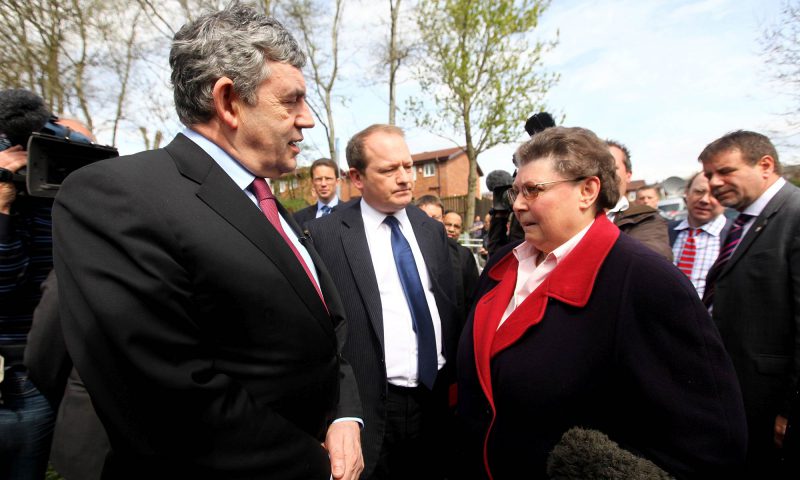
Prime minister Gordon Brown talks with resident Gillian Duffy on 28 April 2010, in Rochdale, England.
Photo from Spiked.
So the 2010s have come to an end. And what a curious and enlivening decade it has been. Decades are rarely neat political categories. The Sixties, as a phenomenon, didn’t really start until 1963. The Eighties are misremembered as an era of free-market triumphalism, overlooking that PC, cultural relativism, post-colonial guilt and the end of the Cold War that had provided the West with a sliver of moral purpose all took place in that tumultuous decade, giving rise to years of Western self-doubt, even self-hatred, rather than the Thatcherite cockiness that historical illiterates see as the Eighties’ ongoing political ripple.
But the 2010s — this decade does feel neat. It feels like it has a story, an arc, in the British context at least. For this is the decade that begins with Gordon Brown insulting a northern working-class Labour voter as a “bigot” and ends with the northern working classes revolting against Labour in their hundreds of thousands. It begins with the Gillian Duffy crisis, when Brown unwittingly exposed his increasingly middle-class party’s contempt for the lower orders by being overheard referring to this 65-year-old lady from Rochdale as a “bigoted woman”, and it ends with the mass switching of traditional “red wall” Labour voters to Boris Johnson’s Conservative Party — and, by extension, to Labour’s worst drubbing at the polls since 1935.
From Gillian Duffy to the Brexit / Boris votes: if the 2010s tell a story, it is one of a peaceful, understated working-class revolt. Of ordinary people pushing back against elites that had come to view them as bigots. Of the long sneered-at and interfered-with and re-educated sections of the public rising up against their so-called betters and restating the case for national sovereignty and community values. Of the people reprimanding the powers-that-be and forcing them, via the ballot box, to respect the people’s will and the people themselves.
This has been a thoroughly democratic decade. The People’s Decade, in fact, in which democracy has done what democracy is meant to do: marshalled the wisdom of the crowd to correct the jaundiced, elitist, anti-democratic drift of the governing classes.
The People’s Decade really begins in April 2010. It was 28 April and Gordon Brown, gearing up for the General Election, was on a walkabout in Rochdale. This was Brown’s first General Election as prime minister, his having received the crown of PM from Tony Blair in 2007, in a stitched-up, court-like manner befitting of the New Labour machine. Gillian Duffy, a lifelong Labour voter and former council worker, was also out in Rochdale that day. She was buying a loaf of bread. Her path crossed with Brown’s, in front of TV-news cameras, and in that very moment Brown’s fate, his destiny as a shortlived and unpopular PM, was sealed.
Duffy asked Brown about various things. She asked him about the public debt and how he proposed to fix it. She asked about the decline of university grants and how her grandkids were expected to be able to go to Uni. She asked him about health and welfare. And she asked him about immigration. “You can’t say anything about the immigrants”, she said, wisely sensing that even raising this issue could see you branded a bigot. “These Eastern Europeans”, she said, “where are they flocking from?”. Brown smiled and said something jovial and even patted Mrs Duffy on the back, but really he was horrified by what she had said. As the nation would discover just moments later.
Unbeknownst to Brown, a Sky News mic attached to his lapel was still on. When he got back to his car he berated one of his aides. He demanded to know why they had put him on air with “that woman”, as he referred to Mrs Duffy. Asked by the aide what the woman had said, Brown replied: “Oh everything. She was just a sort of bigoted woman. She said she used to be Labour. I mean it’s just ridiculous.” That woman. That bigoted woman. Words heard by everyone. Words replayed endlessly in the run-up to the election. The fallout was enormous.
TimeGhost History
Published 27 Dec 2019Did you go to the cinema this holiday? Or binge a bit of streaming? D’you feel modern about it? You’d be wrong… Holiday movies is a tradition that goes back almost 125 years!
Join us on Patreon: https://www.patreon.com/TimeGhostHistory
Hosted by: Indy Neidell
Written by: Spartacus Olsson
Directed by: Spartacus Olsson and Astrid Deinhard
Executive Producers: Bodo Rittenauer, Astrid Deinhard, Indy Neidell, Spartacus Olsson
Creative Producer: Joram Appel
Post-Production Director: Wieke Kapteijns
Research by: Spartacus Olsson
Edited by: Mikołaj Cackowski
Sound design: Marek KamińskiSources:
Mark Doliner https://flic.kr/p/oV46FY
Portrait of the Actress Carrie Fisher member of the jury in the 70 Edition of Venice International Film Festival 2013 by Riccardo GhilardiSoundtracks from Epidemic Sound:
Howard Harper-Barnes – “A Sleigh Ride Into Town”
Howard Harper-Barnes – “My Only Wish Is Love”
Mike Franklyn – “Christmas Bliss”
The Snowy Hill Singers – “It Was On A Christmas Night” (Instrumental Version)A TimeGhost chronological documentary produced by OnLion Entertainment GmbH.

Forgotten Weapons
Published 15 Dec 2017http://www.patreon.com/ForgottenWeapons
Cool Forgotten Weapons merch! http://shop.bbtv.com/collections/forg…
After making the decision to mass produce a submachine gun, the Soviet Union adopted the Degtyarev PPD-38 and PPD-40, but this design was too expensive for the huge scale of production that the USSR intended. A new design was needed, and was put into development almost as soon as the PPD was entering production.
Shpagin won the design competition with the PPSh-41, a weapon which required virtually no lathe work at all. It was assembled from a combination of heavy-gauge stampings and simple milled parts, and it fit the Soviet requirements quite well. Shpagin retained the high rate of fire and large drum magazines from the PPD, and even had a semiauto selector switch in his submachine gun, a bit unusual in a weapon intended for minimum expense.
The drum magazines proved to be the weak point of the design, being only somewhat interchangeable between weapons and being rather complex to manufacture as well as bulky to carry and fairly easy to damage. A 35-round box magazine was introduced later on which ameliorated some of these issues, although not all of them. The PPSh-41 would go on to be deemed itself too complex, and supplemented by the PPS-43 submachine gun, although it was never fully replaced during World War Two. In addition to Soviet service, it would be copied and manufactured by several other nations.
Thanks to Marstar for letting me examine and shoot their PPSh-41!
If you enjoy Forgotten Weapons, check out its sister channel, InRangeTV! http://www.youtube.com/InRangeTVShow

Sabaton History
Published 26 Dec 2019An American-led coalition invaded Iraq in 2003. Sabaton’s song “Panzer Battalion” is about that attack and in this episode, Indy talks about the fight and its consequences.
Support Sabaton History on Patreon: https://www.patreon.com/sabatonhistory
Listen to Primo Victoria (where “Panzer Battalion” is featured):
CD: http://bit.ly/PrimoVictoriaStore
Spotify: http://bit.ly/PrimoVictoriaSpotify
Apple Music: http://bit.ly/PrimoVictoriaAppleMusic
iTunes: http://bit.ly/PrimoVictoriaiTunes
Amazon: http://bit.ly/PrimoVictoriaAmzn
Google Play: http://bit.ly/PrimoVictoriaGooglePlayListen to Sabaton on Spotify: http://smarturl.it/SabatonSpotify
Official Sabaton Merchandise Shop: http://bit.ly/SabatonOfficialShopHosted by: Indy Neidell
Written by: Markus Linke and Indy Neidell
Directed by: Astrid Deinhard and Wieke Kapteijns
Produced by: Pär Sundström, Astrid Deinhard and Spartacus Olsson
Creative Producer: Joram Appel
Executive Producers: Pär Sundström, Joakim Broden, Tomas Sunmo, Indy Neidell, Astrid Deinhard, and Spartacus Olsson
Post-Production Director: Wieke Kapteijns
Edited by: Iryna Dulka
Sound Editing by: Marek Kaminski
Maps by: Eastory – https://www.youtube.com/c/eastoryArchive by: Reuters/Screenocean https://www.screenocean.com
Music by Sabaton.An OnLion Entertainment GmbH and Raging Beaver Publishing AB co-Production.
© Raging Beaver Publishing AB, 2019 – all rights reserved.

TimeGhost History
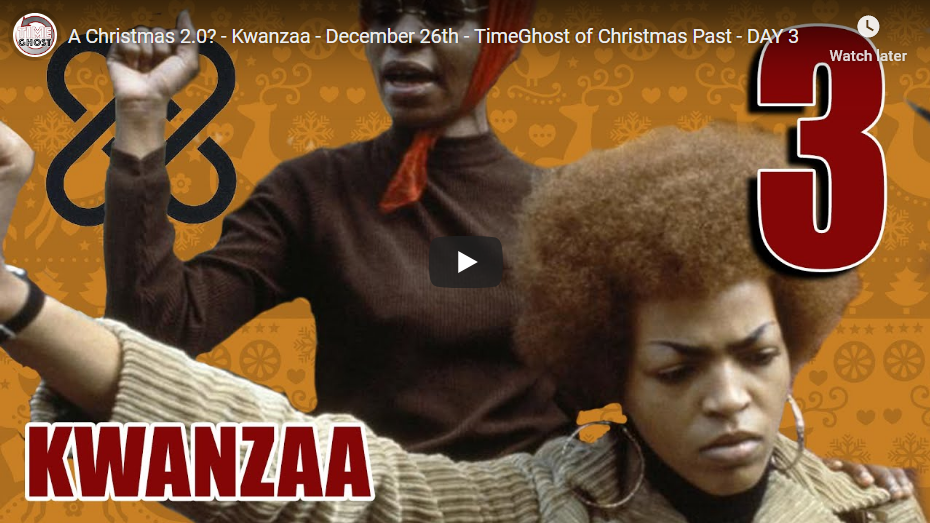
Published 26 Dec 2019It is in the Civil Rights Movement of the 1960s, that a young doctor of African studies decides to create his own holiday in California. Half a century later and this holiday has now become the nation-wide Kwanzaa.
Join us on Patreon: https://www.patreon.com/TimeGhostHistory
Hosted by: Indy Neidell
Written by: Rune Væver Hartvig and Spartacus Olsson
Directed by: Spartacus Olsson and Astrid Deinhard
Executive Producers: Bodo Rittenauer, Astrid Deinhard, Indy Neidell, Spartacus Olsson
Creative Producer: Joram Appel
Post-Production Director: Wieke Kapteijns
Research by: Rune Væver Hartvig
Edited by: Mikołaj Cackowski
Sound design: Marek KamińskiColorization by:
Julius Jääskeläinen – https://www.facebook.com/JJcolorization/Sources:
valphotography https://flic.kr/p/6yoUEF
Emilio Labrador https://flic.kr/p/65sBT1
Robert Couse-Baker https://flic.kr/p/b2oyrr
Boston City Archives
From the Noun Project:
umoja by Travis Avery
kinara by Travis Avery
Human by AngelinaSoundtracks from Epidemic Sound:
Howard Harper-Barnes – “A Sleigh Ride Into Town”
Zauana – “Encountering the Unknown”
Sahara Skylight – “Streams of Africa”
Sahara Skylight – “Arriving in Ghana”
Sight of Wonders – “Wildlife Sunrise”A TimeGhost chronological documentary produced by OnLion Entertainment GmbH.
From the comments:
TimeGhost History
17 minutes ago
Today, December 26, our TimeGhost of Christmas Past looks back in the not-too-distant history – in fact into a time in history when some of us here were alive. See, in 1966, Dr. Maulana Karenga decides to create his own holiday in the midst of the holiday season, and, as you’ll see, the rest is history. Now, before some of you become all judgemental and begin shouting in the comment section, remember what Indy says in the video. Think twice before you write something, and please adhere to our community guidelines. And even if you have something controversial to say or not, we’d still like you to share some holiday cheer with us by supporting us on Patreon. It is because of our Patreons that we can fly back into the past and their contributions are vital. See you tomorrow!
As Mark Steyn pointed out, it isn’t hard to do:
In his Christmas sermon five years ago, the Bishop of Shrewsbury described John Lennon’s ghastly dirge “Imagine” as “heart-chilling”. Here’s what I had to say about it, and about secularism and a common culture, in the Christmas issue of The Spectator a decade earlier:
At my daughter’s school this year, the holiday concert concluded with John Lennon’s “Imagine”. The school had thoughtfully printed the lyric on the program, and the teacher, inviting the parents to sing along, declared the number summed up what we were all “praying” for. Indeed. The droning vamp began, and John’s anthem for cotton-candy nihilists rent the air:
Imagine there’s no heaven
It’s easy if you try
No hell below us
Above us only sky
Imagine all the people
Living for today …Ah, that’s the message of the season, isn’t it? Back in the Sixties, John opined that the Beatles were bigger than Jesus Christ, which was a wee bit controversial in those unenlightened times but which appears to be no more than a prosaic statement of fact as far as the music department’s priorities are concerned. These days, “Imagine” has achieved the status of secular hymn, no doubt because of its inclusive message:
Imagine there’s no countries
It isn’t hard to do
Nothing to kill or die for
And no religion, too …Hey, happy holidays!
You may say he’s a dreamer, but he’s not. A couple of years ago, it emerged that Lennon was a very generous contributor not just to organizations that support and fund the IRA, but to the IRA itself. He could certainly imagine there’s no countries, nothing to kill or die for and no religion, too, but until that blessed day he was quite happy to support a religiously discriminatory organization that blows up grannies at shopping centres in order to get out of one country and join another. How heartening to know that, though he grew rich peddling illusory pap to the masses, he didn’t fall for it himself.
“Imagine” didn’t go over wild with the parents, who mumbled along unenthusiastically. To be honest, I’d prefer John and Yoko’s peacenik dirge, “(Happy Xmas) War Is Over”, though that might be a little premature and anyway that song suffers from the disadvantage of mentioning Xmas. On the radio you can hear “Frosty” and “Rudolph” and James Taylor’s new post-9/11 version of “Have Yourself A Merry Little Christmas”, but anyone with young children finds themselves exposed to a strange alternative repertoire of unseasonal favourites. My friend Tammy emerged from her daughter’s kindergarten concert in a rage: not just no Christmas carols, but no “Jingle Bells”. The only song she recognized was Lionel Bart’s spectacular melisma pile-up from Oliver!, “Whe-e-e-e-ere Is Love?”, which is not designed to be sung en masse. “They sounded like they were dying,” she fumed, before going off to beard the school board, who explained that “Jingle Bells” had been given the heave-ho on the grounds that it might be insensitive to those of a non-jingly persuasion.
Forgotten Weapons
Published 25 Dec 2016Want a sweet Puckle Gun shirt? Check out the new Forgotten Weapons merch store:
http://shop.bbtv.com/collections/forg…
http://www.patreon.com/ForgottenWeapons
If you enjoy Forgotten Weapons, check out its sister channel, InRangeTV! http://www.youtube.com/InRangeTVShow
The Puckle Gun is probably best known as that thing that had round bullets for Christians and square bullets for Turks, but there is much more to it than just that (and in addition, the square bullet version was never actually built). James Puckle designed it in 1718 as a naval defensive weapon to help British vessels fight back against Ottoman pirates using fast and nimble small boats that could not be effectively engaged with large cannon. Puckle’s gun was a 9-shot repeater of about 1.25″ bore on a flexible swiveling mount which could easily track the fastest marauder.
The Puckle is basically a manual revolver, but its firing mechanism incorporates some clever functionality to allow a fast and smooth rate of fire. The gun was demonstrated in public in 1721 (after being turned down by the Royal Navy) and fired 63 shots in 7 minutes — quite the feat at that time! The only sale appears to have been a private purchase of two guns for an expedition to the West Indies, however.
Thanks to the Institute of Military Technology for allowing me to have access to this magnificent piece and bring it to you! Check them out at:

TimeGhost History
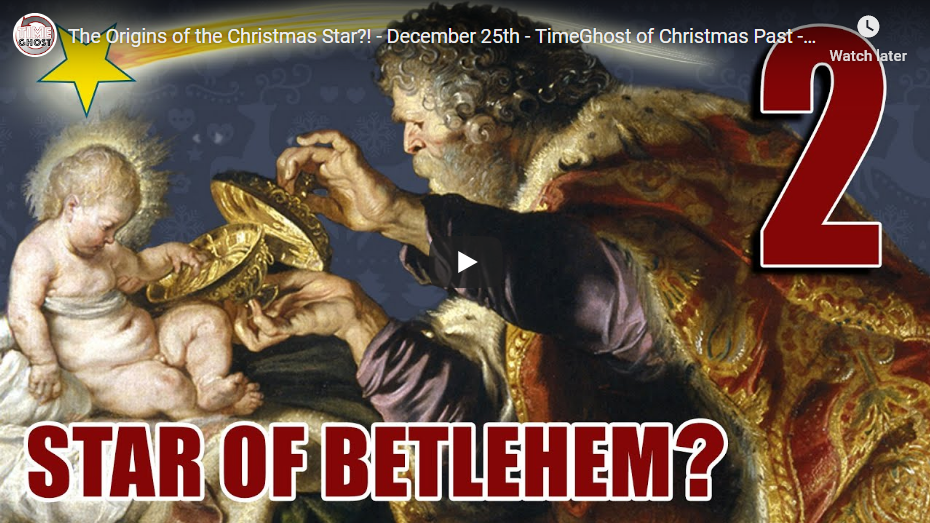
Published 25 Dec 2019What did Mark Twain have in common with Genghis Khan and William the Conqueror? And how is this all tied into a Christmas Miracle? Well, much of this can be answered by a bright bulb of light, that astronomer Johann Palitzsch observed on Christmas Day 1758…
Join us on Patreon: https://www.patreon.com/TimeGhostHistory
Hosted by: Indy Neidell
Written by: Rune Væver Hartvig and Spartacus Olsson
Directed by: Spartacus Olsson and Astrid Deinhard
Executive Producers: Bodo Rittenauer, Astrid Deinhard, Indy Neidell, Spartacus Olsson
Creative Producer: Joram Appel
Post-Production Director: Wieke Kapteijns
Research by: Rune Væver Hartvig
Edited by: Mikołaj Cackowski
Sound design: Marek KaminskiColorizations:
Julius Jääskeläinen – https://www.facebook.com/JJcolorization/Sources:
King William I (“The Conqueror”), courtesy of National Portrait Gallery
Comet Halley and the Milky Way, courtesy of ESO (https://www.eso.org/public/images/com…)Soundtracks from Epidemic Sound:
Howard Harper-Barnes – “A Sleigh Ride Into Town”
Leimoti – “The Christmas Thieves”A TimeGhost chronological documentary produced by OnLion Entertainment GmbH.
TimeGhost History
Published 24 Dec 2019The first day of TimeGhost of Christmas is about a legendary Christmas Party bearing the equally legendary name of “the Eggnog Riots”, which took place on Christmas Eve in 1826 at the Military Academy at West Point, New York.
Join us on Patreon: https://www.patreon.com/TimeGhostHistory
Hosted by: Indy Neidell
Written by: Joram Appel and Spartacus Olsson
Directed by: Spartacus Olsson and Astrid Deinhard
Executive Producers: Bodo Rittenauer, Astrid Deinhard, Indy Neidell, Spartacus Olsson
Creative Producer: Joram Appel
Post-Production Director: Wieke Kapteijns
Research by: Joram Appel
Edited by: Mikołaj Cackowski
Sound design: Marek KamińskiColorizations by:
Norman Stewart – https://oldtimesincolor.blogspot.com/
Dememorabilia – https://www.instagram.com/dememorabilia/Sources:
NYPL Digital Collections
From the Noun Project:
Wine by Ayub Irawan
Drunk by Ates Evren Aydinel
Whisky by Made by Made
Rum by Andreja Kirma
clock by Maurício BritoSoundtracks from Epidemic Sound:
Howard Harper-Barnes – “A Sleigh Ride Into Town”
Etienne Roussell – “A Winter’s Night”
Mike Franklyn – “Christmas Bliss”A TimeGhost chronological documentary produced by OnLion Entertainment GmbH.

Overly Sarcastic Productions
Published 25 Dec 2017Merry Christmas, all! In honor of this complex and multifaceted holiday, today let’s talk about some of the many and varied influences and major historical turning points that sculpted this holiday into what we know and love (or lose our minds at Starbucks over.)
Nobody tell Blue that this video is mostly historical.
PATREON: https://www.patreon.com/user?u=4664797
Find us on Twitter @OSPYouTube!

Extra Credits
Published 22 Dec 2019John Fielding, Henry Fielding’s brother, took over the Bow Street Runners after his brother’s death. He was well known as a man who could identify over 3,000 criminals by voice alone. After all, he was blind. But his real contribution to policing was his organizational skills. He created the first Central Database of stolen goods and suspect descriptions and published papers that included not only London criminals but also descriptions of criminals wanted by other prisons in the country. And while the courts may have loved him, the public was much more skeptical. These were times marked by distrust in authority and having a criminal database seemed like an intrusion on personal liberty. What was required to change public opinion?
Join us on Patreon! http://bit.ly/EHPatreon
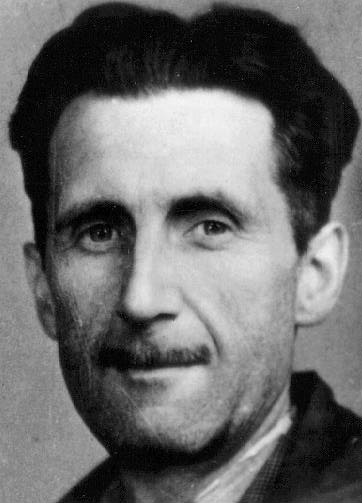
Orwell’s press card portrait, 1943
Suet crust, which appears in innumerable combinations, and enters into savoury dishes as well as sweet ones, is simply ordinary pastry crust chopped beef suet substituted for the butter or lard. It can be baked, but more often is boiled in a cloth or steamed in a basin covered with a cloth. Far and away the best of all suet puddings is plum pudding, which is an extremely rich, elaborate and expensive dish, and is eaten by everyone in Britain at Christmas time, though not often at other times of the year. In simpler kinds of pudding the suet crust is sweetened with sugar and stuck full of figs, dates, currents or raisins, or it is flavoured with ginger or orange marmalade, or it is used as a casing for stewed apples or gooseberries, or it is rolled round successive layers of jam into a cylindrical shape which is called roly-poly pudding, or it is eaten in plain slices with treacle poured over it. One of the best forms of suet pudding is the boiled apple dumpling. The core is removed from a large apple, the cavity is filled up with brown sugar, and the apple is covered all over with a thin layer of suet crust, tied tightly into a cloth, and boiled.
British pastry is not outstandingly good, but there are certain fillings for pies and tarts which are excellent, and which are hardly to be found in other countries. Treacle tart is a delicious dish, and the large or small mince pies which are eaten especially at Christmas, but else fairly frequently at other times, are almost equally good. The mince-meat with which they are filled is a mixture of various kinds of dried fruits, chopped fine, mixed up with sugar and raw beef suet, and flavoured with brandy. Other favourite fillings are jams of various kinds, lemon curd – a preparation of lemon juice, yolk of egg and sugar – and stewed apples flavoured with lemon juice or cloves. An apple pie is often given an exceptionally fine flavour by including one quince among about half a dozen apples.
The other main category of puddings – milk puddings – is the kind of thing that one would prefer to pass over in silence, but it must be mentioned, since these dishes are, unfortunately, characteristic of Britain. They are preparations of rice, semolina, barley, sago or even macaroni, mixed with milk and sugar and baked in the oven. The one made with barley is somewhat less bad then the others: the one made with macaroni is intolerable to any civilised palate. As all of these puddings are easy to make, they tend to be a stand-by in cheap hotels, restaurants and apartment houses, and they are one of the chief reasons why British cookery has a bad name among foreign visitors.
There are, of course, XXX countless other sweet dishes, including the whole range of jellies, blancmanges, custards, soufflés, ice puddings, meringues and what-nots, which are much the same in all European counties. A few oddments which do not fit into any of the above categories are pancakes – British pancakes are thinner than those of most countries, and are always eaten with lemon juice, – batter pudding, which is made of much the same ingredients as Yorkshire pudding, but is steamed instead of being baked and is eaten with treacle, and baked apples. The apples are cored but not peeled, filled up with butter and sugar, and cooked in the oven: it is important that they should be served in the dish in which they are cooked With cooked fruit of any kind British people always eat cream, if they can get it. In the West of England a particularly delicious kind of clotted cream is made by slowly simmering large pens of milk and skimming off the cream as it comes to the surface.
George Orwell, “British Cookery”, 1946. (Originally commissioned by the British Council, but refused by them and later published in abbreviated form.)



Powered by WordPress