Quotulatiousness

June 6, 2011

SlutWalk arrives in Britain

Filed under: Britain, Liberty, Media, Politics — Tags: , , , , — Nicholas @ 09:32

Brendan O’Neill is not impressed with the SlutWalkers, calling them “the most anti-social sluts on earth”:

The most annoying thing about the SlutWalk phenomenon, which arrived in Britain at the weekend, is not its knowingly provocative name or even its attempt to make a serious political project of the frazzled Nineties pop trend of Girl Power (“I wear sexy stuff, therefore I am powerful!”). No, it is its inherently anti-social nature. These are the most anti-social sluts on earth. Where I grew up, the catty phrase “she enjoys the company of men” was often used as a euphemism for “slut”, but you could never say that of those taking part in SlutWalk. On the contrary, many of the SlutWalkers seem to see interaction with men — especially cocky, swaggering men — as a dangerous and risky thing, best avoided.

Of course, no one — except maybe Peter Sutcliffe — disagrees with SlutWalk’s spectacularly uncontroversial message that women should be free to dress as they please without getting raped. But it is quite different to expect to be able to dress as you please without attracting *any* attention from blokes. Yet that is what some SlutWalkers seem to be demanding: effectively the right to dress provocatively without ever being looked at, commented on, whistled at or spoken to by a member of the opposite sex. Unless such interaction is clearly solicited, of course.

[. . .]

The high-minded feminists who make up SlutWalk’s supporters and cheerleaders seem to want to opt out of this everyday social interaction, to dress as sluttishly as they like while also being surrounded by some magic forcefield, legally enforced perhaps, which protects them from any unwanted male gaze or whistle. They are prudes disguised as sluts, self-styled victims pretending to be vixens, astonishingly anti-social creatures who imagine it is possible to parade through society dressed outrageously without any member of that society ever making a comment about or to them. This is the highly individuated politics of fear — fear of men, fear of unplanned-for banter, fear of sexual licence — dressed up as radical feminism. But to update an old saying: no slut is an island.

“How are we supposed to have a mature debate when any criticism is seen as treason?”

Filed under: Britain, Bureaucracy, Health — Tags: , — Nicholas @ 09:18

Mark Piggott on the need to be honest about the state of the British NHS in order to improve healthcare:

The UK National Health Service is like a relative: we are allowed to slag off this national treasure, but woe betide anyone else who tries it. I have no idea if the health secretary, Andrew Lansley, really wants to improve the institution or dismantle it and sell it off to the highest bidder, but whatever his motives, anyone who uses the system knows it needs surgery; no amount of knee-jerk op-eds will change that salutary fact.

In this unhealthy climate I feel obliged to state that I believe in the NHS; many medics do a fine job and healthcare should be free at the point of need. Yet having witnessed the care provided to my grandmother, 89, following a diagnosis of lung cancer, I believe that unless the NHS is willing to admit and tackle its flaws, it will have to shoulder some of the blame if the private sector convinces politicians it can run things better.

[. . .]

After collecting my father from the lobby, we went back to the ICU. A bossy woman at the nurse’s dock insisted she wasn’t on that ward; I had to point nan out, in one of the few occupied beds behind her. The woman compounded her mistake by acting as if we were in the wrong. Many users of the NHS will be familiar with this attitude: that ill people and their relatives are simply a nuisance preventing the otherwise smooth running of the system.

[. . .]

The doctors organisation, the British Medical Association (BMA), reacting with customary promptness, has called Lansley’s reforms ‘mad’. They may be right, but the BMA, like the politicians, has a vested interest in how the NHS is run. As can be witnessed by its endless lectures on the evils of alcohol, the BMA appears to be in the fortunate position of being able to get any message, no matter how authoritarian, to the media, who then obligingly splash it across every front page and news bulletin. Perhaps we haven’t really changed that much from the days of my grandparents, who always believed that doctor knew best.

June 5, 2011

The Marmite affair hits Port Hope

Filed under: Britain, Bureaucracy, Cancon, Food, Health — Tags: , — Nicholas @ 10:57

Apparently the bureaucratic reach of Danish food nannies now extends as far as Port Hope, Ontario. I dropped in to the British Pantry to stock up on my usual assortment of pickled onions, crisps, toffees, and floral gums, to discover that not only did they not have any Marmite, they couldn’t get any more. This is serious . . . food DefCon Three level serious.

A quick interrogation of the sales person revealed that this is due to some strong disinformation activity on the part of the anti-Marmite faction: “Oh, we can’t bring that in anymore because it’s got beef extract in it. We’re not allowed to import that without a beef importing permit.”

My (sadly) empty jar of Marmite proclaims on the front that it’s 100% Vegetarian:

20110605-105004.jpg
100% Vegetarian
20110605-105347.jpg
Ingredients: Yeast Extract
Salt
Vegetable Extract
Niacin
Thiamin
Spice Extracts (contains Celery)
Riboflavin
Folic Acid
Vitamin B12

June 3, 2011

The right software tool for the job: Excel is not a database

Filed under: Britain, Media, Technology — Tags: , , , — Nicholas @ 10:05

You know how some people, having mastered a particular software tool, keep trying to fit every task into the one tool they know even when it’s awkward to do? I’ve seen people using Microsoft Excel instead of Microsoft Word or another word processor to produce letters — and people using Word to do spreadsheet-like tasks. The old adage seems to still apply in the software world: when the only tool you have is a hammer, everything looks like a nail.

It’s apparently not just small companies that suffer from this sort of problem:

The London 2012 Olympics is set be a humanoid spectacle of the like never witnessed by the world’s population before. Or something. But disturbing information has reached us at Vulture Central that reveals the organisation’s entire cultural events database is stored in *gasp* Excel.

A job vacancy currently advertised on the London Organising Committee of the Olympic Games (LOCOG) website is offering a competitive salary to someone who can maintain and report on data held in Microsoft’s spreadsheet software.

Now, a small biz with few customer accounts might consider Excel to be fit for purpose. But surely housing an Olympic stadium-sized database on a standalone spreadsheet is bonkers, isn’t it?

That’s a mighty big nail for such a small hammer.

May 29, 2011

More on the Anglo-Danish Marmite affair

Filed under: Britain, Bureaucracy, Europe, Food, Health — Tags: , , , , — Nicholas @ 10:34

Colby Cosh rounds up the details on the Marmite affair:

Nothing stirs the blood of the British like a nice slapfight over European regulation, and this goes double when food is involved. The UK press has found its latest excuse for tut-tutting and finger-waggling in the unlikeliest of places: at the bottom of the squat, distinctive little jar in which the vile breakfast spread Marmite is sold. This week, English-language journals in Denmark reported that the Scandinavian kingdom’s food regulator was having the dark brown yeast extract cleared from the shelves of shops which serve Brit expatriates.

The British reared up as one, displaying a spirit of indignant unity. “What have the Danes ever done for global cuisine?” thundered the Belfast Telegraph, breaking Godwin’s Law into splinters over its knurled Ultonian knee. (Unfortunately, a good answer might be “Not given it Marmite, at any rate.”) Fans of the quasi-foodstuff gathered on Facebook to form a “Marmite army”. Social campaigners used the ban to call attention to dubious patches in Denmark’s record on human rights and environmentalism.

As he points out, nobody at the Danish food nanny office suddenly issued a ban: technically Marmite had never been cleared for import at all. So it’s just a matter of filling in a form or two and Bob’s your uncle? Not quite:

Marmite’s status as a “fortified food” has apparently only just been noticed, and the DVFA says that “it has not received an application for marketing in Denmark of Marmite or similar products with added vitamins or minerals.” A glance at the DVFA’s procedure for obtaining approval to market these foods reveals why brand owner Unilever might not be in such a hurry to file. (And it also reveals that free-trade fanatics like me should probably rein in their admiration for the EU’s trade barriers just a little.) The agency not only requires compliance with EU-wide regulations, but insists that each product pass an “individual risk assessment” performed using a made-in-Denmark scientific procedure.

May 27, 2011

Happy 190th anniversary to the good old Grauniad

Filed under: Britain, History, Media — Tags: , — Nicholas @ 12:08

It’s the 190th anniversary, so the folks at The Guardian have virtually turned the calendar back:

More information about the “experiment in the typesetting of the mechanical facsimile we operate at guardian.co.uk” here.

May 26, 2011

The Danish Marmite affair thickens

Filed under: Britain, Bureaucracy, Europe, Food, Health — Tags: , , , — Nicholas @ 09:50

Lester Haines has the latest on the plight of ex-pat Brits suffering under a dictatorial food regime in Denmark:

According to this official statement, neither Marmite nor its Oz rival Vegemite are banned in Denmark, because they’ve never actually been approved for sale.

A 2004 law controls the distribution of products with “added vitamins, minerals or other substances”, and in order to punt such foodstuffs, they “need to be approved by the Danish Veterinary and Food Administration before the product can be marketed”.

[. . .]

In effect, then, those shops selling Marmite are dealing in unauthorised enhanced substances.

We and the Daily Mail have no doubt that any attempt to legalise Marmite would be met with a swift rejection, in defiance of EU directives on free trade. As Copenhagen-based expat Lyndsay Jensen put it: “They don’t like it because it’s foreign. But if they want to take my Marmite off me, they’ll have to wrench it from my cold dead hands.”

It’s been said that Marmite is an “acquired taste”, but Denmark’s health regulators are moving quickly to ensure that Danes never have the opportunity to develop that taste. Of course, like most other forms of prohibition, it might actually increase the attractiveness of the “forbidden fruit”.

Denmark has a long coastline, so smuggling in the little black jars across the North Sea would be quite possible . . .

May 25, 2011

How to cope with rapidly changing technology, Victorian style

Filed under: Britain, History, Military, Technology, Weapons — Tags: , , , — Nicholas @ 00:04

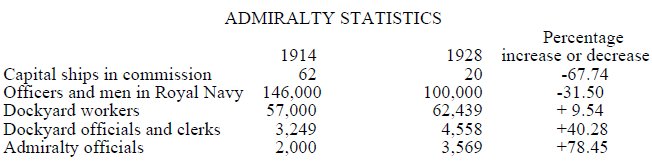
I just finished reading John Beeler’s Birth of the Battleship: British Capital Ship Design 1870-1881, which looks at a time where all the accepted norms of the previous three hundred years were all upset overnight.

In 1815, the Royal Navy was the unchallenged Mistress of the Seas: the most powerful navy in the world. France, the greatest threat to England and her trading empire, had just been destroyed as a military and naval power. The United States had survived the war, but had effectively been neutralized on the sea through much hard fighting. No other rival appeared close to challenging England’s primacy.

Fifty years later, the stasis is being broken technologically. Wind power is giving way to steam. Solid shell cannon are starting to give way to both larger and more complex weapons. Iron is starting to supplant oak as the material of choice for shipbuilding. The renowned duel between USS Monitor and CSS Virginia (formerly the USS Merrimac) sets all the major navies of the world busy considering how to protect their existing fleets and merchant vessels against the new threat of the ironclad.

The English government is suddenly faced with the stark reality that their entire fleet has become or is about to become obsolete. Neither Monitor nor Virginia are ocean-going ships, but the message is clear that no wooden vessel has a prayer of survival against the modern steam-powered ironclad. And even the greatest economic power in the world can’t replace an entire fleet overnight.

The Admiralty couldn’t depend on past experience for guidance, as everything they’d done for hundreds of years was now undecided: what kind of ships do you need to build? How will they be armed? How will they be armoured? How will they be propelled? Bureaucracies are, by nature, not well equipped to face challenges like this. The Royal Navy, from the late 1860’s until the late 1880’s struggled with finding the correct answer, or combination of answers, to meet the needs of the day.

I admit that my interest in British Imperial history fades very quickly after 1815 and only starts to pick up again in the 1870’s, and what little I’d retained of the reading I’d done left me with much disdain for the obvious pattern of muddle and stop-gap planning that clearly defined the Royal Navy’s approach to maintaining the fleet during that time period. I was very wrong in my assumptions, but I was far from alone.

To start with, I assumed that the retention of full sailing rig on steam-powered ships proved the raw incompetence of the Admiralty and their ship designers. What I failed to understand was that there were really two different navies operating under the same flag: the home fleet — close to home port with easy access to coal, drydock, and re-supply — and the colonial fleet which had none of those advantages. Merchant vessels of the 1850-1870 era could depend on refuelling at each end of their scheduled journeys (between fully equipped ports), while the Royal Navy could not. The steam engines of that time period were very inefficient and prone to breakdown: lose your engine in the Indian Ocean or the South Atlantic and you were almost certain to be lost. Sail was essential for Royal Navy ships outside home waters.

Iron as armour was a major step forward, but not without costs: it is far heavier than wood and because you needed it to protect the above-the-waterline essentials of the ship, it made it much harder to ensure that the ship would be stable and sufficiently buoyant in heavy seas (see the story of HMS Captain for an example of what could happen otherwise). It’s always been a rule of thumb in military affairs that you can’t protect everything: by trying to protect everything, you spread your forces (or your armour) too thin and you end up being too weak everywhere. This holds true especially for ship’s armour.

At the same time that you need to add armour to protect the ship, you also need to mount heavier, larger guns. Between placing your order with the shipyard for a new ship, the metallurgical wizards may have (and frequently did) come up with bigger, better guns that could defeat the armour on your not-yet-launched ship. Oh, and you now needed to revise the design of the ship to carry the newer, heavier guns, too.

The ship designers were in a race with the gun designers to see who could defeat the latest design by the other group. It’s no wonder that ships could become obsolete between ordering and coming into service: sometimes, they could become obsolete before launch.

The weapons themselves were undergoing change at a relatively unprecedented rate. As late at the mid-1870’s, a good case could be made for muzzle-loading cannon being mounted on warships: until the gas seal of the breech-loader could be made safe, muzzle-loaders had an advantage of not killing their own crews at distressingly high frequency. Once that technological handicap had been overcome, then the argument came down to the best way to mount the weapons: turrets or barbettes.

To the modern eye, the answer is obvious, but to the men responsible for making the decisions, it was far from obvious that the turret was the better answer. Turrets are heavier than barbettes and required clearer fields of fire (few masted-and-rigged ships could also carry turrets), and also generally required the turret to be mounted higher on the superstructure, which made the ship more top-heavy than an equivalent barbette vessel.

The other weapon controversy at the time was what the primary weapons of the battlefleet would be: gun, torpedo, or ram. The argument for the ram was the weakest, although CSS Virginia had done more damage to the Union fleet with her ram than with her guns. The torpedo was still in the transition stage from something that had to be physically pushed against an enemy ship (like a ram with an explosive charge) and the more modern notion of a self-propelled, unmanned weapon. Perhaps the argument was sealed by the accidental sinking of the HMS Victoria less than a decade later (a less-than-charitable interpretation of the event was fictionalized in Kind Hearts and Coronets in 1949).

In some ways it’s remarkable that the hidebound bureaucrats could keep up in the world’s first real arms race . . . and not only keep up, but stay (slightly) ahead. Each new class of battleship had to be equal to or better than the latest French, German, or Italian ships, yet also stay within fairly strict length, breadth, and displacement limits without going (too far) over budget. Oh, and also be capable of adaptation to whatever new naval gun had been introduced in the time between the ships being laid down and being brought into commission.

To the modern eye, even of someone who followed the general trend of naval technology, the Royal Navy of the early 1880’s looks like a random collection of misfit ships. What isn’t apparent is how much worse the picture could have been. Aside from the bombardment of Alexandria, the Royal Navy of Victoria’s reign exercised a policing rather than a strictly military role: they didn’t need to fight too often because they were clearly stronger than any potential adversaries.

May 24, 2011

Britain’s entry in the new race to space

Filed under: Britain, Space, Technology — Tags: , , — Nicholas @ 09:12

Jonathan Amos reports on the UK Space Agency (UKSA) long-simmered design/proposal called Skylon:

Skylon has been in development in the UK in various guises for nearly 30 years.

It is an evolution of an idea first pursued by British Aerospace and Rolls Royce in the 1980s.

That concept, known as Hotol, did have technical weaknesses that eventually led the aerospace companies to end their involvement.

But the engineers behind the project continued to refine their thinking and they are now working independently on a much-updated vehicle in a company called Reaction Engines Limited (REL).

Realising the Sabre propulsion system is essential to the success of the project.

The engine would burn hydrogen and oxygen to provide thrust — but in the lower atmosphere this oxygen would be taken directly from the air.

This means the 84m-long spaceplane can fly lighter from the outset with a higher thrust-to-weight ratio, enabling it to make a single leap to orbit, rather than using and dumping propellant stages on the ascent — as is the case with current expendable rockets.

Update: Lewis Page has more on the Skylon project.

May 20, 2011

Britain’s Type 45 destroyers finally get main armament

Filed under: Britain, Military, Weapons — Tags: , — Nicholas @ 14:29

Back in October, I linked to an article which told the sad story of the Royal Navy’s most expensive class of unarmed warships, the Type 45 destroyers. In November, I linked to another sad story about the £1.1bn+ lead ship of this class breaking down in mid-Atlantic and having to make an emergency stop in Halifax for repairs.

In the first bit of good news about the Type 45’s, they’re now finally getting their primary missile systems into service:

HMS Daring, first of the £1.1bn+ Type 45 destroyers now coming into service with the Royal Navy, has finally fired her primary (and only significant) armament, the Sea Viper missile system.

The glad news comes five years after the ship was launched, three years after she was accepted into the Royal Navy and well into the tenure of her third commanding officer.

It’s not all good news, however, as the Sea Viper may not be the wonder weapon it’s been implied to be:

Stripping away the hype, Sea Viper has never been tested against a supersonic target and there are no plans to do so — meaning that it would be a brave decision indeed to rely on it against supersonic threats in combat. (The system’s first four trials even against subsonics saw two failures.)

Sea Viper’s French-made Aster missiles can probably reach out to 75 miles, but the inescapable curvature of the Earth means that the Sampson masthead fire control radar can’t lock on to a low-flying target until it is within 20 miles or so. Various modern and indeed not-so-modern anti-shipping missiles (eg the “Klub”, “Sunburn” and “Brahmos”) are both low-flying and supersonic.

Then there are some serious gaps in the Sea Viper’s (and thus the Type 45s’) capabilities. The system cannot attack surface targets, meaning that the Royal Navy’s new and cripplingly expensive destroyers will be almost powerless against properly-equipped warships or even quite minor gunboats and the like.

May 19, 2011

Nathalie Rothschild: Britain’s debate on rape “is demeaning to women”

Filed under: Britain, Law, Liberty — Tags: , , , , — Nicholas @ 09:10

There is much sound and fury in Britain this week over some remarks by a Tory cabinet minister in a BBC interview. The leader of the opposition has demanded that he be dismissed from the government for suggesting that there are ‘other categories of rape’. Nathalie Rothschild wrote this article in response to a 2010 review of the rape law.

In 2007, Camilla Cavendish of The Times (London) found that rape allegations had jumped by 40 per cent between 2002 and 2005. While this can partly be put down to improved support for women, which facilitates the process of reporting rape, Cavendish argued that a widening official definition of rape also played a big role. Since the Sexual Offences Act 2003 came into force, the definition of rape has been expanded to include oral sex. But there has also been a profound attitude shift with roots in the second-wave feminist idea that heterosexual sex is an inherently violent and degrading act that women subject themselves to against their better judgement.

More than four out of five rape allegations are made against friends or acquaintances. As alcohol and/or drugs were involved in over half those cases, Cavendish puts this down to ‘the culture of binge drinking’. But this avoids the more complex picture. Today, various rape-awareness activists and state feminists are themselves helping to blur the boundaries between sex and rape, encouraging women to regard themselves as violated, abused and traumatised for having gone to bed with a man without thinking it through in minute detail.

The Sexual Offences Act 2003 declared that consent must be ‘active, not passive’; in rape cases, consent is now taken to mean agreement rather than the absence of a refusal. So if a woman goes along with sex, but doesn’t make it explicitly clear that she is actively consenting to it, it can be deemed to be rape. The government has even moved towards ensuring that no agreement can be taken as consent if it is given under the influence of alcohol. As Cavendish pointed out: ‘In our zeal to protect women, are we going to legislate so that a drunken man is accountable for his deeds, but a drunken woman is not? Why do we encourage women to see themselves as victims?’ Absolving women who engage in sexual liaisons — whether drunk or sober — of responsibility for their actions is not liberating; it’s demeaning.

There is no doubt that forcing someone to have sex is a heinous, violent and degrading act and victims of rape should indeed be treated with dignity and respect. But in the name of protecting women, the government is insisting that rape cases be treated differently from all other crimes, while interfering with the course of justice in a way that undermines defendants’ rights and undercuts the power of juries.

May 16, 2011

Ear worms

Filed under: Britain, Media — Tags: , — Nicholas @ 00:08

For the last few weeks, I’ve had a musical track bothering me: I knew it very well, but didn’t know what it was called or where I’d encountered it. An unexpected earworm from the past. Thanks to the wonders of YouTube, I finally managed to track it down — it’s the theme music to a British TV show that I don’t remember watching (yet I know the theme music very well):

It’s a very distinctive late-60s to early 70s sound. I have no idea why I know it so well: perhaps my dad used to watch the show and I just heard the music in the background. Actually, that’s the only thing I could come up with to explain why I’d know the theme music, yet not remember ever having watched the TV show.

I thought I’d exorcise the earworm demon and buy a copy from iTunes. But no, they’ve got several covers of the music by various artists (including an interesting version by the Band of the 1st Battalion, the Duke of Wellington’s Regiment — currently classified as “Rock” by iTunes), but not the original. HMVDirect has a similar selection (covers, but no original performance). “Curses, foiled again!”

I found out more about the TV show from Wikipedia, the Unofficial Sweeney website, and a true labour of love, a page devoted to sleuthing up all the many musical tracks used in the original series named for the only album of music released: the Shut it! The Music of “The Sweeney” site.

This page is an ongoing development to identify the 300 different pieces of music used in the 1970s British television series The Sweeney. As is common practice with many television shows, other than the specially-comissioned title theme, Harry South’s unforgettable, rousing actioner, “ready-made” music was mostly used to provide incidental themes to the action. These came from specialist “Production Music” houses, the most well-known being De Wolfe, KPM (Keith Prowse Music), Chappell and Bruton. The years 1971 to 1978 arguably represented the genre’s most creative era (before competition and corporatism took over and strangled much artistic creativity), serendipitously co-inciding with production of The Sweeney itself.

In 2001 Sanctuary Records issued a Sweeney CD compilation with 25 tracks used in the show. As good as it was, it really only scratched the surface and sadly no further volumes have been forthcoming.

But unless I happen across a physical copy of the CD, I’m stuck with my persistent earworm. Here’s the closing credits, in hopes it’ll help banish it from my mind temporarily:

May 11, 2011

Brendan O’Neill: “The moralising Lib-Cons are New Labour in disguise”

Filed under: Britain, Government — Tags: , , — Nicholas @ 07:38

Brendan O’Neill pronounces his verdict on the first year of the British coalition government:

For all the claims that the Lib-Cons are Thatcher in disguise, with the wicked Bullingdon-braised David Cameron only pretending to be touchy-feely and a friend of Nick, in fact the most striking thing about this government one year in is how similar it has been to its ugly predecessor New Labour. The moralisation of everyday life, including people’s parenting styles and their drinking and smoking habits? Check. A promise to create a new kind of society (Dave calls it the Big Society; Blair called it the Stakeholders’ Society) while actually increasing the role of the state in economic, political and personal affairs? Check. Blather about environmentalism and nervousness about pursuing nuclear power? Check. The bombing of a foreign country in the name of all that is morally pure and right? Check. The New-Labour-Lib-Con eras have shown that Britain is no longer fought over by clashingly opposing parties but rather is dominated by a samey, conformist and vision-lite political class: samey both in terms of its members’ social origins and their political obsessions.

May 10, 2011

Superinjunctions

Filed under: Britain, Law, Liberty, Media — Tags: , , , , , — Nicholas @ 09:08

British law is already difficult enough for outsiders to suss out, but the recent use of superinjunctions to prevent even the hint that a story is being legally suppressed makes it even tougher:

The high profile are gagging, the press is losing the ability to speak, and now the Twitterati is vomiting up half-digested rumours. All the signs are that Britain is in the grip of the legal virus known as ‘injunctionitis’.

It makes for an unedifying spectacle. In between news of uprisings in the Middle East, the killing of Osama bin Laden and the marriage of Will’n’Kate, the British press has been running another set of stories about what it is forbidden from reporting. The reason for this is the increasingly problematic use of the injunction, a legal prohibition issued by a judge that prevents a particular story from being published. While these have been issued for a few years now with largely little public knowledge — especially after the use of so-called superinjunctions, which forbid people from mentioning the fact that an injunction exists — over the past year or so, the injunction in all its forms has started to make the news all by itself. Which, you’d be correct in thinking, rather defies the point.

In fact, over the past few weeks, the attempts by certain individuals to gag the press has resulted in an outbreak of calculated press indiscretion. There has been the tale of the unnamed English actor who employed the services of Helen Wood, a prostitute whose previous clients include footballer Wayne Rooney. Of course, given the injunction, Wood couldn’t do a proper bonk-and-blab about the actor, but there was enough detail there for a salacious few pages’ worth. Then there was the unnamed Premier League footballer who had allegedly been having an affair with Big Brother 7 victim/star Imogen Thomas. She has since been frequently pictured looking disconsolate in a series of fetching bikinis.

It’s bad enough when the government uses its powers to suppress public discussion of items of importance to “national security” (with the definition as loose as possible). It’s much worse when the courts are allowing private individuals and corporations to have their own version of court-imposed censorship, as there’s no possibility of it being a “national security” issue.

It has not just been the tabloids making news of the unreportable. There has also been the case of ex-Royal Bank of Scotland boss Fred Goodwin who took out a hyper-injunction, which absurdly forbids anyone from even talking about the subject of the injunction to the lawmakers themselves — namely, parliament. (Although, of course, someone did, hence we know about its existence if not any of the details.) And things became even crazier when a prominent member of the media, BBC journalist Andrew Marr, revealed that he himself had violated his own profession’s freedom by taking out an injunction in 2008 to hush up an infidelity. In fact, as The Times gleefully reported, there are over 30 high-profile injunctions currently in operation involving a whole heap of public figures, from footballers to politicians.

So, in at least one area, we’re back to there literally being two different kinds of law, differentiated by the wealth of the plaintiff.

May 9, 2011

The crushing defeat of the Alternative Vote in Britain

Filed under: Britain, Politics — Tags: , — Nicholas @ 11:58

Angela Harbutt recounts the scale of defeat for the pro-AV side in the recent referendum:

In any two horse political race, it is damned near impossible to poll less than 40% of the vote. You have to be spectacularly inept or obscenely unpopular to drop below this figure. For example, no Republican or Democrat Presidential candidate in recent US history has fallen this far. Even Barry Goldwater, Walter Mondale and Michael Dukakis — all famous for being electorally destroyed — managed to outscore the woeful YES percentage handsomely.

Yet somehow, the YES campaign managed to exceed even these extreme depths of campaigning ineptitude. It didn’t just lose. It was thrashed out of sight. It was humiliated. So appallingly bad has the YES vote been that any prospect of electoral reform has probably been obliterated for a generation.

The scale of incompetence by the YES campaign simply cannot be overstated. It is so vast and so staggering that it won’t merely fill column inches for days, if not weeks to come, it will be the subject of PhD theses for decades to come. It is unlikely that a wilful infiltration of the YES campaign by the NO side — at the most senior levels — could have resulted in a more calamitous result. The enormity of this professional political campaigning disaster is without parallel in modern British history.

H/T to Elizabeth for the link.

« Newer PostsOlder Posts »

Powered by WordPress