Quotulatiousness

March 17, 2019

Brexit delayed is Brexit denied

Filed under: Britain, Europe, Politics — Tags: , , , , — Nicholas @ 03:00

At Spiked, Mick Hume looks at the likely outcome of yet another Brexit betrayal by parliamentary remainers:

The vote to delay / bugger Brexit is a betrayal of the major parties’ promises, but not of their principles. This, after all, is what the overwhelming Remainer majority of MPs wanted all along. Behind all the divisions and parties-within-parties revealed by this week’s parliamentary shenanigans, there remains a clear anti-Brexit majority among MPs, aided and abetted by conniving Speaker John Bercow, and bugger whether their constituents backed it or not.

The final resolution remains uncertain. All options are still technically on the table; the UK remains legally committed to leaving on 29 March unless and until the law is changed. However, things look grim for a meaningful exit; some Tory Brexiteers and the DUP are making vague noises about using Article 62 of the Vienna Convention (oh yes, that old chestnut!) as an excuse for backing May’s deal next week, while Labour’s arch-Remainer buzzards are circling.

But however its planned betrayal of Brexit pans out, the political class cannot delay its own day of reckoning forever. The naked contempt politicians have displayed for voters and popular democracy will not go unrewarded. The Leave revolt has let the democratic genie out of the bottle, and it will not easily be shoved back in.

If Remainers get their long extension, for a start, it should mean that the UK has to hold Euro elections in May. See Brendan O’Neill’s podcast interview with Nigel Farage for a hint at the fun the latter’s newly registered Brexit Party could have with those.

The chaos surrounding this week’s vote to delay and betray Brexit is a microcosm of the dire state of official UK politics. It confirms that both major zombie parties are deeply divided, and that May’s government does not have authority within its own cabinet room, never mind in the country at large. The old political order is falling apart under the pressures of trying to contain the democratic revolt for Brexit.

Amid all this rancour and uncertainty, one thing remains clear: how right Leave voters were to vote to take back control from the demos-loathing EU elites and their allies in the UK’s ‘Bugger Brexit’ alliance.

March 16, 2019

So “Brexit means Brexit” actually means “no Brexit, no matter how many people voted for it”

Filed under: Britain, Europe, Politics — Tags: , , , , — Nicholas @ 03:00

Mark Steyn on the British Parliament’s decision to overturn the referendum result:

As I write, I happen to be next door to the Canadian House of Commons – which is far from my favorite place. But, at its lowest and most contemptible, Ottawa’s House has never screwed over the Commoners the way that of its imperial mother just has in London.

Last night, sixteen days before Britain supposedly leaves the European Union in accord with the people’s vote of three years ago, their elected representatives voted by 312 to 308 to rule out a “no-deal” Brexit – ie, a straightforward walkaway – ever.

So the EU now has no incentive ever to reach a deal with Britain. The appalling “deal” Theresa May “negotiated” was for a wretched and humiliating vassal status with Brussels. Because for the Eurocrats, what matters is to teach the lesson the ingrate voters that you can check “Out” any time you like but you can never leave. Mrs May’s deal was meant to be a message to antsy Continentals that the citizenry’s impertinence must never happen again.

When that flopped, Brussels moved to the next stage – not that Brexit must never happen again, but that Brexit must never happen, period. And, to their shame, the people’s representatives at Westminster have colluded in their subversion of the people’s will.

So last night the elites rose up and overthrew the masses. Of course, they have also destroyed their own reputation, and that of England as the Mother of Parliaments. But in a sense that also makes the larger point – that the world is too complex to be left to self-government by the people’s representatives, so best to leave it to Brussels.Sorry, you grunting morons don’t realize how difficult it all is, so you can vote for it all you want, but it can’t be done.

March 12, 2019

A choice between a (small) UBI and not taxing the poor at all

Filed under: Britain, Economics — Tags: , , — Nicholas @ 03:00

Tim Worstall responds to an article advocating abolishing Britain’s tax-free personal allowance and replacing it with a form of universal basic income (UBI):

Sure, we need to have government, even if not quite as much as we do have. Thus we need tax revenues to pay for it. But that tax should be, where it is derived from income, paid by the better off among us. As Adam Smith pointed out, people should be paying more than in proportion to their income. I would actually argue that income tax should only kick in at median income but agree that would require a smaller state than we’ve got now. Actually, that’s why I would propose it.

Still, that does mean that this suggestion fails at that first hurdle:

    The tax-free personal allowance, which rises to £12,500 in April, should be scrapped and replaced with a flat payment of £48 a week for every adult, according to radical proposals welcomed by shadow chancellor John McDonnell. The proposal, from the New Economics Foundation thinktank, is for a £48.08 “weekly national allowance,” amounting to £2,500.16 a year from the state, paid to every adult over the age of 18 earning less than £125,000 a year. The cash would not replace benefits and would not depend on employment.

It’s a universal basic income. Excellent stuff therefore. But the error is to think that this should replace that personal allowance. Assume that they’re including NI in that no allowance thing – if they’re doing it for income tax then they probably will for NI. What that means is that anyone earning more than £50 a week is facing a 40% marginal tax rate (yes, 40%, employers’ NI is incident upon the workers’ wages).

Do we think that’s a just way to pay for diversity advisers? That someone on £50 a week gives up 40% of any income over that? No, we don’t, we think that’s an entirely unjust taxation system. Actually, it’s a really stercore* taxation system.

* Someone’s been at his Latin texts again … I had to look this word up myself. It’s the ablative singular form of stercus, which means “manure, dung; to sully, soil, decay”, according to Wiktionary.

9 British Dishes Everyone Should Try – Anglophenia Ep 2

Filed under: Britain, Food, History, India — Tags: , — Nicholas @ 02:00

Anglophenia
Published on 22 May 2014

British food has a bad reputation, but Siobhan Thompson’s here to set the record straight, offering nine tasty U.K. dishes that will quiet the naysayers.

Visit the Anglophenia blog at http://www.bbcamerica.com/anglophenia

Photos via Fotolia.

Follow Anglophenia on Twitter: http://www.twitter.com/anglophenia
Follow Siobhan Thompson on Twitter: http://www.twitter.com/vornietom

March 10, 2019

Irish Potato Famine – The American Wake – Extra History – #4

Filed under: Britain, Cancon, Food, History, Religion, USA — Tags: , , , , , — Nicholas @ 06:00

Extra Credits
Published on 9 Mar 2019

Not all of the 214,000 Irish immigrants in 1847 made it safely to their new homes — and of those who did, many faced classism and xenophobia and even bullying from the “Ulster Irish” or “Scots-Irish” folks who had previously established themselves. In New York City specifically, the Five Points neighborhood became an infamous center of conflict — while local Irish-American John Joseph Hughes became instrumental in restoring Irish Catholicism.

Join us on Patreon! http://bit.ly/EHPatreon

March 9, 2019

Anglo-Zulu War | 3 Minute History

Filed under: Africa, Britain, History, Military — Tags: , — Nicholas @ 02:00

Jabzy
Published on 30 Dec 2014

Anglo-Zulu War

March 8, 2019

Wokescolds, rejoice! Titania McGrath has been unmasked!

Filed under: Britain, Humour, Media, Politics — Tags: , , , , — Nicholas @ 05:00

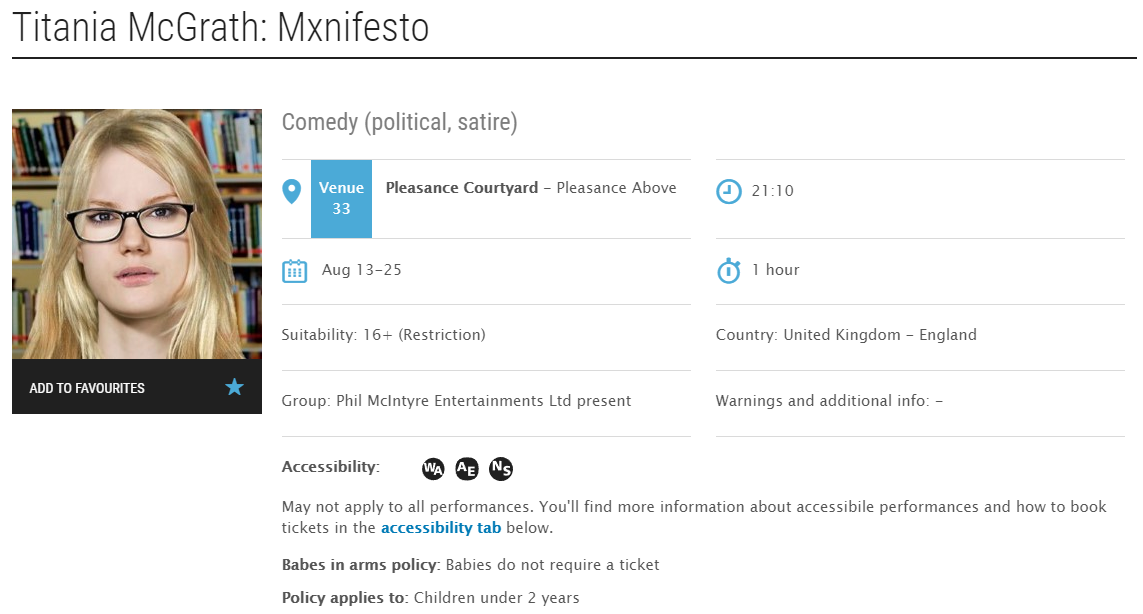
After the woke wolfpack finally dragged down and destroyed the great Twitter troll Godfrey Elfwick (RIP), the satirical void was eventually filled by the ultra-woke poet Titania McGrath. All good things must come to an end, apparently, because we recently discovered that noble Titania is actually — gasp! — just another Twitter troll:

When a former Oxford University postgraduate student set up a satirical Twitter account in April 2018 under the name of Titania McGrath, he had no idea of the social media storm that was to follow.

Aiming to poke fun at the “identitarian left” who use “vicious tactics to push identity politics above all else”, the parody account quickly amassed over 180,000 social media followers.

After months of speculation, the individual behind it can finally be revealed – as a 40-year-old former private school teacher with a doctorate in Early Renaissance Poetry from Wadham College, Oxford.

Dr Andrew Doyle created the account to mock today’s “woke culture” that is obsessed with gender fluidity, identity politics and hates freedom of speech.

Describing Titania McGrath as “a militant vegan who thinks she is a better poet than William Shakespeare”, Mr Doyle told The Telegraph: “Woke is the concept that everything must be inclusive, inoffensive, that you always use the correct language and that you must be hyper aware of other people’s sensitivities.

“This social justice movement is full of people who are arrogant, narcissistic and very certain in themselves. The very idea that they could be wrong doesn’t even cross their mind. That to me is incredibly funny. I thought Titania could embody all of that.

“The majority of people are desperate for this culture to be mocked. The account has become so popular because people are sick of feeling that they can’t say what they want. It used to be the case that if someone spoke out of turn, you would say that’s a bit much, apologise and everyone would move on. Now you post a screenshot on Twitter and try to get someone fired.

“Titania is staying the stuff that most people want to say.”

Stephen Fry on Political Correctness and Clear Thinking

Filed under: Britain, Education, Liberty, Media, Politics, USA — Tags: , , , , — Nicholas @ 02:00

The Rubin Report
Published on 4 Apr 2016

Stephen Fry (actor and comedian) joins Dave Rubin for a quick discussion about political correctness, clear thinking, V for Vendetta, free speech, and his decision to quit Twitter.

This is a bonus edition of ‘The Sit Down’ on The Rubin Report, filmed on the set of Larry King Now.

What are your thoughts? Comment below or tweet to Dave: https://twitter.com/RubinReport

Watch more on Ora TV: http://www.ora.tv/rubinreport

Find us on Patreon: https://www.patreon.com/rubinreport?ty=h

******
Stephen Fry
Actor, Author, and Comedian
******
Care about free speech? Tired of political correctness? Like discussions about big ideas? Watch Dave Rubin on The Rubin Report. Real conversations, unfiltered rants, and one on one interviews with some of the most interesting names in news and entertainment. Comedians, authors, and influencers join Dave each week to break down the latest in politics and current events. Real people, real issues, real talk.

March 5, 2019

If Brexit doesn’t happen, will there be a meaningful reaction?

Filed under: Britain, Europe, Government, Politics — Tags: , , , , — Nicholas @ 05:00

The British government under Prime Minister Theresa May believes — or appears to believe — that with sufficient delay, muddle, and obfuscation, the voters will mutter and grumble but in the end do nothing. David Betz and MLR Smith believe differently:

What do you get when you have a Conservative party that doesn’t conserve, a Labour party that doesn’t represent the interests of the working class, and a Liberal Democrat Party that is neither liberal nor democratic?

The answer is, a pretty accurate description of the current British political landscape. Here are different kinds of political ice cream for sale, but when licked they all turn out to have roughly the same unpalatable taste: a bland, socially progressive, anti-traditionalist, globalist, corporatist flavour. And, you the people, don’t ask for anything else! We know how to make ice cream. You don’t.

Of course, it is Brexit and the reactions of the political classes to it, that most clearly reveals the startling democratic deficit in the United Kingdom. Brexit is, though, not the cause of political strife. It is merely the symptom that has brought these latent anti-democratic inclinations to the surface. Arguably, they have always been there in one form or another since ancient times.

In November 2016, Nigel Farage told the BBC’s Andrew Marr: ‘Believe you me, if the people in the country think they’re going to be cheated, they’re going to be betrayed, then we will see political anger the likes of which none of us in our lifetimes have ever witnessed in this country’. It was an obvious point and true. Yet the striking thing about such a warning has been the degree to which national politicians and media have tried to ignore it.

How, we might wonder, has it all come to this and, just as vitally, what are the possible long-term consequences?

The government is gambling that reaction will be fierce, but localized and short-lived, and that the establishment can ride out the storm with little or no real problem. They may be seriously underestimating the anger and resentment of a voting public who are being explicitly denied the outcome they chose. But will there be serious outbreaks of violence?

Cumulatively, over the past three decades, then, the empirically demonstrable lesson is that violence and threats work. Crudely, there is simply no arguing with the fact that violence is the deus ex machina for changing the way people think and act. Physical force is a method of political communication, and when it is sustained it invariably succeeds in changing minds and changing policies.

Under the threat of violence, it is often easier for governments to knuckle under for the sake of maintaining a semblance of peace, to wax piously about societal cohesion and resilience, and to climb onwards as though the status quo ante were not crumbling beneath them. The progressive factions of academia, culture, and media cheer them for it. So, if the populace don’t really react in the face of such threats and actual violence, and merely light candles and hug teddy bears, then the bet of the political classes is sustained. They have gambled correctly.

But do enough people feel that violence is their only resort when the government refuses to do what the voters want? Might things go beyond mere loud, angry protests and transition towards rioting? Worse?

Thus, we come to the ultimate gamble of the political class, one that appears strongly to be operative in the minds of many in Parliament, namely, that Britons do not rebel and, therefore, faced with a fait accompli they will lump it even if they do not like it. Unlike the French, Italians, or Germans each of which nation is prone in its own way to violent mass spasms of political passion, the British are a phlegmatic people given to the sensible path. So the cliché goes.

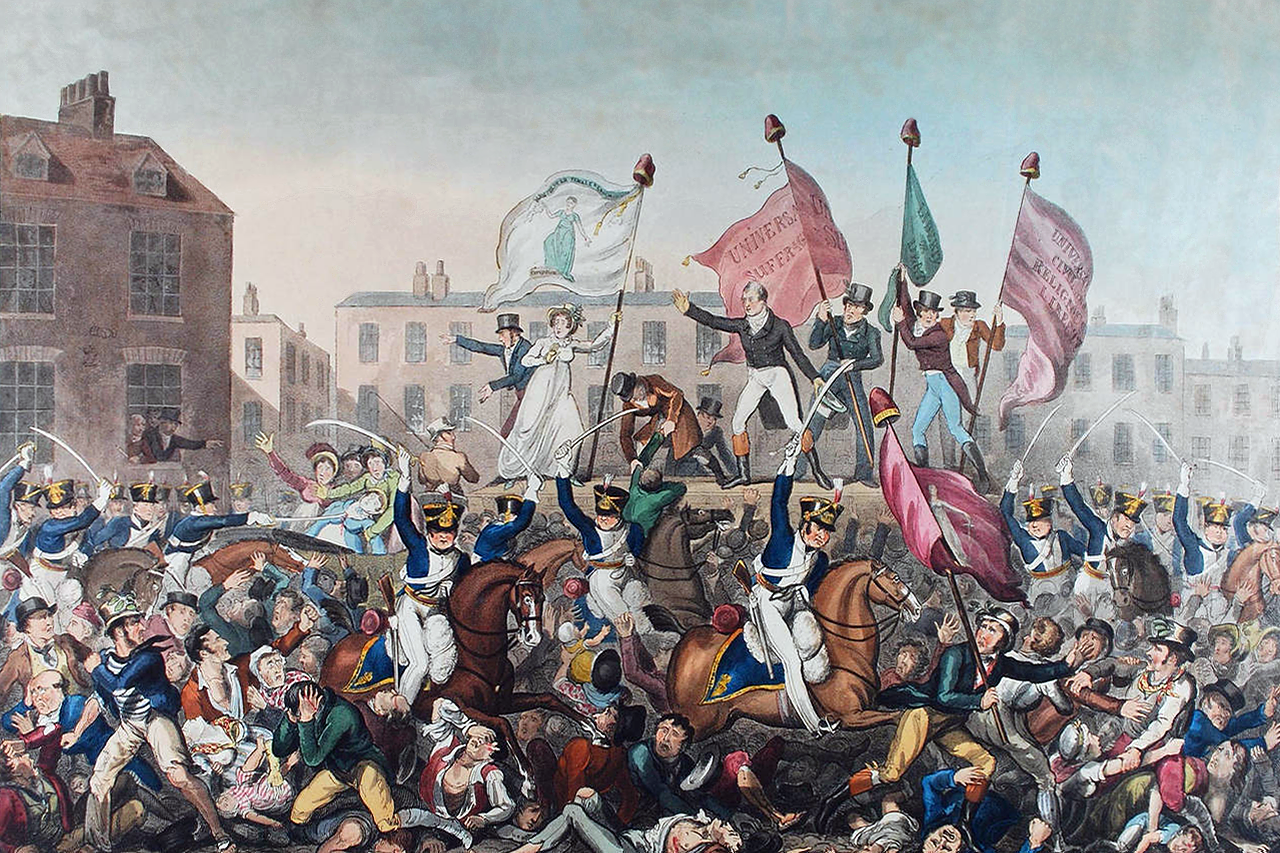
It is true to an extent that revolution is a continental phenomenon that does not travel well across the English Channel — British governments have been better at responding to incipient uprisings, sometimes deflecting them, betimes co-opting their leaders, but mostly muddling through by accommodating their demands within the parameters of the status quo. This is a system that has succeeded precisely because parliamentary democracy, for over 300 years now, is able to internalise the will of the people, even when faced with threats of violent revolt, be it in the demands of Chartists, Irish nationalists or suffragettes.

Should we be so sanguine to believe that the British political system, for so long a beacon of stability, is immune from the turbulence that has afflicted other societies? As Remainers are so keen to remind us, we are not an island whose fortunes and follies are separate from those of our near-neighbours. If people, goods, and ideas flow freely across the borders of Europe why should not the concept of the Yellow Jackets too? White Van Man voted strongly for Brexit, after all. Why should there be an Alternative for Germany movement but not an alternative for Britain, even though the people were asked to choose one and did?

March 4, 2019

Irish Potato Famine – Black ’47 – Extra History – #3

Filed under: Britain, Food, History — Tags: , — Nicholas @ 04:00

Extra Credits
Published on 2 Mar 2019

Watching the Irish suffer from the view of London, Sir Charles Trevelyan believed that the potato famine was part of God’s will. Inspired by the meritocracy-based philosophy of starvation that Thomas Malthus held, Treveylan created a relief plan with the sole goal of protecting the markets, and not the people. Thus the new year of “Black ’47” brought chaos and horror to the Irish people.

Join us on Patreon! http://bit.ly/EHPatreon

The history-pedants’ guide to The Last Kingdom – episode one

Filed under: Britain, History, Humour, Media, Weapons — Tags: , , , , — Nicholas @ 02:00

Lindybeige
Published on 11 Feb 2016

The Last Kingdom – here I review the authenticity of episode one of this television series set in medieval England.

Support me on Patreon: https://www.patreon.com/Lindybeige

The Last Kingdom is a television series, eight hours long, based on the books by Bernard Cornwell. Here, I give the first episode the Lindybeige treatment – that is to say I go through it and in smarmy way point out various things it gets wrong.

People have pointed out in the comments that one character, Uhtred father of Uhtred, whom I describe as a ‘king’, is technically not a king at this point in the story. This is true. I decided not to spend half a minute of screen-time explaining the distinction. He is of a line of kings, has hopes to gain the title ‘king’ again, and is the ruler of Bernicia, and commander of the main force that engages in the battle, and is a very senior nobleman, variously described as ‘king’, ‘earl’, ‘lord’, and ‘ealdorman’.

Lindybeige: a channel of archaeology, ancient and medieval warfare, rants, swing dance, travelogues, evolution, and whatever else occurs to me to make.

▼ Follow me…

Twitter: https://twitter.com/Lindybeige I may have some drivel to contribute to the Twittersphere, plus you get notice of uploads.

website: http://www.LloydianAspects.co.uk

March 3, 2019

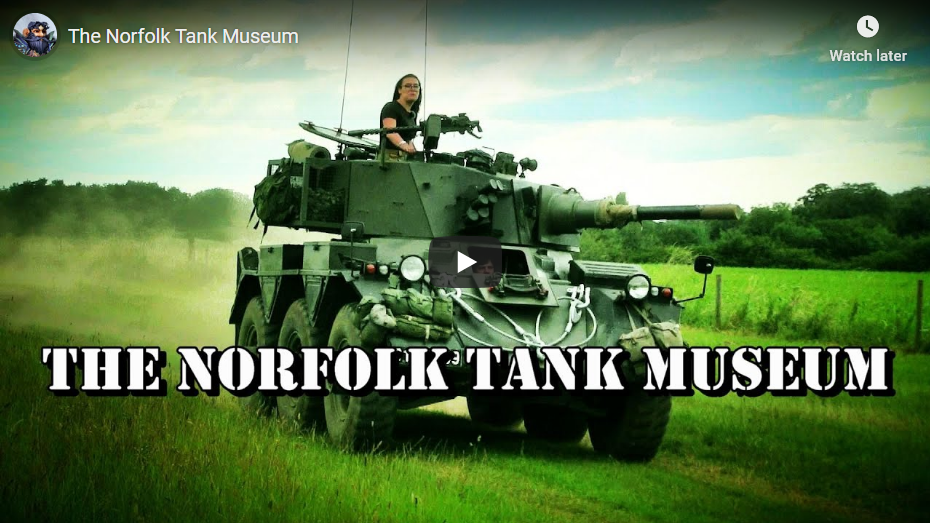
Tank Chats #43 Matilda I | The Tank Museum

Filed under: Britain, History, Military, Technology, WW2 — Tags: , , — Nicholas @ 02:00

The Tank Museum
Published on 22 Dec 2017

Development of Matilda I began in 1935. Production began just before the outbreak of the Second World War in July 1939 and 139 vehicles were delivered by August 1940. 97 of these were lost after the evacuation of troops from Dunkirk, without having had much use. The rest were removed from British service in 1941, but captured vehicles stayed in German service in domestic security roles.

Support the work of The Tank Museum on Patreon: ► https://www.patreon.com/tankmuseum
Or donate http://tankmuseum.org/support-us/donate

Visit The Tank Museum SHOP: ►https://tankmuseumshop.org/

Twitter: ► https://twitter.com/TankMuseum
Tiger Tank Blog: ► http://blog.tiger-tank.com/
Tank 100 First World War Centenary Blog: ► http://tank100.com/ #tankmuseum #tanks

March 2, 2019

Post WW1 Violence Theory – Paris Peace Conference I BEYOND THE GREAT WAR

The Great War
Published on 28 Feb 2019

In our first episode of our new format BEYOND THE GREAT WAR Jesse answers two questions. The first one is in regards to the Brutalization Theory that tries to explain the level of violence during and after the First World War. In our second question, we talk about the start of the Paris Peace Conference 100 years ago.

» SUPPORT THE CHANNEL
Patreon: https://www.patreon.com/thegreatwar
Merchandise: https://shop.spreadshirt.de/thegreatwar/

» SOURCES
Audoin-Rouzeau, Stéphane and Annette Becker. 14-18, retrouver la guerre (Npp : Gallimard, 2000).

Depechin, Annie. “La conférence de la paix,” in Stéphane Audoin-Rouzeau and Jean-Jacques Becker, eds. Encyclopédie de la Grande guerre 1914-1918 (Paris : Bayard, 2013): 935-948.

Gerwarth, Robert. “The Continuum of Violence,” in Jay Winter, ed. The Cambridge History of the First World War, vol. 2: The State (Cambridge: Cambridge University Press, 2014): 638-662.

Gerwarth, Robert. The Vanquished. Why the First World War Failed to End, 1917-1923 (Penguin, 2017).

Konrad, Helmut. “Drafting the Peace,” in Jay Winter, ed. The Cambridge History of the First World War, vol. 2: The State (Cambridge: Cambridge University Press, 2014): 606-637.

Mosse, George. Gefallen für das Vaterland. Nationales Heldentum und namenloses Sterben (Stuttgart: Klett-Cotta, 1993). English version: Fallen Soldiers. Reshaping the Memory of the World Wars (New York: Oxford UP, 1990).

Prost, Antoine. “Les limites à la brutalisation : tuer sur le front occidental, 1914-1918,” Vingtième Siècle. Revue d’histoire (2004/1 no 81) : 5-20. Accessed at https://www.cairn.info/revue-vingtiem…

Sharp, Alan. “The Paris Peace Conference and its Consequences,” in in 1914-1918 online. International Encyclopedia of the First World War. https://encyclopedia.1914-1918-online…

»CREDITS

Presented by: Jesse Alexander
Written by: Jesse Alexander
Director: Toni Steller & Florian Wittig
Director of Photography: Toni Steller
Sound: Toni Steller Editing: Toni Steller
Mixing, Mastering & Sound Design: http://above-zero.com
Motion Design: Christian Graef – GRAEFX
Maps: Daniel Kogosov (http://patreon.com/Zalesky)
Research by: Jesse Alexander
Fact checking: Florian Wittig
Channel Design: Alexander Clark
Original Logo: David van Stephold

A Mediakraft Networks Original Channel

Contains licenced material by getty images
All rights reserved – Real Time History GmbH i.Gr. 2019

From the comments:

The Great War
1 day ago

ICYM the special message at the end of the video: THANK YOU FOR 1 MILLION SUBSCRIBERS! And we also hope you like our new format BEYOND THE GREAT WAR. It will also replace what used to be special episodes and biographies. Just ask us a question about a person, event or country and we will see that we answer it in the same depth that our special episodes had. Simple as that.

March 1, 2019

Development of the British Tank Arm, 1918-1939

Filed under: Britain, History, Military, Technology — Tags: , , , — Nicholas @ 02:00

The_Chieftain
Published on 5 Jan 2019

Supporting the World War Two channel, https://www.youtube.com/channel/UCP1A…

The second in the series of videos discussing how various nations spent the time in between the two wars analyzing what did or did not work for their tank doctrines, how they were developed, and what they came up with. This video (obviously) looks at the British, where budgets and votes were far more important than tank capability.

References:
Mechanised Force, David Fletcher
The Challenge of Change, Harold Winton
Military Innovation in the Interwar Period, Williamson Murray
The Business of Tanks, G. Mcleod Ross
Men, Ideas and Tanks, J.P. Harris

February 28, 2019

QotD: Lawrence of the Arabian Nights

Filed under: Britain, History, Middle East, Quotations, WW1 — Tags: , , — Nicholas @ 01:00

The everlasting battle stripped from us care of our own lives or of others’. We had ropes about our necks, and on our heads prices which showed that the enemy intended hideous tortures for us if we were caught. Each day some of us passed; and the living knew themselves just sentient puppets on God’s stage: indeed, our taskmaster was merciless, merciless, so long as our bruised feet could stagger forward on the road. The weak envied those tired enough to die; for success looked so remote, and failure a near and certain, if sharp, release from toil. We lived always in the stretch or sag of nerves, either on the crest or in the trough of waves of feeling. This impotency was bitter to us, and made us live only for the seen horizon, reckless what spite we inflicted or endured, since physical sensation showed itself meanly transient. Gusts of cruelty, perversions, lusts ran lightly over the surface without troubling us; for the moral laws which had seemed to hedge about these silly accidents must be yet fainter words. We had learned that there were pangs too sharp, griefs too deep, ecstasies too high for our finite selves to register. When emotion reached this pitch the mind choked; and memory went white till the circumstances were humdrum once more.

Such exaltation of thought, while it let adrift the spirit, and gave it licence in strange airs, lost it the old patient rule over the body. The body was too coarse to feel the utmost of our sorrows and of our joys. Therefore, we abandoned it as rubbish: we left it below us to march forward, a breathing simulacrum, on its own unaided level, subject to influences from which in normal times our instincts would have shrunk. The men were young and sturdy; and hot flesh and blood unconsciously claimed a right in them and tormented their bellies with strange longings. Our privations and dangers fanned this virile heat, in a climate as racking as can be conceived. We had no shut places to be alone in, no thick clothes to hide our nature. Man in all things lived candidly with man.

The Arab was by nature continent; and the use of universal marriage had nearly abolished irregular courses in his tribes. The public women of the rare settlements we encountered in our months of wandering would have been nothing to our numbers, even had their raddled meat been palatable to a man of healthy parts. In horror of such sordid commerce our youths began indifferently to slake one another’s few needs in their own clean bodies — a cold convenience that, by comparison, seemed sexless and even pure. Later, some began to justify this sterile process, and swore that friends quivering together in the yielding sand with intimate hot limbs in supreme embrace, found there hidden in the darkness a sensual co-efficient of the mental passion which was welding our souls and spirits in one flaming effort. Several, thirsting to punish appetites they could not wholly prevent, took a savage pride in degrading the body, and offered themselves fiercely in any habit which promised physical pain or filth.

T.E. Lawrence, Seven Pillars of Wisdom, 1926.

« Newer PostsOlder Posts »

Powered by WordPress