Sir Humphrey: I wonder if I might crave your momentary indulgence in order to discharge a by no means disagreeable obligation which has, over the years, become more or less established practice in government service as we approach the terminal period of the year — calendar, of course, not financial — in fact, not to put too fine a point on it, Week Fifty-One — and submit to you, with all appropriate deference, for your consideration at a convenient juncture, a sincere and sanguine expectation — indeed confidence — indeed one might go so far as to say hope — that the aforementioned period may be, at the end of the day, when all relevant factors have been taken into consideration, susceptible to being deemed to be such as to merit a final verdict of having been by no means unsatisfactory in its overall outcome and, in the final analysis, to give grounds for being judged, on mature reflection, to have been conducive to generating a degree of gratification which will be seen in retrospect to have been significantly higher than the general average.
Jim Hacker: Are you trying to say “Happy Christmas,” Humphrey?
Sir Humphrey: Yes, Minister.
December 25, 2019
QotD repost: Sir Humphrey’s bureaucratic holiday wishes
December 24, 2019
Repost – Hey Kids! Did you get your paperwork in on time?
If you hurry, you can just get your Santa’s Visit Application in before the deadline tonight!

December 20, 2019
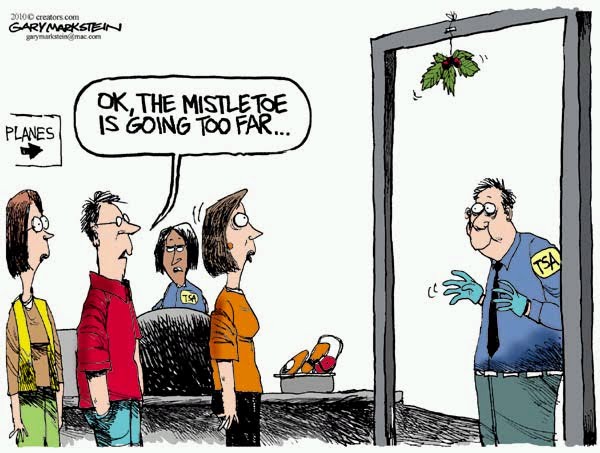
Repost – Happy holiday travels!

H/T to Economicrot. Many many more at the link.
December 14, 2019
History of Space Travel – Guided by Starlight – Extra History – #6
Extra Credits
Published 12 Dec 2019What happened after we touched down on the moon? And where are we going in the future? While we may have lost the glitz and glamor of the Space Race, we have continued to make incredible progress in reaching the stars. We’ve come together to build space stations while in space, create the international space station, and started developing new technologies that could take us to Mars and beyond.
Start your Warframe journey now and prepare to face your personal nemesis, the Kuva Lich — an enemy that only grows stronger with every defeat. Take down this deadly foe, then get ready to take flight in Empyrean! Coming soon! http://bit.ly/EHWarframe
December 13, 2019
Further adventures of the “Basic College Girl”
Severian has another tale of his university teaching career to share:

University College, University of Toronto, 31 July, 2008. (Not the educational institution in the story…)
Photo by “SurlyDuff” via Wikimedia Commons.
The Basic College Girl is so dumb, lazy, and entitled, she makes Hillary Clinton look like a criminal mastermind. I caught one recycling a term paper from another class because she’d forgotten to take the other professor’s name off the header. Hell, I caught one copy-pasting straight off Wikipedia because she’d left the hyperlinks embedded in the text.
And these were not Hail Marys. Just copy-pasting something, anything, Cuttlefish-style makes sense if you haven’t done a lick of work and it’s due in five minutes. It’s a one-in-a-million shot, sure, but since it took you all of 45 seconds and you’re going to fail anyway, you might as well try to shoot the moon. No, these were papers turned in with plenty of time to spare (I always had my term papers due at least a week before final exams).
Think about that for a second: Instead of coming to my office hours with a sob story, or trying to talk the registrar into an incomplete, or faking her own death, or doing literally anything else, more than a few BCGs turned in visible-from-space plagiarism and skipped on down to Starbucks for a triple foam half-caff venti soy chai pumpkin spice latte. YOLO!
That’s not the worst part, though. The worst part is the BCG’s reaction when you catch them. When you point out that no, I’m not Professor Jones and this isn’t Spring 2014, the BCG’s universal, invariable reaction is … anger. At YOU.
At the time I was simply too pissed to think about it rationally (I trust you’ll believe me when I say that in the semesters just before I retired, my biggest challenge was keeping a look of utter contempt off my face). Looking back on it after some years, though, it makes sense. BCGs are all grandiose narcissists with Borderline Personality Disorder. Of course they’re just so wonderful that anything they deign to turn in should be given an A+, sight unseen. What other purpose could I, the professor, possibly serve, other than to mark it down for record-keeping? Now she’s forced to take the time to email me, or come down to my office hours, or what have you, just to set my dumb ass straight. It’s a real inconvenience!
December 10, 2019
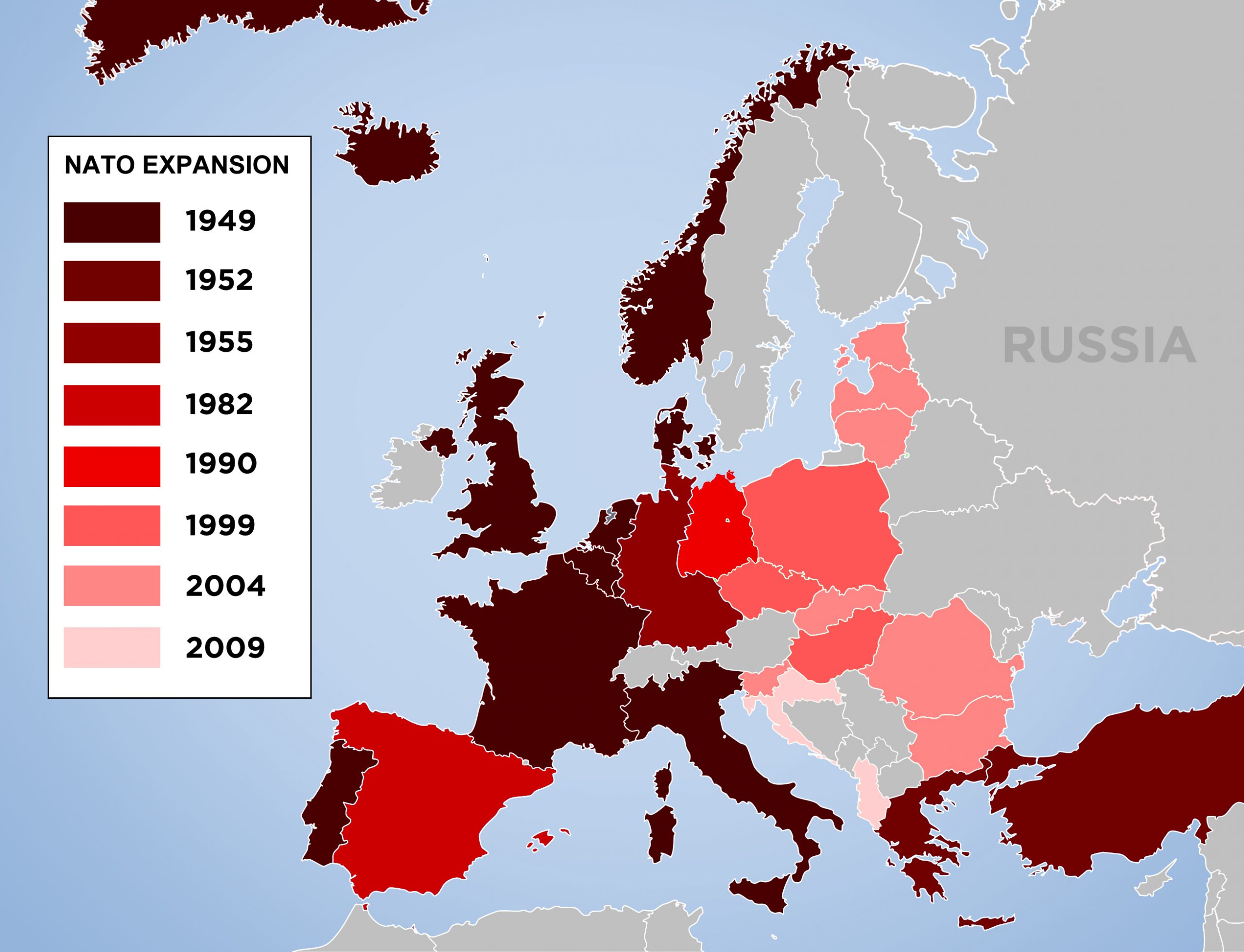
“NATO [reminds] me of the pre-reformation medieval church. Their stated objectives sound Godly and noble but their true purpose is to keep a bloated priesthood in luxury”
NATO still exists, decades after the threat it was designed to counter dissolved. Tom Paine wonders why this is so:
The dismal science teaches us to distinguish between peoples’ stated preferences (often virtue-signalling lies) and their revealed preferences (how they spend their money). All NATO members say they believe in the alliance. Only four — the USA, the UK, Poland and Greece — meet their obligation to contribute more than 2% of their GDP. If you’re wondering, Greece has only accidentally met that target because of the catastrophic fall in its GDP.
Opinion polls and my own experience of the bitter, sneering anti-Americanism of my otherwise delightful continental chums suggest that as usual the revealed preference is the truth. The Germans and French would not go to war in defence of America or Britain if we were attacked. Britain was attacked, when the Falklands were invaded, and our “allies” and “friends” sold arms to our enemies and gave them all kinds of moral support. Remember the Welsh Guards (my grandfather’s old regiment) massacred by Exocets fired from Mirages? The USA has often gone to war since the alliance was formed and mostly only British warriors fought, died or were injured alongside theirs.
Germany, France and their freeloading friends have quite simply been taking the piss from the outset. They take the Americans (and us Inselaffen and rosbifs) for mugs. They plot to form an EU Army and regret that Brexit means they won’t be able to continue to rely on English-speakers as their cannon-fodder.
The continued existence of NATO has fuelled the epic paranoia of Russia’s military/intelligence apparatus. Desperate not to be decommissioned the generals and chekists have claimed that “the West” they grew up opposing is intrinsically hostile — rather than, in truth, insultingly indifferent — to Mother Russia. Their only “proof” of this nonsense was NATO.
[…]
NATO is yet another of many examples of the truism that, once a bureaucracy acquires a competence, it will never disband. It continues because it can. The political and economic ills that drove the creation of what is now called the EU have long since faded into history. But the plump parasites of its apparatus have repeatedly repurposed it. Britain is a paradise of social, ethnic and sexual equality compared to the days when the precursors of the Equalities Commission were formed but its staff will find imaginary evils by the thousand before they’ll return to productive labour. Marx would gasp at the generosity of Britain’s welfare state and marvel at the lifestyle of even the poorest Brit and yet trivial micro aggressions are enough to sustain the revolutionary fervour of Marxist academics desperate to live as idly and unproductively as the man himself.
December 2, 2019
A bad IDEA for classroom peace
In Quillette, Max Eden discusses the rise of “room clears” as teachers resort to evacuating classrooms to prevent harm to students from one disruptive one:
Last month, NBC Nightly News aired a segment on the latest classroom-management technique to sweep America’s schools: “room clears”: When a child throws a tantrum that could physically endanger his peers, teachers evacuate all of the other students from the classroom until the troublemaker has vented his rage upon empty desks, tables and chairs. The technique was virtually unheard of five years ago. But 56 percent of surveyed teachers and parents in Oregon now report having experienced a room clear in their or their child’s classroom over the last year.
Surrendering the classroom to a single student: The average reader might well ask why anyone thinks this would be a good idea. Yet the policies that make this approach inevitable have been applauded by a wide range of authorities, from the Southern Poverty Law Center to the Trump-administration’s Department of Education.
The emergence of room clears is a product of several fashionable education-policy trends designed to protect the rights of troubled students, often with little regard for the rights of their classmates. These include the provisions contained in the federal Individuals with Disabilities Education Act (IDEA), which mandates that special-education students be subject to the “least restrictive environment” possible. When it comes to students who are hard of hearing, dyslexic or developmentally delayed, this policy likely has done a great deal of good. But many schools also label disruptive or violent students as having an “Emotional and Behavioral Disability” (EBD). Rather than provide these students specialized attention in separate settings, schools often funnel them into traditional classrooms.
In a national poll, two thirds of surveyed teachers at high-poverty schools reported that there is a student in their classroom who they believed shouldn’t be there; and 77 percent of surveyed teachers report that a small number of disruptive students cause other students to suffer. Unfortunately, IDEA’s provisions don’t adequately account for the rights and interests of general-education students, and teachers typically have little say over who is in their classroom.
Once they are assigned to a traditional class, EBD students can become virtually untouchable as far as discipline goes. Schools are discouraged by federal policy and activist groups alike from disproportionately disciplining students with disabilities — the effect of which is that principals are required to overlook many otherwise unacceptable transgressions. (Two thirds of teachers say that special-education students are treated more leniently than general-education students for the same offenses.) The worst-behaved students effectively are taught that the rules don’t apply to them in the same way they apply to others. Even when misbehavior edges toward violence, EBD students are becoming physically untouchable.
November 27, 2019
The Deep State versus the President
David P. Goldman reviews a new book by Andrew McCarthy on the ongoing conflict between the elected President of the United States and the permanent bureaucracy:

Donald Trump addresses a rally in Nashville, TN in March 2017.
Photo released by the Office of the President of the United States via Wikimedia Commons.
America’s Central Intelligence Agency in concert with foreign intelligence services manufactured the myth of Donald Trump’s alleged collusion with Russia, argues Andrew McCarthy, a distinguished federal prosecutor turned public intellectual.
A contributor to Fox News and a prolific writer for The National Review and other conservative media, McCarthy well knows how to build a case and argue it before a jury. His latest book Ball of Collusion should be read carefully by everyone with an interest in American politics. It is exhaustively documented and brilliantly argued, and brings a wealth of evidence to bear on behalf of his thesis that an insular, self-perpetuating Establishment conspired to sandbag an outsider who threatened its perspectives and perquisites.
From my vantage point as an American, the constitutional issue is paramount: The American people elected Donald Trump, and it is horrifying to consider the possibility that a cabal of unelected civil servants supported by the mainstream media might nullify a presidential election. That is why I support the president unequivocally and without hesitation against his detractors.
But this sordid business has deep implications for America’s allies as well as her rivals. Trump is not a popular president overseas, except in Poland, Hungary, and Israel. In the eyes of polite opinion, McCarthy writes, “Donald Trump was anathema: a know-nothing narcissist – as uncouth as Queens – riding a populist-nationalist wave of fellow yahoos that threatened their tidy, multilateral post-World War II order.” China (and not only China) views Trump as a bully who presses American advantage at the risk of disruption to the global economy.
Donald Trump has one quality for which the rest of the world should be grateful: He really does not care how China, Russia, or any other country manages its affairs. By “America First,” he simply means that he cares about what happens in America, and is incurious about what happens outside America unless it affects his country directly. That stands in sharp contrast to view of all the wings of America’s political Establishment – progressive, “realist” and neoconservative – who believe that America should bring about the millenarian End of History by bringing democracy to Iraq and Afghanistan, by expanding NATO into a giant social-engineering project, by pressing China to transform itself into a Western-style democracy, and so forth.
McCarthy reports in persuasive detail how the spooks set up the president. There is more to be said, though, about why they did it. I will summarize McCarthy’s findings, and afterward discuss the motivation.
November 25, 2019
YouTube vs Grey: A Ballad of Accidental Suspension
CGP Grey
Published 24 Nov 2019Join my email list: http://www.cgpgrey.com/email
Follow me on Twitter: https://twitter.com/cgpgrey
November 23, 2019
Sir Charles Trevelyan, head of the Irish relief efforts during the potato famine, and creator of the modern civil service
By happenstance, after posting the OSP video on the history of Ireland, a post at Samizdata covered one of the questions I had from OSP’s summary, specifically that the famine was worsened by British “laissez-faire mercantilism”. Mercantilism is rather different from any kind of laissez-faire system, so it was puzzling to hear Blue link them together as though they were the same thing. Of course, I live in a province currently governed by the Progressive Conservative party, so it’s not like I’m unable to process oxymorons as they go by…
Anyway, this post by Paul Marks looks at the man in charge of the relief efforts:
Part of the story of Sir Charles Trevelyan is fairly well known and accurately told. Charles Trevelyan was head of the relief efforts in Ireland under Russell’s government in the late 1840s – on his watch about a million Irish people died and millions more fled the country. But rather than being punished, or even dismissed in disgrace, Trevelyan was granted honours, made a Knight Commander of the Order of the Bath (KCB) and later made a Baronet, not bad for the son of the Cornishman clergyman. He went on to the create the modern British Civil Service – which dominates modern life in in the United Kingdom.
Charles Edward Trevelyan (contemporary lithograph). This appeared in one of the volumes of “The drawing-room portrait gallery of eminent personages principally from photographs by Mayall, many in Her Majesty’s private collection, and from the studios of the most celebrated photographers in the Kingdom / engraved on steel, under the direction of D.J. Pound; with memoirs by the most able authors”. Many libraries own copies.
Public domain, via Wikimedia.With Sir Edwin Chadwick (the early 19th century follower of Jeremy Bentham who wrote many reports on local and national problems in Britain – with the recommended solution always being more local or central government officials, spending and regulations), Sir Charles Trevelyan could well be described as one of the key creators of modern government. If, for example, one wonders why General Douglas Haig was not dismissed in disgrace after July 1st 1916, the first day of the Battle of the Somme when twenty thousand British soldiers were killed and thirty thousand wounded for no real gain (the only officers being sent home in disgrace being those officers who had saved some of them men by ordering them stop attacking – against the orders of General Haig), then the case of Sir Charles Trevelyan is key – the results of his decisions were awful, but his paperwork was always perfect (as was the paperwork of Haig and his staff). The United Kingdom had ceased to be a society that always judged someone on their success or failure in their task – it had become, at least partly, a bureaucratic society where people were judged on their words and their paperwork. A General, in order to be great, did not need to win battles or capture important cities – what they needed to do was write official reports in the correct administrative manner, and a famine relief administrator did not have to actually save the population he was in charge of saving – what he had to do was follow (and, in the case of Sir Charles, actually invent) the correct administrative procedures.
But here is where the story gets strange – every source I have ever seen in my life, has described Sir Charles Trevelyan as a supporter of “Laissez Faire” (French for, basically, “leave alone”) “non-interventionist” “minimal government” and his policies are described in like manner. […]
Which probably explains why Blue used the term in the previous video. Then these “laissez-faire” policies are summarized, which leads to this:
None of the above is anything to do with “laissez faire” it is, basically, the opposite. Reality is being inverted by the claim that a laissez faire policy was followed in Ireland. A possible counter argument to all this would go as follows – “Sir Charles Trevelyan was a supporter of laissez faire – he did not follow laissez faire in the case of Ireland, but because he was so famous for rolling back the state elsewhere (whilst spawning the modern Civil Service) – it was assumed that he must have done so in the case of Ireland“, but does even that argument stand up? I do not believe it does. Certainly Sir Charles Trevelyan could talk in a pro free market way (just as General Haig could talk about military tactics – and sound every inch the “educated soldier”), but what did he actually do when he was NOT in Ireland?
I cannot think of any aspect of government in the bigger island of the then UK (Britain) that Sir Charles Trevelyan rolled back. And in India (no surprise – the man was part of “the Raj”) he is most associated with government road building (although at least the roads went to actual places in India – they were not “from nowhere to nowhere”) and other government “infrastructure”, and also with the spread of government schools in India. Trevelyan was passionately devoted to the spread of government schools in India – this may be a noble aim, but it is not exactly a roll-back-the-state aim. Still less a “radical”, “fanatical” devotion to “laissez faire“.
November 19, 2019
No matter who you vote for the (permanent) government always gets in
Arthur Chrenkoff on the differences between the theoretical role of civil servants and what they actually do:

The western front of the United States Capitol. The Neoclassical style building is located in Washington, D.C., on top of Capitol Hill at the east end of the National Mall. The Capitol was designated a National Historic Landmark in 1960.
Photo via Wikimedia Commons.
Public servants consider themselves more intelligent and expert in their areas of competence than politicians. In many cases they are right. This only adds to the frustration. Because it’s not the job of public servants to make policy but to give advice to elected officials and to implement their decisions. And it certainly is not their job, if elected officials choose not to accept and act on that advice, to sabotage their efforts or even try to engineer the downfall of their political masters.
If you are a public servants who disagrees with the direction the politicians are taking, you have a simple, binary choice: you can clench your teeth, stay in your job and implement the politicians’ will or you can resign – at which stage you have every right as a concerned citizen to publicly campaign against people and policies you disagree with. There are more legitimate avenues of dissent and opposition outside than inside the system.
The ideal of the public service is a completely apolitical and impartial workforce, which faithfully assists government of the day in implementing its agenda, whatever that agenda might be. The reality is that while many bureaucrats are able to separate their personal beliefs from their professional duty, some can’t and won’t. For the reasons that are both obvious and unnecessary to go into detail here, public sector attracts those on the left, the way private sector attracts those on the right. Thus, left wing governments rarely encounter the problem of bureaucratic dissent, unless they really act out of the traditional left-wing box. The right wing governments, by contrast, face at best dutiful but unenthusiastic and sullen cooperation. There are no vast and organised conspiracies; this is a systemic phenomenon where organisations are required to do things that go against the conventional institutional wisdom and against the individual beliefs of the majority of members who shape the informal internal culture. This is the Shallow State. Bureaucracy will always cheer on the expansion of its numbers and powers and shriek at the prospect of shrinking the state. It will embrace and run with the policies it approves and stumble with the policies it doesn’t.
Forgetting the rank and file of the public service, which is unmovable and unchangeable, the reason why new governments enjoy the power of key appointments, including diplomatic ones, is not simply the patronage of rewarding supporters and the faithful but more importantly ensuring that the key administrative positions in bureaucracy are occupied by people who share their vision and can therefore be counted on to enthusiastically pursue the government’s agenda within the particular organisation. This, of course, only kicks the basic problem down the line, in that the top government appointees then have to struggle with the “permanent” employees on the levels below. The lower ranks might still succeed in frustrating their superiors, or worse, in “capturing” the political appointees by converting them to the institutional consensus. But for the government, having its own people in top positions is better than having no support at all. In an ideal world, of course, none of this would be necessary and happening because the impartial public service would be working well with whoever is in power. This is not an ideal world; certainly not for right wing governments. The Shallow State is always the reality. The Deep State is nothing more and nothing less than the Shallow State going well beyond the usual sullen uncooperativeness and taking a particularly strong stance against the government they disagree with. It’s a difference between passive resistance and active resistance.
It is not the job of bureaucracy to resist the government. Hence the current vogue for insubordination and sabotage is necessitating a rather radical redefinition of public service. Recently, we seem to have finally crossed the threshold from years of obfuscation (“The Deep State is a right wing conspiracy theory”) to acknowledging the reality (“The Deep State are patriots trying to protect America and the American people from the president”). But for all the talk about the supposed collusion, treason, crimes and corruption of the Trump administration, which could thus justify the resistance, the only thing that the endless agitation and investigation has succeeded in showing over the past three years is policy differences. Quite simply, the public service is vehemently opposed to the president’s views on a whole range of matters, and they are outraged that he has not followed their conventional wisdom.
November 15, 2019
“In a functioning system, the head of the government sets foreign policy and the diplomats enact it. So naturally there’s not a chance of that in Washington”
Mark Steyn on the foggiest of Foggy Bottom diplomatic bafflegab on the first day of the :
Yesterday I caught a bit of the impeachment theatre en route to a lunchtime speaking engagement. To be honest, if they’d come round and performed it live in my hotel room, I’d still have fled. If universally respected eminent lifelong career foreign-service bigshots Bill Taylor and George Kent are Adam Schiff’s star witnesses, their chief purpose seems to be to get Democrats pining for the charisma of Bill de Blasio and the self-effacement of John Kerry.
In a functioning system, the head of the government sets foreign policy and the diplomats enact it. So naturally there’s not a chance of that in Washington. When Taylor and Kent whine that there seemed to be a “shadow foreign policy”, the shadow is theirs; they spent a day testifying that everything had been going ticketty-boo for decades just as they’d always done things – and then Trump came along and took a different view. Oh, my! Anyone would think that, as Barack Obama once proposed, “elections have consequences”.
First up was George Kent, the “Deputy Assistant Secretary of State for Eastern Europe and the Caucasus”. He warmed up the crowd with some extensive biographical material about the “nearly sixty years” of George Kents (I believe he’s George III or some such) who have “chosen” to endow America with the blessings of their “public service”. It didn’t help that he wore a bow tie. Eventually he stopped talking about himself and started talking about Ukraine:
Our strategic aim for the entirety of my foreign service career is not possible without a Ukraine whole, free, and at peace, including Crimea and Donbas, territories currently occupied by Russia.
Crimea is, of course, familiar to anyone who’s read “The Charge of the Light Brigade”:
Theirs not to reason why
Theirs but to do or die…Or, in the case of low-level diplomats who’ve never had a single conversation with the President, theirs not to reason why, theirs but to do or tender their resignations after first ensuring that their pensions won’t be affected. Instead:
Into the valley of the SCIF
Rode the six hundred hearsay witnesses…As I said, any Tom, Dick or Harry can bandy Crimea, but it takes a career striped-pants Foggy Bottom public servant to toss in “Donbas” with gay abandon. It would have been interesting to see whether Adam Schiff or anyone else in the room could have found Donbas on a map. The odds of pinning the tail on the Donbas blindfolded are better. It’s bordered to the north, east and south-east by Russia, so it’s akin to the Russian foreign ministry regarding northern Mexico as a vital national-security interest of Moscow’s.
In fact, northern Mexico is a vital national-security interest of America’s, but, under the mass wankerization of public policy, Perma-Beltway cares more about the borders of Ukraine than it does about the borders of the United States.
November 1, 2019
QotD: The much-ballyhoo’d open office benefits are a lie
As urban rents crept up and the economy reached full employment over the last decade, American offices got more and more stuffed. On average, workers now get about 194 square feet of office space per person, down about 8 percent since 2009, according to a report by the real estate firm Cushman & Wakefield. WeWork has been accelerating the trend. At its newest offices, the company can more than double the density of most other offices, giving each worker less than 50 square feet of space.
As a socially anxious introvert with a lot of bespoke workplace rituals (I can’t write without aromatherapy), I used to think I was simply a weirdo for finding modern offices insufferable. I’ve been working from my cozy home office for more than a decade, and now, when I go to the Times‘ headquarters in New York — where, for financial reasons, desks were recently converted from cubicles into open office benches — I cannot for the life of me get anything done.
But after chatting with colleagues, I realized it’s not just me, and not just the Times: Modern offices aren’t designed for deep work. […]
The scourge of open offices is not a new subject for ranting. Open offices were sold to workers as a boon to collaboration — liberated from barriers, stuffed in like sardines, people would chat more and, supposedly, come up with lots of brilliant new ideas. Yet study after study has shown open offices to foster seclusion more than innovation; in order to combat noise, the loss of privacy and the sense of being watched, people in an open office put on headphones, talk less, and feel terrible.
Farhad Manjoo, “Open Offices Are a Capitalist Dead End”, New York Times, 2019-09-25.
October 25, 2019
Civil servants tend to be of the left … this should be no surprise to anyone
Arthur Chrenkoff on the political tendencies of people who work for the government:
You could believe the whole “protect[ing] the interests… of the American people” shtick if after all this time and the incalculable amount of energy and effort expended on bringing down the President, all those patriotic public servants have been able to show something – anything – for it. So instead of disinterested paragons of civic virtue, it increasingly looks like the federal bureaucracy is full of hard core progressives and liberals who can’t stomach a non-Democrat usurper who doesn’t share their values, ideas and objectives.
It’s not a shocking revelation that public service is overwhelmingly staffed by left-of-centre people. Government work attracts the left the same way that private sector and military attract the right. The left believes in the power of government to affect change and implement its vision. Even the spooks are no different. A couple of years ago I wrote briefly about the myth that the intelligence community is a hive of shady right-wing types. In reality, the CIA – just like the Department of Education – has always been a liberal institution. That so many people believe that the intelligence community is some sort of a vast-right wing conspiracy instead of another part of the liberal establishment, is a testament to the narrative power of the far-left, for whom indeed anyone to the right of selves is right wing, including everyone from John F Kennedy to Hillary Clinton.
Most public servants can be professional enough to work under any government, even if they would clearly prefer that government to be of the left – forever. But others can’t stomach working for people whom they believe not merely wrong but positively evil. The honourable thing to do in such circumstances, of course, is to resign; if you can’t in good conscience work to implement policies you strenuously object to, you should make room for someone who can. But why quit your often lucrative job and watch from the sidelines as the country is in your opinion going to hell in a hand basket, when you can stay on and try to sabotage the government and save the world? Thus you can convince yourself you are protecting the people, even if in reality it’s the people who voted in your new, unsavoury masters. It’s easy if you try; like so many others in the recent past you can argue that the people did not in fact elect the government, which is therefore illegitimate, or you can default to the standard left-wing position that the people don’t know what’s good for them, so their democratic choice as expressed at the ballot box has no decisive meaning. We know what’s best for everyone, hence taking a different position is equated to “the war on… expertise”.
It’s an interesting, if of course also self-serving theory, that public servants don’t work for the government of the day, but for “the people”. As Cottle’s logic demonstrates, it gives you a licence to essentially do whatever you want instead of what your political bosses tell you. The problem, as I mentioned above, is that “the people” don’t vote for bureaucrats, they vote for their elected representatives, based on which policy program they like best – or hate least. Seeing that we – still – live in a democracy, the people are given the opportunity to judge their politicians every few years. If they consider that their interests have been negatively affected by the executive’s excesses, they will vote somebody else in. The problem is that the progressives only like the people if the people agree with them. By and large, however, the people can’t be trusted; like children or mentally handicapped they need someone – like the government, or if the government is in hostile hands, the public service – to look after them. It’s the unspoken technocratic mantra and it justifies the existence of an in loco parentis state, deep or otherwise.
September 25, 2019
QotD: Big government is not human
An email from a correspondent, who is not in Guam, reminds me to remind gentle reader of a truth I take for self-evident, but perhaps others don’t. We personalize the State. I do myself, when I refer to it as Big Brother, Big Sister, Twisted Nanny, &c. But this is a conceit. As anyone caught in the jaws of Big Shark should realize, it doesn’t think like a human. It thinks more like a mechanism. Of course, when the mechanism has selected one’s own person for food — I am thinking here of the Revenue Department, but government agencies are all much the same — little can be done. One might beg for mercy, but the thing is not designed to dispense mercy. That is not its function. Its function is to absorb protein.
Guvmint agents themselves — the cells and their switches — are task-oriented. Each signed off his right to make humane judgements when he took the job.
We used to have reactionary courts, to restrain the creature. Now we have progressive courts, to urge it on.
Among the foibles of democracy, is the notion that “the peeple” are somehow in control. The people, however, consist of persons, with their quite various moral flaws, which tend to cancel each other. They elect politicians for show. This helps them put a human face on the enterprise, so they have someone to blame at the electoral intervals. It is true that a government with a majority and a will can alter the course of history: usually by putting more sharks in the tank. And that the policy wonks are, arguably, human. But they are cells themselves, within Leviathan.
We live, I say from time to time, in an age of “total war” and “total peace.” The one condition resembles the other: a command economy, focused on results. We have, as it were, totalitarianism with a human face. It is a kind of smiley face, painted on the tip of the missile.
David Warren, “Notes from the sheepfold”, Essays in Idleness, 2017-08-11.