Quotulatiousness

May 24, 2020

Invasion of Crete: a Bloody Mess – WW2 – 091 – May 23 1941

World War Two
Published 23 May 2020

Operation Mercury commences as fallschirmjäger airborne troops land on the Greek island of Crete. A bloody and messy battle follows as it turns out to be costly in more ways than one.

Join us on Patreon: https://www.patreon.com/TimeGhostHistory
Or join The TimeGhost Army directly at: https://timeghost.tv

Follow WW2 day by day on Instagram @World_war_two_realtime https://www.instagram.com/world_war_t…
Between 2 Wars: https://www.youtube.com/playlist?list…
Source list: http://bit.ly/WW2sources

Written and Hosted by: Indy Neidell
Director: Astrid Deinhard
Producers: Astrid Deinhard and Spartacus Olsson
Executive Producers: Astrid Deinhard, Indy Neidell, Spartacus Olsson, Bodo Rittenauer
Creative Producer: Joram Appel
Post-Production Director: Wieke Kapteijns
Edited by: Iryna Dulka
Sound design: Marek Kamiński
Map animations: Eastory (https://www.youtube.com/c/eastory)

Colorizations by:
– Julius Jääskeläinen – https://www.facebook.com/JJcolorization/
– Dememorabilia – https://www.instagram.com/dememorabilia/
– Norman Stewart – https://oldtimesincolor.blogspot.com/
– Jaris Almazani (Artistic Man), https://instagram.com/artistic.man?ig…
– Carlos Ortega Pereira, BlauColorizations, https://www.instagram.com/blaucoloriz…

Sources:
– Imperial War Museum: A 28473, E 3064E, A 4154, A 4153, A 4149, A 4144, E 3066E, E 3023E, A 4156, E 6066
– Archives municipales de Brest
– Museums Victoria
– Bundesarchiv, CC-BY-SA 3.0: Bild_141-0816, Bild_183-L04232, Bild_101I-166-0527-10A, Bild 101I-166-0527-22 / Weixler, Franz Peter, Bild_183-L19019, Bild 146-1977-115-04, Bild 141-0823, Bild_101I-166-0512-39, Bild_146-1981-159-22, Bild_146-1980-090-34, E 3022E

Archive by Screenocean/Reuters https://www.screenocean.com.

A TimeGhost chronological documentary produced by OnLion Entertainment GmbH.
May 21, 2020

1949: Death and Sovereignty | The Indonesian War of Independence Part 5

TimeGhost History
Published 20 May 2020

The Dutch reconquered most of the Indonesian cities on Java and Sumatra, but the Indonesian War of Independence continues as the international community grows tired of the Dutch attitude.

Join us on Patreon: https://www.patreon.com/TimeGhostHistory

Hosted by: Indy Neidell
Written by: Isabel Wilson and Joram Appel
Director: Astrid Deinhard
Producers: Astrid Deinhard and Spartacus Olsson
Executive Producers: Astrid Deinhard, Indy Neidell, Spartacus Olsson, Bodo Rittenauer
Creative Producer: Joram Appel
Post-Production Director: Wieke Kapteijns
Research by: Isabel Wilson and Joram Appel
Edited by: Karolina Dołęga
Maps: Ryan Weatherby
Sound design: Marek Kamiński

Colorizations:
Carlos Ortega Pereira (BlauColorizations) – https://www.instagram.com/blaucoloriz…

Bibliography: https://bit.ly/IndoSources

Image Sources:
Nationaal Archief
Tropenmuseum, part of the National Museum of World Cultures
Journal of the Humanities and Social Sciences of Southeast Asia
Tukangpulas – https://www.instagram.com/tukangpulas…

The icons from The Noun Project by Adrien Coquet

Archive by Screenocean/Reuters https://www.screenocean.com.

A TimeGhost chronological documentary produced by OnLion Entertainment GmbH.

From the comments:

TimeGhost History
1 day ago
We have seen two colonial offensives, two peace agreements, civil wars and multiple foreign interventions. And yet, 1949 is the most deadly year of the entire Indonesian War of Independence. And, without spoiling the episode, stuff doesn’t end in 1949. Indonesia will stay the stage of revolts, colonialism, civil war and ideological purges for decades to come. We won’t get to cover that in these series, as these are exclusively about the Indonesian War of Independence from 1945 to 1949. We might revisit the area in the future though. If you want to support that, and share in the decision of what series to make next, you can support us on www.patreon.com/timeghosthistory or https://timeghost.tv.
Cheers, Joram and Izzy

May 19, 2020

Legends Summarized: The Journey To The West (Part II)

Filed under: Books, China, History, Humour, Religion — Tags: , , , , — Nicholas @ 02:00

Overly Sarcastic Productions
Published 14 Jan 2016

The eponymous Journey actually begins! Sure hope this doesn’t take another eighty-three chapters. OH WAIT

Sun Wukong is back, and better than ever! Or … well, or worse, depending on your point of view. He’s getting up to shenanigans again, which is generally pretty problematic — but you know what, he’s doing stuff, and that’s the important thing.

May 17, 2020

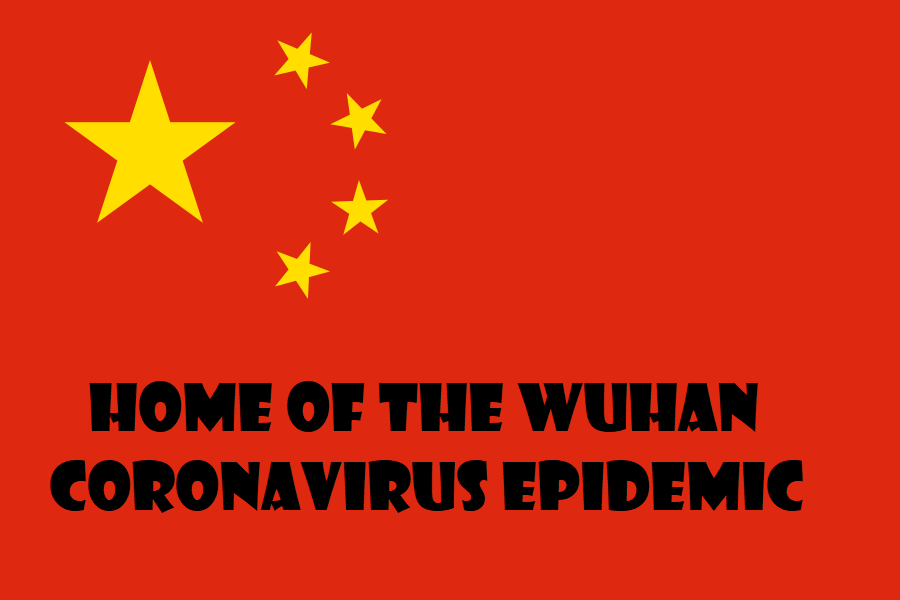
China sees their public image damaged in the wake of the Wuhan Coronavirus

Filed under: Australia, China, Health, Media — Tags: , , , , — Nicholas @ 03:00

Arthur Chrenkoff on the ways other countries regard China after the epidemic spread beyond their borders and the Chinese Communist Party’s antics on the world stage:

Welcome to the political chaos theory – or, should we say, fact: a bat flapping its wings in China produces a hurricane… pretty much everywhere around the world. It seems likely that three decades’ worth of good PR painstakingly build up by the Chinese authorities after the downer of the Tiananmien Massacre have all been undone in a few short months of domestic and international missteps, from initially covering up the truth about COVID, through gifting or selling faulty personal safety and medical goods around the world, to now retaliating against countries like Australia which are asking some uncomfortable questions about the origins of the virus.

Earlier today, Australia’s Lowy Institute has released the results of its COVID poll on public attitudes about the Corona pandemic. Of particular interest, the perception of China’s rulers:

At the same time, 37 per cent of Australians think that China will emerge more powerful after the dust (or the viral load) settles, while 36 per cent believe in no change, and only 27 per cent think China will be weaker in the aftermath. By contrast, a majority of 53 per cent and a plurality of 48 per cent believe that the United States and Europe respectively will be less powerful in the post-pandemic future. Reading the two sets of figures together it seems that the prospect of China’s rebound to international power is viewed more with apprehension rather than enthusiasm.

As Lowy’s Natasha Kassam observed, the public trust in China has been already declining, falling dramatically from 52 to 32 per cent in just one year between 2018 and 2019. It will be interesting to see the figure for this year. It’s unlikely that the behaviour of the communist government so far in 2020 would have improved the perception.

Such findings mirror similar public opinion research elsewhere. Pew Research Center’s polling last month showed that the negative view of China in the United States has risen from 47 per cent in 2017 to 66 per cent this year. Seventy-one per cent have no confidence in China’s President for Life Xi and 61 per cent view China’s power and influence as a major threat.

May 15, 2020

QotD: Gandhi and the rise of Hitler

Filed under: Britain, Europe, Germany, History, India, Military, Quotations, WW2 — Tags: , , , , , — Nicholas @ 01:00

Gandhi’s views on the European crisis were not entirely consistent. He vigorously opposed Munich, distrusting Chamberlain. “Europe has sold her soul for the sake of a seven days’ earthly existence,” he declared. “The peace that Europe gained at Munich is a triumph of violence.” But when the Germans moved into the Bohemian heartland, he was back to urging nonviolent resistance, exhorting the Czechs to go forth, unarmed, against the Wehrmacht, perishing gloriously — collective suicide again. He had Madeleine Slade draw up two letters to President Eduard Beneš of Czechoslovakia, instructing him on the proper conduct of Czechoslovak satyagrahi when facing the Nazis.

When Hitler attacked Poland, however, Gandhi suddenly endorsed the Polish army’s military resistance, calling it “almost nonviolent.” (If this sounds like double-talk, I can only urge readers to read Gandhi.) He seemed at this point to have a rather low opinion of Hitler, but when Germany’s panzer divisions turned west, Allied armies collapsed under the ferocious onslaught, and British ships were streaming across the Straits of Dover from Dunkirk, he wrote furiously to the Viceroy of India: “This manslaughter must be stopped. You are losing; if you persist, it will only result in greater bloodshed. Hitler is not a bad man …”

Gandhi also wrote an open letter to the British people, passionately urging them to surrender and accept whatever fate Hitler had prepared for them. “Let them take possession of your beautiful island with your many beautiful buildings. You will give all these, but neither your souls, nor your minds.” Since none of this had the intended effect, Gandhi, the following year, addressed an open letter to the prince of darkness himself, Adolf Hitler.

The scene must be pictured. In late December 1941, Hitler stood at the pinnacle of his might. His armies, undefeated — anywhere — ruled Europe from the English Channel to the Volga. Rommel had entered Egypt. The Japanese had reached Singapore. The U.S. Pacific Fleet lay at the bottom of Pearl Harbor. At this superbly chosen moment, Mahatma Gandhi attempted to convert Adolf Hitler to the ways of nonviolence. “Dear Friend,” the letter begins, and proceeds to a heartfelt appeal to the Führer to embrace all mankind “irrespective of race, color, or creed.” Every admirer of the film Gandhi should be compelled to read this letter. Surprisingly, it is not known to have had any deep impact on Hitler. Gandhi was no doubt disappointed. He moped about, really quite depressed, but still knew he was right. When the Japanese, having cut their way through Burma, threatened India, Gandhi’s strategy was to let them occupy as much of India as they liked and then to “make them feel unwanted.” His way of helping his British “friends” was, at one of the worst points of the war, to launch massive civil-disobedience campaigns against them, paralyzing some of their efforts to defend India from the Japanese.

Here, then, is your leader, O followers of Gandhi: a man who thought Hitler’s heart would be melted by an appeal to forget race, color, and creed, and who was sure the feelings of the Japanese would be hurt if they sensed themselves unwanted. As world-class statesmen go, it is not a very good record. Madeleine Slade was right, I suppose. The world certainly didn’t listen to Gandhi. Nor, for that matter, has the modern government of India listened to Gandhi. Although all Indian politicians of all political parties claim to be Gandhians, India has blithely fought three wars against Pakistan, one against China, and even invaded and seized tiny, helpless Goa, and all without a whisper of a shadow of a thought of ahimsa. And of course India now has atomic weapons, a satyagraha technique if ever there was one.

Richard Grenier, “The Gandhi Nobody Knows”, Commentary, 1983-03-01.

May 14, 2020

1948: The Dutch vs. the USA – 2nd Police Actions | The Indonesian War of Independence Part 4

TimeGhost History
Published 13 May 2020

The international community forces the Dutch to end their first colonial offensive with the Renville Agreement. However, as the Dutch, the Indonesian Republicans and the multiple other groups continue fighting, an impasse devolops.

Join us on Patreon: https://www.patreon.com/TimeGhostHistory

Hosted by: Indy Neidell
Written by: Joram Appel
Director: Astrid Deinhard
Producers: Astrid Deinhard and Spartacus Olsson
Executive Producers: Astrid Deinhard, Indy Neidell, Spartacus Olsson, Bodo Rittenauer
Creative Producer: Joram Appel
Post-Production Director: Wieke Kapteijns
Research by: Joram Appel and Isabel Wilson
Edited by: Karolina Dołęga
Sound design: Marek Kamiński

Colorizations:
Dememorabilia – https://www.instagram.com/dememorabilia/
Carlos Ortega Pereira (BlauColorizations – https://www.instagram.com/blaucoloriz…
Jaris Almazani (Artistic Man) – https://instagram.com/artistic.man?

Research Sources: https://bit.ly/IndoSources

Visual Sources:
Nationaal Archief
National Archives NARA
Tropenmuseum, part of the National Museum of World Cultures

Icons from the Noun Project by Wonmo Kang, Creative Mania & Claudia Revalina

Archive by Screenocean/Reuters https://www.screenocean.com.

Music:
“Other Sides of Glory” – Fabien Tell
“Remembrance” – Fabien Tell
“Sailing for Gold” – Howard Harper-Barnes
“Last Point of Safe Return” – Fabien Tell
“It’s Not a Game” – Philip Ayers
“Moving to Disturbia” – Experia
“March Of The Brave 10” – Rannar Sillard
“March Of The Brave 9” – Rannar Sillard

A TimeGhost chronological documentary produced by OnLion Entertainment GmbH.

May 12, 2020

Legends Summarized: The Monkey King (Journey To The West Part 1)

Filed under: Books, China, History, Humour, Religion — Tags: , , , , — Nicholas @ 02:00

Overly Sarcastic Productions
Published 1 Oct 2015

Meet the progenitor of all brash, impulsive, superpowerful anime characters! Sun Wukong, the Monkey King and Great Sage, was the most impulsive of them all!

“Wreaking havoc in heaven is so much fun it should be illegal!” -Monkey, probably

I might cover something else before continuing with part two of The Journey To The West. It’s kind of a doozy, and I’m having a lot of trouble convincing myself to cut some parts out. Watch out for Don Quixote in the meantime.

May 10, 2020

Enigma Captured! – WW2 – 089 – May 9, 1941

World War Two
Published 9 May 2020

An Enigma encode is captured in the Atlantic Ocean as the Germans make plans for a new offensive in Crete. Britain is heavily bombed by the Luftwaffe and fighting continues in Iraq, China and East-Africa.

Join us on Patreon: https://www.patreon.com/TimeGhostHistory
Or join The TimeGhost Army directly at: https://timeghost.tv

Follow WW2 day by day on Instagram @World_war_two_realtime https://www.instagram.com/world_war_t…
Between 2 Wars: https://www.youtube.com/playlist?list…
Source list: http://bit.ly/WW2sources

Written and Hosted by: Indy Neidell
Director: Astrid Deinhard
Producers: Astrid Deinhard and Spartacus Olsson
Executive Producers: Astrid Deinhard, Indy Neidell, Spartacus Olsson, Bodo Rittenauer
Creative Producer: Joram Appel
Post-Production Director: Wieke Kapteijns
Edited by: Iryna Dulka
Sound design: Marek Kamiński
Map animations: Eastory (https://www.youtube.com/c/eastory)

Colorizations by:
– Julius Jääskeläinen – https://www.facebook.com/JJcolorization/
– Olga Shirnina, a.k.a. Klimbim – https://klimbim2014.wordpress.com/
– Carlos Ortega Pereira, BlauColorizations, https://www.instagram.com/blaucoloriz…
– Adrien Fillon – https://www.instagram.com/adrien.colo…
– Dememorabilia – https://www.instagram.com/dememorabilia/

Sources:
– Narodowe Archiwum Cyfrowe
– Bundesarchiv, CC-BY-SA 3.0: Bild 101I-769-0229-10A / Borchert, Erich (Eric), Bild 101I-317-0053-18 / Amphlett, Eduard, Bild_101I-567-1523-38, Bild 141-0853, Bild_146-2006-0188
– Micheal Hörenberg, Uferstr. 29, D-78343 Hemmenhofen
– Imperial War Museum: E 6822, AUS 897, E 4791, E 3040E, E 3042E, E446, E 3025E, E 1164, E 1172, E 3020E, E 2182,
– Ju 52 graphic by TSRL from Wikimedia
– DFS 230 and Ju 87 graphics by Kaboldy from Wikimedia

Archive by Screenocean/Reuters https://www.screenocean.com.

A TimeGhost chronological documentary produced by OnLion Entertainment GmbH.
May 9, 2020

History Summarized: The Meiji Restoration

Overly Sarcastic Productions
Published 8 May 2020

Japan may well have the record for World’s Speediest Industrialization, but how did they accomplish so much so fast without falling victim to Europe’s favorite 19th century pastime of “Colonization”? And how did Japan build up a Pan-Asian empire so darn quickly? All that and more in this deep-dive into the Meiji Restoration!

SOURCES & Further Reading:
Modern Japan: A Very Short Introduction by Goto-Jones.
The Japanese Empire: Grand Strategy from the Meiji Restoration to the Pacific War by Paine.
Bushido: The Soul of Japan by Nitobe.

THAT WACKY POLITICAL CARTOON: “Japan Makes Her Debut Under Columbia’s Auspicies” https://tile.loc.gov/storage-services…

This video was edited by Sophia Ricciardi AKA “Indigo”. https://www.sophiakricci.com/

Our content is intended for teenage audiences and up.

PATREON: https://www.Patreon.com/OSP

DISCORD: https://discord.gg/h3AqJPe

MERCH LINKS: https://www.redbubble.com/people/OSPY…

OUR WEBSITE: https://www.OverlySarcasticProductions.com
Find us on Twitter https://www.Twitter.com/OSPYouTube
Find us on Reddit https://www.Reddit.com/r/OSP/

May 7, 2020

1947: From Dutch Boy to Murderer – 1st “Police Actions” | The Indonesian War of Independence Part 3

Filed under: Asia, Europe, History, Military — Tags: , , , , , , — Nicholas @ 04:00

TimeGhost History
Published 6 May 2020

The Dutch are desperate to regain control over their colony as the Lingadjatti Treaty failed to deliver. They launch a brutal military offensive which they mask as “police actions” in an attempt to satisfy the international community.

Join us on Patreon: https://www.patreon.com/TimeGhostHistory

Hosted by: Indy Neidell
Written by: Joram Appel
Director: Astrid Deinhard
Producers: Astrid Deinhard and Spartacus Olsson
Executive Producers: Astrid Deinhard, Indy Neidell, Spartacus Olsson, Bodo Rittenauer
Creative Producer: Joram Appel
Post-Production Director: Wieke Kapteijns
Research by: Joram Appel and Isabel Wilson
Edited by: Karolina Dołęga
Sound design: Marek Kamiński

Colorizations:
Carlos Ortega Pereira (BlauColorizations) – https://www.instagram.com/blaucoloriz…
Dememorabilia – https://www.instagram.com/dememorabilia/
Jaris Almazani (Artistic Man) – https://instagram.com/artistic.man?ig…
Klimbim

Research Sources: https://bit.ly/IndoSources

Visual Sources:
Nationaal Archief
Tropenmuseum, part of the National Museum of World Cultures
Archive by Screenocean/Reuters https://www.screenocean.com.

Music:
“Last Point of Safe Return” – Fabien Tell
“Guilty Shadows 4” – Andreas Jamsheree
“Epic Adventure Theme 4” – Håkan Eriksson
“Symphony of the Cold-Blooded” – Christian Andersen
“Disciples of Sun Tzu” – Christian Andersen
“March Of The Brave 10” – Rannar Sillard – Test
“Remembrance” – Fabien Tell
“Moving to Disturbia” – Experia
“Deflection” – Reynard Seidel
“Heroes On Horses” – Gunnar Johnsén
“Not Safe Yet” – Gunnar Johnsen
“Ominous” – Philip Ayers
“Last Point of Safe Return” – Fabien Tell
“Epic Adventure Theme 4” – Håkan Eriksson
“Walk With Legends” – Bonnie Grace
“Epic Adventure Theme 4” – Håkan Eriksson

A TimeGhost chronological documentary produced by OnLion Entertainment GmbH.

May 2, 2020

Saigon memories

Filed under: Asia, History, Media, Military — Tags: , , — Nicholas @ 06:00

I had no idea that David Warren had some brief journalism experience in Vietnam before the US pulled out their military forces:

A member of the CIA helps evacuees up a ladder onto an Air America helicopter on the roof of 22 Gia Long Street on April 29, 1975, shortly before Saigon fell to advancing North Vietnamese troops.
Hubert van Es photo via Wikimedia Commons.

An article in the New York Post (here) brings one historical event back into view, with a bitterness I haven’t yet overcome. It is only an aside on an old photo-caption, which like so many others from the Vietnam War was, shall we say, inaccurate. Taken for a symbol, it has passed into our electronic folk memory, as one of innumerable lies it contains. I wasn’t there, of course, but I had visited that country, and once, too briefly, lived in Saigon. The (very consequential) deceit, dishonesty, and faithlessness of “the mainstream media” was among the lessons I took from my apprenticeship. My ludicrous ambition, to “correct it” some day, will never be fulfilled. But to the link: my praise to one writer who did his homework. Let me be grand and say, the truth has set him free.

It will soon be fifty years since I first attended the “Five O’Clock Follies” at “MAC-V,” where the best hamburgers in South-east Asia could be obtained for the price of a chocolate bar. This press conference format — bluster and counter-bluster — has not changed in all this time. Everything in that vast sprawling compound of military administration was sprayed, swept, and polished; I always entered with wide eyes. There, and in bars along Tu-Do Street (the old rue Catinat, once an exquisite ribbon from the Cathedral down lines of fragrant tamarinds), was where I first fell in with “real professional journalists,” practising their trade.

Those I met were, by and large, pathological liars, and extremely vain. They were also coarsely disrespectful, much like our journalists today: rudely cynical and sarcastic. The only serious exceptions I came to know were a couple of religious weirdos — one a Lutheran ex-pastor from West Germany, the other a reject from a Catholic seminary in southern France. They, like me, had strayed into the field, from a misplaced sense of adventure.

At all levels, and on all sides, I was witnessing a freak show — there and wherever I wandered outside the Unreal City. I owned a reliable Nikkormat camera, that would sometimes earn me much-needed cash, but was quite unsuccessful as a print journalist. My earnest despatches, sent to newspapers on spec, were routinely “spiked” — not, I think, because I was so young (they didn’t know that), but because I kept, often unknowingly, writing things that contradicted what the New York Times and CBS were reporting.

Not only was I learning that the “mainstream” was all lies, but too, that it invariably followed an agenda. The self-appointed purpose of the press was to sabotage the American war effort. (That of the life-or-death desperate Viets was, at best, ignored.)

But then, I was deceitful, too. I was pretending to be over 18 when I was still only 17, in order to get a press pass.

Drawing some conclusions from our Wuhan Coronavirus experiences

At Catallaxy Files, Justinian the Great provides an expanded list of nine lessons we should learn from our still ongoing Wuhan Coronavirus (aka “Chinese Batflu”, “Kung Flu”, “Bat-biter Bronchitis” and other names our betters insist we not use):

1. Models are not infallible.

When dealing with complex subject matter involving lots of uncertainties, unknowns and data gaps, modelling will almost certainly be wrong. That doesn’t make them worthless but nor does it mean they should be elevated to infallible status and acted upon as though they constitute proof of something.

If we can’t get epidemiological models right involving trajectories of months what is the chance of climate models being correct considering they involve substantially greater uncertainty, unknowns and data problems involving trajectories of decades to centuries?

[…]

2. Experts can get it wrong.

The pandemic has shown that epidemiologists and health experts the world over have got COVID-19 wrong at one stage or another.

The most famous example is the Imperial College model that forecast 2.2m deaths in the United States and over 500,000 deaths in the UK. Critics have argued this was never plausible but it was the catalyst for UK lockdown policy.

[…]

3. Experts can disagree

Experts can disagree and this is normal in science (and policy making).

During the pandemic, health experts across the world have disagreed over epidemiology models (e.g. R0) ranging from thousands of deaths to millions, over treatments (i.e. the efficacy of anti-virals and anti-malarials), over who and how to test (targeted (symptomatic) versus broad based (even antibody testing), how to record cases and fatalities (e.g. Italy counting deaths with COVID the same as due to COVID, Belgium recording deaths suspected to be COVID related but not verified), the origin and nature of the virus (laboratory/synthetic or wet market/natural), over what the public health response should be (full lockdowns, targeted lockdowns, Sweden (minimal) or something in-between), and the susceptibility of children to the virus, leading to divergence on school closures.

[…]

4. The Precautionary Principle – No such thing as a free lunch

The COVID-19 crisis is a classic case of the precautionary principle in action. The policy measures put in place have been justified by the worse case scenarios of epidemic models forecasting mass deaths and hospital systems in collapse. These scenarios have been hyped up by an alarmist media presenting such scenarios / predictions as established fact.

Part of the problem stems from politicians abdicating responsibility for decision-making and hiding behind health experts as human shields. These experts have nothing to gain and everything to lose from underestimating the epidemic. No-one wants to be blamed for hundreds of thousands of preventable deaths.

[…]

5. If you can’t trust the WHO in a pandemic why would you trust the IPCC on climate change?

The neo-liberal (in international relations terms) notion that the UN (and other international institutions) are independent actors working altruistically for the global good has been blown to bits during the COVID-19 pandemic.

The conduct of the WHO and its complicity with China throughout the pandemic has demonstrated what realists have always known, i.e. international institutions are not independent actors, but instead reflect the interests of great powers in the international system.

[…]

6. If you can’t trust the Chinese in a pandemic how can you trust them on climate?

The COVID crisis also demonstrates why should not trust a communist dictatorship to act truthfully, transparently or ethically, much less put global interests above national interests even in times of an international crisis.

If we can’t believe China about infection rates, how can we believe their carbon accounting? If we can’t trust China to reduce the spread of a virus, how can we trust China to reduce the growth in CO2 emissions? If we believe China has captured/corrupted the WHO how do we know it hasn’t captured/corrupted the IPCC? If China will prioritise national interest in a health crisis, why won’t China prioritise national interest in a climate crisis? If we don’t believe China action/excuses in a pandemic why would we believe China action/excuses on climate change? If we can acknowledge China is trying to exploit the health crisis geo-strategically (i.e. South China Sea military manoeuvres) and geo-economically (belt and road and coercive threats), why will it not exploit climate change in the exact same way?

May 1, 2020

Why Pearl Harbor? Peaceful Portugal, and the poor Kriegsmarine – WW2 – OOTF 011

Filed under: Britain, Europe, Germany, History, Japan, Military, WW2 — Tags: , , , — Nicholas @ 06:00

World War Two
Published 30 Apr 2020

How were relations between Japan and the United States at the beginning of the war? What were both sides doing to try and make Portugal enter the war? And to what extent did the Kriegsmarine match the Royal Navy? Find out as we answer these questions in this Out of the Foxholes episode!

Links to the Between 2 Wars videos mentioned in the episode:
Japan, the Bureaucratic War Machine | BETWEEN 2 WARS I 1931 Part 2 of 3: https://youtu.be/vVgCy6iwrHQ
The World Takes Advantage of American Isolationism | BETWEEN 2 WARS | 1933 part 3 of 3: https://youtu.be/-iuQcxXAdfw
Did WW2 Start in 1937? – The Rape of China | BETWEEN 2 WARS I 1937 Part 1 of 2: https://youtu.be/_3vPGpamtDI

Join us on Patreon: https://www.patreon.com/TimeGhostHistory
Or join The TimeGhost Army directly at https://timeghost.tv

Follow WW2 day by day on Instagram @World_war_two_realtime https://www.instagram.com/world_war_t…
Between 2 Wars: https://www.youtube.com/playlist?list…
Source list: http://bit.ly/WW2sources

Hosted by: Indy Neidell
Written by: Rune Væver Hartvig
Director: Astrid Deinhard
Producers: Astrid Deinhard and Spartacus Olsson
Executive Producers: Astrid Deinhard, Indy Neidell, Spartacus Olsson, Bodo Rittenauer
Creative Producer: Joram Appel
Post-Production Director: Wieke Kapteijns
Research by: Rune Væver Hartvig
Edited by: Mikołaj Cackowski
Sound design: Marek Kamiński
Map animations: Eastory (https://www.youtube.com/c/eastory)

Colorizations by:
Carlos Ortega Pereira, BlauColorizations, https://www.instagram.com/blaucoloriz…
Dememorabilia – https://www.instagram.com/dememorabilia/

Sources:
BIBLIOTECA DE ARTE DA FUNDAÇÃO CALOUSTE GULBENKIAN
Bundesarchiv

Soundtracks from the Epidemic Sound:
Reynard Seidel – “Deflection”
Fabien Tell – “Last Point of Safe Return”
Johannes Bornlof – “Deviation In Time”

Archive by Screenocean/Reuters https://www.screenocean.com.

A TimeGhost chronological documentary produced by OnLion Entertainment GmbH.
April 30, 2020

1946: Kill and Only Kill – Death to Colonialism | The Indonesian War of Independence Part 2

Filed under: Asia, History, Military — Tags: , , , , , , , — Nicholas @ 06:00

TimeGhost History
Published 29 Apr 2020

The Indonesian War of Independence is heavily fuelled by the gangs of youngsters who go by the name of Pemuda. They engage in clandestine guerrilla fighting as their revolution takes a violent turn.

Join us on Patreon: https://www.patreon.com/TimeGhostHistory

Hosted by: Indy Neidell
Written by: Isabel Wilson and Joram Appel
Director: Astrid Deinhard
Producers: Astrid Deinhard and Spartacus Olsson
Executive Producers: Astrid Deinhard, Indy Neidell, Spartacus Olsson, Bodo Rittenauer
Creative Producer: Joram Appel
Post-Production Director: Wieke Kapteijns
Research by: Isabel Wilson and Joram Appel
Edited by: Karolina Dołęga
Sound design: Marek Kamiński

Colorizations:
Dememorabilia – https://www.instagram.com/dememorabilia/
Jaris Almazani (Artistic Man) – https://instagram.com/artistic.man?ig…
Carlos Ortega Pereira (BlauColorizations) – https://www.instagram.com/blaucoloriz…

Research Sources: https://bit.ly/IndoSources

Sources:
Tropenmuseum part of the National Museum of World Cultures
Nationaal Archief
Imperial Wars Museum: SE7034; SE5663

Music:
“Deviation In Time” – Johannes Bornlof
“Disciples of Sun Tzu” – Christian Andersen
“Epic Adventure Theme 4” – Håkan Eriksson
“Guilty Shadows 4” – Andreas Jamsheree
“Last Point of Safe Return” – Fabien Tell
“Magnificent March 3” – Johannes Bornlöf
“March Of The Brave 10” – Rannar Sillard
“The End Of The World 2” – Håkan Eriksson
“The Inspector 4” – Johannes Bornlöf
“The Unexplored” – Philip Ayers.
“Try and Catch Us Now” – David Celeste

Archive by Screenocean/Reuters https://www.screenocean.com.

A TimeGhost chronological documentary produced by OnLion Entertainment GmbH.
From the comments:

TimeGhost History
1 day ago (edited)
For the research of this episode about Indonesian revolutionary culture in 1946, I mostly turned to the diaries and writings of those who were there. Reading the untouched experiences was so absorbing and allowed for writing a bottom-up narrative. Something that didn’t make it into the video was the work of Chairil Anwar, a poet who died young a few years after the War of Independence. Dwelling about the life and death of the individual during the revolution, his poetry defied Indonesia’s antagonists. In his poem “Notes for 1946”, he writes of how it felt to be among the young generation of Indonesia: “We – running dogs, hunting hounds – we get to see only a moment of this drama we play in.” I’d definitely recommend reading his work if you’re interested!
Cheers, Izzy.

April 23, 2020

1945: Japan Joins the Allies | The Indonesian War of Independence Part 1

Filed under: Asia, Britain, Europe, History, Japan, Military, WW2 — Tags: , , , , , — Nicholas @ 04:00

TimeGhost History
Published 22 Apr 2020

In Indonesia, following the end of the Second World War catalyses the end of brutal Japanese rule. Their exit prompts the Dutch to begin restoring their prewar colonial status over the archipelago. But nationalist spirits are brewing, their opportunity to proclaim Indonesian independence is transpiring.

Join us on Patreon: https://www.patreon.com/TimeGhostHistory

Watch the Prologue to the Indonesian War of Independence series right here: https://youtu.be/IkKJSRaeOik

Hosted by: Indy Neidell
Written by: Isabel Wilson and Joram Appel
Director: Astrid Deinhard
Producers: Astrid Deinhard and Spartacus Olsson
Executive Producers: Astrid Deinhard, Indy Neidell, Spartacus Olsson, Bodo Rittenauer
Creative Producer: Joram Appel
Post-Production Director: Wieke Kapteijns
Research by: Isabel Wilson and Joram Appel
Edited by: Karolina Dołęga
Sound design: Marek Kaminski

Colorizations:
Dememorabilia – https://www.instagram.com/dememorabilia/
Jaris Almazani (Artistic Man) – https://instagram.com/artistic.man?ig…

Sources:
Archive by Screenocean/Reuters https://www.screenocean.com.
Tropenmuseum, part of the National Museum of World Cultures
Imperial War Museum Arts: Ronald Searle, SE5895 , SE-5865, SE5663, SE5724
Rijksmuseum

Music:
“Deviation In Time” – Johannes Bornlof
“Last Point of Safe Return” – Fabien Tell
“Deflection” – Reynard Seidel
“Disciples of Sun Tzu” – Christian Andersen
“Split Decision” – Rannar Sillard
“Other Sides of Glory” – Fabien Tell
“Last Man Standing 3” – Johannes Bornlöf
“Magnificent March 3” – Johannes Bornlöf
“Deviation In Time” – Johannes Bornlof

A TimeGhost chronological documentary produced by OnLion Entertainment GmbH.
From the comments:

TimeGhost History
1 day ago (edited)
For the last decades, writing colonial histories on events such as the Indonesian War of Independence has been a difficult task. Due to the incriminating nature of the events, records were either never made or have been regularly “lost” since. Political interest in the events was minimal in both The Netherlands and Indonesia, but times are changing. In recent years, a lot more research power has been allocated to this topic by Dutch and Indonesian Universities and Research collectives. Finding colonial truths is a huge focus of academia right now and their work has allowed us to get real with colonialism in this series. We’re sure that even more sources and stories will surface in the coming years, allowing for more books and documentary such as ours to be made. We’re interested to hear what you think about this episode! Make sure to let us know in the comments!

Cheers,
Izzy

« Newer PostsOlder Posts »

Powered by WordPress