
World War Two
Published 25 May 2024This week, the fighting in Europe finally comes to an end and the Allies round up more leading Nazis including Heinrich Himmler and Karl Dönitz. In Asia, the fighting continues on Okinawa even as the Japanese start pulling back. The Australians continue fighting on Tarakan, and the Chinese are victorious in western Hunan.
00:00 Intro
01:45 Fighting In Europe Ends
04:30 Notes From Europe
06:57 Japanese Begin To Withdraw On Okinawa
12:41 The Battle Of Tarakan Island
14:35 Chinese Victory In Western Hunan
18:51 Conclusion
(more…)
May 26, 2024
The Last Battles in Europe – WW2 – Week 300 – May 25, 1945
Comments Off on The Last Battles in Europe – WW2 – Week 300 – May 25, 1945
May 19, 2024
Kamikazes versus Admirals! – WW2 – Week 299 – May 18, 1945
World War Two
Published 18 May 2024The kamikaze menace continues unabated, with suicide flyers hitting not one but two admirals’ flagships. There’s plenty of fighting on land, though, as the Americans advance on Okinawa and take a dam on Luzon to try and solve the Manila water crisis, but even after last week’s German surrender there is also still scattered fighting in Europe.
Chapters
01:34 The Battle of Poljana
06:32 American Advances on Okinawa
10:37 Kamikazes Versus the Admirals
13:58 The Battle for Ipo Dam
19:39 Soldiers Must Go From Europe to the Pacific
23:16 Summary
23:38 Conclusion
25:50 Call to Action
(more…)
Comments Off on Kamikazes versus Admirals! – WW2 – Week 299 – May 18, 1945
May 18, 2024
Glory Days of the Kamikaze! – Operation Kikusui
World War Two
Published 17 May 2024During the Battle of Okinawa, the Japanese see the opportunity to cripple the core of the Allied navies. With their conventional air and naval forces unable to challenge the Allies, the Japanese unleash a wave of mass Kamikaze attacks. Hundreds of suicide pilots smash their aircraft into the Allied fleet. This is Operation Kikusui.
(more…)
Comments Off on Glory Days of the Kamikaze! – Operation Kikusui
QotD: Academic research and the “phantom cite”
If you’ve done any academic work at all, in any field — scratch that, if you’ve done any competent, diligent work in any field — you’ve experienced the frustration of the “phantom cite”. This is where you see a startling assertion in Jones. You check his footnote — see Smith. You go pull Smith off the shelves, and his footnote says “see Williams”. Williams cites Parker, Parker cites Adams, Adams cites Rogers, until finally, you pull Rogers and … nothing. Not the “oh gosh, I’d have to travel to the British Museum to check this, and it’s in Medieval High Bulgarian anyway” kind of nothing, but the bald-ass assertion kind of nothing.
Happens all the time. There are a couple of reasons for this. Being as charitable as I possibly can, I’m going to call one “survivorship bias”. I’m sure you’ve seen this … Since, again, we’re being extremely charitable here, this isn’t actually a case of “just tell ’em what they want to hear”. I’ll illustrate from my own research experience. My dissertation asserts that General Ripper, commander of the 43rd Imaginary Infantry in Au Phuc Dup province, Republic of Vietnam, was convinced that the local provincial governor, Long Duc Dong, was a Communist infiltrator. Now, this is a 100% true fact, that Gen. Ripper believes Long Duc Dong is a Communist. Armies are awash in paperwork, and moreover Gen. Ripper was an obsessive letter-writer and diarist, so you can find hundreds if not thousands of citations stating it directly: “I, Gen. Ripper, believe that Long Duc Dong is a Communist”.
Which explains quite a bit about why Gen. Ripper made the decisions he did, which in turn is why this 100% indisputably true fact — that Gen. Ripper thought Long Duc Dong was a Communist — features so prominently in that study of the dynamics of command in the 43rd Imaginary Infantry.
The problem, though, is that some other historian comes along, looking at something very different — say, the effectiveness of anti-Communist propaganda in the IV Corps operational area — and comes across my dissertation. From this, he writes “So ineffective was the anti-Communist propaganda campaign that even the governor, Long Duc Dong, was strongly suspected of being a Communist infiltrator”. And from that, another historian, looking for the prevalence of pro-Communist sentiment, concludes that “despite the Americans’ best efforts, the extreme south of the RVN was so thoroughly indoctrinated that even the Governor, Long Duc Dong, was a Communist”.
Now, all of that is true except for the last bit. It is not, in fact, proven that Long Duc Dong was a Communist. Gen. Ripper sure thought he was. And Gen. Ripper continued to think so, even after the anti-Communist propaganda campaign, which means that the campaign indisputably failed in Long Duc Dong’s case — he carried on acting like enough of a commie to keep Gen. Ripper’s suspicions up. But thanks to the thicket of citations, it’s the last bit — the assertion that Long Duc Dong was, indisputably, a Communist — that has by far the most footnotes attached to it. Hell, the footnotes probably cite all the same things I did — the truckloads of letters and documents from Gen. Ripper saying “Damn that Long Duc Dong, he’s a Communist!!”
That’s because he lifted them straight from my dissertation, all impeccably footnoted — by which is meant, giving ME full credit — and do you see what I mean? None of the historians involved had any obvious axe to grind, no viewpoint to push. It’s just that everyone’s bibliography is a hundred pages long, and nobody has the time to read every page of every book in those hundred pages. Jones just skimmed Smith’s index, looking for names of commies. Smith did the same thing with my index, of course, in which he found “Dong, Long Duc, Communist sympathies of,” with dozens of page numbers referenced.
Severian, “‘Studies'”, Rotten Chestnuts, 2021-05-22.
Comments Off on QotD: Academic research and the “phantom cite”
May 13, 2024
Unravelling the actual origins of Covid (aka Wuhan Coronavirus)
In Spiked!, Matt Ridley outlines some of the more recent admissions-against-interest of the people who used to accuse you of tinfoil-hattism and peddling conspiracy theories when the topic of the origins of Covid came up:
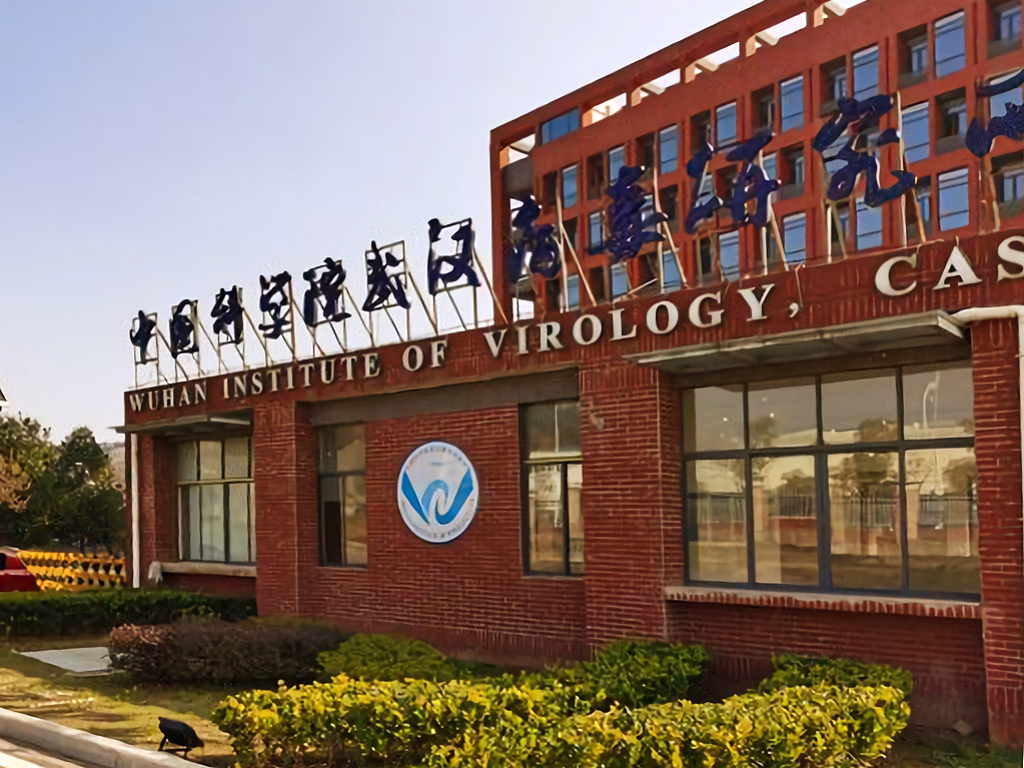
Wuhan Institute of Virology.
Wikimedia Commons.
Two of the key figures in the story of Covid’s origins gave away vital new information last week before the US Congress.
One of these figures is Ralph Baric, the University of North Carolina professor who invented ingenious techniques for genetically altering coronaviruses. He effectively taught scientists at the Wuhan Institute of Virology in China how to do “gain of function” experiments with bat-derived sarbecoviruses to make them more infectious or lethal in humanised mice. The other figure is Peter Daszak, the highly paid president of the non-profit, EcoHealth Alliance. Over many years, EcoHealth Alliance has channelled large sums of US taxpayer money to the Wuhan Institute of Virology for “gain of function” experimentation, and for finding new sarbecoviruses in bats.
Up until now, Baric and Daszak have taken slightly different approaches to (hardly) helping the world understand what went on in Wuhan before the Covid-19 outbreak in November 2019. Baric has remained largely silent, refusing to do interviews or sign up to articles in the scientific press. He remained silent last week, too, but the Congressional Select Subcommittee on the Coronavirus Pandemic released the transcript of a lengthy closed-door session it held with him in January.
Daszak, by contrast, has adopted a high profile, organising round-robin letters defending his friends and colleagues in Wuhan, giving interviews, writing articles and getting himself appointed to not one but two commissions investigating Covid’s origins, despite a glaring conflict of interest. He appeared before the subcommittee on 1 May.
Both men reluctantly admitted under oath to points that markedly strengthen the already strong hypothesis that the pandemic began with an accident in a laboratory in Wuhan. But before considering what they said, it might be worth briefly looking at the relationship between the two.
In comments on a draft of a grant proposal written in 2018, which were made public last year, Daszak boasted of how cheap it is to do experiments in Wuhan because they use a lower biosafety level (BSL-2), without negative-pressure work cabinets. Baric responded that US scientists would “freak out” at that. So a newly released email Baric sent to Daszak on 27 May 2021 smacks one’s gob somewhat. Responding to Daszak’s insistence that the Wuhan Institute actually used safer versions of these low safety standards for its experiments, Baric wrote:
Your [sic] being told a bunch of BS. Bsl2 [with] negative pressure, give me a break. There [sic] last paper mentioned bsl2 [with] appropriate PPE. This last part was the first and only time this was ever mentioned, never in earlier papers, and in the latest paper never defined either. I have no doubt that they followed state-determined rules and did the work under bsl2. Yes China has the right to set their own policy. You believe this was appropriate containment if you want but don’t expect me to believe it. Moreover, don’t insult my intelligence by trying to feed me this load of BS.
Baric clearly does not have a high regard for the Wuhan Institute of Virology’s safety standards, or indeed for his virus-hunting grantrepreneur colleague, Daszak. Nor do some other scientists who have nonetheless defended Daszak in public. Thanks to freedom-of-information revelations, we now know that “Dastwat” and “EgoHealth” are just two of the epithets used about him by his friends. With friends like that …
Both men still insist, however, that the pandemic began naturally – but, to borrow from Mandy Rice-Davies, they would say that wouldn’t they? Before the subcommittee, where even the Democrats gave him a pasting, Daszak was forced to concede some key points on which he had previously stonewalled or said the opposite.
Firstly, he had to concede that a lab leak was possible. Yet back in 2020, Daszak told Democracy Now that “the idea that this virus escaped from a lab is just pure baloney. It’s simply not true … So it’s just not possible.”
Comments Off on Unravelling the actual origins of Covid (aka Wuhan Coronavirus)
May 12, 2024
Germany Surrenders! – WW2 – Week 298 – May 11, 1945
World War Two
Published 11 May 2024Germany signs not one, but two unconditional surrenders and the war in Europe is officially over … although that does not mean that all the fighting in Europe is, for there is fighting and surrenders all over Europe all week. The Japanese launch a counteroffensive on Okinawa; the Chinese launch one in Western Hunan; the Australians advance on Borneo and New Guinea; and the fight continues on Luzon in the Philippines, so there is still an awful lot of the world war to come, even with the end of the war in Europe.
00:00 Intro
00:40 The German Surrender
03:23 Fighting And Surrenders In The East
06:53 The Prague Uprising
15:50 The Last Surrenders In Europe
18:42 The Polish Situation
20:25 The War In China And The South Seas
23:17 Summary
24:44 Conclusion
(more…)
Comments Off on Germany Surrenders! – WW2 – Week 298 – May 11, 1945
QotD: What is Putin’s endgame in Ukraine?
That was the monarchist critique of representative government that hit closest to home: Foreign policy needs to be supple and responsive; it must be able to move quickly, to make big changes in narrow time windows. In a real crisis, you simply don’t have time to convene a Parliament to debate stuff. N.b. they were saying this in the late 18th century; it’s so much worse now. And another observation from that time that is even truer today: A “democratic” foreign policy can never be consistent. You simply can’t plan long-term when there’s partial to complete governmental overhaul every few years.
That the US managed to muddle through for as long as it did was really a combo of two things: time (as a function of distance), and a near-peer enemy.
Neither of those is integral to the system, and neither is within the system’s control. Until recently, American foreign policy had to take into account the fact that on-the-spot commanders would have to make decisions on their own recognizance. Even with phone communications, the man on the ground in the Fulda Gap has to make decisions basically without reference to Washington. It forced him to be conservative — in other words, it discouraged adventurism.
Same way with the near-peer enemy. The looming shadow of the USSR forced regular reality checks inside the US Apparat. A whole bunch of possibilities were foreclosed by default — our response to any given situation had to take the likely Soviet reaction into account. As with the time/distance factor, this forced a kind of conservatism that looked a lot like sclerosis, but at least it deterred adventurism.
The history of the later 20th century is the history of those constraints being removed. In Vietnam, for instance, you had LBJ and McNamara sitting in a room in the White House, personally directing airstrikes in near-realtime. If “news” reports are to be believed, Obama was on the horn with that SEAL team going after Bin Laden right up to the very moment the chopper landed. Knowing these things are technically possible is catnip to politicians — they already assume they’re omnicompetent, and so now they want to be “advising” the commanding general even as the battle rages.
And if that’s catnip, then the end of the USSR was catnip on steroids. Why not play fuck-fuck games everywhere, all at once? Who’s gonna stop us? China? They chose to pass. They saw what happened to the USSR when it locked itself into an ideological death spiral vis-a-vis the Struggle Against International Capitalism. American policymakers only understand Soviet-style bluff and bluster. The Chinese play the long game.
NOT because they’re Inscrutable Orientals, I hasten to add — they’re as Juggalicious as our Clowns, in their way — but because the generation currently in power came up hard, and so they are adults. That’s all. They are not spoiled, petulant children. The next generation of Chinese leadership — assuming we live to see it — will really be something, and not in a good way.
So, what does Putin want? I dunno, and I’m not sure he knows, because I’m not sure he can know. I’m sure his broadest goal is “to stop getting fucked with by idiots”, but how can that be achieved? There shall be no durable peace in this world until there is Regime Change in [Washington, DC], and I’m not talking about the other half of the Uniparty winning an election or two. I think Putin knows that, but what can he really do about it? I think he’s going to be forced to annex a fair amount of territory and set up a totally demilitarized buffer zone. It won’t work, but it’s the least-worst practical option.
Severian, “Friday Mailbag”, Founding Questions, 2024-02-09.
Comments Off on QotD: What is Putin’s endgame in Ukraine?
May 5, 2024
Allied Victory in Berlin, Italy, and Burma! – WW2 – Week 297 – May 4, 1945
World War Two
Published 4 May 2024So much goes on this week, and this is the longest episode of the war by like 15 minutes. But there’s so much to cover! The Battle of Berlin ends; the war in Italy ends; the war in Burma ends- well, it ends officially, though there are still tens of thousands of Japanese soldiers scattered around Burma. And there’s a whole lot more to these stores and a whole lot more stories this week in the war. You can’t miss this one.
01:27 The End of the War in Italy
03:40 Western Allied Advances
07:02 Relief Operations in the Netherlands
15:45 Hitler’s Death and the Surrender of Berlin
24:20 Walther Wenck’s Retreat
28:00 The Polish Situation
31:09 What About Prague?
32:44 The End of the Burma Campaign
36:04 THE FIGHT FOR TARAKAN ISLAND BEGINS
37:24 Okinawa
40:11 Other Notes
41:04 Summary
41:43 Conclusion
(more…)
Comments Off on Allied Victory in Berlin, Italy, and Burma! – WW2 – Week 297 – May 4, 1945
April 30, 2024
DNA and India’s caste system
Earlier this month, Palladium published Razib Khan‘s look at the genetic components of India’s Caste System:
Though the caste system dominates much of Indian life, it does not dominate Indian American life. At slightly over 1% of the U.S. population, only about half of Indian Americans identify as Hindu, the religion from which the broader categories of caste, or varna, emerge. While caste endogamy — marrying within one’s caste — in India remains in the range of 90%, in the U.S. only 65% of American-born Indians even marry other people of subcontinental heritage, and of these, a quick inspection of The New York Times weddings pages shows that inter-caste marriages are the norm. While tensions between the upper-caste minority and middle and lower castes dominate Indian social and political life, 85% of Indian Americans are upper-caste, broadly defined, and only about 1% are truly lower-caste. Ultimately, the minor moral panic over caste discrimination among a small minority of Americans is more a function of our nation’s current neuroses than the reality of caste in the United States.
But this does not mean that caste is not an important phenomenon to understand. In various ways, caste impacts the lives of the more than 1.4 billion citizens of India — 18% of humans alive today — whatever their religion. While the American system of racial slavery is four centuries old at most, India’s caste system was recorded by the Greek diplomat Megasthenes in 300 BC, and is likely far more ancient, perhaps as old as the Indus Valley Civilization more than 4,000 years ago. Indian caste has a deep pedigree as a social technology, and it illustrates the outer boundary of our species’ ability to organize itself into interconnected but discrete subcultures. And unlike many social institutions, caste is imprinted in the very genes of Indians today.
Of Memes and Genes
Beginning about twenty-five years ago, geneticists finally began to look at the variation within the Indian subcontinent, and were shocked by what they found. In small villages in India, Dalits, formerly called “outcastes,” were as genetically distinct from their Brahmin neighbors as Swedes were from Sicilians. In fact, a Brahmin from the far southern state of Tamil Nadu was genetically closer to a Brahmin from the northern state of Punjab then they were to their fellow non-Brahmin Tamils. Dalits from the north were similar to Dalits from the south, while the three upper castes, Brahmins, Kshatriyas and Vaishyas, tended to cluster together against the Sudras.
Some scholars, like Nicholas Dirks, the former chancellor of UC Berkeley, argued for the mobility and dynamism of the caste system in their scholarship. But the genetic evidence seemed to indicate a level of social stratification that echoes through millennia. Across the subcontinent, Dalit castes engaged in menial and unsanitary labor and therefore were considered ritually impure. Meanwhile, Brahmins were the custodians of the Hindu Vedic tradition that ultimately bound the Indic cultures together with other Indo-European traditions, like that of the ancient Iranians or Greeks. Other castes also had their occupations: Kshatriyas were the warriors, while Vaishyas were merchants and other economically productive occupations.
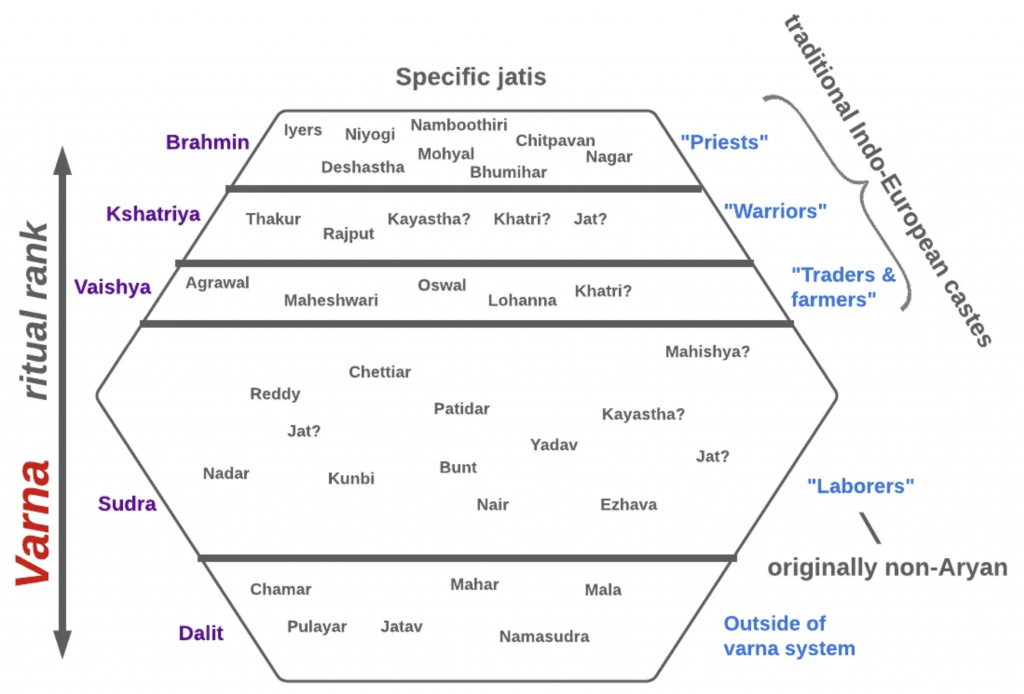
Brahmins, Kshatriyas, and Vaishyas were traditionally the three “twice-born” castes, allowing them to study the Hindu scriptures after an initiatory ritual. The majority of the population were Sudras (or Shudras), India’s peasant and laboring majority. Shudras could not study the scriptures, and might be excluded from some temples and festivals, but they were integrated into the Hindu fold, and served by Brahmin priests. A traditional ethnohistory posits that elite Brahmin priests and Kshatriya rulers combined with Vaishya commoners formed the core of the early Aryan society in the subcontinent, with Shudras integrated into their tribes as indigenous subalterns. Outcastes were tribes and other assorted latecomers who were assimilated at the very bottom of the social system, performing the most degrading and impure tasks.
The caste system as a layered varna system with five classes and numerous integrated jati communities.
Razib KhanThis was the theory. Reality is always more complex. In India, the caste system combines two different social categories: varna and jati. Varna derives from the tripartite Indo-European system, in India represented by Brahmins, Kshatriyas, and Vaishyas. It literally translates as “color”, white for Brahmin purity, red for Kshatriya power, and yellow for Vaishya fertility. But India also has Shudras, black for labor. In contrast to the simplicity of varna, with its four classes, jati is fractured into thousands of localized communities. If varna is connected to the deep history of Indo-Aryans and is freighted with religious significance, jati is the concrete expression of Indian communitarianism in local places and times.
Comments Off on DNA and India’s caste system
April 29, 2024
“The disaster at Imphal was perhaps the worst of its kind yet chronicled in the annals of war”
Dr. Robert Lyman makes the case for the Japanese defeat at the battles of Imphal and Kohima being one of the four great turning points in the Second World War:
It is clear to me that the great twin battle of Imphal & Kohima, which raged from March through to late July 1944, was one of four great turning-point battles in the Second World War, when the tide of war changed irreversibly and dramatically against those who initially held the upper hand.
The first great turning point was arguably at Midway in June 1942 when the US Navy successfully challenged Japanese dominance in the Pacific. The second was at Stalingrad between August 1942 and January 1943 when the seemingly unstoppable German juggernaut in the Soviet Union was finally halted in the winter bloodbath of that city, where only 94,000 of the original 300,000 German, Rumanian and Hungarian troops survived. The third was at El Alamein in October 1942 when the British Commonwealth triumphed against Rommel’s Afrika Korps in North Africa and began the process that led to the German surrender in Tunisia in May 1943. The fourth was this battle, that at Kohima and Imphal between March and July 1944 when the Japanese “March on Delhi” was brought to nothing at a huge cost in human life, and the start of their retreat from Asia began. Adjectives such as “climactic” and “titanic”, struggle to give proper impact to the reality and extent of the terrible war that raged across the jungle-clad hills during these fearsome months.
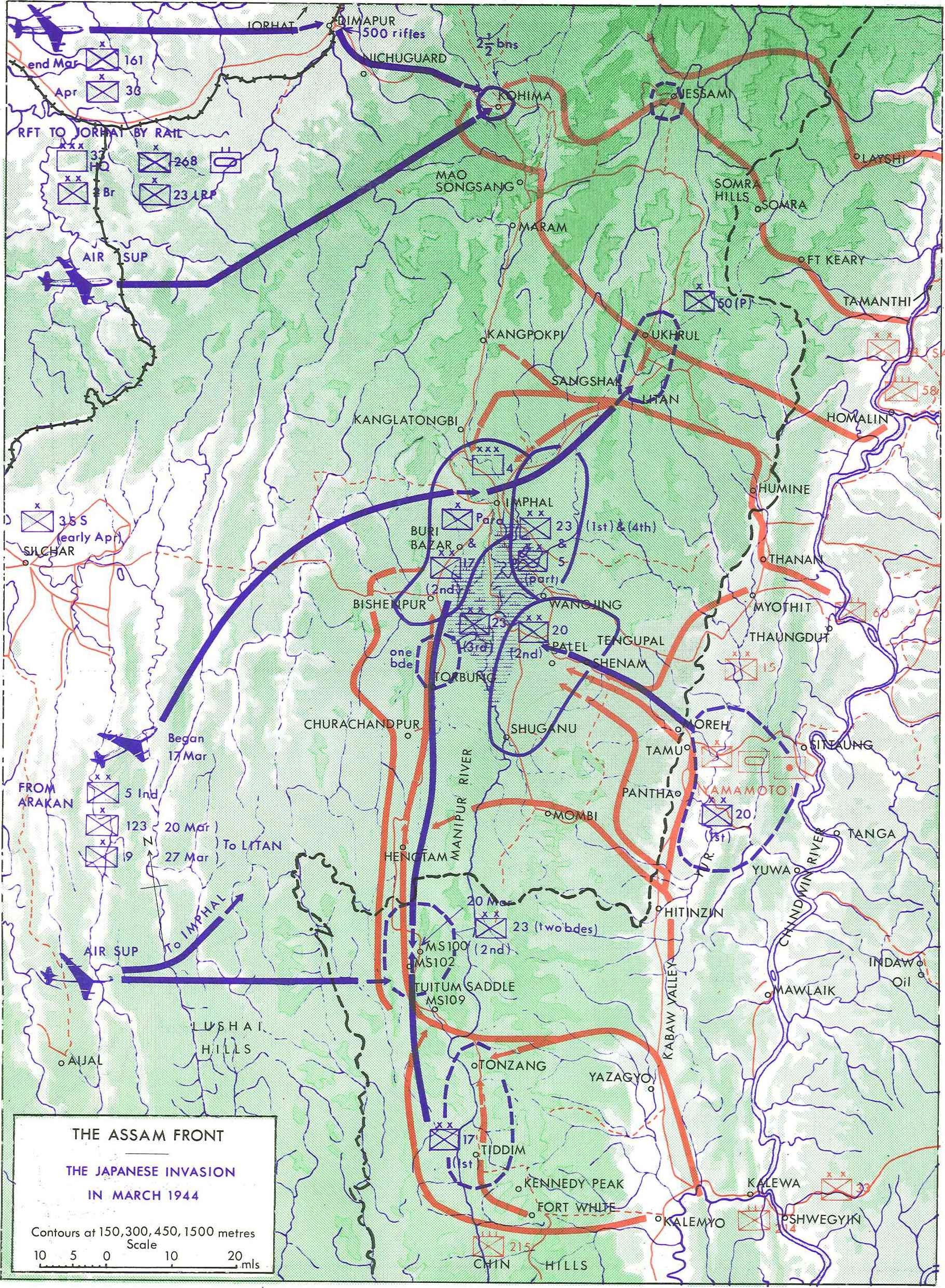
That the Japanese were contemplating an offensive against India in early 1944 was a surprise to Allied planners, who had given no thought to its possibility. By this time Japan had reached the apogee of its power, having extended the violent reach of its Empire across much of Asia since it launched its first surprise attacks in late 1941. Its initial surge in 1942 into what was briefly to be Japan’s “Greater East Asia Co-Prosperity Sphere” was as dramatic as it was rapid and two years further on several millions of peoples across Asia laboured under its heavy yoke. But by early 1944 the tide had turned decisively in the Pacific, the American island-hopping advance reaching steadily but surely towards Japan itself, its humiliated enemies fighting back with desperation, and with every ounce of energy they could muster. They were beginning to prevail in the fight although the struggle on the landmass of Asia was a strategic sideshow in the context of a global conflict: at this time the British and American High Commands were totally occupied with Europe and the Pacific. The British and Americans were preparing for D Day. The Soviets were advancing in Ukraine. There was a stalemate in Italy at Monte Cassino. The Americans were preparing to land in the Philippines. Germany and Japan were both in retreat, but not defeated. In this global context India and Burma appeared strategically peripheral, even inconsequential. Yet in this month, at a time when on every other front the Japanese were on the strategic defensive, Japan launched a vast, audacious offensive deep into India in an attack designed to destroy for ever Britain’s ability to challenge Japan’s hegemony in Burma.
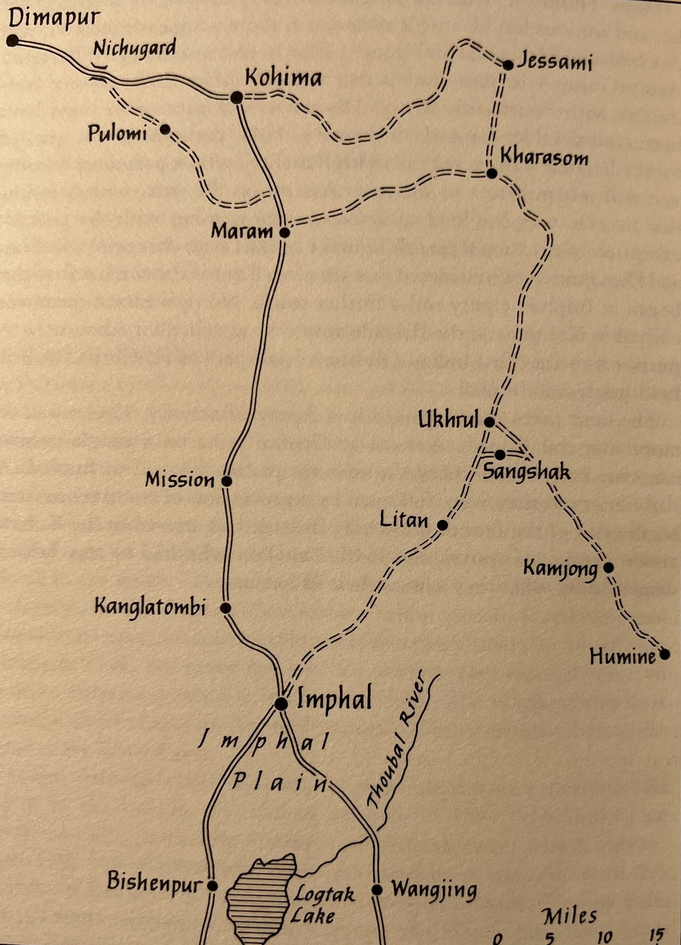
The Japanese commander was General Mutaguchi Renya, a gutsy go-getter who had played a significant role in the collapse of Singapore in February 1942. His evaluation of the British position in northeast India revealed that the three key strategic targets in Assam and Manipur were Imphal; the mountain town of Kohima, and the huge supply base further back on the edge of the Brahmaputra Valley at Dimapur. If Kohima were captured, Imphal would be cut off from the rest of India by land. From the outset Mutaguchi believed that with a good wind Dimapur, in addition to Kohima, could and should be secured. He reasoned that capturing this massive depot would be a devastating, possibly terminal blow to the British ability to defend Imphal, supply the Americans in Northern Burma under Vinegar Joe Stilwell, support the Hump airlift into China and mount an offensive into Burma. It would also enable him to feed his own, conquering army, which would advance across the mountains from the Chindwin on the tightest imaginable supply chain. With Dimapur captured, the Japanese-led Indian National Army under the Bengali nationalist Subhas Chandra Bose could pour into Bengal, initiating the long-awaited anti-British uprising.
(Click to enlarge)
The essence of the battle for India in 1944 can be quickly told. Mutaguchi’s 15th Army advanced in four separate columns into Manipur. The Japanese made determined, even desperate, efforts to seize their objectives: in the north Kohima, with a scratch British and Indian garrison of 1,200 trained fighting soldiers – about two thirds of them Indian – was attacked by an entire division of about 15,000 men in early April. Surrounded and slowly forced back onto a single hill they were supplied by air until relief came on 20 April, although the battle to dislodge the Japanese from Kohima continued bloodily, in appalling weather and battlefield conditions – the annual monsoon was in full spate – through to early June. Further south the Japanese plan entailed attacking Imphal from north, east and south. The plan of the commander of the 14th Army, Lieutenant General Bill Slim, was to withdraw his forces into the hills and there to allow the Japanese to expend themselves fruitlessly against well-supplied and aggressive British bastions, equipped with tanks, artillery and supported by air. The battle for Imphal in Manipur and for Kohima to the north-west in the neighbouring Naga Hills settled down to a bloody hand-to-hand struggle as the Japanese tried to gain the foothold necessary for their survival. They travelled lightly, and reserves soon exhausted themselves and further supplies were almost non-existent. Just as the air situation was becoming critical for Slim through poor weather and shortages of aircraft the relieving division from Kohima – the British 2nd Infantry Division that had last seen action at Dunkirk – began fighting its way towards Imphal, and the four beleaguered divisions began to push out from the Imphal pocket. By 22 June the 2nd Division and the 5th Indian Division met north of Imphal and the road to the plain was open. Four weeks later the Japanese withdrawal to Burma began.
Of all the invading armies of history, it is hard to think of one that was repulsed more decisively, or more ignominiously, than the Japanese 15th Army launched against India in March 1944. Its defeat was not the fault of the Japanese soldiers, who fought courageously, tenaciously and fiercely, but of their commanders, who sacrificed the lives of their troops on the altar of their own hubris. The battle had provided the largest, most prolonged and most intense engagement with a Japanese army yet seen in the war. “It is the most important defeat the Japs have ever suffered in their military career” wrote Mountbatten exultantly to his wife on 22nd June 1944, “because the numbers involved are so much greater than any Pacific Island operation.” The extent of the disaster that befell the 15th Army is captured by a comment by Kase Toshikazu, a member of the wartime Japanese Foreign Office, who lamented: “Most of this force perished in battle or later of starvation. The disaster at Imphal was perhaps the worst of its kind yet chronicled in the annals of war.” The latter might better have included the caveat “Japanese” to avoid charges of exaggeration, but his comment captures something of the enormity of the human disaster that overwhelmed the 15th Army. It might more fairly be described as the greatest Japanese military disaster of all time. The Indian, Gurkha, African and British troops of this remarkably homogeneous organisation had also decisively removed any remaining notions of Japanese superiority on the battlefield.
The importance of this victory was overshadowed at the time, and downplayed for decades afterwards, by the massive victories in 1945 which brought World War II to an end in Europe and the Pacific. But this lack of publicity and of awareness does not remove the fact that, objectively speaking, the battles in India in 1944, epitomized in the fulcrum battle at Kohima, were an epic comparable with Thermopylae, Gallipoli, Stalingrad, and other better known confrontational battles where the arrogant invader became, in time, the ignominious loser.
Comments Off on “The disaster at Imphal was perhaps the worst of its kind yet chronicled in the annals of war”
April 28, 2024
The Battle of Berlin! – WW2 – Week 296 – April 27, 1945
World War Two
Published 27 Apr 2024The battle for the German capital rages on all week, as the Soviets get ever closer to the Reich Chancellery, under which lies Hitler’s bunker. Berlin is surrounded, but can it be relieved? There are also Allied advances in East Prussia, Czechoslovakia, and in Western Germany, but beyond that, it looks like the Axis lines have completely collapsed in Italy. The Allies are also advancing — and quickly — in Burma toward Rangoon, though not much at all on Okinawa, and it is the Japanese who are on the move in Western Hunan. It’s a real rollercoaster of a week.
Chapters
01:10 Recap
01:43 Soviets fight their way into Berlin
07:45 Berlin surrounded
10:28 Rokossovsky advances
12:48 Göring and Himmler betray Hitler
13:57 Fighting on the Eastern Front
15:23 Allied advance in the West
15:51 German collapse in Italy
17:31 4th Corps racing through Burma
19:36 The Battle of Western Hunan
21:40 Okinawa and the Philippines
22:59 Notes
23:59 Conclusion
(more…)
Comments Off on The Battle of Berlin! – WW2 – Week 296 – April 27, 1945
April 27, 2024
“… when it comes to energy policy Germany is an undisputed champion of crazy”
eugyppius explains how Angela Merkel’s government reacted to the Japanese Fukushima disaster in a sane, measured, and sensible way … naw, I’m pulling your leg. They looked at all the options and then selected the dumbest possible reaction available to them:
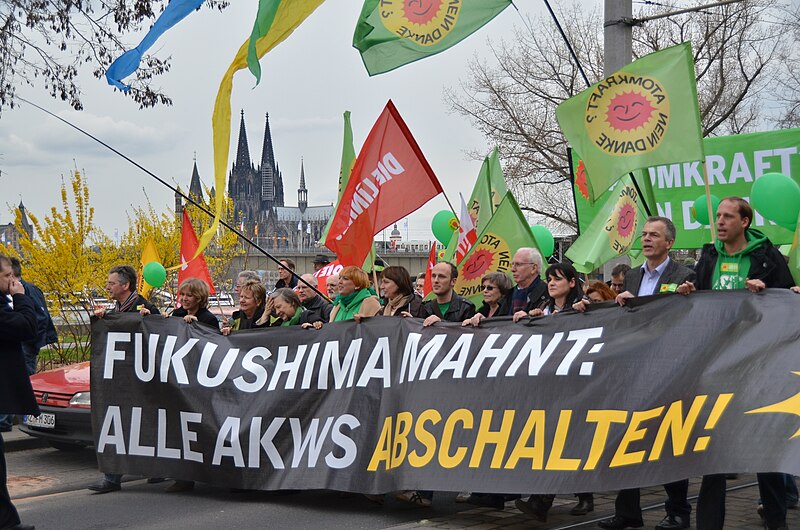
German anti-nuclear protest in Cologne, 26 March 2011.
Photo by Bündnis 90/Die Grünen Nordrhein-Westfalen via Wikimedia Commons.
All of our countries are crazy in various ways, but when it comes to energy policy Germany is an undisputed champion of crazy.
In 2011, a tsunami caused the Fukushima nuclear disaster. If you check a map, you’ll notice that Fukushima is in a country called Japan, which it turns out is a different country from Germany. The Fukushima disaster had zero to do with the Federal Republic, but then-Chancellor Angela Merkel felt the need to solve the problem of Fukushima by phasing out nuclear power in Germany, even though tsunamis and earthquakes are not a problem in Germany, because Germany is a country in Central Europe and not an island nation in Asia.
That is crazy enough, but it gets much crazier. Months before announcing the nuclear phase-out, Merkel’s government had passed energy transition legislation to secure Germany’s path towards a zero-emissions future. We resolved to ditch our most significant source of emissions-free power, in other words, just months after resolving an energy transition to emissions-free power. At this point you would be justified in wondering if Germany suffers from some kind of shamanistic cultural phobia of electricity in general, that is how crazy this is. These insane choices had the near-term consequence of increasing our dependence on Russian natural gas. Otherwise, they ensured that power generation in Germany would be vastly more expensive than necessary and also vastly more carbon intensive than necessary.
Now, crazy demands explanations, and observers have proposed various theories for the German climate nuclear crazy. Two of them deserve mention here:
1) The 1968 generation in Germany suffered from unusual radicalism, sharpened by moral anxiety over National Socialism, and resolved to outcompete all others in the project of self-abnegating virtue. Our culture developed a deranged anti-nuclear movement that in a fit of typical German thoroughness also came to embrace opposition to nuclear power. The Chernobyl disaster radicalised the pink-haired anti-nuclearists still further, and these cretins grew up to become news anchors, school teachers and book authors, effectively indoctrinating the next generation according to their parareligious delusions.
2) German politicians after the Cold War – especially Gerhard Schröder and Angela Merkel – harboured a subtle and not entirely unreasonable desire to strengthen ties with resource-rich Russia. They decided that the anti-nuclearists and the Green Party could be instrumentalised towards this end. The energy transition and the nuclear phase-out increased our dependence on Russian gas, and this was a feature more than it was a bug.
These are mutually supporting theories, but I don’t think either of them can fully account for the bizarre phenomenon before us. Germany energy crazy is a very deep problem and it will keep historians busy for many generations.
In 2022, Russia invaded Ukraine, and Germany under Merkel’s successor, Chancellor Olaf Scholz, decided along with the rest of the liberal West that Russia was bad, bad, bad and that evil Putin had to be punished with self-immolating sanctions, sanctions, sanctions. This new spasm of high-minded moralising further attenuated our energy situation, ushering in an entirely self-made energy crisis. The Greens, now in government, were determined to proceed with the last stages of the nuclear phase-out, even with our natural gas supplies in doubt. Only when they saw themselves staring into the abyss of political doom did they grudgingly agree to give our last nuclear plants a three-and-a-half month lease on life. We Germans and our energy policy had out-crazied everyone else, we had made ourselves the laughing stock of the entire world, that is how crazy we were.
Comments Off on “… when it comes to energy policy Germany is an undisputed champion of crazy”
April 26, 2024
QotD: The secret rulers of Japan
Remember, this may look like an economic planning bureaucracy, but it’s actually a secret samurai clan. So they’re constantly doing the kinds of stuff that any good feudal nobility does. For instance, the economic planning bureaucrats frequently cement their treaties by marrying off their sister/daughter/niece to a mentor or to a protegé. They also sometimes legally adopt each other, ancient Roman-style. Naturally they also have an extremely complicated set of rules governing their internal hierarchy, rights of deference, etc. But remember, this isn’t just a secret samurai clan, it’s also a government agency! Agencies have rules too — explicit rules written down in binders, rules governing promotion and succession and all the rest. Sometimes, the official rules and the secret rules conflict, butt against each other, and out of that friction something beautiful emerges.
The highest rank in MITI is “Vice-Minister” (the “Minister” is one of those elected political guys who don’t actually matter). But it’s also the case that somebody who’s been at MITI longer or who’s older than you (these are actually the same thing, because everybody joins at the same age) is strictly superior to you in seniority. But that can create a paradox! What happens if a young guy becomes Vice-Minister? He would then be more senior than his older colleagues by virtue of office, but they would be more senior by virtue of tenure, and that would mean either an official rule or a secret rule being broken. To resolve this impossible conflict, the instant a new Vice-Minister is selected, everybody who’s been in the bureaucracy longer than him resigns immediately, so that his absolute seniority is unambiguous and unquestionable. And then … the first act of the new Vice-Minister is to give everybody who fell on their swords powerful jobs as executives and board members of the biggest Japanese corporations. The entire process is called amakudari, which means “descent from heaven”.
Amakudari is really a win-win-win-win: the new Vice-Minister has unchallenged power within the agency and a whole host of new friends in the private sector, the guys who resigned all have cushy new jobs that come with better pay and perks, the companies that are descended upon now have an employee with great connections to the agency that controls their fates, and MITI as a gestalt entity can spread its tentacles throughout the economy, aided by cadres of alumni who think its way and help translate policy into reality.
John Psmith, “REVIEW: MITI and the Japanese Miracle by Chalmers Johnson”, Mr. and Mrs. Psmith’s Bookshelf, 2023-04-03.
Comments Off on QotD: The secret rulers of Japan
April 23, 2024
Debating the economic impact of the Raj on India
At The Daily Sceptic, Nigel Biggar looks at a few books making or refuting the narrative on how much or how little British rule in India extracted or contributed to the economic life of the subcontinent:
Beyond slave-trading and slavery, what were the economic effects of British imperial dominance? Can they be reduced to Britain’s leeching wealth from exploited subject peoples?
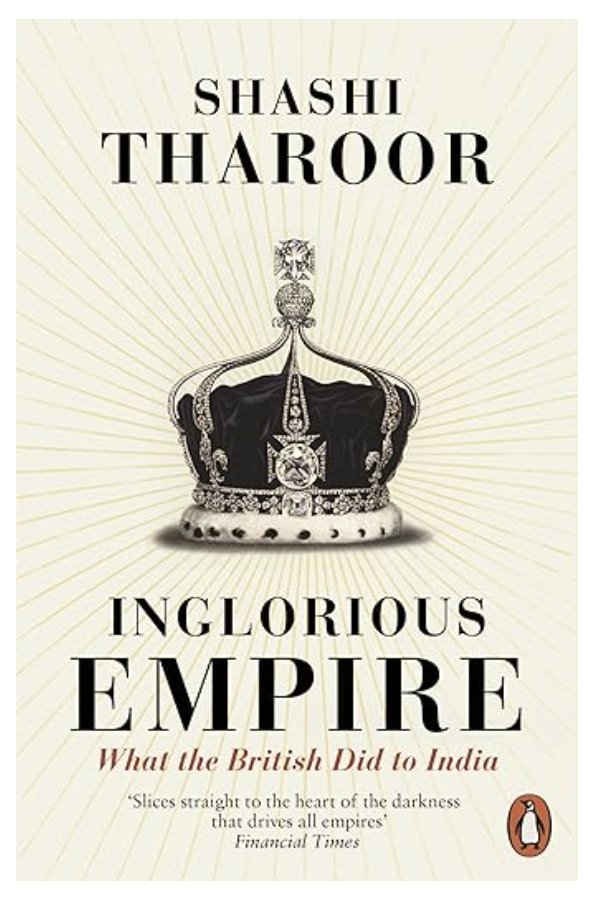
For over a century, that is what Indian nationalists have claimed. It is also what the politician Shashi Tharoor claims in his 2016 book, Inglorious Empire: What the British Did to India. Against him, however, the Bengali-born, LSE-based economic historian Tirthankar Roy has declared of the nationalist critique that “generations of historians … have shown that it is not [true]”. Pace Tharoor, the statistic that India produced 25 per cent of world output in 1800 and 2–4 per cent in 1900 does not prove that India was once rich and became poor: “[i]t only tells that industrial productivity in the West increased four to six times during this period … The proposition that the Empire was at bottom a mechanism of surplus appropriation and transfer has not fared well in global history”.
On the contrary, the British Empire’s commitment to free trade gave Indian entrepreneurs new opportunities to grow. Some of them visited England in the late 19th Century, observed the workings of manufacturing industry, imported machinery and expertise to India, built factories employing Indians, and then outcompeted Manchester. This is exactly how the Tata Iron and Steel Company began in Bombay – the same company that now owns what remains of the British steel industry.
What is more, colonial governments often protected native producers against British business, in order to moderate economic and social disruption, partly because they genuinely cared for the welfare of native people and partly because they didn’t want to have to manage the political unrest that foreign commercial intrusion could excite. Famously, in 1910-11 colonial officials barred Lever Brothers from acquiring concessions in Nigeria on which to establish palm-oil processing mills with widespread hinterlands, since Africans were already producing for the world markets and generating tax revenue and because the alienation of large areas of land risked provoking native opposition.
Further still, the British were the leading exporters of capital from the mid-19th Century to at least 1929. Between 1876 and 1914, Britain invested over a third of its overseas capital in the Empire, over 19% of it in India. Of course, British investors often made a profit out of this. That’s the thing about investment: you tend to want to grow your money, not waste it. But if the British gained, so did colonial peoples. Take railways. By 1947, British India had 45,000 miles of railway track, most of it constructed with private capital, whereas five years later un-colonised China still had less than 18,000 miles. For sure, the railways served military purposes. But they also served commercial and economic ones: one estimate reckons that when the railway network reached the average district, real agricultural income rose by about 16%. And it served the welfare purpose of efficient famine relief, too.
A basic reason why the British sent their capital overseas to the Empire, enabling the growth of businesses and the building of infrastructure, was that colonial states provided sufficient political stability and legal certainty to make the risks of financial ventures worth taking. (Badenoch hints at this in her reference to the economic effects of the Glorious Revolution of 1688.) That explains why Australia’s economic growth compares so favourably with that of many Latin American countries, and why, between the 1860s and 1890s, Australia was the richest country on earth.
In sum, the considered judgement of the Swiss historian Rudolf von Albertini, whose work – according to the world’s “leading imperial economic historian”, David Fieldhouse – was based “on exhaustive examination of the literature on most parts of the colonial world to 1940”, was simply this: “colonial economics cannot be understood through concepts such as plunder economics and exploitation”.
Comments Off on Debating the economic impact of the Raj on India
April 22, 2024
Did Japan Attack Pearl Harbor Because Of China?
Real Time History
Published Dec 1, 2023December 7, 1941: The Japanese attack on Pearl Harbor shocked the world and brought the US into the Second World War. But why did the Japanese resort to such an attack against a powerful rival and what did it have to do with the Japanese war in China?
(more…)
Comments Off on Did Japan Attack Pearl Harbor Because Of China?


