
Mark Felton Productions
Published on 13 Nov 2018Does a British battleship still exist? Yes, but not in Britain. Find out the full fascinating story of the last of her kind.
Support my channel by becoming a Patron: https://www.patreon.com/markfeltonpro…
Photos: Nesmad, Ningyou, nattou, Mikasa Historic Memorial Warship
Video: YouTube Creative Commons
December 16, 2018
The Last British Battleship?
Comments Off on The Last British Battleship?
December 7, 2018
“A date that will live in infamy” – Speech
FootageArchive – Videos From The Past
Published on 19 Mar 2015Welcome to FootageArchive! On this channel you’ll find historic and educational videos from the 1900s. Watch, learn, and take a trip back in time as we gain insight into a previous time. Subscribe for more.
Note: this video contains archived public domain / licensed footage. This footage serves documentary purposes on world history and is to be viewed as educational.
Comments Off on “A date that will live in infamy” – Speech
December 6, 2018
Izanami and Izanagi – Underworld Blues – Extra Mythology
Extra Credits
Published on 3 Dec 2018Join the Patreon community! http://bit.ly/EMPatreon
When Izanami died giving birth to Kagu-Tsuchi, the incarnation of fire, Izanagi visited the underworld to try to get her back, not realizing the dreadful terrors he would face. But from that bitter journey, sprung the life of new Japanese gods…
Watch the Overly Sarcastic Productions crossover episode: https://www.youtube.com/watch?v=clJ0F…
Comments Off on Izanami and Izanagi – Underworld Blues – Extra Mythology
December 2, 2018
The Winter War – WW2 – 014 December 1 1939
World War Two
Published on 1 Dec 2018On the last day of November 1939 the Red Army of the USSR invades Finland and the Winter War begins.
WW2 day by day, every day is now live on our Instagram account @World_war_two_realtime https://www.instagram.com/world_war_t…
Between 2 Wars: https://www.youtube.com/playlist?list…
Join us on Patreon: https://www.patreon.com/TimeGhostHistory
Or join The TimeGhost Army directly at: https://timeghost.tvWritten and Hosted by: Indy Neidell
Produced and Directed by: Spartacus Olsson and Astrid Deinhard
Executive Producers: Bodo Rittenauer, Astrid Deinhard, Indy Neidell, Spartacus Olsson
Research by: Indy Neidell
Edited by: Iryna Dolka
Community Manager: Joram AppelColoring by Spartacus Olsson and Norman Stewart
Norman’s pictures https://oldtimesincolor.blogspot.com/Archive by Screenocean/Reuters https://www.screenocean.com
A TimeGhost chronological documentary produced by OnLion Entertainment GmbH
Comments Off on The Winter War – WW2 – 014 December 1 1939
November 26, 2018
Will the Kriegsmarine Rule the Waves? – WW2 – 013 24 November 1939
World War Two
Published on 24 Nov 2018The European Allies seek a countermeasure to the mysterious German mines, in China the Japanese advance, and in Poland it is the beginning of the Warsaw Ghetto.
WW2 day by day, every day is now live on our Instagram account @World_war_two_realtime https://www.instagram.com/world_war_t…
Join us on Patreon: https://www.patreon.com/TimeGhostHistory
Or join The TimeGhost Army directly at: https://timeghost.tvWritten and Hosted by: Indy Neidell
Produced and Directed by: Spartacus Olsson and Astrid Deinhard
Executive Producers: Bodo Rittenauer, Astrid Deinhard, Indy Neidell, Spartacus Olsson
Research by: Indy Neidell
Edited by: Wieke Kapteijns and Spartacus Olsson
Community Manager: Joram AppelColoring by Spartacus Olsson and Norman Stewart
Norman’s pictures https://oldtimesincolor.blogspot.com/Archive by Screenocean/Reuters https://www.screenocean.com
A TimeGhost chronological documentary produced by OnLion Entertainment GmbH
Comments Off on Will the Kriegsmarine Rule the Waves? – WW2 – 013 24 November 1939
October 31, 2018
Some Criticism of The Infographics Show – Best World War 2 Battleships and Battlecruisers
iChaseGaming
Published on 10 Oct 2018There is something called Wikipedia. You can find it here: https://en.wikipedia.org/wiki/Main_Page
Comments Off on Some Criticism of The Infographics Show – Best World War 2 Battleships and Battlecruisers
October 12, 2018
QotD: More words we need in English
There are some words out there that are brilliantly evocative and at the same time impossible to fully translate. Yiddish has the word shlimazl, which basically means a perpetually unlucky person. German has the word Backpfeifengesicht, which roughly means a face that is badly in need of a fist. And then there’s the Japanese word tsundoku, which perfectly describes the state of my apartment. It means buying books and letting them pile up unread.
The word dates back to the very beginning of modern Japan, the Meiji era (1868-1912) and has its origins in a pun. Tsundoku, which literally means reading pile, is written in Japanese as 積ん読. Tsunde oku means to let something pile up and is written 積んでおく. Some wag around the turn of the century swapped out that oku (おく) in tsunde oku for doku (読) – meaning to read. Then since tsunde doku is hard to say, the word got mushed together to form tsundoku.
Jonathan Crow, “‘Tsundoku,’ the Japanese Word for the New Books That Pile Up on Our Shelves, Should Enter the English Language”, Open Culture, 2014-07-24.
Comments Off on QotD: More words we need in English
October 7, 2018
Poland Falls and China Rises – WW2 – 006 October 6 1939
World War Two
Published on 6 Oct 2018In the West, the sun sets on Poland as the last forces surrender, but her defenders are already regrouping abroad. In the East, the sun rises on China as Japan meets yet another defeat.
Join us on Patreon: https://www.patreon.com/TimeGhostHistory
Or join The TimeGhost Army directly at: https://timeghost.tvWritten and Hosted by: Indy Neidell
Produced and Directed by: Spartacus Olsson and Astrid Deinhard
Executive Producers: Bodo Rittenauer, Astrid Deinhard, Indy Neidell, Spartacus Olsson
Research by: Indy Neidell
Edited by: Ben Ollerenshaw & Spartacus Olsson
Trainee Editors: Sarvesh and Ben Ollerenshaw
Colorized Pictures by Spartacus OlssonColorized pictures by:
Mikołaj Kaczmarek – Kolor Historii https://www.facebook.com/KolorHistorii/
Olga Shirnina – Klimbim https://klimbim2014.wordpress.com
NormanStewart – https://oldtimesincolor.blogspot.com/
Spartacus OlssonArchive by Screenocean/Reuters http://www.screenocean.com
A TimeGhost chronological documentary produced by OnLion Entertainment GmbH
Comments Off on Poland Falls and China Rises – WW2 – 006 October 6 1939
September 25, 2018
China’s anti-Japanese attitudes
From the time that Japan broke out of its self-imposed isolation in the late 19th century, China has been one of its main targets, first for military action and more recently for economic expansion and competition. Japan’s reputation in China would have been bad enough even without the Japanese Imperial presence in large portions of China from 1937 through 1945, but the wounds from the Second Sino-Japanese War have never healed.
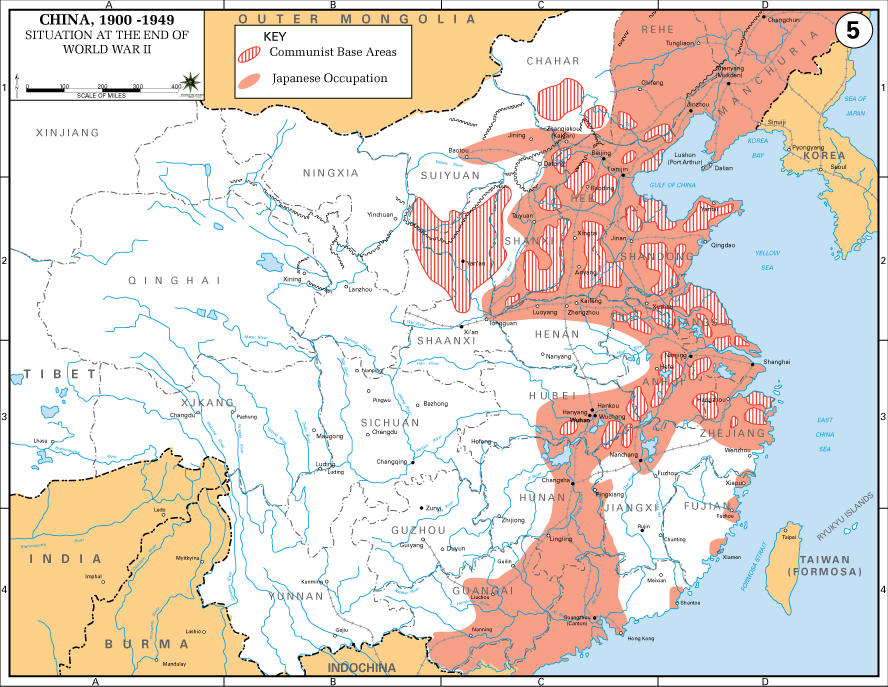
Last week, Nick Taber reported on some surprisingly intense anti-Japanese sentiments he encountered in China:
In 2017 in a rust-belt city in Northeast China I hopped in a taxi and began chatting with my driver who, when the conversation turned to politics, nonchalantly told me that he wished that the Chinese Government would kill every single Japanese person on the planet. I found this extreme to say the least, so I double-checked just in case my Chinese was failing me, “You mean kill every single Japanese man, woman, and child?”
“Yes, exactly,” he said.
Guessing by his apparent age I wrote my driver off as a fringe extremist whose possibly restricted worldview was likely shaped during the throes of the Cultural Revolution. I presumed that the vast majority of Chinese people today would decisively denounce this kind of violent sentiment of genocide. This presumption was wrong.
Chinese genocidal hatred against the Japanese simply cannot be dismissed as the bigotry of a nationalist fringe movement. Anti-Japanese sentiment is in fact so engrained in Chinese culture that it has become not only a political utility and form of patriotism but even a solid go-to branding opportunity.
The CEO of a major company in Hebei province sets his username on Weibo (China’s Twitter) to “killer of Japanese devils” and likewise a news anchor of a regional TV station sets his Weibo username to “destroy Japanese devils.” Weibo also has hundreds of users with the phrase “bomb Japan” in their username, and after a devastating 6.1 magnitude earthquake struck Osaka in June, the natural disaster began trending on Weibo with a large number of Chinese netizens lamenting that more Japanese people had not been killed. As one user put it, “The whole nation of Japan should perish as soon as possible. It’s an evil race that has infuriated god.”
Certainly not all Chinese hold such genocidal or hateful views. There is a sizeable minority that even frown upon these views and a growing number of more internationally-minded Chinese who have Japanese friends or study in Japan so are at the very least suspicious of this hate. Some Chinese even see this sentiment, in part, as a product of government propaganda and brainwashing. As The Chinese Communist Party (CCP) manages uncertainty over the future of its leadership, it exploits nationalism to boost its popularity and the painful memories of WWII anti-Japanese sentiment provides a relatively low-cost, high-yield opportunity for this purpose.
Chinese citizens who do openly support Japan in any way, shape, or form also risk being seen as traitors. Another user commenting on the Osaka tragedy remarked, “Any Chinese people in Osaka right now travelling or shopping? They should be buried together with the Japanese”.
In 2017, the China Badminton Super League told their own Lin Dan, the number one badminton champion in the world, that he would be forbidden from competing in the playoffs because he had a sponsorship contract with the Japanese sports brand Yonex. In 2012, the Chinese actress Li Bingbing refused to travel to Japan to promote her film, Resident Evil 5, saying that she “personally cannot handle it emotionally”.
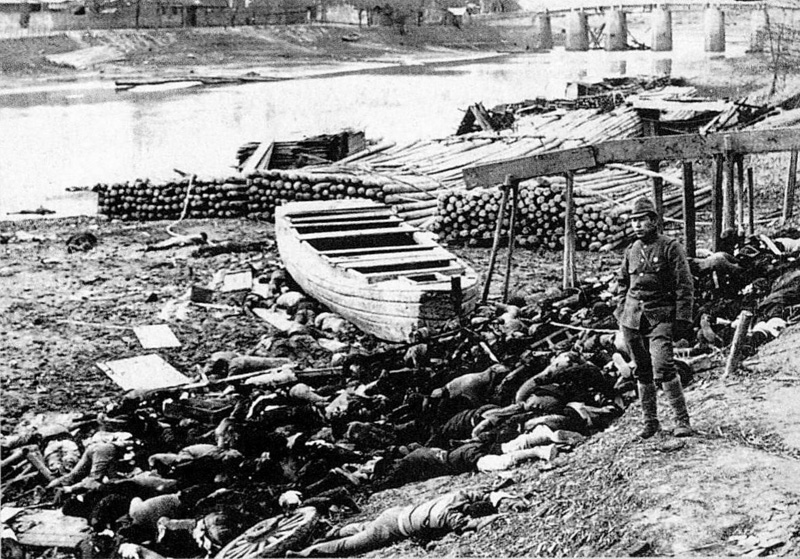
The origin of China’s anti-Japanese sentiment lies in the Chinese theater of World War II when the Imperial Japanese Army committed scores of harrowing war crimes on Chinese soil including the mass killing of civilians, sexual slavery, human experimentation, and cannibalism that resulted in the deaths of 10 to 20 million Chinese people.
Bodies of victims along Qinhuai River out of Nanjing’s west gate during Nanjing Massacre.
Detail of original photo by Moriyasu Murase, 村瀬守保 via Wikimedia Commons.
Comments Off on China’s anti-Japanese attitudes
September 23, 2018
The Russians are Coming! – WW2 004 September 22 1939
World War Two
Published on 22 Sep 2018When the USSR crushes the plans of the Allies for Poland and the Japanese plans in China in the same week, it is Germany that benefits.
Join us on Patreon: https://www.patreon.com/TimeGhostHistory
Or join The TimeGhost Army directly at: https://timeghost.tvBetween 2 Wars: https://www.youtube.com/playlist?list…
Written and Hosted by: Indy Neidell
Produced and Directed by: Spartacus Olsson and Astrid Deinhard
Executive Producers: Bodo Rittenauer, Astrid Deinhard, Indy Neidell, Spartacus Olsson
Research by: Indy Neidell
Edited by: Spartacus Olsson
Colorized Pictures by Olga Shirnina and Norman StewartOlga’s pictures: https://klimbim2014.wordpress.com
A TimeGhost chronological documentary produced by OnLion Entertainment GmbH
Comments Off on The Russians are Coming! – WW2 004 September 22 1939
September 15, 2018
Battle of Saipan – Suicide Island – Extra History – #2
Extra Credits
Published on 13 Sep 2018This series is brought to you by World of Tanks PC. Check out the game at the link below and use the invite code FORAGER for extra goodies. https://redir.wargaming.net/r06pve1j/…
As the ruthless clash of the Saipan invasion drags on into the second week, a unique and unlikely hero emerges. Marine scout Guy Gabaldon can speak Japanese. He deserts his post, not once but twice, to reach out to the enemy soldiers and civilians.
Comments Off on Battle of Saipan – Suicide Island – Extra History – #2
September 8, 2018
Battle of Saipan – Steel and Coral – Extra History – #1
Extra Credits
Published on 6 Sep 2018The battle of Saipan would decide the fate of the Pacific War. On a tiny island, just five miles wide, thousands died under advanced artillery and amphibious tanks. This series is brought to you by World of Tanks PC. Check out the game at the link below and use the invite code FORAGER for extra goodies. https://redir.wargaming.net/r06pve1j/…
Support us on Patreon! http://bit.ly/EHPatreon
Comments Off on Battle of Saipan – Steel and Coral – Extra History – #1
September 6, 2018
Feature History – Chinese Civil War
Feature History
Published on 25 Jul 2017Hello and welcome to Feature History, featuring a civil war that done happened in China.
Help me recognise Taiwan (or not)
https://www.paypal.me/FeatureHistory
Patreon
https://www.patreon.com/FeatureHistory
Discord
https://discord.gg/Zbk4CvR
———————————————————————————————————–
I do the research, writing, narration, art, and animation. Yes, it is very lonely
Comments Off on Feature History – Chinese Civil War
September 3, 2018
WW2 – September 1 1939 – The Polish German War
World War Two
Published on 1 Sep 2018When Germany invades Poland on September 1 1939, the world is already at the brink of a new world war…
Between 2 Wars: https://www.youtube.com/playlist?list…
Written and Hosted by: Indy Neidell
Produced and Directed by: Spartacus Olsson and Astrid Deinhard
Executive Producers: Bodo Rittenauer, Astrid Deinhard, Indy Neidell, Spartacus Olsson
Research by: Indy Neidell
Edited by: Spartacus OlssonJoin us on Patreon: https://www.patreon.com/TimeGhostHistory
Or join The TimeGhost Army directly at: https://timeghost.tvA TimeGhost chronological documentary produced by OnLion Entertainment GmbH
Apologies for this going out a day later than usual … I was out of town on the weekend with very limited internet connectivity. Future TimeGhost/Between2Wars episodes will appear closer to their release days (usually the next day).
Comments Off on WW2 – September 1 1939 – The Polish German War
August 29, 2018
Out of Context: How to Make Bad History Worse | World War 2
Knowing Better
Published on 5 Mar 2018Churchill was a genocidal maniac. The Japanese were rounded up into concentration camps. FDR let Pearl Harbor happen. When you take history out of context, you can make it say whatever you want – including making bad things worse.
A long list of links to sources is included, but I’m too lazy to re-link ’em all, just go to YouTube to see them. Back in 2009, I did a short fisking of Pat Buchanan’s hit-piece on Churchill’s “reponsibility” for the outbreak of WW2.
Comments Off on Out of Context: How to Make Bad History Worse | World War 2


