
Mani Basharzad explains that although resurgent socialist beliefs are a bad sign, there’s actually a worse danger to modern economies that isn’t a coherent ideology but all the more potent because of it:
Custom image by FEE
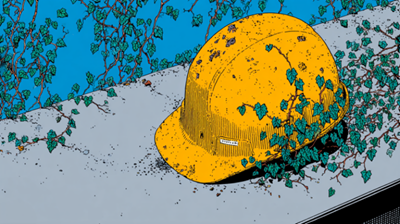
If someone asked me what the most dangerous economic ideology is, many would expect an Austrian to give a typical answer: Marxism, socialism, or Modern Monetary Theory. Yet I believe there is another way of thinking that is even more pervasive. It is not a coherent body of ideas like those ideologies. Rather, it is a sentiment so widespread and socially accepted that it threatens not merely economic freedom, but our very understanding of progress itself. I call it “nostalgia economics”.
Recently, the singer Sting suggested that the rise of toxic masculinity is partly the result of the “loss of manual jobs”, claiming that because many men no longer use their hands and physical strength in their daily work, unhealthy masculine traits are on the rise. Like many commentators on the political left, he also blamed Margaret Thatcher for Britain’s economic transformation. “Britain’s wealth was created in the coalfields and the steel towns and the mill towns and the shipyards”, Sting said. “All of those skill sets were thrown on the scrapheap … for Thatcher’s dream of a service economy.”
This is nostalgia economics in action. A global celebrity whose music can be streamed instantly on another continent, who earns income through digital platforms, and whose career depends on modern communications and services, criticizes the very service economy that makes his success possible.
A person in thrall to nostalgia economics will take the blessings of progress for granted while romanticizing a past that never truly existed. Imagine living in the world of Charles Dickens: you would not have had access to a typewriter for much of your life, if at all, since it was only commercialized in the late 19th century. More importantly, you would not have had access to electricity. The conveniences we now consider basic would have been unimaginable luxuries.
The economic historian Norman Stone illustrated the extraordinary pace of modern progress through the experience of the novelist Henry James:
In 1895 the novelist Henry James acquired electric lighting; in 1896 he rode a bicycle; in 1897 he wrote on a typewriter; in 1898 he saw a cinematograph. Within very few years, he could have had a Freudian analysis, travelled in an aircraft, understood the principles of the jet-engine or even of space-travel.
Had Sting been alive in 1890, a world tour would have looked very different. A journey from London to New York would have taken more than a week rather than a few hours. International audiences, instant communication, and global entertainment markets would have been beyond imagination.
The glorification of manual labor is one of the most overrated ideas in modern political discourse. This tendency is not confined to the left. Ambitions to revive manufacturing employment through government policy often draw on the same nostalgic impulse. But what exactly are we trying to return to?
Perhaps literature offers a more honest answer than politics. Oscar Wilde observed that “all unintellectual labour, all monotonous, dull labour” involved unpleasant conditions. He went even further, commenting that “there is nothing necessarily dignified about manual labour at all, and most of it is absolutely degrading”.
The reality of industrial labor was far harsher than many modern observers imagine. In Britain, workplace fatalities have fallen dramatically over the last century: fatal injuries to employees dropped from around 4,400 a year early in the 20th century to around 200 a year by the end of the century. Coal mining, one of the occupations most frequently romanticized today and the first industry Sting evoked, exposed workers to constant danger and disease. Throughout the 1950s and 1960s, coal workers’ pneumoconiosis (“black lung”) claimed well over a thousand lives annually. What would a laborer enduring dangerous conditions, long hours, and chronic health risks have given for an air-conditioned office job?
One thing Sting did identify is that men generally do need more physical activity in their lives both for general physical health but also for mental health.



Of course that Sting fella was directionally correct, and Oscar Wilde was a poofter with a fluffer always at hand. That manual labor thingy is most definitely a thing, and will remain so for a bit. People are working their asses off keeping the lights on… until that Musk fella perfects his Optimus doodad like he did the self-landing boosters and cars. Old age is like death by snu-snu at this juncture in the human timeline. I’ve read the old sci-fi books… you absolutely can make this shit up.
Comment by Mike Porter — June 13, 2026 @ 20:35