Domestic terrorists got into RAF Brize Norton, one of Britain’s main airbases, last week and committed damage that may range into the tens of millions of pounds … and were in and out with the RAF none the wiser:
So this was a serious attack; it’s also an intensely embarrassing one. The terrorists got in and out completely undetected; it appears nobody at Brize Norton was aware of the attack until the perpetrators had already escaped. This would be bad enough if they’d been Spetsnaz-trained infiltrators, flitting silently from shadow to shadow towards their targets. In fact, however, they were a couple of unwashed hippies from Palestine Action, and they “infiltrated” the base on electric motorbikes. It is absolutely staggering that they were able to get in, attack two valuable aircraft and then get out again without being intercepted.
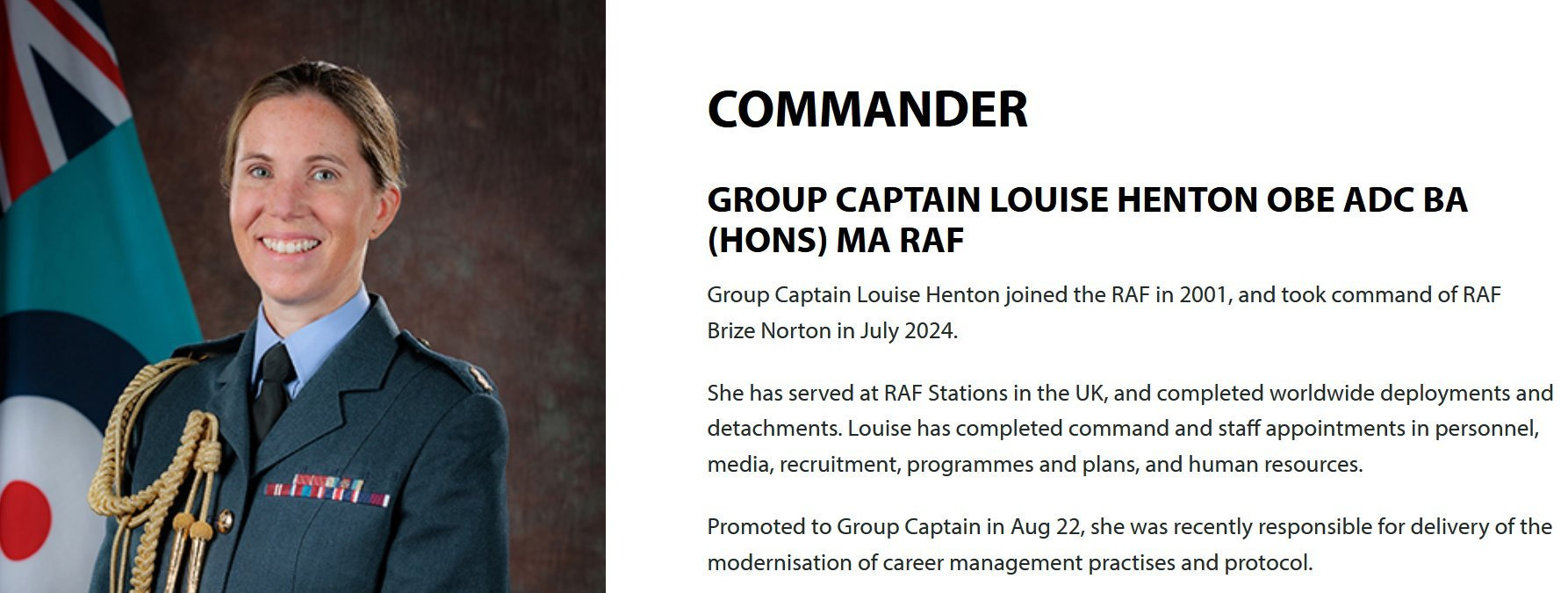
Or maybe it isn’t. This is the station commander of RAF Brize Norton:
Gp Capt Henton appears to have spent her entire career in non-operational roles. She also seems to have some very strange ideas about concepts such as masculinity and even patriotism. In a paper she wrote (which is available online) Henton appears strongly critical of traditional military culture, particularly that in the combat units she has never been part of. Is it just coincidence that, under the command of someone who is effectively an HR manager in a uniform, traditional military concerns such as security appear to have been badly neglected?
It’s undeniable that security at Brize Norton was neglected. One of the things I was trained in, as an Intelligence Corps operator, was protective security. We tended to focus on the protection of classified information, but the same principles apply to the protection of anything else (for example aircraft), and one of those principles is that if the security around an asset is weak in one respect — for example, physical barriers like fences — you can plug that gap by deploying other assets — for example, guards.
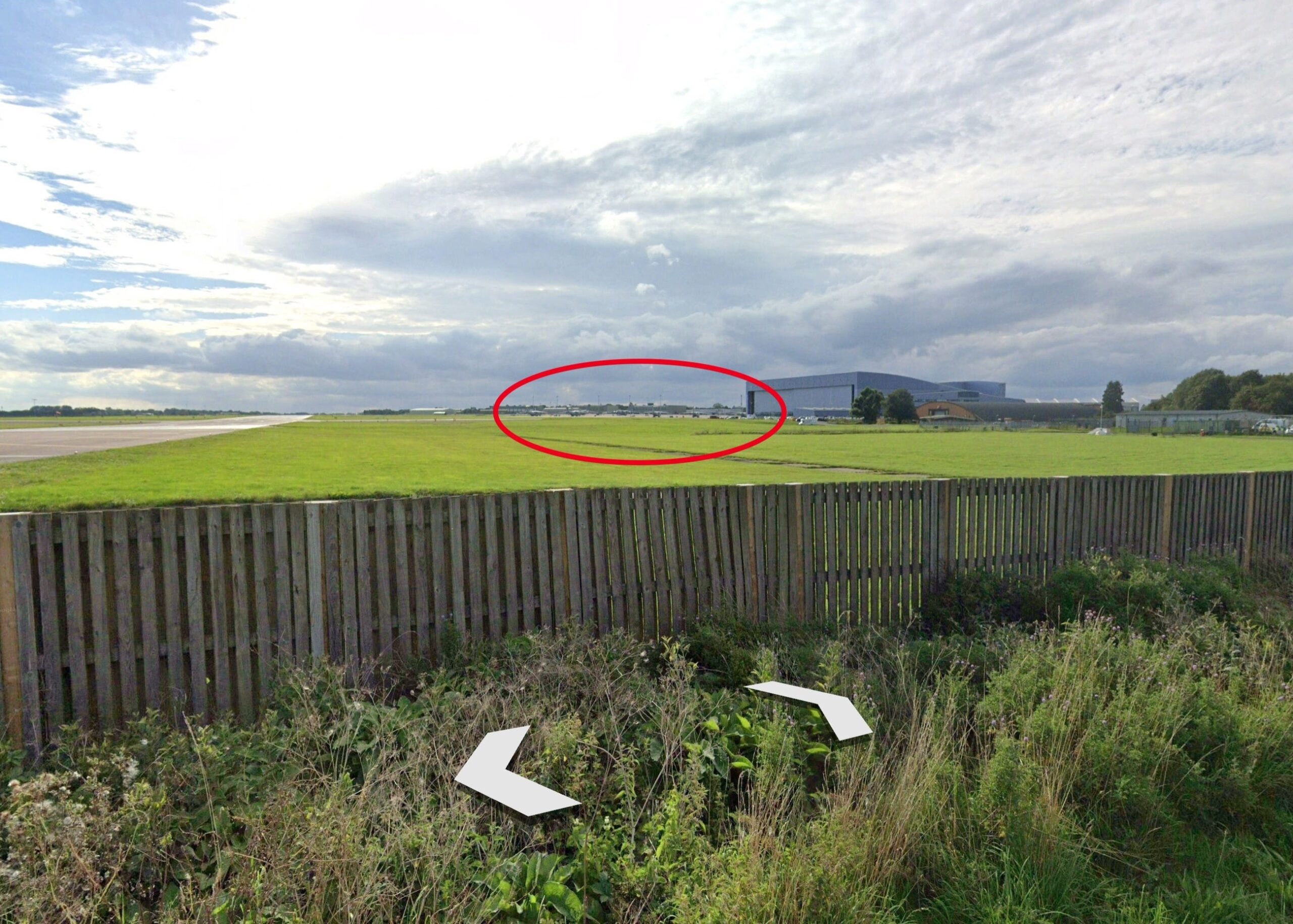
I used Google Street View to do a perimeter recce of Brize Norton, and took this screenshot looking from Station Road at the eastern end of the base’s runway:
This shot is taken from a public road, outside the base. The only perimeter security is a simple, easily climbed wooden fence less than six feet high. For a long stretch it has no “topping” — security jargon for razor wire or other anti-climb obstacles. There is also no perimeter security lighting along this section of the road. There aren’t even streetlights on the road itself. This is a massive weakness in physical security, which any terrorist can easily identify using open-source tools like Google Street View. The red ellipse I have drawn on the image highlights aircraft — seven of them, a mix of Voyagers and A400M transports — parked on the apron. They are less than three-fifths of a mile (900m in new money) from the perimeter fence, a distance that an electric scooter can cover in around 90 seconds. This level of physical security is completely unacceptable for the protection of such valuable assets, so it should have been supplemented with armed guards. It wouldn’t take all that many. A twelve-man guard under the command of a corporal could easily supply a pair of two-man prowler patrols, one on the apron and one randomly checking vulnerable points around the perimeter. That would have been enough to intercept and stop this attack.