Quotulatiousness

December 3, 2019

The Hungarian Romanian War & The Downfall of the Hungarian Soviet Republic I THE GREAT WAR 1919

Filed under: Europe, History, Military — Tags: , , , , — Nicholas @ 06:00

The Great War
Published 2 Dec 2019

SPONSOR: Get 20% off of your first order at Mack Wheldon. Go to https://mackwheldon.com and use promocode “greatwar” at checkout.

In early 1919 Hungary was one of the European territories that saw a communist revolution. Bela Kun and his supporters established the Hungarian Soviet Republic while the country was in great turmoil and fighting against the Romanians, the Czechoslovaks, the Serbs and within Hungary itself.

» SUPPORT THE CHANNEL
Patreon: https://www.patreon.com/thegreatwar
Merchandise: https://shop.spreadshirt.de/thegreatwar/

» SOURCES
Balogh, Eva S. “István Friedrich and the Hungarian Coup d’État of 1919: A Reevaluation” in Slavic Review, 1 June 1976, Vol.35(2): 269-286.

Borodziej, Wlodzimierz and Maciej Gorny. Der Vergessene Weltkrieg. Europas Osten 1912-1923. Band II – Nationen 1917-1923 (wbg Theiss, 2018).

Gosztony, Peter. “The Collapse of the Hungarian Red Army,” in Pastor, Peter, ed. Revolutions and Interventions in Hungary and its Neighbor States, 1918-1919 (New York: Columbia University Press, 1988): 69-80.

Hetes, Tibor. “The Northern Campaign of the Hungarian Red Army,” in Pastor, Peter, ed. Revolutions and Interventions in Hungary and its Neighbor States, 1918-1919 (New York: Columbia University Press, 1988): 55-60.

Horthy, Admiral Nicholas. Admiral Nicholas Horthy Memoirs. Simon Publications LLC, (2000).

Macmillan, Margaret. The Peacemakers: Six Months that Changed the World (London: John Murray, 2001).

Nouzille, Jean. “The July Campaign of the Hungarian Red Army as seen by France,” in Pastor, Peter, ed. Revolutions and Interventions in Hungary and its Neighbor States, 1918-1919 (New York: Columbia University Press, 1988): 81-88.

Révész, Tamás: “Post-war Turmoil and Violence (Hungary)”, in: 1914-1918-online. International Encyclopedia of the First World War, ed. by Ute Daniel, Peter Gatrell, Oliver Janz, Heather Jones, Jennifer Keene, Alan Kramer, and Bill Nasson, issued by Freie Universität Berlin, Berlin 2019-08-05.
https://encyclopedia.1914-1918-online…

Torrey, Glenn. “The Romanian Intervention in Hungary, 1919,” in Pastor, Peter, ed. Revolutions and Interventions in Hungary and its Neighbor States, 1918-1919 (New York: Columbia University Press, 1988): 301-320.

»CREDITS
Presented by: Jesse Alexander
Written by: Jesse Alexander
Director: Toni Steller & Florian Wittig
Director of Photography: Toni Steller
Sound: Toni Steller
Editing: Toni Steller
Mixing, Mastering & Sound Design: http://above-zero.com
Maps: Daniel Kogosov (https://www.patreon.com/Zalezsky)
Research by: Jesse Alexander
Fact checking: Florian Wittig

Channel Design: Alexander Clark
Original Logo: David van Stephold

A Mediakraft Networks Original Channel

Contains licensed material by getty images
All rights reserved – Real Time History GmbH 2019

Canada and China

Filed under: Cancon, China, Economics, Politics — Tags: , , , , — Nicholas @ 05:00

Ted Campbell discusses Canadian foreign policies — or perhaps more accurately Canada’s lack of policies — on China:

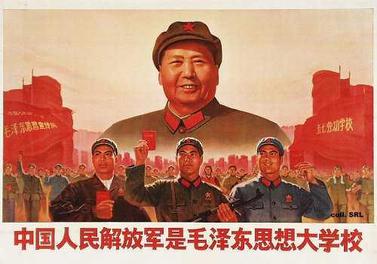
“The Chinese People’s Liberation Army is the great school of Mao Zedong Thought”, 1969.
A poster from the Cultural Revolution, featuring an image of Chairman Mao, published by the government of the People’s Republic of China.
Image via Wikimedia Commons.

There were many things that history might find regrettable about the Mulroney years but I doubt that it will fault him for having a principled and coherent foreign policy.

That all changed with Jean Chrétien, who was almost a neo-mercantilist, and for whom principle could never stand in the way of profit.

In the modern (Chrétien-Martin-Harper-Trudeau) era, Conservatives have been, broadly, anti-China, sometimes for reasons that are less than coherent or principled, and Liberals have been too prepared to “go along to get along” with China. This is because both parties reflect the incoherent views of the whole country. But political leaders shouldn’t (mustn’t) just reflect the views of their voters ~ that sort of populism is nonsensical ~ they must, as Edmund Burke said, bring his or her “unbiased opinion … mature judgment … [and] … enlightened conscience” to bear on each issue. But I’m afraid that too many (most?) modern Canadian political tacticians hold all those things in scant regard.

In the 2020s Canadians must listen to a few clear voices who will tell them that China is a competitor in many “markets” including in the marketplace of ideas, ideals, institutions and values. The current Chinese leadership is overtly hostile to Weterm liberal-democratic values and is not unwilling to punish any country with which it disagrees. It is protectionist, relatively rich and growing in military, political and economic power, but, still, somewhat cautious, and Xi Jinping’s China seems to be able to separate its own short-term political interests from its firm, long term, strategic goals. China, as Kevin Rudd reminded us just a few days agois contemptuous of weakness and prevarication,” which explains why it is so obviously contemptuous of Justin Trudeau’s Canadian government.

It is a fact that the Sino-Canadian relationship is “unbalanced:” China is a great power, Canada is not; China is an autocracy, Canada is a democracy; and so on but, as Kevin Rudd said (link just above) “China too has net strengths and weaknesses of which … [our] … strategists should be aware in framing our own strategy … [and we] … should be equally aware of our own strengths, weaknesses and vulnerabilities.” Canadian strategists need to educate Canadians about China so that a solid, informed majority will want a coherent and principled policy ~ one that puts our national vital interests first […]

Our policy towards China needs to be just one part of a coherent, principled foreign policy which Canadians understand and, broadly, support, and that, in turn, needs to be part of a Canadian grand strategy that aims to secure a place, as Paul Martin suggested, “of pride and influence in the world” ~ that, of course, was a place we enjoyed under St Laurent, Diefenbaker and Pearson, all of whom were acutely aware of the many and varied (and very divergent) views about Canada in the world that existed then and persist today in Canada’s many and varied communities.

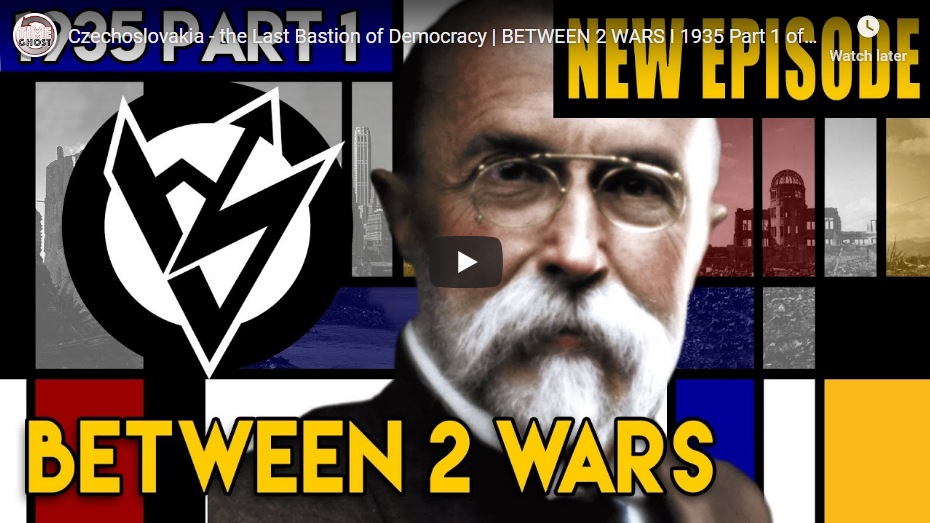
Czechoslovakia – the Last Bastion of Democracy | BETWEEN 2 WARS I 1935 Part 1 of 4

Filed under: Europe, Germany, History — Tags: , , , , , , — Nicholas @ 04:00

TimeGhost History
Published 2 Dec 2019

Czechoslovakia is holding on to democracy by a thread. It even looks like they might be able to integrate the German Czechoslovakians, but Hitler’s rise to power changes everything.

Join us on Patreon: https://www.patreon.com/TimeGhostHistory

Hosted by: Indy Neidell
Written by: Francis van Berkel
Directed by: Spartacus Olsson and Astrid Deinhard
Executive Producers: Bodo Rittenauer, Astrid Deinhard, Indy Neidell, Spartacus Olsson
Creative Producer: Joram Appel
Post-Production Director: Wieke Kapteijns
Research by: Francis van Berkel and Rune Væver Hartvig
Edited by: Daniel Weiss and Wieke Kapteijns
Sound design: Marek Kamiński

A TimeGhost chronological documentary produced by OnLion Entertainment GmbH.

From the comments:

TimeGhost History
2 days ago
The year is 1935 CE. Central Europe is entirely dominated by Authoritarians and Fascists. Well not entirely! One small country of indomitable Czechs and Slovaks still holds out for democracy. And life is not easy for the German Nazis who garrison the towns and villages in Bohemia and Moravia…

One thing in this episode might go unnoticed. It is how important it is to note that the term Sudeten German has only become widespread after WWI. It shows us how the delicate balance of ethnic groups had been upset after the Great War.

Before 1918, these same people felt comfortable called themselves Bohemian or Moravian. On the other side of the border that now divides Czechoslovakia from Germany, Austria, Poland and Hungary Czech and Slovak speakers felt comfortable calling themselves for instance Carpathian, Silesian, or Bavarian. In only 17 years this regional sense of unity has now been eradicated. It’s really easy to fall into the trap of the identity rhetoric of the time. To say that “Well, what did you expect? You forced people to be part of a country that wasn’t theirs” it’s an easy explanation for all of this conflict.

Well as we have often pointed out it wasn’t that simple. Fanned by identity politics on all sides, the borders have become fevering soars that are spreading infection into all of Europe. It is a disease that now threatens to develop into sepsis for the whole European continent. And think of this; borders are nothing but lines on maps, things invented arbitrarily in people’s minds… isn’t it remarkable how we as a species can invent our own demise?

“Useful idiots” during the Cold War

Robert Reilly reviews Judgement in Moscow: Soviet Crimes and Western Complicity by Vladimir Bukovsky, which has recently been republished in English:

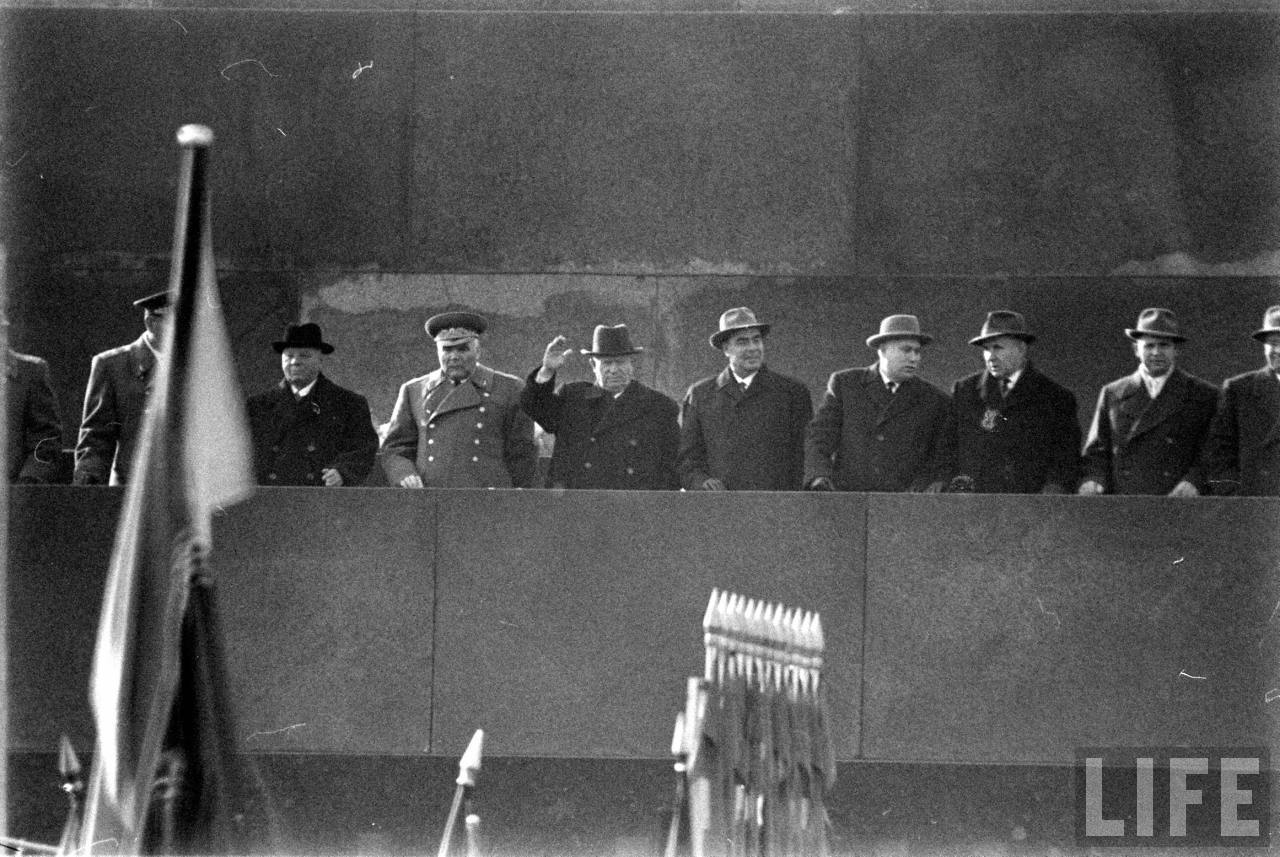
Krushchev, Brezhnev and other Soviet leaders review the Revolution parade in Red Square, 1962.
LIFE magazine photo by Stan Wayman.

Judgment In Moscow contains autobiographical elements but is principally concerned with providing and analyzing documentary evidence for what should have been the USSR equivalent of what the Nuremberg Trials had been for Nazi Germany. In 1991, Bukovsky returned to the Soviet Union to take part in the “trial of the communist party” that was held in 1992. In an audacious move the Communist Party had sued then-President Boris Yeltsin to get its property back. To prepare a defense, Yeltsin ordered that the secret Central Committee archives be opened to Bukovsky. The order was obeyed, but only partially and for a short time. The trial fizzled, but Bukovsky, with the aid of a hand-held scanner, was able to gather many thousands of pages of top-secret Central Committee and Politburo documents and get them out of Russia. Some of these key documents are what we have in this priceless book. They are eye-opening.

During the Cold War, we had to speculate as to why, for instance, the Soviet Union invaded Afghanistan and how the decision was made. Now we know for certain. Bukovsky provides the minutes of the Politburo meetings in which the invasion was decided. The Reagan administration was highly skeptical of détente and was therefore criticized for war-mongering. The skepticism was well-placed because, as the documents reveal, détente was simply a façade for advancing Soviet power and manipulating Western publics and governments against the Reagan plan to place Pershing IIs and cruise missiles in Europe to defend it against burgeoning Soviet power, including the SS-20s.

The revelations of the extent to which the Soviet Union manipulated the “peace” movement in the West should be an embarrassment to its participants, who may have been too naïve at the time to know how they were being used. Others, of course, acceded to being used, or even cravenly sought to be used. The names of some of these useful idiots are in the documents.

Another thing these documents disclose, much to the embarrassment of many American Sovietologists, is that there were no “hawks” and “doves” in the Kremlin — a premise on which they had banked their academic careers. The unanimity of the Politburo decisions reveals that the senior Soviet leaders were all of one stripe. It was to their advantage to create the impression that there were hawks and doves so that they could game the policies of Western governments and the opinions of its publics. For instance, providing Western credits to the USSR — it was thought by many so-called Russian experts in the West — would strengthen the doves in the Kremlin, whereas denying credits would empower the hawks. By buying this line of thought, the West was induced to keep the Soviet Union on life-support for more than a decade past what would have been its earlier collapse, according to Bukovsky.

No one was a greater master of this deception than Mikael Gorbachev. The minutes from many Politburo meetings chaired by Gorbachev show that glasnost and perestroika were façades constructed to ensure the continued existence of the Soviet Union through even more Western subsidies. And it worked to the extent that credits and subsidies ballooned under the Western illusion that Gorbachev had to be supported to ensure his success — ignorant of the fact that Gorbachev conceived of success in ways inimical to Western freedom.

H/T to Blazing Cat Fur for the link.

Turkish Conehammer “Broomhandle” C96 Mauser

Filed under: Europe, Germany, History, Military, Weapons — Tags: , , , — Nicholas @ 02:00

Forgotten Weapons
Published 13 Oct 2019

This is Lot 2493 in the upcoming October Morphy Extraordinary auction.

The “cone hammer” was the first commercial version of the Mauser C96, so named for the stepped conical sides of its hammer. The C96 did not sell particularly well in the first few years after its introduction, and the only major bulk sale was to Sultan Abdul Hamid II of the Ottoman Empire, who bought 1,000 of the guns for his palace guard. These guns were numbered in Farsi in their own range from 1 to 1000, and were all sold with matching shoulder stocks. The order was signed in December of 1897 and the guns were shipped a few months later, in May of 1898.

Under the Sultan’s rule, there was significant concern over potential military coups, and most arms were locked away in armories, including many of the C96 pistols. After the revolution in 1908/9, guns were more liberally distributed to the military and police, and these C96 pistols were issued out to both groups for service use. Some were used in combat in World War One, and after the war they were considered surplus, available for purchase inexpensively by Army or police officers. This meant that they saw a lot of use, and as a result few survive today, with many of them in rather rough condition.

http://www.patreon.com/ForgottenWeapons

Cool Forgotten Weapons merch! http://shop.bbtv.com/collections/forg…

Contact:
Forgotten Weapons
6281 N. Oracle #36270
Tucson, AZ 85704

QotD: Defending freedom of speech

Filed under: Law, Liberty, Quotations — Tags: , , — Nicholas @ 01:00

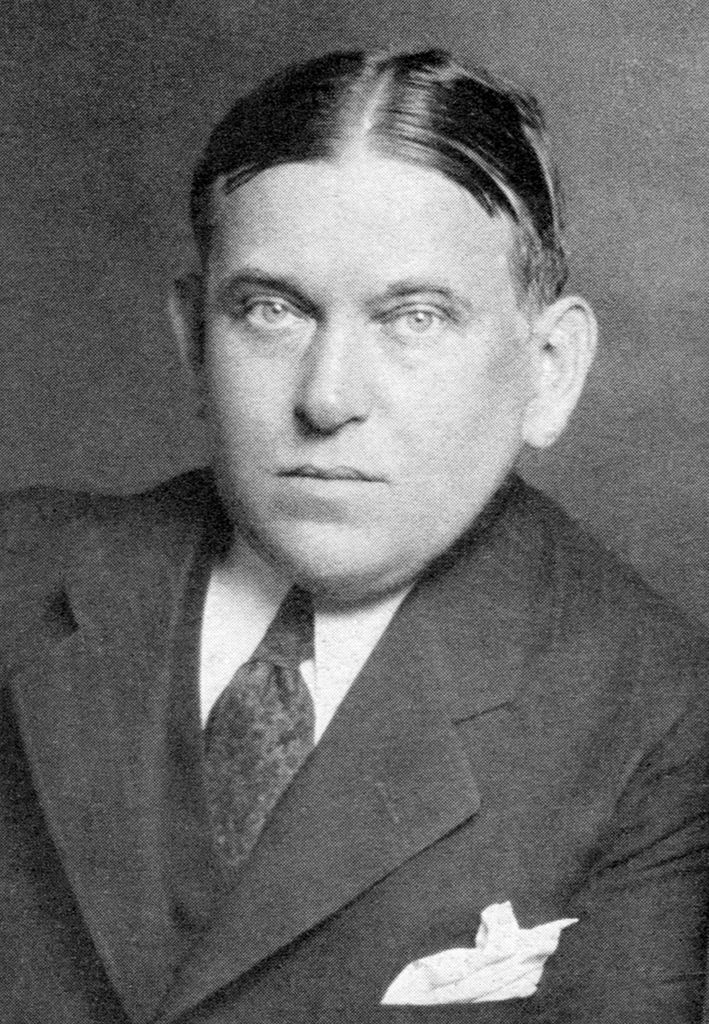
H.L. Mencken in 1928.
Photo by Ben Pinchot for Theatre Magazine, August 1928.

The trouble with fighting for human freedom is that one spends most of one’s time defending scoundrels. For it is against scoundrels that oppressive laws are first aimed, and oppression must be stopped at the beginning if it is to be stopped at all.

H.L. Mencken.

December 2, 2019

The Battle of the Granicus (334 B.C.E.)

Filed under: Europe, Greece, History, Middle East, Military — Tags: , , — Nicholas @ 06:00

Historia Civilis
Published 30 Nov 2019

Patreon | http://patreon.com/HistoriaCivilis
Donate | http://www.paypal.com/cgi-bin/webscr?…
Merch | http://teespring.com/stores/historiac…
Twitter | http://twitter.com/HistoriaCivilis
Website | http://historiacivilis.com

Sources:
Arrian, The Anabasis of Alexander, Book 1 | https://amzn.to/37F4qo3
Diodorus Siculus, “The Library of History,” Book 17 | https://amzn.to/2qPDP71
Plutarch, “Parallel Lives: The Life of Alexander” | https://amzn.to/2QUHXxu

Ernst Badin, “The Battle of the Granicus: A New Look,” from “Collected Papers on Alexander the Great” | https://amzn.to/37zeuyO
Peter Green, Alexander of Macedon | https://amzn.to/2OogimY
Robin Lane Fox, Alexander the Great | https://amzn.to/2OlzZvx
Philip Freeman, Alexander the Great | https://amzn.to/35wVtv4

Music:
“IMF,” by Dot
“Heliograph,” by Chris Zabriskie
“Infados,” by Kevin MacLeod
“The House Glows (With Almost No Help),” by Chris Zabriskie
“Hallon,” by Christian Bjoerklund

We are a participant in the Amazon Services LLC Associates Program, an affiliate advertising program designed to provide a means for us to earn fees by linking to Amazon.com and affiliated sites.

Andrew Scheer’s Daisy connection

Filed under: Cancon, Politics — Tags: , , , — Nicholas @ 05:00

Jay Currie on the lingering stench of the spoiled Milk Dud’s campaign:

Andrew Scheer, paid tool of Big Dairy, chugs some milk during a Press Gallery speech in 2017. I’ve called him the “Milk Dud” ever since.
Screencapture from a CTV video uploaded to YouTube.

The sheer lack of ethics and paranoia hiring the Jackal demonstrates pretty much proves that Scheer is not fit to lead the CPC or to be Prime Minister. A fact which is dawning on the CPC itself as it struggles to figure out what to do with their present leader. Before Kinsellagate it was possible to say that Scheer was a decent, if uninspiring, leader. Now? It is indecent to hire a political mobster to beat up your opponents. Which leaves Scheer as merely uninspiring. I would be astonished if he survives a leadership review.

The revelation of Kinsella’s filth may sink Scheer but it burnishes Bernier’s reputation. Virtually all the accusations of “racism” levelled against the PPC and Max personally either were manufactured by Kinsella or occurred in a climate of hate created by the Jackal. I have never seen a credible accusation and now we have a pretty good idea why.

The PPC, even with Kinsella’s disinformation campaign, secured over 300,000 votes from a standing start a year before the election. If the CPC tears itself apart with a red/blue fight, a lot of thoughtful, conservative, people will give the PPC a second look. Conservative MPs looking for an alternative to the nastiness and vindictiveness of the Scheer people might well be tempted to join the PPC. Max had a lot of caucus support for his CPC leadership run. He was careful not to unfairly attack conservative positions, rather, during the campaign, he attacked CPC positions which were, in fact, Liberal-lite positions.

Political pundits, as they do after every election in which the Conservatives fail to win government, solemnly inform us that it was because the Conservatives failed to move towards the middle. The fact that only 30-35% of Canadians are even a bit right-leaning is trotted out to show how impossible it is for the Conservatives to win government unless they move left. I think this analysis is entirely incorrect. A solid, right of center party which had libertarian social views would hold that 30-35%. From there it is simply a matter of finding 3-5% in carefully targetted ridings. To do that a party would have to come up with policies which, while conservative, do not alienate middle-class voters, immigrant communities and women.

I don’t think there is a chance the CPC will manage that simply because they are too tied to establishment politics in Canada. Yeah multi-culti, boo climate change only echos the Liberal Party’s bland formula for success.

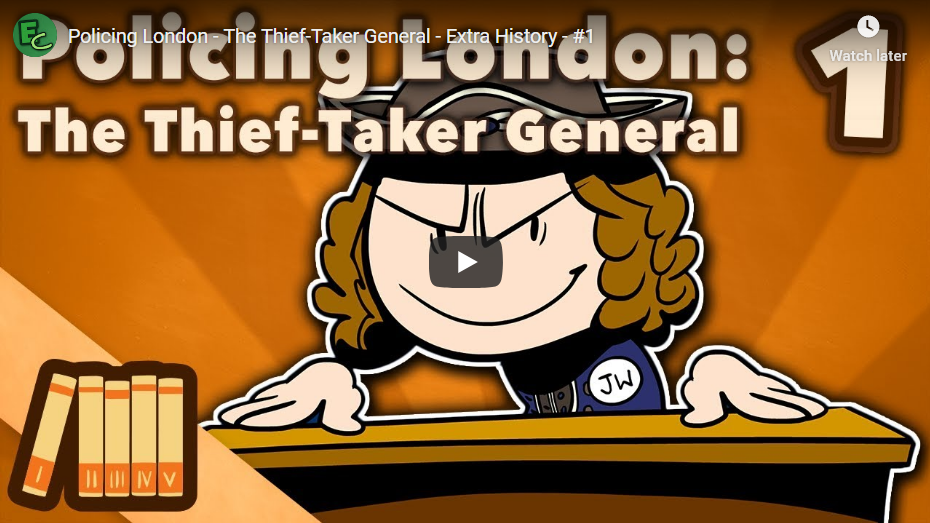
Policing London – The Thief-Taker General – Extra History – #1

Filed under: Britain, History, Law — Tags: , , , — Nicholas @ 04:00

Extra Credits
Published 30 Nov 2019

These days we kind of assume that police are a normal part of law and order. But that wasn’t always the case. In fact, it wasn’t the case for a lot of human history. So how did we start thinking of police as a natural part of a city? It all starts in London with the Thief-Taker General Jonathan Wilde, a man of two faces. Which one is real: valiant crime fighter or the puppet master of London’s underbelly?

Join us on Patreon! http://bit.ly/EHPatreon

A bad IDEA for classroom peace

Filed under: Bureaucracy, Education, Health, USA — Tags: , , — Nicholas @ 03:00

In Quillette, Max Eden discusses the rise of “room clears” as teachers resort to evacuating classrooms to prevent harm to students from one disruptive one:

Last month, NBC Nightly News aired a segment on the latest classroom-management technique to sweep America’s schools: “room clears”: When a child throws a tantrum that could physically endanger his peers, teachers evacuate all of the other students from the classroom until the troublemaker has vented his rage upon empty desks, tables and chairs. The technique was virtually unheard of five years ago. But 56 percent of surveyed teachers and parents in Oregon now report having experienced a room clear in their or their child’s classroom over the last year.

Surrendering the classroom to a single student: The average reader might well ask why anyone thinks this would be a good idea. Yet the policies that make this approach inevitable have been applauded by a wide range of authorities, from the Southern Poverty Law Center to the Trump-administration’s Department of Education.

The emergence of room clears is a product of several fashionable education-policy trends designed to protect the rights of troubled students, often with little regard for the rights of their classmates. These include the provisions contained in the federal Individuals with Disabilities Education Act (IDEA), which mandates that special-education students be subject to the “least restrictive environment” possible. When it comes to students who are hard of hearing, dyslexic or developmentally delayed, this policy likely has done a great deal of good. But many schools also label disruptive or violent students as having an “Emotional and Behavioral Disability” (EBD). Rather than provide these students specialized attention in separate settings, schools often funnel them into traditional classrooms.

In a national poll, two thirds of surveyed teachers at high-poverty schools reported that there is a student in their classroom who they believed shouldn’t be there; and 77 percent of surveyed teachers report that a small number of disruptive students cause other students to suffer. Unfortunately, IDEA’s provisions don’t adequately account for the rights and interests of general-education students, and teachers typically have little say over who is in their classroom.

Once they are assigned to a traditional class, EBD students can become virtually untouchable as far as discipline goes. Schools are discouraged by federal policy and activist groups alike from disproportionately disciplining students with disabilities — the effect of which is that principals are required to overlook many otherwise unacceptable transgressions. (Two thirds of teachers say that special-education students are treated more leniently than general-education students for the same offenses.) The worst-behaved students effectively are taught that the rules don’t apply to them in the same way they apply to others. Even when misbehavior edges toward violence, EBD students are becoming physically untouchable.

China Rules the Seas – The Invention of the Junk l HISTORY OF CHINA

Filed under: China, History, Japan, Military, Technology — Tags: , , , , — Nicholas @ 02:00

IT’S HISTORY
Published 19 Aug 2015

Imperial China was a great seafaring nation. With the invention of the junks — massive, nearly unsinkable ships — it is safe to say that by the 14th century China had the best sea vessels in the world. The invention of the compass made navigation trustworthy as never before and Admiral Zheng He’s treasure fleet eagerly explored the Seven Seas. The first Chinese navy also depended on the mighty junk for their fighting tactics. But not all emperors were convinced of seafare and so the Chinese maritime power ended somewhat abruptly, giving the rest of the world time to catch up. Learn all about China on the water on IT’S HISTORY.

» The Complete PLAYLIST: http://bit.ly/HistoryOfChina

» SOURCES
Videos: British Pathé (https://www.youtube.com/user/britishp…)
Pictures: mainly Picture Alliance
Content:
“Hadingham, Evan (2001): Ancient Chinese Explorers: http://www.pbs.org/wgbh/nova/ancient/…
Needham, Joseph (1986): Science and Civilization in China, Volume 4, Physics and Physical Technology, Part 3, Civil Engineering and Nautics. Taipei”

» ABOUT US
IT’S HISTORY is a ride through history – Join us discovering the world’s most important eras in IN TIME, BIOGRAPHIES of the GREATEST MINDS and the most important INVENTIONS.

» CREDITS
Presented by: Guy Kiddey
Script by: Martin Haldenmair
Translated by: Guy Kiddey
Directed by: Daniel Czepelczauer
Director of Photography: Markus Kretzschmar
Music: Markus Kretzschmar
Sound Design: Bojan Novic
Editing: Markus Kretzschmar

A Mediakraft Networks original channel
Based on a concept by Florian Wittig and Daniel Czepelczauer
Executive Producers: Astrid Deinhard-Olsson, Spartacus Olsson
Head of Production: Michael Wendt
Producer: Daniel Czepelczauer
Social Media Manager: Laura Pagan and Florian Wittig

Contains material licensed from British Pathé
All rights reserved – © Mediakraft Networks GmbH, 2015

QotD: Evidence of markets in classical civilizations

Filed under: Economics, Europe, Greece, History, Quotations — Tags: , , , , — Nicholas @ 01:00

If someone were to claim that market behaviour was peripheral to life in eighteenth century England, it would be easy to laugh at him. This is not to say the claim has not been or will not be made. But if it were made, it could be refuted with a mass of government and private statistics, of newspaper reports and law reports, of high literature, of sermons, speeches and letters, of descriptive and analytical surveys, of biographies and novels, and of physical remains. Ludicrous claims can always be based on selective and misread evidence. In this case, the weight of the evidence must be decisive.

If we turn, however, to the ancient world, the evidence must almost always be indecisive. Very few ancient writings have survived. Obviously, two thousand years are a long time; and ancient civilisation did collapse. Add to this that far fewer documents relating to economic matters were produced or could be preserved than has been the case with us. There was no printing: everything had to be copied by hand. The best writing material was papyrus, which was both expensive and fragile. The normal writing materials for accounts and administrative documents were waxed tablets, which were scraped and reused, and thin wooden sheets, which were thrown away once they had served their purpose.

The literary remains of Greece and Rome which have come down to us through generations of copying and recopying are the products of a rather snobbish culture, and contain little direct information about economic behaviour. The great writers, as Finley observes, do seem to have lacked the conceptual framework for intelligent discussion of finance and commerce. Even otherwise, these were matters they regarded as beneath the notice of history. Thucydides, for example, gives full discussion to the political causes of the Peloponnesian War, but says nothing of what we know from the archaeological evidence was the complete Athenian displacement of Corinth in the pottery markets of the Western Mediterranean world.

During the past century or so, the rubbish dumps of Egypt have revealed a mass of the everyday documentation we have for no other area of the ancient world. There are tax records, and commercial correspondence, and administrative commands, among much else. The problem here is that Egypt was always an exception. From its earliest history, its geography opened it to capture and exploitation by rent-seeking élites. The Pharaohs were worshipped as gods and given whatever they demanded. The Ptolemies organised the country into one gigantic state enterprise and used the proceeds for making a big noise in the Hellenistic world. The Roman Emperors kept up the monopolies and requisitions, treating Egypt as their personal property, and so far as possible isolating it from the rest of the Empire. The documentary evidence, therefore, we have from Egypt may not be representative of the ancient world as a whole.

But this, plus the material archaeology, is all we have. And if we want to know anything for economic motivations and behaviour, we must press the evidence we have as hard as we can. The history of the ancient world is, in many important respects like a mosaic that has been broken up with many of its tiles thrown away. The whole must be reconstructed from the parts remaining. It is a difficult enterprise, but it can be attempted.

If there is little direct, there is much indirect evidence. This is scattered through the surviving body of ancient literature. It consists of casual remarks, illustrations to arguments, even comments that are in themselves foolish. It is a question of looking for this evidence, and of knowing how to use it.

An interesting example of how evidence can be extracted and used comes not from our own ancient world, but from pre-Columbian South America. Deirdre McCloskey has looked at the geographical distribution of Mayan obsidian tools. She notes that, the farther from the sources of their obsidian, the smaller was the ratio of blade weight to cutting length. She comments:

    By taking more care with more costly obsidian the blade makers were earning better profits; as they did by taking less care with less costly obsidian.

What we have here, then, is evidence that illiterate, stone age toolmakers were at least as conscious of opportunity cost as any Victorian mill owner, and rather more so than the average socialist planner of the next century. So long, of course, as this is evidence — this is, so long as the tools are distributed as claimed — we have empirical reason for doubting the Polanyi claim that,

    previously to our time no economy has ever existed that, even in principle, was controlled by markets…. Gain and profit made on exchange never [before the nineteenth century] played an important part in human economy.

Sean Gabb, “Market Behaviour in the Ancient World: An Overview of the Debate”, 2008-05.

December 1, 2019

The German Plan to Destroy French Culture – The Occupation of France – WW2 – 066 – November 30, 1940

World War Two
Published 30 Nov 2019

While Hitler consolidates his power in occupied France, Japanese and Italian forces try to get an edge, but fail. The war is not looking too well for anyone at this point.

Join us on Patreon: https://www.patreon.com/TimeGhostHistory
Or join The TimeGhost Army directly at: https://timeghost.tv

Follow WW2 day by day on Instagram @World_war_two_realtime https://www.instagram.com/world_war_t…
Join our Discord Server: https://discord.gg/D6D2aYN.
Between 2 Wars: https://www.youtube.com/playlist?list…
Source list: http://bit.ly/WW2sources

Written and Hosted by: Indy Neidell
Produced and Directed by: Spartacus Olsson and Astrid Deinhard
Executive Producers: Bodo Rittenauer, Astrid Deinhard, Indy Neidell, Spartacus Olsson
Creative Producer: Joram Appel
Post-Production Director: Wieke Kapteijns
Research by: Indy Neidell
Edited by: Mikołaj Cackowski
Map animations: Eastory (https://www.youtube.com/c/eastory)

Colorizations by:
– Adrien Fillon (https://www.instagram.com/adrien.colo…)
– Dememorabilia (https://www.instagram.com/dememorabilia/)

Sources:
-Archiwum Cyfrowe

Archive by Screenocean/Reuters https://www.screenocean.com.

A TimeGhost chronological documentary produced by OnLion Entertainment GmbH.

Tulsi Gabbard versus the Democratic establishment

At Spiked, Tim Black calls the establishment’s anger and rage at the Democratic presidential candidate “Gabbard Derangement Syndrome”:

Tulsi Gabbard speaks at the “People’s Rally” in Washington DC on 17 November, 2016.
Photo by Lorie Shaull via Wikimedia Commons.

… the Democratic establishment and its media cheerleaders seem to have become fixated on her. She annoys them. She riles them. And it’s not just because of her ambivalence towards identity politics and the other aspects of her Sanders-style progressivism – indeed, she endorsed Sanders in 2016, much to the chagrin of the Democratic establishment at the time. No, it’s also because of her uncompromising opposition to the “counterproductive regime-change wars” pursued with such ignorant zeal by the likes of Democratic grandee Hillary Clinton. It’s because of her willingness to question the narratives that have justified Western intervention in Syria, including a secret fact-finding mission to Damascus, and a meeting with Bashar al-Assad in 2017. And it’s because she does all this not as a woolly pacifist, but as a war vet.

So where her small but growing band of supporters see a principled 38-year-old, armed with a progressive policy platform, and, above all, a strong commitment to anti-interventionism, her powerful opponents are determined to present her as something altogether more sinister. They talk of her being a poster girl for white supremacists and the alt-right, of her being a Republican stooge in Democratic clothing, and of her being some sort of Russian asset.

It’s genuinely crazy stuff. Last week, the New York Times even laid into her for wearing a white pantsuit for a TV debate, claiming it was somehow cult-like. But that is as nothing compared to the constant innuendo and sometimes outright claims that Gabbard is being backed by Russia and Putin, the seeming power behind all world disorder.

Gabbard’s chances of winning the Democratic nomination are slim, but her recent online spat with Hillary Clinton probably won her a lot of fans outside the establishment:

Then, of course, there’s Hillary Clinton herself, a woman who, since losing to Donald Trump in the 2016 presidential election, is no longer able to go near a bed without spotting reds under it. Gabbard, unsurprisingly, does not escape Clinton’s conspiracist gaze. “I’m not making any predictions but I think [the Russians have] got their eye on somebody who’s currently in the Democratic primary, and they’re grooming her to be the third-party candidate. She’s the favorite of the Russians”, Clinton continued. “They have a bunch of sites and bots and other ways of supporting her so far.”

That’s right. Clinton thinks Gabbard is a Russian plant. She thinks Gabbard is “being groomed” by the Kremlin. She thinks she is being manoeuvred, by Putin and Co, out of the Democratic Party and into a third-party position, so as to split the Democratic vote in 2020. And she thinks that will hand victory once again to Russia’s Manchurian Candidate, Donald Trump, just as she thinks that Jill Stein, the Green Party’s 2016 presidential nominee, was also a Russian asset, used to split the vote three years ago and deprive Hillary of the election victory she still believes should be hers. The entitlement underwriting her deranged conspiracy theory is breathtaking.

Tank Chats #56 Sherman DD | The Funnies | The Tank Museum

Filed under: Britain, History, Military, Technology, USA, WW2 — Tags: , , , , — Nicholas @ 02:00

The Tank Museum
Published 7 Sep 2018

Another episode in the Tank Chats Funnies Specials, with David Fletcher looking at the weird and wonderful vehicles of 79th Armoured Division led by Major General Percy Hobart, known as “Hobart’s Funnies”.

The Sherman DD, or Duplex Drive, was a term applied to Sherman tanks modified for amphibious operations. DD tanks were used by American, British and Canadian forces in WW2 on D-Day, 6 June 1944; by the Americans again in the south of France and by the Americans and British during the Rhine crossing.

Support the work of The Tank Museum on Patreon: ► https://www.patreon.com/tankmuseum
Or donate http://tankmuseum.org/support-us/donate

Visit The Tank Museum SHOP: ► https://tankmuseumshop.org/

Twitter: ► https://twitter.com/TankMuseum
Tiger Tank Blog: ► http://blog.tiger-tank.com/
Tank 100 First World War Centenary Blog: ► http://tank100.com/ #tankmuseum #tanks #tankchats

« Newer PostsOlder Posts »

Powered by WordPress