Quotulatiousness

December 6, 2019

“‘The world needs more Canada’, some of us love to boast. Just not if it costs money”

Filed under: Cancon, Military, Politics, USA — Tags: , , , — Nicholas @ 03:00

In hindsight, President Trump let Justin Trudeau off rather lightly for his blatant disrespect on the world stage. Trump has all the cards in our bilateral trade relationship, and the Canadian economy isn’t in a healthy state at the moment. It’s not a risk any Canadian PM should be running when we are so “delinquent” on our NATO commitments, as Chris Selley points out:
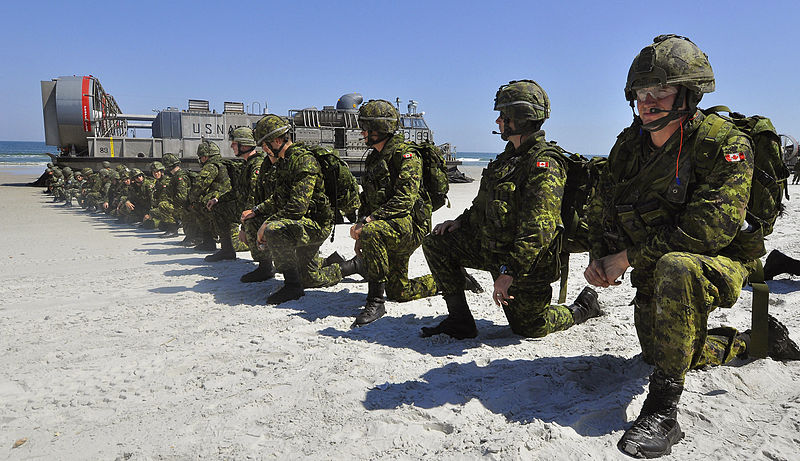
Canadian soldiers set a perimeter position after disembarking a U.S. Navy landing craft during a simulated amphibious landing, 24 April 2009. The training exercise was part of the 50th iteration of UNITAS, a multi-national exercise intended to increase interoperability among participating navies. Other participating nations include Brazil, Peru, Mexico, Germany, Ecuador, Argentina and Chile.
U.S. Coast Guard photo by Petty Officer Seth Johnson via Wikimedia Commons.

The unfortunate thing is that the precipitating event for this little spat could have been useful: An American president publicly calling out Canada, in effect, as a deadbeat brother. At their media availability-cum-fireside chat, Trump accused Canada — again in remarkably diplomatic language, by his standards — of being “slightly delinquent” when it comes to military spending, particularly as it relates to our NATO obligations. The unofficial target for NATO countries is two per cent of GDP. In 2018, the World Bank pegged Canada at 1.25.

This is far from a unique state of affairs. “The world needs more Canada,” some of us love to boast. Just not if it costs money. As a percentage of gross national income, Canada’s foreign aid spending is 0.26 per cent — below the OECD average of 0.31 and a pale shadow of countries like Sweden and Norway, which spend quadruple that. During the last election campaign, no doubt having extensively focus grouped the idea, the Conservatives promised to cut aid spending by 25 per cent.

Canada routinely lobbies for a seat on the UN Security Council for reasons no one can quite articulate — I suspect because it’s a relatively inexpensive thing that we can then boast about. Trudeau’s Liberals orated furiously about Canada’s alleged peacekeeping imperative during the 2015 election, dithered for an eon about how to fulfil it, sent 200 soldiers and eight helicopters to Mali for a year, and then brought them home. Peace kept! Conservatives spent the previous decade talking up Canada’s hard-power credentials even as military spending fell, as a percentage of GDP, for five out of the nine years Stephen Harper was prime minister.

No Canadian government of any stripe can procure a new fighter jet, icebreaker or frigate to save its life — because at the end of the day, we can’t use them to save our lives. If things really go pear-shaped we’re basically begging at Uncle Sam’s feet anyway, so military procurement has become about buying votes and very little else. Military spending has risen under Trudeau’s Liberals, but it’s still less than the 2009 high point under Harper — 1.4 per cent of GDP, in 2009. It was above two per cent as recently as 1987.
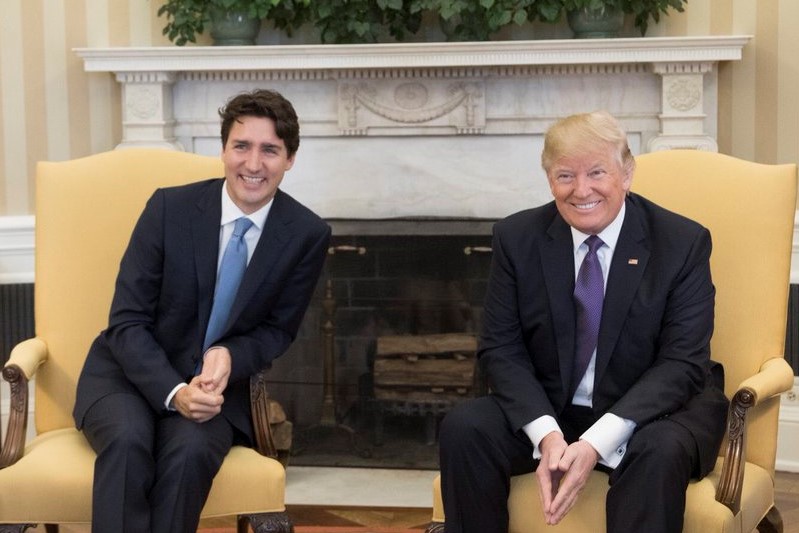
Justin Trudeau meets with President Donald Trump at the White House, 13 February, 2017.
Photo from the Office of the President of the United States via Wikimedia Commons.


Laying Out Dovetails with Christopher Schwarz

Filed under: Tools, Woodworking — Tags: , — Nicholas @ 02:00

Popular Woodworking
Published 23 May 2017

Chris shares his method for laying out dovetails to make things easier and more reliable for each set of dovetails. For more great information on joinery techniques, visit http://www.popwood.com/techniques/joi…

QotD: The British army

Filed under: Britain, History, Military, Quotations — Tags: , — Nicholas @ 01:00

[The British army] occupies a curious place in both the emotional heart of the nation and the head of policy makers. The public if asked are usually aware of an organisation steeped in regimental tradition, know of units like the SAS, Guards and Parachute Regiment and may know a little bit about the equipment such as tanks (noting that all APCs are tanks to the layman’s eye…). They recognise it from state ceremonial, where it is an integral part of the national fabric and identity, and are proud of the perception of “our boys” serving overseas in warzones. There is often a deeper rooted, but baseless suspicion of the senior echelons, dating back to the tired cliché of “lions led by donkeys” and fed by a generation of misguided historians trying to rewrite WW1 as not the greatest victory in the history of the British army, but instead four years of class war and turgid poetry.

To policy makers the army is an institution which is central to the survival of the nation, and which carries out many vital roles to meet defence and security policy objectives, but which is also extremely good at champing at the bit to get involved in operations overseas, even when it is not necessarily in the national interest to do so.

A cursory examination of history suggests that the British army is not by itself a war winning organisation. It does not go to war alone with peer rivals and expect to win – UK policy instead for centuries has been to maintain a small (but professional) army able to either conduct colonial policing, or work as part of a larger coalition force to achieve victory. This is not to do down the efforts of the army, but to accept the reality that as an island nation, the UK has relied on the navy as the ultimate guarantor of its security.

Sir Humphrey, “How Do You Solve a Problem Like a Deployable Division?”, Thin Pinstriped Line, 2017-08-06.

December 5, 2019

Build a spoke-shave for PENNIES (or just buy one)

Filed under: Tools, Woodworking — Tags: , — Nicholas @ 06:00

Rex Krueger
Published 4 Dec 2019

Should you build your own spokeshave or just buy an inexpensive new one?
More video and exclusive content: http://www.patreon.com/rexkrueger
Get the PLANS: https://www.rexkrueger.com/store/make…
Get the FREE Tip Sheet: https://www.rexkrueger.com/articles/2…
(more…)

Edith Cavell, before her execution, “patriotism is not enough. I must have no hatred or bitterness toward anyone”

Filed under: Britain, Germany, History, Military, WW1 — Tags: , , — Nicholas @ 05:00

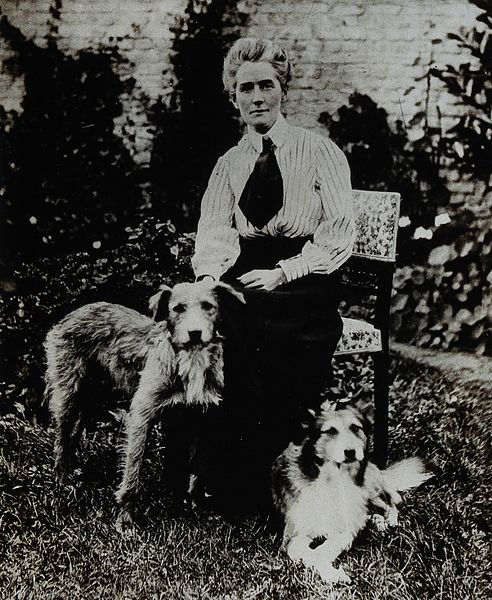
At the Foundation for Economic Education, Lawrence W. Reed relates the story of British nurse Edith Cavell:

Nazi Germany forced France to surrender on June 22, 1940. A day later, Adolf Hitler himself toured the conquered capital of Paris, where he personally ordered the destruction of two memorials to heroes from the First World War. Today — December 4, 2019 — is the 154th anniversary of the birth of one of them, a remarkable woman named Edith Cavell.

Edith Louisa Cavell
Photograph from the Wellcome Trust via Wikimedia Commons.

Her story is an example of the age-old tragedy that repeats itself every single minute somewhere in the world: a genuinely good individual whose life is snuffed out by some lousy government for a pointless purpose.

Born in 1865 in Swardeston, England, Edith Cavell was 30 when she chose nursing as a professional career. The inspiration had come to her while caring for her father during a serious illness, from which he recovered. During her training, she worked at several hospitals and later traveled around southeastern England treating patients in their homes for diseases from appendicitis to cancer. She earned a sterling reputation for her attention to detail, a congenial bedside manner and, says one biographer, a “ferocious sense of duty.”

At the insistence of a surgeon in Brussels, she went to Belgium in 1907 and became instrumental in the founding of Belgium’s first school of nursing. According to Kathy Warnes of the website Windows to World History, Cavell was soon training aspiring nurses for three hospitals, 24 schools, and 13 kindergartens in Belgium. She became the first matron of the Berkendael Institute in Brussels.

[…]

When Germany occupied Belgium in the fall of 1914, the Kaiser’s troops allowed Cavell, a citizen of an enemy country (England), to stay in charge of her Institute but they kept their eyes on her as she treated combatants from both sides in the hospital and training school. […] German suspicions led to Cavell’s arrest on August 3, 1915. Accused of treason, she was court-martialed, found guilty, and sentenced to death by firing squad.

Among the notes she wrote while incarcerated was a September 14 letter to a group of nurses, thanking them for flowers they had sent to the jail. She ended it with these words:

    In everything one can learn new lessons of life, and if you were in my place you would realize how precious liberty is and would certainly undertake never to abuse it. To be a good nurse one must have lots of patience; here, one learns to have that quality, I assure you.

At her subsequent trial, the prosecution posed only a dozen questions. From the first, she answered truthfully and boldly. Yes, she had helped hundreds to escape and she was proud of it. When asked if she realized what she was doing was “to the disadvantage of Germany,” she bravely replied that her preoccupation was “to help the men who applied to me to reach the frontier; once across, they were free.”

Tippman’s Half-Scale .22 Rimfire Browning 1917 Machine Gun

Filed under: History, USA, Weapons — Tags: , , , , — Nicholas @ 04:00

Forgotten Weapons
Published 4 Dec 2019

https://www.instagram.com/rockislanda…

https://www.youtube.com/user/RockIsla…

This is Lot 1578 in the upcoming RIA December 2019 Premier auction.

In 1983, Dennis Tippman formed a company to manufacture half-scale functional replicas of Browning machine guns — the 1919 and 1917 specifically. He built these as both fully automatic and semiautomatic (the semiauto design being approved by ATF in 1984) as new machine guns could still be registered in 1983. They were chambered for .22 LR rimfire ammunition, making then cheap and easy to shoot. In 1985, he added an M2HB replica, also in half scale, chambered for the .22 Magnum cartridge.

Tippman’s guns were excellent replicas of the originals, including accessories like tripods and even a few .22 caliber belt-loading machines. However, when the machine gun registry was closed in 1986, he left the business, selling it to FJ Vollmer. Tippman would move into paintball markers, and the company name is much better know for those today outside of a small community of machine gun enthusiasts.

Vollmer would eventually sell the company in 2001 to Eric Graetz and Lakeside Machine, who continued production of the semiauto versions, as well as offering post-sample automatics ones. This example is one of Graetz’ production, serial number 001 from when the company moved to New Haven Indiana.

http://www.patreon.com/ForgottenWeapons

Cool Forgotten Weapons merch! http://shop.bbtv.com/collections/forg…

Contact:
Forgotten Weapons
6281 N. Oracle #36270
Tucson, AZ 85704

Fallen flag – the Denver & Rio Grande Western

Filed under: History, Railways, USA — Tags: , , , , , , , — Nicholas @ 03:00

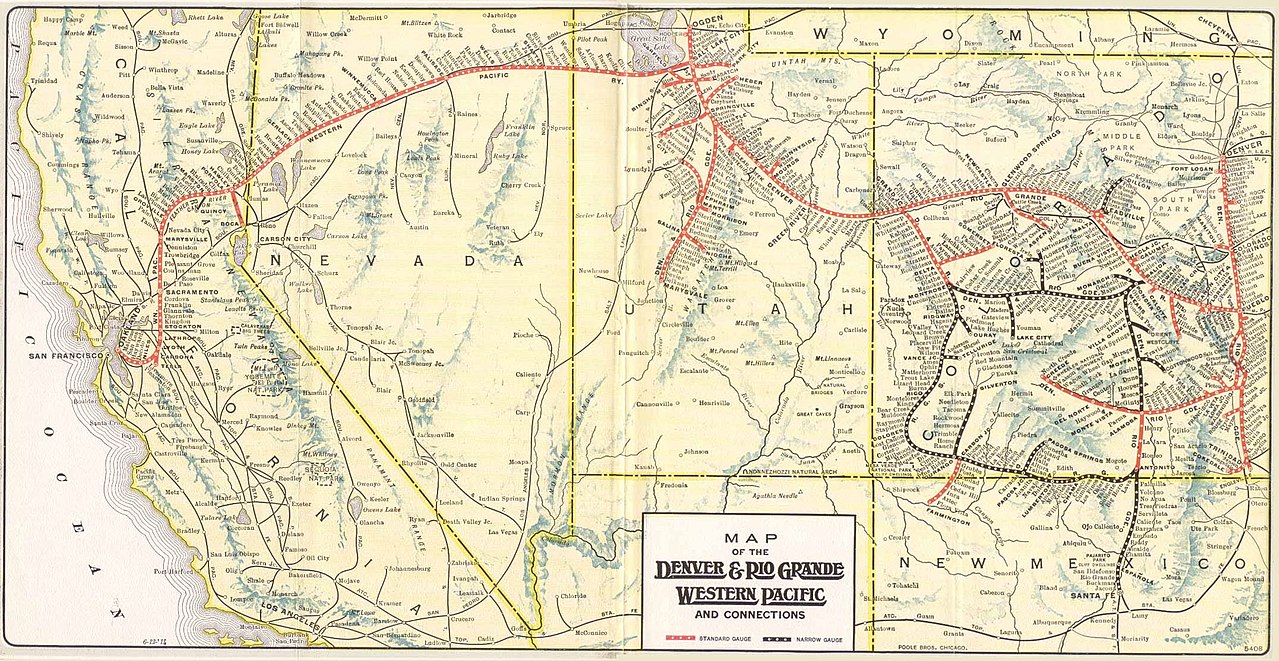
The origins of the Denver & Rio Grande Western by Mark Hemphill for Trains magazine:

1914 route map of the Denver & Rio Grande Western and Western Pacific railroads.
Map via Wikimedia Commons

In the American tradition, a railroad is conceived by noble men for noble purposes: to develop a nation, or to connect small villages to the big city. The Denver & Rio Grande of 1870 was not that railroad. Much later, however, it came to serve an admirable public purpose, earn the appreciation of its shippers and passengers, and return a substantial profit.

The Rio Grande was conceived by former Union Brig. Gen. William Jackson Palmer. As surveyor of the Kansas Pacific (later in Union Pacific’s realm), Palmer saw the profit possibilities if you got there first and tied up the real estate. Palmer, apparently connecting dots on a map to appeal to British and Dutch investors, proposed the Denver & Rio Grande Railway to run south from Denver via El Paso, Texas, to Mexico City. There was no trade, nor prospect for such, between the two end points, but the proposal did attract sufficient capital to finish the first 75 miles to Colorado Springs in 1871.

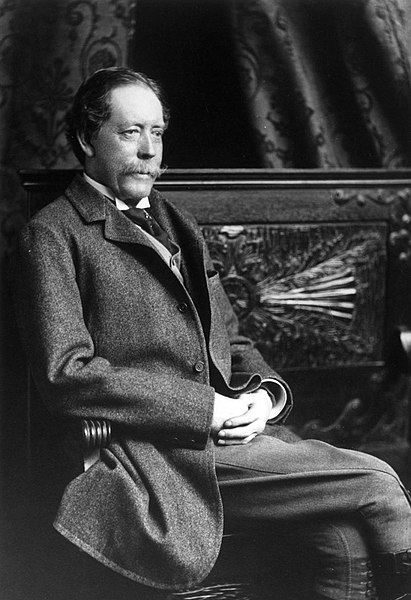
William Jackson Palmer 1836-1909, founder of Colorado Springs, Colorado, builder of several railroads including the D&RGW.
Photograph circa 1870, photographer unknown, via Wikimedia Commons.

Narrow-gauge origins
Palmer chose 3-foot gauge to save money, assessing that the real value lay in the real estate, not in railroad operation. At each new terminal, Palmer’s men corralled the land, then located the depot, profiting through a side company on land sales. Construction continued fitfully to Trinidad, Colo., 210 miles from Denver, by 1878. Above Trinidad, on the ascent to Raton Pass, Palmer’s engineers collided with the Santa Fe’s, who were building toward California. Realizing that a roundabout narrow-gauge competing with a point-to-point standard-gauge would serve neither the fare box nor the next prospectus, Palmer changed course, making D&RG a supply line to the gold and silver bonanzas blossoming all over Colorado and Utah. Thus the Rio Grande would look west, not south, and would plumb so many canyons in search of mineral wealth that it was a surprise to find one without its rails.

Turning west at Pueblo, Colo., and outfighting the Santa Fe for the Royal Gorge of the Arkansas River — where there truly was room for only one track — D&RG entered Leadville, Colorado’s first world-class mining bonanza, in 1880. Three years later, it completed a Denver–Salt Lake City main line west from Salida, Colo., via Marshall Pass and the Black Canyon of the Gunnison River. The last-spike ceremony in the desert west of Green River, Utah, was low-key, lest anyone closely examine this rough, circuitous, and glacially slow “transcontinental.” Almost as an afterthought, D&RG added a third, standard-gauge rail from Denver to Pueblo, acknowledgment that once paralleled by a standard-gauge competitor, narrow-gauge was a death sentence.

New owners, new purpose
Palmer then began to exit. The company went bust, twice, in rapid succession. The new investors repurposed the railroad again. Instead of transient gold and silver, the new salvation would be coal. Thick bituminous seams in the Walsenburg-Trinidad field fed beehive coke ovens of a new steel mill near Pueblo and heated much of eastern Colorado and western Kansas and Nebraska.

The New York Central in 1928-1929

Filed under: History, Railways, USA — Tags: , , — Nicholas @ 02:00

Speed Graphic Film and Video
Published 22 Dec 2017

More early sound film from the Fox Movietone News archives in the University of South Carolina’s Moving Image Resource Collection.

It shows New York Central trains in the Hudson River valley in 1928 and 1929. Scenes include:
0:10 K3 Pacifics passing through Peekskill station.
1:10 View from the tender as a fast freight crosses the bridge at Castleton.
2:30 Looking up at the bridge as a train passes over.
2:42 Another ride over the bridge at Castleton, this time seen from the caboose. There is a brief glimpse of NYC 0-6-6-0 No. 1300, the only locomotive with that wheel arrangement on the railroad.
4:54 View from a bluff above the Weehawken yards. (Thanks to Vincent Zablocki for the ID.)
5:30 Street operations on the West Side Line in Manhattan when it still ran at street level. Locomotives seen include No. 595 and dummy No. 1904.
7:33 A look at the drivers as a K3 Pacific passes by the camera.
8:21 Passenger trains on the main line, seen at a distance. These are editing “trims,” so the shot ends just as the train gets near the camera. These were probably taken at Breakneck Mountain.
11:19 Departing passenger train at a grade crossing. Again, this is a “trim,” so the beginning of the shot is missing.

QotD: [Literal] Health Nazis

Filed under: Germany, Health, History, Quotations — Tags: , , , , , — Nicholas @ 01:00

[T]he Nazis’ focus on the threats that risky habits pose to “public health” makes perfect sense in light of their collectivist ideology. “Brother national socialist,” said one bit of Nazi propaganda, “do you know that your Führer is against smoking and thinks that every German is responsible to the whole people for all his deeds and missions, and does not have the right to damage his body with drugs?”

Smith adds: “Clearly there were considerable links between the promotion of particular lifestyles and the racial hygiene movement. Tobacco and alcohol were seen as ‘genetic poisons,’ leading to degeneration of the German people.”

The point, I hasten to add, is not that today’s “public health” paternalists are Nazis. I am not suggesting that everyone who hates smoking is just like Hitler. But there is an unmistakable totalitarian logic to the notion that the government has a responsibility to promote “public health” by preventing us from engaging in activities that might lead to disease or injury. The implication is that we all have a duty to the collective to be as healthy as we can be, an idea the Nazis embraced but one that Americans ought to find troubling.

Jacob Sullum, “So What If Hitler Was an Anti-Smoker?”, Reason Hit and Run, 2004-12-17.

December 4, 2019

The British Blitz Spirit is a Myth – WW2 – War Against Humanity 005

World War Two
Published 3 Dec 2019

Strategic bombing was used to destroy the popular support for their governments war effort, and the British boosted that their resistance to bombing was an unique trait. But both are false, based on lies and propaganda.

Join us on Patreon: https://www.patreon.com/TimeGhostHistory
Or join The TimeGhost Army directly at: https://timeghost.tv

Follow WW2 day by day on Instagram @World_war_two_realtime https://www.instagram.com/world_war_t…
Join our Discord Server: https://discord.gg/D6D2aYN.
Between 2 Wars: https://www.youtube.com/playlist?list…
Source list: http://bit.ly/WW2sources

Hosted by: Spartacus Olsson
Written by: Joram Appel and Francis van Berkel
Produced and Directed by: Spartacus Olsson and Astrid Deinhard
Executive Producers: Bodo Rittenauer, Astrid Deinhard, Indy Neidell, Spartacus Olsson
Creative Producer: Joram Appel
Post-Production Director: Wieke Kapteijns
Research by: Francis van Berkel and Joram Appel
Edited by: Karolina Dołega

Thumbnail Colorization by:
– Julius Jääskeläinen – https://www.facebook.com/JJcolorization/

Colorizations by:
Dememorabilia – https://www.instagram.com/dememorabilia/

Sources:
– Imperial War Museum: D2168, D1623, D2956, 36206, D1587, D2154, D2157, HU36143, HU 36199
– Deutsche Fotothek, 0000436
– Noun Project: Natural Disasters 1674928 By Claudia Revalina, ID
noun_prisoner 63221 By carlotta zampini, IT, Bomb by P Thanga Vignesh
– Toni Frissell, Abandoned boy, London, 1945
– Battle of Britain, film from United States Holocaust Memorial Museum

Archive by Screenocean/Reuters https://www.screenocean.com.

A TimeGhost chronological documentary produced by OnLion Entertainment GmbH.

From the comments:

World War Two
7 hours ago (edited)
Having spoken to many British people while researching this episode, I realised that many in the United Kingdom still grow up with the idea that the perseverance in the face of constant bombing was something uniquely British, and that the so-called “Blitz Spirit” caused people to proudly face Hitlers bombs and transcend class-differences, and that bombing actually boosted their morale. However, research – half of which was done by Francis who is from Britain as well, shows that this idea is mainly based on propaganda. Furthermore, it is still considered controversial to doubt Churchill’s war cabinet’s policy of mass bombing German cities to force them out of the war. However, the effectiveness of this too has been proven to be based on falsehoods and lies. The true effectiveness of strategic bombing was already known to Churchill’s advisors during the war. Feel free to enter discussion about this in the comment section, but keep it civil and back up your arguments with examples and sources wherever possible.

Cheers,
Joram

Defund the BBC? Well, if you can’t just sack, burn, and salt the earth it stands on, defunding might help

Filed under: Britain, Government, Media, Politics — Tags: , , — Nicholas @ 05:00

Hector Drummond wonders if the Overton Window has moved far enough that the BBC might lose its sacred status:

In a notorious talk given to Conservative Future in 2009, Sean Gabb made the following radical recommendation:

    On the first day of your government, you should close down the BBC. You should take it off air. You should disclaim its copyrights. You should throw all its staff into the street … You must shut it down – and shut it down at once.

I have for many years been torn between thinking this a good idea, and thinking that it would result in such uproar that the government would immediately fall, and be replaced by a new government who would restore the BBC. But the question was purely abstract anyway, because no Conservative government would even contemplate doing such a thing. No Conservative government was even going to contemplate taking away the licence fee.

But finally, after three years of disgraceful conduct — well, extra disgraceful conduct — the future of the BBC is finally an issue that that can be broached. It’s finally an issue that can be talked about without people throwing up their hands in horror and demanding you be thrown out of wherever you are. People will listen sympathetically if you suggest that the BBC can’t go on like it has been. People will join in enthusiastically if you say that Channel 4 is a disgrace that should no longer be state-funded. Well, not if you’re in the common room. But in the ordinary pubs around the country they will. They will at the dinner parties that are being held outside the M25. And even some inside it.

So what should be done? The conventional conservative/libertarian idea is that the BBC should be moved to a subscription model. The more radical Gabb idea is not one that has ever been talked about much. In fact, it’s an idea that until recently would have shocked most people, even most conservatives. (If you read to the end of the Gabb article, you’ll see that the young conservatives were themselves outraged by Gabb’s idea). But actually it’s a very good idea. Because here’s the thing. If you privatise the BBC, it may do very well for itself, and then it would be free to spin the news far more outrageously than it currently does.

More recently than Dr. Gabb, Richard Delingpole made a suggestion that I stole for my headline:

So the idea is no longer so alien. Particularly amongst younger people, who just don’t watch the BBC any more. They generally don’t watch much TV at all, they prefer YouTube and TikTok (which are filled with rubbish, it has to be said, but that’s another story), but they especially don’t watch the BBC (or channel 4). So most young people won’t even notice if the BBC is closed down, although about thirty sociology undergraduates will eventually tweet about it once their lecturers tell them what’s happened, and then the Guardian will have a fit and try to make it a big story, but there’ll be no BBC to amplify that, so it won’t be that effective. And the other channels are unlikely to shed too many tears over the shutdown of a subsidised rival (although I expect that the news staff will as they’re all lefties now).

The Twelve Labors of Hercules – Rules Lawyering – Extra Mythology – #2

Filed under: Europe, Greece, History, Humour — Tags: — Nicholas @ 04:00

Extra Credits
Published 2 Dec 2019

Hercules (or Herakles in the Greek) needs to finish the last five tasks on the list before he will have properly atoned for murdering his family, but it isn’t going to be so easy. The king, seeing that Hercules has completed the tasks declares that two of them are invalid since Hercules got outside help. And I guess that’s technically cheating? More sidequests abound and we meet a familiar face from an older Extra Mythology!

The flesh-eating horses might be the worst monsters we’ve had on Extra Mythology. Something about those eyes. D:

Desiderius Erasmus of Rotterdam

Filed under: Books, History, Religion — Tags: , — Nicholas @ 03:00

David Warren on discovering Erasmus as a teenager:

Erasmus makes an adequate hero for the adolescent boy. He was mine, for a time, even more than his friend Thomas More, who was forced on our consciousness in the late ‘sixties by Robert Bolt’s play-cum-movie (A Man for All Seasons). We were all herded from the High School to the Cinema, and rolled home in our yellow schoolbus full of something — youthful idealism — that could then be applied to various dubious causes. There was this Penguin with the title, Utopia. Without reading it, even in this pop translation, we became wise in our conceit, which is to say, conceited little wiseacres. I don’t “look back in anger,” however. That was for the ‘fifties. I look back through a fog of marijuana smoke, from the Age of Hippies.

Portrait of Desiderius Erasmus of Rotterdam (1466-1536) with Renaissance Pilaster
Hans Holbein (1497-1543) via Wikimedia Commons.

Drugs saved us. Had it not been for them, we might have accomplished worse horrors. By the ‘seventies, when a new nadir was being established for Western Civ, another, visibly duller generation was coming along. Ours was the first to be perpetually schooled (I would not say “educated”). I left high school, home and Canada, in the year of grace 1969, now half a century ago; and when I returned to settle in the 1980s, I found my old schoolmates still in college. To be fair, at least some were homemakers by then, or garage mechanics. It was so long ago that this word, “homemakers,” could still be used without feminist “irony,” if you came from a small town.

But the Erasmus who had appealed to me, as teenager, was the author of the Colloquies, and the Praise of Folly (a keepsake from his friendship with More). I imagined him gentle, humorous, wise, yet full of righteous fire. Too, apparently, a bit of a whiner. I was dazzled by his production of the first printed edition of the Greek Testament, and did not yet realize that it was a slapdash performance, rushed to beat the version of Cardinal Ximenes, already set in type but not yet bound — a proof that there is nothing new under the sun.

Erasmus’ obsessive struggle against the reputation of Saint Jerome, whose central rôle in the history of our Vulgate he tried to deny, and whom he presumptuously corrected on innumerable points — himself straying in and out of heresy — ended in repeated embarrassments for him. But to my adolescent mind, he must always be the hero, beating furiously against the hidebound.

What Life Was Like for the Home Guard During WW2

Filed under: Britain, History, Military, WW2 — Tags: , , — Nicholas @ 02:00

Forces TV
Published 8 May 2014

Scrapbooks revealing what the Home Guard was really like during World War Two have been published online.

The collection of maps, photographs and secret documents were compiled by Lieutenant Colonel Sir Morgan Crofton.

Now they are available for all to see thanks to work by the New Forest Park Authority.

The scrapbooks can be viewed online here – http://www.newforestww2.org

QotD: French anti-Americanism

Filed under: Books, France, Quotations, USA — Tags: — Nicholas @ 01:00

The list of French anti-American writers is long: it is its own unique genre, one found nowhere else in such abundance. Already, in 1793, Talleyrand, in exile before he would become French foreign minister, wrote in Philadelphia that Americans possessed “neither conversation nor cuisine.” He also famously observed, “These Americans, they have 32 religions but only one dish, roast beef with potatoes.” The genealogy of contemporary anti-Americanism is traceable to the beginning of the nineteenth century, to a Catholic France arrayed against a Protestant America, and then to the twentieth century, when a socialist France confronted a capitalist America; always just beneath the surface is the idea of a civilized France set against a supposedly uncivilized America. French anti-American literature, which Jean-François Revel analyzed perceptively in Anti-Americanism, is faithful to an eternal code: our civilization versus their lack of culture; our spirituality versus their brutality. Beneath these changing ideological masks, we might perhaps discern a rivalry between two nations that claim to be “universalist.” Americans have seized the torch of human rights from France, or at least the claim to embody them.

Guy Sorman, “French Anti-Americanism, Rebooted”, City Journal, 2017-11-27.

« Newer PostsOlder Posts »

Powered by WordPress