
The Shah that emerges from these pages would be almost a tragic figure, if they gave us a better feel for him as a person, that is to say as a living being rather than a mere policy-maker. He was by nature a vacillator, thrust by inheritance and a destiny beyond his control into a position in which vacillation would eventually prove fatal. In addition to self-doubt, however, he was also inclined to vainglory, oscillating between the two, retreating from crises and ostentatiously parading himself, and boasting, when things seemed to be going well. He thought that he had both the right and the duty, genuinely for the sake of his country, to rule rather than reign, but while he had the ideas of an autocrat, he also had those of an ordinary decent person who baulked at the shedding of much blood, the only way, in the end, that he could have preserved his throne (and possibly not even then).
He was intelligent and wily, and his achievements were not negligible. He managed to wrest control of Iran’s oil first from the British and then from the international oil consortium that succeeded them. He played the oil market with great skill. He instituted an important land reform that genuinely benefitted the peasantry, expanded education, and had a full understanding of the importance of technology in the modernization of Iran necessary if it were to be anything other than a dependent state. His foreign policy was flexible, pragmatic, and shrewd. He needed the Americans but did not trust them (or anybody else, for that matter), realising that in politics there were no friendships, only common interests. This was to be borne out in the most terrible and tragic way during his last few years of exile, with which this book does not deal. Where there is no friendship, there is no gratitude for services rendered.
His failures were at least as great as his successes, and in the end more important from the point of view of his personal destiny. He so hollowed out political life in Iran, in order to exercise power as a true autocrat, that it came to have two poles: sycophancy and plotting against him. Sycophancy is a terribly addictive drug, no doubt a permanent temptation of the powerful (and therefore a good reason to restrict political terms of office); you can never have enough of it, nor can it ever be outrageous enough.
Unfortunately for the Shah, no one is sycophantic from principle, indeed sycophants tend (rightly) to despise themselves, fully aware that they are acting from the most naked of self-interest. There is no rat that leaves a sinking ship faster than a sycophant deserting a lost cause. A sycophant will take a risk to preserve his skin, but not to preserve his master.
Theodore Dalrymple, “Downfall of the House of Pahlavi”, The Iconoclast, 2021-03-03.
June 16, 2021
QotD: The Shah of Iran
June 13, 2021
QotD: Defending the undefendable – Brutalist architecture
The newly-gained attractivity [of architectural brutalism] is growing by the day. In troubled times where societal divides are stronger than ever around the globe and in a world where instantaneous rhymes with tenuous, brutalism offers a grounded style. It’s a simple, massive and timeless base upon which one can feel safe, it’s reassuring.
It is rather difficult to argue with, let alone refute, the vague propositions of such a paragraph, which nevertheless intends (I imagine) to connote approval and judgment based upon sophisticated, wide, and deep intellectual considerations. But what exactly is a “grounded style” in contrast to a “world where instantaneous rhymes with tenuous”? This is verbiage, if not outright verbigeration, though it might serve to intimidate those with little confidence in their own judgment. The idea that brute concrete could create any kind of security rather than unease or fear is laughable.
When defenders of or apologists for brutalism illustrate their articles with supposed masterpieces of the genre, it is hardly a coincidence that they do so with pictures of buildings utterly devoid of human beings. A human being would be about as out of place in such a picture, and a fortiori in such a building, as he would be in a textbook of Euclidean geometry, and would be as welcome as a termite in a wooden floor or a policeman in a thieves’ kitchen. For such defenders and apologists of brutalism, architecture is a matter of the application of an abstract principle alone, and they see the results through the lenses of their abstraction, which they cherish as others cherish their pet.
Theodore Dalrymple, “The Brutalist Strain”, Taki’s Magazine, 2019-11-02.
May 23, 2021
QotD: The psychological impact of extended lockdowns
Theodore Dalrymple (TD): The first thing to say is that I do not like the term “mental health.” Was Isaac Newton mentally healthy, or Michelangelo? I think part of the problem is very concept of mental health. It implies that there is some state or condition of mind deviation from which is analogous to illness. Once this idea takes hold, it is clearly up to an expert to cure the person, or better still prevent him from getting ill in the first place. This expectation cannot be met, but the idea that it can be makes people more fragile.
Second, people clearly vary much in their response to confinements, lockdowns, closures of resorts of entertainment, etc. For myself, I have reached the age of misanthropy or self-sufficiency when these things make comparatively little difference to my life. I have plenty of space and plenty of things to do, in essence reading and writing. But that does not make me mentally healthier than a young man who is frustrated because he cannot play football with his friends and becomes ratty – moreover living in a very confined space.
Depression is so loosely defined a term that it has become almost valueless as a diagnosis. How often have you heard someone say “I’m unhappy” rather than “I’m depressed?” The semantic shift is very important. The proper response to someone who says that he is depressed is to give him antidepressants, even though these don’t work in the majority of cases, except as a placebo, and have potential side-effects. It is always tempting for people who are unhappy to drink alcohol – to drown their sorrows, as we say. Of course, if you drink too much, you might become really and truly depressed. A person who did not respond to the current situation with a little gloom would be odd.
Claudio Grass, “Theodore Dalrymple: Self-Control And Self-Respect Have Become Undervalued”, The Iconoclast, 2021-02-17.
April 16, 2021
QotD: “Declaring passionate belief in freedom of speech”
The only thing that most managers or bureaucrats believe in passionately is their career, in the broad sense of that term: for they are quite willing to abandon or sacrifice a career completely in the narrow sense if it is in the interest of their career in a broader sense.
I learned this in the hospitals in which I worked. As soon as a hospital manager said “I believe passionately in the work that Department X has been doing,” I knew that Department X was about to be closed down by that very same manager.
Thus, when I read that a publisher claimed that “We believe passionately in freedom of speech,” I knew at once that the publisher was about to withdraw a book from publication that it had previously advertised for publication.
Theodore Dalrymple, “‘Passionate’ Belief in Freedom of Speech and Multiplying Orthodoxies”, New English Review, 2020-12-22.
April 9, 2021
QotD: Instant expertise
One of the effects of the COVID-19 epidemic has been to reveal to a very large percentage of the population the joys of instant expertise. The world now has hundreds of millions, if not several billions, of epidemiologists, virologists, and clinicians, all of whom know best how to deal with the pandemic. The only problem is that their solutions are at variance with one another.
It sometimes seems as if the certainty with which views are held is inversely proportional to the solidity of the factual basis on which they are founded. If commentary on the internet is anything to go by (it might not be, of course, for those who avail themselves of this means of self-expression are a self-selected rather than a representative sample), people often take a religious attitude toward their own doctrine and condemn as heretics all those who express doubts about it. I don’t want to sound like a psychoanalyst, that class of person who believes that he unfailingly knows the real meaning of what is said rather than its merely apparent meaning, but stridency of views is often indicative of unacknowledged uncertainties. Zinc supplementarians and others of the type cling to their beliefs with a fervor that evidence does not merit.
Theodore Dalrymple, “Everyone’s an Expert”, Taki’s Magazine, 2020-10-16.
April 6, 2021
QotD: Rap music
Theodore Dalrymple, “Liars and Maligners”, Taki’s Magazine, 2020-11-13.
April 5, 2021
The Ahuman obsession
Theodore Dalrymple considers the work of an English professor who advocates for the extinction of the human race:
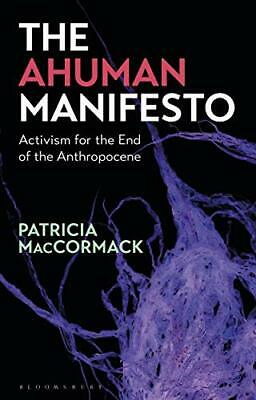
Professor MacCormack’s main idea seems to be that the only way to save the planet from destruction is for humanity not to reproduce itself and thereby to die out within a generation or two. She wants to make the world safe for the worms and the wasps, though her scheme would be hard luck on those species that parasitize only Man. They would have to die out too. But, as the Reverend Charles Caleb Colton put it in 1821, “Let no man presume to think that he can devise any plan of extensive good, unalloyed with evil.” If Man dies out, so too will Wuchereria bancrofti, one of the filarial parasites that cause elephantiasis, along with other such species, but I suppose that this is but a small price to pay for the immense benefit overall wrought by the extinction of Mankind.
Naturally, I sent for her latest book, The Ahuman Manifesto: Activism for the End of the Anthropocene. Thanks to the epidemic all the libraries were shut, though in other respects the virus’ efforts to end the Anthropocene were, from the professor’s rather special point of view, feeble or pathetic, with only 2,000,000 deaths so far and 6,998,000,000 to go. If I wanted to read the book, I would have to buy it.
I am an obsessional reader; that is to say, when I start a book I feel obliged to read it through from cover to cover. Moreover, I would rather read anything than nothing at all. Once in Los Angeles I was stuck in a hotel bedroom with nothing to read but the yellow pages (there were still telephone directories in those days), from which I learned a humiliating lesson. Books have long been at the center of my life, but I discovered how unimportant they are in the lives of most people. There was about half a page devoted in the yellow pages to bookshops, but scores to private detectives. No wonder Philip Marlowe chose Los Angeles as his place of work.
But Professor MacCormack’s book defeated me, not only sapping my will to read further but inducing a state almost of catatonia. It certainly cured me, at least temporarily, of my obsessional desire to finish any book that I have started. Her style made The Critique of Pure Reason seem as light and witty as The Importance of Being Earnest. She appears to think that the English plural of manifesto is manifesti rather than manifestos; I admit that it conjured up in my mind a new Italian dish, gnocchi manifesti.
Open the book at any page and you will find passages that startle by their polysyllabic meaninglessness combined with the utmost crudity. By chance, I opened the book to page 144 and my eye fell on the following:
The multiplicity of becoming-cunt as an assemblage reassembles the tensors upon which it expresses force and by which force is expressed upon its various planes and dimensions.
I have known deteriorated schizophrenic patients to speak more sensibly and coherently than this.
March 21, 2021
The two Britains, gastronomically speaking
Theodore Dalrymple on the British diet (at least before the neverending lockdowns):
“The Joy of Cookbooks” by shoutabyss is licensed under CC BY 2.0

As in many other things, the population has divided into two: those with increasingly refined tastes in gastronomy, and those who eat mainly junk and takeaway food for the quickest but also crudest possible gratification.
Gastronomy often seems the only aesthetic sphere in which the modern British display any real interest. Their dress, their music, their art (or at least such as gains any publicity), their literature, and of course their architecture, are hideously ugly, even militantly so, but a Michelin-starred restaurant receives their adulation — or did in the now-distant days when restaurants were open.
But the modern interest in food is not the same as a mass market for fish, which has, alas, mainly to be cooked, and the fact is that the British are, grosso modo, too lazy and ignorant to cook properly. Many millions of them would be horrified by the sight of a whole fish, or even any part of a raw fish: they don’t want to eat anything that hasn’t been through a complex industrial process, had chemicals and preservatives added to it, and cannot be just stuck in a microwave for a few minutes before consumption in front of the television. Besides, they wouldn’t know what to do with a fish, let alone a crustacean.
It is said that about a fifth of British children do not eat a meal with another member of their household (family would, perhaps, be a misleading term) more than once a fortnight, turning meals into asocial and even furtive occasions. Many households do not have a dining table, and in my visiting days as a doctor I discovered that the microwave is often a household’s entire batterie de cuisine.
This slovenly and asocial approach to eating — evident in the detritus left behind in British streets as people eat wherever they happen to be, in their cars, walking along, in trains and buses, in fact anywhere but a dining room and with others — is not the consequence of poverty, but of a degraded style of life.
Many years ago I noticed that shops in poor areas where there were many immigrants of Indian origin had enormous piles of a vast array of vegetables so cheap that the problem was carrying them home rather than their cost. I would see Indian housewives selecting their purchases with care and attention: the quality and not just the price mattered to them. Uncompelled by economic necessity to shop there, I would nevertheless do so; but I never saw poor whites doing so. The problem with all those vegetables was that they required cooking, preferably with skill, which very few poor whites, as against poor Indians, had. And this is a cultural problem, if the taste for and consumption of a diet of junk food (what the French more vividly call malbouffe) is a problem.
The Indians are fat, with bad health consequences, from eating too much good food; the native British, with bad health consequences, from eating too much bad food. The prevalence of obesity in Britain, greater than in most other European countries, is possibly one of the reasons that its death rate from COVID-19 is so high, among the highest if not actually the highest. And this obesity is immediately obvious on arrival in Britain from any European country.
February 24, 2021
Solzhenitsyn was far from the first to warn about the evils of Soviet rule
Theodore Dalrymple had a discussion recently with a Marxist professor:
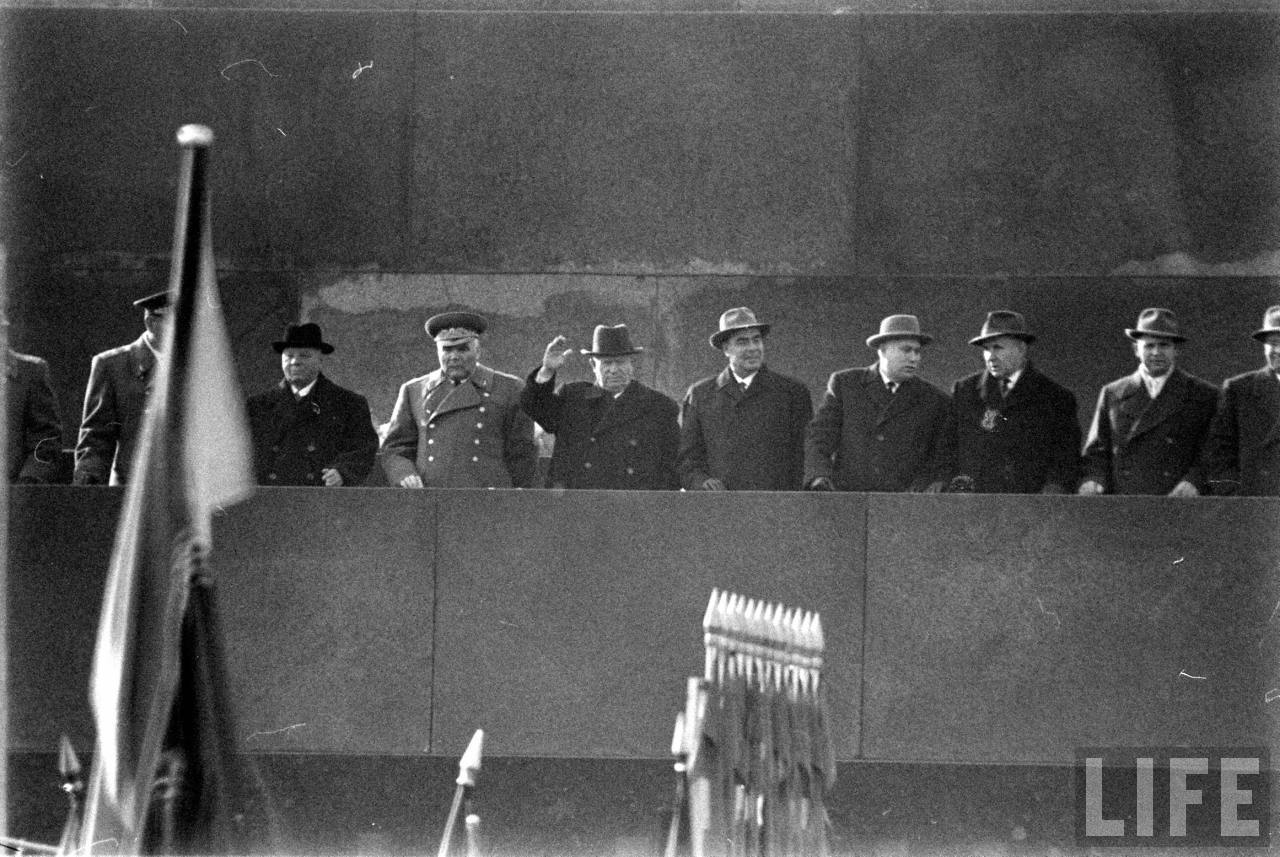
Krushchev, Brezhnev and other Soviet leaders review the Revolution parade in Red Square, 1962.
LIFE magazine photo by Stan Wayman.
The professor was an intelligent man, and probably cultivated too. How was it possible, in the Year of Our Lord 2021, for such a person still to believe that, until the advent of Stalin, the Russian revolution was a good thing, to be emulated or repeated elsewhere?
How could anyone of his intelligence fail to realise that, though as ever there was much wrong with the world, attempts to put everything right at once by the implementation of petty intellectual schemes are fraught with danger, and have a history of mass slaughter behind them?
I think the answer must lie in the psychology of religion: when religious faith is replaced by a philosophy that prides itself on its rationality, it soon turns religious in the worst possible sense. it becomes an atheist theocracy.
Everything was known about the Soviet Union from the first. It is simply not true that Solzhenitsyn revealed anything to the West that, in essence, was not, or could not have been, known before.
I have, in desultory fashion for a number of decades, been collecting books about Russia and the Soviet Union from just before the Revolution until the Second World War, and while it is true that many of them are laudatory, with titles that now seem hilarious to us such as The Soviet Union Fights Neurosis, a very large number books of various genres, from essays to histories to memoirs to novels and short stories, were published that exposed the viciousness of Bolshevism from the very first — a viciousness that anyone with any imagination could have anticipated from Lenin’s literary style alone.
Leninist viciousness was viciousness of a new and more thoroughgoing type that acted on the mind as a virus acts on a computer (viciousness, both actual and potential, is, alas, a constant of human history because of our flawed nature).
Solzhenitsyn was right about the difference between Macbeth, who from personal ambition killed people, but only a few, and the ideologically-motivated mass-killings of the Soviet Union and elsewhere — the difference being precisely in the effect of ideology.
But what was really different about Solzhenitsyn, apart from his literary talent, was that Western intellectuals were now prepared to believe what he said, whereas shortly before they had rejected as mere propaganda evidence of a very similar nature produced by others.It was so startling to meet someone who still believed that a “pure” revolution could take place, and that such a person was teaching history of all things, in a reputable, or at any rate reputed, university, that, like Karl Kraus confronted by Hitler, I could think of nothing to say.
I had no idea whether he still taught undergraduates, or whether in doing so he suppressed at least some of his views (as a judge is supposed to suppress his own private opinions): but I confess that the charge against Socrates, that of corrupting youth, came into my mind.
February 18, 2021
QotD: The “European Project”
Theodore Dalrymple, “European Empire, Fractured”, Law & Liberty, 2020-11-10.
January 12, 2021
QotD: The use and abuse of stigma
But stigma, and hence the fear of stigma, can be beneficial in a social creature such as Man. I want the good opinion of my neighbours, I do not want them to think I am rude or dishonest. Fearing the stigma of being thought so, I try harder to be polite and honest.
Of course, wanting the good opinion of others may, in certain situations, have bad effects. Wanting the good opinion of my superior in the Nazi Party would be very bad. But that does not mean that desiring the good opinion of others is always intrinsically bad. In the same way, fear of stigmatization is not always bad (and there can be no fear of stigma without the existence of the thing itself). For example, it might be that people are discouraged from taking drugs, drinking too much, or stealing for fear of being stigmatized.
Theodore Dalrymple, “Stigma and Sympathy”, The Iconoclast, 2020-09-23.
December 28, 2020
QotD: Book accumulation
However, I never buy a book without intending to read it, and intention is, if not nine-tenths of accomplishment, at least some portion of it.
Theodore Dalrymple, “Sufficiently Educated to Embrace the Simplistic”, The Iconoclast, 2020-09-24.
November 30, 2020
QotD: Grandstanding, or more properly, cant
To cant is to utter moral sentiment far in excess of what is felt or could ever be felt. The purpose of cant is either to present the person who utters it as morally superior to others or to himself as he really is, or to shut other people up entirely. These purposes are not mutually exclusive, of course.
Cant is not new in the world, though the authors of this book offer no history of it. “Of all the cants that are canted in this canting world …” Laurence Sterne wrote more than quarter of a millennium ago, and Doctor Johnson suggested that his interlocutor should clear his mind of cant. My late friend, Peter Bauer, when elevated to the House of Lords, took “Let us be free of cant” as his heraldic motto, but far from ushering in an era free of it, subsequent years have proved a golden age of cant. The social — or antisocial — media have been a powerful catalyst of cant.
Theodore Dalrymple, “The Expanding Tyranny of Cant”, The Iconoclast, 2020-08-26.
November 26, 2020
QotD: The “history-as-nightmare” narrative
The fact remains, however, that for more than one reason, history-as-nightmare is nowadays an infinitely more powerful organising narrative principle than history-as-progress.
In the first place, nightmares present themselves much more vividly to the imagination than the slow accretion of progress, just as hell is much more easily envisaged than heaven — and more enjoyable to imagine, too.
In the second place, when progress occurs, it is immediately taken for granted, as if it were a merely natural process that had never really required human effort to take place. Who now is grateful for the elimination of the suffering caused by peptic ulceration, for example? There is simply no cultural recollection of peptic ulceration at all, though well within living memory books were written about how to live with, or despite, your ulcer, what diet to take to assuage your ulcer, and so forth. Once they are cured, it is simply taken for granted that people do not have such maladies — progress magically did away with them.
In the third place, and most importantly, the fact of progress is much less useful to political entrepreneurs than is the narrative of history as nothing but a nightmare that continues to the present day and, as Marx put it, weighs upon the brain of the living. Only by keeping the memory of the nightmare ever-present in the minds of their sheep, thereby stoking resentment, may the political shepherds herd, and then fleece, the flock.
A fourth great advantage of history-as-nightmare is that it explains the failures and failings of everybody who is dissatisfied or disappointed with his life. To misquote Shakespeare: The fault, dear Brutus, is not in ourselves, but in our stars, that we are underlings. We do not fail the world, the world fails us. How comforting a thought!
Theodore Dalrymple, “Against History-as-Nightmare”, Law & Liberty, 2020-08-11.
October 17, 2020
QotD: The inherent triviality of most “news” programs
Anthony Daniels, “The European Working Time Directive & the Sound-Bite Culture: why the latter makes arguing against the former impossible”, The Social Affairs Unit, 2004-08-09.


