Forgotten Weapons
Published 30 Aug 2017When World War One began, the British did not have a formal sniping program, and by 1915 the British found themselves thoroughly outclassed by the Germans in this area. They responded by developing tactics and equipment for sniping, and by mid 1916 they had really outclassed the Germans. However, the mid-war British sniping rifles really left a lot to be desired, even if they were being used effectively in the field. There was no single military optic, instead a wide variety of commercial scopes were rounded up and put into use. The mounts for these scopes were offset to the left side of the rifles to allow for continued use of stripper clips. Clips were arguably not really necessary on these rifles, and the offset scopes led to substantial headaches in use, as they required calculating windage as well as elevation adjustments depending on range.
Through 1918, though, the British developed one of the best sniping rifles of the war, although it would be introduced too late to see virtually any front line service. This new rifle was a Winchester-made Pattern 1914 Enfield with a center-mounted optic, and was designated the P14 MkI W(T). The P14 rifles were more accurate than the SMLE, and the centrally mounted optic made for much simpler shooting. These rifles were deemed to be mechanically capable of 1.5 MOA shooting, with the practical expected group size being 3 MOA.
Three thousand of these P14 snipers’ rifles were assembled and kept in service after the end of the war, but in the mid 1930s a small additional batch of 79 were made for the Irish Free State by BSA. These were all eventually surplussed to the US, and the rifle in this video is one of those late-production guns.
http://www.patreon.com/ForgottenWeapons
Cool Forgotten Weapons merch! http://shop.bbtv.com/collections/forg…
If you enjoy Forgotten Weapons, check out its sister channel, InRangeTV! http://www.youtube.com/InRangeTVShow
December 1, 2020
Pattern 14 MKI W (T) – The Best Sniper Rifle of World War One
November 19, 2020
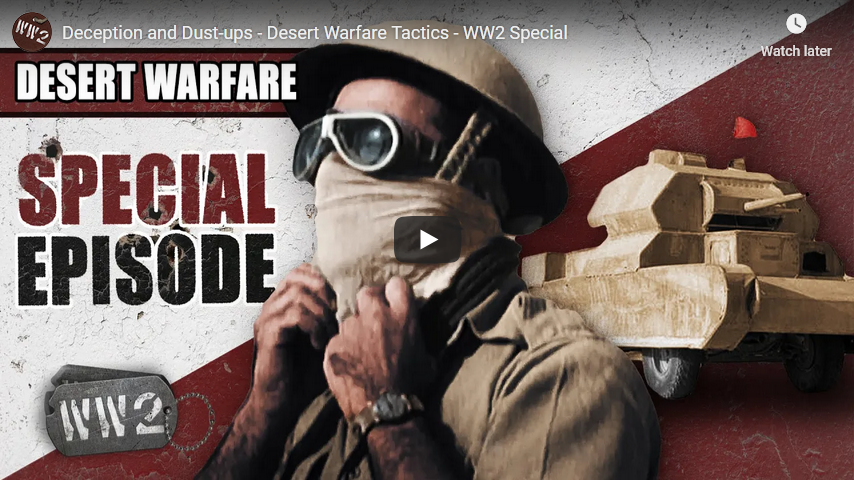
Deception and Dust-ups – Desert Warfare Tactics – WW2 Special
World War Two
Published 18 Nov 2020When Allies and Axis clash on the deserts of North Africa, harsh and unique conditions force them to develop new tactics. From misdirection to new ways to move across the desert, all to gain an advantage over the enemy.
Join us on Patreon: https://www.patreon.com/TimeGhostHistory
Or join The TimeGhost Army directly at: https://timeghost.tvFollow WW2 day by day on Instagram @ww2_day_by_day – https://www.instagram.com/ww2_day_by_day
Between 2 Wars: https://www.youtube.com/playlist?list…
Source list: http://bit.ly/WW2sourcesHosted by: Indy Neidell
Written by: Marlon William Londoño and Francis van Berkel
Director: Astrid Deinhard
Producers: Astrid Deinhard and Spartacus Olsson
Executive Producers: Astrid Deinhard, Indy Neidell, Spartacus Olsson, Bodo Rittenauer
Creative Producer: Maria Kyhle
Post-Production Director: Wieke Kapteijns
Research by: Marlon William Londoño
Edited by: Miki Cackowski
Sound design: Marek Kamiński
Map animations: Eastory (https://www.youtube.com/c/eastory)Colorizations by:
Julius Jääskeläinen – https://www.facebook.com/JJcolorization/
Spartacus OlssonSources:
IWM E 18461, E 8361, E 10147, E 12630, E 12385, E 12375, E 21337, E 12410, HU 3715, E 21339, E 4350
Picture of John Hutton, courtesy of Coventry Society
Picture of Edwin Galligan, Steven Sykes and Fred Pusey, courtesy of Rick Stroud
Picture of Hugh Cott, courtesy of Selwyn College, Cambridge
Picture og Ralph Alger Bagnold, courtesy of National Portrait Gallery
from the Noun Project: sun by MRFASoundtracks from the Epidemic Sound:
Reynard Seidel – “Deflection”
Max Anson – “Ancient Saga”
Hakan Eriksson – “Epic Adventure Theme 4”
Rannar Sillard – “March Of The Brave 4”
Jon Bjork – “Force Matrix”Archive by Screenocean/Reuters https://www.screenocean.com.
A TimeGhost chronological documentary produced by OnLion Entertainment GmbH.
From the comments:
World War Two
6 hours ago
As we see the North African campaign ongoing in our week by week series, in today’s episode we take a closer look at the tactics and logistical developments that helped shaped that campaign.
October 28, 2020
QotD: The Gurkhas
For 20 years between the wars [Field Marshal Viscount Slim] was a Gurkha officer, as so many of the 14th Army’s fighting generals were. Indeed, for a time, they were known on the front as the “Mongol Conspiracy.” Slim loves the Gurkhas, whose language he speaks. His favourite stories are of Gurkhas. He tells of the paratroopers who were to jump at 300 feet. As they had never jumped before, their Havildar [Sergeant] asked if they might go a little nearer the ground for their first jump. He was told that this was impossible because the parachutes would not have time to open. “Oh,” said the Gurkha, “so we get parachutes, eh?”
October 1, 2020
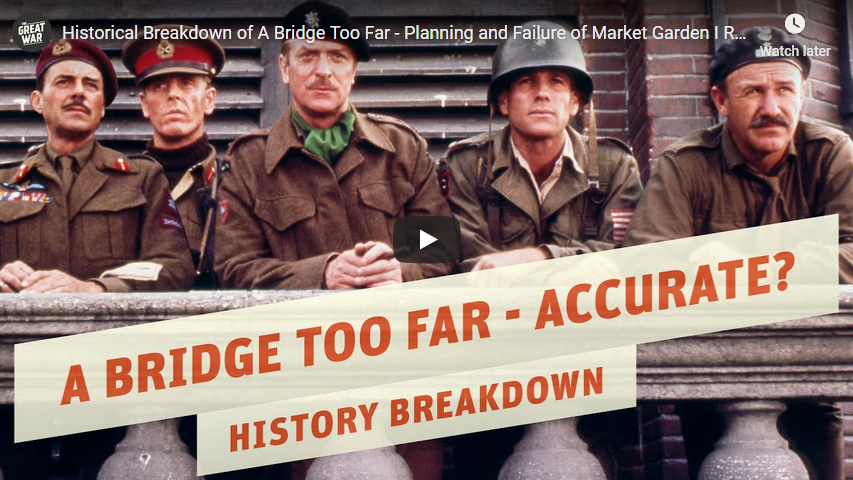
Historical Breakdown of A Bridge Too Far – Planning and Failure of Market Garden I RHINELAND 45
The Great War
Published 30 Sep 2020Support our brand new World War 2 documentary about The Battle of the Rhineland (not to be released on YouTube): https://realtimehistory.net/rhineland45
After last year’s Downfall video (with over 1 million views!) we thought we look at another classic WW2 movie and give you a breakdown about the historical figures and background. Our pick this time: A Bridge Too Far.
» SUPPORT THE CHANNEL
Patreon: https://www.patreon.com/thegreatwar» OUR PODCAST
https://realtimehistory.net/podcast – interviews with World War 1 historians and background info for the show.» BUY OUR SOURCES IN OUR AMAZON STORES
https://realtimehistory.net/amazon *
*Buying via this link supports The Great War (Affiliate-Link)» SOURCES
A. Beevor, Arnhem: The Battle for the Bridges (2018)
B. Horrocks, Escape to Action (1960)
R. Neillands, The Battle for the Rhine 1944 (2005)
Builder, Bankes, Nordin, Command Concepts (1999)
www.pegasusarchive.org
www.nam.ac.uk/explore/market-garden
www.iwm.org.uk/history/the-story-of-operation-market-garden-in-photos» MORE THE GREAT WAR
Website: https://realtimehistory.net
Instagram: https://instagram.com/the_great_war
Twitter: https://twitter.com/WW1_Series
Reddit: https://reddit.com/r/TheGreatWarChannel»CREDITS
Presented by: Jesse Alexander
Written by: Jesse Alexander
Director: Toni Steller & Florian Wittig
Director of Photography: Toni Steller
Sound: Toni Steller
Editing: Toni Steller
Motion Design: Philipp Appelt
Mixing, Mastering & Sound Design: http://above-zero.com
Maps: Daniel Kogosov (https://www.patreon.com/Zalezsky)
Research by: Matthew Moss
Fact checking: Florian WittigChannel Design: Alexander Clark
Original Logo: David van StepholdContains licensed material by getty images
All rights reserved – Real Time History GmbH 2020
From the comments:
The Great War
6 hours ago
Support our brand new World War 2 documentary about The Battle of the Rhineland (not to be released on YouTube): https://realtimehistory.net/rhineland45 **We know that some of you don’t like the fact that we upload non-Great War content once in a while. But here are a few fun facts: Last year’s video about THAT scene from Downfall has been one of our most successful videos ever produced. It helped us spreading the word about our crowdfunding campaign last year and it also brought new subscribers to The Great War that hadn’t heard about it. And in the cut-throat world of the YouTube attention economy this is really important for our continued existence. Another “fun” fact: Both this video and the Downfall video were both claimed for copyright violation even though they clearly fall under fair use. We disputed and lost and now there is nothing we can do about the fact that someone else is earning money through our work. Just one of the reasons why it’s increasingly frustrating working with YouTube and why we are exploring other avenues for The Great War and our other projects.
August 29, 2020
Durs Egg Ferguson – The Rifle That Didn’t Shoot George Washington
Forgotten Weapons
Published 27 Oct 2018http://www.patreon.com/ForgottenWeapons
Cool Forgotten Weapons merch! http://shop.bbtv.com/collections/forg…
Captain Patrick Ferguson was a British officer who designed and patented a breechloading rifle in 1776, which would actually see service in the American Revolution at the Battle of Brandywine. Ferguson presented two rifles to the British military for consideration, one of them being this specific gun. In a shooting demonstration on a windy, rainy day he convinced the Board of Ordnance of the viability of his rifle, and a field trials was set in motion. One hundred Ferguson rifles were made for the Crown, and Ferguson was detached from his regiment to be given command of a company of specially trained elite riflemen. His men were drilled in accurate shooting as well as use of the bayonet, they were organized in small groups to make use of cover and concealment, and they were fitted with green uniforms to blend into the terrain. This unit deployed to the American colonies in 1777, and saw action in the Battle of Brandywine.
Unfortunately for Ferguson and his ideas, the unit didn’t make any particularly notable impact on the battle, although not by any fault of their own. Worse, Ferguson was wounded, and because the unit was so heavily dependent on him it was disbanded while he recuperated. He did see service again at the Battle of King’s Mountain, where he was killed in action. This particular Ferguson rifle was made by the noted London gunsmith Durs Egg, and is one of the two guns presented to the Board of Ordnance that began the whole series of events.
Contact:
Forgotten Weapons
PO Box 87647
Tucson, AZ 85754If you enjoy Forgotten Weapons, check out its sister channel, InRangeTV! http://www.youtube.com/InRangeTVShow
August 19, 2020
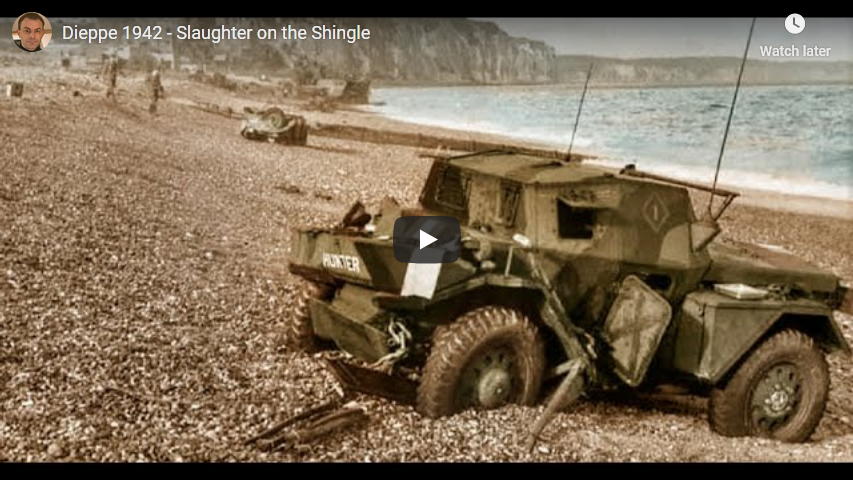
Dieppe 1942 – Slaughter on the Shingle
Mark Felton Productions
Published 14 Mar 2020Find out how and why the Dieppe Raid was launched in 1942 and why is went so disastrously wrong.
Visit my new audio book channel ‘War Stories with Mark Felton’: https://youtu.be/xszsAzbHcPE
Help support my channel:
https://www.paypal.me/markfeltonprodu…
https://www.patreon.com/markfeltonpro…Disclaimer: All opinions and comments expressed in the ‘Comments’ section do not reflect the opinions of Mark Felton Productions. All opinions and comments should contribute to the dialogue. Mark Felton Productions does not condone written attacks, insults, racism, sexism, extremism, violence or otherwise questionable comments or material in the ‘Comments’ section, and reserves the right to delete any comment violating this rule or to block any poster from the channel.
Credits: YouTube Creative Commons; WikiCommons; Google Commons; Mark Felton Productions
August 4, 2020
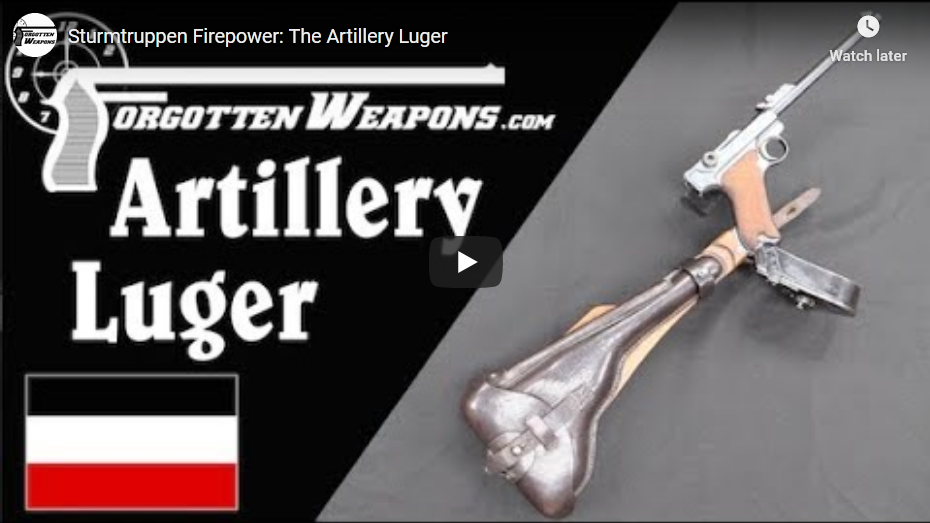
Sturmtruppen Firepower: The Artillery Luger
Forgotten Weapons
Published 4 Apr 2020https://www.instagram.com/rockislanda…
https://www.youtube.com/user/RockIsla…
This is lot #3569 in the upcoming RIA Premier Auction. It was scheduled for April, but has been postponed — check their web site for upcoming Online Only auctions every month, though!
The lP08 (Lange pistole 08) was formally adopted in 1913 to replace the Reichsrevolver for the field artillery. These were the German light artillery troops, who were specifically given a pistol caliber carbine to provide maximum firepower in a very compact package. They were made by the Erfurt Arsenal in 1914, and by DWM throughout the war, with a total of about 180,000 made.
What is most interesting to me is the evolution of the use of the “artillery Luger” throughout the course of World War One. Starting as simply a compact weapon for artillery, it was quickly recognized by aviators as an ideal weapon for aircraft before the mass introduction of aerial machine guns. The stock allowed more accurate fire, and the semiautomatic operation minimized the handling movements required to fire. More substantially, it was adopted by the German Sturmtruppen for maximizing the striking power of small and flexible units. It is for these men that the 32-round drum magazine was developed in 1916. This represents one of the very few formal military uses of a pistol-caliber semiautomatic carbine, as it was superseded by the advent of the submachine gun in 1918.
A few small batches were made in the 1920s and 1930s, but it would not see significant use in World War Two – leaving it a weapon specifically iconic to the Great War.
http://www.patreon.com/ForgottenWeapons
https://www.floatplane.com/channel/Fo…
Cool Forgotten Weapons merch! http://shop.bbtv.com/collections/forg…
Contact:
Forgotten Weapons
6281 N. Oracle #36270
Tucson, AZ 85740
July 28, 2020
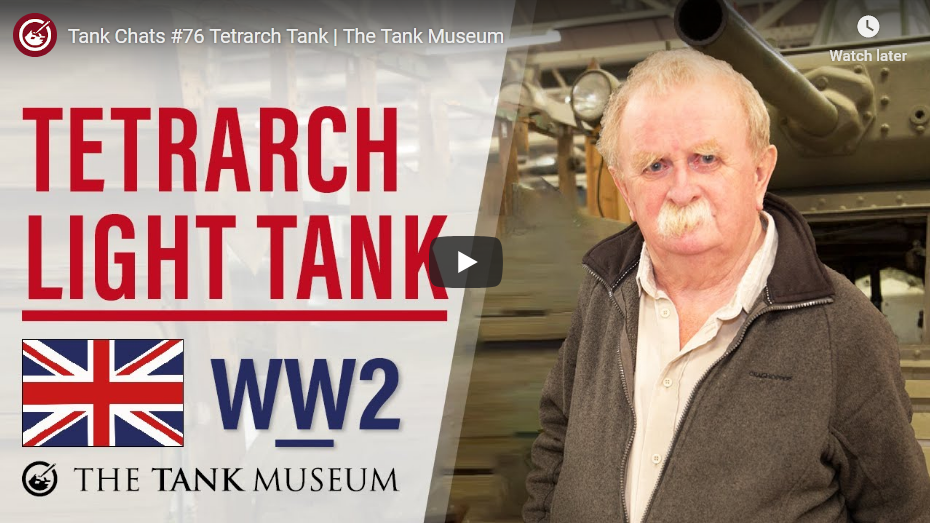
Tank Chats #76 Tetrarch Tank | The Tank Museum
The Tank Museum
Published 31 May 2019Tetrarch tanks were flown over on D-Day, 6th June, 1944, for the invasion of France during WW2. Find out more with David Fletcher.
Originally adopted by the British Army as a light tank it became the first British airborne tank.
Many thanks to Vitaly Kuzmin for providing the image of the Tetrarch at Kubinka https://www.vitalykuzmin.netSupport the work of The Tank Museum on Patreon: ► https://www.patreon.com/tankmuseum
Visit The Tank Museum SHOP: ► https://tankmuseumshop.org/
Twitter: ► https://twitter.com/TankMuseum
Tiger Tank Blog: ► http://blog.tiger-tank.com/
Tank 100 First World War Centenary Blog: ► http://tank100.com/ #tankmuseum #tanks #DDay75 #tankchats
July 17, 2020
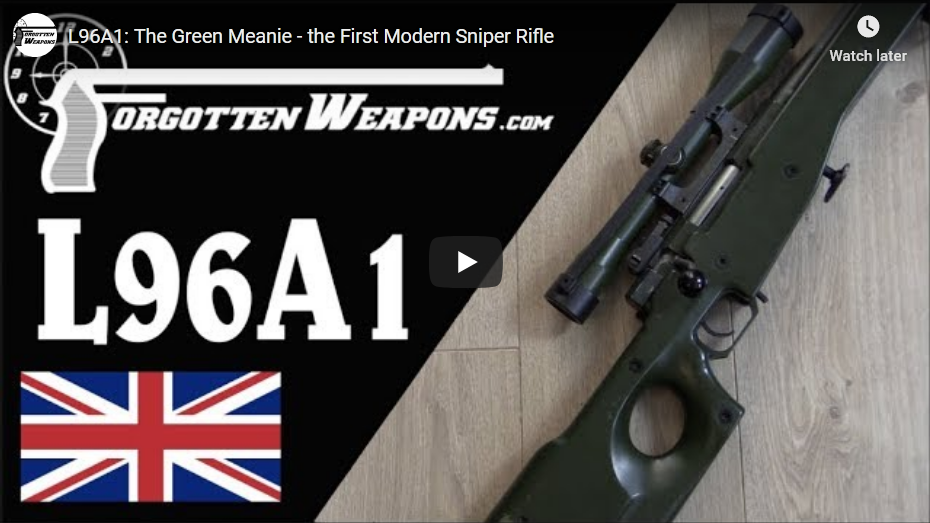
L96A1: The Green Meanie – the First Modern Sniper Rifle
Forgotten Weapons
Published 16 Feb 2019http://www.patreon.com/ForgottenWeapons
Cool Forgotten Weapons merch! http://shop.bbtv.com/collections/forg…
The Accuracy International Precision Marksman rifle was the winner of the British MoD’s competition to replace the L42A1 as the standard British sniper rifle, and was accordingly adopted as the L96A1. It was the vanguard of the modern sniper rifle, with a highly modular chassis design, and it revolutionized British sniping performance. Thanks to Steve Houghton, was have access today to one of a tiny number of original L96A1 rifles in private hands. If you are interested in learning more, I highly recommend checking out Steve’s newly released book, The British Sniper: A Century of Evolution. It can be found at:
https://www.swiftandboldpublishing.co…
Contact:
Forgotten Weapons
PO Box 87647
Tucson, AZ 85754
July 12, 2020
July 10, 2020
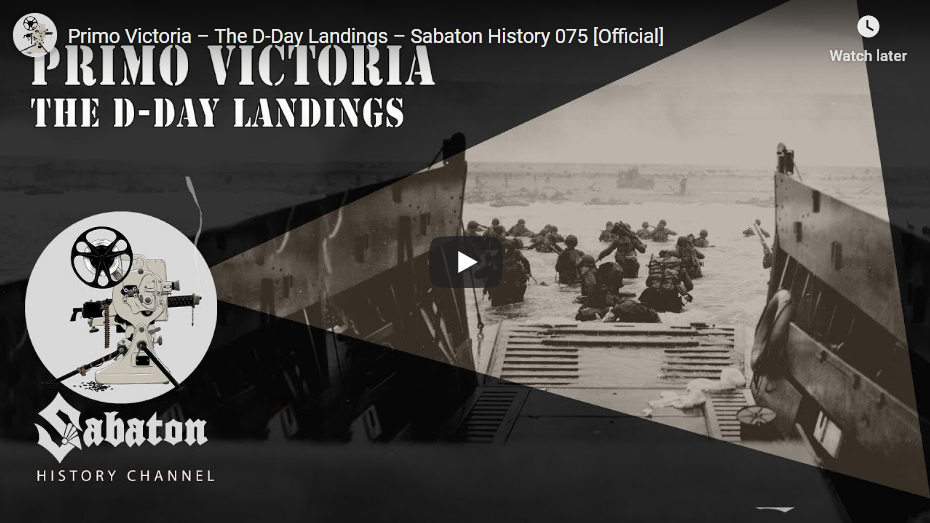
“Primo Victoria” – The D-Day Landings – Sabaton History 075 [Official]
Sabaton History
Published 9 Jul 2020On D-Day, 6th June 1944, Operation Overlord began. The Western Allies unleashed their gigantic amphibious landing on the coast of Normandy. Preluded by a nightly airborne attack and supported by a massive armada of bombers and fleet artillery, their landing-craft reached the fortified beaches. Against a hail of machine-gun bullets, the Allied soldiers stormed the beaches and overran the German bunkers and trenches. A new front was opened and the battle for France began.
Support Sabaton History on Patreon: https://www.patreon.com/sabatonhistory
Listen to “Primo Victoria” on the album Primo Victoria:
CD: http://bit.ly/PrimoVictoriaStore
Spotify: http://bit.ly/PrimoVictoriaSpotify
Apple Music: http://bit.ly/PrimoVictoriaAppleMusic
iTunes: http://bit.ly/PrimoVictoriaiTunes
Amazon: http://bit.ly/PrimoVictoriaAmzn
Google Play: http://bit.ly/PrimoVictoriaGooglePlayWatch the Official Lyric Video of “Primo Victoria” here: https://www.youtube.com/watch?v=qVHyl…
Listen to Sabaton on Spotify: http://smarturl.it/SabatonSpotify
Official Sabaton Merchandise Shop: http://bit.ly/SabatonOfficialShopHosted by: Indy Neidell
Written by: Markus Linke and Indy Neidell
Directed by: Astrid Deinhard and Wieke Kapteijns
Produced by: Pär Sundström, Astrid Deinhard and Spartacus Olsson
Creative Producer: Joram Appel
Community Manager: Maria Kyhle
Executive Producers: Pär Sundström, Joakim Broden, Tomas Sunmo, Indy Neidell, Astrid Deinhard, and Spartacus Olsson
Post-Production Director: Wieke Kapteijns
Edited by: Karolina Dołęga
Sound Editing by: Marek Kaminski
Maps by: Eastory – https://www.youtube.com/c/eastory
Archive by: Reuters/Screenocean – https://www.screenocean.com
Colorizations by: Julius Jääskeläinen – https://www.facebook.com/JJcolorization/
Music by: SabatonSources:
National Archives NARA
Bundesarchiv
US Holocaust Memorial Museum
Imperial War Museums: IWM H 39183, H38244 IWM, 1944_B5234, 944_TR1631, IWM A70 31-1, IWM A70 31-2,EA25734, B 5218, 1944_MH9509, IWM A70 29-1-2, B5225, B5089
Icons from The Noun Project by zidney and Norbert de GraaffAn OnLion Entertainment GmbH and Raging Beaver Publishing AB co-Production.
© Raging Beaver Publishing AB, 2019 – all rights reserved.
June 29, 2020
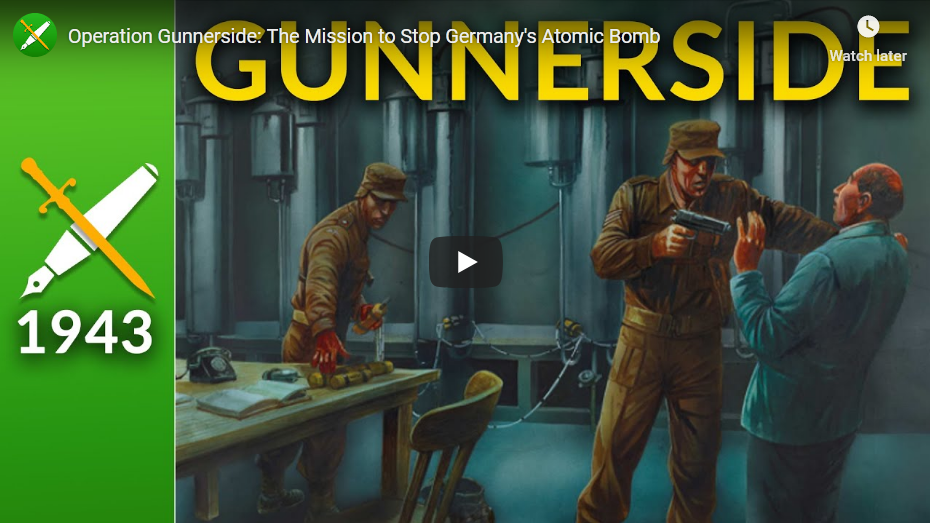
Operation Gunnerside: The Mission to Stop Germany’s Atomic Bomb
Historigraph
Published 21 Mar 2020Buy Historigraph Posters here! https://teespring.com/stores/historig…
Support the channel on Patreon: https://www.patreon.com/historigraph#OperationGunnerside #Historigraph #Historigraph #CuriosityStream
►Twitter: https://twitter.com/historigraph
►Instagram: https://www.instagram.com/historigraph
►Patreon: https://www.patreon.com/historigraph
►Follow me on Twitch: https://www.twitch.tv/historigraphSources:
Richard Petrow, The Bitter Years
David Greentree, Heroes of Telemark: Sabotaging Hitler’s Atomic Bomb
Clips:
1948 film Kampen om tungtvannet
Clips from contemporary documentary; https://www.youtube.com/watch?v=c3jSW…
Music:
“Crypto” by Kevin MacLeod
Link: https://incompetech.filmmusic.io/song…
License: http://creativecommons.org/licenses/b…“Rynos Theme”, Incompetech https://incompetech.com
“Hitman” by Kevin MacLeod
Link: https://incompetech.filmmusic.io/song…
License: http://creativecommons.org/licenses/b…
June 21, 2020
Burma Victory (1945)
PeriscopeFilm
Published 31 May 2016Support Our Channel: https://www.patreon.com/PeriscopeFilm
Made in 1945, BURMA VICTORY is a British documentary about the Burma Campaign during World War Two. It was directed by Roy Boulting. The introduction to the film outlines the geography and climate of Burma, and the extent of the Japanese conquests. The film then describes the establishment of the South East Asian Command (SEAC) under Mountbatten, “a born innovator and firm believer in the unorthodox”, and gives a comparatively detailed account of subsequent military events, including the Battle of Imphal-Kohima and Slim’s drive on Mandalay, Arakan landings, the northern offensive of the Americans and Chinese under Stilwell, and the roles played by Chindits and Merrill’s Marauders. The film ends with the capture of Rangoon and the Japanese surrender. The film focuses on the difficulties of climate, terrain, the endemic diseases of dysentery, malaria, etc., the vital role of air supplies, the shattering of the myth of Japanese invincibility and the secondary role of the Burma campaign in overall Allied strategy.
This film represents a British look at the campaign and was the pet project of Admiral Lord Louis Mountbatten, Supreme Allied Commander, South-East Asia, and he planned it as a joint Anglo-American production. But this scheme foundered over the inability of the U.S. leadership and British to agree on the main theme of the film. The British wanted it to concentrate on the drive southwards to liberate Burma. The Americans, anxious not to be seen to be participating in the restoration of the British Empire, wanted to emphasize the heroic building of the Ledo Road and the drive northwards to relieve the Chinese. In the end the two sides went their separate ways. The Americans produced the Ronald Reagan narrated film The Stilwell Road and the British made Burma Victory. It was the final production of the Army Film and Photographic Unit (AFPU) and was directed, like Desert Victory (1943), by Roy Boulting. Not released until after the war was over, it was hailed and promoted as “the real Burma film”.
The Burma Campaign in the South-East Asian theatre of World War II was fought primarily between the forces of the British Empire and China, with support from the United States, against the forces of the Empire of Japan, Thailand, and the Indian National Army. British Empire forces peaked at around 1,000,000 land, naval and air forces, and were drawn primarily from British India, with British Army forces (equivalent to 8 regular infantry divisions and 6 tank regiments), 100,000 East and West African colonial troops, and smaller numbers of land and air forces from several other Dominions and Colonies. The Burmese Independence Army was trained by the Japanese and spearheaded the initial attacks against British Empire forces.
The campaign had a number of notable features. The geographical characteristics of the region meant that factors like weather, disease and terrain had a major effect on operations. The lack of transport infrastructure placed an emphasis on military engineering and air transport to move and supply troops, and evacuate wounded. The campaign was also politically complex, with the British, the United States and the Chinese all having different strategic priorities.
South East Asia Command (SEAC) was the body set up to be in overall charge of Allied operations in the South-East Asian Theatre during World War II. Admiral Lord Louis Mountbatten served as Supreme Allied Commander of the South East Asia Command from October 1943 through the disbandment of SEAC in 1946.
This film is part of the Periscope Film LLC archive, one of the largest historic military, transportation, and aviation stock footage collections in the USA. Entirely film backed, this material is available for licensing in 24p HD and 2k. For more information visit http://www.PeriscopeFilm.com

June 9, 2020
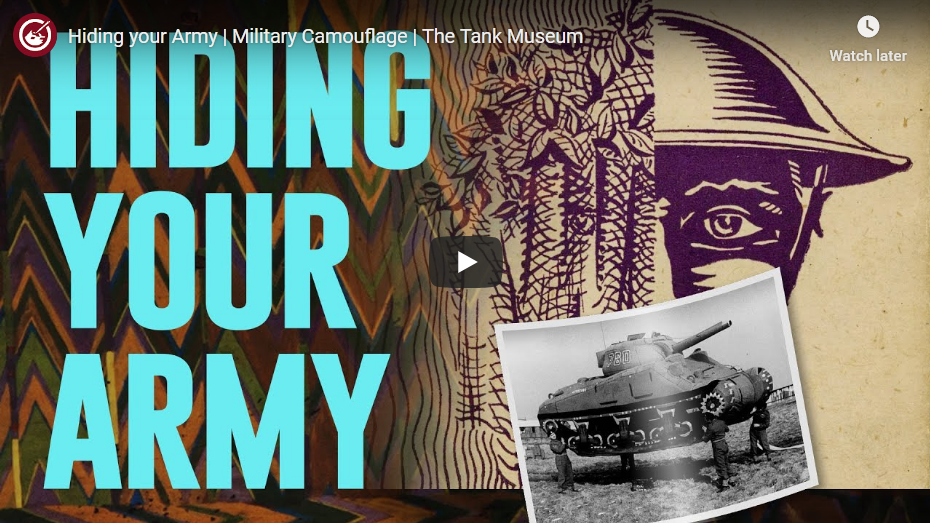
Hiding your Army | Military Camouflage | The Tank Museum
The Tank Museum
Published 10 May 2020Curator David Willey talks to you about military camouflage, from home! He takes a look at military uniform and vehicles.
Support the work of The Tank Museum on Patreon: ► https://www.patreon.com/tankmuseum
Visit The Tank Museum SHOP & become a Friend: ► https://tankmuseumshop.org/Twitter: ► https://twitter.com/TankMuseum
Instagram: ► https://www.instagram.com/tankmuseum/
Tiger Tank Blog: ► http://blog.tiger-tank.com/
Tank 100 First World War Centenary Blog: ► http://tank100.com/
June 7, 2020
British Officers Abandon Their Men to the Nazis – WW2 – 093 – June 6 1941
World War Two
Published 6 Jun 2020The British morale reaches new depths after losses at Crete and the loss of HMS Hood. New plans are made for North Africa and Syria to restore the public and the soldier’s faith.
Join us on Patreon: https://www.patreon.com/TimeGhostHistory
Or join The TimeGhost Army directly at: https://timeghost.tvFollow WW2 day by day on Instagram @World_war_two_realtime https://www.instagram.com/world_war_t…
Between 2 Wars: https://www.youtube.com/playlist?list…
Source list: http://bit.ly/WW2sourcesWritten and Hosted by: Indy Neidell
Director: Astrid Deinhard
Producers: Astrid Deinhard and Spartacus Olsson
Executive Producers: Astrid Deinhard, Indy Neidell, Spartacus Olsson, Bodo Rittenauer
Creative Producer: Joram Appel
Post-Production Director: Wieke Kapteijns
Edited by: Iryna Dulka
Sound design: Marek Kamiński
Map animations: Eastory (https://www.youtube.com/c/eastory)Colorizations by:
– Dememorabilia – https://www.instagram.com/dememorabilia/
– Julius Jääskeläinen – https://www.facebook.com/JJcolorization/
– Olga Shirnina, a.k.a. Klimbim – https://klimbim2014.wordpress.com/
– Carlos Ortega Pereira, BlauColorizations, https://www.instagram.com/blaucolorizations/
– Jaris Almazani (Artistic Man), https://instagram.com/artistic.man?ig…Sources:
– Hawker Hurricane shape by Martin Čížek, Junkers Ju 87B-2 shape by Kaboldy, Ju 52 shape by TSRL; from Wikimedia
– Imperial War Museum: E 443, E 3661, TR 1487, E 3284
– National Portrait Gallery
– Bundesarchiv, CC-BY-SA 3.0: Bild_146-1981-159-22, Bild_146-1979-128-35, Bild_101I-559-1076-29Archive by Screenocean/Reuters https://www.screenocean.com.
A TimeGhost chronological documentary produced by OnLion Entertainment GmbH.