Quotulatiousness

May 8, 2020

Soldier of Three Armies Pt. 3 – Vietnam War – Sabaton History 066 [Official]

Filed under: History, Media, Military, USA — Tags: , , , , , , — Nicholas @ 04:00

Sabaton History
Published 7 May 2020

Crossed the water a new start, war still beating in his heart, a new legend has been born.

Arrested by the Finnish secret police and tried for treason, war-hero and living legend Lauri Törni realized that his home country held no more future for him any longer. Törni made a run for it. Towards a new country, a new life and a new name. And a new war.

Support Sabaton History on Patreon: https://www.patreon.com/sabatonhistory

Listen to “Soldier of Three Armies” on the album Heroes:
CD: http://bit.ly/HeroesStore
Spotify: http://bit.ly/HeroesSpotify
Apple Music: http://bit.ly/HeroesAppleMusic
iTunes: http://bit.ly/HeroesiTunes
Amazon: http://bit.ly/HeroesAmz
Google Play: http://bit.ly/HeroesGoogleP

Check out the trailer for Sabaton’s new album The Great War right here: https://www.youtube.com/watch?v=HCZP1…

Listen to Sabaton on Spotify: http://smarturl.it/SabatonSpotify
Official Sabaton Merchandise Shop: http://bit.ly/SabatonOfficialShop

Hosted by: Indy Neidell
Written by: Markus Linke and Indy Neidell
Directed by: Astrid Deinhard and Wieke Kapteijns
Produced by: Pär Sundström, Astrid Deinhard and Spartacus Olsson
Creative Producer: Joram Appel
Executive Producers: Pär Sundström, Joakim Broden, Tomas Sunmo, Indy Neidell, Astrid Deinhard, and Spartacus Olsson
Post-Production Director: Wieke Kapteijns
Edited by: Iryna Dulka
Sound Editing by: Marek Kaminski
Maps by: Eastory – https://www.youtube.com/c/eastory

Archive by: Reuters/Screenocean https://www.screenocean.com
Music by Sabaton.

Sources:
– Helsinki City Museum
– KANSALLISARKISTO
– Lauri Törni in 1951 from Forum Marinum, CC BY-ND 4.0
– Cricket sound by damonmensch from freesound.org
– Photo of Lauri and Marja courtesy of Hillevi Kops

An OnLion Entertainment GmbH and Raging Beaver Publishing AB co-Production.

© Raging Beaver Publishing AB, 2019 – all rights reserved.

May 3, 2020

Balkans in Nazi Hands – A Greek Tragedy – WW2 – 088 – May 02, 1941

World War Two
Published 2 May 2020

Greece falls as Axis troops push through the last Allied defences. New plans are made for a German invasion of Crete, and a new war breaks out between Great Britain and Iraq.

Join us on Patreon: https://www.patreon.com/TimeGhostHistory
Or join The TimeGhost Army directly at: https://timeghost.tv

Follow WW2 day by day on Instagram @World_war_two_realtime https://www.instagram.com/world_war_t…
Between 2 Wars: https://www.youtube.com/playlist?list…
Source list: http://bit.ly/WW2sources

Written and Hosted by: Indy Neidell
Director: Astrid Deinhard
Producers: Astrid Deinhard and Spartacus Olsson
Executive Producers: Astrid Deinhard, Indy Neidell, Spartacus Olsson, Bodo Rittenauer
Creative Producer: Joram Appel
Post-Production Director: Wieke Kapteijns
Edited by: Iryna Dulka
Sound design: Marek Kamiński
Map animations: Eastory (https://www.youtube.com/c/eastory)

Colorizations by:
– Olga Shirnina, a.k.a. Klimbim – https://klimbim2014.wordpress.com/
– Julius Jääskeläinen – https://www.facebook.com/JJcolorization/
– Dememorabilia – https://www.instagram.com/dememorabilia/
– Carlos Ortega Pereira, BlauColorizations, https://www.instagram.com/blaucoloriz…

Sources:
– Bundesarchiv, CC-BY-SA 3.0, Bild_146-1977-163-05A, Bild 146-1977-122-16, Bild_141-0816, Bild 101I-757-0023-32
– National Portrait Gallery
– Imperial War Museum: Q 69840, HU 52264

Archive by Screenocean/Reuters https://www.screenocean.com.

A TimeGhost chronological documentary produced by OnLion Entertainment GmbH.
From the comments:

World War Two
2 days ago (edited)
Now, we have decided to leave out any Call to Action (the bit where Indy tells you to subscribe and support us on Patreon) to give room to the dramatic speech on Radio Athens. So allow me to write it right here: If you want to learn more about how Kurt Student’s Fallschirmjäger were developed and used earlier in the war, you can check out our Special Episode about that right here: https://youtu.be/RNr3E3Hr0bo. I don’t want to deny anyone the chance to get a random name shoutout in the video by writing it here, but it is thanks our supporters that we can continue to make content like this. You can join the TimeGhost Army on www.patreon.com/timeghosthistory or https://timeghost.tv. Don’t forget to subscribe, ring the notification bell and see you next time!
Cheers, Joram

April 17, 2020

Prototype Mauser 1917 Trench Carbine

Filed under: Germany, History, Military, Weapons, WW1 — Tags: , , , — Nicholas @ 02:00

Forgotten Weapons
Published 20 Dec 2019

http://www.patreon.com/ForgottenWeapons

Cool Forgotten Weapons merch! http://shop.bbtv.com/collections/forg…

In the latter stages of World War One, the German military was looking for new arms for its Sturmtruppen. Without a reliable self-loading rifle design to use, they instead focused on pistol-caliber arms. The first to be used was the existing P08 artillery Luger, fitted with a drum magazine. At the very end of the war, these were being replaced by Bergmann MP-18,I submachine guns. But there was another gun that was tested but not adopted — the 1917 trench carbine variation of Mauser’s C96 “Broomhandle” pistol. Only about 40 of these guns were made as prototypes and trials models, and they were not adopted for reasons that are not entirely clear (but cost is probably a significant element). Only a few examples survive, and they vary substantially in their details. In addition, they are substantially different from both standard C96 pistols and also the sporting carbines made before the war.

All the 1917 trench carbines used a magazine developed from the 1906/08 pistol; an excellent double-stack, double-feed type. Magazines of 10, 20, and 40-round capacity were made, although all known examples were only semiautomatic (the full-auto Schnellfeuer Mausers would not come until the early 1930s).

Contact:
Forgotten Weapons
6281 N. Oracle #36270
Tucson, AZ 85704

March 30, 2020

FP-45 Liberator Pistol

Filed under: Greece, History, Military, USA, Weapons, WW2 — Tags: , , , , — Nicholas @ 02:00

Forgotten Weapons
Published 10 Nov 2015

http://www.Patreon.com/ForgottenWeapons

Hammer price: $2250

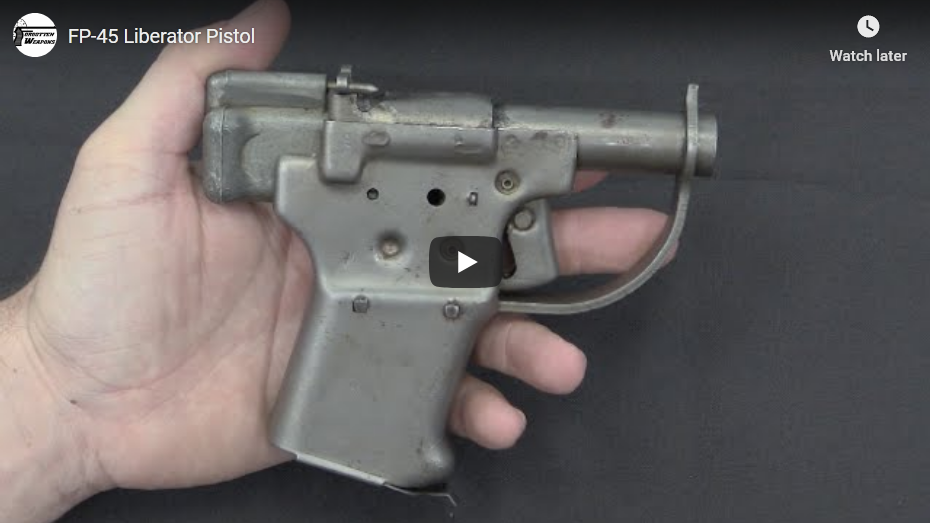
The Liberator is one of those interesting artifacts of WWII; an extremely simple single-shot .45 caliber pistol made by the boxcar-load (a million, specifically) with the intention of being dropped en masse across Europe to promote civilian sabotage against German occupation forces. They were manufactured by the Guide Lamp division of GM in record time – just 10-11 weeks for a literal million-gun production run. However, as they were being manufactured, shipped, and put into storage the motivation behind the project largely evaporated. British SOE ultimately decided not to distribute any in France, and only distributed a small number to partisans in Greece.

In the US, the Army stockpile of Liberators was transferred to the OSS, and a fair number were actually distributed in India, China, and the Philippine Islands – although they did not ultimately have any measurable impact on the war effort.

March 13, 2020

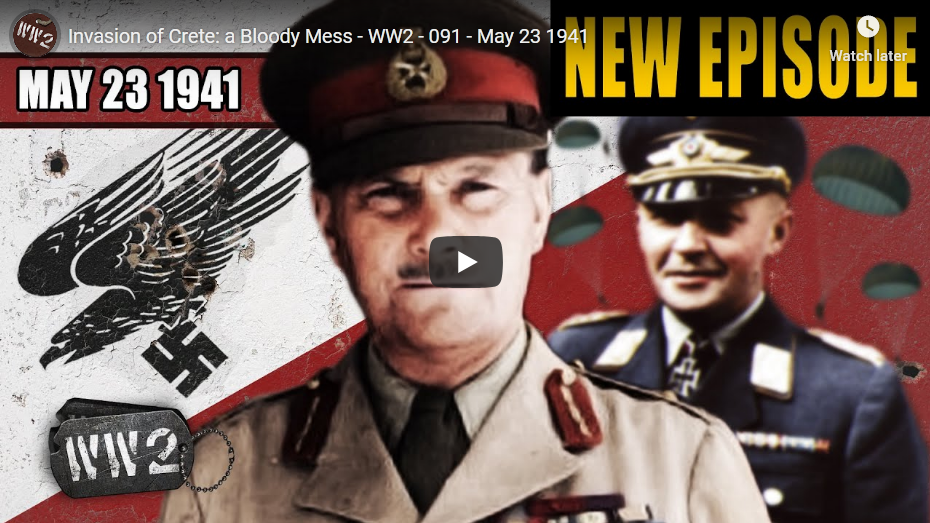
Fallschirmjäger – Germany’s Finest – WW2 Special Episode

Filed under: Germany, History, Military, WW2 — Tags: , , , , — Nicholas @ 06:00

World War Two
Published 12 Mar 2020

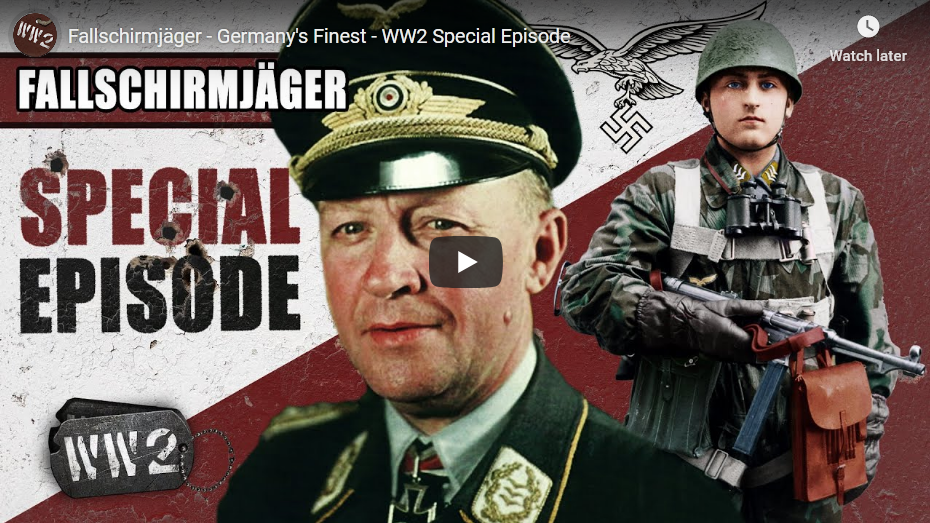
The Fallschirmjäger were Germany’s own paratrooper branch, designed to deal a swift and fatal blow behind the enemy’s lines. They were deployed with great success in Scandinavia and the Benelux, but they come too close to the sun when they attempt to invade Crete.

Join us on Patreon: https://www.patreon.com/TimeGhostHistory
Or join The TimeGhost Army directly at: https://timeghost.tv

Follow WW2 day by day on Instagram @World_war_two_realtime https://www.instagram.com/world_war_t…
Between 2 Wars: https://www.youtube.com/playlist?list…
Source list: http://bit.ly/WW2sources

Hosted by: Indy Neidell
Written by: Joram Appel and Izzy Wilson
Produced and Directed by: Spartacus Olsson and Astrid Deinhard
Executive Producers: Bodo Rittenauer, Astrid Deinhard, Indy Neidell, Spartacus Olsson
Creative Producer: Joram Appel
Post-Production Director: Wieke Kapteijns
Research by: Joram Appel and Izzy Wilson
Edited by: Mikołaj Cackowski
Map animations: Eastory (https://www.youtube.com/c/eastory)
Sound design by: Marek Kaminski

Colorizations by:
Julius Jääskeläinen – https://www.facebook.com/JJcolorization/
Ruffneck88 – https://commons.wikimedia.org/wiki/Fi…

Sources:
IWM E 3066E

Soundtracks from the Epidemic Sound:
Rannar Sillard – “March Of The Brave 4”
Reynard Seidel – “Deflection”
Rannar Sillard – “Easy Target”
Gunnar Johnsen – “Not Safe Yet”
Johannes Bornlof – “Last Man Standing 3”
Fabien Tell – “Last Point of Safe Return”

Archive by Screenocean/Reuters https://www.screenocean.com.

A TimeGhost chronological documentary produced by OnLion Entertainment GmbH.
From the comments:

World War Two
1 day ago
This is the first of many proper specials that we want to do to add on the weekly World War Two episodes, the War Against Humanity series, the Biographies, our Out of the Foxholes Q&A series and our upcoming On the Homefront sub-series. In these specials, we’ll cover any additional topics in depth — think about hardware, tactics, special forces, bills or decryption systems. We’re interested to hear your suggestions! What do you want to see covered in an upcoming special epsiode?

March 12, 2020

Canadian Ross MkIII Sniper Rifle with Warney & Swasey Scope

Filed under: Cancon, History, Military, USA, Weapons, WW1 — Tags: , , , , — Nicholas @ 04:00

Forgotten Weapons
Published 11 Mar 2020

http://www.patreon.com/ForgottenWeapons

https://www.floatplane.com/channel/Fo…

Cool Forgotten Weapons merch! http://shop.bbtv.com/collections/forg…

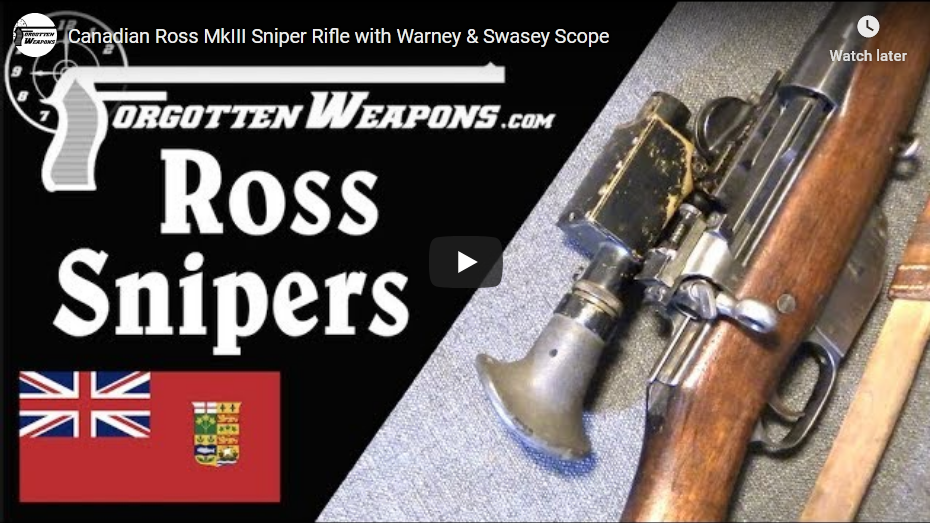
The Canadian infantry that went to Europe in the early years of World War One were equipped primarily with the Ross MkIII rifle. The Ross would become quite the scandal, and was replaced in service with the SMLE in 1916 — but as a sniper rifle the Ross excelled. Its problems in service were largely based on poor quality ammunition, and this was not an issue for the sniper corps. In addition, Great Britain was having enough trouble equipping its own snipers to have any extra scoped rifles to hand over to the dominions.

And so, the Canadians modified 500 Ross rifles into a sniper configuration using American-sourced Warner & Swasey M1913 “Musket Sight” scopes. These were 5x magnification prismatic scopes, also used by American forces on the M1903 sniper rifle and the M1909 Benet-Mercie machine guns. The scope was not very good, suffering from fogging and other issues, but it was available. The Canadian rifles were made in two batches of 250 each, one in 1915 and one in 1917. This was actually more rifles than needed, and many of them (including the two in this video) remained in Canada for training (and were used at least until 1942).

Canadian Warner & Swasey scopes can be identified by three elements. They have elevation dials marked out to 2400 yards, serial numbers between 1 and 500, and no data plate on top. Canadian scope cases are marked with the serial numbers of the scope and the rifle they were issued with.

Contact:
Forgotten Weapons
6281 N. Oracle #36270
Tucson, AZ 85740

March 11, 2020

A Bridge Too Far | Military History Book Review

Filed under: Books, Britain, Germany, History, Military, USA, WW2 — Tags: , , , — Nicholas @ 02:00

TIK
Published 22 Feb 2016

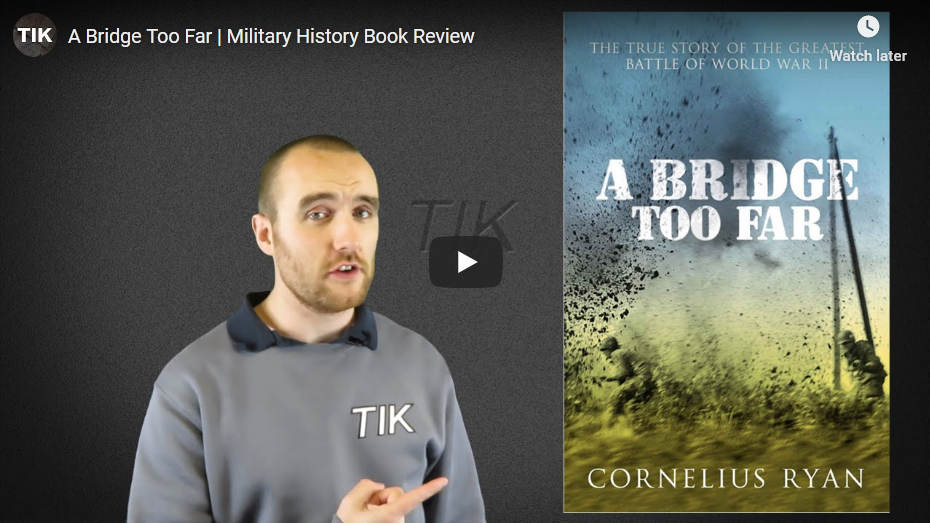
The classic history book looking at the battle of Arnhem and Operation Market Garden. Cornelius Ryan’s A Bridge Too Far.

Have you seen my popular Operation Market Garden Documentary?
https://youtu.be/vTUC79o4Kmc

Also, if you haven’t done already, follow me on Twitter!
https://twitter.com/TIKhistory

March 8, 2020

Bulgaria Joins the Fascist Alliance – WW2 – 080 – March 7, 1941

World War Two
Published 7 March 2020

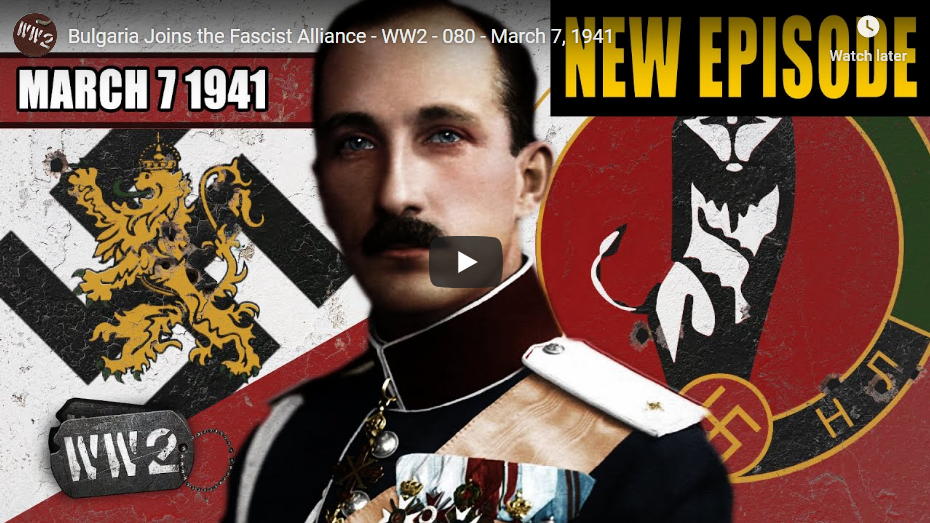
German troops pour into Bulgaria as they join the Axis alliance, while British troops enter Greece in anticipation of a German attack. Meanwhile, the British celebrate victories in East-Africa and on the Atlantic.

Join us on Patreon: https://www.patreon.com/TimeGhostHistory
Or join The TimeGhost Army directly at: https://timeghost.tv

Follow WW2 day by day on Instagram @World_war_two_realtime https://www.instagram.com/world_war_t…
Between 2 Wars: https://www.youtube.com/playlist?list…
Source list: http://bit.ly/WW2sources

Written and Hosted by: Indy Neidell
Produced and Directed by: Spartacus Olsson and Astrid Deinhard
Executive Producers: Bodo Rittenauer, Astrid Deinhard, Indy Neidell, Spartacus Olsson
Creative Producer: Joram Appel
Post-Production Director: Wieke Kapteijns
Research by: Indy Neidell
Edited by: Iryna Dulka
Map animations: Eastory (https://www.youtube.com/c/eastory)

Colorizations by:
– Royal Bulgaria In Colour
– Daniel Weiss
– Dememorabilia – https://www.instagram.com/dememorabilia/
– Julius Jääskeläinen – https://www.facebook.com/JJcolorization/
– Norman Stewart – https://oldtimesincolor.blogspot.com/

Sources:
– Bundesarchiv
– Narodowe Archiwum Cyfrowe
– IWM: TR 1762, CM 187, MH 27178, E 2370, E 2380, K 284, E 2376, E 1384, E 2383, E 3245, E 2001, E 2393
– Moscow icon by Graphic Tigers, film icon by Fernando Vasconcelos, oil barrel icon by Musmellow, from the Noun Project
– Slide projector sound by hpebley3 from Freesound.org

Archive by Screenocean/Reuters https://www.screenocean.com.

A TimeGhost chronological documentary produced by OnLion Entertainment GmbH.
March 6, 2020

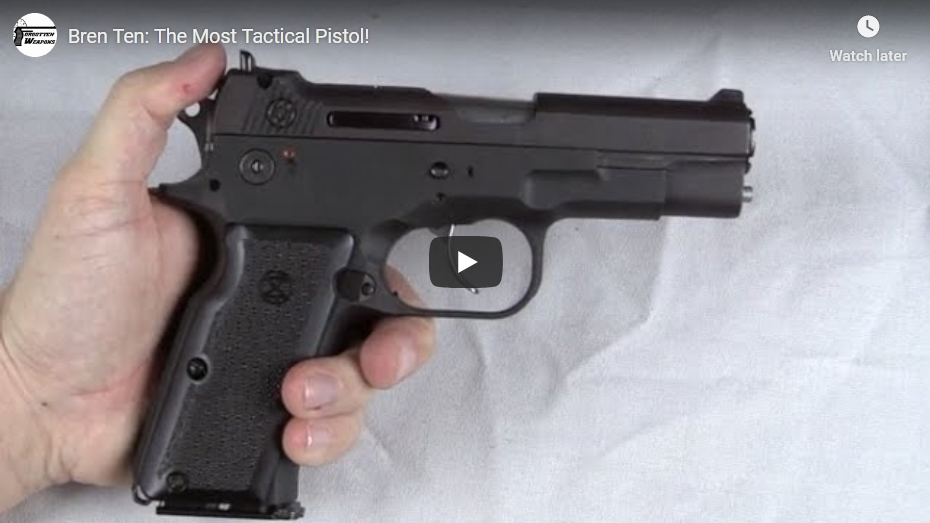
Bren Ten: The Most Tactical Pistol!

Filed under: History, Military, USA, Weapons — Tags: , , , , — Nicholas @ 02:00

Forgotten Weapons
Published 30 Sep 2015

http://www.patreon.com/ForgottenWeapons

Hammer price: $2,500

The Bren Ten is an interesting story of handgun development and business failure. The gun was first developed by Dornaus & Dixon, with the consulting help of the iconic Col. Jeff Cooper. It was intended to be a handgun to improve upon the venerable 1911 in every way.

To satisfy the adherents to the theory of large-caliber handgun cartridges, the gun was designed around a new 10mm cartridge designed by Norma. This cartridge would propel a 200 grain bullet at 1200 fps from a 5 inch barrel, making it the most powerful service handgun cartridge in production. It would use a 10-round magazine, and also be convertible to .45ACP.

The gun itself was based on the excellent Czech CZ-75 (made at Brno, which is where the “Bren” portion of the pistol’s name came from). It had full length slide rails, a DA/SA trigger that could be carried cocked and locked, and nice big sights.

Unfortunately, a combination of production quality problems, inadequate magazine design, preorders, and other issues led to the company quickly falling into tough financial straits. The guns were only manufactured for about 2 years before bankruptcy ended production. Some had been shipped without magazines, and Bren Ten magazines remain a sought-after commodity today.

March 3, 2020

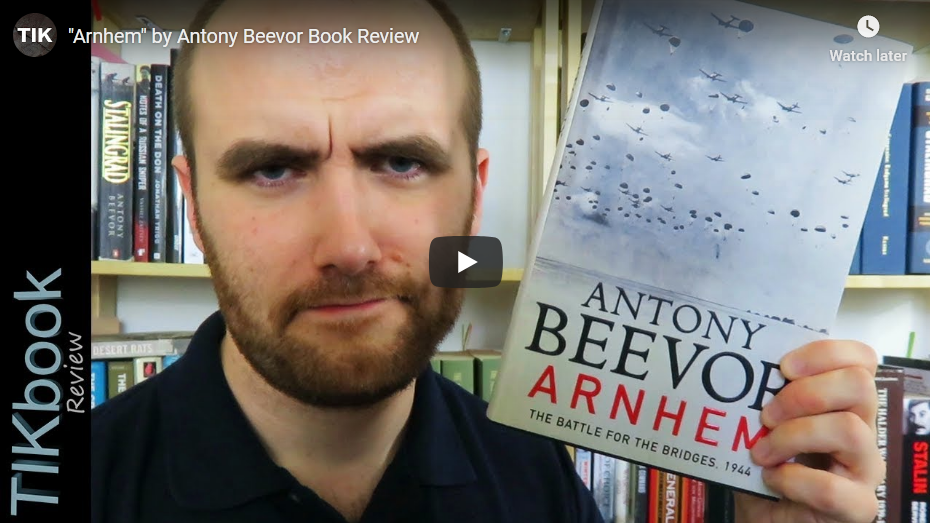
Arnhem by Antony Beevor Book Review

Filed under: Books, Britain, Germany, History, Military, USA, WW2 — Tags: , , , — Nicholas @ 04:00

TIK
Published 18 Jun 2018

Antony Beevor’s book Arnhem is good — but it contains a flawed argument. So flawed, that there’s a ton of counter evidence that shows it doesn’t work. Here, I will explain the events of the Nijmegen battle, what Beevor’s incorrect statement is, why he has to say it like he did, and how he could have done things differently.

Check out the pinned comment below for more information, notes, links, and sources.

Don’t forget to subscribe if you like history or gaming! And hit the little bell icon to be notified when videos like this are uploaded.

Please consider supporting me on Patreon and help make more videos like this possible https://www.patreon.com/TIKhistory

From the comments:

TIK
1 year ago

Selected Bibliography/Sources

Brereton, L. The Brereton Diaries: The War in the Air in the Pacific, Middle East and Europe, 3 October 1941-8 May 1945. Kindle, 2014.
Frost, J. A Drop Too Many. Kindle, 2009.
Hastings, M. Armageddon. Pan Books, 2004.
Robert J. Kershaw, It Never Snows in September. Ian Allan Publishing, 2007.
Mead, R. General Boy: The Life of Lieutenant General Sir Frederick Browning. Kindle, 2010.
Middlebrook, M. Arnhem 1944: The Airborne Battle, 17-29 September. 2009.
Neillands, R. The Battle for the Rhine 1944. Kindle, 2014.
Poulussen, R.G. Lost at Nijmegen. Kindle, 2011.
Ryan, C. A Bridge Too Far. Kindle, 1974
Urquhart, R. Arnhem. Kindle, 1958.
Sosabowski, S. Freely I Served. Kindle, 1982.

Links

My “REAL Operation Market Garden” documentary https://youtu.be/vTUC79o4Kmc
“The BAD BOY of Operation Market Garden” A video on General ‘Boy’ Browning https://youtu.be/Dvv8GQIRYVU
The “Who to Blame? John Frost on Operation Market Garden’s Failure” video https://youtu.be/7C_HoMVhKAI
My discussion of Market Garden’s True Purpose using Monty vs Eisenhower’s Memoirs https://youtu.be/f79KgQVL3MM
A video on Kampfgruppen where I talk about some of the Market Garden Kampfgruppen https://youtu.be/zKWczZkQ130
My Book review of It Never Snows in September https://youtu.be/-RRdWCyHpG8
My A Bridge Too Far Book Review video https://youtu.be/D6vDlbsOkQE

Add me on Twitter @TIKhistory

Thanks for watching, bye for now!

January 25, 2020

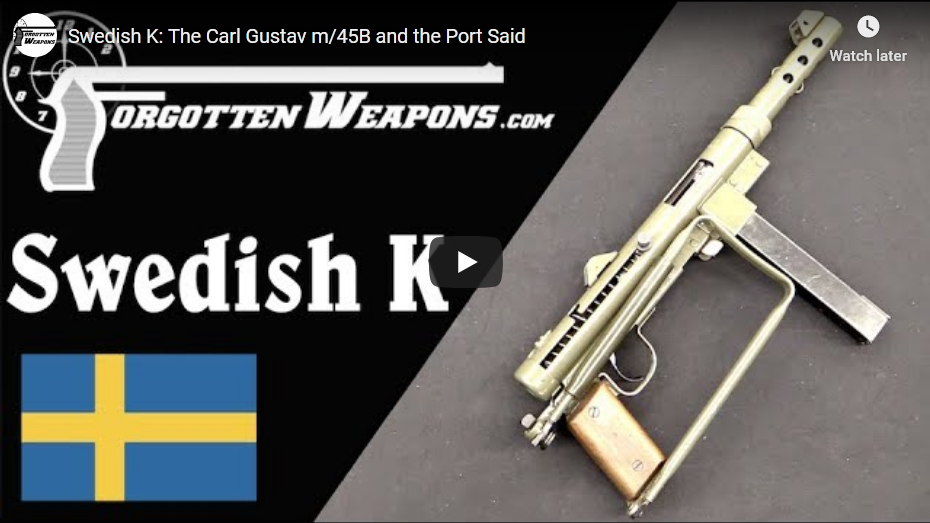
Swedish K: The Carl Gustav m/45B and the Port Said

Forgotten Weapons
Published 24 Jan 2020

http://www.patreon.com/ForgottenWeapons

https://www.floatplane.com/channel/Fo…

Cool Forgotten Weapons merch! http://shop.bbtv.com/collections/forg…

During the 1930s, Sweden acquired an assortment of different submachine guns, including Bergmanns, Thompsons, and Suomis. As World War Two progressed, they decided that they really needed to standardize on a single caliber and model of gun, and requested designs from both the Carl Gustav factory and Husqvarna. The Carl Gustav design won out, and was adopted as the m/45.

It was a very simple open-bolt, tube-receiver, fixed-firing-pin design chambered for 9x19mm Parabellum ammunition. The original guns were built around Finnish Suomi magazines, both 71-round drums and 50-round “coffin” mags. After the war these were replace by a new 36-round traditional box magazine, and magazine well adapters were fitted to the guns which precluded the use of the larger mags. The new magazines were much more convenient to carry, less expensive, and more reliable.

The name “Swedish K” comes form the full designation: Kulsprutepistol m/45. The guns were used by American special operations forces in Vietnam until the Swedish government stopped export sales to the US, at which point the Navy commissioned Smith & Wesson to produce the Model 76 submachine gun (essentially a copy of the m/45). The design was also licensed by Egypt, which also licensed the AG-42 Ljungman rifle at the same time. The Egyptian copy was called the Port Said, and shows the features fo the original Swedish m/45 pattern, where the guns in Swedish service were mostly updated to the m/45B pattern.

Photo of m/45C with bayonet from: http://www.gotavapen.se/index_eng2g.htm

Check them out for a ton of information on Swedish small arms!

Contact:
Forgotten Weapons
6281 N. Oracle #36270
Tucson, AZ 85740

January 16, 2020

Book Review: The Ministry of Ungentlemanly Warfare by Damien Lewis

Forgotten Weapons
Published 24 Sep 2017

Get your copy on Amazon: http://amzn.to/2xwfDZ8

I ordered a copy of Damien Lewis’ book on the exploits of British SOE in WWII expecting to find an overview of, well, what SOE had done during the war. That’s not quite what this book is. Instead, Lewis has given us essentially a first-person view of SOE’s work through the eyes of Danish commando Anders Lassen (VC, MC with two bars). Don’t be fooled by the cover image; the North African LRDG is never mentioned. However, what Lassen was involved in was equally impressive and probably less well known.

Lassen was part of the crew for the first real SOE operation, the theft of a pair of German and Italian supply ships from the neutral Spanish port at Fernando Po. In an exploit that could be straight out of Hollywood, a band of commandoes sailed a pair of tugboats into the harbor at night while the ships’ officers were ashore at a raucous party. They blew the anchor chains with explosive charges, locked the crews below deck, and sailed the ships out to sea where they could be legally captured by a British destroyer. And they did it without a single death on either side.

The exploits only became bigger and bolder after that, with Lassen and his comrades making regular raids across the English Channel and running a freewheeling campaign of both hit-and-run raids and occupation of Greek islands in the Aegean. These were the quintessential independent Special Forces fighters, operating outside regular military command structures and supply chains, fighting as they saw fit. Lassen eventually became the commanding officer of a large group, and by the end of the war had been awarded the Military Cross three times. His last operation in Italy — where his men were hit with a shattering defeat when pushed into the role of spearheading a conventional offensive — would result in him posthumously receiving the Victoria Cross for his heroism.

I ended up reading the book almost entirely in a single sitting, and found it riveting and fascinating — far more so than the typical academic history. It offers a humbling and motivating example of what men can do when they are skilled and motivated. At the same time, it also left me a bit melancholy, as by the end we can see Lassen consumed by his combat experiences and slowly becoming removed from society. Nobody can say how Lassen would have coped had he survived the war, but one suspects he would have led a troubled life. Perhaps that is the price one must pay to become, as Churchill described, “a hand of steel which plucks the German sentries from their posts with growing efficiency.”

http://www.patreon.com/ForgottenWeapons

Cool Forgotten Weapons merchandise! http://shop.bbtv.com/collections/forg…

If you enjoy Forgotten Weapons, check out its sister channel, InRangeTV! http://www.youtube.com/InRangeTVShow

December 31, 2019

The DeLisle: Britain’s Silenced .45 ACP Commando Carbine

Filed under: Britain, History, Military, Weapons, WW2 — Tags: , , — Nicholas @ 02:00

Forgotten Weapons
Published 16 Sep 2017

Armament Research Services (ARES) is a specialist technical intelligence consultancy, offering expertise and analysis to a range of government and non-government entities in the arms and munitions field. For detailed photos of the guns in this video, don’t miss the ARES companion blog post:

http://armamentresearch.com/

The DeLisle carbine was a conversion of a standard SMLE rifle to the .45 ACP cartridge, feeding from modified 1911 pistol magazines. It was fitted with a 7″ (175mm) barrel and a very large integral suppressor. The combination of the subsonic cartridge, the large suppressor volume, and even a sound-dampening pad on the bolt handle made for an extremely quiet firearm. Although often compared to the Welrod silenced pistol, the DeLisle was intended specifically for special forces (Commando) use, and not for dropping into occupied territories.

The conversions were done by the Sterling company, and an order of 550 was placed, with 500 of those using a fixed wooden stock and 50 using a folding metal stock. The contract was cancelled in 1943, however, with only about 130 having been made (and only a single prototype of the folding stock model).

Today we will take a look at one of the prototypes, two of the standard production models, and the only existing folding stock example. While a number of companies have made reproduction DeLisles of varying quality, originals are very rare, and none of the reproduction have duplicated them entirely correctly.

http://www.patreon.com/ForgottenWeapons

Cool Forgotten Weapons merch! http://shop.bbtv.com/collections/forg…

If you enjoy Forgotten Weapons, check out its sister channel, InRangeTV! http://www.youtube.com/InRangeTVShow

October 21, 2019

The French Resistance – was it of any use to anyone?

Filed under: France, Germany, History, Military, WW2 — Tags: , , , — Nicholas @ 02:00

Lindybeige
Published on 19 October 2016

Who organised the French Resistance? Did it ever do much?
Support me on Patreon: https://www.patreon.com/Lindybeige

I had planned to say a lot more, but this should be long enough. In take one, which I had to ditch because my sound recorder packed in half-way through it (but I didn’t notice, so carried on), I talked quite a bit about Wing Commander F.F.E. Yeo-Thomas AKA “The White Rabbit” who did a lot of organising the French Resistance, and I was also planning to talk about “R.A.F. blackmail sabotage” but perhaps that will come out in another video another day. Probably not, though. Never mind – sixteen minutes should be long enough for anyone.

Many of the figures I quote were fresh in my mind because I had just read them in Dadland by Keggie Carew. Another influential book on this video was The White Rabbit about Wing Commander FFE Yeo-Thomas.

Lindybeige: a channel of archaeology, ancient and medieval warfare, rants, swing dance, travelogues, evolution, and whatever else occurs to me to make.

▼ Follow me…

Twitter: https://twitter.com/Lindybeige I may have some drivel to contribute to the Twittersphere, plus you get notice of uploads.

website: http://www.LloydianAspects.co.uk

September 10, 2019

Shooting the Milkor M32 40mm Grenade Launcher

Filed under: Africa, Military, Technology, USA, Weapons — Tags: , , , , — Nicholas @ 02:00

Forgotten Weapons
Published on 6 Jul 2019

http://www.patreon.com/ForgottenWeapons

Cool Forgotten Weapons merch! http://shop.bbtv.com/collections/forg…

Thanks to Milkor USA, I have a chance today to do some shooting with both the M32 and M32A1 rotary grenade launchers they make for the US military. I’m using 40mm chalk training ammunition, with some steel targets at about 75-85 meters. In live fire, it’s quite clear how much of an improvement the M32A1 trigger is over its predecessor!

Contact:
Forgotten Weapons
PO Box 87647
Tucson, AZ 85754

« Newer PostsOlder Posts »

Powered by WordPress