Quotulatiousness

November 7, 2025

“BookTok on its own sounds innocent enough”

Filed under: Books, Health, Media — Tags: , , , , , , — Nicholas @ 04:00

I’ve seen occasional references to BookTok on other platforms but as it seemed to be as female-coded as an online community can be, I’d never bothered to pay close attention to it. If Zoomertea is to be believed, it’s a weird and disturbing space for the unprepared to visit:

Image from “The Female Gooner Epidemic” at Zoomertea

If you’re smart enough to have never downloaded TikTok, then you’ve probably never heard of BookTok and the resulting epidemic of female gooners (a term borrowed from porn culture to describe obsessive arousal and fixation). BookTok on its own sounds innocent enough, women rediscovering the joys of reading, romanticising cozy nights in, or even joining a book club. In theory, what could be more wholesome? However, the reality is more concerning. It turns out the bookish girls have traded the likes of Pride and Prejudice for highly pornographic dark fantasy erotica, stories that make Fifty Shades of Grey seem tame.

Women have always enjoyed a flair for romance. Once it was the slow burn longing of Romeo & Juliet or Wuthering Heights – the stories weren’t explicit, yet still roused deep, passionate feelings. By the 2000s, romance had evolved into “chick lit” – breezy novels about friendship, love and self-discovery. Books like Bridget Jones and the Devil Wears Prada swapped tragic love for witty realism, capturing the struggles of modern women navigating careers, dating, and independence. It seems like in all aspects of modern culture, people have been pushing for the “reliability factor” – they wanted to see themselves in the characters and storylines. But somewhere along the way, the realism and reliability factor lost its appeal.

During the pandemic, while the virus spread and the world stayed home, TikTok spread too, surpassing 2 billion downloads by mid-2020. With endless free time, people picked up new hobbies: some tried Chloe Ting’s “Get Abs in 2 Weeks” workouts, others turned to BookTok and rediscovered their love for literature. Booktok isn’t just for explicit romantasy novels, however it’s become synonymous with women who obsessively consume dark romance. On BookTok, desire isn’t intimate anymore; it’s performed.

While Fifty Shades of Grey, a book very explicitly about sex, came almost ten years before BookTok, it wasn’t exposed to the algorithmic amplification loop we see today. Although its release did shock readers and spark feminist critiques about patriarchal relationships and sexual themes, it still felt more like a dirty secret. Its eroticism was discussed privately, even sheepishly. It was a book club secret, not a TikTok performance. Now, even the most unassuming women are flocking to BookTok and demanding books with a maximum “spice rating”, without an ounce of shame. But how did this happen?

Somewhere between the isolation and scrolling, the lines between fantasy and reality began to blur. The algorithm on TikTok can be very dangerous for enforcing unhealthy habits on its users. When a woman watches or likes just one “spicy book” video, even just out of curiosity, TikTok interprets it as interest in similar content. Without the user’s knowledge, suddenly their ForYou page is filled with similar videos, “books with a max spice rating”, “extreme taboo book recommendations” or “Top five dark romance recs”. The more they see, the more they engage, the more the algo pushes darker more extreme content. Essentially, the algorithm learns: You like desire, here’s more. Louder. Darker

October 31, 2025

“NFL media is dominated by the nerds” and their “never-ending performance of Well, Actually football contrarianism”

Filed under: Football, Media, USA — Tags: , , , , — Nicholas @ 04:00

Freddie deBoer discusses the way NFL media coverage has changed from the retired jocks of old to today’s emphasis on data nerd analysis and clickbait contrarianism:

Being a sports media professional means forcing yourself to have this kind of a reaction every time you’re on camera.
Screencap from Freddie deBoer

Consider how smart football journalism was supposed to be by now. Long the domain of ex-jocks ladling out evidence-free bromides about how you have to pound the ball and causation-flipping claims that time of possession is the ultimate metric, today NFL media is dominated by the nerds, analysts who proudly announce that they’ve never played the game and let their teenage resentments power their never-ending performance of Well, Actually football contrarianism. Experience is out! Numbers are in! Empiricism reigns! The bible was right: someday, the meek will inherit the earth, and it’s happening every Sunday on NFL Twitter, where it’s always time to re-prosecute high school.

And yet … The analytics revolution promised to graft rationality and context onto our game-day commentary, but when it comes to the most common and pernicious trend in NFL analysis — overreacting to small samples and short runs of good or bad performance — nothing has really changed. That’s because NFL new media conditions dictate that even the most temperamentally sober and judicious talking heads operate as 24/7 hype machines. This is not, to put it mildly, a new problem. In 2007, ESPN’s Kevin Jackson wrote that NFL media was “Overreaction Nation – a land where no sample size is too small for drawing conclusions, where the most common movement is the knee-jerk”. That description still fits the NFL media perfectly. Week after week, cable TV and podcasters spin wild narratives, proclaiming teams hopeless or superhuman after one game, seemingly embracing the idea that “no sample size is too small”. That this all comes from people who will tell you that they’re the keepers of the flame of Rational Football Analysis only makes it all more annoying.

Modern front offices have jumped on modern statistical analysis, with every team employing analytics departments and with more and more coaches regularly expressing disdain for yesterday’s conventional wisdom. This isn’t a secret; the Ringer, which has always employed its fair share of football nerds who heap contempt on the old ways, proclaimed back in 2018 that “football’s analytics moment has arrived”, pointing out the rise of modern tracking data and explaining how it gives teams an edge. But if we’re honest, even the Ringer was clear that football will never be baseball in statistical clarity: “Football will likely never be baseball, where statistics can basically explain anything,” Kevin Clark (now of ESPN) wrote – “there are too few games and too many variables”. In other words, the sport I love the most is inherently a beast of variance, full of noise. You’d think that message would temper the beat writers.

Instead, it seems the analytics evangelists and talking heads don’t trust their own analytic philosophy. They invoke “small sample size” as a scolding cliché if you dare overreact, but shamelessly turn right around and do it themselves. With every Monday morning comes a fresh rush of oversimplified hot takes. And time has proven that the ostensibly-objective analytics peddlers are no better when it comes to hype than their old school former player competition.

The Minnesota Vikings drafted J.J. McCarthy last year as their “quarterback of the future” only to lose him for his rookie season with a knee injury in the preseason. He started two games so far this season and got injured in his first loss and will only return to play this coming weekend. Bust? A lot of online fans certainly seem to think so, on the basis of a two-game sample, one of which included one quarter of amazing work earning him NFC Offensive Player of the Week. Fans are fickle at the best of times, but the NFL media hype juices that into a kind of sports schizophrenia.

Could Drake Maye be the next big thing? Sure. He certainly has the physical ability. Or he could be Daunte Culpepper. Could CJ Stroud and Jayden Daniels justify all of the hype from their rookie years? Of course! The point is that I don’t know, you don’t know, and neither do the NFL pundits. Neither does Ben Solak. And what bothers me in particular about this species of condescending NFL pundit is that they will endorse concepts like “small sample size theater” when it conforms to their narratives and then gleefully discard those concepts when they don’t. It’s quite frustrating.

Here are tropes to watch out for when it comes to the NFL hype train:

  • One Game = Season’s Fate A single loss becomes proof a coach’s job is on the line, a single win means the team is a contender.
  • Player of the Year (or Bust) in 48 Hours A QB throws two picks and the media declares him washed up; the next week he goes 25-of-30 and he’s an MVP candidate. NFL pundits alternate between funeral dirges and coronation ceremonies every Monday.
  • Outsized Weighting of One Stat Analysts cherry-pick a percentage or grade and assign it cosmic meaning, AKA “going the full PFF.” (This is, not coincidentally, a big part of why so many ex-players despise PFF.)
  • Vox Populi Misguided NFL analysis has a habit of looking an awful lot like chatter on Reddit; go look for a team’s subreddit and note the way that supposedly adult-in-the-room analysts ape the exact same hype and intensity of the Reddit squad. A lot of new media-style entities even straight-up quote random tweets as if they’re serious analysis. When you’re looking to backstop deeply irresponsible predictions, any evidence will do.

QotD: The Zoomers as human Giant Pandas

Filed under: China, Humour, Media, Quotations, Technology, USA — Tags: , , , — Nicholas @ 01:00

When was the moment you first realized you’re a cold-hearted sumbitch? For me, it was sometime in my late childhood — early high school, thereabouts — when for whatever reason I became aware of the Giant Panda. I forget the occasion — I think one of the few captive pairs was going to have cubs — but we were treated to a massive media blitz about these gentle giants. And look: they’re cute and all, but the upshot of so many of those stories was that these things are critically endangered, not least because it takes tremendous effort to get them to breed.

Not just “breed in captivity”, mind you. Breed in general. Apparently panda lovin’ is like nerds on date night — the conditions must be perfect, it’s incredibly awkward, it takes massive effort, and even the tiniest misstep can throw the whole thing off forever. Your average MGTOW gets more poony than your average panda … all of which prompted in me the very uncharitable thought: Are you sure God doesn’t want it to be dead?

Which — black pill incoming — is pretty much what I feel about the human race right now.

Take a gander at this. The “aki no kure” guy has a lot of issues, no doubt, but when he’s on he’s a very useful read. If for no other reason than that he keeps up with the Kids These Days, and I just can’t, y’all, I just can’t. And here’s why:

    Well, if Zoomers never leave the home (something they all make self-deprecating jokes about), then you *are* watching their daily lives as they sit in a chair in front of a computer set-up. Their whole lives are online and virtual, not IRL. Their daily activities are not going to the store and running into neighbors who they share funny stories with, it’s scrolling their timeline and engaging with its content. So you are watching them go through all sorts of daily activities — checking their subreddit, uploading pictures to Instagram, clapping back to haters on Twitter, reacting to other streamers’ video clips, sending text messages, and so on and so forth. And the other characters in their online lives are also entirely online — other accounts who they interact with, although every once in awhile they make an IRL guest appearance.

That right there is my definition of hell. Seriously, if that’s “life” in the Worker’s Paradise, I’m punching out. But: That’s what so many people, not just “Zoomers”, seem to want. See “Every single thing about the Holocough, 2020-present”. If that’s what Western Civ has come to, then let me complete my transformation into the goofiest hippie on campus circa 1992: “Hey hey, ho ho, Western Civ has got to go.”

Severian, “Giant Pandas”, Founding Questions, 2022-03-28.

October 13, 2025

Speculation that J.D. Vance “maintains a Twitter alt, that he is in fact an anon poaster”

Filed under: Media, Politics, Technology, USA — Tags: , , — Nicholas @ 05:00

The latest post from John Carter at Postcards from Barsoom includes some interesting speculation about how well J.D. Vance has handled his engagement with social media trolling and why that might be:

Gigachads on the official DHS X account only provide evidence of one poaster in the administration, but this is a poaster in a very prominent, public-facing role, who has been allowed to do this for quite some time now, obviously without rebuke. That strongly suggests that the administration smiles upon the memelord, and it also makes it more likely that the chud running the DHS X account is far from alone. An obvious question is why the DHS would be so tolerant of its social media manager posting right wing memes, when this is guaranteed to draw the ire of the left. One possible explanation is that the administration wants its anon army to understand that they have guys on the inside. Memes are a tool for informal coordination; by posting these memes, the administration is winking at the base, telling them “We’re listening to you, and as for CNN … we don’t think about them at all. Now follow our lead …”

The young men powering the new administration were acculturated within the free-wheeling environment of loosely connected online networks, in which irony and ambiguity is simply the water in which they swim, and the only hierarchy is the one established by informal influence and demonstrated ability. They are not accustomed to subordinating their activities to directives pushed down from the summits of rigid org charts. Their basic assumptions are individual initiative, freedom of action, and a magpie willingness to grab good ideas wherever they can be found and put them to immediate use without waiting for permission.

And it is not only the junior staffers and federal agents who have this mindset.

Importantly, at 41, Vance is a young man by political standards. His cultural assumptions are not those of network news, but of digital networks. When the Vance memes making fun of his weight, or riffing off of his remark to Zelensky that he never even said “Thank you”, started circulating, he didn’t get mad about them. He laughed, and rolled with it, because he understood that – coming from the online right – these memes were an expression of affection, the way you rib your friend by calling him a faggot and he pokes you back by calling you a fat retard. Naturally the feminized left does not understand this at all. They think that these memes are humiliating to Vance and so spread the memes themselves, while interpreting the popularity of the memes amongst the online right as an indication that the base loathes him. As always, the left lacks theory of mind for their opponents. Imprisoned within the iron bars of their own ideological-managerial cage, the left has completely failed to learn the lessons of participatory media, and like a general staff doggedly trying to break the trench lines with cavalry charges, continues to try to fight the current war with the weapons they used to win the last one.

There is widespread speculation that Vance’s comfortable navigation of meme culture comes from direct experience, that he maintains a Twitter alt, that he is in fact an anon poaster. There is of course even speculation as to which account is his, although naturally, no one knows for sure, and Vance sure isn’t telling.

If there are poasters in the administration, we might expect them to treat policy the way they learned to handle memes. Any random small-account anon might come up with an absolute banger of post … so why shouldn’t they be able to come up with banger policies, too? Why limit themselves to adopting policies developed inside the long, tedious processes of bureaucratic committees and comfortable think tanks? If rapisthitler1488 has a good idea, well, why not use it? You can just do things. This attitude is at the heart of what Dudley Newright calls the “up-the-chain phenomenon”.

We’d also expect an administration laced with poasters to pay careful attention to the online right, using it to gauge the public mood in order to correct course. At its worst this could turn into audience capture, but at its best this enables a much more responsive reaction to public sentiment than that afforded by polling data since it is both immediate and disintermediated. Rather than waiting for the polling agency to carefully word a question to get the answer it wants, and then painstakingly call up and interview a statistically representative and unbiased sample so that it can provide rigorous Poisson errors for the answers to its biased questions, public sentiment can be analyzed as soon as people start tweeting, and evaluated in terms of the public’s own words. In essence, the poastocratic administration becomes akin to a livestreamer monitoring the chat.

Finally, we might expect to see the administration deliberately trolling the base. Experienced influencers know that outrage bait drives engagement. If you want to move in a certain policy direction but are being pressured behind the scenes not to do that, or conversely if you are being pressured to do something you know will be unpopular, an excellent way of assembling the political capital necessary to do what you want is to announce that you’re going to do the opposite. The howls of outrage from the base then provide you with the excuse you need to do what you wanted to do in the first place. “Let me check with the boss … Well, sorry, I’d really love to help you, but the boss won’t let me do that.”

OK, you say, this is all very interesting, an emergent feedback loop of cybernetic governance linking the networked hive mind to the traditional institutions of government, but is there any actual evidence beyond some meme-slop posted by the DHS in an effort to assure the base that they are getting the Got What They Voted For Award? Well, let’s get into that.

Update, 14 October: Welcome, Instapundit readers! Please do have a look around at some of my other posts you may find of interest. I send out a daily summary of posts here through my Substackhttps://substack.com/@nicholasrusson that you can subscribe to if you’d like to be informed of new posts in the future.

October 10, 2025

We have to destroy European democracy to save European democracy

Every week it seems like the undemocratic powers-that-be in Europe have had to pull legalistic strings to ensure that the popular will is not translated into political power in nation after nation. Unsurprisingly, the candidates and parties subject to these serial interferences are almost all populist and right-wing. On his Substack, Frank Furedi explains “the EU’s quest to monopolize the doctrine of the Truth”:

Army of Fact Checkers – Roots & Wings with Frank Furedi

In recent years globalist institutions – including the European Union Commission have become obsessed with the circulation of disinformation. In particular, they point the finger of blame on outside external actors whose fake news supposedly threatens the very existence of democracy. According to the EU Commission “Foreign information manipulation and interference is a serious threat to” European values. It claims that “it can undermine democratic institutions and processes by preventing people from making informed decisions or discouraging them from voting1.

The narrative of foreign misinformation is invariably used to discredit political parties and electoral results that are not to the liking of the centrist technocratic elites that run the EU as well as numerous western governments. Foreign information manipulation served as an excuse to bar a populist candidate from running for the post of the President of Romania. Since by all accounts he was the likely winner of this contest his elimination from the race could be interpreted as a soft coup d’etat. Similar objections were made about foreign interference during the referendum for Brexit as well as during the recent elections in Moldavia and Czechia.

Alarmist accounts of the threat posed by foreign information manipulation rest on the claim that the circulation of so much unreliable information makes it impossible for people to make an informed choice. Yet the electorate has always faced the challenge of having to distinguish factually accurate claims from false ones. Public life was always forced to confront the problem of who to believe and whose words are trustworthy. Throughout history different actors and technologies were blamed for misleading people with false information and dangerous ideas. In ancient Greece it was the smooth-tongued demagogue who could effortlessly and purposefully transmit lies to capture the attention of the public, who served as the personification of misinformation. During the centuries to follow the finger of blame has been pointed at books, mass-publication newspapers, radio, television and now the Internet

Since information manipulation has played an important role in the political life of western societies since the 18th century, it is far from evident why the contemporary public should no longer be able to make “informed choices” and why they should feel discouraged from voting? Despite the recent EU Commission induced panic about information manipulation, the percentage of people voting in the 2024 EU elections was 51 percent, the highest rate of turnout since 1994, when it was 56 percent.

People have always had to contend with fake news and propaganda. So why should they be more likely to be fooled by it today than in the past? The standard argument used to justify this EU elite promoted panic is that new technologies “have made it possible for hostile actors to operate and spread disinformation at a scale and with a speed never seen before”.2 It is worth remembering that the same arguments were used to warn against new information technologies since the 19th century. Even in the late 20th century the media was blamed by politicians for their electoral failures.

Kirsten Drotner has used the term media panic – that is a panic about the media -to highlight the recurrent tendency for change and innovation of the media to incite anxiety and fear.3 Such reactions were a response to the expansion of both publishing and the reading public in the 18th century. The expansion of the media and its commercialization created an environment where competing views and opinions helped foster a climate where the question of which sources could be trusted were raised time and again.


  1. https://commission.europa.eu/topics/countering-information-manipulation_en
  2. https://commission.europa.eu/topics/countering-information-manipulation_en
  3. Drotner, K.(1999) “Dangerous Media? Panic Discourses and Dilemmas of Modernity”, Paedagogica Historica: International Journal of the History of Education, 35:3, 593-619.

October 9, 2025

Britain is only a few steps further than Canada in the war on free speech

In The Line, Peter Menzies looks at the worsening situation for freedom of speech and freedom of expression in Britain, noting that what’s happening over in Blighty is our immediate future with current Liberal bills before Parliament to give government bureaucrats more power to silence us:

Everyone may know, for instance, that Kimmel got suspended by ABC for a week following statements made in the wake of the assassination of Charlie Kirk. But not a lot of people consuming Canadian media know that in the U.K., comedians weren’t just getting one-week suspensions. Nope. Last month they were getting arrested.

Right-wing icon Katie Hopkins, best known for her Batshit Bonkers Britain clips and Silly Cow tour, hadn’t been charged at the time of writing, but was arrested and, as they say in Blighty, “interviewed under caution”. Previously, Graham Linehan was arrested upon his return from the United States by five armed police officers at Heathrow Airport. At issue were posts he had made on X in April.

“If a trans-identified male is in a female-only space,” one Linehan post declared, “he is committing a violent, abusive act. Make a scene, call the cops and if all else fails, punch him in the balls.”

Currently on bail, Linehan returns to court on Oct. 29. The charges are harassment, criminal damage and suspicion of inciting hatred.

The merits of the cases can be debated, but my point today is that when it comes to digital policy and policing you, and the internet, Canadians and their media should be paying a lot more attention to the U.K.

Because it is there that the true illiberalism of modern Western so-called liberalism is most menacingly embraced. Even prior to the U.K.’s Online Safety Act coming into effect, pre-existing British legislation had been used to, for instance, convict six retired police officers for making comments “deemed to be offensive” within their private WhatsApp chat group. Following the Southport mass stabbing murders of little girls, at least two women with no prior history with police were given prison sentences — one for 15 months for a Facebook post calling for a mosque to be blown up, another 31 months for a tweet calling for hotels full of migrants to be burned. While their comments were certainly worthy of vigorous condemnation, the intervention of the state into private, closed conversations and the involvement of police, courts and the penal system has taken matters in the U.K. to a level inconsistent with liberal traditions.

Now that the Online Safety Act has supplemented those laws, hundreds of people have been arrested and dozens so far convicted for social media posts. The government calls the act a “new set of laws that protect children and adults online” in much the same way Justin Trudeau explained Canada’s own Online Harms Act. It’s all about “safety”.

Online Harms may have died when Parliament was prorogued last winter, but a successor is anticipated and, given Prime Minister Mark Carney’s obvious Anglophilia, it’s easy to speculate — fear is a better word — that he is taking inspiration from the Brits. After all, up until a few months ago, he was one of them.

Fighting back in the U.K. is, among others, Lord Toby Young, the Conservative peer, associate editor of The Spectator and founder of the Free Speech Union, which now has a Canadian branch featuring, among others, journalist Jonathan Kay. Young has protested that criminalizing disinformation hands governments the power to determine truth. Nevertheless, while Prime Minister Sir Keir Starmer has muttered that maybe the police have more important things to do, he shows — despite the meteoric rise in the polls of Nigel Farage’s Reform Party — no inclination to order a digital retreat.

In fact, Starmer just doubled down with the introduction of legislation imposing mandatory digital IDs. A petition opposing it and the potential to enable mass surveillance and state control has already gathered close to three million signatures.

There’s a good chance the Canadian Free Speech Union will be similarly engaged in the years ahead. The Trudeau government’s instincts when it came to digital legislation were not as extreme as Britain’s. And there are very real differences in the legal structure of free-speech rights in Canada and the U.K. — we have the Charter, and the British don’t. So our laws would be enacted and enforced differently here than they can be the the U.K.

October 2, 2025

UNshittifying the internet

Filed under: Business, Media, Technology — Tags: , , — Nicholas @ 04:00

In The Line, Matt Gurney asks if we can go back to when the internet (and by extension, all the other tech toys and gadgets we see everywhere) was … good?

Have you heard about enshittification? It’s not just a potty word. It’s actually a pretty fascinating concept, and you read about it mostly in tech circles. Enshittification is the process by which something becomes worse over time, instead of better, normally as people try to squeeze more efficiency and revenue value out of it. Through that process of squeezing, the thing becomes enshittified.

If you want a proper definition

    Enshittification: The gradual deterioration of a service or product brought about by a reduction in the quality of service provided, especially of an online platform, and as a consequence of profit-seeking.

There are lots of examples. My favourite example? My video doorbell has an annual service fee. Another great example? Cars that now require payments to access certain features, like heated seats. You own the device. But you need to pay a recurring fee to use it. That’s enshittification.

It’s everywhere. And it’s getting worse, especially online. And, perversely, maybe this is a good thing. Maybe it’s going to force us to stop, rethink how we use the digital realm, and, basically, try again. Start over. And get it right this time.

Noah Smith is an American economics writer whose work I enjoy. Smith noted on Twitter recently that we are rapidly getting to the point where we should declare social media a failure. It’s passé to criticize social media on social media, but Smith wasn’t making the usual warmed-over moral argument. He wasn’t saying that it was bad because people are mean there or that they fall down dark rabbit holes and end up believing insane things. Those are problems! But Smith’s concern was the extent to which AI-generated content and bots have simply flooded all the social media channels. Even a responsible user trying to use these platforms for the good is going to find it increasingly difficult to derive any value from them. They’re being rapidly enshittified.

I share his view of the trajectory. I don’t really know anyone who doesn’t. But Smith’s comment led me to ponder what value I actually derive from them — what I would miss if they were gone. I came up with four broad use cases.

September 29, 2025

Screen addiction – “No drug cartel makes as much money as the screen-and-app companies”

Filed under: Health, Media, Technology — Tags: , , , , , , — Nicholas @ 03:00

Ted Gioia on the eight things about screen addiction that David Foster Wallace tried to warn us about before he took his own life in 2008:

Those same youngsters are now showing up on college campuses, and we can begin to gauge the societal impact of a screen-driven life. It ain’t pretty.

So this is a good time to revisit what Wallace tried to warn us about thirty years ago. He was ahead of his time in the worst possible way, experiencing firsthand all the debilitating symptoms that now plague millions.

That’s why his writings feel so eerily contemporary. They read like commentaries on what’s happening right now.

Of course, Wallace knew very little about the Internet — he deliberately avoided it. He also refused to own a television. He understood how susceptible he was to screen addiction, and took drastic steps to reduce his exposure to all screens.

But he wrote about it — most tellingly in his huge novel Infinite Jest. The title refers to a film that is so addictive that people who watch it can’t stop. They literally watch it to death. It’s an infinite diversion, much like the endless scrolls on today’s social media apps.

He returned to the topic in his final book The Pale King, and also discussed it in interviews and essays. I’ve read through all of these including more than thirty interviews with the author. These allow me to put together a point-by-point summary of what Wallace tried to tell us.

We ignore his warnings at great risk.

(1) Screen technology will cause a crisis of loneliness, especially among young people.
In almost every interview, Wallace eventually talks about loneliness. It was a looming crisis, he insisted. But he was one of the first to link this to the ways we divert ourselves via screens. […]

(2) This will lead to widespread depression.
Wallace also knew this firsthand. He suffered intensely from depression. His inability to find a suitable treatment led to his suicide in 2008. […]

(3) This will also happen at a larger scale. Society will grow more fragmented and disconnected.
As each person falls into an isolated relationship with a screen, larger communities begin to fray. Wallace anticipated a “new vision of the U.S.A. as an atomized mass of watchers and appearers”. […]

(4) Screen technology promises to liberate us, but the reality is that it controls us for the benefit of others.
The most dangerous part of the screen entertainment is the illusion that it serves us. But the reality is that we actually serve tech platforms and their advertisers. […]

(5) The people who control the technology work to hide their purposes and goals.
“They’re trying to lock us tighter into certain conventions, in this case habits of consumption,” Wallace told Larry McCaffery in 1993. “This is McLuhan right? ‘The medium is the message’ and all that? But notice that TV’s mediated message is never that the medium is the message.” […]

(6) Our survival will depend on our ability to remain independent of these forces.
If we abandon ourselves completely to the tech (as many now do), we become pawns in the corporate agenda to monetize us — at a tremendous cost in loneliness, depression, and social disconnection. […]

(7) We don’t have many tools, but kindness and compassion will be the starting point.
We need to replace irony, sarcasm, and cynicism — which have contributed to our self-debasement — with softer, gentler attitudes. Cynicism is useful in criticizing, but is impotent when we need to build something better. Irony only destroys, never builds. […]

(8) Art can help us heal.
He wrote his big books with the hope that they would help us find a way back to a more caring and connected world — but connected via people, not screens. […]

September 26, 2025

John Carter revisits the cancellation debate

Filed under: Media, Politics, USA — Tags: , , , , , , , — Nicholas @ 05:00

As part of a much longer essay, covering a lot more ground, John Carter considers the pro and con arguments for the much-cancelled right to fully indulge in cancelling figures on the left in the wake of the Charlie Kirk assassination and the widespread celebration of the murder by leftists:

Talking heads on network television are whining that it’s getting out of hand, while abruptly unemployed leftists take to GoFundMe to beg for support.

The purge has started, and yes, thank you, I’m feeling quite vindicated right now.

Repeating myself is boring, so I’m not going to rehash the arguments in favour of turning cancellation against the left. Suffice to say, they have it coming. It’s also worth pointing out that there’s an important distinction to be made between getting a labourer fired because he made the OK sign, and removing a medical professional who openly celebrates the death of a man for having opinions shared by half the country. Can a bloody-minded leftist doctor be trusted to give medical care to a Trump voter, when he’s on the record as advocating the execution of Trump voters? The doctor should certainly be allowed to say what he pleases, and he should have the same right to use a social media account as anyone else, but he probably shouldn’t be allowed to practice medicine.

But I don’t want to rehash that. Instead, I want to focus back in on human water fountain women as an exemplar of that choir of liars suddenly singing hymns to the sacred practice of freedom of speech. People would be shocked by this self-serving mendacity if long experience had not accustomed them to it.

We aren’t shocked because we’ve seen this before, repeatedly. The left screamed about the spontaneous unguided tour of the capitol on J6 as an insurrection and an unforgivable attack on our democracy, conveniently forgetting that the Weather Underground were bombing federal facilities, including the Capitol, back in the 70s, or that the state capitol of Wisconsin was occupied by protesters in 2011 … or that they’d attacked the White House in 2020 … to say nothing of the nation-wide Burning Looting and Murdering they committed in the wake of Floyd’s fentanyl overdose.

The curious phenomenon of leftist narrative blindness was repeatedly demonstrated during the COVID years, in which the entire professional-managerial caste would switch from one narrative to its opposite like a school of fish, confidently proclaiming on one day what they had denounced as anti-scientific misinformation just the day before.

Sure enough, in the wake of Kirk’s murder, with his blood still on the ground and their gleeful cries ringing in the world’s ears, the left went on an immediate disinformation counter-offensive. They adopted the narrative that Tyler Robinson was a right-wing groyper – an online follower of Nick Fuentes – who had assassinated Kirk for not being based enough, or for supporting Israel, or something. It was for lying about this that Kimmel was pulled off the air. The evidence for Robinson’s right-wing sympathies were that he’d been raised in a conservative Mormon household by a police officer father, and that he’d dressed up as a gopnik once or something. Robinson’s live-in relationship with a troon, the Antifa slogans he’d carved into the bullet casings, and his friends and family attesting to his left-wing radicalization were waved away. This is what abusive narcissists do: “I didn’t do the thing you just saw me do to you, and anyhow you deserved it”. Sure enough, as I wrote this, another leftist sniper attacked an ICE facility in Dallas; sure enough, leftists immediately began insisting that he couldn’t possibly have been a leftist, this time on the grounds that the shooter inscribed “Anti-ICE” rather than “Fuck ICE” on his bullets.

The left also tried to change the conversation to the supposed problem of right-wing violence. Professional-looking infographics flooded onto social media, pushed by Alex Nowrasteh of the Cato Institute, Ilhan Omar, and the Economist.

Ilhan Omar (note that the data are from the ADL).

The infographics make it look like there’s an epidemic of right-wing political violence being waged against a peaceful, tolerant, and defenceless left. This is of course nonsense. Every time someone dug into their data, it turned out that they were basically doing this:

It isn’t even necessary to subject the datasets to close scrutiny. Look at the Economist graphic. See that little black rectangle in 2020? The Economist would have you believe that there was practically no left-wing political violence at all in 2020, which as everyone remembers was a fiery but mostly peaceful year. The Economist dataset turns out to have been curated by an Antifa activist, by the way, which I suppose makes the Economist an affiliate of an international terrorist organization, now.

Now, you can say “they’re just lying”, and yes, quite a few of them know exactly what they’re doing.

[…]

In a lot of cases, however, calling them “liars” isn’t quite accurate. Lying implies conscious deception. If you’ve talked to these people, which I know you have to the point where you have post-traumatic stress disorder, you know that they seem to really believe the things they say. It does not matter in the slightest if they contradict the thing they said yesterday. They apparently have no memory of their previous statements. Their present belief is always entirely sincere. It does not matter if observable reality is in stark contradiction to their belief. They have lost the ability to distinguish between fact and fiction, with the result that they routinely mistake their own pop culture propaganda for reality.

That they do not even seem to notice when they contradict themselves suggests a void of self-awareness. This is the origin of the NPC meme, which depicts leftists as Non-Player Characters, effectively no more than computer programs that emulate human behaviour. When the meme first began to spread a few years ago, there was a purge of Twitter accounts that posted it. The NPC meme cut leftists to the quick because they instinctively recognized – as everyone did – the truth in it. Leftists complained that the NPC meme was dehumanizing, which is actually perfectly correct. An NPC is not really human.

We see evidence for this NPC absence of self-awareness everywhere. A self-aware person who had spent a decade viciously persecuting anyone who publicly contradicted leftist orthodoxy would understand that an appeal to freedom of speech once they themselves were persecuted for their words would garner mockery rather than sympathy. A clever Machiavellian would therefore preface their entreaties with expressions of contrition for their past behaviour, however insincere. Not one of them has done this, which makes it less likely that their attempt to appeal to freedom of speech is mere calculated cynicism. It is instead as though they themselves are not aware of their own previous actions.

September 23, 2025

“[A]nyone who tries to tell you ‘Antifa is just an idea’ is not merely deluded, but consciously and deliberately lying”

Filed under: Media, Politics, USA — Tags: , , , , , — Nicholas @ 03:00

On the social media site formerly known as Twitter, ESR uses the methods of counter-terror analysis:

None of Antifa’s public propaganda channels have attempted to deny that they were behind the assassination of Charlie Kirk. This is a fact of considerable significance, which I will now use the methods of counter-terror analysis to examine.

Antifa’s distributed structure makes it impossible for any one chapter or cell to know what another subgroup didn’t do.

It is quite possible that Tyler Robinson is a true stochastic terrorist, inspired and motivated by Antifa propaganda and considering himself part of Antifa but without planning or logistical support from others in the organization. I give this about 60% probability.

The fact that Robinson had peers on Discord with apparent foreknowledge of the assassination attempt does not falsify this possibility. Even if they did assist with the assassination, their connections to Antifa might be equally deniable, equally just a matter of their states of mind.

The assassination was in complete accordance with Antifa doctrine and propaganda. Direct action against “fascist” targets, ranging from low level intimidation up to political killings and organized attacks on government facilities, is exactly what Antifa is organized to do.

Thus, with over 90% probability, other members and aboveground allies of Antifa regard the operation as a (tactically) successful Antifa op, whether or not they had any foreknowledge of it and whether or not Robinson was stochastic.

The ones who aren’t fanatics or idiots have probably figured out by now that the assassination was a serious strategic blunder. You might expect that they would be scrambling to deny that Antifa had anything to do with Kirk’s death.

Some of Antifa’s aboveground allies [are] in fact doing this; the dominant form of denial by Democratic politicians and activists is to deny that Antifa even exists as more than an idea.

But Antifa itself has not done this, and I predict very confidently (95%) that it will not. The real reason it won’t has nothing to do with its structural inability to know that no member of Antifa was involved.

To understand why this is, you need to grasp what Antifa is for. Not its ultimate purpose, which is to foment a violent revolution that will enable Communists or Left-Anarchists to seize power, but the way it operationalizes that goal in practice.

The purpose of Antifa direct action is to shape the political environment through terror. Its goal is to intimidate its opponents into paralysis — to raise the costs of their speech and public action by predictably opposing it with violence.

I am not speculating about this, because if you read Antifa’s propaganda and organizing materials it will tell you exactly this.

The assassination of Charlie Kirk is perfectly accordant with Antifa doctrine. Antifa cannot deny this, nor disown Tyler Robinson even in the likely event that he is only stochastically connected to the organization, because … what use is a terror network that disavows intimidation of its opponents?

Antifa’s goals require it to be a credible threat to “fascists”. If it denied that it had anything to do with killing Charlie Kirk, it would demotivate its own foot soldiers and decrease its usefulness to its aboveground allies.

Antifa needs to exist in a kind of mixed state — simultaneously deeply threatening to its enemies but deniable by many of its allies in the Democratic Party, journalism, and academia.

It is also, however, important that none of its aboveground allies can actually believe their own denials. Otherwise Antifa, perceived as useless, would risk losing the funding and political cover that has until now allowed it to operate with some degree of impunity.

You may therefore safely assume that anyone who tries to tell you “Antifa is just an idea” is not merely deluded, but consciously and deliberately lying.

At Woke Watch Canada, C.C. Harvey discusses the “red thread of Antifa subversion” over the last ten or so years:

Establishment leaders now even cuddle up with extremists who do not hide their violently subversive orientation. When the ENTIRE establishment took a knee for for the (self-identified) queer, Marxist, violently revolutionary group BLM during the 2020 riots, the subjugation of the professional classes was complete. We stopped being allowed to object to our institutions becoming vehicles for communist revolution. We were called racists and far right extremists and conspiracy theorists for even thinking bad thoughts about BLM and the woke communist revolution, and could be punished for talking to friends about it in group chats. We all became ideological captives of neoMarxist revolutionaries.

The DEI industry exploded, and although it is losing steam in the USA, it still functions as a modern Red Guard policing Canadian discourse and behaviour. If we’re being honest, we will admit that even most conservative politicians here were cowed. The entire establishment worked together to erect a new politburo and stasi throughout Canada and the USA, and far beyond.

Republicans are dismantling the neoMarxist structures that have been erected in America, and this is of course being disingenuously characterized by leftists as proof that Trump is fascist and authoritarian. BLM has largely imploded with corruption and infighting, but Antifa appears to have grown even stronger, especially its queer contingent, and their membership is agitating heavily as they see the Trump administration tearing down what they built.

Antifa is not just a gang of idealistic rabble-rousers in black hoodies rebelling against authority. It is the heir of a century-long Marxist project seeking massive, sweeping revolution, and advancing their goals via inversions: turning truth into lies, sin into virtue, desecration into liberation. From the beginning, Antifascist communists were passionately committed to revolution in all areas of human life and society.

It is not by coincidence that antifa and the LGBTQIA+ are entwined. Antifa have always been committed to sexual revolution — crossing sexual boundaries, normalizing deviance, dissolving the family.

Even in earliest iterations, the antifascists were dangerously radical in sexual ideology and policy: the historical record shows they handed children to paraphilic predators in the name of antifascist sexual liberation as early as postwar Germany. That anti-family, fetishistic spirit runs straight through antifascist history and is on full display in today’s TQ+ movement. TQ+ is conjoined with Antifa (Trantifa, if you will) to actively promote hypersexualization, the destabilizing of sex identity and family, and the mainstreaming of disorder and perversion.

Marx and Engels attacked the family as a “bourgeois prison”. Later Marxists carried this out through radical experiments in sex and pedagogy, all under the banner of liberation. Today’s gender and queer theorists are majority Marxists.

Marxists deal in inversions, so indoctrination presented as education, perversion rebranded as liberation, abuse disguised as compassion, self-mutilation celebrated as authentic selfhood. Today, Antifa-aligned “Queer Resistance” brigades advance sexual inversions and corruptions that are just as damaging as antifascists of bygone eras: in postwar Germany, the antifascist Kentler experiment assigned orphan boys to be raised by wealthy pedophiles. Today, an uncomfortable number of LGBTQIA+ activists have been caught adopting babies and toddlers to abuse, raping their own children, or sexually assaulting minors. As a result of our establishment embracing the far left revolutionary zeitgeist and sacralizing “marginalized” identities, safeguarding has been sacrificed on the altar of LGBTQIA+ identitarianism.

Update, 25 September: Welcome, Instapundit readers! Please do have a look around at some of my other posts you may find of interest. I send out a daily summary of posts here through my Substackhttps://substack.com/@nicholasrusson that you can subscribe to if you’d like to be informed of new posts in the future.

September 11, 2025

Charlie Kirk, RIP

Filed under: Media, Politics, USA — Tags: , , , , , , , — Nicholas @ 05:00

I don’t follow US conservative figures, so while I’d heard of Charlie Kirk, I didn’t know much about him or what differentiated him from other right wing figures. He was assassinated on Wednesday while speaking to an audience at Utah Valley University:

An assassin’s bullet struck down Charlie Kirk, the prominent conservative commentator and founder of Turning Point USA, while he was speaking at an event at Utah Valley University on Wednesday. He was 31.

Graphic video footage of the killing, which occurred as Kirk addressed a large outdoor crowd of students and supporters, showed him being shot in the neck. He was rushed to the hospital but did not recover.

The shocking tragedy has prompted an outpouring of lamentations from Kirk’s many friends in conservative media and Republican politics. Announcing his death on Truth Social, President Donald Trump wrote that Kirk was “Great, and even Legendary”.

“No one understood or had the Heart of the Youth in the United States of America better than Charlie,” wrote Trump.

Kirk was influential among young people. He launched Turning Point USA in 2012, with financial backing from Tea Party activist Bill Montgomery. The organization’s stated goal was to foster a conservative movement on college campuses, following in the footsteps of past groups such as Young Americans for Freedom. He was adept at creating catchy slogans and useful talking points for conservative students to deploy against leftwing thinkers; he popularized the phrase “Socialism Sucks” and added it to t-shirts, posters, and banners. He took advantage of dramatically increased interest in crazy campus happenings among the broader American public, and he encouraged dissenting kids to challenge their liberal professors, form right-leaning organizations, and invite Republican speakers to campus. Under Kirk’s leadership, the group became the undisputed king of conservative campus activism, helping turn thousands of non-liberal students into fans of the Republican Party and its rising stars: Candace Owen, Tucker Carlson, Ben Shapiro, Matt Walsh, and of course Trump.

Chris Bray posted some brief thoughts on the assassination as a way marker on the path to modern day nihilism:

Ryan Gerritsen on X – “People have yet to realize how the media affects the minds of so many. Just look at these headlines on Charlie Kirk. This affects people. It’s targeted & purposeful.”

First, the murder of Charlie Kirk is just the next level up the behavioral chain from the way Robert F. Kennedy was just treated in front of a Senate committee. He wasn’t mistaken, or wrong: He was an unforgivable monster, wholly illegitimate in every imaginable sense, who had no views or arguments that were worth considering in any way, and the only possible response to him is personal destruction. Our institutional left is a rage mob with formal titles. We’re not having a debate.

Second, the transition to radical violence is a reflection of the events that followed the death of the radical dream of the 1960s New Left. After the hippies, the Weatherman and the Symbionese Liberation Army. The turn to radical violence is the turn that follows obvious failure. It’s an acknowledgement of political impotence, and a last-ditch emergency reflex: If they won’t submit to our political vision, we’ll coerce them into submission. It’s the death rattle. It means the arguing and convincing has failed, and they see the failure.

Third, Camille Paglia persistently describes late-cultural-stage sexual disorder, especially widespread transgenderism, as a turn to sadomasochism, and I didn’t get that description for a long time. I’m seeing it now. It comes from an impotent rage over the limits of personal will, a Veruca Salt disgust that the world doesn’t do what I want, and a desire to hurt the body that’s trapped by a nature that won’t yield to ideology. I’m going to dive back into Sexual Personae today. Notice how much left-oriented political identities are currently invested in causing literal, physical injury, and in celebrating moments in which political opponents suffer actual pain. Go look for leftists celebrating Charlie Kirk’s death on social media, if you want to wade into that sewer. “Progressive” politics is becoming a torture fetish.

John Carter explains why we all need to watch the video to understand what happened. The post was originally about the murder of Iryna Zarutska on the light rail system in Charlotte, North Carolina. Before he published it, he heard about the shooting of Charlie Kirk:

Just as I got to this point in the article, I received word that Charlie Kirk was shot in the throat with a high-power rifle.

Once again, this is a difficult video to watch. Once again, I think you should watch it. Do not turn away from this. In case you’re hesitant, here is the last tweet Charlie Kirk will ever write.

[…]

Initial reports were that the assassin was some hapless boomer, but the police seem to have arrested the wrong person; FBI director Kash Patel has recently announced that the actual perpetrator has been apprehended, although as of the time of this writing the shooter’s identity hasn’t been released. Kirk was brought to hospital, and there were reports that he’d been stabilized and was receiving blood accompanied by prayers for his recovery. Soon after that we received confirmation of his death.

[…]

Reports are that his children were present for his assassination.

If Iryna’s death was the murder of peace, Charlie Kirk’s was the death of debate. Dialogue was shot in the throat, the very organ that produces speech. That probably wasn’t intentional: it’s likely the shooter was aiming for the head. Regardless, the symbolism is profound. Kirk was no bigoted firebrand, for all that the left cast him in the role of a fascist racist Nazi rabble-rouser. If anything, those on the right considered his politics to be rather milquetoast, though it’s certainly true he became more based in recent years. His modus operandi was to go to college campuses and enter into calm, reasonable, good-faith debate with the students there, because he believed profoundly that when we stop talking to one another, we begin to see one another as evil, and violence follows. Kirk was no stranger to violence himself: he’d received numerous death threats, he’d been driven off campus and out of restaurants by Antifa, he’d been assaulted. He knew full well the risks that he took by making himself such a high-profile public figure, and he took those risks anyhow, in full knowledge that he risked life and limb. Those are the actions of a man possessed of great physical courage.

No sooner did news of Kirk’s shooting hit the Internet, than the lying media was spreading doubt about the incident and heaping scorn upon the victim. Perhaps the shooter had been a supporter, one talking head suggested, and had been firing his rifle in celebration … it was all a big accident, and that’s just what you get for supporting the Second Amendment. Other journalist scum were at pains to emphasize that Kirk was divisive, polarizing, controversial … implying that if he’d just been a good boy and said what all the other good boys are supposed to say, he would have been safe. Getting shot in the throat is just what you get for speaking out of turn, so shut your mouth, bigot.

Leftists on social media were far less circumspect than their counterparts on the major networks. Almost without exception – by which I mean that I have seen no exceptions, though of course I have seen only the screenshots that people have shared, and cannot rule out that there are a few, for all that I doubt it – they are exulting in Kirk’s death. There is no surprise to this. The left is vicious, and to take pleasure in the death of an enemy may be the only healthy instinct they have left. I’m not even angry at them for that. I expect nothing else from them. Nevertheless, the gloating pleasure the left takes in Kirk’s death only serves to underline that dialogue is dead.

Thanks in part to Kirk’s tireless efforts, the left has been steadily losing the war of ideas, and with it their hold on the mass mind. They no longer have the ability to define the boundaries of the Overton window, because every single one of their claims has been shown to be baseless, deceptive, and destructive of both individual lives and society itself. Since the advent of mass media the left has had the ability to delineate the acceptable boundaries of discourse; since the rise of social media, and the advent of the meme war, this power has slipped through their fingers. Truth has leaked into peoples’ brains, and the people have realized that they have been lied to shamelessly on an almost incomprehensible scale about almost everything that matters. The people have seen the left for what it is, a malign force that delights in their humiliation, that glories in their annihilation, an influence whose special talent is to take the best impulses of people and twist them into something self-destructive and foul. And so, the people have turned from the left, and coalesced into into an opposition that has become determined to put an end to the left’s tyrannical parasitism. Not all the people, to be sure. But a lot of them.

September 8, 2025

“Down with this sort of thing!”

In the free-to-cheapskates part of Ed West’s post on the Graham Linehan case in Britain, he identifies one of the reasons that Linehan’s Father Ted became so popular in the country it was situated in:

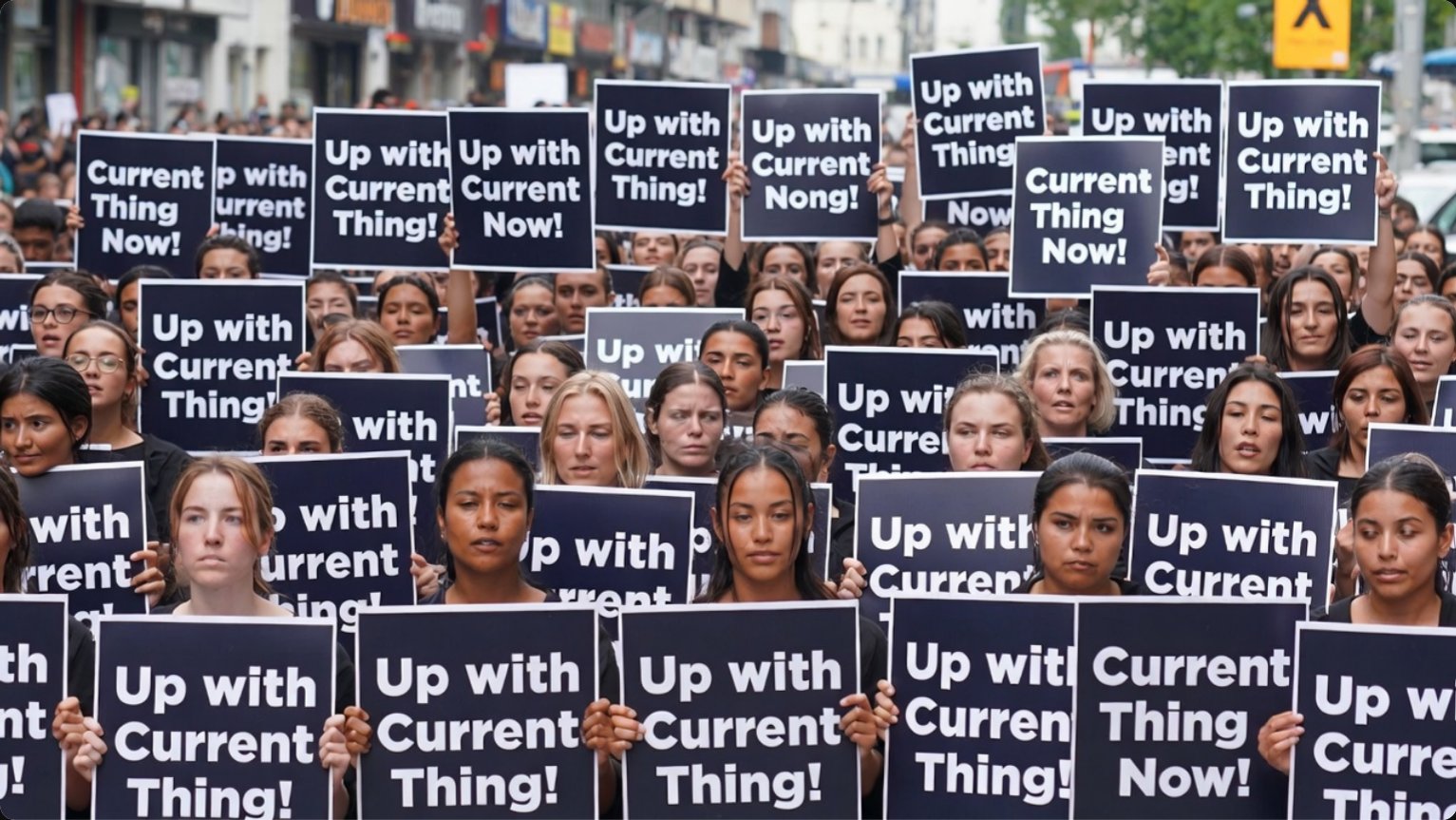
I don’t think I’d seen a “down with this sort of thing” placard in the flesh since I watched the Protest the Pope march back in September 2010. Those were the heady days of New Atheism, before the movement evolved into something more explicitly progressive.

The sign references an episode of the 1990s comedy Father Ted, in which the protagonist and his dim-witted sidekick Fr Dougal are forced to protest the screening of a blasphemous new film called The Passion of Saint Tibulus. Among the many catchphrases popularised by the comedy, back in 2010 this one suggested an ironic and gently mocking attitude to religion; that it was ridiculous, rather than evil.

This week, outside Westminster Magistrates’ Court in Marylebone Road, the sign appeared in a rather different context, carried by supporters of Father Ted co-creator Graham Linehan as he faced charges of harassment and criminal damage in an ongoing trial, following an incident at last year’s Battle of Ideas involving a young transgender activist.

Linehan had been bailed before trial, allowing him to travel to the United States to work on a new comedy project. When he arrived back at Heathrow on Monday, however, he was arrested by five armed police officers over three tweets he had posted back in April. The situation was as absurd and surreal as anything that had emerged from the writer’s fertile imagination.

As Linehan described it on his substack: “When I first saw the cops, I actually laughed. I couldn’t help myself. ‘Don’t tell me! You’ve been sent by trans activists’. The officers gave no reaction and this was the theme throughout most of the day. Among the rank-and-file, there was a sort of polite bafflement. Entirely professional and even kind, but most had absolutely no idea what any of this was about.”

The incident is embarrassing to Britain as it faces increasing scrutiny in the US for its poor record on free speech, especially over the Lucy Connolly case. It was unfortunate timing that this arrest happened just as Nigel Farage was heading in the other direction to talk about this very issue in Washington. But Linehan’s ordeal is also part of a much longer and sadder story about the perils of the political meeting the personal.

Arthur Mathews and Graham Linehan had worked on The Fast Show before renowned comedy producer Geoffrey Perkins had taken to one of their ideas, about a group of priests stuck on a remote Irish island, proposing that it be written as a six-part sitcom. It was brilliant, and hugely loved, and in its timing was significant.

Conor Fitzgerald wrote of Father Ted that, while well-loved in Britain, in Ireland it is more like “the national sitcom, a piece of light entertainment that nevertheless Says Something Meaningful About Us”. It also appeared at a crucial time in history.

    Not only was Father Ted one of the few successful TV representations of Ireland, it was made during Ireland’s version of the Swinging Sixties, our flux decade of the Nineties. The accelerating collapse of the Church and the exposure of longstanding political corruption coincided with the dawn of the Celtic Tiger years, lending peripheral Ireland a sense of self-conscious modernity. It was a unique national turning point, where our 19th-century past seemed to co-exist with our 21st-century future. In reflecting this upheaval, Father Ted has become not just a social historical document, but a portent of where Ireland stands today.

    When Ted was broadcast, the Church was formally still one of the central pillars of Irish life, but its authority rang hollow. Priests often felt like administrators of a vanished country. And on remote Craggy, Ted, Dougal and Jack mirror this directly. All good sitcoms feature characters who are trapped, but Ted is doubly so: first on his island; and second in an institution people are coming to see as irrelevant. He is still an essential member of the community, more than just a ceremonial functionary for weddings and funerals. But it’s just not clear what the essential thing he does is anymore, beyond being a common reference point that deserves token respect.

    Ted and Ted therefore stand at a crossroads, and capture the more fundamental social change in Ireland at this time: the collapse in respect for older establishment hierarchies generally.

Those establishment hierarchies collapsed across the West in the late 20th century, first in more secularised nations such as Britain and France and later, and more quickly, in places like Ireland and Spain where the Catholic Church still held on.

The Church lost its power to patrol its taboos, without which it became a sitting duck for satirists; the Passion of St Tibulus was influenced by the protest against Life of Brian, successfully banned in Ireland until 1987. As a teenager, Linehan had to join a film club to watch it, but such censorship was disappearing everywhere.

Father Ted was a work of genius, employing a surreal style of humour that has often been characteristic of Linehan and Mathews, and later seen in their under-appreciated sketch show Big Train – including the brilliantly bizarre sketch in which Beatles producer George Martin is kidnapped by Hezbollah.

The clerical comedy bequeathed numerous catchphrases. “I hear you’re a racist now, Father”, which features in an episode where Fr Ted is wrongly accused of anti-Chinese prejudice, is still a popular meme. Likewise, “These are small, but the ones out there are far away“, Ted’s explanation of perspective to his idiotic housemate, is still used to mock the gormless.

The show was also charming, and its treatment of religion was far from vicious. Rather than being a vitriolic attack on Church authority, Father Ted poked gentle fun at the absurdity of the old order, a kind of mockery which is perhaps a more dangerous threat to a belief system that relies on awe and fear. It was innocent, and many years later Linehan said he would find writing Father Ted much harder in light of the abuse scandal.

September 7, 2025

QotD: Generation X

Filed under: Books, Humour, Quotations, USA — Tags: , , , , , — Nicholas @ 01:00

… But Sailer’s right about Klosterman’s ability to grasp the obvious about Gen X. For instance:

    The concept of “selling out” — and the degree to which that notion altered the meaning and perception of almost everything — is the single most nineties aspect of the nineties. The complexity, nuance, and application of the term sellout was both ubiquitous and impossible to grasp. Nothing was more inadvertently detrimental to the Gen X psyche.

Or, as I like to put it, we were so obsessed with “authenticity” that we took as our guru an exquisitely sensitive longhaired goof who fronted a band named after spooge. […] But Klosterman does have genuine insights sometimes:

    The detail always noted in remembrances of the Bronco chase is the throngs of bystanders cheering for Simpson as the car rolled down the freeway, congregating on overpasses and holding makeshift cardboard signs proclaiming, “The Juice Is Loose”. It seemed perverse then and still seems perverse now. Yet this can also be understood as the primordial impulse of what would eventually drive the mechanism of social media: the desire of uninformed people to be involved with the news, broadcasting their support for a homicidal maniac not because they liked him, but because it was exhilarating to participate in an experience all of society was experiencing at once.

Sailer thinks that’s clever and perceptive, and I agree. Too bad you have to read some masturbatory bullshit about Zima to get to it.

Sadly, he doesn’t take that out a step (or, at least, he doesn’t get quoted doing so in Sailer’s review). Here’s Klosterman’s verdict on why Gen X, for all its faults, wasn’t so bad:

    The enforced ennui and alienation of Gen X had one social upside: Self-righteous outrage was not considered cool, in an era when coolness counted for almost everything. Solipsism was preferable to narcissism. The idea of policing morality or blaming strangers for the condition of one’s own existence was perceived as overbearing and uncouth. If you weren’t happy, the preferred stance was to simply shrug and accept that you were unhappy.

True enough, but look: Of all the things that made the Boomers so fucking insufferable, right near the top was their utter inability to let go of their youth. Instead of seeing Forrest Gump as a metaphor so unsubtle, an anvil to the head seems sneakier, they thought it was a lighthearted celebration of a simpler, more innocent time. We knew better. Since they couldn’t let go of their youth, we made “being old and jaded long before our time” into our signature thing.

But where, my fellow alterna-dudes, is that attitude now, when it matters? We’re in the same position in 2022 as our parents were in 1992: Staring down the barrel of middle age, teeing off on life’s back nine, pick your metaphor. It’s time to put away childish things. Grow the fuck up already, the way we wish our parents would’ve done for us back in 1992. Instead, we’re letting our lunatic children smear their pathologies all over what’s left of America, because … ?

I know why Klosterman does it: That’s what they pay him for. What’s our excuse?

Severian, “A Meta-Review”, Founding Questions, 2022-02-24.

September 4, 2025

They can’t catch actual criminals, but they are quite capable of arresting social media users

Filed under: Britain, Government, Law, Liberty, Media, Politics, Technology — Tags: , , , — Nicholas @ 04:00

Andrew Doyle hopes that the farcical performance by British police in sending five armed officers to arrest Graham Linehan as he stepped off the plane will be a tipping point:

How many more controversies will it take? The arrest of comedy writer Graham Linehan by five armed police officers as he landed at Heathrow Airport has become an international news story because it so self-evidently tyrannical. The stress of the ordeal raised his blood pressure to an alarming degree and he was rushed to hospital. With the help of the Free Speech Union, Graham is now suing the Metropolitan Police. You can donate to his crowdfunder here.

It is reassuring to see that some action is being taken against such chilling state overreach, but when will our politicians follow suit? Many of us have been warning about this ongoing assault on liberty for many years, and at every watershed moment we’ve been led to believe that something will be done. Then, inevitably, the “blob” is activated and swallows up any potential for progress in its viscous and undulating folds.

So when Sir Mark Rowley, head of the Metropolitan Police, complains that the police are acting on unclear laws, and that the responsibility for the maltreatment of the likes of Graham lies with those in power, he’s overlooking the impact of the activist middlemen. Let’s not forget that the Home Office has twice instructed the College of Policing to stop the recording of “non-crime hate incidents” (NCHIs) and has been ignored. Or that the chairman of the College of Policing, Lord Herbert, said the solution to the complaints about NCHIs might be to rename them. As though the public’s concerns about this brazen authoritarianism might be assuaged with a touch of rebranding.

Rowley’s buck-passing is likewise inadequate. He claimed that Graham’s arrest was necessary because officers “had reasonable grounds to believe an offence had been committed”, which is palpably untrue. He said: “I don’t believe we should be policing toxic culture wars debates and officers are currently in an impossible position”. He also made clear that police would continue to behave in this way “unless the law and guidance is changed or clarified”.

But this is precisely the problem. At present, a quango called the College of Policing trains officers in England and Wales. In my article for UnHerd about Graham’s arrest (which you can read here) I make the case that the College of Policing has become woefully unfit for purpose due to activist capture. For a long time, agitators within the system have reinterpreted and fudged the actual law in favour of what they would like it to be. This has led to some police acting in potentially criminal ways. Most egregiously, there is clear evidence of systemic bias against gender-critical individuals within the police force, and a reluctance to apply identical standards to trans activists who routinely post threats of death and rape and are rarely investigated for it.

In the wake of the Linehan arrest, Tom Knighton wonders why the US isn’t treating the UK as it would any other tyranny where free speech and other civil liberties are denied to the people on a whim or a suspicion:

The United States has a history of dealing with tyrannical governments, who oppose tyrannical governments we like even less. We worked with Saddam Hussein, for example, because he was at war with Iran.

But we never stopped pretending these weren’t tyrants.

So, it’s time we start treating the UK just the same.

The latest incident was a well-known comedian from the UK being arrested over a couple of jokes.

    Something odd happened before I even boarded the flight in Arizona. When I handed over my passport at the gate, the official told me I didn’t have a seat and had to be re-ticketed. At the time, I thought it was just the sort of innocent snafu that makes air travel such a joy. But in hindsight, it was clear I’d been flagged. Someone, somewhere, probably wearing unconvincing make-up and his sister/wife’s/mum’s underwear, had made a phone call.

    The moment I stepped off the plane at Heathrow, five armed police officers were waiting. Not one, not two—five. They escorted me to a private area and told me I was under arrest for three tweets. In a country where paedophiles escape sentencing, where knife crime is out of control, where women are assaulted and harassed every time they gather to speak, the state had mobilised five armed officers to arrest a comedy writer for this tweet (and no, I promise you, I am not making this up.

    … and then, a follow up to that one.

    When I first saw the cops, I actually laughed. I couldn’t help myself. “Don’t tell me! You’ve been sent by trans activists” The officers gave no reaction and this was the theme throughout most of the day. Among the rank-and-file, there was a sort of polite bafflement. Entirely professional and even kind, but most had absolutely no idea what any of this was about.

While the officers were kind, they still arrested him. They arrested him because he made some jokes. He spent time in a jail cell, was interviewed by detectives, and was treated like a criminal because he made some jokes.

They waited for him at the airport with five officers, something that would be a clear indication to others that he was truly dangerous, over some jokes.

The first one wasn’t a great joke, really, but that wasn’t the issue. This wasn’t that it wasn’t as funny as it should have been, but that it was made at all.

August 29, 2025

The dangers of joining the online hive mind of social media

Filed under: History, Media, Military, USA — Tags: , , , , , — Nicholas @ 03:00

At The Freeman, Nicole James discusses the experience of being immersed in a social media swarm or hive mind phenomenon:

Ever noticed how your social media feed doesn’t sound like “independent thought” so much as a stadium of people chanting, “Yaasss, queen!” in matching sequins? One minute you’re scrolling idly, the next you’ve been recruited into a sect with better lighting filters and the odd ironic dog meme. All it takes is clicking on one video of a dachshund in a raincoat, and suddenly you’ve been ordained High Priest of Sausage Dogs, condemned to a lifetime of puddle-splash reels and algorithmic sermonizing. That’s the hive mind. It’s the Internet’s favorite parlor trick, turning ordinary humans into synchronized swimmers thrashing about in a soup so murky it makes the Hudson on a hot July afternoon look like Perrier.

Bees and ants nailed this millennia ago: buzzing, working in lockstep, worshipping a terrifying queen—basically the Kardashians of the insect world. But instead of honey, humanity now churns out TikTok dances, Reddit debates about whether Die Hard was a Christmas movie (it wasn’t), and Facebook is where your uncle accidentally joins a cult.

Yet this collective buzz can tip into something darker. Collaboration can harden into groupthink, flattening individuality like a raccoon on the New Jersey Turnpike.

Cristina Dovan, a life coach based in the UK, calls the hive mind “group decision-making where individuals meld into one big throbbing consciousness”. Which sounds noble, and also like the worst hangover imaginable.

Collective intelligence can shine. Wikipedia (on a good day), Reddit’s problem-solving posters, Kaggle competitions, GitHub fixes. It’s a brainstorming session without the burnt office coffee and stale biscuits.

But history, and the Internet, remind us there’s a darker wing.

Psychologist Irving Janis, who coined “groupthink,” pointed to the Bay of Pigs invasion as Exhibit A.

Let’s return to 1961 where JFK is young, popular, and surrounded by Very Serious Men in suits. The CIA pitches a plan to topple Fidel Castro that went roughly like this:

  1. Train a ragtag bunch of Cuban exiles.
  2. Drop them on a swampy stretch of coastline actually called the Bay of Pigs (because nothing says “stealth” like announcing your arrival in Pork Bay).
  3. Hope the Cuban people spontaneously rise and overthrow Castro, preferably in a neat anti-communist conga line.

Everyone in the room knew it sounded dodgy. The beaches were wrong, the surprise was nonexistent, Castro’s army was enormous and very much awake. But instead of saying, “Excuse me, Mr. President, this is bananas”, the advisors all nodded along as if they were trapped in a corporate retreat exercise called Let’s Pretend We’re Bold Visionaries.

The result? A fiasco. Castro’s forces crushed the invaders in three days flat. America looked ridiculous, Kennedy was humiliated, and “Bay of Pigs” became shorthand for “the world’s worst team-building activity”. In short, a textbook case of groupthink, or as we’d call it today, “watching as your drunk mate climbs onto the shed roof, yells that he can backflip, and you cheer instead of calling an ambulance”.

« Newer PostsOlder Posts »

Powered by WordPress