Quotulatiousness

November 26, 2021

The more government tries to do, the less well it does everything

Filed under: Cancon, Government, Health — Tags: , , , , — Nicholas @ 03:00

In what I suspect will be a long, long series of stories illustrating government’s ever-increasing appetite for control and decreasing ability to competently discharge its authority, Matt Gurney says he remembers to the day when he realized the Canadian government didn’t have a clue in an emergency. ANY emergency:

It seems a very long time ago now, but let me set the stage for you: this was just days after March 12th, the Thursday most North Americans seem to agree marked the real beginning of it all here — the day the NBA and NHL suddenly shut down and, in Toronto at least, the schools closed. Though the prime minister wouldn’t officially ask Canadians to come home from abroad for a few more days, thousands were landing at our airports each day. The federal government had said that enhanced screening had been established to meet them. Sadly, this wasn’t exactly, you know, true. I knew this for a fact: I’d been out of the country with my wife and children, arriving home the day before Joly’s press conference. I’d expected screening, questions, temperature checks, pamphlets, PA announcements — to be blunt about this, I expected a gigantic hassle. Hell, I wanted to be hassled and sternly ordered home for 14 days of isolation. Nope! Here’s how I described our arrival in a column in the National Post:

    [We] were processed by an automated kiosk with a touchscreen (that is hopefully being regularly cleaned). It scanned our passports and took photos of my wife and I — our children, being under 12, were exempt from photographing. Alongside the usual questions about value of purchased goods and whether we’ll be visiting a Canadian farm, there was a question asking whether we had recently visited Iran, Italy or China’s Hubei province. I (honestly) clicked no. The kiosk printed out a form, which I handed to a customs officer. He glanced at it, asked where we were returning from, looked at our passports for the barest moment, and welcomed us home. [The] entire process took barely six minutes.

    No questioning about symptoms. No temperature screening. No information about mandatory 14-day self-isolation. No signage, or at least not obvious signage. No multi-language pre-recorded PA announcements with public health details. My wife did see a pamphlet listing COVID-19 symptoms, but nothing about self-isolation was noted. (Photos have circulated on Twitter claiming to show updated pamphlets given out at airports containing self-isolation information; we did not receive one on Saturday night.)

Our hassle-free arrival, to be clear, was not what was supposed to be happening. Worse, the federal government really seemed to have no idea what the facts on the ground actually were. Bill Blair was tweeting out complete nonsense that had absolutely no relation to what was actually happening. Provinces and cities were surging their own people to the airports to assert some order, since the federal government was clearly completely incapable of getting a handle on the situation, probably because it was blissfully unaware that there was a situation.

So that was bad.

But the next day, our first day back, was when it got really scary.

Joly had been at a cabinet meeting, and afterward, tried to project confidence and calm. She was full of smiles when she addressed the media, saying that there’d be announcements to come the next day. The Globe and Mail‘s Marieke Walsh, doing a vastly better job containing her temper than I would have, demanded to know why Canadians sitting at home were being teased about an announcement instead of just told what the announcement was. Joly had no real answer to that really, really good question, and just tried to smile her way through it, until David Lametti tried to save her by lavishing praise on the leadership of … Patty Hajdu, our then-health minister.

Read that paragraph again. Joly. Lametti. Hajdu. It’s a miracle any of us are still alive.

October 12, 2021

The Southwest canary in the coal mine?

Filed under: Business, Government, Health, Liberty, USA — Tags: , , , , — Nicholas @ 03:00

Jim Treacher wonders, based reactions from the self-imagined elites, if they consider airline pilots to be slaves now:

I’m one of the pesky minority of Americans who are both pro-vaccine and against vaccine mandates. The evidence overwhelmingly proves that these vaccines are effective against the coronavirus, and I will continue to encourage everyone to get vaccinated. And, also, in addition to that, vaccine mandates are not only un-American but counterproductive. In addition to all the other dishonest, lame-brained, self-negating messaging we’ve heard during this pandemic, telling Americans what to do just doesn’t work. That’s not how we’re built.

And just on principle, vaccination is your decision as an individual. That’s how it’s supposed to work in this country. This is still a republic, if you can keep it.

Which is why it’s interesting that now this is happening:

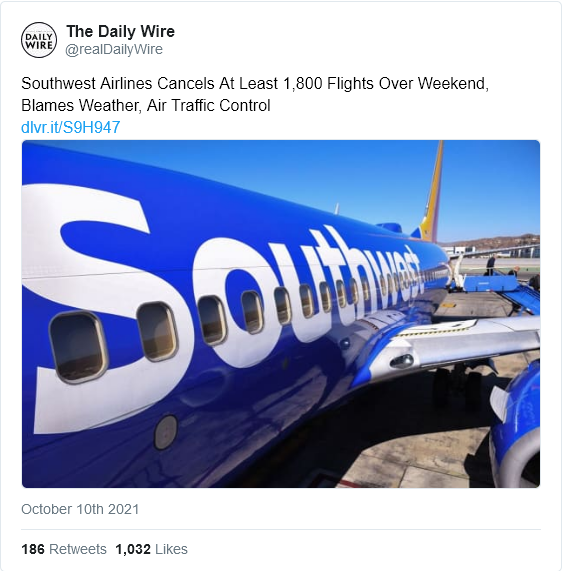
Southwest is the only airline cancelling so many flights. Is that because the employees, including the pilots who are needed to fly the planes, are refusing to comply with the company’s new vaccine mandate?

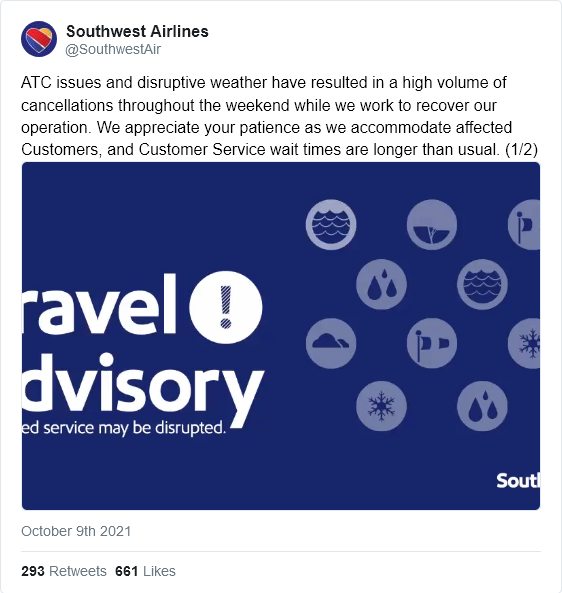
The airline is saying otherwise:

“Disruptive weather”? Wouldn’t that affect all the airlines, not just one?

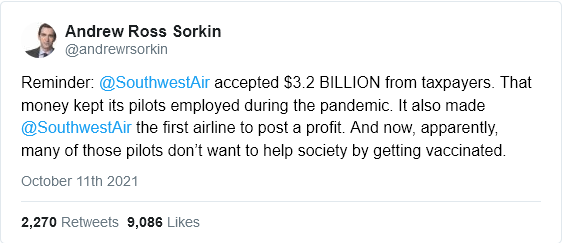
In any case, the smart fellers seem to think it’s about the vaccine. And they ain’t happy:

Oh, is that how it works? Those pilots are no longer individual human beings, with individual thoughts and opinions? They must subsume themselves into the corporation? The government throws money at everything in sight, and therefore all that stuff is owned by the government? All those people are owned by the government?

And these clowns call us fascists?

Airline pilots aren’t slaves. If they don’t want to work because of an employer’s mandate, that’s between them and the employer. If they get fired, that’s their problem. But nobody owns them, let alone entitled @$$holes like Andrew Ross Sorkin.

Of course, you can always trust The Babylon Bee (America’s Most Trusted News Source™) to get to the heart of the matter:

September 28, 2021

“Eating healthy”? You’re doing it wrong

Filed under: Europe, Food, Government, Health — Tags: , , , — Nicholas @ 05:00

Joanna Blythman pulls some useful tasty tidbits out of a recent Swedish study that contradicts much of what western governments have been pushing as “healthy” eating habits for the last fifty-plus years:

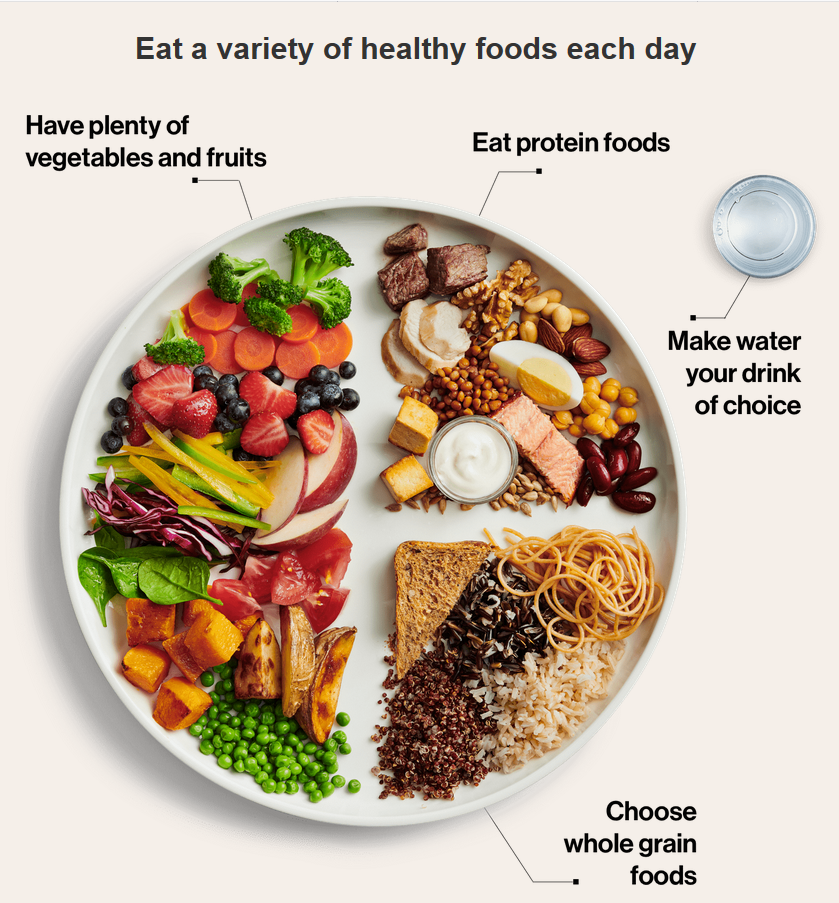
The NHS Eatwell Guide, fondly known to its critics as the Eat badly guide, still tells us to choose lower-fat products, such as 1% fat milk, reduced-fat cheese, or low-fat yoghurt. This is based on the inadequately evidenced postwar belief that saturated fat is bad for your heart.

How embarrassing, then, for government dietetic gurus, that a major study of 4,150 Swedes, followed over 16 years, has last week reported that a diet rich in dairy fat may lower, not raise your risk of cardiovascular disease.

This Swedish study echoes the findings of a 2018 meta-analysis of 29 previous studies, which also found that consumption of dairy products protects against heart disease and stroke.

A body of research also suggests that consumption of dairy fat is protective against type 2 diabetes.

[…]

Five a day
A slogan invented to shift more fruit and veg, but not one to live your life by

This catchy slogan, now a central plank of government eating advice, came out of a 1991 meeting of fruit and veg companies in California.

Five a day logos now appear on many ultra-processed foods, from baked beans to ready meals, imbuing them with a questionable aura of health.

But other than as a marketing tool, any justification for this slogan is thin.

[…]

The health case against meat is predicated on cherry-picked evidence from low-quality, unreliable, observational studies that fail to draw a distinction between meat in its unprocessed form and multi-ingredient, chemically altered, ultra-processed meat products, such as hotdogs.

Association doesn’t mean causation. Confounding factors exist; someone who eats bacon butties daily might also be eating too much sugar, be consuming lots of additive-laden bread, be under stress, or smoke – the list goes on.

The International Agency for Research on Cancer’s 2015 claim that red meat is “probably carcinogenic” has never been substantiated.

In fact, a subsequent risk assessment concluded that this is not the case.

September 25, 2021

Samizdat from “Ozcatraz”

Through some miracle of invisible ink, blind mail drops, and all the necessary modern cloak-and-dagger technical equivalents, James Morrow manages to get some news out of locked-down-to-the-nth-degree Australia:

You really have to feel for the poor people at Tourism Australia.

Having spent decades happily if not particularly creatively pitching their product to the world with the time honoured formula of “beaches, Opera House, outback, crocs”, they now have to figure out how to sell a country that looks more and more like a tropical North Korea.

That is, of course, if the federal government ever lets visitors in again without forcing them to first spend a week or two quarantined in some prefab hotel or desert facility in the name of “keeping Australians safe”.

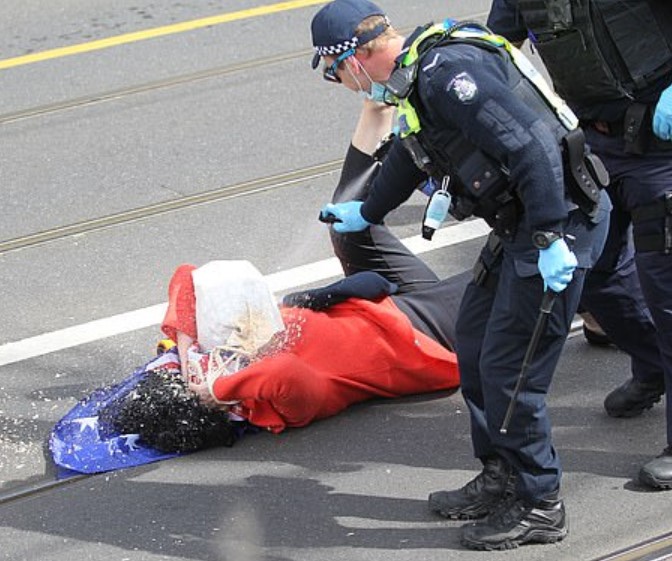
The question thus becomes, both for those of us trapped here in Ozcatraz as well as bemused outside onlookers, how did a free and easy land of opportunity become gripped by a neurotic covid puritanism that truly believes any sort of fun or joy or sociability is deadly, and a place where protesters and cops are having pitched battles in the street over mandatory vaccinations?

If you don’t believe me, consider that in Melbourne — ground zero for Australia’s covid madness, the city just crossed the line to become the most locked-down city in the world — the state premier ordered playgrounds shut and had concrete bollards hoisted into skate parks to stop kids from riding their bikes.

A few weeks ago, after some wags took advantage of a loophole that allowed bars to offer takeaway cocktails and organised an al fresco pub crawl, outdoor consumption of alcohol was banned always and everywhere.

Even a tiny loosening of restrictions there to allow beleaguered residents to meet up for a brief, vaccinated, socially distanced picnics left the prohibition on alcohol in place, all in the name of the Holy Blessed Science.

In Sydney, which is comparatively sane and where there is at least a decent plan to get back to some sort of vague simulacrum of normal over the next few months, everyone still has to “mask up” when outdoors, even if not around anyone else. The only socialising allowed is under very limited outdoor circumstances, among the fully vaccinated, who are not allowed to travel too far to meet up with one another.

What makes it most bizarre is that even the state’s health minister recently admitted outdoors was the safest place to be and everyone understands that the mask rule was imposed largely to shut up a depressingly totalitarian press gallery that wasn’t going to shut up until everyone was welded into their homes Wuhan-style.

Yet, as Sydney moves into summer, every weekend sees Twitter flooded with photos of sunbakers on local beaches asking WHY IS THIS ALLOWED? and demanding police action.

On any given Monday in the local park where I exercise my spaniel, my very earnest bourgeoise-left neighbours grumble about it all not being “in the spirit” of the health orders while rabbinically parsing whatever latest decree has just come down from the Temple, er, Ministry of Health.

Update: Alex Berenson confirms much of the situation in Oz (h/t to SDA for the link).

Americans have the wrong idea about Australia.

Thanks to some brilliant tourism branding and Crocodile Dundee, we think of it as rough-n-ready frontier country, Montana with bigger beer cans. The dingo ate my baby!

In reality it’s Canada with a mean streak. The Karens are in charge and they are mad.

[…]

So when Covid rolled in, the Australian government (and lots of Aussies) saw it as just another ugly export from China that needed to be beaten back at all costs. To its credit, Australia pushed hard for an independent investigation of the origins of Sars-Cov-2 last year (the Chinese pushed back, going so far as to call for a boycott of Australia’s delicious wine).

But Australia also went cray-cray — the technical term — for the fantasy of zero Covid. It effectively closed its borders not just to other countries but to its own citizens. For most of the last two years, they have had a hard time coming home — and an even harder time leaving.

[…]

Until the last couple of months, the frogs were not just luxuriating in the pot but asking for a little more heat! Australians were so pleased to be Covid-free — for the entire first half of 2021, they had only one Covid death — that the majority happily tolerated these restrictions.

Yes, a few rabble-rousers complained, but even videos of police arresting people inside their homes or attacking (truly) peaceful protestors didn’t dent support for the creeping police state.

But in the last couple of months, and especially the last few days, the equilibrium has shifted. And — inevitably — the response of Australia’s fearless leaders has been to try even harder to stamp down unrest. As a result, the situation is increasingly unstable.

September 23, 2021

“The truth about the origins of Covid would have serious consequences for the US Government and its ‘public health’ bureaucracies …”

Filed under: China, Government, Health, Media, USA — Tags: , , — Nicholas @ 03:00

Mark Steyn on the deliberate blindness of western governments to any evidence that points to the Wuhan Coronavirus pandemic actually originating in Wuhan:

Wuhan Institute of Virology.
Wikimedia Commons.

The first pieces published about ChiCom-19 at this website were on the insanity of empowering China and the lies of Beijing when it comes to the spread of infectious diseases. Nineteen months in, my main interest remains the origins of the WuFlu.

At the same time, one notices the almost total lack of interest in its origins from virtually anyone who matters, starting at the very highest levels of government. As Rumsfeld used to say, absence of evidence is not evidence of absence. Somewhat analogously, overwhelming lack of interest in evidence is paradoxically evidence of interest. The truth about the origins of Covid would have serious consequences for the US Government and its “public health” bureaucracies, and for the broader “science” community and its peer-reviewed journals and grant-application processes. Furthermore, the public deference to political leaders who claim to be “following the science” — already fraying badly in France and Australia — would take a huge hit once it became clear that the killer virus is itself the creation of “science” and of a Washington public-health bureaucracy that followed it all the way to an insecure lab in Wuhan.

From my old friends at the Telegraph:

    New documents show that just 18 months before the first Covid cases appeared, researchers had submitted plans to release skin-penetrating nanoparticles containing “novel chimeric spike proteins” of bat coronaviruses into cave bats in Yunnan, China.

    They also planned to create chimeric viruses, genetically enhanced to infect humans more easily, and requested $14 million from the Defense Advanced Research Projects Agency (DARPA) to fund the work.

    Papers, confirmed as genuine by a former member of the Trump administration, show they were hoping to introduce “human-specific cleavage sites” to bat coronaviruses which would make it easier for the virus to enter human cells.

Ah, I miss the old days when a Google search for “human-specific cleavage sites” would be strictly NSFW. Now it’s links that are Not Safe For Google or Facebook or Twitter or any of the other media so censorious of anything that dissents from the official line. The Telegraph report is based on the work of DRASTIC, the ad-hoc group of international researchers who, so Wikipedia assures us, “have engaged in personal attacks against virologists” – so just hitch your mask up over your ears and don’t listen to them.
As for “novel chimeric spikes”, that’s the last year and a half, starting with the chimera of “zero Covid”. And we are in this mess because the central strategy of American foreign policy for a third of a century — that China can be economically endowed into behaving as a normal part of the global order — is the biggest chimera of all.

September 5, 2021

The official science advisors themselves are making it much harder to “trust the science”

Filed under: Cancon, Government, Health, Science — Tags: , , , , , — Nicholas @ 03:00

In the very last “Weekly Dispatch” from The Line that I’ll be able to read and share (because those posts are going behind the paywall from next week onward), the difficulty in “trusting the science” is made very clear indeed:

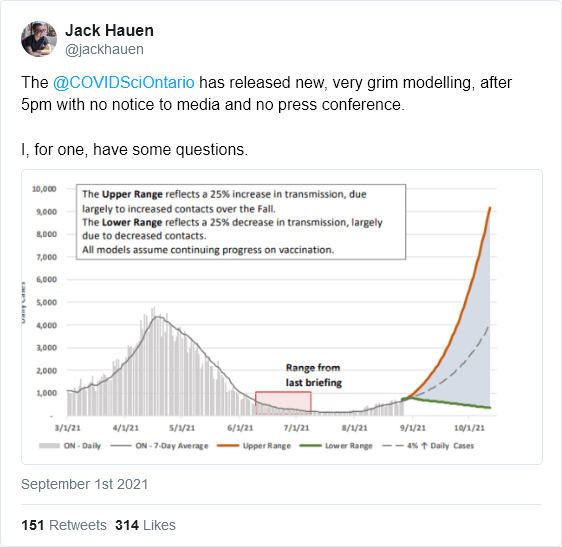
A friend of The Line who lives in Ontario sent us a delightfully snippy little text this week attached to the Ontario Science Table’s latest COVID-19 modelling efforts.

“Do you have any idea what would happen if I walked into a meeting with a range from 500-9000, and expected people to take me seriously?” she wrote. “I want to believe you scientists, but you are making it impossible to have any faith in your work.”

She’s right. A range this wide is both useless and unfalsifiable. No government can look at this graph and decide what the best course of action ought to be, and no individual can look at this data and make reasonable decisions about how to go about his or her life. If you want to see catastrophic health-care collapse, it’s there at the top end, and if you want to see “pandemic is over” signal, it’s there near the bottom.

The Science Table might as well just put a giant ¯\_(ツ)_/¯ on the x/y axis and call it in. These guys have no goddamn clue what is going to happen, and they’d be better off just admitting as much.

The Public Health Agency of Canada’s modelling was equally pointless. It’s predicting another literal off-the-chart case spike by October; 15,000 cases per day, which is almost a third higher than the peak daily case rate of the second wave. Somehow, this will happen despite the fact that more than 70 per cent of the eligible population is now fully vaccinated.

We at The Line are looking forward to October. The fall will bring with crunchy leaves, warm lattes, and the ability to compare these models to reality; but in the meantime, we have to ask, what the hell is the purpose of these things?

If public-health types are trying to scare people into getting vaccinated and maintaining distance, we’re sorry to break this to you, but that’s not going to work anymore. Those who can be scared into changing their behaviour have done so already. And those who refuse to be scared are going to look at another set of unfalsifiable modelling predictions and roll their eyes.

We cannot say this enough: COVID-19 is now an endemic disease. We’re stuck with it. It’s not going away. We are going to experience another wave of cases. Hospitalizations and ICU admissions will rise. Our mortality rate will also increase — although these latter metrics will rise at nowhere near the rate as previous waves thanks to vaccines. Delta will pass. Then another variant will pop up. And another after that. We can’t let ourselves be trapped on a Ferris wheel of restrictions and easing every time case numbers go up and down for a disease that may be with us for years. Eventually, we have to make our peace with the suck, return to some semblance of normal, and figure out how to live our lives in a sustainable and healthy way — albeit with this new way to get sick and die in them.

We have an 83 per cent first-dose vaccination rate among those who are eligible; vaccine mandates, passports, $100 gift cards, may, at best, add a few points to that total. We have reached the point where we are grasping at increasingly divisive policies to make ever more incremental gains — in short, the law of diminishing returns is beginning to kick in, as it always does. If our current vaccination, mortality, and hospitalization rates are is not good enough to call time on this pandemic then what, exactly, is the exit strategy? And just from a pure communications perspective, how does releasing another round of bonkers off-the-charts modelling serve that end?

August 27, 2021

Updating Rahm Emanuel’s notion about not “wasting” a crisis — don’t let a crisis end

Filed under: Government, Health, Liberty, Media — Tags: , , , , , — Nicholas @ 03:00

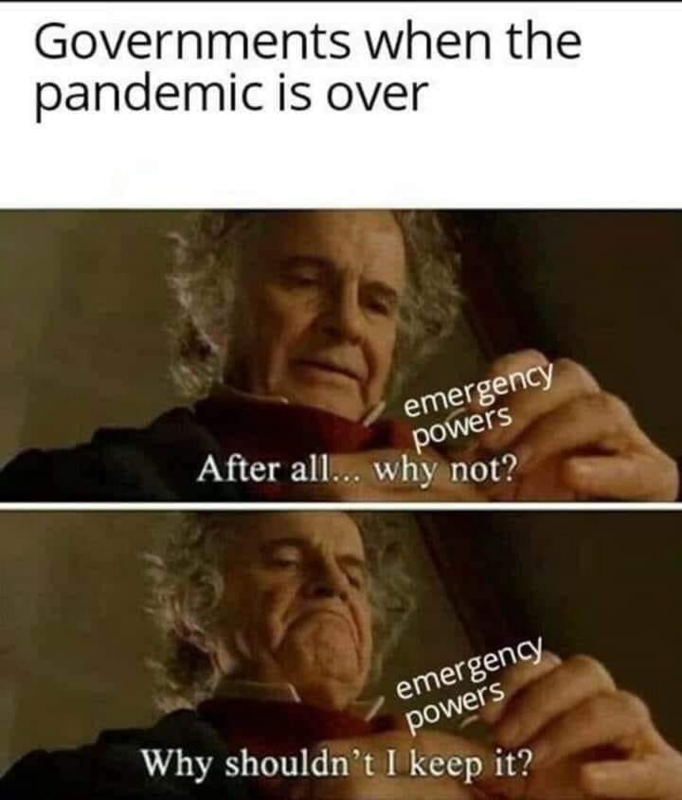
In City Journal, John Tierney considers how political leaders and public health officials across the western world are going Rahm Emanual one better by continuously extending the Wuhan Coronavirus crisis:

Wuhan Institute of Virology.
Wikimedia Commons.

Throughout the pandemic, American political and public-health leaders have been following Rahm Emanuel’s classic dictum for power-seeking officials: “You never want a serious crisis to go to waste.” Now they’ve adopted a corollary: you never want a crisis to end.

So they are prolonging the national misery instead of easing it, which could be done with a few simple strategies. Explain to the public that the virus will never disappear but is no longer a mortal threat to the vast majority of Americans. Encourage the minority still at risk to get vaccinated by honestly discussing who is in jeopardy and what scientists have learned about infections. Promote treatments proven to prevent infection and speed recovery while avoiding unproven treatments and mandates that cause collateral damage and generate mistrust. Above all, make it clear to Americans that we finally have reason to celebrate: what once seemed an unprecedented danger is now just one of many pathogens that we know how to live with.

But the nation’s crisismongers aren’t about to relinquish their hold over the public, so they’ve set new goals that are as unachievable as they are unnecessary and harmful. Making vaccines available to every American adult is no longer sufficient; now the crisis cannot end until the entire population has been vaccinated. Instead of focusing efforts on vaccinating the vulnerable, officials obsess on compelling universal obedience, even if that means squandering vaccines on people who already have acquired natural immunity or are at minimal risk of serious illness.

The same progressives who regularly denounce “systemic racism” and “Western imperialism” are now enforcing policies that disproportionately punish minorities and the poor, both in the United States (the majority of black teenagers and young adults in New York have been banished from much of public life by the city’s new vaccine-passport policy) and in the rest of the world. The hypocrisy was deftly captured in a tweet by Martin Kulldorff, the Harvard epidemiologist: “If you favor university vaccine mandates for low-risk American and European students, when there is not enough vaccine for older high-risk people in Asia, Africa and Latin America, please remove your #BLM tags from your Twitter/Facebook profiles.”

Children are being sentenced to another round of unnecessary mask mandates and probably more school closures based on evidence-free warnings from Anthony Fauci and others that the Delta variant will be more deadly to them than the original virus. While the variant is more infectious, the evidence does not show it to be any more lethal. In fact, the current mortality rate among American children with Covid is lower than it was last year — and last year many more children died of the flu than of Covid. One of the most thorough studies, in England, shows that the survival rate for those under 18 with Covid is 99.995 percent. But instead of emphasizing these reassuring statistics, public-health officials like Jerome Adams, the former surgeon general, keep looking for new ways to scare parents and children.

August 12, 2021

The Canadian Historical Association’s “consensus” on genocide in Canada

Filed under: Cancon, Education, Government, Health, History — Tags: , , , , — Nicholas @ 03:00

In Quillette, Christopher Dummitt reports on last month’s declaration by the Canadian Historical Association that not only were past Canadian governments complicit in deliberate genocide against First Nations, but that such mass extermination efforts are current and ongoing:

Kamloops Indian Residential School, 1930.
Photo from Archives Deschâtelets-NDC, Richelieu via Wikimedia Commons.

Last month, the Canadian Historical Association (CHA) issued a public “Canada Day Statement” — described as having been “unanimously approved” by the group’s governing council — declaring that “existing historical scholarship” makes it “abundantly clear” that Canada’s treatment of Indigenous peoples amounts to “genocide”. The authors also claimed that there is a “broad consensus” among historians on the existence of Canadian “genocidal intent” (also described elsewhere in the statement as “genocidal policies” and “genocidal systems”) — an alleged consensus that is “evidenced by the unanimous vote of our governing Council to make this Canada Day Statement”.

The authors went further by arguing that both federal and provincial governments in Canada “have worked, and arguably still work, towards the elimination of Indigenous peoples as both a distinct culture and physical group” (my emphasis); thereby suggesting that there is “arguably” an ongoing genocide going on, to this day, on Canadian soil.

The idea that Canada is currently waging a campaign of mass extermination against Indigenous people may sound like something emitted by Russian social-media bots or Chinese state media. But no, this is an official statement from the CHA, a body that describes itself as “the only organization representing the interests of all historians in Canada” — presumably including me.

In fact, there is no “broad consensus” for the proposition that Canadian authorities committed genocide, let alone for the completely bizarre idea that a genocide is unfolding on Canadian soil even as you read these words. And while many of us have become used to such plainly dilatory claims being circulated by individual Canadian academics in recent years, the CHA’s use of its institutional stature in this way was so shocking that it caused dozens of historians to affix their names to a letter of protest.

Notwithstanding what this (or any other) official body claims, the question of whether Canada committed genocide is not a settled issue among scholars. Canada is a relatively small country, home to only a small number of professional historians. And so even this modest-seeming collection of names suffices to disprove the CHA’s claim that it speaks for the entire profession. Moreover, many of those who have signed the letter are senior scholars giving voice to younger colleagues who (rightly) fear that speaking out publicly will hurt their careers.

I am not writing here to defend the actions of Canadian governments toward Indigenous populations. As most Canadians have known for decades, the policy of forcing Indigenous children to attend residential schools led to horrendous cases of sexual and physical abuse. There was also a long history in many schools of refusing to let children speak their native languages or continue their cultural traditions. These were assimilatory, underfunded institutions created and run by people who typically believed that they were doing Indigenous people a favour by “civilizing” them.

What I am addressing, rather, is (a) the question of whether these actions are correctly described with the word “genocide”, and (b) the CHA’s false claim that there is “broad consensus” on the answer to that question. As the letter of protest states:

    The recent discovery of graves near former Indigenous residential schools is tragic evidence of what the Truth and Reconciliation Commission (TRC) documented in Volume 4 of its final report — a report that we encourage all Canadians to read. We also encourage further research into gravesites across Canada and support the completion of a register of children who died at these schools. Our commitment to interrogate the historical and ongoing legacies of residential schools and other forms of attempted assimilation is unshaken. However, the CHA exists to represent professional historians and, as such, has a duty to represent the ethics and values of historical scholarship. In making an announcement in support of a particular interpretation of history, and in insisting that there is only one valid interpretation, the CHA’s current leadership has fundamentally broken the norms and expectations of professional scholarship. With this coercive tactic, the CHA Council is acting as an activist organization and not as a professional body of scholars. This turn is unacceptable to us.

Historians are taught to approach their study of the past with humility, on the understanding that the emergence of new documents and perspectives may require us to revise our assessments. Moreover, even if an individual scholar might have strong opinions about a particular historical subject — having become certain that his or her interpretation represents the truth — the community of historians exists in a state of debate and disagreement. We are always aware that two historians sifting through the same archival box of documents can develop very different theories about what those documents mean.

It is true that there are some areas of history that might be fairly labelled as definitively “settled”. But these are few. And even in these cases, consensus typically arises organically, through the accumulated weight of scholarship — not, as in the case of the CHA’s Canada Day stunt, through ideologically charged public statements that seek to intimidate dissenting academics into silence.

July 30, 2021

The British government reaches deep into the bag of “nudge” tricks yet again

Britain’s public health boffins have got the government agitated enough to try major incentives to encourage British shoppers to buy healthier, lower-calorie foods. Tim Worstall explains that, because those shoppers are human beings, this suite of incentives won’t do at all what Nanny expects them to do:

Now consider how it has to work. You go shopping, you present your DimbleCard and gain points for the healthiness of that shopping basket. Lettuce and carrots galore, super, free ticket to London on the choo choo.

So, where are the chocco biccies? If you buy them when presenting your card then no choo choo for you. What happens?

The lettuce and the carrots are bought on the card, the chocco biccies are not. Everyone simply does two transactions, with DimbleCard and sans. Lots of free choo choo and no change, whatsoever, in diet.

Yes, of course people will do this. For that’s what people do. Survey the landscape of incentives in front of them then maximise their utility, the outcome, in the face of them. It’s a restricted rationality, restricted by knowledge, but it is there. Everyone will fiddle the system because that’s what it is to be human. Collecting the fire from the lightning strike is fiddling the universe, that’s just what we do.

This being why so many clever schemes to encourage or deter this or that just don’t work. This being why those detailed plans for men, if not mice, gang aft into idiocy. Because we out here, hom sap, will play whatever system there is to our benefit.

No, this will not work out like supermarket loyalty cards. Yes, it’s true, most of us do use them. But the incentive is for us to do so. The more we do use them then the more discounts we gain, the better off we are, even at the cost of that data. How does this new government one work? The less we buy of certain things the better off we are. So, less of those things will be bought using the cards.

It is not possible to insist that people must use the card to buy things. Well, not unless we’re about to descend into the dystopia desired by Caroline Lucas it’s not. There might be a card reader at the point of purchase but the supermarkets will not demand that a sale can only happen when a card is read.

Therefore there will be those sales which gain points which make prizes. There will also be those DimbleCardless sales which do not gain points, or even demerits, and are done without their being registered in the system.

July 23, 2021

Panic is infectious, and the dying media are a primary vector

In City Journal, John Tierney looks at the two lethal waves of contagion the world has suffered since 2019, the Wuhan Coronavirus itself and the media-driven panic that almost certainly resulted in far more deaths than the disease that triggered it:

Wuhan Institute of Virology.
Wikimedia Commons.

Instead of keeping calm and carrying on, the American elite flouted the norms of governance, journalism, academic freedom — and, worst of all, science. They misled the public about the origins of the virus and the true risk that it posed. Ignoring their own carefully prepared plans for a pandemic, they claimed unprecedented powers to impose untested strategies, with terrible collateral damage. As evidence of their mistakes mounted, they stifled debate by vilifying dissenters, censoring criticism, and suppressing scientific research.

If, as seems increasingly plausible, the coronavirus that causes Covid-19 leaked out of a laboratory in Wuhan, it is the costliest blunder ever committed by scientists. Whatever the pandemic’s origin, the response to it is the worst mistake in the history of the public-health profession. We still have no convincing evidence that the lockdowns saved lives, but lots of evidence that they have already cost lives and will prove deadlier in the long run than the virus itself.

One in three people worldwide lost a job or a business during the lockdowns, and half saw their earnings drop, according to a Gallup poll. Children, never at risk from the virus, in many places essentially lost a year of school. The economic and health consequences were felt most acutely among the less affluent in America and in the rest of the world, where the World Bank estimates that more than 100 million have been pushed into extreme poverty.

The leaders responsible for these disasters continue to pretend that their policies worked and assume that they can keep fooling the public. They’ve promised to deploy these strategies again in the future, and they might even succeed in doing so — unless we begin to understand what went wrong.

The panic was started, as usual, by journalists. As the virus spread early last year, they highlighted the most alarming statistics and the scariest images: the estimates of a fatality rate ten to 50 times higher than the flu, the chaotic scenes at hospitals in Italy and New York City, the predictions that national health-care systems were about to collapse. The full-scale panic was set off by the release in March 2020 of a computer model at the Imperial College in London, which projected that — unless drastic measures were taken — intensive-care units would have 30 Covid patients for every available bed and that America would see 2.2 million deaths by the end of the summer. The British researchers announced that the “only viable strategy” was to impose draconian restrictions on businesses, schools, and social gatherings until a vaccine arrived.

This extraordinary project was swiftly declared the “consensus” among public-health officials, politicians, journalists, and academics. Anthony Fauci, director of the National Institute of Allergy and Infectious Diseases, endorsed it and became the unassailable authority for those purporting to “follow the science”. What had originally been a limited lockdown — “15 days to slow the spread” — became long-term policy across much of the United States and the world. A few scientists and public-health experts objected, noting that an extended lockdown was a novel strategy of unknown effectiveness that had been rejected in previous plans for a pandemic. It was a dangerous experiment being conducted without knowing the answer to the most basic question: Just how lethal is this virus?

The most prominent early critic was John Ioannidis, an epidemiologist at Stanford, who published an essay for STAT headlined “A Fiasco in the Making? As the Coronavirus Pandemic Takes Hold, We Are Making Decisions Without Reliable Data.” While a short-term lockdown made sense, he argued, an extended lockdown could prove worse than the disease, and scientists needed to do more intensive testing to determine the risk. The article offered common-sense advice from one of the world’s most frequently cited authorities on the credibility of medical research, but it provoked a furious backlash on Twitter from scientists and journalists.

July 15, 2021

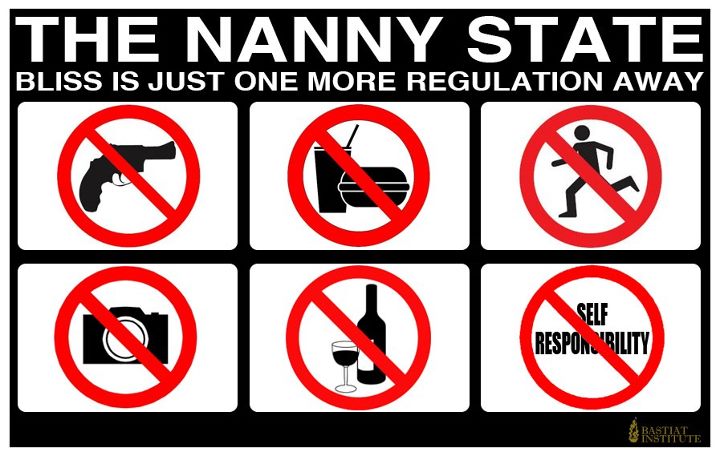
Out: “War is the health of the state”, In: “Pandemic restrictions are the health of the nanny state”

British MP Andrew Lewer on the inability (and determined unwillingness) of western governments at all levels to back away from all the restrictions they’ve been able to impose on their citizens since the start of the Wuhan Coronavirus pandemic:

The list goes on. By the government’s own calculations it [banning advertising for “junk food” on TV] will reduce children’s diets by a meagre five calories a day – the equivalent of a third of a cherry tomato. And watch out for those Government figures. Pardon the pun, but given that they add weight to the arguments of those opposing their intrusiveness into our lives, would anyone be amazed if new and revised figures emerged during the course of detailed legislation? But even if the impact of these proposals was amplified by “the science”, it would still come at too high a cost to individual freedom and liberty.

And this is just the thin end of the wedge. For a moment back in winter, it looked like we had woken up and smelt the full English breakfast. It was reported that the advertisement ban would be discarded, which allowed the free market minded to hope, especially given the disbanding of Public Health England, that this might signal pushback against nanny state intrusion. Alas, no.

The appetite for ill-conceived, unworkable ideas is growing: we have plans to force pubs to disclose the number of calories in every drink they serve, just as they begin to fill their tills after months of lockdown. Plans to end deals like “buy one get one free” on foods high in fat, sugar and salt – a regressive measure that will hit the poorest consumers hardest while doing nothing to reduce our waistlines. Plans for further legislation around nutritional labelling – adding cost, probably not adding clarity.

We left the EU in part as a reaction to over-regulation. I remember well during my time as an MEP how skewed towards large corporations the regulatory regime could be in Brussels. If, having taken the difficult and painful decision to leave the bloc, we fail to roll back the overreach then people will start to ask what the last four years was all about. If freedoms regained are never applied, then what was the point? The food laws will diminish freedoms in everyday life, not just those of the important, but more esoteric and common room kind, that our political elites from time to time do remember to respect.

July 8, 2021

The initial findings of our months-long dietary natural experiment

Filed under: Britain, Food, Health — Tags: , , , , — Nicholas @ 05:00

As we’ve all been told many, many times by the food nannies, access to fast food restaurants makes us fat. The food is too greasy, too salty, too tasty for our feeble wills to fight so we just engorge ourselves on those bad calories. We eat too much fast food and we get fat. Case closed. Well, that’s what we’ve been told. Our recent fast food deprivation diets say something else again:

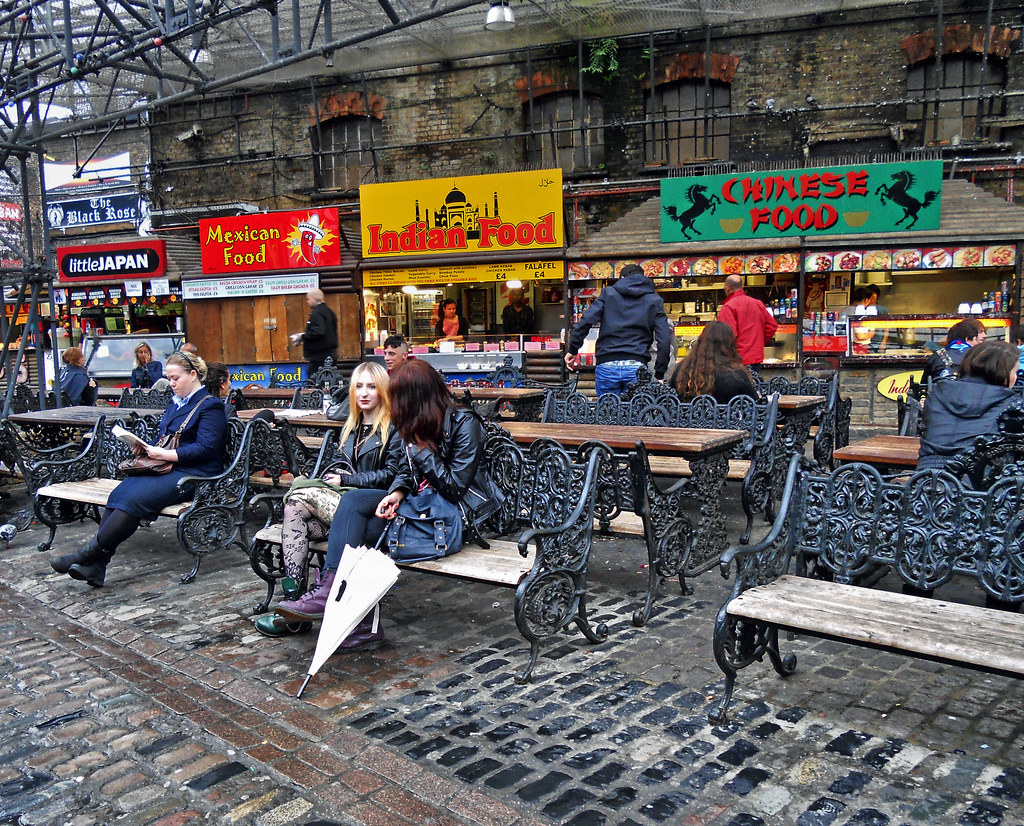
“Camden Fast Food” by It’s No Game is licensed under CC BY 2.0

OK, well, we’ve just had a grand experiment, haven’t we? Peeps haven’t been able to queue at Maccy D’s to get their greaseburger. People have had to – and have had time to – buy actual food and then prepare it for themselves at home.

Which is something that does rather kill the case about those burgers. Because what has been happening is that we’ve been – in the absence of greaseburgers – been eating more.

No, really:

    Using data on millions of food and non-alcoholic drink purchases from shops, takeaways and restaurants, the study found that the pandemic led to calories from restaurant meals falling to zero during the UK’s first national lockdown. That increased somewhat over the summer and declined again as restrictions in the hospitality sector were reintroduced in the autumn.

    However, this was more than offset by a large increase in calories from takeaways, which peaked at more than double the usual levels in the UK’s second national lockdown in November 2020.

    Overall, people increased their calories from raw ingredients by more than those from ready-to-eat meals and snacks and treats, with the pandemic leading to a shift in the balance of calories towards foods that required home preparation.

It’s that last paragraph that’s important. More home food preparation was being done from raw ingredients. And yet calorie consumption rose.

The report said the most plausible explanation for the sustained increase over the pandemic was higher consumption rather than changes in household composition, food waste or stocking up.

The study is specific to Britain, but it’s highly likely that the same results will be observed in Canada, the United States, Australia, and many other places. But I wouldn’t expect it will be given much coverage, like so much these days that contravenes the messaging that our dying media all seem to prefer to spread.

July 6, 2021

Conspiracies within conspiracies within conspiracies

In the latest edition of the Libertarian Enterprise, Sean Gabb considers the evolving nature of Wuhan Coronavirus conspiracy theories:

“Covid 19 Masks” by baldeaglebluff is licensed under CC BY-SA 2.0

We have, for the past eighteen months, lived through a fantasy pandemic. If unpleasant, the Virus is not particularly deadly. The number of cases is a product of testing, the number of deaths a statistical fraud. We have had much worse infections in living memory. We never responded to those by locking down whole populations and making hysterical fear an object of state policy. What is happening?

The most likely answer is stupidity. The quality of the people who rule Britain and America has dropped through the floor since about 1990, and it was not that high then. Sadly, though, the rest of the world still believes Britain and America are the pinnacle of civilisation, and so, whatever madness is decided in London and Washington is copied without question almost everywhere else. Take stupidity, add short-term advantage to the usual suspects in politics and business, and we have the Coronavirus Panic.

But arguments from stupidity are boring. They are the equivalent of denying the existence of ghosts and second sight — worthy and true, but unentertaining. Much better is to begin from the assumption that the idiots in charge are not really in charge, but are only front men for the supremely intelligent and supremely effective and supremely wicked Ones-on-High. Do this, and explaining the panic becomes an argument over which conspiracy theory best fits the observed facts.

Until a few weeks ago, my favourite was that the Virus was a bioweapon that had somehow leaked from a Chinese laboratory. It was spotted by the main governments, because they were all working in secret on something similar. This would explain the initial panic. As for the piffling number of deaths, bioweapons are still at the experimental stage, and no one realised until it was too late that modified viruses lose their potency almost at once in the wild. This was my favourite conspiracy theory for over a year. I only went off it when the authorities stopped denouncing it and punishing anyone important who said it was true, and instead announced on television that it might be true. Since the hacks in the mainstream media are just bright enough not to tell the truth even by accident, it was half a minute to give up on a year of enjoyable speculation.

There are other conspiracy theories. Regrettably, most of these border on the respectable. For example, the panic is a cover for clawing back some of the manufacturing outsourced to China since the 1990s. Or it is an excuse for ending the unwise monetary policies of the past decade and inflating away the resulting national debts. These all have an appearance of the probable, and are therefore dull before the first paragraph is read. But, looming over all the others, is the merger of scepticism about vaccines and the Agenda 21 conspiracy.

For those unaware of it, Agenda 21 is boring drivel from the United Nations about not cutting down trees. Behind this, though, is an alleged conspiracy to reduce the human population from seven billion to half a billion. Doing this, apparently, will end all the fanciful scares about global warming, and leave the lucky survivors free to use all the electricity they want without feeling guilty.

The latest version of this theory is that the Virus is a fraud, but justifies injecting people with a vaccine that will make most of them fall down dead, or in some degree sterilise them. There are passionate advocates of the revised theory, all of them begging us to keep away from any of the vaccines on offer. I have so far kept away from the vaccines.

June 18, 2021

Feeding “the masses”

Sarah Hoyt looked at the perennial question “Dude, where’s my (flying) car?” and the even more relevant to most women “Where’s my automated house?”:

The cry of my generation, for years now, has been: “Dude, where’s my flying car?”

My friend Jeff Greason is fond of explaining that as an engineering problem, a flying car is no issue at all. It is as a legal problem that flying cars get interesting, because of course the FAA won’t let such a thing exist without clutching it madly and distorting it with its hands made of bureaucracy and crazy. (Okay, he doesn’t put it that way, but I do.)

[…]

But in all this, I have to say: Dude, where’s my automated house?

It was fifteen years ago or so, while out at lunch with an older writer friend, that she said “We always thought that when it came to this time, there would be communal lunch rooms and cafeterias that would do all the cooking so women would be free to work.”

I didn’t say anything. I knew our politics weren’t congruent, but really the only societies that managed that “Cafeterias, where everyone eats” were the most totalitarian ones, and that food was nothing you wanted to eat. If there was food. Because the only way to feed everyone industrial style is to take away their right to choose how to feed themselves and what to eat. And that, over an entire nation, would be a nightmare. Consider the eighties, when the funny critters decided that we should all live on a Russian Peasant diet of carbs, carbs and more carbs. Potatoes were healthy and good for you, and you should live on them.

It will surprise you to know – not — that just as with the mask idiocy, no study of any kind supports feeding the population on mostly vegetables, much less starches. What those whole “recommendations” were based on was “diet for a small planet” and the bureaucrats invincible ignorance, stupidity and assumption of their own intelligence and superiority. I.e. most of what they knew — that population was exploding, that people would soon be starving, that growing vegetables is less taxing on the environment and produces more calories than growing animals to eat — just wasn’t so. But they “knew” and by gum were going to force everyone to follow “the plan”. (BTW one of the ways you know that Q-Anon is in fact a black ops operation from the other side; no one on the right in this country trusts a plan, much less one that can’t be shared or discussed.) Then the complete idiots were shocked, surprised, nay, astonished when their proposed diet led to an “epidemic of obesity” and diabetes. Even though anyone who suffered through the peasant diet in communist countries, could have told the that’s where it would lead, and to both obesity and Mal-nutrition at once.

So, yeah, communal cafeterias are not a solution to anything.

My concern about the “automated house of the future” is nicely prefigured by the “wonders” of Big Tech surveillance devices we’ve voluntarily imported into our homes for the convenience, while awarding untold volumes of free data for the tech firms to market. Plus, the mindset that “you must be online at all times” that many/most of these devices require means you’re out of luck if your internet connection is a bit wobbly (looking at you, Rogers).

June 8, 2021

The utter failure of political leadership in most countries during the pandemic

Jay Currie runs through some of the many reasons our political leadership and their “expert class” advisors in most western countries were utter shit almost from the starting gun of the Wuhan Coronavirus pandemic:

“Covid 19 Masks” by baldeaglebluff is licensed under CC BY-SA 2.0

The first response of most of our political class was to doggedly claim to be following the science, turn day to day decision making over to “public health experts”, follow the guidance of the WHO and the CDC – guidance which was, to be charitable, inconsistent – and to largely avoid questioning the experts. (Trump seemed to make some attempt to raise questions but made little headway in the face of his own public health bureaucracy.)

“Wipe everything” (which the CDC now concedes is pointless because the virus is rarely, if ever, transmitted by contact, “wash your hands” (good advice at any time), “social distance” (hilarious when in effect outdoors where there is next to no transmission), “walk this way” in the essential grocery and liquor stores, “wear a mask”, “wear two masks”, “stay home” (logical for two weeks, insane for six months), “curfew” (no known benefit, Quebec ended up being under curfew for five months), “no indoor dining” (despite next to no evidence that restaurants were significant sources of infection), “don’t travel” (with a vast list of exceptions), “don’t gather outdoors (unless BLM protest)” (ignoring entirely that the virus rarely spreads outdoors): it was all COVID theatre and, to paraphrase Dr. Bonnie Henry, “There’s no science to it.”

What the politicians did was simply to panic. They abdicated their responsibility to lead to “experts” who seemed to all be reading from the same “mass lockdown, masks everywhere, hang on for the vaccine, there is no treatment” script.

The key political failure was the acceptance of the “there is no treatment” story. Back in February/March 2020 there were suggestions that there might well be treatments of some sort. HCQ was trotted out and, partially because Trump mentioned it and partially because of very badly designed studies, dismissed. The very idea of a COVID treatment regime was, essentially, made illegal in Canada and much of the United States.

The idea of boosting immunity with things like Vitamin D and C and a good long walk every day did not come up at most of the Public Health Officer’s briefings across Canada. And, again, not very well done studies were cited showing that “Vitamin D does not cure COVID”. A claim which was not being made. A healthy immune system, to which Vitamin D can contribute, most certainly does cure COVID in the vast majority of cases.

Citing privacy concerns, public health officials were unwilling to give many details as to who was dying of or with COVID. Age, co-morbidities, race, and the socio-economic status of the dying were disclosed reluctantly and long after the fact.

I don’t think most of this can be blamed on the public health officials. They had their jobs to do and, to a greater or lesser degree, managed to do them. They are hired to apply current best practices – often mandated on a world wide basis by the WHO – to the situation before them. Public Health officials are not expected to be imaginative nor innovative.

Imagination, leadership, thinking outside the proverbial box is what we elect politicians for.

But, hey! Doesn’t Justin wear cool socks? Totally worth flushing decades of economic growth down the toilet for those nice socks! Canada’s back! (Back to 1974, approximately.)

« Newer PostsOlder Posts »

Powered by WordPress