World War Two
Published 19 Dec 2020The Japanese make gains in Malaya, Burma, Hong Kong, Borneo, and the Philippines. The Allies also have trouble in the Atlantic and the Mediterranean, where they are beginning to seriously suffer from a lack of capital ships. The Soviet Red Army is advancing, though, and Stalin takes personal control of planning for the upcoming counteroffensive, while Adolf Hitler takes personal control of the German Army.
Join us on Patreon: https://www.patreon.com/TimeGhostHistory
Or join The TimeGhost Army directly at: https://timeghost.tvFollow WW2 day by day on Instagram @ww2_day_by_day – https://www.instagram.com/ww2_day_by_day
Between 2 Wars: https://www.youtube.com/playlist?list…
Source list: http://bit.ly/WW2sourcesWritten and Hosted by: Indy Neidell
Director: Astrid Deinhard
Producers: Astrid Deinhard and Spartacus Olsson
Executive Producers: Astrid Deinhard, Indy Neidell, Spartacus Olsson, Bodo Rittenauer
Creative Producer: Maria Kyhle
Post-Production Director: Wieke Kapteijns
Research by: Indy Neidell
Edited by: Miki Cackowski
Sound design: Marek Kamiński
Map animations: Eastory (https://www.youtube.com/c/eastory)Colorizations by:
Norman Stewart – https://oldtimesincolor.blogspot.com/
Dememorabilia – https://www.instagram.com/dememorabilia/
Julius Jääskeläinen – https://www.facebook.com/JJcolorization/
Carlos Ortega Pereira, BlauColorizations, https://www.instagram.com/blaucolorizations
Spartacus Olsson
Daniel Weiss
Mikołaj UchmanSources:
Bundesarchiv
IWM MH 26392, WPN 298, K 2204, FL 20432, A 12126, A 9257, FL 1203, E 3469E
Mil.ru
Narodowe Archiwum Cyfrowe
Picture of Mark Young, courtesy of National Portrait GallerySoundtracks from the Epidemic Sound:
Phoenix Tail – “At the Front”
Reynard Seidel – “Deflection”
Skrya – “First Responders”
Hakan Eriksson – “Epic Adventure Theme 4”
Philip Ayers – “The Unexplored”
Max Anson – “Ancient Saga”
Rannar Sillard – “March Of The Brave 9”
Johannes Bornlof – “Death And Glory 2”
Johan Hynynen – “Dark Beginning”
Fabien Tell – “Last Point of Safe Return”Archive by Screenocean/Reuters https://www.screenocean.com.
A TimeGhost chronological documentary produced by OnLion Entertainment GmbH.
December 20, 2020
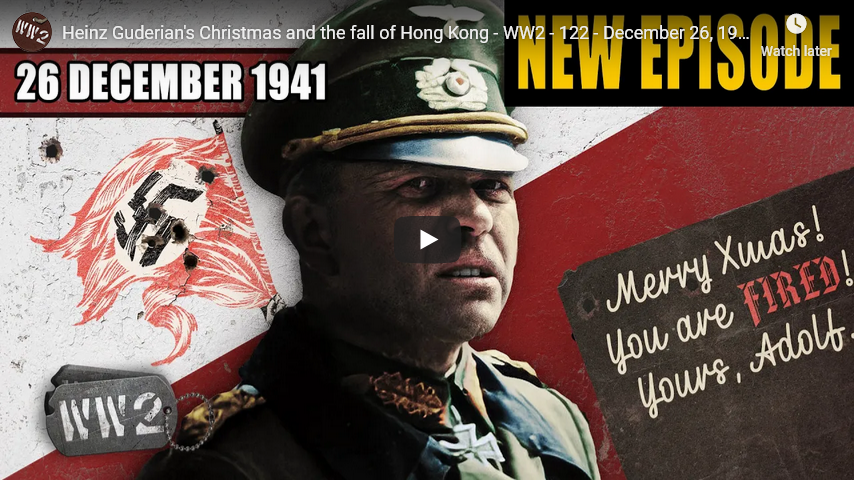
The Japanese are unstoppable everywhere – WW2 – 121 – December 19, 1941
December 13, 2020
December 6, 2020
November 16, 2020
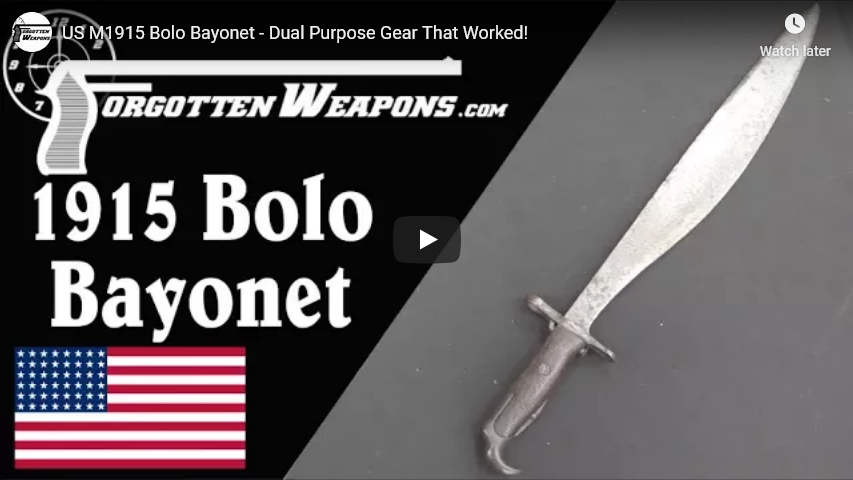
US M1915 Bolo Bayonet – Dual Purpose Gear That Worked!
Forgotten Weapons
Published 27 Nov 2017The M1915 bolo bayonet was originally the brainchild of US Army Captain Hugh D. Wise, Quartermaster with the 9th Infantry in the Philippines. In 1902, he recommended the implement in a letter to his superior officers, noting that a bolo style of bayonet (ie, one with a widened machete-like blade) would have several advantages over the standard knife bayonet then being issued with the Krag-Jorgenson rifles the US Army was using. Specifically, the wider bayonet would be easier to recover after a thrust (he noted several instances of troopers being killed while trying to extricate their bayonets from enemies) and also (and more significantly) make an excellent and necessary bushwhacking tool in the jungle environment of the Philippines.
Wise’s idea was taken with interest and Springfield produced a series of experimental bolo bayonets, but the project ended there as the 1903 Springfield was adopted with a rod bayonet instead of a blade. Of course, the rod bayonet would be shortlived, and the blade bayonet would come back. The bolo bayonet ideas resurfaced in 1911 when a commission was formed to look into special equipment for the Philippine Scouts. After another series of experimental designs, the M1915 Bolo bayonet was formally adopted on May 22, 1915 and an order was placed for 6,000 of them to be made at Springfield Armory.
Delivery of these bayonets took place in 1915 and 1916, and they proved to be extremely popular tools with the soldiers in the Philippines. They would remain in service on the islands until World War Two, serving at last as a replacement for the M1913 cavalry saber for the 26th Cavalry.
http://www.patreon.com/ForgottenWeapons
Cool Forgotten Weapons merch! http://shop.bbtv.com/collections/forg…
If you enjoy Forgotten Weapons, check out its sister channel, InRangeTV! http://www.youtube.com/InRangeTVShow
August 3, 2020
Recycling is a SCAM!
J.J. McCullough
Published 29 Jun 2019Recycling is a disaster. This video was sponsored by Loonie Politics! Sign up using the code word “McCullough” for 25% off! https://looniepolitics.com/register/
Visit the channel of guest star Demetrios: https://www.youtube.com/channel/UCNKV…
An in-depth look at Canadian recycling:
https://globalnews.ca/news/5199883/ca…The Vice video I mentioned:
https://www.youtube.com/watch?v=Pv1UP…FOLLOW ME:
🇨🇦Support me on Patreon! https://www.patreon.com/jjmccullough
🤖Join my Discord! https://discord.gg/3X64ww7
🇺🇸Follow me on Instagram! https://www.instagram.com/jjmccullough/
🇨🇦Read my latest Washington Post columns: https://www.washingtonpost.com/people…
🇨🇦Visit my Canada Website http://thecanadaguide.com
August 2, 2020
April 13, 2020
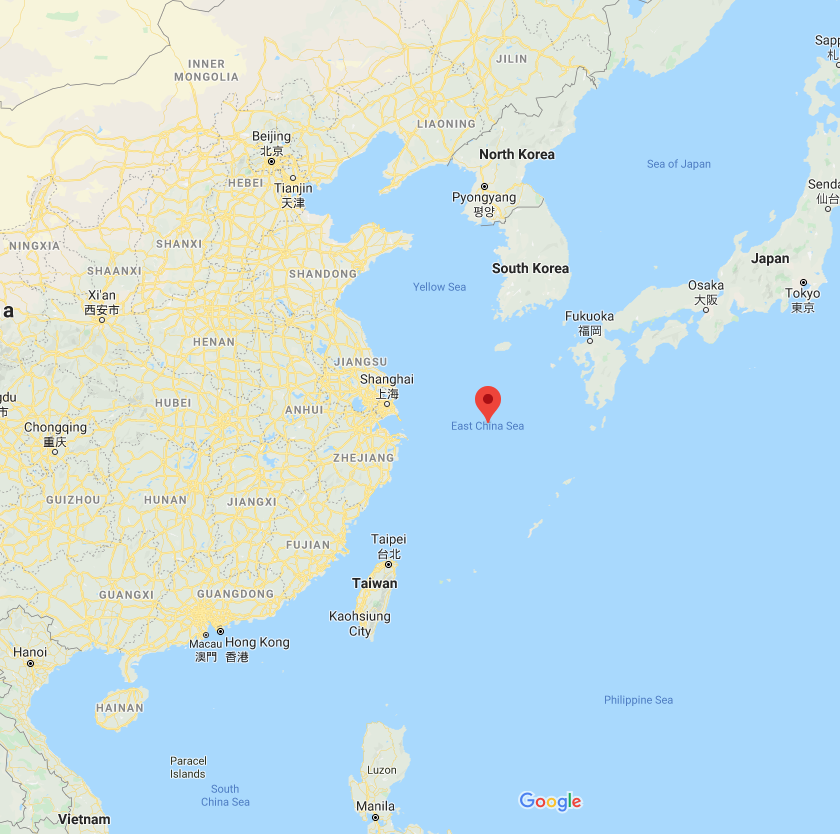
Increasing hazards to navigation in the East China Sea
It’s odd that all the increased collisions seem to involve Chinese vessels:

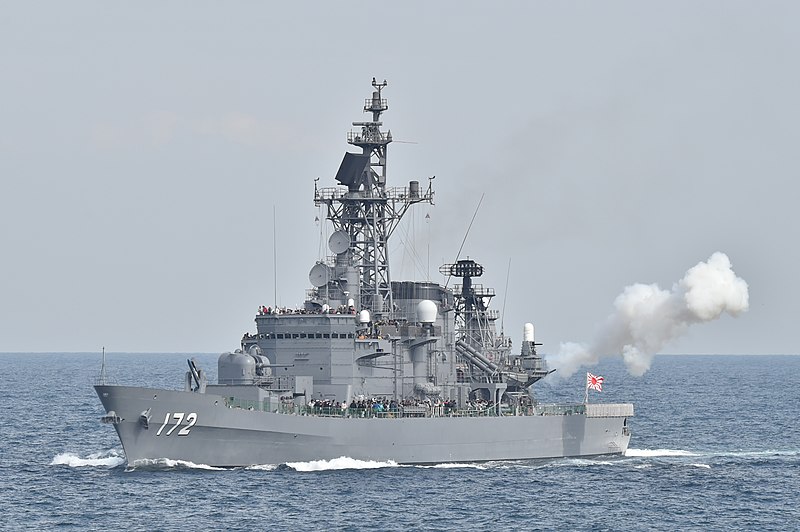
Japanese Maritime Self-Defence Force ship JS Shimakaze (DDG-172), the second ship of the Hatakaze class, commissioned in 1988. She was slightly damaged in a collision with a Chinese fishing boat in the East China Sea on 30 March 2020.
Image via Wikimedia Commons.
Sci-fi genius Robert Heinlein warned readers never to attribute to villainy behavior that was adequately explained by stupidity. In other words, he believed malice should be the explanation of last resort for puzzling conduct on the part of people or groups of people; it shouldn’t be the default. Better to hunt for more benign explanations first. With apologies to Heinlein, I would amend his “razor,” or heuristic, slightly. It’s too narrow. There are other candidates than stupidity or purposeful villainy to account for misconduct. Factors like incompetence, bureaucratic inertia, and sheer accident form — and sometimes deform — human thought and action. They belong on the stupidity side of Heinlein’s ledger.
How about this: Never attribute to villainy behavior that can be adequately explained by human failings. That preserves the essence of Heinlein’s razor while widening its scope to fit reality.
Let’s use his revised heuristic to evaluate the Sino-Japanese collision. It’s certainly possible the mishap came about by accident. It took place at night, in crowded waters. If the U.S. Navy collisions of 2017 taught us nothing else, it’s that the crews of even frontline warships can suffer from a host of maladies, from overwork to shoddy personnel practices to doctrinal or training shortfalls. No amount of high technology — whether it’s Aegis radar or satellite navigation — can altogether forestall human error. It may be that the Japanese crew, the Chinese crew, or both blundered around in the dark and came to grief. By Heinlein’s lights that’s the generous and proper assumption until the facts become known. If they do.
Nevertheless, a silent corollary has to be appended to Heinlein’s razor: But don’t rule out villainy, either.
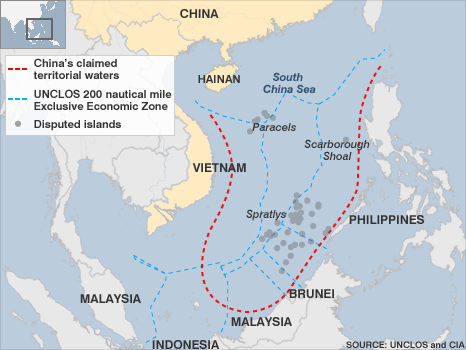
Especially when it comes to the Chinese Communist Party (CCP). For decades Beijing has made militiamen embedded in the Chinese fishing fleet an arm of maritime strategy. The maritime militia is an irregular adjunct to regular naval forces, including the People’s Liberation Army Navy (PLA Navy) and especially the musclebound China Coast Guard fielded over the past decade. Beijing touted the militia’s combat prowess as long ago as 1974, when Chinese naval forces wrested a tottering South Vietnam’s holdings in the Paracel Islands from it in a brief but bloody sea battle. Militia craft backed by the coast guard have been a fixture in the South China Sea ever since 2009, when Beijing declared “indisputable sovereignty” over the vast majority of that body of water — including seas allocated to its neighbors by treaty. The irregular force went into overdrive in 2012 during the standoff with the Philippine Navy and Coast Guard at Scarborough Shoal, deep within the Philippines’ exclusive economic zone. Fishing craft flood the zone in CCP-claimed waters and dare local coast guards or navies to repulse them. If the locals resist, the China Coast Guard backs up the militia. PLA regular forces provide a backstop should things go awry.
H/T to Blazing Cat Fur for the link.
March 30, 2020
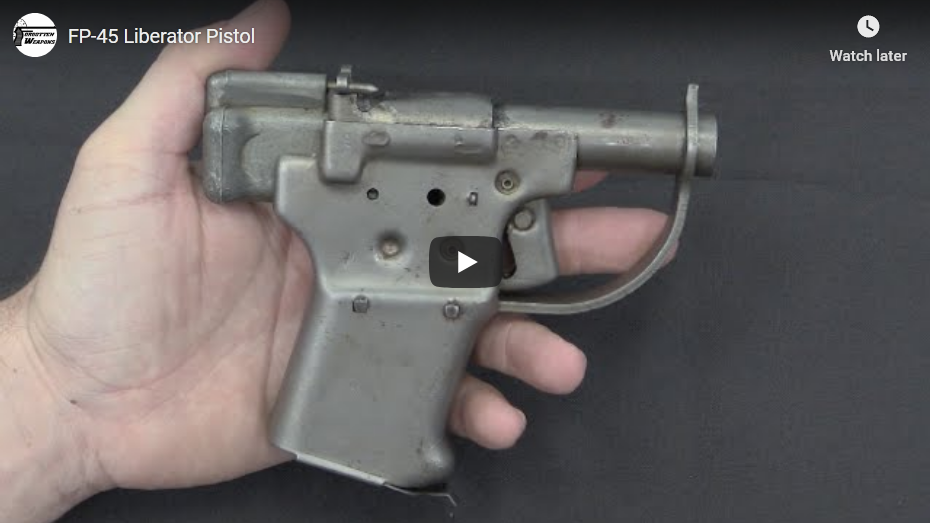
FP-45 Liberator Pistol
Forgotten Weapons
Published 10 Nov 2015http://www.Patreon.com/ForgottenWeapons
Hammer price: $2250
The Liberator is one of those interesting artifacts of WWII; an extremely simple single-shot .45 caliber pistol made by the boxcar-load (a million, specifically) with the intention of being dropped en masse across Europe to promote civilian sabotage against German occupation forces. They were manufactured by the Guide Lamp division of GM in record time – just 10-11 weeks for a literal million-gun production run. However, as they were being manufactured, shipped, and put into storage the motivation behind the project largely evaporated. British SOE ultimately decided not to distribute any in France, and only distributed a small number to partisans in Greece.
In the US, the Army stockpile of Liberators was transferred to the OSS, and a fair number were actually distributed in India, China, and the Philippine Islands – although they did not ultimately have any measurable impact on the war effort.
April 13, 2018
India and the “Quad”
At Strategy Page, Austin Bay discusses India’s position, both geographically and militarily with respect to China:
As the Cold War faded, a cool aloofness continued to guide India’s defense and foreign policies. Indian military forces would occasionally exercise with Singaporean and Australian units — they’d been British colonies, too. Indian ultra-nationalists still rail about British colonialism, but the Aussies had fought shoulder to shoulder with Indians in North Africa, Italy, the Pacific and Southeast Asia, and suffered mistreatment by London toffs. Business deals with America and Japan? Sign the contracts. However, in defense agreements, New Delhi distanced itself from Washington and Tokyo.
The Nixon Administration’s decision to support Pakistan in the 1971 Indo-Pakistani War [Wikipedia link] embittered India. Other issues hampered the U.S.-India relationship. Indian left-wing parties insisted their country was a “Third World leader” and America was hegemonic, et cetera.
However, in the last 12 to 15 years, India’s assessments of its security threats have changed demonstrably, and China’s expanding power and demonstrated willingness to use that power to acquire influence and territory are by far the biggest factors affecting India’s shift.
In 2007, The Quad (Quadrilateral Security Dialogue), at the behest of Japan, held its first informal meeting. The Quad’s membership roll sends a diplomatic message: Japan, Australia, America and India. Japan pointed out all four nations regarded China as disruptive actor in the Indo-Pacific; they had common interests. Delhi downplayed the meeting, attempting to avoid the appearance of actively “countering China.”
No more. The Quad nations now conduct naval exercises and sometimes include a quint, Singapore.
The 2016 Hague Arbitration Court decision provided the clearest indication of Chinese strategic belligerence. In 2012, Beijing claimed 85 percent of the South China Sea’s 3.5 million square kilometers. The Philippines went to court. The Hague tribunal, relying on the UN Convention on the Law of the Sea treaty, supported the Filipino position that China had seized sea features and islets and stolen resources. Beijing ignored the verdict and still refuses to explain how its claims meet UNCLOS [Wikipedia link] requirements.
That is the maritime action. India and China also have mountain issues. In 1962, as the Cuban Missile Crisis diverted world attention, the two Asian giants fought the Indo-Chinese War [Wikipedia link] in the Himalayas. China won. The defeat still riles India.
June 25, 2017
Fort Drum – America’s concrete battleship
Published on 15 Sep 2016
After the United States acquired the Philippines from Spain, the U.S. Board of Fortifications recommended that important harbors be fortified. This led to the development of defenses on several islands at the mouth of Manila and Subic Bays. One of these was El Fraile Island which would later become Fort Drum, America’s concrete battleship.
Read more about America’s concrete battleship, Fort Drum, here: http://www.wearethemighty.com/articles/americas-concrete-battleship-defended-manila-bay-until-the-very-end
April 6, 2017
American “isolationism” between the wars
Reason‘s Jesse Walker linked to this article by Andrew Bacevich which helps to debunk the routine description of US foreign policy between the first and second world wars as “isolationism”:
… McCain is worried about the direction of world events, with Russian provocations offering but one concern among many. Patterson shares McCain’s apprehensions, compounded by what he sees as a revival of “the isolationism in Europe and America that precipitated World War II.”
Now as an explanation for the origins of the war of 1939-1945, American “isolationism” is as familiar as the sweet-and-sour pork featured at your local Chinese takeout joint. Its authenticity is equally dubious. Yet Patterson’s assertion has this virtue: It captures in less than a sentence a prime obstacle to instituting a realistic, fact-based approach to foreign policy.
In truth, isolationism is to history what fake news is to journalism. The oft-repeated claim that in the 1920s and 1930s the United States raised the drawbridges, stuck its head in the sand, and turned its back on the world is not only misleading, but also unhelpful. Citing a penchant for isolationism as a defect afflicting the American character is like suggesting that members of Congress suffer from a lack of self-esteem. The charge just doesn’t square with the facts, no matter how often repeated.
Here, by way of illustrating some of those relevant facts, is a partial list of places beyond the boundaries of North America, where the United States stationed military forces during the interval between the two world wars: China, the Philippines, Guam, Hawaii, Panama, Cuba, and Puerto Rico. That’s not counting the U.S. Marine occupations of Nicaragua, Haiti, and the Dominican Republic during a portion of this period. Choose whatever term you like to describe the U.S military posture during this era — incoherent comes to mind — but isolationism doesn’t fill the bill.
As for Patterson’s suggestion that the behavior of the United States “precipitated” World War II, the claim is simply laughable. World War I precipitated World War II, or more specifically the European malaise resulting from the bloodletting of 1914-1918, compounded by the Bolshevik Revolution and the spread of fascism, and further exacerbated by profoundly shortsighted policies pursued by Great Britain and France. Throw into the mix the Great Depression, Japanese imperial ambitions, and the diabolical plotting of Adolf Hitler and his henchmen, and you have the makings of a catastrophe. Some few observers foresaw that catastrophe, but preventing it lay well beyond the ability of the United States, even if U.S. leaders had been clairvoyant.
December 27, 2015
Why Was Franz Ferdinand A Horrible Person? I OUT OF THE TRENCHES
Published on 26 Dec 2015
It’s time for the Chair of Wisdom again. This time Indy explains why he deems Franz Ferdinand a horrible person, why the soldier did not mutiny all the time and what the Philippines did in World War 1.
January 9, 2014
China asserts “police powers” over most of the South China Sea
James R. Holmes on the change in China’s approach to the disputed South China Sea region:
Associated Press reporter Christopher Bodeen chooses his words well in a story on China’s latest bid to rule offshore waters. Beijing, he writes, is augmenting its “police powers” in the South China Sea. That’s legalese for enforcing domestic law within certain lines inscribed on the map, or in this case nautical chart.
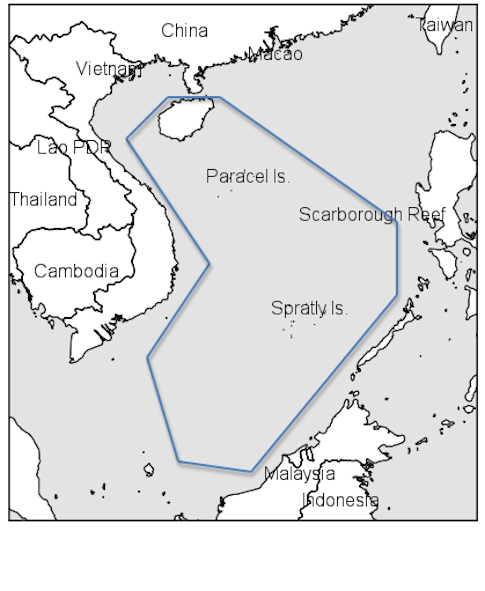
The Hainan provincial legislature, that is, issued a directive last November requiring foreign fishermen to obtain permission before plying their trade within some two-thirds of the sea. Bill Gertz of the Washington Free Beacon supplies a map depicting the affected zone. It’s worth pointing out that the zone doesn’t span the entire waterspace within the nine-dashed line, where Beijing asserts “indisputable sovereignty.”
China imposes fishing curbs: New regulations imposed Jan. 1 limit all foreign vessels from fishing in a zone covering two-thirds of the South China Sea. Washington Free Beacon
A few quick thoughts as this story develops. One, regional and extraregional observers shouldn’t be too shocked at this turn of events. China’s claims to the South China Sea reach back decades. The map bearing the nine-dashed line, for instance, predates the founding of the People’s Republic of China. It may go back a century. Nor are these idle fancies. Chinese forces pummeled a South Vietnamese flotilla in the Paracels in 1974. Sporadic encounters with neighboring maritime forces — sometime violent, more often not — have continued to this day. (See Shoal, Scarborough.) Only the pace has quickened.
Henry Kissinger notes that custodians and beneficiaries of the status quo find it hard to believe that revolutionaries really want what they say they want. Memo to Manila, Hanoi & Co.: Beijing really wants what it says it wants.
December 9, 2013
Despite cutbacks, the Royal Navy still internationally active (and valid)
Sir Humphrey on how the UK still manages to project force around the world in the wake of the most recent set of budget cuts:
While the numbers may be smaller than in the past, reading the twitter feed [@NavyLookout]and looking at the images of modern vessels, one is left with a genuine sense that the RN remains an immensely capable force by any reasonable standard. The ability to deploy this force globally, and to meet a wide range of missions is extremely impressive. One of the centre pieces of the SDSR was the restructuring of the RN to provide the so-called ‘Response Force Task Group’ (RFTG) which has since establishment proven to be a superb means of deploying a worked up task group around the world and reacting to events.
In this year alone the Royal Navy has been engaged in operations across the globe, and been able to not only rely on warship deployments, but also highlight the value of its wider basing and command and control capabilities. As the year draws to a close, there are by the authors reckoning three 1* command groups deployed out there co-coordinating both UK and Multi-national operations. The facility in Sembewang has once again highlighted its importance to the RN (and the wider UK) as a useful foothold in a region that the RN hasn’t frequented for some years, and HMS DARING and HMS ILLUSTRIOUS have helped restore hope to thousands of people affected by the dreadful events in the Philippines.
While many wish to be downbeat about the RN, given the pace at which it is operating globally, and the way in which it is able to respond so rapidly to so many events, it is hard to see it as a navy in decline. Yes it is smaller, but so are most Navies these days. But to judge a Navy purely by hulls and not by output is misguided — the RN today remains one of the most capable on the planet, and the events of this year have gone to show that it continues to meet the task placed on it with aplomb.
November 16, 2013
Whatever happened to Chinese “soft power”?
James R. Holmes says the Chinese have unequivocally abandoned soft power:
China never ceases to amaze. Not only has the leadership done away with a promising soft-power campaign that was years in the making. It razed its own soft-power edifice to the ground, and salted the ruins so nothing can take root again. Why remains a mystery.
The latest trouble sign came after Typhoon Haiyan slammed into the Philippine Islands over the weekend, claiming at least more than 1,800 lives so far. Professor Mead posted an item marveling at the paltry sum Beijing committed to Philippine disaster relief. Upon reading it, I was sure Mead had omitted two or three zeroes. But sure enough, cross-checking his commentary against a Reuters report shows he had the figure right: US$100,000 in direct aid, and another US$100,000 through the Red Cross. Such token amounts give tokenism a bad name.
Forget smile diplomacy. This is sneer diplomacy. Many observers, myself included, ascribed Chinese inaction following the 2004 Indian Ocean tsunami to immature capability. The PLA hadn’t yet fielded the expeditionary capabilities necessary to render assistance far from Chinese shores. Beijing did little because it could do little. Chinese forces, however, now own disaster-relief assets such as the hospital ship Peace Ark. Yet they remain idle. It’s hard to escape the conclusion that Beijing is withholding help out of pique. Manila, after all, has the temerity to insist that its exclusive economic zone is, well, its exclusive economic zone. Seems political tit-for-tat trumps alleviating human suffering.
[…]
There’s an upside to this from an American standpoint: China has made itself look small and petty, like a skinflint rather than a magnanimous power worthy of regional leadership. This is self-defeating conduct of a high order. Far be it from me to interfere with a strategic competitor intent on shooting himself in the foot. Fire!