Hornby Railways is a British model railway brand. Its roots date back to 1901, when founder Frank Hornby received a patent for his Meccano construction toy. The first clockwork train was produced in 1920. In 1938, Hornby launched its first 00 gauge train. In 1964, Hornby and Meccano were bought by their competitor, Tri-ang, and sold on when Tri-ang went into receivership. Hornby Railways became independent again in the 1980s, and became listed on the London Stock Exchange, but due to recent financial troubles, reported in June 2017, is presently majority owned by turnaround specialist Phoenix Asset Management.
The script for this video comes from Wikipedia: https://en.wikipedia.org/wiki/Hornby_…
If you find issues with the content, I encourage you to update the Wikipedia article, so everyone can benefit from your knowledge.
To get early ad-free access to new videos, or your name at the end of my videos, please consider supporting me from just $1 or 80p a month at https://www.patreon.com/bigcar
In The Line, Peter Menzies explains the economic underpinnings of the newspaper world back in the “good old days” before first radio, then TV, and finally the internet took all the profits out of their model:
We will hear a lot in the months ahead about who’s making money from news, so let’s get something straight: Even in the profit-soaked heyday of Canadian newspapers, no one made money from news.
That all ended about 100 years ago when radio — and then television — began delivering it for free.
Oh sure, the occasional ongoing news story would inspire people to buy more newspapers. But in my 30 years in that business the only event that did so in any significant way was the death and funeral of Princess Diana. Even then, after the extra cost of newsprint and distribution, the financial return was insignificant.
But mythologies die hard. People in newsrooms believed news made money — and apparently some still do — even when year after year, surveys of readers showed that there were lots of other things that sold and sustained newspapers.
Some people bought them because they were looking for a job. For others, it was a house, a plumber, a companion, a pet, a car or, really, almost anything else you can think of that might be needed. Classified pages were every town and city’s marketplace. That’s where you found stuff you had to get and bought an ad when you had something to sell or tell people about. It was where you announced the births of your babies, the graduations, engagements and weddings of your children and the deaths of your parents. The lives of communities were recorded in the classified pages of their newspapers.
After a glance at the headlines, many other readers’ first and sometimes only stops were the horoscope, comics, crossword (an error there generated far more calls than a rogue columnist ever could) and other pleasant distractions. For still more, it was the stocks listings, sports scores or recipes to which they were primarily drawn.
There were movie and entertainment listings — even a TV guide so you’d know where and when to find Seinfeld. On Thursdays, you might buy a paper just for the Canadian Tire flyer. On weekends, specialty sections discussed books and told tales of travel adventures well-supported by the latest deals advertised by travel agencies. Housing developers pitched their latest home designs in special real estate sections. And there were magazines. Honestly, there were.
It’s been literal decades since we last subscribed to a print newspaper, and nearly as long since I picked one up from a news stand. My mother is the last person I recall still depending on buying a physical newspaper — she only stopped buying a Saturday Toronto Star in the last year or so — but that was mainly for the TV listings. Back when I still occasionally travelled on business (also more than a decade ago, now), it was a nostalgic treat to find a copy of USA Today at the door of my hotel room in the morning.
Comments Off on The long-gone economic framework of print newspapers
If you find issues with the content, I encourage you to update the Wikipedia article, so everyone can benefit from your knowledge.
To get early ad-free access to new videos, or your name at the end of my videos, please consider supporting me from just $1 or 80p a month at https://www.patreon.com/bigcar
Matchbox is a popular British toy brand which was introduced by Lesney Products in 1953, and is now owned by Mattel, Inc. The brand was given its name because the original die-cast Matchbox toys were sold in boxes similar to those in which matches were sold. The brand grew to encompass a broad range of toys, including larger scale die-cast models, plastic model kits, and action figures.
During the 1980s, Matchbox began to switch to the more conventional plastic and cardboard “blister packs” that were used by other die-cast toy brands such as Hot Wheels. The box style packaging was re-introduced for the collectors’ market in recent years, particularly with the release of the “35th Anniversary of Superfast” series in 2004.
What brought this to mind was a discussion on Facebook, prompted by my quipping about music:
Man, I just {LISTENED_TO_ALBUM/WENT_TO_CONCERT} by {$GROUP_FROM_MY_TEENS/EARLY_TWENTIES} and they still kicked ass just like they did when they were new.
{$GROUP_LIKED_BY_KIDS_WHO_SHOULD_GET_OFF_MY_LAWN} just won’t have that same kind of staying power.”
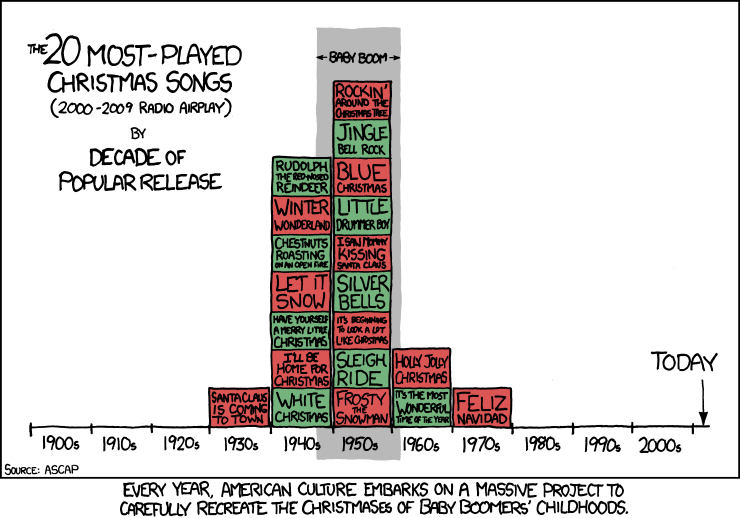
Part of that phenomenon is that we’re less likely to form strong emotional connections to specific pieces of music the way we were when we were younger, and part of it is that the music that gets remembered from the good ol’ days is just the good stuff. The year 1968, for instance, had huge chart hits from The Beatles and The Rolling Stones, but also from 1910 Fruitgum Company and Tiny Tim.
The airwaves had plenty of crap in my teens and early twenties, but I prefer to forget that. Say what you will about the Kids These Days, but they aren’t listening to Milli Vanilli … of course, as it turned out, neither were kids back then.
Survivorship Bias is baked right into a lot of hobbies that interface with older things. “Man, they really knew how to build [cameras/pocket knives/watches/revolvers] in the old days!” is skewed by the fact that only the well-built stuff has survived. The handgun counter at the hardware store in a hypothetical Old West town had Colts and Smith & Wessons and Remingtons, and plenty of cheaply-made Victorian equivalents of Hi Points and Jennings, too.
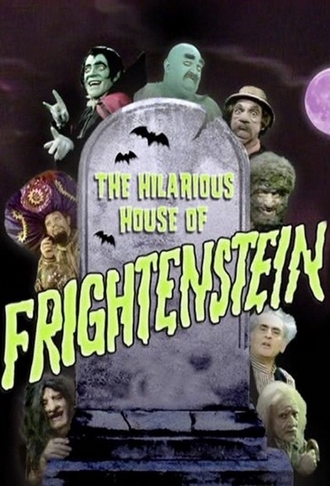
I still have fond memories of CHCH TV’s Hilarious House of Frightenstein and Kathy Shaidle clearly does too:
The Hilarious House of Frightenstein was produced in 1971 by our one and only TV station, CHCH. This hour-long, 130-episode kids’ show combined the mid-century sensibility of Famous Monsters of Filmland with the then-hip look and sound of psychedelia: kaleidoscopic “special effects” plus Top 40 hits spun by “The Wolfman,” an affectionate rip-off of legendary DJ Wolfman Jack.
The show’s “plot” concerned a banished count’s attempts to revive his comatose monster, Brucie, but that was just a flimsy excuse to mount a fast-paced series of corny sketches, semi-serious “educational” segments, and — years before The Simpsons and Pixar — “over the kids’ heads” jokes aimed at adults who might find themselves awake at dawn, or earlier.
The part that always puzzled me as a kid was that a local southern Ontario low-budget TV show for kids had international movie star Vincent Price in it. Kathy explains how it happened:
Older and “uncool” (despite receiving the imprimatur of another rising Hollywood director, Roger Corman), Price was out of fashion.
At the same time, CHCH had a limited budget, but wanted and needed some star power for their single camera kid’s show.
Who better to host this “monster mash” than Vincent Price, still one of the all-time great horror-movie icons?
Frightenstein‘s producer tracked down Price, who agreed to work for $3000 a day, one quarter of his usual per-diem appearance rate.
He loved children, he explained simply. And the gig sounded like fun.
CHCH checked their tiny budget. They could only afford Price for four days, tops.
Four days it would have to be.
Everyone signed on the dotted line.
I’ve heard the story of what happened next from different sources, and it never ceases to warm my heart:
Price arrived at the modest TV studio, got into makeup and costume and was handed reams of doggerel poems about some crazy characters he’d never heard of before.
He’d read each piece once, put his head down, then look up at the camera’s red light and utter his lines perfectly in one take.
Next!
New makeup, new costume, same perfect delivery, hour after hour.
Finally, it was time for a break. The weary yet exhilarated crew turned off the cameras and lights.
Then they looked around and realized that Vincent Price had disappeared.
Oh well, they said to each other, what do you expect? He’s a big star and all. Plus he’s, like, 60 years old, so he probably went for a nap…
The studio door opened a few minutes later.
It was Vincent Price and a cab driver, hauling “two-fours” of beer from the nearby Brewer’s Retail.
He handed cold stubbies out to the cast and crew and regaled them with tales of old Hollywood, his days working with Karloff and Peter Lorre and Gene Tierney and Cecil B. DeMille and all the other greats he’d known.
Comments Off on Kathy Shaidle tells the story of Hamilton’s 1970s cult children’s TV show
Ted Campbell is a big fan of the CANZUK scheme (Canada-Australia-New Zealand-United Kingdom) to create an “anglosphere” power alongside the current economic big-hitters on the world stage like the United States, China and the European Union. I agree it has historical, nostalgic appeal, but as Aris Roussinos points out, geography is a big stumbling block to it ever being much more than an idea:
Since losing the empire, Britain has notoriously struggled to find a role on the world stage. Initial attempts to piggyback on the power of our successor as global hegemon, the United States, by acting as a guiding force — a Greece to America’s Rome, in Harold Macmillan’s phrase — faltered due to the total absence of interest ever shown in this arrangement by any American administration.
The subsequent attempt to remould Britain as a European power acting in concert with its continental neighbours through the European Union was an unhappy marriage, and has ended in a rancorous divorce whose final settlement is still to be determined. Adrift on the world stage, we are in need of good ideas.
Instead, we are offered CANZUK, a reheated Edwardian fantasy of a globe-spanning Anglosphere acting as a world power which excites the enthusiasm of a small coterie of neoliberal and neoconservative ideologues, if no one else.
In a recent piece for the Wall Street Journal, the historian and Churchill biographer Andrew Roberts argued that the CANZUK nations — Canada, Australia, New Zealand and the UK — ought to establish “some form of federation among them” as a “second Anglospheric superpower” combining “free trade, free movement of people, a mutual defense organization and combined military capabilities” , which would “create a new global superpower and ally of the U.S., the great anchor of the Anglosphere”.
One cannot fault Roberts for the grandeur of his vision, even if the details of how this would actually work are left to others to fill in. Instead, we are reassured, this would not be a centralising project like the hated EU; rather, “its program for a loose confederal state linking the Westminster democracies would be clearly enunciated right from the start.” Already, we see the harsh hand of reality ready to crush this initially appealing vision. On the one hand, CANZUK is a globe-spanning superpower ready to be born; on the other, it is merely a loose grouping of separate national governments, which would, like all national governments, act according to their own interests above all.
By totting up the different GDP figures of the various CANZUK nations, Roberts claims that his proposed Empire 2.0 “would have a combined GDP of more than $6 trillion, placing it behind only the U.S., China and the EU,” while “with a combined defense expenditure of over $100 billion, it would also be able to punch above its weight”.
Yet the flaws of this argument are obvious. As other critics have noted, only a minuscule proportion of the CANZUK nations’ trade is with each other, save New Zealand, an economic satellite of Australia. Australia is a great East Asian trading power, and will remain so. Canada is enmeshed in the greater North American trading sphere, as are we with Europe, whatever Brexiteers may wish. As always, the simple matter of geography trumps the affective bonds between far-flung kith and kin, whatever their emotional appeal.
Comments Off on Geography works against CANZUK ever happening
That’s another thing that may be plaguing pop culture in general and pop music in particular. When I was a teen, your music said something about you because you felt a connection to the band. In the sterile transactional world of today, no one feels an attachment to anything, much less the latest pop group. There’s no sense of obligation to buy or listen to their latest release. Supporting a type of music or a specific act is no longer a part of kid’s identity. The relationship is now as sterile as society.
That is the funny thing about pop culture in our Progressive paradise. It is a lot like the pop music of totalitarian paradises of the past. The Soviets manufactured their version of Western pop, but it was never popular. Just as we see at the Super Bowl, comrades can be forced marched to an arena and made to cheer, but no one really liked it. There’s a lot of that today, as every pop star has the exact same Progressive politics and uses their act to proselytize on behalf of the faith. That’s not a coincidence. It is by design.
The West does not have a competitor that embraces freedom and liberty, so the past has become the competition. Look at YouTube and you will see that old songs and bands have enormous amounts of traffic. Given that the people who listened to Sinatra in their prime are mostly dead, it must be younger people discovering and enjoying the old stuff from when the West was still in love with itself. I’ve often been surprised to see young people, particularly young men, into music that pre-dates me, but it is not uncommon.
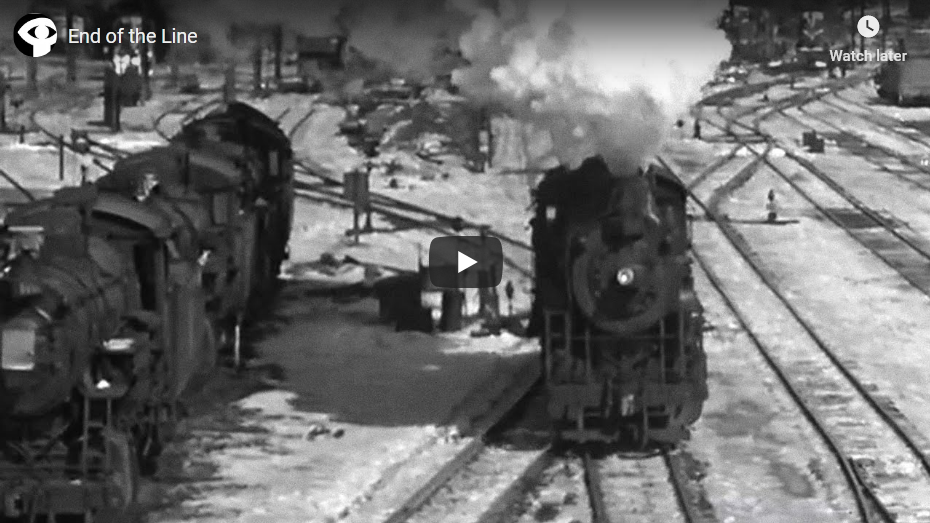
This documentary short offers a nostalgic look at the steam locomotive as it passes from reality to history. In its heyday, the big smoke-belching steam engine seemed immortal. Now, powerful and efficient diesels are pushing the old coal-burning locomotives to the sidelines, and the lonely echo of their whistles may soon be a thing of the past.
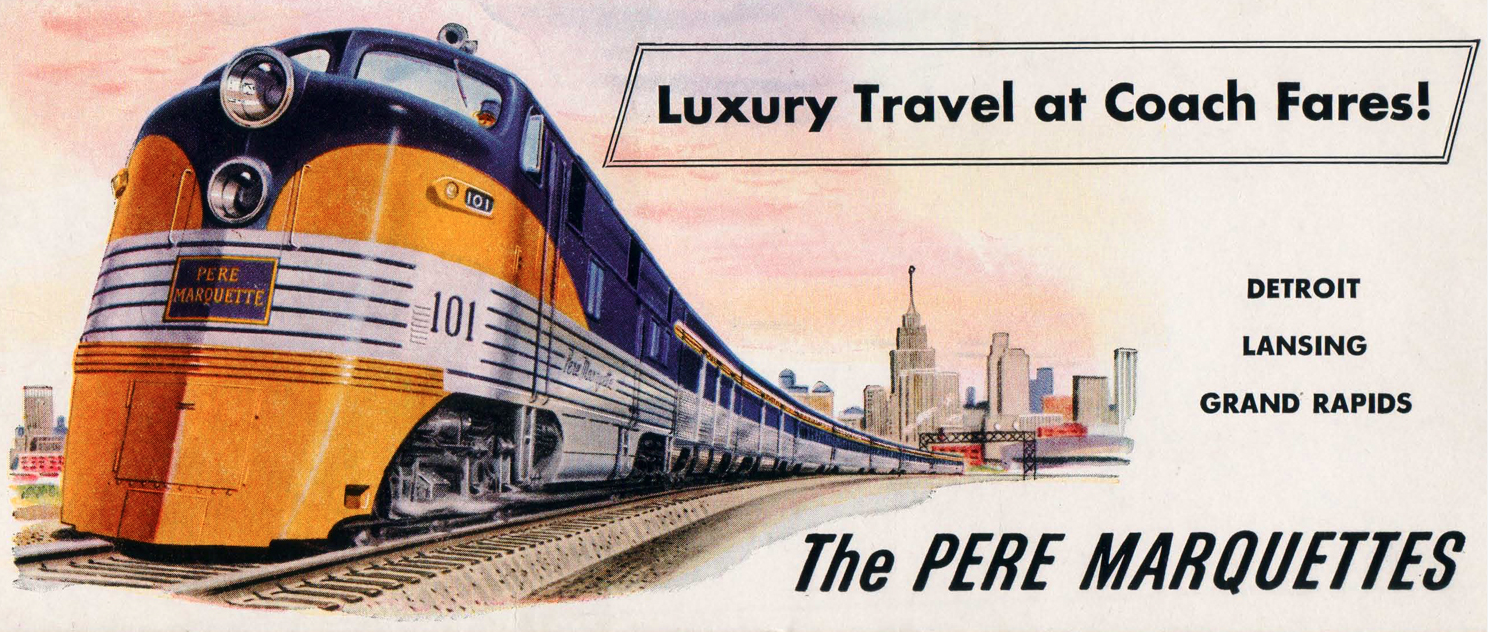
George Hamlin reflects on the state of the US passenger rail system before the formation of Amtrak in 1971:
… non-commuter U.S. passenger trains can be said to have been under siege essentially for my entire lifetime, beginning not long after the end of World War II. Many railroads spent large sums to re-equip with streamlined lightweight equipment after the war, only to see what was originally couched as an investment turn into essentially a drain on their companies’ treasuries.
And the “rewards” for this? Passengers decamped to the rapidly-expanding airlines, and their personal automobiles. The decisive blow came in 1956, with the passage of the Federal Aid Highway Act, which led to the Interstate Highway System.
Quoting from Joe Welsh’s Pennsy Streamliners, The Blue Ribbon Fleet (page 138), “Referring to the challenge, [PRR President] Symes wrote ‘There is such a thing as planning an orderly retreat in the face of superior forces.’ Clearly, the bugle had been sounded.”
In 1958, an Interstate Commerce Commission Hearing Examiner predicted that there would be no intercity passenger trains by 1970; he only missed by four months, effectively (and didn’t count on the Southern Railway, Rio Grande and Rock Island shying away from the government’s largesse). In 1959, TRAINS magazine devoted an entire issue to what was now clearly a crisis; the cover bore the legend “Who Shot the Passenger Train?”, complete with simulated bullet hole.
The 1960s in the U.S. could well be described as the “train-off” decade from a transportation history perspective; get, and read, Fred Frailey’s Twilight of the Great Trains, for a blow-by-blow analysis. The 1970s quickly produced the Penn Central bankruptcy, which proved to be the catalyst for government intervention; less than a year later, Amtrak was on the scene.
And since, it has frequently found itself in a “Perils of Pauline” existence, ranging from lack of funding to buy equipment, in many cases, to several bouts of route eliminations, to micro-management by politicians that don’t seem to be willing to provide consistent operational funding so that the company can make reasonable plans.
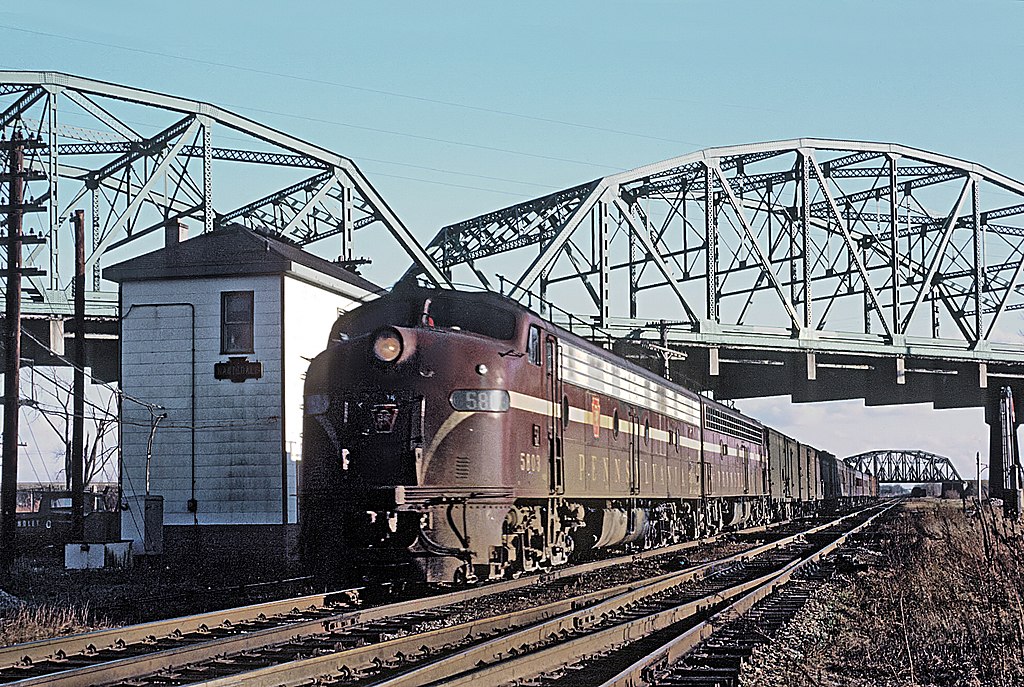
PRR E8A 5803 with Train 72, The Red Bird, passing the Hartsdale, Indiana tower and crossing the NYC and EJ&E on November 26, 1965. Photo from the Roger Puta collection via Wikimedia Commons.
Comments Off on American passenger trains before Amtrak
Real brick-and-plaster substance is, perversely enough, often smooshed then overlain with a plastic parody of some “olde” style. We live today in urban environments which are comprehensively fake — a contributing factor to the fakeness in ourselves. The tactic of developers is to append “poetic” associations from a happier past, to their ghastly provisional installations. This odonymical abuse has been going on for some time: “mountain-view” where there is no mountain, “river-side” where there is no river, “park-dale” with neither park nor dale. “Old-world charm” that consists of ticky-tack boxes, with stacks of brutalist concrete poking through.
The “downtowns” of cities in the eastern half of this American continent were built before the automobile, with pedestrian compactness. So prosperous did we become, so quickly, and so extensive was the building towards the latter end of the nineteenth century, that plentiful evidence remains. The ground-cover is still mostly older buildings, paradoxically thanks to rocketing property values: new buildings must accommodate phenomenal densities, upon tiny footprints. But ten-thousands of apparently “old houses” remain, going on and off market at a million apiece. The principles of money-management have “evolved” over the years, and the idea of “home” as a fungible investment has been universalized. All one needs to acquire one is a small saving and a large credit line. Then one is cut in for all subsequent rounds of poker.
You move in and “re-decorate,” less from personal taste than in anticipation of re-sale. After this process has been repeated a few times, nothing remains of the older building except its “historical” façade, itself somewhat tarted. Travelling about by foot and trolley, I have watched a likely majority of the city’s more attractive “landmark” buildings reduced to fronts only. These are propped by girders, while entirely new (and disproportionately larger) new constructions are bunged in behind.
Thus, nothing remains that is “authentic.” All continuities are destroyed, beyond this tip of the hat — the aesthetic equivalent of that homage which vice pays to virtue.
David Warren on discovering Erasmus as a teenager:
Erasmus makes an adequate hero for the adolescent boy. He was mine, for a time, even more than his friend Thomas More, who was forced on our consciousness in the late ‘sixties by Robert Bolt’s play-cum-movie (A Man for All Seasons). We were all herded from the High School to the Cinema, and rolled home in our yellow schoolbus full of something — youthful idealism — that could then be applied to various dubious causes. There was this Penguin with the title, Utopia. Without reading it, even in this pop translation, we became wise in our conceit, which is to say, conceited little wiseacres. I don’t “look back in anger,” however. That was for the ‘fifties. I look back through a fog of marijuana smoke, from the Age of Hippies.
Portrait of Desiderius Erasmus of Rotterdam (1466-1536) with Renaissance Pilaster Hans Holbein (1497-1543) via Wikimedia Commons.
Drugs saved us. Had it not been for them, we might have accomplished worse horrors. By the ‘seventies, when a new nadir was being established for Western Civ, another, visibly duller generation was coming along. Ours was the first to be perpetually schooled (I would not say “educated”). I left high school, home and Canada, in the year of grace 1969, now half a century ago; and when I returned to settle in the 1980s, I found my old schoolmates still in college. To be fair, at least some were homemakers by then, or garage mechanics. It was so long ago that this word, “homemakers,” could still be used without feminist “irony,” if you came from a small town.
But the Erasmus who had appealed to me, as teenager, was the author of the Colloquies, and the Praise of Folly (a keepsake from his friendship with More). I imagined him gentle, humorous, wise, yet full of righteous fire. Too, apparently, a bit of a whiner. I was dazzled by his production of the first printed edition of the Greek Testament, and did not yet realize that it was a slapdash performance, rushed to beat the version of Cardinal Ximenes, already set in type but not yet bound — a proof that there is nothing new under the sun.
Erasmus’ obsessive struggle against the reputation of Saint Jerome, whose central rôle in the history of our Vulgate he tried to deny, and whom he presumptuously corrected on innumerable points — himself straying in and out of heresy — ended in repeated embarrassments for him. But to my adolescent mind, he must always be the hero, beating furiously against the hidebound.
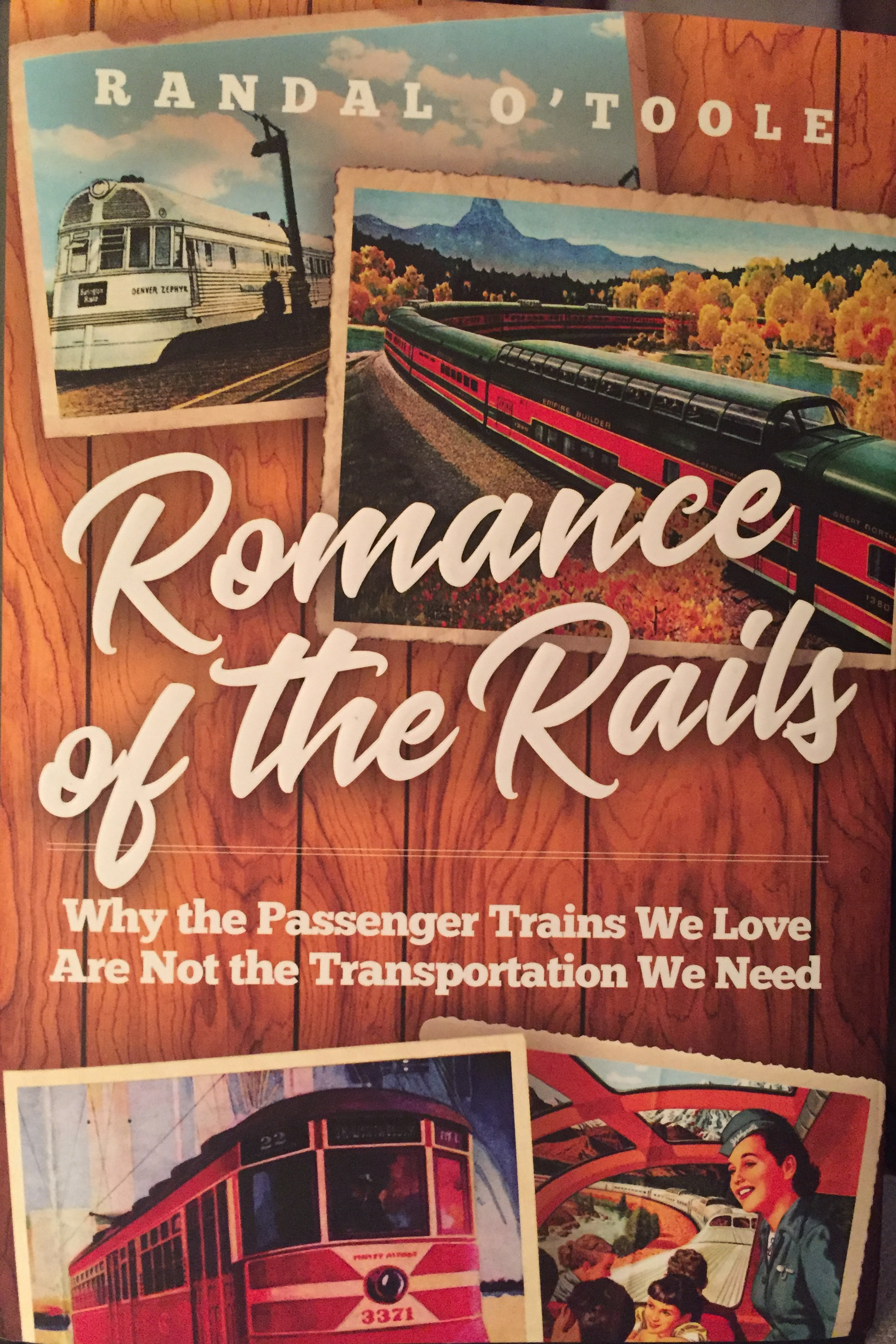
At the very end of his recent book Romance of the Rails, Randal O’Toole regretfully (he really, genuinely is a train fan) answers the question three ways … none of which bolster the hopes that the United States will go back to great passenger railway service:
First, when we had great trains, they were used mainly by the elite, and that remains true of great trains in other countries today. Before 1910, it is likely that a majority of Americans had never traveled more than 50 miles from home, and most had never been on a train, while many others had taken only one or two train trips in their life. As James Hill observed, “the so-called ‘travelling public’ forms in reality but a small, and the more fortunate class of the community.” If he was prejudiced against passenger trains, as some claim, it may have been for altruistic reasons, as the people who relied on freight trains “direct and indirect, include all. Hence justice requires that railway systems … should be cautious not to favor passenger traffic at the necessary expense of freight payers.” It is neither sensible nor fair fo the government to subsidize transportation catering mainly to the wealthy.
Second, new transportation technologies have replaced trains and streetcars. Planes are faster and less expensive for long distances; cars and buses are more convenient and less expensive for short distances; and there is no midrange distance at which passenger rail has an advantage over both cars and planes.
Third, and just as important, other new technologies, including the moving assembly line, telecommunications and the electrical grid, have reshaped our cities so the urban patterns that once made rail convenient to large numbers (though never a majority) of people have been replaced by patterns in which rail makes no sense for passenger travel.
Although we might want great trains in our fantasy of what the world should be like, the reality is we don’t need trains. Most Americans don’t ride the trains we have, nor would they ride them even if they met some arbitrary devinition of “great.” We love passenger trains, and we will remember them in museums and tourist lines. But if the government stays involved in transportation at all, it should be to prepare for the next revolution in transportation, not to try to reverse the previous one.
Comments Off on “Why can’t America have great trains?”