There are few sounds more frightening than that of the English young enjoying themselves. The English, it was once said, take their pleasures sadly; but now they take them loudly, which is far, far worse. Their pleasures are brutish, and the sounds the men emit while experiencing them are indistinguishable from those of a mob indignantly beating someone to death. As for the women, they never speak but they scream, as if being chronically raped. Of course, they all have to raise the level of their vocalizations because there is the perpetual background throb and thump of background music, or para-music, turned up to maximum volume, so that the ground vibrates beneath you like a ripple bed in an intensive care unit.
Recently I stayed overnight in a charming small cathedral city in England, genteel by day and Gomorrah by night. It is a little like H.G. Wells’ story The Time Machine, set 3,000 years hence, when humanity has divided into two: the effete, gentle, vegetarian diurnal Eloi, and the ugly, vicious, carnivorous nocturnal Morlocks, who emerge from underground once the sun goes down and prey on the Eloi.
I had booked no place to stay until the last minute, and found only a room above a cavernous, darkened bar, for me an antechamber of Hell, where the Morlock youth of the cathedral city gathered to enjoy themselves — or at least to pretend to do so, for I have long thought that those who cannot enjoy themselves without shouting and screaming are really hysterics, trying to convince themselves that they are enjoying themselves when actually they do not really know how to do so.
Theodore Dalrymple, “Evening Above the Hell-Bar”, Taki’s Magazine, 2019-12-16.
August 6, 2025
QotD: Modern English night life
July 26, 2025
The desperate narcissism of the “Cool Professor”
Freddie deBoer on the pathetic academic specimen sometimes known as “Bob” or “Biff” or “Lizzie” — the dreaded self-imagined “cool professor”:

“heh, probably never expected to have a professor with full sleeve tattoos, huh? well, that’s not the last time your mind’s gonna be blown this semester …”
Image and caption from Freddie deBoer’s Substack
Let me tell you about the saddest figures in the American university. They wear black jeans and Chuck Taylors to class, except maybe on the first day, when they stroll in wearing semi-ironic suits designed to contrast with their ample tattoos. Their syllabuses are printed in Helvetica. They mention Chappell Roan in the first fifteen minutes of the first day of class. They tell their students, with a wink, that they don’t believe in grades — why, who are they to judge their students! They encourage everyone in class to call them by their first names, or perhaps a contrived nickname. They hope to blow everyone’s minds when they theatrically announce that in their classes, students pick the readings, because the students are the ones who really know what’s worthy of their time. They describe themselves as “friends” or “guides” or “partners”, not as teachers or professors. They disdainfully invoke the words “rigor” and “standards” only with ironic scare quotes and want you to know that they don’t believe in deadlines. They subtweet the provost on BlueSky. They are the Cool Professors. And they are frauds.
The Cool Professor fundamentally does not want to teach, as teaching requires the teacher to sometimes be the bad guy. The Cool Professor can’t stand to be the bad guy, chafes at the very idea. That’s the core of all of this. The posture, the cultivated aesthetic of rejection, the performance of cool — none of it’s about students, even though Cool Professors will not shut the fuck up about how they run a “student-centered classroom”. Their affect isn’t about pedagogy. It’s about insecurity and narcissism, their desperate need to be perceived as the rare exception, the rogue academic, the anti-institutional rebel. Cool Professors aren’t trying to liberate students. They’re trying to be loved, and in being loved by students stave off their horror about growing old. And if that means letting students drift intellectually, if that means mistaking chaos for creativity, if that means failing to ever give anyone a hard but necessary lesson, then so be it. Because the thing the Cool Professor wants to avoid at all costs is being perceived as an authority figure, and that is precisely what students most need them to be.
It’s a common misunderstanding, particularly among faculty who feel alienated from the bureaucracy of the university or who fancy themselves transgressive thinkers, that teaching should never be hierarchical. The idea is that it’s somehow oppressive to know more than your students or to presume to evaluate their performance; that knowing more than your students and evaluating their performance are publicly understood to be core parts of being a teacher typically goes ignored. Many who consider themselves modern or progressive in the academy insist that education should be horizontal, an equal exchange between learner and guide, that the classroom is a site of resistance or liberation. But these ideas, while maybe flattering to the professor’s ego and superficially appealing to a certain kind of idealist, are incoherent. They’re built on a fundamental category error: mistaking the classroom for a club meeting, or a dinner party, or a DSA breakout session. The classroom is none of those things. It’s a site of instruction, and in a site of instruction one party knows more than the other; one party evaluates the other; one party is, necessarily, in charge.
(And, for the record, the fundamental dictate of critical pedagogy is always and forever self-defeating: if you inspire your students to rebel against your authority in your own classroom, they’re still following your lead and thus not rebelling at all. The ubiquitous goal of prompting students to resist top-down education, whatever that means, is unachievable, because if you do prompt them to resist, they’re actually complying with your desires, not resisting them. It’s a good old fashioned paradox and not one you can bluff your way out of with abstruse academic vocabulary.)
The plain fact that a teacher must necessarily have some sort of control over the classroom space that the students do not makes people uncomfortable. Authority always does. But then, the job of a teacher is not to minimize discomfort; indeed, a good teacher will necessarily make their students uncomfortable, on occasion, as it’s often only in the space of genuine discomfort that we’re inspired to achieve our deepest growth. The professor’s job to be responsible for the intellectual development of students, which inevitably involves making judgments: what is true, what is false, what is well argued, what is sloppy, what is insightful, what is clichéd. If you aren’t willing to say those things, if you shrink from judgment, you’re abandoning the role you signed up for, you’re copping out. You’re indulging yourself, and your own flattering self-mythology, at the expense of the people you’re supposed to be teaching.
July 21, 2025
July 20, 2025
Generational differences about … ugh … talking on the telephone
As a late boomer — and unlike most of my cohort — I’ve always hated talking on the telephone to someone. I’m sure part of it is my innate shyness and social awkwardness: if I can’t see how the other person reacts to my verbal blundering, how can I correct myself in time to salvage something from the call? As a result, I’m rather more sympathetic to younger Millennials and Gen Z’ers who have a common generational aversion to telephone calls:

“Candle-stick phone with courtesy pay box” by CodeName47km is licensed under CC BY-SA 4.0 .
I’ve been working to wean myself off the phone. I try to use it only when it feels necessary: we require an answer now, things are too complex to lay out in an email, or I want to be sure what I’m saying is received as I intend it. Sometimes these calls are spontaneous. Increasingly, I schedule them, or ask permission first.
I’ve done this because it’s how business communications work today, and I don’t like to remind people that I’m getting on. I also do it in deference to my colleagues, all of whom are much younger than me. They prefer email, texts, or the group chat.
The landline decision was forced by our acquisition of Fitzhenry & Whiteside, which has had the same telephone number for decades. F&W has many more authors than does Sutherland House, and a good number of them are over sixty. We’re trying to make the transition to new ownership seamless. We didn’t want people calling up to hear “this number is no longer in service”. So the newly installed phone sits on a stand beside the desk I share with Shalomi. I call it Shalomi’s phone and make her answer it when she’s around. Mostly it goes to voicemail and tells people how to contact us by email.
Accustomed as I’ve become to phone-free work, I was taken aback this week when I asked one of our interns to call a printer — we needed a quick quote — and she responded, “I don’t do telephones”. She looked at me bewildered. I responded in kind.
My mind was racing to figure out if I’d mishandled the matter. I’d just read that story in the New York Times about the “Gen Z stare”, the blank look given by a young person (usually in a service job) where a verbal response would be common. It is often interpreted as a freeze on the part of the starer, an inability or reluctance to engage, perhaps rooted in anxiety, perhaps a remnant of the pandemic’s social dislocations, although some insist the starer is telling their interlocutor “you’re in my space and you ought to back off”.
I heard from a number of people about that article this week, and while the Times had not mentioned phone usage and etiquette, my conversations did. Apparently there are a lot of young people who don’t know how to answer their phones. They see a call pop up on their screen and they stare at it, waiting for it to go away. Or they press answer and listen without saying anything. Some, I’m told, answer even scheduled calls from people they know with silence.
I’ve heard parents say they didn’t expect they’d have to teach their children to answer a phone. A university lecturer explained that journalism professors now demonstrate use of a telephone before instructing students on how to conduct an interview over it. Apparently, the same goes for rookie salespeople.
Poking around online, I found a BBC article reporting that a quarter of people aged eighteen to thirty-four never answer their phones, more than half of them interpret any unexpected call as bad news. CBS reports 90 per cent of Gen-Z are anxious about phone calls.
In fairness, a lot of adults are similarly leery of their phones. They don’t want to engage with spam dialers or scammers — they answer and listen for the brief pause that betrays a call centre. Some let every unrecognized call go to voicemail. The savvier ones have figured out that your iPhone, properly configured, will send calls from people not in your contacts directly to voicemail.
Back to our intern. Eventually, I recovered myself. This wasn’t an instance of Gen-Z awkwardness or anxiety around real-time conversations. She is bright, confident, and as socially adept as anyone in the office. I asked if she had a phone. She did. I asked if she used it for calls. She said only to speak to her mom, who pays for her phone. Perfectly reasonable. And it was her personal phone, not a company phone, so she was under no obligation to use it at work. So we suggested she make the call on the company phone, which she cheerfully did.
We spoke later about generational differences with regard to communications technology. She likes the control one has over email communication as compared to the unpredictable nature of phone calls. I told her about life when no one had phones, yet we could all somehow manage to show up at the same place and the same hour. I can hardly believe I lived in such times. Hearing this must have hit her like I was once hit by the reporter Ray Stannard Baker’s account of how he used to walk up to the White House, knock on the front door, and ask to speak with the president.
January 8, 2025
October 23, 2024
October 10, 2024
July 29, 2024
W.H. Smith attempts to rebrand their stores to “raise awareness” or something
British bookseller from time immemorial, W.H. Smith, apparently decided that the corporate branding they’d been using since the 18th century was just too boring for modern consumers, so they brainstormed a daring new design for the 21st century … that sucked.

“UK High Street” from https://www.whsmithplc.co.uk/media/media-gallery/images
When the British retailer, W.H. Smith, rebranded its logo last year, confusion and bafflement ensued.
The high street fixture, its Times New Roman logo mostly unchanged since 1792, earned its reputation by selling books, stationery, and for fleecing bleary-eyed travellers in airports. Through sheer zombie persistence, W.H. Smith remains a constant of British retail. Never mind the threadbare carpets, the general dilapidation, or the desperate staff forced to offer you a bottle of knock-off perfume with your twenty Lambert and Butler.
W.H. Smith endures because its business model concentrates on a captive audience. Go to an airport or a hospital — any place in which people cannot escape — and you’ll find a W.H. Smith reliably charging double for a Lucozade Sport. W.H. Smith will outlive Great Britain. The retailer’s existence — puzzling to the most scientific of minds — defies natural law.
Last year, creative designers attempted to play God. They sanded off the logo’s regnant edges and stripped “Smiths” altogether. The dynamic branding screamed minimalism: a plain, white “WHS” stamped on to a blue background.
I’d imagine the big revelation underwhelmed those paying for the work. “That’s interesting.” Or “It’s certainly different“.
Mockery ensued. “Baffling” said one. “It looks like the NHS logo,” observed another.
No doubt the designers plotted a revolution in design. Of course, these “creatives” — invariably young and invariably uncreative — fancied their vandalism as “forward thinking” and “dynamic”. I’ll wager at least one thought the new logo addressed the plight of some faraway progressive cause to which they subscribe. The public, unschooled in the most voguish developments in design, concluded: The new logo is shit.
W.H. Smith soon backtracked. Passive-aggressive defences of the staid new logo melted into sulky denial. It’s just a trial, they mewled.
A breathless spokesman revealed the truth. Or some addled version of the truth. The fresh signs, they revealed, were “designed to raise awareness of the products W.H. Smith sells”. What else, I wonder, is a shop sign meant to achieve?
The phrase “raising awareness” is one of a litany of linguistic evasions which say nothing. By shoehorning that ghastly phrase into a sentence, the speaker hopes to evade criticism. Reader, I’m not ploughing through a duty-free bottle of Chateau le Peuy Saincrit in the obscene Bulgarian sunshine. I’m raising awareness of the plight of southern French winemakers.
That passive-aggressive statement of the obvious — our shop sign raises awareness of our shop — you plebeian fools — crystallises the creative industry’s age problem.
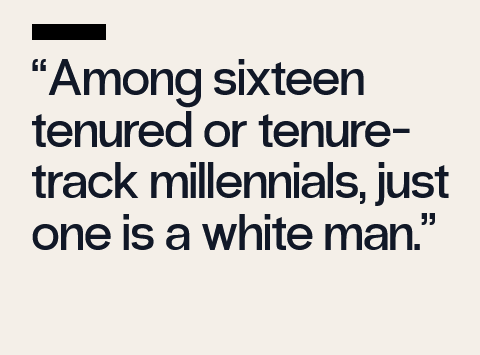
Three-quarters of the creative industry is under 45. Perhaps this age gap (not the sexually consensual and fun kind) explains why so much of what we see and hear is cliché-riddled evasive hoo-hah.
When talking to anyone under 45, I mentally add a question mark to the end of their sentence. Millennials and Zoomers avoid declarative sentences. Listen. Almost every utterance sounds like a question. Further to this quirk, I note the adverbs and filler words. Young people stuff their speech with “basically”, “actually”, “literally”, and “like”. Zoomers are especially militant. They eschew capital letters. Capital letters are grammatical fascism. Full stops reveal a latent proclivity for Zyklon-B. Influencers add another tic to this repertoire of anxiety and unsurety. They crackle their voice as if a frog has lodged in their throat.
July 25, 2024
Poptimism?
Freddie deBoer has a few things to say about “poptimism” (whatever the heck that might be):
I mean, honestly, what are we doing here? Where does this go? When does the madness end? What degree of all-swallowing society-wide celebration of pop music might be considered sufficient, for pop fans? How much more slavish devotion can Taylor Swift engender before they stop calling her an underdog? What is the endgame? What level of delusion is yet to be achieved, in the space of pretending that pop music is somehow marginalized or disrespected? This is, I’m told, “pop girl summer“, and it is genuinely difficult to find new music that gets any burn that isn’t some 18 to 28 year old photogenic woman, autotuning over shlocky overproduced midtempo backing tracks complete with beats stolen from mid-2010s EDM and muddy indistinct synth lines that all sound exactly the same. (Jack Antonoff should be put to death for his crimes.) My friends: you get all the streams, you get all the good reviews, you get all the Grammys, you get all the magazine covers. There exist almost no mainstream publications that regularly cover any music other than the kind you like. If anyone uses words like “authenticity” in music criticism, they will be sent to the gulag; if anyone suggests that musicians who write their own songs possess some sort of intimate connection to them, that person receives the digital equivalent of being pressed to death like Giles Corey. What more adulation do you want for your stars? What additional level of respect is there for them to secure? What do you want?
NPR says “This summer’s music charts are dominated by pop girl underdogs”. Underdogs cannot dominate! Definitionally! If they are dominating, they are not underdogs! This is the modern hell of crybullying, the person who tells you that you’re oppressing them while they’re busy mashing your face into the asphalt.
And, of course, it’s mostly all a negotiation with aging. As one of the oldest Millennials, I’m watching as my generation reaches middle age and reacts to that transition, and I can give you an initial verdict on how it’s going: not well, at all. We’re mostly adjusting to it by not adjusting to it. So, so many Millennials are confronting the end of their youth by performatively embracing youth culture, loudly declaring that the only music that matters is that which you discover on TikTok. They need everyone to know that they’ve spent the cost of a new Toyota on tickets to the Eras Tour. (Which soaks up seats that might otherwise be available to actual young people, not wine moms with too much money, but nevertheless.) They might like music. But in a much deeper way, they need it. They need what they think it represents.
Of course, this is all made a little bleaker by the fact that elder Millennials were once defined as the “hipster” generation, Williamsburg residents swilling PBR at backyard parties where they listened to the latest indie darling. In other words, they — we — have gone from being ostentatiously countercultural to ostentatiously mainstream, in the span of twenty years, which makes it hard not to conclude that they — we — never actually had aesthetic tastes at all and have instead lived like little reeds in the wind, terrified of ever appearing to not be The Right Kind of Person, which can only ever be defined through our capitalist consumption, since we think that all we are is our capitalist consumption.
May 25, 2024
“Education” versus “learning”
At Astral Codex Ten, Scott Alexander discusses some of the ideas from Bryan Caplan’s book The Case Against Education:

Source here. Note deranged horizontal axis.
Education isn’t just about facts. But it’s partly about facts. Facts are easy to measure, and they’re a useful signpost for deeper understanding. If someone has never heard of Chaucer, Dickens, Melville, Twain, or Joyce, they probably haven’t learned to appreciate great literature. If someone can’t identify Washington, Lincoln, or either Roosevelt, they probably don’t understand the ebb and flow of American history. So what facts does the average American know?
In a 1999 poll, only 66% of Americans age 18-29 knew that the US won independence from Britain (as opposed to some other country). About 47% of Americans can name all three branches of government (executive, legislative, and judicial). 37% know the closest planet to the sun (Mercury). 58% know which gas causes most global warming (carbon dioxide). 44% know Auschwitz was the site of a concentration camp. Fewer than 50% (ie worse than chance) can correctly answer a true-false question about whether electrons are bigger than atoms.
These results are scattered across many polls, which makes them vulnerable to publication bias; I can’t find a good unified general knowledge survey of the whole population. But there’s a great survey of university students. Keeping in mind that this is a highly selected, extra-smart population, here are some data points:
- 85% know who wrote Romeo and Juliet (Shakespeare)
- 56% know the biggest planet (Jupiter)
- 44% know who rode on horseback in 1775 to warn that the British were coming (Paul Revere)
- 33% know what organ produces insulin (pancreas)
- 31% know the capital of Russia (Moscow)
- 30% know who discovered the Theory of Relativity (Einstein)
- 19% know what mountain range contains Mt. Everest (Himalayas)
- 19% know who wrote 1984 (George Orwell)
- 16% know what word the raven says in Poe’s “The Raven” (“Nevermore!”)
- 10% know the captain’s name in Moby Dick (Ahab)
- 7% know who discovered, in 1543, that the Earth orbits the sun (Copernicus)
- 4% know what Chinese religion was founded by Lao Tse (Taoism)
- <1% know what city the general Hannibal was from (Carthage)
Remember, these are university students, so the average person’s performance is worse.
Most of these are the kinds of facts that I would expect school to teach people. Some of them (eg the branches of government) are the foundations of whole subjects, facts that I would expect to get reviewed and built upon many times during a student’s career. If most people don’t remember them, there seems to be little hope that they remember basically anything from school. So what’s school even doing?
Maybe school is why at least a majority of people know the very basics – like that the US won independence from Britain, or that Shakespeare wrote Romeo and Juliet? I’m not sure this is true. Here are some other questions that got approximately the same level of correct answers as “Shakespeare wrote Romeo and Juliet“:
- What is the name of the rubber object hit by hockey players? (Puck, 89%)
- What is the name of the comic strip character who eats spinach to increase his strength? (Popeye, 82% correct)
- What is the name of Dorothy’s dog in The Wizard of Oz? (Toto, 80% correct)
I don’t think any of these are taught in school. They’re absorbed by cultural osmosis. It seems equally likely that Romeo and Juliet could be absorbed the same way. Wasn’t there an Academy-Award-winning movie about Shakespeare writing Romeo and Juliet just a decade or so before this study came out? Sure, 19% of people know that Orwell wrote 1984 – but how many people know the 1984 Calendar Meme, or the “1984 was not an instruction manual!” joke, or have heard of the reality show Big Brother? Nobody learned those in school, so maybe they learned Orwell’s name the same place they learned about the other 1984-related stuff.
Okay, so school probably doesn’t do a great job teaching facts. But maybe it could still teach skills, right?
According to tests, fewer than 10% of Americans are “proficient” at PIIAC-defined numeracy skills, even though in theory you need to know algebra to graduate from most public schools.
I took a year of Spanish in middle school, and I cannot speak Spanish today to save my life; that year was completely wasted. Sure, I know things like “Hola!” and “Adios!”, but I also know things like “gringo” and “Yo quiero Taco Bell” – this is just cultural osmosis again.
So it seems most people forget almost all of what they learn in school, whether we’re talking about facts or skills. The remaining pro-school argument would be that even if they forget every specific thing, they retain some kind of scaffolding that makes it easier for them to learn and understand new things in the future; ie they keep some sort of overall concept of learning. This is a pretty god-of-the-gaps-ish hypothesis, and counterbalanced by all the kids who said school made them hate learning, or made them unable to learn in a non-fake/rote way, or that they can’t read books now because they’re too traumatized from years of being forced to read books that they hate.
It’s common-but-trite to encounter people who say things like “I love learning, but I hated school” — I’ve undoubtedly said that myself many times. A weird experience was having to study a book in school that I’d already read on my own: it was like an early form of aversion therapy … here’s something you loved once, let’s make you hate it now.
May 2, 2024
QotD: Fomenting inter-generational hatred
“You’re in a heap o’ trouble, boy.” Or girl. What follows are the reasons — or at least the big ones — why you’re so thoroughly screwed, along with some suggestions for self-help at the end.
You tend to loathe Boomers and Generation X, I know. I don’t actually blame you for that, at least not entirely. Some of you, though, the Millennials who lump all the above together, without exception, strike me as singularly stupid and ignorant.
Moreover, the reasons you have for loathing them are somewhat misplaced. You tend to think — not without some reason — that the Boomers, especially, robbed their future, which is to say you, personally, to pay for largesse for themselves in the present.
It’s true enough, but it is neither the really awful thing they did to you nor does the complaint portray you in any particularly favorable light. “Those damned Boomers; they took everything and now there’s nothing left for us.” Yeah … you know what that sounds like? It sounds like the whining of one group of thieves over the success of a better or, in this case, merely luckier group of thieves who got to the big haul first. Yes, it really does.
Sorry, but the damage the Boomers and Xers did to you wasn’t primarily fiscal. No, no, the damage they did – or allowed – was to you, as a person. That’s the real crime. They didn’t just rob you of some money in advance. They didn’t just vote for a series of politicians and political programs and giveaways that ran the economy into the ground.
No, they stole from you — or allowed others to steal from you — some key elements of personhood, especially the ability to engage in critical, logical thinking. That’s right, you were not educated, whether in kindergarten or in the kindergartenesque, safe space segregated, snowflake sanctuary schools we call colleges and universities. Yes, these institutions of miseducation were supposed to teach you how to think. Instead, they taught you what to think and stunted your native ability to think. If you ever start to spout bright green feathers? Yes, this is the reason why; your teachers demanded that you become a parrot.
Tom Kratman, “It’s Up to You, Millennials. Deflect or Be Doomed”, Milo, 2017-12-06.
April 18, 2024
QotD: The intergenerational blame game
I believe it’s related to pensions, Medicare, and the whole Social Security scam. Boomers paid into these funds with the naive but innocent understanding that their money would be returned. Instead, the government spent it on other frivolities such as wars for Israel and keeping the Federal Reserve happy, so there’s no money left, and naturally the younger generations will have to pay. I believe that the elites want to get the younger generations so angry at the Boomers that they cut off what was promised to them — so angry, they dream of the day that Boomers get murdered in nursing homes.
OK, Zoomer. Two can play this game. Keep in mind that the little magic trick I’m about to perform here does not mean I’m blaming your generation for any of these things, because I’m not a Generational Astrologist. I’m merely taking what you do and flipping the script:
Yours is the generation of “woke culture” and Antifa. As much as you yabber about how the Boomers let the culture slide into liberalism, atheism, and degeneracy, your generation is far less religious than the Boomers. You lean heavily socialist and encourage “punishment” for Halloween costumes you deem “offensive”. While the world is burning, the Zoomers’ top three voting issues are emotionally laden trifles such as “mass shootings, racial equality, and … treatment of immigrants”. You are far more anti-racist, anti-“hate”, and pro-LGBT than any generation that preceded you. This is not my opinion — it’s a statistical fact supported by every survey and poll I’ve ever seen.
Therefore, every Zoomer is personally responsible for Drag Queen Story Time and the fact that there’s no wall on the border, because you just sat there and LET it happen. Three trillion dollars have been added to the national debt since Trump’s inauguration, and you Millennials and Zoomers just sat there and LET it happen. The tech giants are doing purges of people for thoughtcrimes, while your generation hides behind goofy fake names and clown avatars and LETS it happen.
That’s because every member of every generation is 100% responsible for what happens on its watch. Get down on your knees and APOLOGIZE!
And if you don’t repent immediately and bend to my shaming tactics, you fucking deserve all the righteous pain the generations after you will rain down on your selfish head.
See how stupid that sounds when it’s applied to you?
People hate to admit they’ve been brainwashed. But sorry — you’ve been brainwashed.
Politicians enjoy a little generational warfare if it suits their needs. They’ll even instigate it. And as far as I can tell, this sudden emergence of a generational identity-politics civil war is a divide-and-conquer tactic that has worked wonderfully.
Jom Goad, “The Myth of Boomer Privilege”, Taki’s Magazine, 2019-11-03.
March 25, 2024
QotD: Generational politics
The major theme of my writing is guilt — how blaming others is maliciously used as a disabling mechanism and how people and cultures toss it around like a hot potato. No one, unless they’re masochists or are trying to earn social-approval points, ever wants to accept guilt — they want to tie it around someone else’s neck and let them sink to the bottom of the lake with it. This is why I believe Christianity has such perennial appeal — because Jesus takes the rap for you.
I’ve been making this point for years, but you’ve all been too busy projecting your guilt onto others and blaming them for all your problems to listen to me.
The reason I get fixated on certain topics is because they in some way powerfully reflect this theme of misplaced blame. This may burst quite a few of your bubbles, but the fact that I’ve focused on the endless bashing of whites for years is not a sign of how deeply in love I am with white people but rather a fascination with the fact they’re getting blamed for many things that demonstrably aren’t their fault. It’s the same reason I focus on the gender wars — men nearly aren’t as awful as they’re being depicted, and women are nowhere near as innocent as the current narrative says they are.
If you haven’t been paying attention, there’s been escalating intergenerational hostility across our fair land, and people are increasingly identifying with dumb, media-manufactured generational names — AKA Baby Boomers, Gen X, Millennials, and Gen Z — as if they were scientific categories that are predictive of human behavior rather than arbitrary designations along the lines of Virgo, Capricorn, Scorpio, and Leo.
It’s some weird new metastasized form of identity politics. And, since it comes with the turf, these groups are blaming each other for all that ails the world.
It’s dumber than astrology […] but this intensely stupid way of framing the world refuses to die.
Jom Goad, “The Myth of Boomer Privilege”, Taki’s Magazine, 2019-11-03.
January 28, 2024
Adolescence is “a profoundly unnatural life-stage”
Sarah Hoyt on the plight of the younger Millennials and the Gen Z kids in our over-supervised safety-at-all-costs culture today:

Child labour laws did generally get younger children out of dangerous places like mines, mills, and factories. Modern child labour laws instead keep young adults from gaining work experience in many cases.
Photo of pre-teen children working in a mill in Macon, Georgia in 1909. Photo NCLC.01581, Library of Congress via Wikimedia Commons.
Mostly, it gets attributed to “kids these days” but unless you have kids, these days, you don’t know how they are bound. And even if you do, you might not realize it, because all you see is the infantilization of a generation, and not that they, themselves, aren’t the ones doing the infantilizing, but all those “good rules” and regulations and laws are doing it.
I realized about 10 years ago that my son’s generation was about 10 years behind where we were. In their mid twenties they were doing things we did in our teens. It was disconcerting. And even I had no idea why, other than too much regimentation in school, too much of a never end of button counting, and not enough room or freedom to think or be on their own.
Since then … I’ve seen more. And a lot of the reason they are younger than we were is that the entire world is geared not to let them grow up. I mean, let’s be glad that — unprepared or not — they’re legal adults at 18, or people would be denouncing them for walking alone down the street, without an “adult” at 25.
There’s also … adolescence is in some ways a profoundly unnatural life-stage, and more or less invented in the 20th century. In the past, sure, people were children, and people grew to be adults, but there wasn’t this protracted time period where they were adults in size and at least some ability, but weren’t allowed to be adults: they weren’t allowed to earn or spend, or make their own decisions, for years.
The earn or spend thing is important. Kids used to grow along with their tasks. Read Tudor or colonial memoirs, and you find four year olds looking after cows or horses, or learning Latin, or other unlikely things even for twelve year olds in our time.
Mom went to work at 10 and started getting a salary. It wasn’t much, and 90% of it went to her parents’ budget. But she was working, holding down a job, doing things that were maybe not at adult level, but could lead to it, eventually, if she applied herself. This was normal for her generation. In my own generation, amid the working class, most people went to work at 10. Heck, amid the middle class, most people went to work at 15 or so, after 9th grade. Were they more mature than the rest of us that went all the way to college?
I wouldn’t have thought that at the time, but yes, of course they were. Most of my elementary school classmates were married, with kids by the time my biggest worries were final exams. Of course, with my intellectual pride I looked down on them but now I understand they were managing a very difficult job, which at the time I could not have done.
I always feel stunned and shocked when someone says the kids should be “holding down two jobs like I was at 16” or “working to pay their way through college”. (That last is a giggle as it has two impossibilities. Finding a job that pays enough after college which has a lot of make-work expectations, and making a full-time middle-class salary, which is what college costs these days.) Two Jobs. At 16. The difficulties in giving work to 16 year olds, increasingly restriction of hours, etc. combined with chaotic scheduling in the only unskilled jobs remaining (mostly just retail) means that until recently none of them could find A job. Let alone two. And the recently was during Covid. I haven’t seen so many little 16 year olds cashiering, or serving at tables recently. And that’s because most people I’m seeing are around my age: I guess unemployment is biting hard.
But you know, all these strong rules against “child labor” mean that most kids hit 18 or, if they’re going to college, 22 or — more likely, as most degrees (remember make work?) are taking 6 or 7 years — 24, with absolutely no job experience. Which means their applications aren’t even looked at. Not seriously.
Honestly, almost every young person — particularly young men — I know who found a job, and is doing relatively well, did so through contacts. Through friends of friends. Through knowing someone.
This is a bad sign, because it’s how Portugal functions, and it is not in any way shape or form meritocracy, which in turn contributes to other things falling apart.
But more and more what I’m seeing is young people hitting their mid twenties lost, and doing this, and doing that, and trying this and trying that, and nothing ever gels. To make things worse, they don’t have the habits mom had by 10, because they haven’t been allowed to acquire them.
There was a similar generation — one, while here we’re well into two — in Portugal, where unemployment was so bad (the generation before mine) that most people weren’t “established” on a path till their mid thirties. I’d guess about half of them never got the knack of it: of the day to day of working, fulfilling the work duties, just … the unglamorous day to day that makes us adults.
December 19, 2023
QotD: The art of the Millennial celebrity memoir
“Who Am I?” asks Danny’s book, knowing full well who he is. To feign humility, the title does that Millennial thing: asks a question to which it knows the answer.
I have a cactus-like indifference to celebrity, to Danny Cipriani, to anyone over whom the kaffeeklatsch gushes. Danny was a gifted athlete who drained his Superman abilities in pursuit of celebrity. Little is more tragic than wasted talent.
The Romans thought celebrities were mentally deranged, and to be avoided. To this day, we’re yet to discover the secret behind their vastly superior self-healing concrete. The Romans had a point.
Anyway, Danny’s sex life, as documented in his book, would blush the cheeks of a Roman senator.
Danny has bedded scores of beautiful women. This happens when one is Hollywood handsome, rugged, cocky, and a known shagger. At the height of his bedhopping campaign, Danny featured permanently in the tabloid press, each week a new beauty attached to his arm.
In short, Danny could indulge himself senselessly and did so with the atomic energy of a nymphomaniac in the waiting room at Dignitas.
Reader, that’s it. That’s the story. A young man blessed with opportunities to shag beautiful women indulged those opportunities to shag beautiful women.
[…]
This book could have been a tweet.
Christopher Gage, “Spare a Thought: The inexorable rise of pitybragging”, Oxford Sour, 2023-09-12.