Quotulatiousness

October 20, 2019

Webley Model 1904

Filed under: Britain, History, Military, Weapons — Tags: , , , — Nicholas @ 02:00

Forgotten Weapons
Published on 24 Feb 2015

Sold for $109,250.

The Model 1904 was basically the first working automatic pistol made by Webley (there was a 1903 toolroom experiment, but it didn’t really work). Like all the Webley automatic that would follow, it was designed by William Whiting. The 1904 was the company’s first effort at making a semiautomatic sidearm for the British military, so it was chambered for the .455 cartridge (a special rimless version made by Kynoch, after early experiments using the .455 rimmed revolver ammunition caused lots of problems stacking in magazines). It is a rather huge handgun, and uses a short recoil mechanism with two separate locking blocks. This particular one is s/n 23 – very few were made before it was rejected in military trials and Webley redirected its efforts toward smaller commercial pistols.

http://www.forgottenweapons.com

Theme music by Dylan Benson – http://dbproductioncompany.webs.com

October 17, 2019

American Eagle Lugers

Filed under: Germany, History, Military, USA, Weapons — Tags: , , , — Nicholas @ 02:00

Forgotten Weapons
Published on 1 Dec 2014
Dissent This
Sold for $14,950 (9mm fat barrel) and $9,775 (7.65mm test trials).

Many people are aware of the .45 caliber Lugers made for US military field trials — but far fewer people realize that Lugers were both tested by the US military and sold commercially several years prior to the .45 tests.

In 1900, the US military put several hundred 7.65mm Luger pistols into field trials with both infantry and cavalry units. These pistols were marked with a large and elaborate American eagle crest, in an attempt by DWM to enhance the gun’s appeal to Americans. A similar tactic was used in production of Lugers for Swiss sale, with a large Swiss cross (and it worked well).

After complaints about the small caliber of the early 1900 Lugers, DWM developed the 9mm Parabellum cartridge, and attempted to sell them commercially in the US (and elsewhere). A small batch were also purchased for further military testing.

http://www.forgottenweapons.com

Theme music by Dylan Benson – http://dbproductioncompany.webs.com

October 14, 2019

Krupp 50mm Mountain Gun (Thai Model 1902)

Filed under: Asia, Germany, History, Military, Weapons — Tags: , , — Nicholas @ 02:00

Forgotten Weapons
Published on 27 Jul 2014

http://www.forgottenweapons.com

Theme music by Dylan Benson – http://dbproductioncompany.webs.com

Taking a look at another artillery piece today, a 50mm mountain gun made for Siam (now Thailand) by the German Krupp company. It is a relatively simple (and thus relatively inexpensive at the time) design, with no recoil mechanism or adjustable traverse.

October 11, 2019

Bethlehem Steel 37mm Cannon – WWI Era

Filed under: France, History, Military, USA, Weapons, WW1 — Tags: , , — Nicholas @ 02:00

Forgotten Weapons
Published on 6 Jul 2014

http://www.forgottenweapons.com

Theme music by Dylan Benson – http://dbproductioncompany.webs.com

The 37mm gun was found in many guises during World War One – that caliber was the smallest allowed to use exploding projectiles by the 1899 Hague accords. Every nation in the world, it seems, used 37mm guns of one type or another. Well, one particular version I had the chance to look at was built by Bethlehem Steel in Pennsylvania for the French Army. Chambered for the same 37x136mm Hotchkiss Heavy cartridge used in US naval service, 200 were purchased in 1916. Only 15 were actually shipped before the US Army seized the bulk of the order in 1917 – but they were never put into any sort of service by the US military. The French tested the guns for suitability as an infantry gun, anti-tank gun, anti-aircraft gun, and naval landing gun – and found it unsuitable for all roles. It was probably tested only as a backup in case the redesign of the Mle 1916 Tir Rapid ran into problems.

At any rate, the 15 guns sent to France were sent back at the end of the war, and the guns remained in US Army inventory until 1921, when they appear to have been distributed out the National Guard units.

I think this is a very cool gun for the present-day enthusiast. In addition to the historical links to WWI, it has the practical benefits of being relatively light and using ammunition relatively inexpensive to reload. And, of course, the free mount and shoulder rest and iron sights give it more the feel of a shoulder rifle than later light artillery that use precisely adjusted mounts. This one is just more fun to shoot! Alas, there are very few still in existence. Perhaps an opportunity for someone who wants to make a reproduction Big Boy’s Toy?

October 8, 2019

Big Iron: Development of the Colt 1848 Dragoon Revolver

Filed under: History, Military, USA, Weapons — Tags: , , , , , — Nicholas @ 02:00

Forgotten Weapons
Published on 23 Aug 2019

RIA on YouTube: https://www.youtube.com/user/RockIsla…
RIA on Instagram: https://www.instagram.com/rockislanda…

Sam Colt’s first foray into firearms manufacturing did not end well — after 6 years, he went broke and shut down production of Paterson revolvers and revolving long guns. His guns were too expensive, too fragile, and too underpowered to become a commercial success. They did make an impression on some people, however, and a few years later Colt would work with Captain Samuel Walker of the Texas Rangers to develop a much larger and more robust revolver. The US military purchased 1,000 of these Model 1847 “Walker” revolvers, and this set Colt back on the path to financial success.

Colt contracted with the Whitneyville Armory to produce his Walkers, and part of the contract was that Colt would own any tooling developed for the manufacturing process. The Walker was successful enough that it spurred a second 1,000-pistol order form the government, and Colt used the Walker tooling along with his newfound capital to set up shop in Hartford CT producing guns himself. He immediately made a number of changes to the Walker pattern, primarily making is a bit shorter and lighter (4lb 2oz, with a 7.5 inch barrel), reducing the powered charge to 50 grains (the Walker had used 60 grains), and improving the loading lever retention latch. This would become known as the Model 1848 Dragoon revolver.

Between 1848 and 1860, a total of 20,700 Dragoons were made, 8,390 of them for the US military. There would be three main variations, called the first, second and third types today. In today’s video, I will show you all three and explain how they differed from each other — and we will also take a look at a rare long-barreled version as well as one with an original shoulder stock.

http://www.patreon.com/ForgottenWeapons

Cool Forgotten Weapons merch! http://shop.bbtv.com/collections/forg…

Contact:
Forgotten Weapons
PO Box 87647
Tucson, AZ 85754

October 5, 2019

Dreyse Model 1835 Needlefire Breechloading Pistol

Filed under: Germany, History, Technology, Weapons — Tags: , , , — Nicholas @ 02:00

Forgotten Weapons
Published on 19 Aug 2019

RIA on YouTube: https://www.youtube.com/user/RockIsla…
RIA on Instagram: https://www.instagram.com/rockislanda…

Johann Nicolaus Dreyse, later promoted to the aristocracy as Nicolaus von Dreyse, designed the first mainstream military breechloading rifle. His rifle was adopted by Prussia and changed military history, but this was not his only work. Dreyse also endeavored to sell guns commercially, both rifles and handguns. This is an example of one of his first, the Model 1835. It is a single shot breechloader, with the chamber consisting of a rotating tumbler. The firing mechanism is identical in concept to that of his Model 1841 rifle, just scaled down for the smaller pistol. The piece uses a power charge of just 6 grains, but its breechloading action was quite advanced for the 1830s!

http://www.patreon.com/ForgottenWeapons

Cool Forgotten Weapons merch! http://shop.bbtv.com/collections/forg…

Contact:
Forgotten Weapons
PO Box 87647
Tucson, AZ 85754

October 2, 2019

Marston 3-Barrel Selectable Pocket Derringer

Filed under: History, Technology, USA, Weapons — Tags: , , , , — Nicholas @ 02:00

Forgotten Weapons
Published on 18 Aug 2019

RIA on YouTube: https://www.youtube.com/user/RockIsla…
RIA on Instagram: https://www.instagram.com/rockislanda…

William Marston was born in the UK in 1822 and emigrated to the US in the 1830s with his father, who was a gunsmith. William became a naturalized citizen in 1843, and in 1844 went to work for his father in the family business. He would later open his own shop, and became successful making a wide variety of firearms — mostly concealable pocket pistols — until his death in 1872.

This is one of his 3-barrel derringers, with a pretty neat auto-indexing system. This one is in .32 rimfire with 3″ barrels, although 4″ barrels and .22 rimfire versions were also made. Production began in 1858, but really picked up with the addition of an extractor in 1864. That improved model would see some 3300 examples made.

http://www.patreon.com/ForgottenWeapons

Cool Forgotten Weapons merch! http://shop.bbtv.com/collections/forg…

Contact:
Forgotten Weapons
PO Box 87647
Tucson, AZ 85754

September 29, 2019

Walther KKW: Competition Shooting in Nazi Germany

Filed under: Germany, History, Military, Weapons, WW2 — Tags: , , , , — Nicholas @ 02:00

Forgotten Weapons
Published on 14 Aug 2019

RIA on YouTube: https://www.youtube.com/user/RockIsla…
RIA on Instagram: https://www.instagram.com/rockislanda…

The KKW (“Klein Kaliber Wehrsportgewehr“, or small caliber military sporting rifle) was developed by BDW in 1937 as an amalgamation of various .22 rifle elements from other manufacturers as well as BSW itself. It was intended to fill the role of the German national standard target rifle. When the Nazi party took over Germany in the early 30s, the SA consolidated and reorganized the civilian shooting sports in to a format aimed at military training. To this end, they wanted a standardized rifle which would duplicate the handling of the Mauser K98k in .22 long rifle caliber. This was initially the DSM, but in 1935 the SA decided that it wanted a rifle that more closely mirrored the military pattern Mauser. The result was the KKW. For more information on these and other German 1930s/40s training rifles, I recommend the recent book on the subject by Bob Simpson.

http://www.patreon.com/ForgottenWeapons

Cool Forgotten Weapons merch! http://shop.bbtv.com/collections/forg…

Contact:
Forgotten Weapons
PO Box 87647
Tucson, AZ 85754

September 26, 2019

Hiram’s Extra Light Maxim Gun

Filed under: Britain, History, Military, Weapons — Tags: , , , , — Nicholas @ 02:00

Forgotten Weapons
Published on 7 Aug 2019

http://www.patreon.com/ForgottenWeapons

Cool Forgotten Weapons merch! http://shop.bbtv.com/collections/forg…

Designed in an effort to compete with the then-new Colt/Browning air cooled 1895 machine gun, the Extra-Light Maxim weighted in at just 27 (maybe 28) pounds for the gun, and 44 pounds with tripod. This may sound heavy, but it was a remarkable improvement over the 100+ pounds of most models of Maxim with mount. The water jacket was replaced with an air jacket (necessary to support the muzzle), and the whole gun was narrowed. The mainspring was moved to the inside of the receiver, allowing lighter construction but complicating disassembly and removing the ability to tune the mainspring tension to fit a particular batch of ammunition.

The concept proved to be a commercial failure, as the air cooling lacked the sustained fire capability that militaries were looking for. A total of 135 examples were made, but most were sold in small orders for testing, with no major contracts forthcoming.

Many thanks to the Royal Armouries for allowing me to film this tremendously rare artifact! The NFC collection there – perhaps the best military small arms collection in Western Europe – is available by appointment to researchers:

https://royalarmouries.org/research/n…

You can browse the various Armouries collections online here:

https://royalarmouries.org/collection/

Contact:
Forgotten Weapons
PO Box 87647
Tucson, AZ 85754

September 25, 2019

Forgotten History: Violent Jewish Resistance to the Holocaust

Filed under: Europe, Germany, History, Military, Religion, WW2 — Tags: , , , , , — Nicholas @ 04:00

Forgotten Weapons
Published 24 Sep 2019

http://www.patreon.com/ForgottenWeapons

Cool Forgotten Weapons merch! http://shop.bbtv.com/collections/forg…

I wrote this paper back in 2003 or 2004 for a college class I was taking (HIST 595 – The Holocaust And Genocide). Today, it sounds a bit amateurish — but I suppose that is to be expected of something written by someone barely out of their teens. I think it could be much better written today, and its subject matter deserves much greater depth, but I believe its conclusions are sound. In particular, I would not be so casual in identifying the perpetrators simply as “the Germans”, as this is an unfair simplification of the guilt for the crimes of the Holocaust.

Some people will interpret this paper though narrow political viewpoints today, which is unfortunate. I shouldn’t have to say it, but obviously such interpretations are certainly not reflective of my own beliefs.

Bibliography:

Ainsztein, Reuben. Jewish Resistance in Nazi-Occupied Europe. Paul Elek Ldt, London: 1974.

Arad, Yitzhak. Ghetto in Flames. Holocaust Library, New York: 1982.

Berenbaum, Michael. The World Must Know. New York: Little, Brown, and Co, 1993.

Donat, Alexander. The Death Camp Treblinka. New York: Holocaust Library, 1979.

Gutman, Yisrael. The Jews of Warsaw, 1939-1943. Indiana University Press, Bloomington:1982.

Mark, Ber. Uprising in the Warsaw Ghetto. Schocken Books, New York: 1975.

Novitch, Miriam. Sobibor: Martydom and Revolt. Holocaust Library, New York: 1980.

Rotem, Simha. Memoirs of a Warsaw Ghetto Fighter. New Haven: Yale University Press, 1994.

Zuckerman, Yitzhak. A Surplus of Memory. University of California Press, Berkeley: 1993.

Contact:
Forgotten Weapons
6281 N. Oracle #36270
Tucson, AZ 85704
September 23, 2019

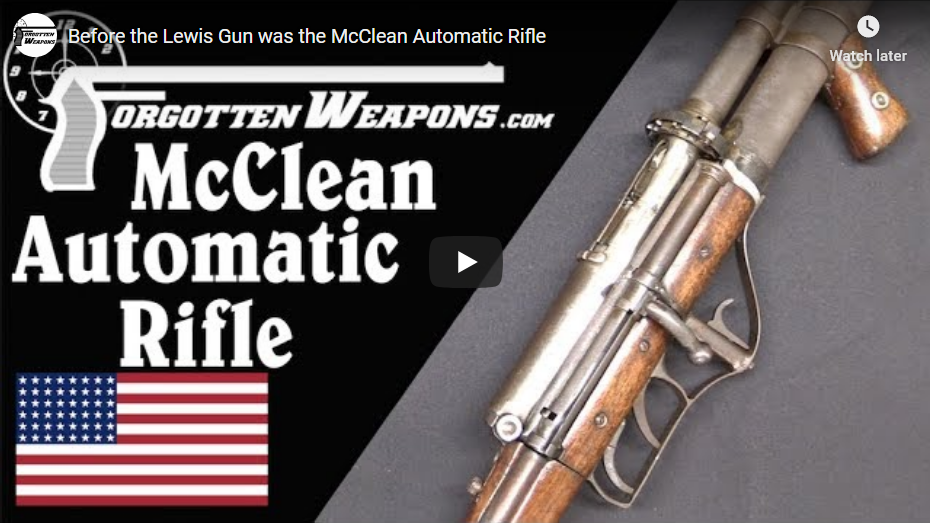
Virtual Tour: Newly Renovated Cody Firearms Museum

Filed under: History, USA, Weapons — Tags: , , , , , — Nicholas @ 02:00

Forgotten Weapons
Published on 27 Jul 2019

http://www.patreon.com/ForgottenWeapons

Cool Forgotten Weapons merch! http://shop.bbtv.com/collections/forg…

The Cody Firearms Museum has spent many months undergoing a complete renovation and rebuilding, and is now back fully open to the public. The new layout has not just improved visibility and put the guns in better display context, but it has actually increased the number of guns on display. When I last filmed at Cody, most of the really interesting unusual stuff was back in the vaults — but during filming this past week we had to take a remarkable number of guns out of displays to film. This is a great improvement — the Cody museum was always good, but this new design has made it the best firearms museum in the United States, in my opinion.

Visiting? The CFM is part of the 5-museum complex that is the Buffalo Bill Center of the West in beautiful Cody, Wyoming:

https://centerofthewest.org

Contact:
Forgotten Weapons
PO Box 87647
Tucson, AZ 85754

September 17, 2019

From Bolt Action Lee to LMG: The Charlton Automatic Rifle

Filed under: History, Military, Weapons, WW2 — Tags: , , , , — Nicholas @ 02:00

Forgotten Weapons
Published on 26 Jul 2019

http://www.patreon.com/ForgottenWeapons

Cool Forgotten Weapons merch! http://shop.bbtv.com/collections/forg…

The Charlton automatic rifle is one of very, very few examples of a conversion from bolt action to self-loading rifle actually working reasonably well. Typically this sort of project founders in expense and unreliability. Charlton, however, was able to take his vision for providing the New Zealand Home Guard with a new weapon made form obsolete surplus and bring it fully to fruition, with 1500 guns made. They were never fired in anger, but allowed New Zealand to put all of its Bren guns into the field while retaining the Charltons as emergency weapons in case of Japanese invasion. Sadly, virtually all were destroyed in a warehouse fire after the war, leaving them extremely rare today.

Many thanks to the Royal Armouries for allowing me to film and disassemble this very scarce automatic rifle! The NFC collection there – perhaps the best military small arms collection in Western Europe – is available by appointment to researchers:

https://royalarmouries.org/research/n…

You can browse the various Armouries collections online here:

https://royalarmouries.org/collection/

For the whole detailed story on Charlton manufacture, and to download a copy of the manual, check my web site article here:

https://www.forgottenweapons.com/light-machine-guns/charlton-automatic-rifle/

Contact:
Forgotten Weapons
PO Box 87647
Tucson, AZ 85754

September 14, 2019

Apocrypha: WW1 Tour Sneak Peek

Filed under: Cancon, France, History, Military, WW1 — Tags: , , , — Nicholas @ 04:00

Forgotten Weapons

Want to see all of my Apocrypha behind-the-scenes videos? They are a perk for Patrons who help directly support Forgotten Weapons:

http://www.patreon.com/ForgottenWeapons

Cool Forgotten Weapons merch! http://shop.bbtv.com/collections/forg…

I partnered up with Military Historical Tours to guide a World War One battlefield tour this week, and I figured I’d give you a bit of a peek into it. We are looking at the war chronologically, starting with a day in Belgium to look at the German attack in 1914, visiting the remains of Fort de Loncin in Liege and the Mons cemetery. Next was a day in Ypres for the stagnation into trench warfare in 1915, seeing the Dodengang up on the Yser and then the Bayernwald trenches, Passchendaele Museum, and Kitchener’s Wood. The year of 1916 marks two of the huge Western Front offensives, and we took one day on the Somme (Beaumont-Hamel and Lochnagar Crater) and a day at Verdun (Driant’s command post and tomb, Fort Vaux, Fleury Village, and the Douaumont Ossuary). Today we move to the Chemin des Dames to look at the disastrous French Nivelle Offensives at the Plateau de Californie and the Caverne du Dragons, and tomorrow we will see the arrival of significant American forces and the Hundred Days Offensive the ended the war, through the sites of Les Mares Farm, Belleau Wood, and Blanc Mont. We have a great group of people along, and it’s been a lot of fun, if quite sobering at times. I hope to see you on a future tour!

https://www.miltours.com

Contact:
Forgotten Weapons
6281 N. Oracle #36270
Tucson, AZ 85704
How Does It Work: Lever Delayed Blowback

Filed under: Technology, Weapons — Tags: , , — Nicholas @ 02:00

Forgotten Weapons
Published on 11 Jul 2019

http://www.patreon.com/ForgottenWeapons

Cool Forgotten Weapons merch! http://shop.bbtv.com/collections/forg…

Lever-delayed blowback is a relatively uncommon action system, although it is applicable to a wide variety of firearms and has been successfully used in submachine guns, rifles, and light machine guns. It uses a principle of mechanical disadvantage on a fulcrum lever to force a mass to accelerate rearward while the bolt remains closed. This allows the effective weight of the moving parts to be amplified, resulting in a lighter firearm.

Contact:
Forgotten Weapons
PO Box 87647
Tucson, AZ 85754

September 12, 2019

Book Review: The Ross Rifle Story

Filed under: Books, Cancon, History, Military, Weapons, WW1 — Tags: , , , , — Nicholas @ 04:00

Forgotten Weapons
Published on 8 Sep 2019

http://www.patreon.com/ForgottenWeapons

Cool Forgotten Weapons merch! http://shop.bbtv.com/collections/forg…

The Ross Rifle Story is the Bible of Ross rifle collecting — it is the only substantial reference work on the subject and it has a tremendous amount of information about the development of the Ross. However, it is also one of the worst-edited firearms reference books I am aware of. It has a second Table of Contents on page 85 — need I say more than that?

Well, I will. The photographs are black and white and often too dark or too light. Beyond it really being two separate manuscripts printed back to back, the organization is really lacking. Finding information in the book is sometimes very difficult, as the subject matter jumps around a lot. The story of the Ross — especially separating the civilian and military development — is a pretty complicated one, and even a well-edited book on the subject might be a bit difficult to parse. This book is really bad at times.

But for all that, it does have the information (with only a few errors), and it’s the only book that does. If you are interested in the Ross, this is a must-have book despite its problems.

A second printing was run in 2002, and not much effort was put into marketing it. Despite the online prices all being $300+, the seller still has a couple dozen copies remaining as of this writing. To order one (for $100 plus shipping, via PayPal) email him at ross.rifle.story@sympatico.ca .

Contact:
Forgotten Weapons
6281 N. Oracle #36270
Tucson, AZ 85704
« Newer PostsOlder Posts »

Powered by WordPress