Quotulatiousness

November 17, 2019

Book Review: Arms & Accoutrements of the Mounted Police 1873-1973

Filed under: Books, Cancon, History, Weapons — Tags: , , — Nicholas @ 02:00

Forgotten Weapons
Published on 15 Sep 2019

http://www.patreon.com/ForgottenWeapons

Cool Forgotten Weapons merch! http://shop.bbtv.com/collections/forg…

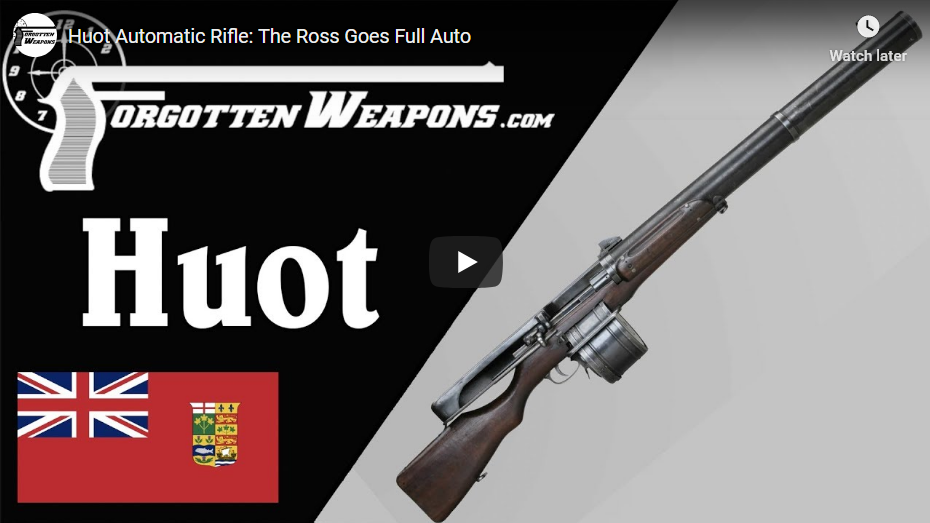
The Royal North West Mounted Police (later merged with the Dominion Police to become the RCMP — Royal Canadian Mounted Police) are an interesting and often overlooked element of the western frontier. We Americans tend to only think about the Old West up to northern Montana and Idaho, but of course things were not that much different on the other side of the border in Alberta, Saskatchewan, Yukon, and the other western provinces. Starting with their founding in 1873, law enforcement in western Canada was the domain of the RNWMP, and they used an interesting mixture of British Empire arms and American arms – Colts and Adams; Winchesters and Sniders.

Arms and Accoutrements of the Mounted Police, 1873-1973 covers the whole range or arms and accessories used by the Mounties. Handguns, rifles, shotguns, machine guns, swords, lances, and even artillery (yes, they had some artillery). This is a great book for any Canadian collector, and quite interesting for the rest of us as well — a window into a police agency we don’t often think about.

The book is generally out of print, but as of this writing still in stock for $35 at JoeSalter.com:

https://www.joesalter.com/category/pr…

Contact:
Forgotten Weapons
6281 N. Oracle #36270
Tucson, AZ 85704
November 14, 2019

Shooting the Mle 1866 Chassepot

Filed under: France, History, Military, Weapons — Tags: , , — Nicholas @ 02:00

Forgotten Weapons
Published on 14 Sep 2019

http://www.patreon.com/ForgottenWeapons

Cool Forgotten Weapons merch! http://shop.bbtv.com/collections/forg…

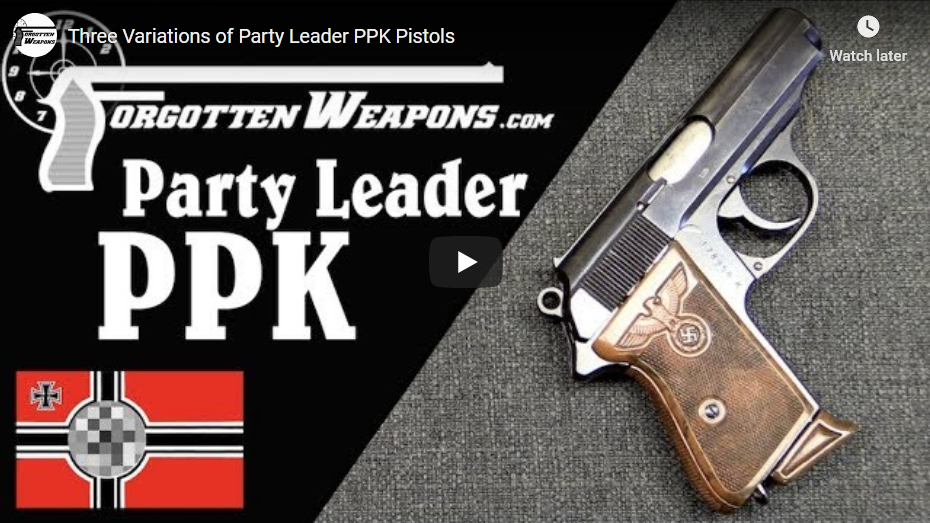
A while back, I visited @CanadianGunLover, and we did a bit of shooting with an 1866 Chassepot. I lost track of the footage and only just now found where I had put it – so today is some Chassepot shooting! A couple things to note; the rifle sounds very quiet because my microphone was clipping it off, sorry. And yes, we are on a very short range bay – it’s what was available at the time. The ammo we are using was made by CGL, and was a bit longer than military spec, which led to the bolt getting tight to close more quickly that would have originally been the case. But even with that, the rapidity of fire offered by the Chassepot completely outclassed all the muzzleloaders still in service.

Want a whole lot more information on the Chassepot? Well, it’s covered in the first chapter of my book, Chassepot to FAMAS: French Military Rifles: https://www.headstamppublishing.com/f…

Contact:
Forgotten Weapons
6281 N. Oracle #36270
Tucson, AZ 85704
November 11, 2019

Too Late and Not Much Better: the Austen Mk II SMG

Filed under: Australia, History, Military, Weapons, WW2 — Tags: , , — Nicholas @ 02:00

Forgotten Weapons
Published on 12 Sep 2019

http://www.patreon.com/ForgottenWeapons

Cool Forgotten Weapons merch! http://shop.bbtv.com/collections/forg…

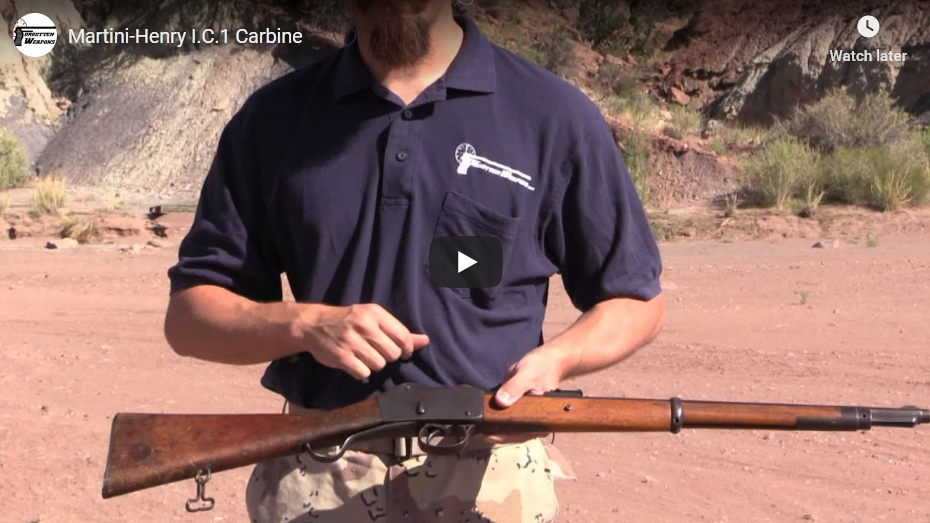
The story of the Austen submachine gun did not end when the Mk I guns were pulled from combat service in 1944. The manufacturer continued to work on an improved version, which would be ready in 1946, after the end of World War Two. Only 200 were made total, and they were both adopted and declared obsolete in August of 1946.

The changes made to the MkII Austen mostly involved increasing the use of die cast components, which fit the manufacturer’s tooling and experience. The front grip and magazine well casting was enlarged, and the whole rear assembly was made into a second cast part integrating the rear sight, stock mounting and latch, and fire control group. The one significant internal change was to remove the firing pin from the telescoping recoil spring assembly and make it an integral feature of the bolt face.

Many thanks to the Royal Armouries for allowing me to film this very rare artifact! The NFC collection there – perhaps the best military small arms collection in Western Europe – is available by appointment to researchers:

https://royalarmouries.org/research/n…

You can browse the various Armouries collections online here:

https://royalarmouries.org/collection/

Contact:
Forgotten Weapons
PO Box 87647
Tucson, AZ 85754

November 10, 2019

The Diggers’ Dismay: Austen Mk I SMG

Filed under: Australia, Britain, History, Military, Weapons, WW2 — Tags: , , — Nicholas @ 02:00

Forgotten Weapons
Published on 11 Sep 2019

http://www.patreon.com/ForgottenWeapons

Cool Forgotten Weapons merch! http://shop.bbtv.com/collections/forg…

When World War Two began, Australia saw little threat of invasion from Germany (obviously), and sent a substantial number of firearms to Britain to help arm the Home Guard there, which was seriously concerned about the possibility of a German invasion. When Japan and Australia declared war in December 1941, the situation immediately became much more serious for Australia, and the government began looking for arms.

At the start of the war, there were effectively no submachine guns at all on the continent — just a couple examples. These included an MP38 somehow confiscated by Australian customs, which would take on a significant role. Australia looked to Britain for arms, and they were sent a technical data package to produce the Sten MkII — but found the design pretty underwhelming. Australian manufacturers decided to make their own improvements to it, using elements of the MP38 — specifically the sealed telescoping recoil spring system and underflowing stock. They also gave the gun a pair of pistol grips for improved handling.

The Owen SMG was going into production at this time, and had been in development for a while under private civilian supervision. The Australian Sten, called the Austen, lacked that developmental track record and it went into production without passing proper trials. It faced significant manufacturing delays and reliability problems, and was not well liked by troops — in contrast to the excellent Owen. The Austen was ultimately made in smaller numbers than the Owen (19,914 of the MkI guns) and pulled from combat use in August of 1944.

Many thanks to the Royal Armouries for allowing me to film this rare artifact! The NFC collection there — perhaps the best military small arms collection in Western Europe — is available by appointment to researchers:

https://royalarmouries.org/research/n…

You can browse the various Armouries collections online here:

https://royalarmouries.org/collection/

Contact:
Forgotten Weapons
PO Box 87647
Tucson, AZ 85754

November 8, 2019

Cooey: The Unassuming Canadian Workhorse

Filed under: Cancon, History, Weapons — Tags: , , — Nicholas @ 04:00

Forgotten Weapons
Published 6 Nov 2019

http://www.patreon.com/ForgottenWeapons

Cool Forgotten Weapons merch! http://shop.bbtv.com/collections/forg…

Cooey is a brand name that will be immediately recognized by Canadians, but pretty much unknown everywhere else. Founded in 1903 by Herbert Cooey, the company would produce a series of simple and practical firearms that became hugely popular and common in Canada. The basic models were the single-shot .22 Model 39, the bolt action magazine-fed .22 Model 60, and the break action single-shot Model 84 shotgun (and the Model 64 semiautomatic .22, made after the company was sold out of the Cooey family). These are not particularly exciting firearms, but they are ubiquitous across Canada, having served Canadian families reliably for a
century now.

Contact:
Forgotten Weapons
6281 N. Oracle #36270
Tucson, AZ 85704
November 7, 2019

Boer Lee-Speed Rifle from the Jameson Raid

Filed under: Africa, Britain, History, Military, Weapons — Tags: , , , — Nicholas @ 02:00

Forgotten Weapons
Published on 29 Aug 2019

The Jameson Raid in December 1895 was one of the key events in the lead to the second Boer War. Leander Jameson took a force of about 600 men on December 1895 to make a surprise attach on Johannesburg, incite support for the multitude of British miners who felt oppressed by the Boer government, and ultimately bring in British forces to take over. The plan failed in a complete and public manner, though, as Boer forces knew about it from the very beginning. The raiding party was ambushed at Doornkop outside Johannesburg and forced to surrender. It was a tremendous public relations setback for supporters of British intervention.

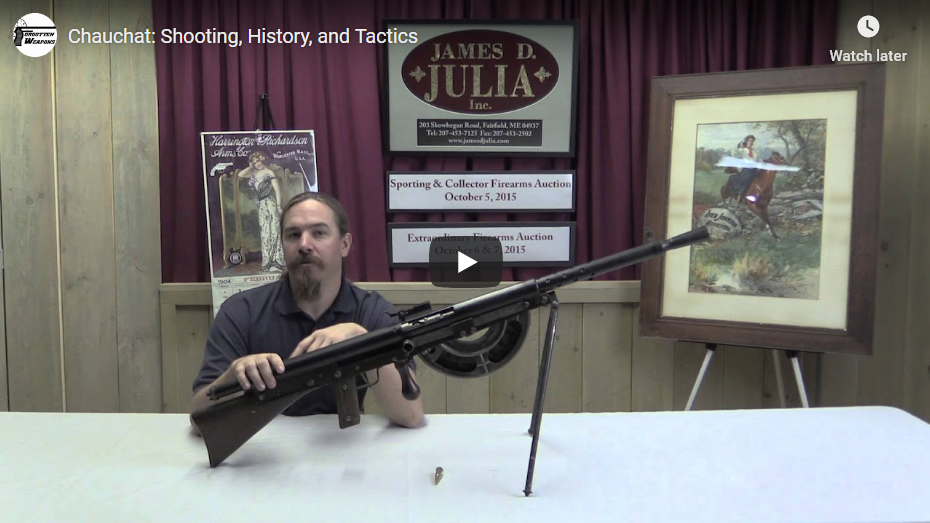
In addition, the Boers captured a nice selection of very modern arms, including half a dozen artillery pieces, a dozen Maxim machine guns, and about 500 Lee rifles. This Lee-Speed is one of them, given to a Boer burgher who used it in the war that eventually broke out in 1899. He carved his name into the stock, as was common for the Boers. This is one of only two known and documented surviving rifles from the Jameson Raid, and it is both a very cool piece of history for that reason as well as a great time capsule of the Lee-Metford MkI pattern of rifle. Most of the early Lees in British military service were updated and repurposed over the decades, and finding them in original configuration is quite difficult today.

http://www.patreon.com/ForgottenWeapons

Cool Forgotten Weapons merch! http://shop.bbtv.com/collections/forg…
Contact:
Forgotten Weapons
PO Box 87647
Tucson, AZ 85754

November 4, 2019

The Ross in the Great War: The Mk III (and MkIIIB)

Filed under: Cancon, History, Military, Weapons, WW1 — Tags: , , , , , — Nicholas @ 02:00

Forgotten Weapons
Published 1 Nov 2019

http://www.patreon.com/ForgottenWeapons

Cool Forgotten Weapons merch! http://shop.bbtv.com/collections/forg…

While the MkII (1905) iteration of the Ross rifle had resolved most of the major mechanical problems from the MkI, it retained a number of characteristics that the Canadian (and British) military was not fond of. In particular, it was not suited to the use of stripper clips. Starting with experimentation on sporting rifles, Ross substantially redesigned the action for the final 1910 pattern – aka the MkIII.

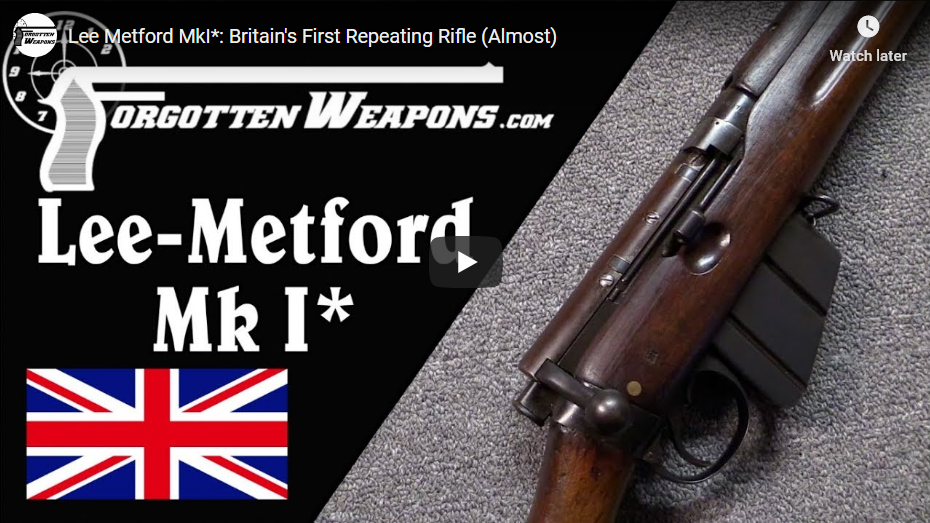
The MkIII used a rotating bolt as before, but with six locking lugs in two rows of three, instead of two large lugs as the MkI and II. The magazine was replaced by a conventional single-stack design, with a stripper clip guide built into the receiver, and with a nicely adjustable rear aperture sight. This would be the model to equip the Canadian infantry who went to Europe to fight in 1914 and 1915 – and it is there that a new set of problems would begin to plague the Ross.

In keeping with its sporting legacy and reputation for outstanding accuracy, the MkIII Ross was made with a rather tight chamber, optimized for the excellent-quality Canadian production .303 ammunition. Britain had been forced to massively increase ammunition supply as the war lengthened, and British standards had widened to accept ammunition that was really of rather questionable quality. The SMLE rifles used by British forces had chambers made to accommodate this, but the Rosses did not. Canadian ammunition was supposed to follow the Canadian troops, but it was usually diverted to other services because of its high quality, and the Canadians left with ammo that was difficult to chamber or extract in the Ross.

This led to men having to beat open rifle bolts, which led to damage to locking lugs, in a viscous circle of escalating problems. By the time of the German gas attack at Ypres, Canadians were ditching their Rosses for Lee Enfields by the thousands, despite specific orders to the contrary. General Haig finally had enough of the issues, and ordered the Ross removed from combat in 1916, to be replaced by the SMLE (which was finally available in sufficient numbers to arm the Canadian troops).

Contact:
Forgotten Weapons
6281 N. Oracle #36270
Tucson, AZ 85704
November 3, 2019

Ross MkII: Sorry, We’ll Get it Right This Time

Filed under: Cancon, History, Military, Weapons, WW1 — Tags: , , , — Nicholas @ 02:00

Forgotten Weapons
Published 30 Oct 2019

http://www.patreon.com/ForgottenWeapons

Cool Forgotten Weapons merch! http://shop.bbtv.com/collections/forg…

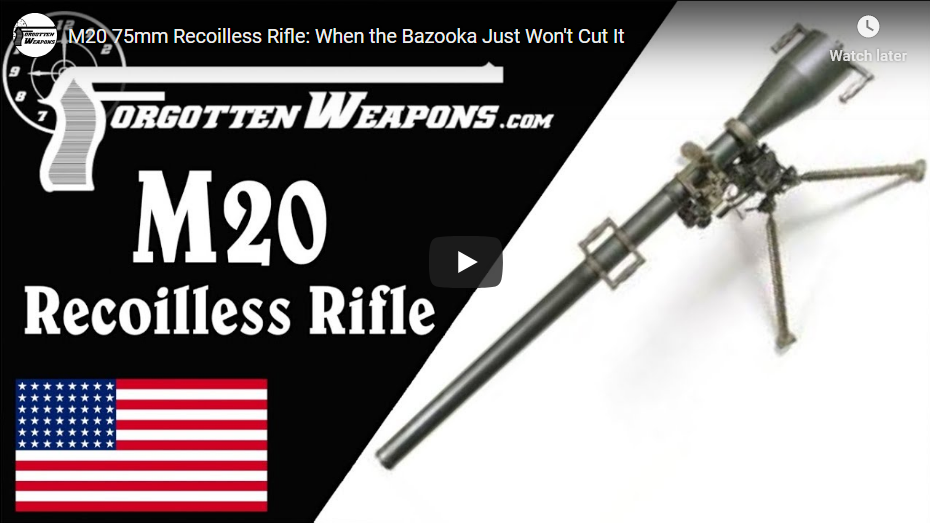
The many significant problems with the Model 1903 / MkI Ross rifle had quickly led to the development of the improved MkII design. This strengthened many parts, including the sights, nosecap, bolt latch, and more. The receiver was made thicker, and an extra set of cams added to make the bolt throw smoother. Primary extraction was added by way of angling the locking lugs. Mk II rifles began to come off the Ross Rifle Company production line in December of 1905.

Between its introduction and its replacement by the MkIII in 1912, the MkII Ross would undergo 5 changes in type, mostly involving different rear sights. However, a distinct “long” pattern was also made, designated the MkII**. This model had a longer barrel and some mechanical changes, and was also fitted with a rear aperture sight and stripper clip guide. These would be very successful in competition shooting at the time, and helped salvage the reputation of the Ross after the problems of the MkI.

Overall, 13,700 “long” MkII Rosses were made along with 124,000 of the “short” type. They did see use in World War One, as armament for Canadian artillery units. They were also used as training rifles by the military, and the US government also purchased 20,000 of the MkII3* pattern for use training the multitudes of new US soldiers joining up to fight in Europe.

Many thanks to the private collectors who allowed me access to their rifles to make this video!

Contact:
Forgotten Weapons
6281 N. Oracle #36270
Tucson, AZ 85704
November 2, 2019

Sir Charles Ross was a Jerk: The Martello Tower

Filed under: Cancon, History, Military, Weapons, WW1 — Tags: , , , , — Nicholas @ 02:00

Forgotten Weapons
Published 29 Oct 2019

Note: These towers were built by the British, not the French. Sorry!

http://www.patreon.com/ForgottenWeapons

Cool Forgotten Weapons merch! http://shop.bbtv.com/collections/forg…

Sir Charles Ross was really a jerk sometimes. Not the sort of guy you would want to go into business with.

Contact:
Forgotten Weapons
6281 N. Oracle #36270
Tucson, AZ 85704
Here are the Wikipedia pages on Sir Charles Ross, Bart. and Martello towers.

November 1, 2019

Ross MkI: Canada’s First Battle Rifle

Filed under: Cancon, History, Military, Weapons — Tags: , , , , , — Nicholas @ 02:00

Forgotten Weapons
Published 28 Oct 2019

http://www.patreon.com/ForgottenWeapons

Cool Forgotten Weapons merch! http://shop.bbtv.com/collections/forg…

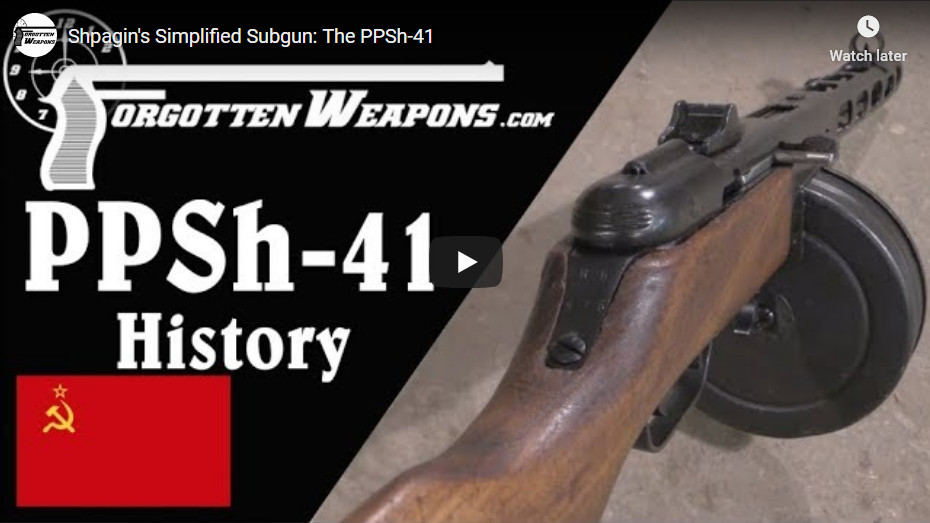
Sir Charles Ross was heir to a very wealthy Scottish family, and was a talented if temperamental engineer. He took an interest in firearms and their design, and worked with American and English connections to produce a line of his own straight-pull sporting rifles. Upon returning from the Boer War he looked to expand into the military market.

At this same time, the Canadian government was looking to replenish its arms supplies after the war, and requested Enfield rifles form the British. The request was turned down, as Britain did not have enough supply to spare any for the Canadians. The Canadians were expected to construct their own factory to make rifles of he standard British pattern. Well, the Canadian government was not eager to invest that sort of capital into the project. They investigated buying arms elsewhere, but the consensus was that Canada’s armaments should come from either Britain or from within Canada itself. No good solution was apparent until Sir Charles Ross stepped in.

Ross offered to fund the construction of a factory himself, and use Canadian labor and industry to manufacture Ross rifles for the military. This seemed like an excellent solution — for zero initial cash outlay, the Canadian government would get rifles both designed and produced domestically! The rifles would be chambered for the standard .303 British cartridge, thus handling the British objections about arms compatibility (Ross pointed out that the British themselves used something like 7 different patterns of rifle at the time).

In 1902, Ross and the Canadian government signed a contract for 12,000 rifles to be made in 1903 and 10,000 per year thereafter, at the price of $25 each. In addition to the Canadian military, the Royal North West Mounted Police also adopted the new Ross rifle. Deliveries did not actually begin until 1905, and when they did plenty of disturbing problems arose. The rifles proved fragile and unreliable — and a weak bolt latch periodically allowed the bolt to fall completely out of the rifle on parade drill — not a good start!

Only 10,000 of the Mark I Ross rifles were made, and an improved Mark II pattern would follow as quickly as Ross could make it a reality.

Many thanks to the private collectors who allowed me access to their rifles to make this video!

Contact:
Forgotten Weapons
6281 N. Oracle #36270
Tucson, AZ 85704
October 29, 2019

1918 Mauser Tank Gewehr

Filed under: Germany, History, Military, Weapons, WW1 — Tags: , , — Nicholas @ 02:00

Forgotten Weapons
Published on 23 Aug 2015

http://www.patreon.com/ForgottenWeapons

Cool Forgotten Weapons Merch! http://shop.bbtv.com/collections/forg…

Hammer price: $4,750

Germany was the first country to produce a purpose-built antitank rifle, in response to the major Entente tank attack at Cambrai. The design was pretty simple, basically a scaled-up Mauser 98 with 4 locking lugs chambered for the massive 13.2mm TuF cartridge. It would perforate about 20mm of armor plate at 100m, which was nicely effective on WWI tanks. By the end of the war more than 15,000 had been made. Interestingly, a bunch of them ended up at Springfield Armory, where they were used in the development of the .50 BMG cartridge.

October 26, 2019

Chassepot Needle Rifle

Filed under: France, History, Military, Weapons — Tags: , , , , — Nicholas @ 02:00

Forgotten Weapons
Published on 30 May 2015

Sold for $1,150 (with three other rifles).

The Chassepot was the French answer to the Dreyse needle rifle, and also the only other needlefire rifle to see major military service. It was adopted in 1866 and served as a primary French infantry rifle until being replaced by the 1874 Gras rifle, which was basically a conversion of the Chassepot to use self-contained brass cartridges. The concept of a needle rifle is that of a breech loading rifle using paper cartridges. A primer was set in the base of the cartridge (inside the paper), and upon firing the needle-like firing pin would pierce the paper cartridge and detonate the primer and powder charge. The system always had trouble with sealing the breech, but was still a significant improvement over muzzleloading rifles.

October 23, 2019

The Guns of John Pedersen

Filed under: History, Military, USA, Weapons — Tags: , , , , — Nicholas @ 02:00

Forgotten Weapons
Published on 10 Apr 2015

Sold for:
$34,500 (Pedersen Device)
Failed to sell (Model 10 shotgun)
(Model 12 in a later auction)
$1,610 (Model 14 carbine, with one other rifle)
(Military Ithaca 37 in a later auction)
$2,588 (Remington 51 pistol with one other pistol)
(Irwin-Pedersen M1 Carbine in a later auction)
$16,100 (Vickers-Pedersen rifle)
$74,750 (Pedersen GY rifle)

John Pedersen was one of the more prolific and successful gun designers in American history, having even been described by John Moses Browning as “the greatest gun designer in the world”. And yet, many people only know about Pedersen from his unsuccessful toggle-locked rifle or his WWI Pedersen Device that never saw action. In truth, Pedersen’s work included a number of very successful sporting rifles and shotguns that many shooters would still recognize today. While looking through the guns at Rock Island on my most recent trip there, I realized that they had examples of virtually every one of Pedersen’s guns — so I figured I should do an overview of the man’s work.

October 22, 2019

Papers Behind the Pistol: Mauser’s Archives on the Model 1910

Filed under: Business, Germany, History, Weapons — Tags: , , , , — Nicholas @ 04:00

Forgotten Weapons
Published 21 Oct 2019

http://www.patreon.com/ForgottenWeapons

Cool Forgotten Weapons merch! http://shop.bbtv.com/collections/forg…

Courtesy of the Paul Mauser Archive, we have a very cool opportunity to look at the documentation and paperwork behind a production pistol design, from beginning to commercial sales. This sort of documentation is rare for pre-WW1 German small arms in general, and the Mauser Model 1910 pistol is a very rare example of a complete set of archival papers surviving. So, what we can look at is the whole development process from behind the scenes at Mauser. Initial design drawings, blueprints, glass-plate photography, internal assembly instructions, costing, corporate-level final approval, marketing, and final print manuals. Thanks to Mauro Baudino for supplying these original documents for me to show you!

The Paul Mauser Archive (http://www.paul-mauser-archive.com/in…) is a wealth of information for researchers, and make sure to check out the recent book on Mauser coauthored by Mauro Baudino and Gerben van Vlimmeren:

https://amzn.to/2LIXH3p

Contact:
Forgotten Weapons
6281 N. Oracle #36270
Tucson, AZ 85704
October 20, 2019

Webley Model 1904

Filed under: Britain, History, Military, Weapons — Tags: , , , — Nicholas @ 02:00

Forgotten Weapons
Published on 24 Feb 2015

Sold for $109,250.

The Model 1904 was basically the first working automatic pistol made by Webley (there was a 1903 toolroom experiment, but it didn’t really work). Like all the Webley automatic that would follow, it was designed by William Whiting. The 1904 was the company’s first effort at making a semiautomatic sidearm for the British military, so it was chambered for the .455 cartridge (a special rimless version made by Kynoch, after early experiments using the .455 rimmed revolver ammunition caused lots of problems stacking in magazines). It is a rather huge handgun, and uses a short recoil mechanism with two separate locking blocks. This particular one is s/n 23 – very few were made before it was rejected in military trials and Webley redirected its efforts toward smaller commercial pistols.

http://www.forgottenweapons.com

Theme music by Dylan Benson – http://dbproductioncompany.webs.com

« Newer PostsOlder Posts »

Powered by WordPress