Quotulatiousness

June 7, 2018

Trade war with Canada justified because the White House was torched in the War of 1812

Filed under: Cancon, Economics, History, USA — Tags: , , , — Nicholas @ 05:00

Maybe it was intended as a joke, but what else was Trump supposed to say when Trudeau actually asked what actual security threat Canada poses to the United States?

During a phone call with Canadian Prime Minister Justin Trudeau last weekend, President Donald Trump reportedly justified his decision to impose tariffs on Canadian steel and aluminum by invoking … the burning of the White House by British troops during the War of 1812.

At least, that’s what CNN is reporting this afternoon. Here’s how they put it, citing information from “sources familiar with the call: “Trudeau pressed Trump on how he could justify the tariffs as a ‘national security’ issue. In response, Trump quipped to Trudeau, ‘Didn’t you guys burn down the White House?'”

That is, presumably, a reference to the War of 1812, during which British troops invaded Washington, D.C., and set fire to the White House. Despite the war’s name, the burning of the White House actually occurred in 1814. And it wasn’t carried out by Canadians because, well, Canada did not become an independent nation until 1867 — or 53 years after the White House burned.

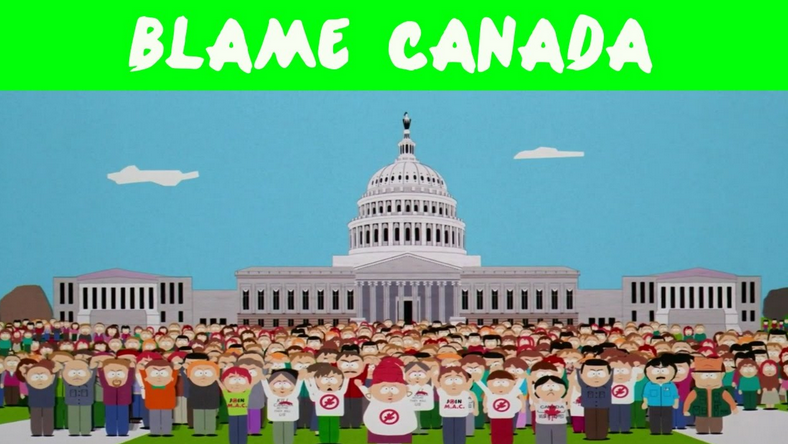
But, sure, whatever. The War of 1812 makes Canada a national security threat in the year 2018, despite our having been allies for the last century, sharing the world’s longest unpatrolled border, and exchanging more than $620 billion in goods last year. The rationales for war with Canada in Canadian Bacon and South Park: Bigger, Longer & Uncut are more grounded in reality.

April 9, 2018

Portrait of a protectionist

Filed under: China, Economics, USA — Tags: , — Nicholas @ 03:00

The latest of a long-running series by Don Boudreaux, all entitled “A Protectionist is Someone Who…”:

… if he is among the many protectionists (such as Donald Trump or Peter Navarro) who, finding meaning in bilateral trade accounts, detects danger for country A if country A has a trade deficit with country B, should also find danger for each private producer that has a trade deficit with another private producer. That is, if this protectionist were consistent in his views, the same reasoning that leads him to worry about America’s trade deficit with China should also lead him to worry about, say, The Trump Organization, Inc.’s trade deficit with each of its many suppliers, including with each of any janitors that The Trump Organization, Inc. has on its payroll or otherwise contracts to hire. (After all, I’m quite certain that no janitor hired by The Trump Organization, Inc., buys as much from The Trump Organization, Inc., and The Trump Organization, Inc., buys from any janitor.)

So why does the allegedly genius businessman who is now president of the United States – and whose many fans believe him to “tell it like it is” – not judge his own private company by the same standards that he so confidently insists are appropriate for judging Americans’ trade with non-Americans? After all, if China’s trade surplus with America really is evidence either of Chinese chicanery or of the incompetence of American leaders (or both), then it must also be true that a Trump Organization janitor’s trade surplus with The Trump Organization, Inc. is evidence either of that janitor’s chicanery or of the incompetence of Trump Organization leaders (or both).

March 23, 2018

Who’s gaslighting who?

Filed under: Media, Politics, USA — Tags: , , , , — Nicholas @ 03:00

Nick Gillespie on the gaslighting of America:

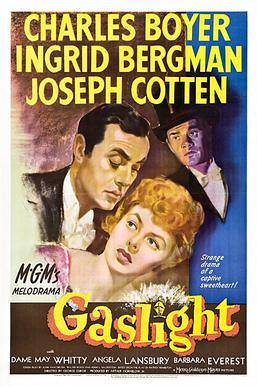
The election of Donald Trump hasn’t just brought a poorly mannered reality TV star into the Oval Office and our newsfeeds. It has also popularized the concept of gaslighting, or tricking rational people into thinking they’re insane. The phrase is a reference to a 1944 movie in which Charles Boyer tries to convince his young bride, played by Ingrid Bergman, that she’s nuts so he can cover up a murder and search for jewels hidden in the house they share (the house’s gas lamps flicker due to Boyer’s late-night searches, hence the title).

Go Google “Donald Trump is gaslighting America” and you’ll find a constantly growing list of stories from outlets ranging from CNN to Teen Vogue to Vanity Fair to Refinery 29. The common thread is some variation on the theme that Trump’s brazen lies, misstatements, and rhetorical sleights of hand are designed to drive us all batshit crazy by contradicting what we plainly see happening to the United States of America. At rock bottom, Trump’s detractors believe there is simply no way that he could have legitimately won the 2016 election, especially against Hillary Clinton, of whom President Obama said, “I don’t think that there’s ever been someone so qualified to hold this office.”

Yet it’s not Donald Trump who is gaslighting us, but Hillary Clinton, whose complete and utter refusal to take responsibility for her loss is at the heart of what’s so weird about contemporary America. You read it here first: Trump is the effect and not the cause of the ongoing mudslide that is the daily news. Ever since about 11 p.m. ET on November 8, 2016, Clinton and her allies in the media have worked overtime to provide increasingly fanciful explanations for her failure to beat the least-credible candidate ever in American history. Sometimes the apologias are conscious, sometimes not, but nobody really wants to accept what happened (in fact, even Trump himself couldn’t believe it for a while, which helps explain why his transition was so incompetent). The result is a non-stop barrage of stories, some more credible than others, that Trump’s win was the result of some sort of sinister machination that has undermined our democracy. Following from this interpretation every aspect of his behavior, from his bro-ing out with Vladimir Putin to his indifferent spelling and capitalization while tweeting, is just one more sign that we are living in a world gone stark, raving mad.

To be fair, Trump trades in delusion, such as his insistence that violent crime is at or near all-time highs, that massive voter fraud was the only reason he lost the popular vote, and that his inauguration was the most-viewed ever. These sorts of patently false statements do indeed constitute attempts at gaslighting. So, too, do his unconvincing denials about a sexual relationship with the porn star known as Stormy Daniels, his doctor’s statement that he only weighs 239 lbs. (giving rise to the “Girther” movement), and his fanciful stories about how Japanese car makers use bowling balls in quality-assurance tests. Against such a backdrop, even the president’s so-far-not-contradicted denial that his campaign colluded with Russia seems like a form of gaslighting. In fact, everything he says seems like it’s intended to drive us insane or at least seriously question basic reality.

March 19, 2018

Meet “the gay Canadian vegan who [created] ‘Steve Bannon’s psychological warfare mindf*ck tool'”

Filed under: Politics, Technology, USA — Tags: , , — Nicholas @ 03:00

In the Guardian, Carole Cadwalladr talks to the young developer at Cambridge Analytica who says he’s the one who created the tools that the Trump campaign used to sway opinions their way:

The first time I met Christopher Wylie, he didn’t yet have pink hair. That comes later. As does his mission to rewind time. To put the genie back in the bottle.

By the time I met him in person, I’d already been talking to him on a daily basis for hours at a time. On the phone, he was clever, funny, bitchy, profound, intellectually ravenous, compelling. A master storyteller. A politicker. A data science nerd.

Two months later, when he arrived in London from Canada, he was all those things in the flesh. And yet the flesh was impossibly young. He was 27 then (he’s 28 now), a fact that has always seemed glaringly at odds with what he has done. He may have played a pivotal role in the momentous political upheavals of 2016. At the very least, he played a consequential role. At 24, he came up with an idea that led to the foundation of a company called Cambridge Analytica, a data analytics firm that went on to claim a major role in the Leave campaign for Britain’s EU membership referendum, and later became a key figure in digital operations during Donald Trump’s election campaign.

Or, as Wylie describes it, he was the gay Canadian vegan who somehow ended up creating “Steve Bannon’s psychological warfare mindfuck tool”.

In 2014, Steve Bannon – then executive chairman of the “alt-right” news network Breitbart – was Wylie’s boss. And Robert Mercer, the secretive US hedge-fund billionaire and Republican donor, was Cambridge Analytica’s investor. And the idea they bought into was to bring big data and social media to an established military methodology – “information operations” – then turn it on the US electorate.

March 13, 2018

Trump Is ‘Destroying’ Regulations

Filed under: Bureaucracy, Government, USA — Tags: , — Nicholas @ 06:00

ReasonTV
Published on 12 Mar 2018

The president’s first year of slowing down regulations shattered previous records. But will politics and legislative inaction stall things from here?
—–
With his tariffs on aluminum and steel, family-separating crackdowns on nonviolent illegal immigrants, and authoritarian musings about executing drug dealers, President Donald Trump can be a libertarian’s nightmare.

Except when it comes to regulatory reform.

The Competitive Enterprise Institute (CEI), a Washington, D.C.-based free market think tank that focuses on the administrative state, tallied up the number of regulations in Trump’s first year in office and found, “This is the lowest count since records began being kept in the mid-1970s.” CEI Vice President for Policy Clyde Wayne Crews told Reason that, “I haven’t seen personally anything like the regulatory reductions that have taken place.”

What’s producing these results? In part, the president’s early executive orders mandating that with every new regulation two old ones get killed, and that the net imposed regulatory cost of each agency and department be zero. Trump has also appointed some real reformers to change the way the executive branch does business: Scott Gottlieb at the Food and Drug Administration (FDA), Ajit Pai at the Federal Communications Commission, Betsy DeVos at the Department of Education, and Rick Perry at the Department of Energy.

Chief among the anti-bureaucratic bureaucrats is Neomi Rao, administrator of the obscure-sounding but important Office for Regulatory Affairs (OIRA), which applies cost-benefit analyses to proposed regulation while making sure it still aligns with legislative intent. Rao, who came to the administration after founding the Center for the Study of the Administrative State at George Mason University’s Antonin Scalia Law School, tells Reason that, “We have done more in our first year than any president since we’ve been keeping records, which is back to Reagan.”

President Trump appears genuinely enthusiastic about this push, talking up FDA reforms in both of his State of the Union addresses, and crowing at a December red-tape-cutting ceremony that, “The never-ending growth of red tape in America has come to a sudden screeching and beautiful halt.”

But Crews warns that a midterm will be much harder for Trump to navigate than the comparative honeymoon of 2017. “I think in 2018, he’s going to have a much tougher time meeting the goal,” Crews said. “When you’re acting alone as president and you can’t make law on your own, the barrier that you run into is you run out of low-hanging fruit.”

Produced by Matt Welch and Alexis Garcia. Camera by Todd Krainin, Ian Keyser, Mark McDaniel, and Jim Epstein.

March 8, 2018

Trump’s ideology is more like psychology

Filed under: Government, Politics, USA — Tags: , , , — Nicholas @ 03:00

Jonah Goldberg on how Trump’s instincts are far more significant to his behaviour than any residual attachment to an ideology:

On the left, there’s an enormous investment in the idea that Trump isn’t a break with conservatism but the apotheosis of it. This is a defensible, or at least understandable, claim if you believe conservatism has always been an intellectually vacuous bundle of racial and cultural resentments. But if that were the case, Commentary magazine’s Noah Rothman recently noted, you would not see so many mainstream and consistent conservatives objecting to Trump’s behavior.

Intellectuals and ideologically committed journalists on the left and right have a natural tendency to see events through the prism of ideas. Trump presents an insurmountable challenge to such approaches because, by his own admission, he doesn’t consult any serious and coherent body of ideas for his decisions. He trusts his instincts.

Trump has said countless times that he thinks his gut is a better guide than the brains of his advisers. He routinely argues that the presidents and policymakers who came before him were all fools and weaklings. That’s narcissism, not ideology, talking.

Even the “ideas” that he has championed consistently — despite countervailing evidence and expertise — are grounded not in arguments but in instincts. He dislikes regulations because, as a businessman, they got in his way. He dislikes trade because he has a childish, narrow understanding of what “winning” means. Foreigners are ripping us off. Other countries are laughing at us. He doesn’t actually care about, let alone understand, the arguments suggesting that protectionism can work. Indeed, he reportedly issued his recent diktat on steel tariffs in a fit of pique over negative media coverage and the investigation into Russian election interference. His administration was wholly unprepared for the announcement.

News emanating from the White House is always more understandable once you accept that Trumpist policy is downstream of Trump’s personality.

March 6, 2018

Winning a Trade War Isn’t “Easy”… It’s Impossible!

Filed under: Business, Economics, Politics, USA — Tags: , , , — Nicholas @ 04:00

Foundation for Economic Education
Published on 5 Mar 2018

Trump wants to impose tariffs on steel and aluminum? Bad idea. We’ve been down this road before. Trade wars are short-sighted and economically destructive.

Ever wondered what caused the Great Depression? Check out this free eBook (available in mobi, epub, PDF, and audiobook formats!) by Larry Reed, “Great Myths of the Great Depression:”

https://fee.org/resources/great-myths-of-the-great-depression/

February 16, 2018

Trump’s Fake News: Deep Breaths and Fact-Checking Might Just Save America

Filed under: Humour, Media, Politics, USA — Tags: , , , — Nicholas @ 04:00

ReasonTV
Published on 15 Feb 2018

President Trump labels whatever he dislikes as “fake news,” and makes up his own, but the media is part of the problem. In the latest “Mostly Weekly,” Andrew Heaton provides a solution.

—————-

Donald Trump tends to call whatever he dislikes “fake news,” from inconvenient facts to unfavorable reporting. Even though the President himself is less a font of truth and more a spigot of self-serving exaggeration and insults.

But Trump isn’t all wrong when he labels reporting against him as fictitious or slanted. Reporters have become so enraged with the President that in their hurry to lambast him, they sometimes forget about fact checking and standard quality controls.

The result is that actual “fake news” is slipping into major news outlets. When hit pieces turn out to be false, they bolster Trump’s claims about the media and discredit journalists in the eyes of his supporters.

In the latest “Mostly Weekly” Andrew Heaton explains the relationship between “Trump Derangement Syndrome,” fake news, and a solution for the media.

Mostly Weekly is hosted by Andrew Heaton, with headwriter Sarah Rose Siskind.

Script by Sarah Rose Siskind with writing assistance from Andrew Heaton and Brian Sack.

Special guest appearance by Brian Sack as “TV doctor”

Edited by Austin Bragg and Siskind.

Produced by Meredith and Austin Bragg.

Theme Song: Frozen by Surfer Blood.

February 8, 2018

Dilbert’s Scott Adams Explains How He Knew Trump Would ‘Win Bigly’

Filed under: Books, Media, Politics, USA — Tags: , — Nicholas @ 06:00

ReasonTV
Published on 7 Feb 2018

The cartoonist-turned-political-prognisticator talks about Trump, “master persuaders,” and winning arguments in a “world where facts don’t matter.”

—————-

In 2015, Scott Adams, the cartoonist behind the massively popular comic strip Dilbert, boldly predicted that Donald Trump would win the 2016 presidential election.

“The reason I can see it coming is because I have studied this field of persuasion,” says Adams. “I saw this Trump character and he had the full tool set.” The 60-year-old Bay Area resident doesn’t agree with Trump on many political issues, but his prediction was enough for his to receive death threats from embittered Hillary Clinton supporters.

Adam’s new book, Win Bigly: Persuasion in a World Where Facts Don’t Matter, is both a detailed analysis of how Trump reframed political rhetoric during the 2016 campaign and a guide to how all of us can communicate more effectively and persuasively.

Adams sat down with Reason‘s Nick Gillespie in front of a live audience in San Francisco to talk about his book, his “extreme liberal” views, the popularity of his live broadcasts with followers via Twitter, and why Trump is a “master persuader.”

Cameras by Zach Weismueller, Paul Detrick, and Justin Monticello. Edited by Ian Keyser.

February 2, 2018

Trump Diminishes the Power of the State in Our Heads: Wired Co-Founder Louis Rossetto

Filed under: Books, Liberty, Technology, USA — Tags: , , , — Nicholas @ 06:00

ReasonTV
Published on 1 Feb 2018

Louis Rossetto, co-founder of Wired magazine, on politics, the dot-com bubble, and his new novel, Change Is Good: A Story of the Heroic Era of the Internet.
—————-
“Trump is a refreshing reminder that the guy that’s in the White House is another human being,” says Louis Rossetto, the co-founder of Wired and author of the new book Change Is Good: A Story of the Heroic Era of the Internet. “The power of the state is way too exalted [and] bringing that power back to human scale is an important part of what needs to be done to correct the insanity that’s been going on in the post-war era.”

In 2013, Rossetto was the co-recipient of Reason‘s very first Lanny Friedlander Prize, an award named after the magazine’s founder that’s handed out annually to an individual or group who has created a publication, medium, or distribution platform that vastly expands human freedom. Rossetto is also a longtime libertarian who knew Friedlander personally.

While still an undergraduate at Columbia University, Rossetto co-authored a 1971 cover story in the New York Times Magazine titled “The New Right Credo — Libertarianism,” writing that “[l]iberalism, conservatism, and leftist radicalism are all bankrupt philosophies,” and “refugees from the Old Right, the Old Left and the New Left, they are organizing independently under the New Right banner of libertarianism.”

Reason‘s Nick Gillespie sat down with Rossetto to talk about his new book (the paper version was lavishly designed and crowdfunded on Kickstarter), the 1990s tech boom, and why Trump “diminishes the power of the state” in our heads.

Interview by Nick Gillespie. Edited by Ian Keyser. Cameras by Paul Detrick, Justin Monticello, Zach Weissmueller.
Machinery by Kai Engel is used under a Creative Commons license.
Photo Credits: Chris Kleponis/ZUMA Press/Newscom – Jonathan Ernst/Reuters/Newscom – Abaca Press/Douliery Olivier/Abaca/Sipa USA/Newscom

“Europeans like the U.S. to be a great St. Bernard dog that takes the risks and does the work, while they hold the leash and give the orders”

Filed under: Britain, Europe, Media, Politics, USA — Tags: , , , — Nicholas @ 03:00

Conrad Black on how the European press in general — and the British press in particular — view the United States:

A week in England has enabled me to see more clearly the absurdity of the depths and length that the political scandal-mongering in the United States has achieved. Most of the British media are anti-American anyway, and, like most of America’s so-called allies, Britain likes weak American presidents who are fluent and courteous, other than when they are themselves in mortal peril, at which point strong American presidents suddenly are appreciated. Generally, the Western European attitude toward the U.S. evolved from fervent and almost worshipful hope for rescue by Roosevelt, to appreciative, even grateful recognition for Truman and Marshall’s military and economic support of non-Communist Europe, while fretting whether America would “stay the course” (Mr. Churchill’s concern), to complacent patronization in the post-Suez Eisenhower-Dulles era. Europe, like most of the world, swooned over John F. Kennedy and genuinely mourned his tragic death, but it has been slim pickings since. Johnson was regarded as a boor and an amateur, and, on the left, a war criminal. Richard Nixon was regarded with suspicion and then the customary orchestrated opprobrium, though with grudging respect for his strategic talents. Presidents Ford, Carter, Reagan, George H. W. Bush, and George W. Bush were regarded as dolts, though Reagan, whose anti-missile defense plan was regarded with shrieks of derision and fear, was seen, long after he left office, as possibly useful. Clinton was likeable but déclassé, and Obama was greatly welcomed but ultimately a disappointment. The Europeans like the U.S. to be a great St. Bernard dog that takes the risks and does the work, while they hold the leash and give the orders.

With Donald Trump, the British and most Western Europeans have the coruscation of their dreams that the United States is a vulgar, completely materialistic, cultureless Darwinian contest of the most tasteless and unsavory elements, elevating people in their public life who excel at the country’s least attractive national characteristics. In the British national media there is almost never a remotely insightful or fair commentary on anything to do with President Trump. At one point last week, Ambassador John Bolton had what amounted to a debate with some academic British supporter of the Paris climate accord, and of feeble responses to all international crises, from Ukraine to Syria to North Korea. Both participants were speaking from remote locations and were on large screens, and the moderator’s questions were posed in such a provoking and tendentious manner to John Bolton that he began his last several responses with the stated assumption that the management of Britain’s national television network presumably approved of framing questions on such serious subjects in a deliberately dishonest way, and then answered effectively. The BBC correspondent in Washington uniformly referred to “Donald Trump” or just “Trump” and never to “President Trump” or to “the president,” as normal professional usage requires. The Economist, a distinguished magazine for many decades, follows the same route, referring to Mr. Trump as a “bad” or “poor” president, as if this were an indisputable and universally agreed fact.

The British, and to a large degree the major continental powers, slavishly repeat the Trumpophobic feed from the American national media and justify “Trump’s” view that most of the media propagate lies as a matter of policy, and that America’s allies are largely freeloaders — passengers of the Pentagon with no loyalty to the country that liberated them from Nazism and protected them from Soviet Communism. Senator McCain’s editorial criticism of the president in the New York Times two weeks ago, that his attacks on the press weakened democracy by demeaning a free press, is bunk. The president was closer, though, as is his wont, was slightly carried away, when he called the primal-scream newscasters and writers “enemies of the people.” They are even worse abroad.

January 12, 2018

President Oprah?

Filed under: Media, Politics, USA — Tags: , , , — Nicholas @ 03:00

I didn’t watch the TV or movie awards show that Oprah used to launch her presidential campaign test balloon, but many others did. Those who watched it generally came away very impressed, based on mentions in my various social media feeds. Those who read it later include skeptics like Colby Cosh:

The Oprah for President boomlet didn’t last long, did it? Oprah Winfrey is somebody who has been discussed occasionally as a semi-serious presidential candidate since the early 1990s. The talk-show hostess accumulated so much cultural and financial capital so quickly, once she became a national television figure, that the thought has always been universal: if she really wanted to run, it is hard to see how she could be stopped.

Indeed, if the Americans elected her, she would undoubtedly turn out to have the same sort of presidential “pre-history” that Donald Trump did. People had been making “President Trump” jokes for ages, although we never noticed quite how many of those jokes there were until they all came true and weren’t jokes anymore.

On Sunday night, Oprah give an acceptance speech for a lifetime-achievement award at the Golden Globes, and people found it so stirring that it started a mini-wave of “Oprah 2020” references and remarks on social media. What was most interesting about the speech was not its intensity or its profundity, but the fact that it was, self-evidently, designed as a political candidate’s address.

[…]

If you would like a Hollywood liberal president, or any president other than the one the United States has, criticizing Oprah goes against your immediate partisan interests. (At least it probably does. Is anyone really too sure about the character of her personal core politics?) There is no sense denying it: if she did run, she probably could win. In 2016 we all got a stark lesson in just how much televisual familiarity, a large personal fortune, and control of media attention can accomplish in a presidential election.

And, of course, she has enormous charisma. Even those of us who think her influence on American culture has been baleful must acknowledge there is something magnificent and stately about her, and that she represents the American dream about as well as any individual human could. Financially, Donald Trump can only dream of having her track record — and, probably, her fortune.

It doesn’t mean she should be president. One almost suspects that the Oprah 2020 trial balloon might have enjoyed more success if it had been launched six months ago. Amid the tearful liberal trauma that followed the defeat of Hillary Clinton, the Most Qualified Presidential Candidate Of All Time, the despairing temptation to seek a television president even more familiar than Trump was bound to be more powerful. The passage of time, combined with Ms. Clinton’s obnoxious re-litigation of a strategically dumb campaign, may have helped blue America regain its senses. This is, I think, good news. And not just for the liberals.

January 4, 2018

“This is what you get when you touch the Orb”

Filed under: Humour, Politics, USA — Tags: , , , — Nicholas @ 05:00

Jonah Goldberg thinks he’s identified the moment our timeline went screwy, sorta:

Ever since Donald Trump touched the Orb, praise be upon it, I’ve been making “This is what you get when you touch the Orb” jokes.

If you don’t know what I’m talking about, I’ll tell you: On his trip to the Middle East in May, President Trump, along with the Saudi king and the president of Egypt, laid his hands on a glowing white orb for two minutes (which strikes me as a long time to touch an orb).

The image was like a mix of J.R.R. Tolkien and 1970s low-budget Canadian sci-fi. It looked like they were calling forth powerful eldritch energies from the chthonic depths or perhaps the forbidden zone.

Ever since then, when things have gotten weird, I’ve credited the Orb. For instance, when the Guardian reported that sex between Japanese snow monkeys and Sika deer may now constitute a new “behavioral tradition,” I tweeted, “the Orb has game, you can’t deny it.” When Roy Moore, the GOP Alabama Senate candidate, was plausibly accused of preying on teenagers and many evangelical leaders rallied to his defense, invoking biblical justifications for groping young girls, I admired the Orb’s cunning. And when the bunkered Moore decided to give one of his only interviews to a 12-year-old girl, I sat back and marveled at the Orb’s dark sense of humor.

But I know in my heart that it’s not the Orb’s fault things have gotten so weird, for the simple reason that rampant weirdness predates the Orb-touching by years.

I have a partial theory as to why, and it doesn’t begin with Trump. It begins with a failure of elites and the institutions they run.

December 29, 2017

2017 wasn’t all doom and gloom and Trump tweet wars

Veronique de Rugy manages to find three things that 2017 produced that somehow didn’t kill millions of Americans (so far, as far as we know):

First, President Donald Trump just signed a historic reduction in the corporate income tax rate, from 35 percent — the highest of all industrialized nations — to 21 percent. And except for a one-time repatriation tax, the U.S. will no longer tax most profits made by businesses overseas.

Both changes should boost economic growth and American workers’ wages. Moreover, the reform removes many of the distortions that discourage companies from investing foreign-earned income in the United States and prompt them to use tax avoidance techniques.

Second, this was a very good year for deregulation. Cutting taxes isn’t the only way to boost growth and raise wages; innovation may matter even more. Getting rid of duplicative and outdated regulatory hurdles to innovation promises to have a real impact on our lives. That’s what the Trump administration, with the help of Congress, seems committed to doing.

When the president first got to the White House, for example, he froze many not-yet-implemented Obama-era regulations. These include the punishing overtime pay regulation, which would have increased the cost of employing workers and ultimately reduced their base compensation to offset the increase in overtime pay.

[…]

Last but not least are the sustained efforts by Sens. Pat Toomey, R-Pa., and Richard Shelby, R-Ala., to slow down the process that would restore the Export-Import Bank, a bastion of cronyism, to its full and former glory.

Appointing enough board members to give Ex-Im a full quorum would instantly restore the agency’s ability to sign off on deals above $10 million for the benefit of a handful of very large foreign and domestic corporations. By resisting, the two senators are fighting a lonely fight on behalf of the unseen victims of corporate welfare.

December 14, 2017

Cognitive dissonance in action – Net Neutrality partisans want TRUMP to control the internet

Jon Gabriel on the weird position Net Neutrality fans find themselves in … demanding that Il Donalduce himself, the most hated politician in Liberal America since Richard Nixon be the one to dictate how the internet is run:

If President Trump is some kind of digital facist, he sure has a funny way of going about it.

His FCC chairman is trying to remove government from the Internet, returning it to those dark, authoritarian days of 30 months ago — you know, when pretty much every website, app and online service we use was created.

Bizarrely, these net neutrality alarmists are demanding that Trump maintain control of the Internet, planting his administration firmly between citizens and whatever content they want to view or create.

Even if Democrats were running the show in Washington, how could federal meddling improve the Internet? Do they want the Web run by the bureaucrats who spent $2 billion to build a health care website that didn’t work? Do they want our privacy assured by those behind the National Security Agency?

Nevertheless, progressives insist that Trump regulate the Internet in the name of free speech. Perhaps he can do this between his tweets bashing the press.

[…]

If the FCC approves this new proposal, the worst of federal meddling online will be retired. Instead, the commission will simply require Internet service providers to be transparent about their service offerings. That way, tech innovators will have the information they need and consumers will know which plan works best for them.

In other words, Web users and creators will be back in control of the Internet instead of lawyers and bureaucrats. Just as they were for all but the past couple of years.

To ensure transparency, Pai made all his proposals public before the FCC vote Thursday. A big departure from the Obama administration’s methods, which kept its net neutrality rules secret until after they were approved.

Before the FCC’s heavy-handed intervention, we saw the creation of Amazon, Google and Twitter. If Washington removes these unnecessary regulations as expected, we’ll see the Internet continue to blossom.

And my daughters will get to watch their favorite YouTube celebrities complain about net neutrality for years to come.

« Newer PostsOlder Posts »

Powered by WordPress