Quotulatiousness

August 24, 2025

The Supreme Court of British Columbia has detonated a legal mine under all of Canada’s established property titles

Filed under: Cancon, History, Law, Politics — Tags: , , , — Nicholas @ 05:00

Conrad Black discusses just how much the Supreme Court of British Columbia’s decision on First Nations land claims in BC will undermine established property rights across the entire country:

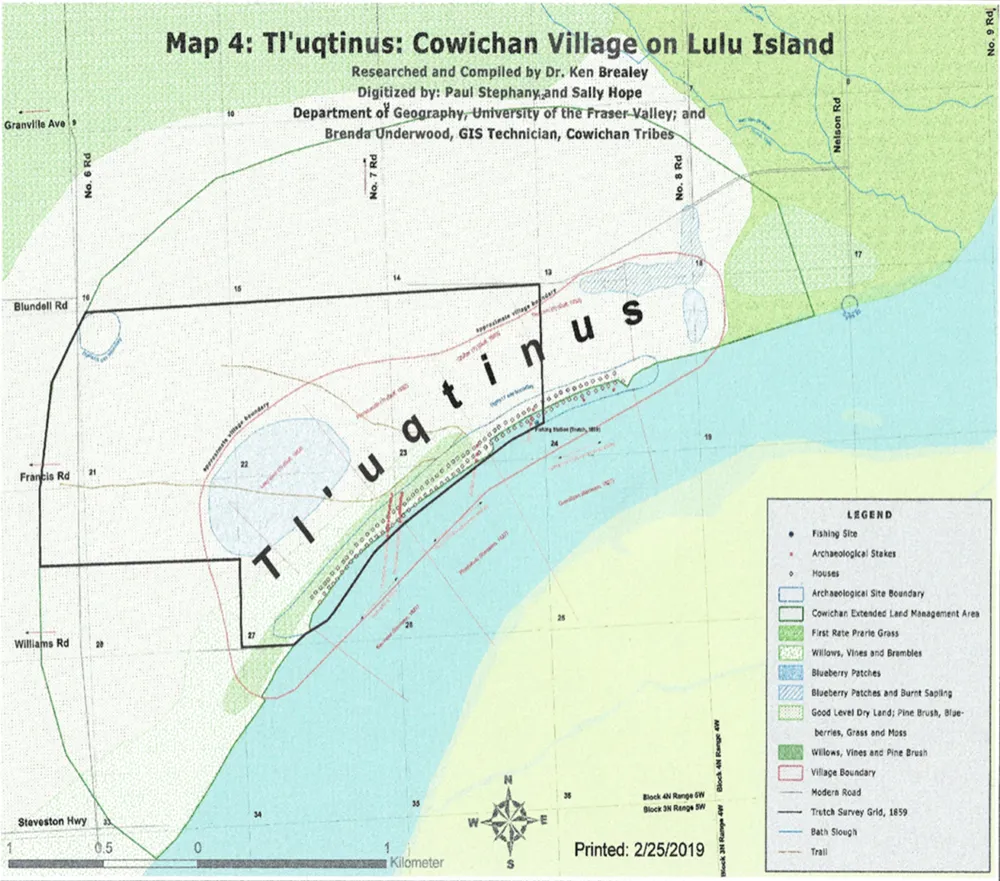
A map shows the Cowichan title lands outlined in black. (B.C. Supreme Court) Photo by B.C. Supreme Court

The decision earlier this month by the Supreme Court of British Columbia that the Cowichan tribes hold title over federal, city, and private land in Richmond B.C. that enjoys a higher legal status than the fee simple ownership of the current proprietors is outrageous but may have some positive consequences. The decades and $7 billion that have been spent or pledged for what is called the “reconciliation” process, has finally hit a stone wall. The almost universal desire to be fair to Indigenous people and where appropriate to compensate them for inequitable treatment, has finally collided with the entrenched economic rights and interests of every owner of real property in Canada, including those of Indigenous ancestry.

Inexplicable latitude has been granted to the thickening population of crusaders for indigenous rights. Even the NDP government of British Columbia, which has been pathologically addicted to prostrating itself at the feet of anyone or anything purporting to champion any definition of the Indigenous interest, was reduced to monosyllabic waffling by the court decision brought down by Justice Barbara Young. Premier David Eby’s office declared an ambition to continue seeking a negotiated resolution of the conflict between Aboriginal rights and common law rights of affected property owners, (including the municipal, provincial, and federal governments-of $100 billion of property in Richmond B.C. that is directly affected by the decision).

This is an understandable ambition, but in the circumstances, his government might have pressed the negotiations over the six years that this case has been litigated. Our judiciary has been addicted to truckling to almost any Indigenous claim, on the restricted occasions when the federal and provincial governments have even had the temerity to conduct a defense against them. Now the taxpayers’ negotiating position has been tanked by this ludicrous decision, which is being appealed.

If courts with authority for the whole country were to come to similar judgments, and we cannot doubt that activists will continue to push on an open door and quite rightly take all they can get, then every property title deed in the country is compromised, including the Houses of Parliament. There were only approximately 200,000 native people in all of what is now Canada when the French and British explorers and settlers came here starting at the end of the 15th century. Yet the implication of this ruling is that they legitimately owned all of Canada and that in the patchwork of numbered treaties and other agreements following absorption of the politically organized parts of Canada into the British Empire at the end of the Seven Years War in 1763, ancient and undocumented Aboriginal rights took precedence over any subsequent real estate law allocations of property rights under the common or civil law systems that gradually spread across Canada.

Given the activist preferences of courts across the country, we can expect to see similar cases pop up everywhere, as First Nations sensibly try to strike while the iron is hot and lay claim to as much of the real estate of Canada as the courts will let them … which might well be the entire land mass plus fishing rights.

August 19, 2025

Bad laws in Canada must be challenged in court

Filed under: Bureaucracy, Cancon, Government, Law, Media, Politics — Tags: , , , , — Nicholas @ 05:00

At Rigid Thinking, Damian Penny says — and I wholeheartedly agree — that it’s a good thing for laws to be challenged in the courts, but especially when it’s called an “emergency”:

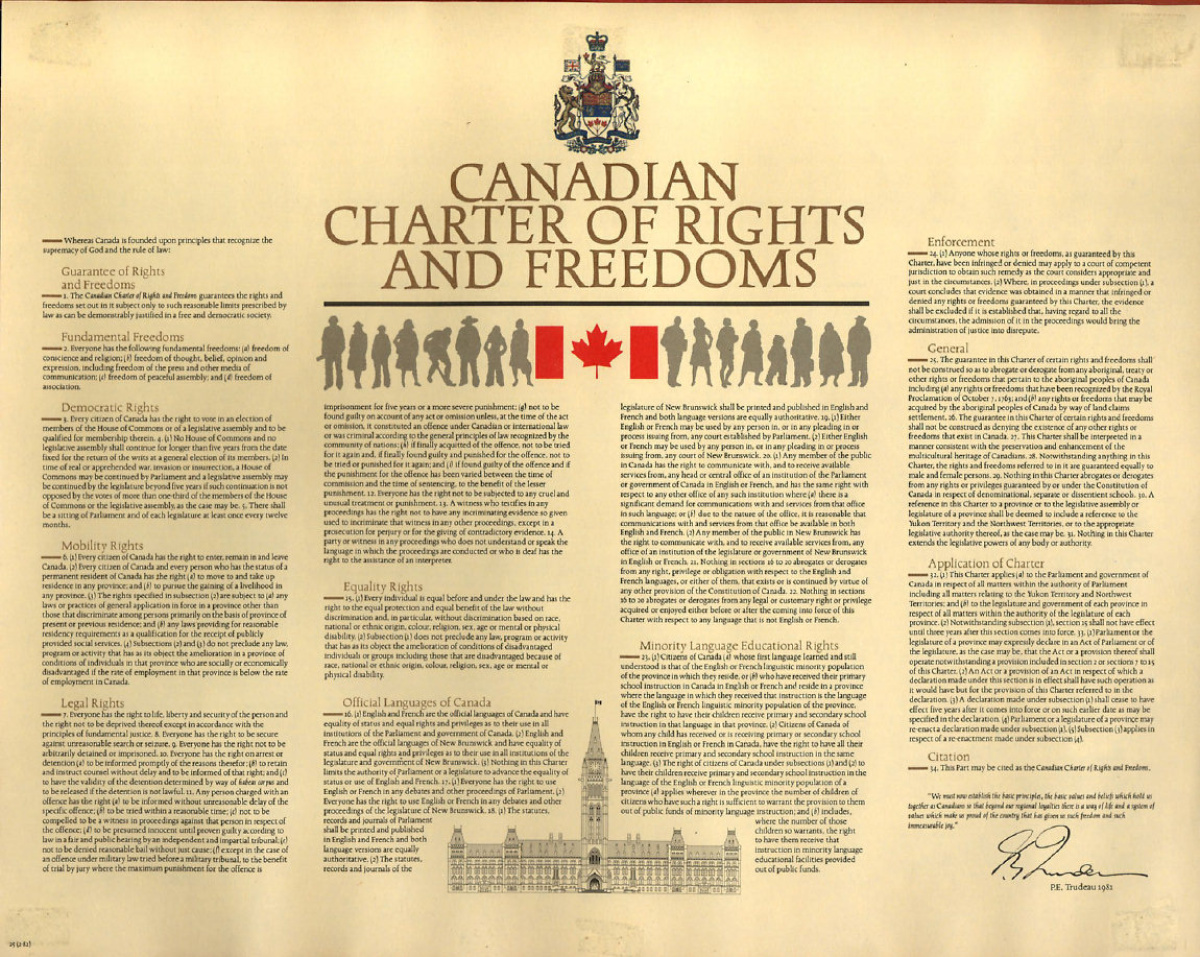
[Retired Canadian veteran Jeff] Evely, with the help of some conservative/libertarian-ish legal organizations, plans to challenge the woods ban in court as a violation of the Canadian Charter of Rights and Freedoms. This is not a popular position here in Nova Scotia (in online discussions, the phrases “Maple MAGA” and the venerable “American-style” come up a lot) and I am not sure he’ll be successful.

But, honestly, I give him credit for trying. In fact, I’d argue his Charter challenge is win-win for everyone in Nova Scotia, whether one supports, opposes or remains indifferent to the policy.

That’s not despite the pressing emergency posed by the forest fire threat, but because of it.

When we’re faced with a crisis, that’s precisely when governments are tempted to seize as much power and authority as possible – and, more importantly, when the public is more inclined to go along with it.

Hence, Trudeau I imposing War Measures Act provisions during the 1970 October crisis, the PATRIOT Act debate after 9/11, COVID-19 restrictions during the pandemic, Trudeau II using the Emergencies Act when the “Freedom Convoy” set up shop in downtown Ottawa, and now Premier Houston (whom I support, despite some misgivings about this issue) using sweeping measures to tramp down the forest fire risk.

And sometimes such powers are justified under the circumstances. Even self-professed libertarians will admit as such when the emergency is something they’re personally worried about, and when a leader from the “good” team is in power.1

But they aren’t always justified. And governments definitely can’t be trusted to handle such power responsibly the longer the “emergency” goes on.


  1. The rise of Trump has allowed many “libertarians” to reveal themselves as authoritarians, but that’s for another post.

August 13, 2025

“[A]ll those land acknowledgments weren’t just symbolic: they [were] advance notice”

Filed under: Cancon, Government, History, Law, Politics — Tags: , , , , , — Nicholas @ 03:00

In The Free Press, Rupa Subramanya discusses the — in my opinion, insane — court ruling in British Columbia that invalidated existing land titles in part of the Vancouver area, handing the titles to the properties over to the Cowichan First Nation:

A B.C. Supreme Court judge has granted several First Nations a portion of a 1,846-acre land claim on Lulu Island. B.C. Supreme Court

It turns out that all those land acknowledgments weren’t just symbolic. They may have been advance notice.

When Canada adopted its constitution in 1982, Prime Minister Pierre Trudeau slipped in a ticking time bomb: an explicit recognition of indigenous land rights without constitutional protection for property rights for other Canadians. That constitutional clause has fueled decades of lawsuits from First Nations — Canada’s indigenous people — asserting claims to huge portions of their ancestral territories.

Last Thursday, the British Columbia Supreme Court ruled that the Cowichan Nation holds “Aboriginal title” to about 1,846 acres of land on the south shore of Lulu Island in Richmond, and constitutionally protected rights to fish in the south arm of the Fraser River.

This 275,000-word judgment doesn’t just affect government-owned lands. It also includes private property now owned by third parties. So if you’re a Canadian who is a property owner in British Columbia and not indigenous, your claim on what you think you own has just been superseded by indigenous claims, called a “senior” claim in legalese. Down the road, your land or house could be expropriated by the federal government and turned over to an indigenous group that claims ownership.

That has already happened in Ontario, where three northern Ontario First Nations claimed in a lawsuit last month that a 14-acre public park in Kenora called Anicinabe Park is actually unceded territory and should be returned.

“In constitutional terms, aboriginal rights trump private property rights,” Bruce Pardy, a professor of constitutional law at Queen’s University in Kingston, Ontario, told me. He pointed to last November’s ruling by a New Brunswick judge that the court might be in position to order the government to seize private property and turn it over to an indigenous group making a claim on it.

As Prime Minister Mark Carney tries to fast-track major infrastructure projects — roads, bridges, pipelines, power plants, and more — all part of his plan to boost Canada’s global competitiveness and reduce reliance on the U.S., some of those ambitions might be snarled by indigenous land claims that take years to resolve. The British Columbia case began in 2019 and is considered to be the longest trial in Canadian history.

The day before the Cowichan Nation ruling in British Columbia, a Yukon First Nation announced that it would oppose all new mining claims on its traditional territory while a regional land-use plan is developed. Yukon First Nations leaders said that new claims are “unwelcome” and “unlawful”, and that they plan to challenge the mining industry to protect the land from further industrial activity.

Stefan Labbé in BIV last week:

A B.C. court has handed the Cowichan Tribes and other First Nations title over a chunk of federal and city land in Richmond that for centuries was used as a winter fishing village, before colonial administrators evicted the people who lived there.

The landmark Aug. 7 ruling was handed down after more than 500 days of litigation before the B.C. Supreme Court.

It gives the Cowichan Tribes, the Stz’uminus First Nation, Penelakut Tribe, Halalt First Nation — as well as the Lyackson First Nation in a supporting role — Aboriginal title over the Tribes’ historic Tl’uqtinus village on the southeast side of Lulu Island.

The ruling also gives the First Nations fishing rights at the mouth of the Fraser River.

In a joint statement, the First Nation plaintiffs said: “We raise our hands to the generations of leaders” who fought for the return of the Tl’uqtinus village lands and their fishing rights in the Fraser River.

B.C. Supreme Court Justice Barbara Young suspended her decision for 18 months “to allow for an orderly transition of the lands” in keeping with the principle of reconciliation.

“Now that this multi-year journey has concluded, it is my sincere hope that the parties have the answers they need to return to negotiations and reconcile the outstanding issues,” she wrote.

Jamie Sarkonak in the National Post wrote on Monday:

This case of “land back” in action (Cowichan Tribes v. Canada) casts a shadow over the country’s property system. It jeopardizes the default means of owning land in Canada — the estate in fee simple, where owners have exclusive rights to sell land — wherever Aboriginal title is found to exist.

Aboriginal title is the right of an Indigenous group to use, control and reap benefits from the land. It’s granted to claimant groups that can prove they are descended from the sole occupants of an area at the time the British asserted sovereignty. Unlike regular fee simple ownership, it’s enshrined in Section 35 of the 1982 Constitution and impossible to sell to anyone but the Crown.

The Cowichan claim covered the site of their summer village near the mouth of the Fraser River, where they had established continuous, exclusive seasonal occupancy dating back to European contact in the 1790s.

In 1846, the British Crown asserted sovereignty over that land and the rest of what would become B.C. The following years would see property being surveyed and auctioned off to public and private buyers — but not the Cowichan summer village. Instead, it was set aside in 1860 and continued to be used as a settlement for the group. Colonial officials considered the possibility of making it into a reserve, and took initial steps to do so. After B.C. joined Canada in 1871, however, the summer village was carved into parcels and sold over the years until 1914. Purchasers included private parties (including “well-placed men” in the colony) and even the municipality itself; some of the land purchased privately would eventually be sold back to the Crown. Today, about half of these lots are held by public bodies, with the other half falling under private ownership.

A map shows the Cowichan title lands outlined in black. (B.C. Supreme Court) Photo by B.C. Supreme Court

The question before the B.C. Supreme Court was whether the taking of those village lands was legal to begin with. Justice Barbara Young (a Harper appointee, by the way) concluded it was not.

August 10, 2025

Nova Scotia rediscovers the joys of dictatorial power

Filed under: Cancon, Government, Law, Liberty — Tags: , , , , — Nicholas @ 03:00

Clearly hankering for those glorious days when Canadians cowered in their homes due to the government’s public health diktats, Nova Scotia has now banned almost all outdoor activities in wooded areas across the province:

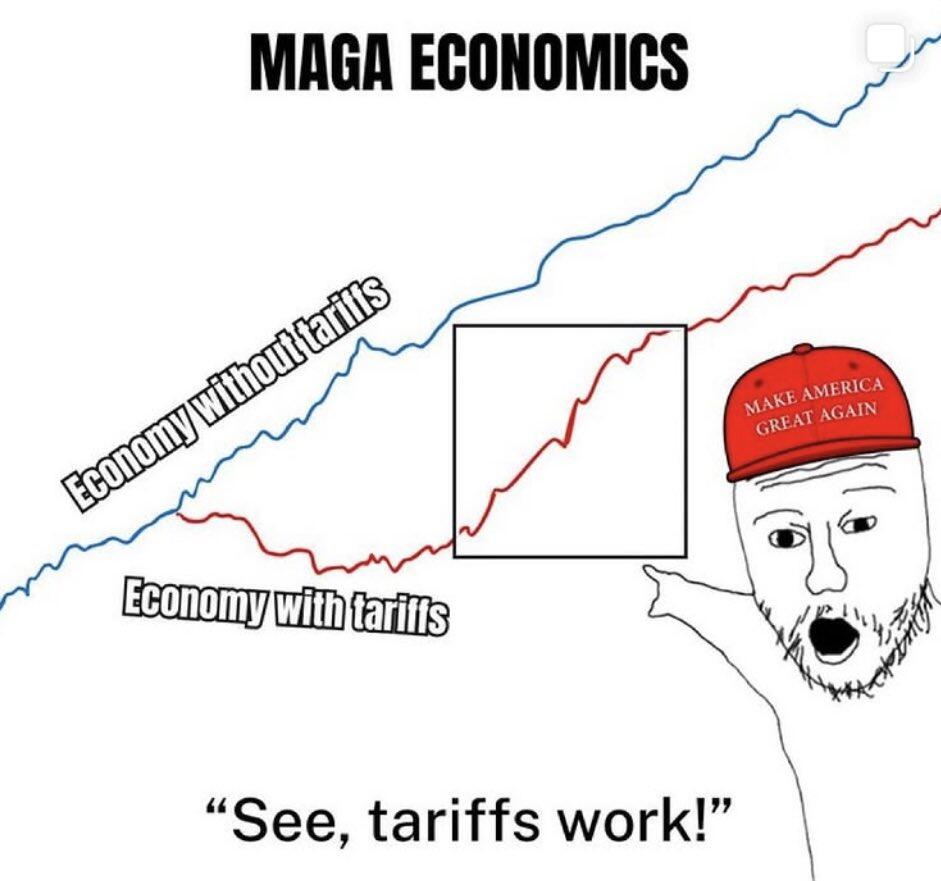
Image from Junk Economics

Nova Scotia’s Premier has decided that walking in the woods — yes, walking — is now so dangerous it carries a $25,000 fine.

Not for lighting a campfire. Not for running your ATV through dry brush. Not for tossing a cigarette. Just walking. In a province where there are currently four active wildfires … all under control.

This is not about preventing wildfires. This is about the politics of safety — and how governments turn fear into obedience.

I was born in Halifax, and my family’s roots run deep in Nova Scotia — deeper than the roads and towns that stand there now. Generations of my parents, grandparents, and great-grandparents — along with uncles, aunts, and cousins — are buried in its soil. My family weathered centuries of storms, wars, and political upheavals there, carving out a life from raw wilderness. This isn’t some detached policy rant from a distance. It’s personal. And it’s infuriating to watch a government use “safety” as a smokescreen for inaction, punishing people for living their lives while leaving the real problem unsolved.


The Problem They Didn’t Solve

In 2023, Nova Scotia suffered its worst wildfire season in history. At the time, the province had four Airbus H125 helicopters to fight fires.

In 2025, after all the smoke cleared and the “lessons learned” speeches were made, Nova Scotia … still has four Airbus H125 helicopters. Newer paint jobs, slightly upgraded safety features, same firefighting capacity. No fixed-wing aircraft. No surge ability. No major investment in manpower or pre-positioned crews.

The province didn’t fix the problem. They just hit refresh on the equipment list.

[…]


The Legal Overreach

The ban covers 89% of provincial land (Crown land) plus private forested land. Even if you own it, you can’t invite your mother over to walk her dog in your woods.

Section 7 of the Charter protects liberty, and the Forests Act was never intended to give cabinet the power to impose a province-wide walking ban. That’s legislative overreach wrapped in administrative convenience.

And the $25,000 fine? Grossly disproportionate — and in practice, quietly plea-bargained down because it’s more for optics than enforcement. A scarecrow penalty to make the Premier look tough on camera.


The Snitch Line and the COVID Flashback

Just like pandemic tip lines, Nova Scotia has invited citizens to report on each other for the crime of going for a picnic.

It’s hard to overstate how corrosive this is: encouraging suspicion, legitimising neighbour-against-neighbour policing, and normalising the idea that the government can criminalise any movement it decides is risky.

Of course, the commentariat is having a wonderful time of it:

And what may be the first issued fine under the provincial ban went to Jeff Evely:

July 21, 2025

Was Juan Perón a Fascist? The Cold War Origins of Peronism – W2W 037

TimeGhost History
Published 20 Jul 2025

Was Juan Perón really a fascist, a socialist, or something entirely different? In this episode of War 2 War, we explore the rise of Peronism in post–World War II Argentina and how Perón tried to position his country between the superpowers of the Cold War.

Through labour reforms, nationalist rhetoric, media control, and brutal repression of dissent, Juan and Eva Perón created a powerful populist regime that borrowed ideas from both fascism and socialism, while claiming to reject both. From Argentina’s “Third Way” to its complicated ties with the US, USSR, and even Nazi fugitives, we examine the ideology, contradictions, and legacy of Peronist rule.

Was Peronism a unique form of authoritarian populism, or just another face of fascism?

Join us as we uncover the foundations of Argentina’s Cold War identity and the true political nature of Juan Perón.
(more…)

July 17, 2025

A renewed push to ban AfD from contesting elections in Germany

Filed under: Germany, Government, Law, Liberty, Media, Politics — Tags: , , , , , , — Nicholas @ 03:00

eugyppius updates us on the state of play as the various smaller parties in Germany try to ban Alternative für Deutschland (AfD) which had risen from fringe status to being the most popular political party after the last federal election:

I’m far from a sensationalist, and I’ve repeatedly discounted the likelihood of an AfD ban – not least because the German establishment and the left in particular have good reasons to keep the AfD around. Lately, however, I’ve begun to appreciate that there are deeper, systemic forces working against the AfD in this case. These forces are beyond anybody’s control and if nobody does anything, they may well end in political catastrophe that is much bigger than any single party.

Since the end of the Merkel era, the German left has become thematically scattered, and so they have retreated to the only coordinating issue the German left has ever had, which is hating the right. As climatism started to fade, the social welfare state exceeded its limits and mass migration went sour, AfD bashing became the sole unifying principle for much of the SPD, Die Linke and the Greens. Hating the right is particularly important because it keeps leftist politicians and their activist class on the same page. Without a crusade against the right, a great chasm opens between the antifa thugs who want to smash the state and destroy capitalism on the one hand and the schoolmarm leftoid establishment functionaries in the Bundestag who want to mandate gender-neutral language for the civil service on the other hand. What is more, the firewall against the AfD splits the right and keeps the shrinking left in government. It is a win-win for leftoids everywhere.

Recent events, however, show why things cannot continue as they are now indefinitely. Over time, our Constitutional Court will begin to fill with leftist justices supported by the left parties, who like the rest of the left will also want to ban the AfD. Brosius-Gersdorf and Kaufhold are omens here. Right now the system is held in perfect balance; the left talks a big game about wanting to stamp out the AfD, but they can always justify their hesitation by saying the outcome of ban proceedings is too uncertain. When the necessary judicial majority for an AfD ban is finally secured in Karlsruhe, everything changes. At that point, there will be no excuse for not proceeding with a ban. The activists and the NGOs will take to the streets if their political masters in Berlin don’t begin the process. The CDU will be brought around by media smear campaigns and antifa intimidation.

Keep in mind that this is not about the AfD, but about imperatives within the left itself. No amount of moderation, polite messaging or triangulation on the part of the AfD can get the left to stop or pursue other goals. Unless some exogenous force introduces a new unifying obsession for the left parties and their activists, they will never stop gnawing on this particular chew toy.

Practically, this probably means that the AfD has an expiration date. If they can’t get into government at the federal level and if nothing else changes, they will find themselves facing ban proceedings before a court stacked with leftists who hate them in the next 10 or 15 years. The federal elections in 2029 seem like the last opportunity to normalise the AfD before this final escalation.

People in the CDU need to realise how serious this is, because their fate hangs in the balance as much as the fate of the populist opposition to the right of them. It is absolutely necessary that they break the firewall and enter some kind of arrangement with the AfD before it is too late. It doesn’t matter how much the press freaks out. It doesn’t matter how many violent antifa thugs take to the streets. It doesn’t matter how many party headquarters the leftists invade and vandalise. The firewall will fail in one direction or the other, and if it fails with an AfD ban, we are all in very deep shit.

June 30, 2025

DOGE couldn’t address the structural problems with the US government

At the Foundation for Economic Education, Mohamed Moutii looks at the reasons DOGE was unable to come close to achieving the lofty goals it was launched with:

DOGE’s biggest failure was its inability to deliver its promised sweeping transformation. From the start, its $2 trillion savings target was unrealistic. Cutting nearly 30% from a $7 trillion budget was never feasible, especially with politically untouchable programs like Social Security, Medicare, Medicaid, and Defense off the table.

Musk’s claim that eliminating waste alone could close the gap didn’t hold up. While most budget experts support cutting inefficiencies, they agree that waste isn’t the main driver of the fiscal crisis. Even slashing all discretionary spending would save only $1.7 trillion. The real pressure comes from mandatory programs, which account for nearly two-thirds of the budget, leaving only a quarter of spending truly up for debate.

As reality set in, Musk’s savings claims shrank from $2 trillion to just $150 billion. While DOGE cites $170 billion saved, independent estimates suggest closer to $63 billion, less than 1% of federal spending, with many claims either inflated or unverifiable. Some savings were credited to long-canceled contracts. Though headline-grabbing layoffs and cuts were made, they were often botched, forcing agencies to rehire staff or reverse course. Meanwhile, federal spending rose by $166 billion, erasing any gains. Trump’s fiscal agenda worsens the outlook with the first-ever $1 trillion defense budget, sweeping tax cuts, and protected entitlements — all while annual deficits approach $2 trillion.

Yet DOGE’s failures ran deeper than mere fiscal naiveté. What began as Musk’s role as a “special government employee” quickly expanded into an unchecked exercise of executive power, raising constitutional alarms. His team reportedly accessed classified data, redirected funds, and sidelined entire agencies — actions taken without Senate confirmation, potentially in violation of the Appointments Clause of the Constitution. Legal pushback swiftly followed, with fourteen states suing Trump and Musk over the constitutionality of Musk’s White House-granted authority.

Meanwhile, glaring conflicts of interest became impossible to ignore. Musk’s companies — X, SpaceX, and Tesla — hold $38 billion in federal contracts, loans, tax breaks, and subsidies while facing over 30 federal investigations. His push to dismantle regulatory agencies like the Consumer Financial Protection Bureau (CFPB) — while X launches the “X Money Account“, a mobile payment service subject to CFPB oversight — only deepened concerns. Musk was legally obligated to separate his business dealings from government decisions. One major result has been the impact on Musk’s reputation. Once hailed as a visionary for his promotion of electric cars, he is now viewed unfavorably by many former fans.

June 27, 2025

Germany’s Constitution, Erotica, and a Pastor’s Dignity – Rise of Hitler 19, July 1931

Filed under: Germany, History — Tags: , , , , , — Nicholas @ 04:00

World War Two
Published 26 Jun 2025

A rogue preacher breaks into the Reichstag and steals silverware, banned erotica, and the 1848 German Constitution. As Germany’s banks collapse and panic spreads, the press is captivated by the strange tale of Walter Wohlgemuth: pastor, thief, and accidental symbol of a republic in crisis.
(more…)

June 4, 2025

Arch-statist Mark Carney believes that Canadians “must earn their freedom everyday”

Filed under: Cancon, Government, Media, Politics — Tags: , , , , — Nicholas @ 03:00

At The Intrepid Viking, Roxanne Halverson examines what Prime Minister Mark Carney means when he tosses off comments like “Freedom is something you earn everyday”:

CBC’s David Cochrane interviewing Prime Minister Mark Carney in Ottawa.

It is surprising and disconcerting that so few pundits, commentators or even members of the Conservative Party, and for that matter are, not taking issue with a recent statement from our new Prime Minister in which he asserted, when talking about Canadians, that, “Freedom is something you earn everyday“.

Has anyone asked Mark Carney, this globalist World Economic Forum (WEF) acolyte, who is now Canada’s Prime Minister, what he meant when he made that statement? He made it during an interview with David Cochrane on CBC’s Power and Politics following on King Charles delivering the throne speech. He made the statement while talking about the great “crisis” Canada is and how his government has to get moving on major projects and our economy and solving the housing calamity. Of course he forget to mention that these problems are due to the policies of the previous Liberal government, for whom he was the financial advisor. He also does not explain that why, in the middle of such a crisis, his government has decided to take the summer off and not release of budget of any type, any time soon, but that’s another story.

Now, back to his claim that Canadians “must earn their freedom everyday”. Of course, Cochrane, being one of Carney’s main fanboys at CBC, didn’t probe any deeper to ask him what he meant by that statement. But it is a strange statement coming from the Prime Minister of a country where its constitution essentially says that individual freedom is a God given right. And given that Carney, with his recent visit to Rome to see the new pope, has made it clear that he is a devout practising Catholic, his belief in the Almighty is obviously not an issue. So again, what did he mean by that remark? Strange again, because just six weeks ago, before he was the Prime Minister, Carney posted the following statement on X.

    The Charter of Rights and Freedoms is the embodiment of our principles and our aspirations as Canadians. It must be protected — not wielded for political gain. Forty-three years on, the Charter remains strong — and it’s on all of us to defend it.

This apparently was in response to Conservative Leader Pierre Poilievre’s assertion that he would use the notwithstanding clause to override a judicial ruling against imposing consecutive life sentences on murderers, rather than concurrent sentences.

So given that, it would seem that Mr. Carney believes our rights regarding freedom are enshrined in the Charter. Carney, in his interview with Cochrane also maintained that Canada was still “the true north strong and free”. So then which is it when it comes to freedom from his perspective? Is it enshrined in the Charter, are we the true north “strong and free”, or must freedom be earned, and in what way?

May 31, 2025

“U.S. libertarians [are] the best friends Canada doesn’t know it has”

In the National Post, Colby Cosh sings the praises of American libertarians for their work in trying to dismantle some of Donald Trump’s dubiously Constitutional extensions of presidential power:

The James L. Watson Court of International Trade Building at 1 Federal Plaza in Lower Manhattan, New York City.
Photo by Americasroof via Wikimedia Commons.

The U.S. Court of International Trade (CIT) issued a decision Wednesday that annuls various salvos of surprise economic tariffs, including ones on Canada, that have been enacted by President Donald Trump since his inauguration in January. I won’t lie to you: I had the same initial reaction to this consequential news that you probably did, which was “Hooray!” and then “Huh, there’s a U.S. Court of International Trade?”

This court is surely unfamiliar even to most Americans, no doubt because much of its work involves settling issues like “Do hockey pants count as ‘garments’ or ‘sports equipment’ under customs law?” Nevertheless, the CIT does have exclusive jurisdiction over civil actions involving U.S. trade law. It’s just that no president has ever before rewritten the tariff schedule of the republic in the half-mad fashion of a child taking crayons to a fresh-painted wall.

The American Constitution, from day one, has unambiguously assigned the right to set international tariffs to Congress. Congress is allowed to delegate its powers to the president and his agents for limited or temporary purposes, but it can’t abandon those powers to him altogether. Defining this legal frontier is what the CIT was asked to do, and their demarcation of it will now swim upward through higher appellate courts (its decision has been put on hold in the meantime).

The lawsuit was actually two parallel suits raising overlapping objections to the tariffs. One was brought forward by 12 U.S. states, and the other was filed by a group of tariff-exposed American businesses, including manufacturers of bikes, electronics kits and fishing equipment. The latter set of plaintiffs was roped together by the usual posse of heroic libertarians and legal originalists, including George Mason University law prof Ilya Somin.

About 24 hours after Trump originally announced the “Liberation Day” worldwide tariffs, Somin quickly blogged about how insanely unconstitutional the whole idea was, and concluded his article essentially by saying “I’m darn well gonna do something about this nonsense”. I don’t mean to suggest he deserves primary credit; I only intend to call attention, once again, to U.S. libertarians being the best friends Canada doesn’t know it has.

May 29, 2025

The King of Canada

Filed under: Britain, Cancon, Government, History — Tags: , , , , , , — Nicholas @ 04:00

In the National Post, Colby Cosh tweaks the berries of the tiny number of dedicated Canadian republicans:

King Charles III and Queen Camilla, official portrait by Millie Pilkington.

The Post and other Canadian organs have been full of conscious praise for our unusual absentee monarchy lately, what with the King being in the capital to give the throne speech in person. But Canadian republicans must be hoping that our people will instinctively reject the spectacle, and at least see the genuine need for that blessing without which no sovereign state can hope to be taken seriously — a president.

There are rumblings about behind-the-scenes diplomatic tensions between Canada and the United Kingdom over the royal visit, rumblings which the Sunday Times (of London) put in print this weekend. The crux of the story is that Canada and the U.K. are not quite using the same playbook in dealing with the volatile and cutthroat Trump administration.

Sir Keir Starmer’s Labour government is applying lots of soft-soap, using Trump’s fondness for the British monarchy and its highly ornamented nature as a means of getting special treatment in trade negotiations. Meanwhile, Canada and its government hope to use the presence in Canada of Canada’s King as a subtle way of asserting independence, determination and strength as we bear the economic blows of Trumpian whim.

And — wait for it — the crazy part is, THOSE TWO KINGS ARE THE SAME EXACT DUDE. WHAAAT?

To a republican, this seems like a mystery concocted to obfuscate a logical weakness in the system. No doubt they see it just the same way an atheist looks at the centuries of early Christian debate over the Holy Trinity. It’s not exactly as though the U.K. and Canada are at war, or as though there is any overt disharmony between the two states. But the monarchists have to concede at least this much: when mutually sovereign countries have a shared head of state, you do in fact end up with the exotic possibility that George XIV of Canada might one day, in theory, have to issue a declaration of war on George XIV of Great Britain and Northern Ireland. This is baked into the improvised post-Imperial ontology of our government and of Britain’s.

This is why Canadian monarchists are so fussy about the independent constitutional footing on which the Canadian Crown rests. We do this, implicitly insisting that our system of government was reinvented in 1931, while at the same time arguing that the advantages of monarchy include antiquity, historical continuity and the preservation of a special bond between Commonwealth realms. Perhaps we are sneaky imperialist (or racist) hypocrites. Perhaps we just feel that those advantages are legitimate and important, and that the Statute of Westminster is an optimum compromise that preserves them while guaranteeing our sovereign freedom of action in the interplay of governments.

April 12, 2025

QotD: The changed role of the Dictatorship in the late Roman Republic

And then the dictatorship sleeps, for 119 years. The Romans don’t appoint any dictators at all during the second century, despite appointing, on average, one roughly every four years for the first three centuries of the republic. And then in 82, L. Cornelius Sulla Felix “revives” the dictatorship.

Now, precisely because we are now talking about the irregular dictatorship, there really is no way to lay out its features except to go through its uses. Fortunately, there aren’t that many.

In the spring of 83 BC, Sulla, who had been notionally serving in a proconsular command in the East to fight Mithridates, landed in Italy with his army; Rome had effectively come under the control of a military junta initially led by Gaius Marius (cos.107, 104-100, 86) and after his death by L. Cornelius Cinna, Gn. Papirius Carbo and Gaius Marius the younger (son of the former). Sulla openly fought the consuls of 83 (Gaius Norbanus and L. Cornelius Scipio), pushing towards Rome. As the year shifted over into 82, Carbo and Marius the Younger had themselves elected consuls. Marius was killed in 82 during the siege of Praeneste; Carbo fled to Sicily after Sulla took Rome (where he’d eventually be captured and killed by Pompey in 81).

Now this posed a problem, constitutionally: there were always to be two consuls and consular elections had to be presided over by a consul … but one consul was dead and the other fled. The customary solution to this problem was the appointment of an interrex, a five-day-long office which essentially only had the authority to hold elections for new consuls in the absence of consuls or an already appointed dictator. Prior to 82, the last confirmed interrex we know of was in 216, but there may have been another in 208, in either case this also a long-unused office. All the interrex is supposed to do is hold an assembly of the comitia centuriata which can elect new consuls; they did not have any further authority.

Sulla, sweeping into Rome, convened the Senate and directed them to select an interrex; one wonders if this was the same meeting of the Senate Sulla convened within hearing distance of his soldiers in the process of butchering six thousand captured Romans who had sided against him, in case the Senate imagined they were being given a choice (Plut. Sulla 30.1-3). In any event, the Senate selected Lucius Valerius Flaccus (its oldest member, App. BCiv 1.98) on the assumption he would hold elections; instead, Sulla directed him (with the obvious threat of violence) to instead convene the comitia centuriata and instead of holding elections, propose a law (the lex Valeria) to make Sulla dictator with the remit of rei publicae constituendae causa, “for reforming the constitution of the Republic” – an entirely new causa never used before. Of course with Sulla’s army butchering literally thousands of his political opponents, the assembly knew how they were to vote.

This is, to be clear, a thing that customarily the interrex cannot do. This is also not, customarily, how dictators are selected. The appointment of a dictator had not been recommended by the Senate and in any case has also chosen the wrong voting assembly (the comitia centuriata instead of the comitia curiata) and also the interrex doesn’t have the authority to nominate a dictator or propose a law that nominates a dictator. You may begin to see why I see this as a new political innovation and not a clear extrapolation from previous practice. None of this is how the customary dictatorship had ever worked.

The law also gave Sulla a lot of powers, which was important because most of these powers were not things that customarily a dictator could do. He could legislate by fiat without an assembly, something dictators could not do before. He was given the ability to alter the number of senators as well as choose new senators and expel current senators; a dictator had once been named, Fabius Buteo in 216, to enroll new senators, but had (according to Livy) openly noted he did not consider himself to have the authority to remove senators enrolled by the previous Censors (Liv. 23.23). Sulla rendered his authority immune to the acts of the tribunes, whereas that office had previously been the only office to exist outside of the dictator’s authority. Finally, his appointment had no time limit set to it, whereas previously all dictators had six months and no more.

What Sulla has done here is used new legislation (remember, Rome has no written constitution which could invalidate any new law) to create what was is effectively an entirely new office, which shared neither an appointment procedure, term limit, or set of authorities and powers with the previous version.

Sulla then made a lot of very reactionary changes to the Roman Republic we need not get into here, got himself elected consul in 80, and then resigned his dictatorship (after rather a lot longer than six months, making Sulla, by the traditional criteria, the worst dictator Rome had up until that point, though I doubt he saw it that way), and after that retired from public life. Sulla seems to have imagined the office he created out of thin air in 82 would be a thing sui generis, a unique office to him only, to that moment only. Which was incredibly foolish because of course once you’ve created the precedent for that kind of office, you can’t then legislate away your own example.

And so Caesar utilized the same procedure. M. Aemilius Lepidus (later to be triumvir with Octavian and Antony), the praetor in 49, put forward the legislative measure – once again, proposed as a law rather than through the normal process – to make Caesar dictator for that year (Dio 41.36.1-3), with the same sweeping powers to legislate by fiat that Sulla had. One of the first things Caesar did was openly threaten the tribunes with violence if they interfered with him; as noted the tribune’s powers were not at the discretion of the dictator in the customary system and tribunes were held to be sacrosanct and thus legally immune to any kind of coercion by other magistrates, so this too represented a continuation of Sulla’s massive increase in the dictator’s absolute authority (App. BCiv 2.41, Plut. Caes. 35.6-11).

Caesar’s dictatorship, rather than initially being without time limit, was renewed, presumably every six months, from 49 through February 44, when Caesar had himself instead appointed dictator perpetuo rei publicae constieundae causa, “Dictator forever for the reformation of the Republic”, at this point (if not earlier) reusing Sulla’s made-up causa and now making explicit his intention to hold the office for life. He was assassinated a month later, on March 15, 44 BC, so perpetuo turned out to not be so perpetual.

As an aside, Julius Caesar is sometimes given a rosy glow in modern teaching materials, in part because he got such a glow from the ancient sources (one could hardly do otherwise writing under the reign of his grand-nephew, Augustus, who had him deified). That glow was often reinforced by (early) modern writers writing with one eye towards their monarch – Shakespeare, for instance. This may be a topic for another time, but I think a fair assessment of Caesar strips away most of this glow (especially his “man of the people” reputation), except for his reputation as a gifted general, which is beyond dispute. Julius Caesar’s career was a net negative for nearly everyone he encountered, with the lone exception of Augustus.

Bret Devereaux, “Collections: The Roman Dictatorship: How Did It Work? Did It Work?”, A Collection of Unmitigated Pedantry, 2022-03-18.

March 21, 2025

Apparently the US Constitution elevates the judiciary over the other branches of government

Filed under: Bureaucracy, Government, Law, Military, USA — Tags: , , , , , — Nicholas @ 03:00

Chris Bray on recent innovative judicial activism to constrain the evil machinations of the Bad Orange Man:

It won’t be news to anyone that the federal judiciary has decided Donald Trump has no authority as President of the United States but to serve and protect the status quo, absolutely without deviation. Change is unconstitutional. Policy is unconstitutional. But even by that standard, today has been very special.

Without digging into all the details about everything, skim your way through a single judicial decision to begin to see what’s happening: the decision from District Court Judge Ana Reyes, ordering the Department of Defense to allow the continued service of transgender military personnel. You can click here to read it, or open the PDF file below.

This is not a judicial decision. I mean, it is a judicial decision, but it doesn’t represent judicial culture or a judicial outlook. At all. It’s a bitchy schoolgirl essay about being fair and not being mean, with healthy doses of platitudinous foot stompery. Screenshot, bottom of page one and top of page two:

“Today, however, our military is stronger and our Nation is safer for the millions of such blanks (and all other persons) who serve.” Because she says so, is why. The old bigoted American military was very weak. I don’t remember: Did the old dumb bigots ever even win any wars or anything?

[…]

Our military is much stronger now than it was when gay and transgender service wasn’t warmly encouraged, the end. (Stomps foot.) It’s a TikTok video formatted to look like a, you know, a judge thing. You can even agree with the judge and see that she hasn’t made an argument. “Today, however, our military is stronger.” Like when we beat the Taliban, or all the other wars we’ve won lately. This is the declarative reality in which a thing becomes true because you type it.

Now, watch this. Watch Judge Ana Reyes roll right over herself without noticing that she’s doing it. You don’t have to read past page two to see this.

On page one, she characterizes the reasoning — the premise the administration advanced to forbid military service by transgender personnel: “Service by transgender persons is ‘inconsistent’ with this mission because they lack the ‘requisite warrior ethos’ to achieve ‘military excellence’.” That’s it, those mean monsters! That’s their whole reason! They said trans people can’t serve because of, I don’t know, some stupid ethos thing. What does that even mean?

March 17, 2025

German politicians are willing to literally bankrupt the country to keep the AfD out of power

Filed under: Economics, Environment, Germany, Government, Media, Politics — Tags: , , , , , — Nicholas @ 03:00

eugyppius is clearly no fan of Friedrich Merz, the CDU leader and presumptive next Chancellor of Germany, but even he seems boggled at how much Merz is willing to concede to his ideological enemies to get himself into that position:

Let us summarise, briefly, what has happened so far:

  • The CDU are the party of fiscal responsibility. His Triviality the Pigeon Chancellor Friedrich Merz presented himself throughout the campaign as an unusual fan of Germany’s constitutionally-anchored debt brake. He told everybody that he could not imagine ever borrowing in excess of 0.35% of annual GDP, so interested was he in limiting the tax burden of future generations.
  • All of the while, Merz and his advisers were scheming in secret about how they might overhaul the debt brake, firstly because they could not give the slightest shit about the tax burdens of future generations, and secondly because they spent the months since November 2023 observing what happens when a government that has no ideas is also deprived of money. “I have no ideas,” Merz said to himself during this time. “What happens if like Olaf Scholz I also end up with no money?”
  • Exactly two weeks ago, U.S. President Donald J. Trump and Ukrainian President Vladimir Zelensky had a verbal spat in the Oval Office. This spat put the fear of God into the Eurocrat establishment, for whom the Ukraine war has become a sacred and essentially religious cause. Merz capitalised on the panic to unveil his massive debt spending plan. He and his would-be coalition partners, the Social Democrats, announced that they wished to spend 500 billion Euros of debt on “infrastructure” and untold hundreds of billions of debt on defence. This would entail adjustments to the debt brake, in the same way setting your house on fire would entail adjustments to your living arrangements.
  • This massive spending package will require a constitutional amendment, which can only be achieved with a two-thirds vote of the Bundestag. In the newly elected Bundestag, Die Linke and AfD will be in a position to block this amendment and Merz will be stuck with the debt brake. Thus Merz wants to break the debt brake in the final days of the old Bundestag – a strategy that has put him in the amazing position of groveling before the election’s biggest losers. Specifically, Merz has spent the past few days feverishly negotiating with the Green Party, who will not even have any role in his government, just to get them to sign off on his insane spending plans.

I wrote a lot here and on Twitter about the election nightmare scenario I called the “Kenyapocalypse” – a hypothetical in which the Greens and the Social Democrats would each be too weak to give the Union parties a majority on their own, such that Friedrich Merz would be forced to negotiate a coalition deal with both of them at once. In the end, Kenyapocalypse did not happen; the CDU avoided it by a razor’s breadth. Merz, however, turns out to be such a monumental retard that he has managed to recreate a simulacrum of Kenyapocalypse for himself. The man has been on his knees kissing not only Social Democrat but also Green ass for days. He has been begging the Greens to sign onto his debt plan, and the Greens have finally agreed, in return for the following concessions:

  1. The “defence” funding that will be exempt from the debt brake is to be defined as widely as possible. All kinds of things will count as debt brake-exempt “defence” spending now, probably including various climate nonsense.
  2. The 500 billion-Euro “infrastructure” debt is to include 100 billion Euros specifically earmarked for the “Climate and Transformation Fund” – the central financial instrument of the energy transition. This is basically infinity windmill money, you might as well set it on fire. Beyond this specific allocation, any projects that contribute to making Germany “climate neutral by 2045” will also be eligible for the 500 billion-Euro exception. This whole thing will be a massive wad of debt for Green nonsense and I would like to take this moment to laugh at everyone who told me how happy I should be that Merz was trying to fix Germany’s bridges with this debt bullshit. Nothing of the sort is going to happen.
  3. You will note that the explicit goal of achieving “climate neutrality” by 2045 is slated to be among the very few positive political points anchored in the German constitution. “Climate neutrality” is a more expansive concept than mere “carbon neutrality”, or net zero. It describes a utopian state of affairs in which human actions have no influence on the climate whatsoever.

These are prizes the Greens could not achieve even at the height of their influence, in the 2021 elections. Strictly speaking, the entire traffic light coalition fell apart over a matter of 3 billion Euros. Now the Greens are getting 100 billion Euros for free, all because Merz is determined to become Chancellor whatever the cost.

March 4, 2025

Canada’s nasty authoritarian streak shows up in the “deprive Musk of his citizenship” online mob

Filed under: Cancon, Government, Media, Politics, USA — Tags: , , , — Nicholas @ 05:00

In The Line, Leonid Sirota explains why we can’t just arbitrarily deprive a Canadian of his citizenship rights just because Charlie Angus has riled up a social media mob to demand it:

Elon Musk wrapped in the Canadian flag – created with Grok.

One other incontrovertible fact about Mr. Musk is that he is a Canadian citizen. His mother was born in Canada — which made her a citizen — as are her children, even though they were born abroad.

A large number of Mr. Musk’s and my fellow Canadians find the coexistence of these facts to be obnoxious. Whether out of anger or embarrassment, they are lining up to sign a petition to Parliament to demand that he be deprived of his Canadian citizenship. As of this writing, the petition has been signed by about 300,000 people. (In theory, these are Canadian citizens or residents, though on the Internet, nobody knows you didn’t actually watch the McDavid goal 97 times on loop.) At least one member of Parliament, the NDP’s Charlie Angus, is supportive.

This is appalling. The reasons given for depriving Mr. Musk of his Canadian citizenship are fundamentally authoritarian, as is the contempt for both the substantive and the procedural legal requirements involved in deprivation of citizenship that the petition manifests. That a member of Parliament is supporting this abomination is especially disturbing (and one reason this whole mess is worth caring about).

To start with the substantive point, the idea that a Canadian could be deprived of his citizenship for political reasons ought to be beyond the pale of polite discussion. It is the sort of thing the Soviets did to Mstislav Rostropovich, Aleksandr Solzhenitsyn, and others. Is Mr. Musk a Solzhenitsyn? Well, no. But so what? The principles at stake here are universal. They do not depend on whether one is a martyr or a millionaire, a genius or a jerk. (Solzhenitsyn, at any rate, was both jerk and genius. So is Mr. Musk. Not that it matters.)

More to the point, do you want the Canadian government to have the power to deprive people of their citizenship for their political beliefs, statements, or activities? If you are okay with a government led by a Justin Trudeau or a Mark Carney having this power, do you agree that one led by Pierre Poilievre should? (Or, of course, vice versa.)

And yes, no matter how patriotic and indignant the people who sign the petition, or support it, may feel, the demand to take away Mr. Musk’s citizenship is political. The first recital of the petition accuses him of having “engaged in activities that go against the national interest of Canada”. I think the accusation is well-founded. But it is a political accusation: the national interest is a political concept. The petition then claims Mr. Musk “has used his wealth and power to influence our elections”. If he has, that is political action that Canadian citizens are entitled to take, subject to applicable laws, which the petition isn’t even alleging Mr. Musk broke. Finally, the petition claims that Mr. Musk “has now become a member of a foreign government that is attempting to erase Canadian sovereignty”. Stipulated. But the actions of this foreign government, no matter how dishonourable, distasteful, and dangerous for Canada, have so far stayed within the realm of politics.

« Newer PostsOlder Posts »

Powered by WordPress