
In the first couple of pages of her 1987 memoir Being and Becoming, Myrna Loy gets down to business. Talking about the sex lives of Hollywood stars such as herself, she tells us that “any business involving so many beautiful and high-strung people working together on such intense and intimate terms is bound to breed an easy promiscuity. God knows I’ve fended off my share of amorous men – attractive, desirable men.”
She goes on to provide a short list: John Barrymore (“just because he felt like a little redhead now and then didn’t incline me to join the club …”), Clark Gable (she shoved him off her back porch one night after he made a pass “and, boy, did he punish me for that!”), Spencer Tracy (“he chased me for years, then sulked adorably when I married someone else …”) and Leslie Howard (despite both of them being married he “wanted to whisk me off to the South Seas, and, believe me, that was tempting …”).
“These days you’re made to feel dull and defensive if you weren’t the Whore of Babylon,” Loy writes. “Well, succumbing isn’t the only interesting aspect of a relationship.”
It’s no surprise that a woman who understands this much was such a natural in screwball comedies, where succumbing is usually held at bay until the last shot, the better to draw out the difficulties, obstacles and improbabilities set up like an obstacle course along the way.
Of the over 120 films she made, most of the first half of her career – largely bit parts, vamps and “exotics” – is forgotten, her reputation based on the fourteen she made with William Powell (six of which were Thin Man pictures), along with titles like The Best Years of Our Lives, The Bachelor and the Bobby Soxer, Mr. Blandings Builds His Dream House and Cheaper by the Dozen.
If she had a type onscreen – and Loy tried hard to avoid becoming a type – she would become Nora Charles, the paragon of wives: supportive but not obsequious, the equal of any spouse, ready with a wisecrack and a bit of fun, and always beautifully turned out. Quite a stretch, she’d admit, for a woman divorced four times, childless and openly dismissive of her domestic skills.
Rick McGinnis, “Do You Take This Woman? Myrna Loy and Third Finger, Left Hand“, Steyn Online, 2022-09-17.
December 20, 2022
QotD: Myrna Loy
January 30, 2022
QotD: Montgomery on the advance after El Alamein
Suddenly I saw a lorry coming up from behind, and on it a large boat; a naval Petty Officer sat with the driver and some sailors were inside.
I stopped the lorry and said to the Petty Officer: “What are you doing here? Do you realise that you are right up with the most forward elements of the Eighth Army, and you and your boat are leading the advance? This is a very dangerous area just at present, and you are unarmed. You must turn round and go back at once.”
He was dreadfully upset. He had been ordered to open up a “petrol point” at a small cove well to the north of Mersa Brega; small naval craft were to land petrol at this point in order that the leading armoured car regiments could refill their tanks; this was the easiest way of getting petrol and oil to them. He explained this to me, looking at me with pleading eyes rather like a spaniel asking to be taken for a walk to hunt rabbits.
He then said: “Don’t send me back, sir. If the armoured cars don’t get their petrol, they will have to halt and you will lose touch with the Germans. Couldn’t I go on with you? I would then be quite safe.”
That Petty Officer was clearly a student of psychology! In point of fact I did not know about these small petrol points for the armoured cars; it was a staff plan and a very good one. I took the naval party forward with me and saw them safely to their cove, where I was their first customer for petrol. I have often thought of that Petty Officer; he was from the Merchant Navy and in the R.N.V.R.; his sense of duty was of the highest order, and Britain will never lose her wars so long as the Royal Navy can count on men like him.
Bernard L. Montgomery, The Memoirs of Field-Marshal Montgomery, 1958.
December 27, 2021
QotD: The purpose of an Eton education
Auberon Waugh, Diary, 1973-09-26.
December 1, 2021
“To challenge individualism, we must suspend individual perceptions by exploring our collective racial identity, which is good because by disrupting individual identities, we challenge individualism”
Matt Taibbi reviews Robin DiAngelo’s Nice Racism: How Progressive White People Perpetuate Racial Harm.
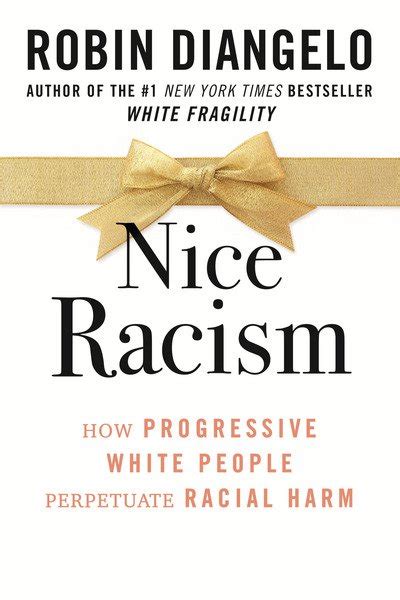
Nice Racism, the booklike product just released by the “Vanilla Ice of Antiracism“, Robin DiAngelo, begins with an anecdote from the author’s past. She’s in college, gone out to a dinner party with her partner, where she discovers the other couple is, gasp, black. “I was excited and felt an immediate need to let them know I was not racist,” she explains, adding: “I proceeded to spend the evening telling them how racist my family was. I shared every racist joke, story, and comment I could remember my family ever making …”
Predictably, her behavior makes the couple uncomfortable, but, “I obliviously plowed ahead, ignoring their signals. I was having a great time regaling them with these anecdotes — the proverbial life of the party!” She goes on:
My progressive credentials were impeccable: I was a minority myself — a woman in a committed relationship with another woman … I knew how to talk about patriarchy and heterosexism. I was a cool white progressive, not an ignorant racist. Of course, what I was actually demonstrating was how completely oblivious I was.
No kidding. Instead of trying to amp down her racial anxiety out of basic decency, this author fed hers steroids and protein shakes, growing it to brontosaurus size before dressing it in neon diapers and parading it across America for years in a juggernaut of cringe that’s already secured a place as one of the great carnival grifts of all time. Nice Racism, the rare book that’s unreadable and morally disgusting but somehow also important, is the latest stop on the tour.
DiAngelo is a unique writer, being dishonest, dangerous, and moronic in magnificent quantities, probably in that order. If you’re trying, which she clearly isn’t, a good trade rule is, “If you’ve already written a book once, don’t write it again.” Nice Racism is the same book as the 2018 bestseller White Fragility, and by “the same” I don’t mean generally, but word-for-word, line-by-line, chapter-by-chapter the same, a thunderous, admirably brazen exercise in self-plagiarism. Can you guess which of these passages is from Nice Racism, and which from White Fragility?
a) Individualism… allows white people to exempt ourselves personally from race-based advantage.
b) To challenge the ideologies of racism such as individualism and color blindness, we as white people must suspend our perception of ourselves as unique and/or outside race.
c) Exploring our collective racial identity interrupts a key privilege of dominance — the ability to see oneself only as an individual.
d) We need to discuss white people as a group — even if doing so jars us — in order to disrupt our unracialized identities … Talking about race and racism in general terms such as white people is constructive for whites because it interrupts individualism.
The first is from Nice Racism, the rest from White Fragility. The last three actually comprise a paragraph that moves in full circle: “To challenge individualism, we must suspend individual perceptions by exploring our collective racial identity, which is good because by disrupting individual identities, we challenge individualism.” A rhetorical palindrome! This isn’t writing, but vomiting up mounds of sentences that mean the same thing and mopping them on the page. Because this author only has two or three ideas — I was going to make a list but I think it stops after “denying racism is evidence of racism” — the effect is disorienting across one book, let alone two.
H/T to K.T. at Ace of Spades H.Q. for the link.
November 27, 2021
How Andrew Cuomo got megabucks for his (ghostwritten) book on the pandemic
In the latest issue of the SHuSH newsletter, Kenneth Whyte details how former New York state Governor Andrew Cuomo managed to get a $5.1 million advance from Random Penguin for a book that was mostly written by Cuomo staff members and an outside ghostwriter:
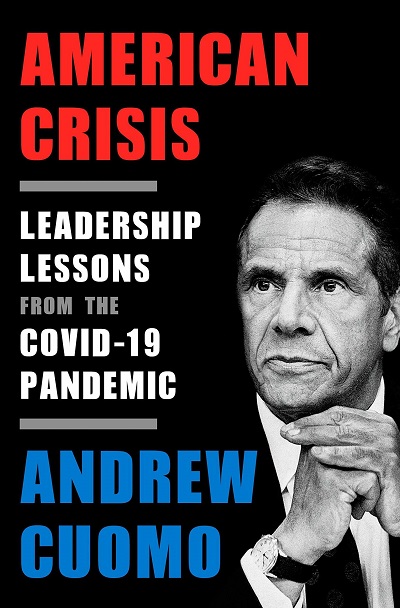
Penguin Random House contacted Cuomo’s agent about writing a book on March 19, 2020, about three weeks after the first COVID-19 case landed in New York. Cuomo was a TV darling in the early days of the pandemic. On July 1, his agent got back to Penguin Random House to say he’d written 70,000 words and he was ready to make a deal. How did a governor of America’s hardest-hit pandemic state produce a fat manuscript in three months flat? It appears he had his staff and a ghostwriter author the book for him, in violation of state ethics prohibitions against the use of any state resources or personnel to produce the book.
Meanwhile, Cuomo’s office was churning out doctored statistics to make his pandemic policies, particularly around nursing homes, look better than they deserved.
July 8, Cuomo’s book went to auction. Penguin Random House kicked things off with a $750,000 offer and wound up winning with a bid of $5.1-million. It was a triumph for Cuomo, and not his first in the publishing world: about seven years ago, he took HarperCollins for a $700,000 advance on what the New Republic called an “overlong … cliché-ridden, and hopelessly dull” memoir, All Things Possible. That one sold 4,000 copies in hardcover, a number that would warrant an advance of maybe $10,000.
Several weeks after the auction, Cuomo was asked by the media if he got a lot of money to write the book. “Well,” he replied. “Only if I sell a lot of copies.” Which is not how it works. Advances are non-returnable, and he’d banked $3.1 of the $5.1 before publication. The rest of Cuomo’s advance was spread out over two more years, presumably for tax purposes.
Weeks after the grandly titled American Crisis: Leadership Lessons from the COVID-19 Pandemic was released in October 2020, Cuomo was hit with the first of a long series of sexual harassment allegations. He was forced to resign in August 2021. By then, it had also emerged that Cuomo’s office had covered up roughly half of the fatalities among state nursing home residents during the pandemic.
American Crisis managed to sell at least ten times more copies than Cuomo’s previous book, which is progress, I suppose, but still a nightmare for his publisher. A sale of 50,000 copies might warrant a solid six-figure advance. But $5.1 million? Disastrous.
November 5, 2021
QotD: The Dame of Sark
Auberon Waugh, Diary, 1974-07-25.
September 19, 2021
A communist-party-connected publisher reprinted Justin Trudeau’s 2014 book Common Ground
Aha! I thought … yet more scandal! This time with direct pay-offs to Trudeau from his Beijing paymasters! Sadly, for the conspiracy minded among us, it’s not much more significant or scandalous than Barack Obama’s endorsement of Trudeau, as Kenneth Whyte explains:
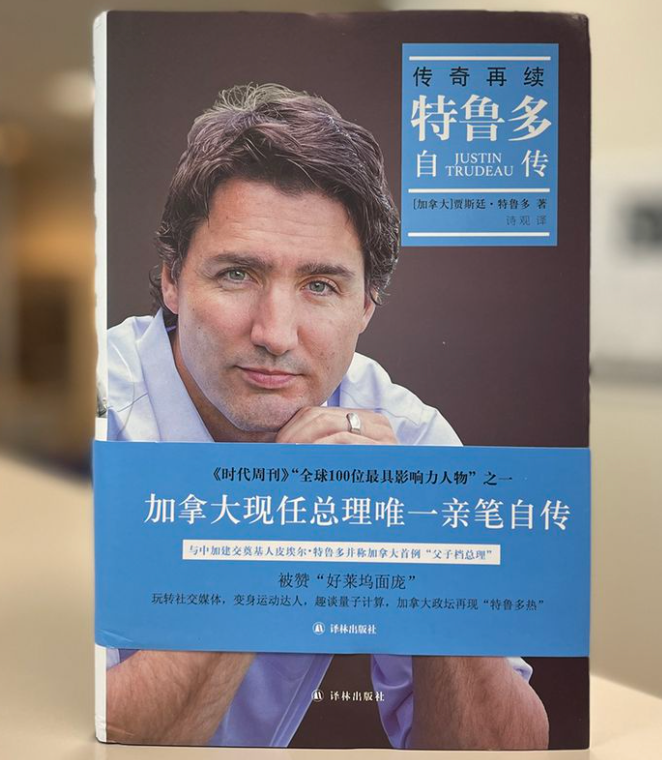
… the Globe & Mail reported that Justin Trudeau’s 2014 memoir Common Ground was republished in a Chinese edition in 2016.
Doesn’t sound like much of a story, does it? Foreign editions of Canadian books are released all the time.
What’s different in this case, says the Globe, is that the Chinese publisher is Yilin Press of Nanjing, part of the state-owned enterprise Jiangsu Phoenix Publishing and Media, which “takes operational direction from the propaganda department of the Jiangsu provincial communist party committee.”
Why would a propaganda wing of the communist party make such a deal? The Globe quotes foreign policy experts who say that the republication of Trudeau’s book is “a classic ploy” by Beijing to flatter a foreign leader. “They are trying to do anything they can to encourage him to look positive on China and the Chinese state,” according to one of the experts.
Says another: “Clearly, by publishing his biography they wanted to please him. They are the masters of propaganda.”
What do the Chinese hope to get out of courting Trudeau? “Beijing had high hopes it could persuade Canada to sign a free-trade agreement and was seeking Canada’s help in its global campaign Operation Fox Hunt to track down people it called criminals, many of whom were Chinese dissidents,” writes the Globe.
The Globe also finds it notable that the Liberals, at the time, were trotting Trudeau out to private events at the homes of wealthy Chinese-Canadians. The PM would do a little dance and the money would flow:
Chinese billionaire and Communist Party official Zhang Bin attended a May 19, 2016, fundraiser at the home of Benson Wong, chair of the Chinese Business Chamber of Canada. A few weeks later, Mr. Zhang and his business partner, Niu Gensheng, donated $200,000 to the Pierre Elliott Trudeau Foundation and $50,000 to erect a statue of Mr. Trudeau’s father.
So it all looks a bit unseemly.
I poked around and was reliably informed by someone in a position to know that Trudeau and his agent sold worldwide rights to Common Ground to HarperCollins Canada. That means it was up to HarperCollins to publish the book in Canada and also sell rights to its republication in as many foreign markets as possible. Trudeau would get a cut of revenues from those sales.
Except, as he further reveals, Trudeau had long since assigned any profits from the book to a charity, so he’s not being secretly bribed by copious amounts of money from the Chinese Communist Party’s propaganda budget (at least, not in this case, hedging just a bit …).
Should the PM, or someone in his office, have asked questions about Yilin Press and its connections to the communist party? Maybe, but it’s not like there was a free-market alternative down the street from Yilin. Every publisher in China is accountable to the communist party in one way or another. To get an ISBN number in the Chinese market, you have to go through the state, not because the state provides the service, but because it monitors all publications. Si Limin, chairman of the China Book Publishing Industry Association, is the former director of the News and Newspapers Department of the State Administration of Press, Publication, Radio, Film and Television. And so on.
As for the trade deal the Chinese were supposedly eager for Trudeau to sign? It was more the other way around. In 2017, the Liberals tried to convince Beijing to adopt Trudeau-style progressivism in return for free-trade with Canada. They were laughed out of town. The Chinese couldn’t even be bothered to pretend an interest in human rights to get a deal signed.
I have all kinds of problems with the ethical standards of the Liberal party, Trudeau’s personal judgment, those cash for access meetings, and his Chinese policy, but there’s nothing much to see here.
September 15, 2021
QotD: The cult of Napoleon
Other Europeans see him very differently. While French historians amplify the myth that Napoleon himself created by dictating his idealized Memoires on St. Helena, English, German, Russian and Spanish authors count up the massacres and the destruction of their cities and their civilization.
Napoleon began shaping his reputation while he was still alive. He commonly wrote reports of his victories before the battles had even begun, which makes him the founding father of fake news. Certain disasters, such as the Battle of Eylau (now in Poland) against the Russians and Prussians, for example, are still inscribed in the walls of the Arc de Triomphe in Paris as if they were victories, since that is how they were first announced.
Since France is now part of Europe — rather than Europe becoming part of France, as Napoleon wished — what should we commemorate? French victories, such as Austerlitz, were defeats for the Russians and Austrians. Waterloo, a day of mourning for the French, is a symbol of liberation for the British, Germans, and Dutch. In any case, since the return of Napoleon’s ashes, our view of history has changed; the fate of people concerns us more than the fate of armies. Napoleon’s stature does not benefit from this change of perspective. To finance his wars, he ruined Europe, banning international commerce (only smugglers got rich), conscripting peasants, ravaging harvests, and confiscating horses. How should we commemorate the Russian and German campaigns of 1812 and 1813, when the Grand Army left in its wake not the liberation of peoples, but famine and epidemic? Worst still, how should we commemorate the restoration of slavery in the French Antilles, Guadeloupe, and Santo Domingo (Haiti), where the deputies of France’s Revolutionary Convention had abolished it in 1794?
Guy Sorman, “Which Napoleon?”, City Journal, 2021-05-14.
September 13, 2021
“Only the most fanatical Justin Trudeau partisans will begrudge Jody Wilson-Raybould for her moment of revenge”
Howard Anglin responds to an early excerpt from former Trudeau cabinet minister Jody Wilson-Raybould:

Jody Wilson-Raybould, 30 January, 2014.
Photo by Erich Saide via Wikimedia Commons.
Reading the first excerpt of her book, I did find myself occasionally cocking an eyebrow at the portrayal of a wide-eyed innocent who somehow awoke to find herself in a den of partisan thieves.
It was, after all, the Liberal Party she had joined — the most ruthless and successful vote-winning machine in Western politics this side of Mexico’s PRI — not the parish altar guild.
But setting aside questions of systemic hypocrisy and looking only at the SNC-Lavalin imbroglio, it is as clear today as it was in 2019 that Wilson-Raybould was right and Trudeau was wrong.
She was right as attorney general to rebuff political pressure to offer SNC-Lavalin a deferred prosecution agreement — a slap on the wrist that would have seen the engineering and construction company avoid criminal conviction and remain eligible for more federal contracts — and Trudeau and his office were wrong to pressure her to consider it.
Now, she is fully justified in reminding us of that fact. And if the book’s self-righteousness message is belied by the calculated timing of its release, well, she has earned the right to say “I told you so” at the time of her choosing.
As far as the election goes, the most important revelations are about Trudeau’s character.
To constitutional law nerds like me, however, the highlight is Wilson-Raybould’s disagreement with the prime minister over the role of the Attorney Genereal, including her description of a freshly briefed Trudeau expatiating scholastically on the nuances of the Shawcross doctrine before she drily punctures his condescension with the comment: “You have been talking to a lawyer.”
Coming from someone who was until a few weeks earlier “his” lawyer, at least in his capacity as head of government, the comment is doubly ironic.
Wilson-Raybould had, by her account, explained the doctrine and its implications at length to Trudeau, as well as to his principal secretary, Gerry Butts, and the Clerk, neither of whom is a lawyer but both of whom were nevertheless dispatched to try to explain their version of it to her and her lawyer chief of staff.
April 28, 2021
QotD: George Orwell’s other novels
This would be a harsh and rather glib judgement, but many writers have faced worse. The book that suggested Wigan Pier, JB Priestley’s English Journey, was once hugely influential, even being credited with winning Labour the 1945 election, and is now regarded as a quaint piece of social commentary. That Priestley conducted his travels from a chauffeur-driven car, while Orwell willingly subjected himself to filthy evenings in slum bed and breakfasts and hostels, is a telling distinction between the two writers and their approaches: it is also undeniably true that Priestley died at 89, a grand old man of letters, and that Orwell’s premature death was one brought on by the tuberculosis that had affected him for years before his death. Yet Priestley is now remembered mainly for An Inspector Calls, and Orwell remains an iconic figure, beloved by millions. His canonisation was made explicit by a statue of him by Martin Jennings being erected outside Broadcasting House in 2017, complete with the phrase “If liberty means anything at all, it means the right to tell people what they do not want to hear”.
Yet it is doubtful that many of his admirers have read his earlier novels, namely Burmese Days, A Clergyman’s Daughter, Keep the Aspidistra Flying and Coming Up For Air. All four were brought out by the left-wing publisher Victor Gollancz, between 1934 and 1939, and each of them is autobiographical in nature. Burmese Days draws on Orwell’s faintly unlikely time in Burma in the Twenties with the Indian Imperial Police, and A Clergyman’s Daughter uses both his life with his family in Southwold (which appears faintly disguised in the novel as “Knype Hill”) and his days tramping for its narrative. Keep the Aspidistra Flying finds Orwell mining his experiences in the lower reaches of the London literary scene, including his time working in a bookshop in Hampstead, and Coming Up For Air, written while Orwell was recuperating in Marrakesh, is suffused with an intense nostalgia for an England that may never have really existed, but is of a piece with the fascination, and repulsion, for the tenets of “Englishness” that Orwell wrote about over and over again in his essays and reportage.
Alexander Larman, “The lesser-known Orwell: are his novels deserving of reappraisal?”, The Critic, 2021-01-07.
October 10, 2020
I AM Julius Caesar
The Study of Antiquity and the Middle Ages
Published 2 Jul 2020Politician, warrior, priest, lover.
My name is Gaius Julius Caesar and I led one of the most extraordinary lives in recorded history.
My victories over foes both foreign and domestic are still studied today. I upended the Roman Republic and became its first dictator.
I loved Cleopatra.
My brutal assassination has been synonymous with bitter betrayal for 2000 years.
New videos from The Study of Antiquity and the Middle Ages, the I AM series allows the great figures of history to introduce themselves in brief, compelling, historically-accurate episodes. Look for more I AM videos of your favorites!
I AM Julius Caesar! Welcome to the first episode of the I AM series where you live history itself through the mind, viewpoints and lives of a historical character!
See and experience the world they lived and celebrate their triumphs and feel their defeats.
This first episode is on Julius Caesar, the revolutionary who set into place the foundations of what would become the Roman Empire.
This was written, directed and created by the extraordinary professional DW Draffin! He is an audio book narrator, stage actor, and independent author.
AUDIOBOOK NARRATOR
https://www.audible.com/search?search…STAGE ACTOR
https://www.youtube.com/watch?v=xTept…INDEPENDENT AUTHOR
https://www.amazon.com/DW-Draffin/s?k…If you need a professional then contact him!
To support the channel, become a Patron and make history matter!
Patreon: https://www.patreon.com/The_Study_of_…
Donate directly to PayPal: https://paypal.me/NickBarksdale
Check out our newly opened store!
teespring.com/stores/antiquity-and-th…Get your SPQR Face Masks today!
https://spqr-emporium.com/collections…Enjoy history merchandise? Check out affiliate link to SPQR Emporium!
http://spqr-emporium.com?aff=3*Dislaimer, the link above is an affiliate link which means we will earn a generous commission from your magnificent purchase, just another way to help out the channel!
Join our community!
October 1, 2020
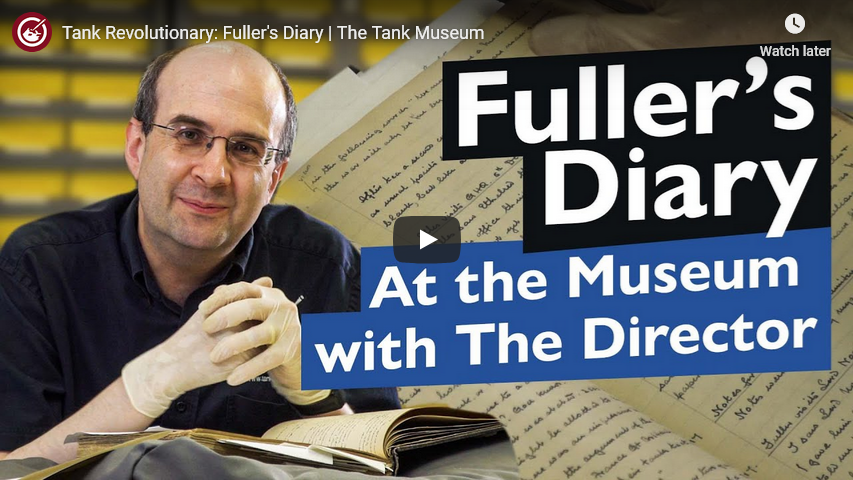
Tank Revolutionary: Fuller’s Diary | The Tank Museum
The Tank Museum
Published 5 Jun 2020J.F.C. Fuller has been described as a satanist, Nazi and bigot. Director Richard Smith, explores this highly controversial character, who was pivotal to the story of armoured warfare, using Fuller’s personal diary.
Support the work of The Tank Museum on Patreon: ► https://www.patreon.com/tankmuseum
Visit The Tank Museum SHOP & become a Friend: ► https://tankmuseumshop.org/Twitter: ► https://twitter.com/TankMuseum
Instagram: ► https://www.instagram.com/tankmuseum/
Tiger Tank Blog: ► http://blog.tiger-tank.com/
Tank 100 First World War Centenary Blog: ► http://tank100.com/
February 12, 2020
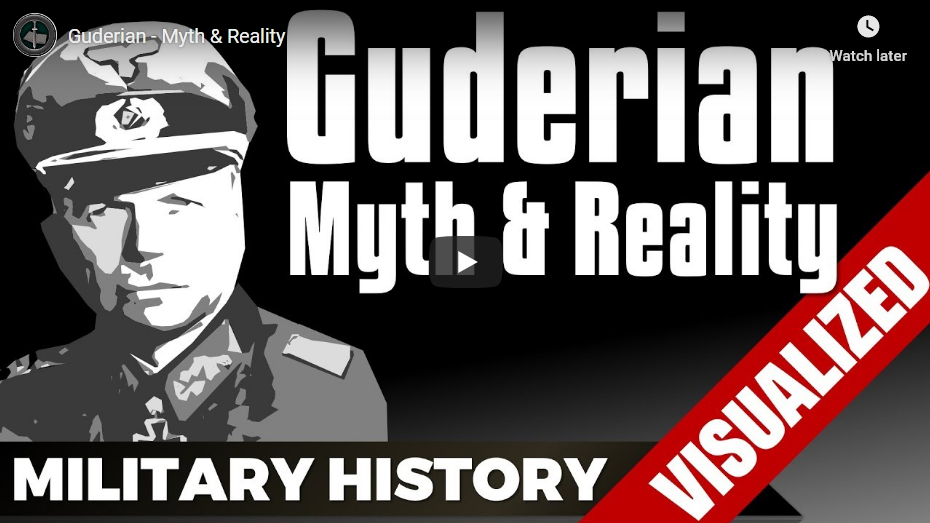
Guderian – Myth & Reality
Military History Visualized
Published 24 Apr 2018Heinz Guderian, the father of the German Panzerwaffe, is one of the best known German generals from the Second World War. He is also known for his opposition to the Battle of Kursk (Operation Zitadelle) and the early deployment of the Panzerkampfwagen V Panther, yet some historians noted recently that many of Heinz Guderian’s claims are not backed up by archives. Well, time to take a closer look.
»» SUPPORT MHV ««
» patreon – https://www.patreon.com/join/mhv
» paypal donation – https://www.paypal.com/cgi-bin/webscr…»» MERCHANDISE – SPOILS OF WAR ««
» shop – https://www.redbubble.com/people/mhvi…»» SOCIAL MEDIA ««
» twitter – https://twitter.com/MilHiVisualized
» twitch – https://www.twitch.tv/militaryhistory…
» minds.com – https://www.minds.com/militaryhistory…» SOURCES «
Pöhlmann, Markus: Der Panzer und die Mechanisierung des Krieges: Eine deutsche Geschichte 1890 bis 1945 (Zeitalter der Weltkriege)
Corum, James S.: The Roots of Blitzkrieg. Hans von Seeckt and German Military Reform
Macksey, Kenneth: “Generaloberst Heinz Guderian”; in: Ueberschär (Hrsg.) Gerd R.: Hitlers militärische Elite – 68 Lebensläufe (3. Auflage), S. 351-358
Guderian, Heinz: Panzer Leader (English Version of Erinnerungen eines Soldaten)
Guderian, Heinz: Erinnerungen eines Soldaten
Munzel, Oskar: Die deutschen gepanzerten Truppen bis 1945
Schacter, Daniel L.: The Seven Sins of Memory: How the Mind Forgets and Remembers
Citino, Robert M.: The German Way of War. From the Thirty Years’ War to the Third Reich
Citino, Robert M.: The Wehrmacht Retreats: Fighting a Lost War, 1943
» CREDITS & SPECIAL THX «
Song: Ethan Meixsell – “Demilitarized Zone”#ww2 #panzergeneral #Guderian
August 23, 2019
QotD: The ego of Salvador Dali
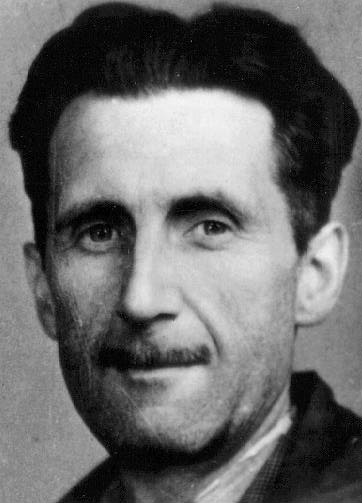
Orwell’s press card portrait, 1943
[Dali’s] aberrations are partly explicable. Perhaps they are a way of assuring himself that he is not commonplace. The two qualities that Dali unquestionably possesses are a gift for drawing and an atrocious egoism. “At seven”, he says in the first paragraph of his book, “I wanted to be Napoleon. And my ambition has been growing steadily ever since.” This is worded in a deliberately startling way, but no doubt it is substantially true. Such feelings are common enough. “I knew I was a genius”, somebody once said to me, “long before I knew what I was going to be a genius about.” And suppose that you have nothing in you except your egoism and a dexterity that goes no higher than the elbow; suppose that your real gift is for a detailed, academic, representational style of drawing, your real métier to be an illustrator of scientific textbooks. How then do you become Napoleon?
There is always one escape: into wickedness. Always do the thing that will shock and wound people. At five, throw a little boy off a bridge, strike an old doctor across the face with a whip and break his spectacles — or, at any rate, dream about doing such things. Twenty years later, gouge the eyes out of dead donkeys with a pair of scissors. Along those lines you can always feel yourself original. And after all, it pays! It is much less dangerous than crime. Making all allowance for the probable suppressions in Dali’s autobiography, it is clear that he had not had to suffer for his eccentricities as he would have done in an earlier age. He grew up into the corrupt world of the nineteen-twenties, when sophistication was immensely widespread and every European capital swarmed with aristocrats and rentiers who had given up sport and politics and taken to patronising the arts. If you threw dead donkeys at people, they threw money back. A phobia for grasshoppers — which a few decades back would merely have provoked a snigger — was now an interesting “complex” which could be profitably exploited. And when that particular world collapsed before the German Army, America was waiting. You could even top it all up with religious conversion, moving at one hop and without a shadow of repentance from the fashionable salons of Paris to Abraham’s bosom.
That, perhaps is the essential outline of Dali’s history. But why his aberrations should be the particular ones they were, and why it should be so easy to “sell” such horrors as rotting corpses to a sophisticated public — those are questions for the psychologist and the sociological critic. Marxist criticism has a short way with such phenomena as Surrealism. They are “bourgeois decadence” (much play is made with the phrases “corpse poisons” and “decaying rentiers class”), and that is that. But though this probably states a fact, it does not establish a connection. One would still like to know why Dali’s leaning was towards necrophilia (and not, say, homosexuality), and why the rentiers and the aristocrats would buy his pictures instead of hunting and making love like their grandfathers. Mere moral disapproval does not get one any further. But neither ought one to pretend, in the name of “detachment”, that such pictures as Mannequin rotting in a taxicab are morally neutral. They are diseased and disgusting, and any investigation ought to start out from that fact.
George Orwell, “Benefit of Clergy: Some Notes on Salvador Dali”, Saturday Book for 1944, 1944.
August 20, 2019
QotD: Autobiography
Orwell’s press card portrait, 1943
Autobiography is only to be trusted when it reveals something disgraceful. A man who gives a good account of himself is probably lying, since any life when viewed from the inside is simply a series of defeats. However, even the most flagrantly dishonest book (Frank Harris‘s autobiographical writings are an example) can without intending it give a true picture of its author. Dali’s recently published [The Secret Life of Salvador Dali] comes under this heading. Some of the incidents in it are flatly incredible, others have been rearranged and romanticised, and not merely the humiliation but the persistent ordinariness of everyday life has been cut out. Dali is even by his own diagnosis narcissistic, and his autobiography is simply a strip-tease act conducted in pink limelight. But as a record of fantasy, of the perversion of instinct that has been made possible by the machine age, it has great value.
George Orwell, “Benefit of Clergy: Some Notes on Salvador Dali”, Saturday Book for 1944, 1944.


