Quotulatiousness

June 30, 2012

The cruellest month in Newfoundland is July

Filed under: Cancon, Economics, History, Military, WW1 — Tags: , — Nicholas @ 10:43

Rex Murphy in the National Post on the worst month in Newfoundland’s calendar:

T.S. Eliot did not write for Newfoundlanders. April is not the cruelest month. For us, it’s July. Both the first and second day of July are marked indelibly in the province’s common memory, the first perhaps the saddest day in the historic calendar, the second as the day of the most fundamental change in the essential makeup of the province.

The greatest tragedy in Newfoundland’s history occurred on July 1, 1916 the opening day of the Battle of the Somne, when nearly 800 men from the 1st Newfoundland Regiment went “over the top” at Beaumont Hammel, only to suffer close to 700 casualties within less than half an hour. It was a virtual annihilation of the entire Regiment. The shockwaves from Beaumont Hammel went through every town and village, city and outport of the time. There was not a place unmarked with grief. To this day, the memory of Beaumont Hammel commands deep respect and notice.

A different kind of event, one not drawn from conflict or war, marks the second day of the month. Just 20 years ago, for the very first time since the late 15th century and the arrival of the Europeans and John Cabot to the fish-crowded waters off Newfoundland, catching cod-fish was declared illegal. The fishery, that great and traditional fishery of Newfoundland, was shut down for the first time in nearly 500 years.

It’s been 20 years since the fishery was closed, and there’s still no sign that it will be re-opening any time soon.

June 17, 2012

Royal Navy submarine wreck discovered in the Dardanelles

Filed under: Britain, History, Middle East, Military, WW1 — Tags: , , , — Nicholas @ 09:26

What appears to be the wreck of the E14 has been located just 800 feet offshore in the Straits of the Dardanelles:

Its precise location in the eastern Mediterranean remained a mystery until this month when a Turkish marine engineer and a diver detected it on the seabed off the town of Kumkale – just 800ft from the beach.

The wreck was discovered by marine expert Selçuk Kolay and film-making diver Savas Karakas, who had spent three years trying to find it.

After studying documents at the national Archives in Kew, west London, and surveying Turkish defences, they scanned an unusual object from a boat on the surface.

But they could not establish what it was because it was near the mouth of the straits — a sensitive military area where diving was forbidden.

It took two years to get permission from the military before their team were able to dive to the wreck and confirm it was the E14 earlier this month.

June 16, 2012

Sometimes the navy gets far more use out of a ship than they expect

Filed under: Britain, Europe, History, Military, Russia, USA, WW1, WW2 — Tags: , , , — Nicholas @ 10:12

Strategy Page on some extremely old ships still in service in various navies:

Last year, the British Royal Navy retired its oldest warship still in service, the 4,700 ton HMS Caroline. This light cruiser entered service in 1914 and fought in the epic Battle of Jutland in 1916. After World War II, Caroline served as a training ship, mostly tied up at dockside. When decommissioned last year, the ship could no longer move under her own power.

The Caroline was not the only World War I warship still in service. Currently, the oldest ship still in service is the Russian salvage ship VMF Kommuna. This 2,500 ton catamaran was built in the Netherlands and entered service in 1915. Kommuna began service in the Czar’s navy, spent most of its career in the Soviet (communist) Navy, and now serves in the fleet of a democratic Russia. Originally designed to recover submarines that had sunk in shallow coastal waters, Kommuna remains in service to handle smaller submersibles, does it well and has been maintained over the decades to the point where it cheaper to keep the old girl operational, than to try and design and build a replacement.

Most navies would not want to bring attention to their oldest ship, especially if it was nearly a century old. It’s different in the American Navy. For example, three years ago the carrier, USS Kitty Hawk (CV 63) was finally decommissioned, and ceased to be the oldest ship in the fleet. The Kitty Hawk served for 48 years and 13 days. In that time, about 100,000 sailors served on the ship. The ship was the navy’s last non-nuclear carrier and, since 1998, the oldest ship in commission. “The Hawk” did not age well, and had lots of breakdowns in its final years. This led members of the crew to nickname the ship; “Shitty Hawk”.

June 13, 2012

John Kay on the Finnish frontier

Filed under: Europe, History, Military, Russia, WW1, WW2 — Tags: , , , , — Nicholas @ 08:58

Finland had a very chancy time over the last hundred years. John Kay is visiting now, and reflects on how Finland survived to today:

The Finnish border is an anomaly. In 1918 the Finns won independence for a state that extended to the gates of St Petersburg. Russia captured territory in the 1939-40 Winter War. Finland then fought on the losing side in the second world war and did not remain neutral in the cold war. So the once thriving Finnish industrial city of Viipuri is today the depressed Russian outpost of Vyborg.

A cynical commentator on 20th-century history might observe that the political ineptitude of Kaiser Wilhelm and subsequently of Adolf Hitler brought America in on the opposite side of Germany’s quarrel with Russia in 1917 and 1941. Only when the democratic politicians of modern Germany made the rational alliance did Finland achieve the favourable political and economic outcomes it now enjoys. To pass the watchtowers and barbed-wire fences on the Finnish-Russian border is to be reminded of how fragile, and how recent, are the stability and security we take for granted today.

[. . .]

That observation is evident on the Finnish-Russian border. The razor wire kept Russian citizens in when the living standards of planned societies and market economies diverged. But now the border is easy to cross and the gap in per capita income has narrowed, though not by much. The very different income distributions of egalitarian Finland and inegalitarian Russia can be seen in the car parks and designer shops of Lappeenranta.

In the Soviet era, Finland produced Marimekko; Russia made no clothes any fashion-conscious woman would want to buy. Post-Communist but still autocratic Russia made surveillance equipment; democratic Finland led the world in mobile phones. Today Russia’s geeks hack into your bank account, while those of Finland develop Angry Birds.

The pristine countryside of Finland contrasts with the degraded physical state of much of Russia: a demonstration of the unexpected finding that regulated democratic capitalism preserves the environment more successfully than any other system of government.

May 7, 2012

Royal Flying Corps, 100 years on

Filed under: Britain, History, Military, Technology, WW1 — Tags: , , — Nicholas @ 10:25

April 13th was the 100th anniversary of the founding of the Royal Flying Corps (RFC), which was merged with the Royal Naval Air Service (RNAS) to become the Royal Air Force in 1918. BBC Magazine has an interesting article about the early days:

In most accounts of WWI, mention of the Royal Flying Corps goes hand-in-hand with stories of the fighter aces, men like Albert Ball and James McCudden, who downed dozens of enemy planes.

The romance of gladiatorial combat in the air — initially firing revolvers at one another from the cockpit, and then shooting machine guns through the propellers of the aircraft — makes their adventures against such legendary foes as the Red Baron some of the most stirring tales of the Great War.

But as a division of the British Army, the main role of the Royal Flying Corps, with its hundreds of pilots and thousands of ground crew, was very different.

It was the eyes of the army.

For the first time in history, it was possible not only to get a detailed view of the enemy lines from above, but to see what was going on behind those lines — the trench systems, the support routes, the railways and road vehicles that manoeuvred troops and weaponry into position.

The real heroes of the war in the air were the pilots and observers who flew in all conditions to maintain British air superiority, and to keep the ground troops aware of everything that the enemy was doing.

During the First World War, Canada hosted a training unit for British aircrew, the Royal Flying Corps Canada (Wikipedia link), from 1917 onwards. It operated the following air stations in southern Ontario:

  • Camp Borden 1917–1918
  • Armour Heights Field 1917–1918 (pilot training, School of Special Flying to train instructors)
  • Leaside Aerodrome 1917–1918 (Artillery Cooperation School)
  • Long Branch Aerodrome 1917–1918
  • Curtiss School of Aviation (flying-boat station with temporary wooden hangar on the beach at Hanlan’s Point on Toronto Island 1915–1918; main school, airstrip and metal hangar facilities at Long Branch)
  • Deseronto Airfield, Deseronto 1917–1918 (pilot training)
  • Camp Mohawk (now Tyendinaga Mohawk Airport) and Camp Rathburn — located at the Tyendinaga Indian Reserve near Belleville 1917–1918 (pilot training)
  • Hamilton (Armament School) 1917–1918
  • Beamsville Camp (Aerial fighting)

List sourced from the Wikipedia page on the RFC.

[Lt Col (later Brig Gen) Cuthbert] Hoare made several agreements with U.S. Brig Gen George O. Squier (US Army Signal Corps) and the US Aircraft Production Board. Squier had overall responsibility for the US Army’s air service, which was short of flight instructors. The RFC released five experienced American pilots to the US Army, where they became squadron commanders. The US Air Board acquiesced in the British opening a recruiting office in New York City, ostensibly to recruit British citizens, but in fact also soliciting US citizens, of whom about 300 were successfully signed up. The RFC would also train many US Army flight personnel: 400 pilots; 2,000 ground-crew members; and 20 equipment officers. These Americans would then collect aircraft and equipment from the UK, before coming under RFC control in France. Ten American squadrons would train in Canada during the summer of 1917, while RFC squadrons were allowed to train during the winter in Fort Worth, Texas.

During the last two years of the war 3135 pilots and 137 observers trained in Canada and Texas for both the RFC and the new Royal Air Force (RAF). Of these trainees, 2,624 went to Europe for operational duty.

April 22, 2012

Protecting the Turkish identity should not include ignoring history

Filed under: Education, History, Liberty, Middle East, WW1 — Tags: , , , — Nicholas @ 12:11

Ayşe Kadıoğlu is a Turk who went to university in the United States. Part of the experience was meeting Armenian-American students in Boston and learning about events in Turkish history that have been rigorously suppressed in aid of bolstering “Turkishness”:

I grew up in Turkey, where the prevailing education system still conceals certain historical facts in primary and secondary school curricula lest they harm the “indivisibility of the state with its country and nation”, an expression that is used several times in the current Turkish constitution. Perhaps the fear about deeds that can harm the unity of the state and nation is best symbolised in the Turkish national anthem, which begins with the lyrics “Do not fear”.

When fears nurture and sustain taboos, the ability to retain experiences declines. Enduring an education that is laden with either false historical facts or an eerie silence makes it impossible for people to exit the state of self-imposed immaturity.

[. . .]

There are many taboos in Turkey that mainly concern the protection of the “indivisibility of the state and nation”. There are also many laws that make it a crime to break these taboos. When taboos are sustained by law, the minds (and, many times, bodies) of citizens end up being imprisoned. One such taboo involves the founder of the Turkish republic, Mustafa Kemal Atatürk. In Turkey, it is a crime to insult his memory and harm his statutes. Another taboo involves the sacredness of the armed forces. This is sustained by a law against discouraging people from performing their compulsory military service.

[. . .]

Taboos, enforced by law, are fetters in front of the ability to reason. It is possible to be released from the spell of taboos and strengthen the ethos of democracy by upholding the realm of public debate and deliberation. Therefore, yes, I agree with Free Speech Debate’s fourth draft principle, “We allow no taboos in the discussion and dissemination of knowledge”, because we try not to be trapped in a state of immaturity and want to do our utmost to fulfil our capacities as reasonable human beings.

April 14, 2012

John Moore thinks that Canada is stupid to consider Vimy Ridge a “defining moment”

Filed under: Cancon, Europe, France, Germany, History, Military, WW1 — Tags: , — Nicholas @ 11:27

Writing in the Pacifist Times National Post, John Moore expresses the opinion that Canada should derive its sense of national pride from “compassion, hard work and character” rather than remembering anything positive from the bravery and sacrifice of Canadian soldiers in the war against Imperial Germany:

The tropes are well known to Vimy devotes. Over four days in April in 1917, Canadian soldiers accomplished through planning, guts and guile what 150,000 dead French and British soldiers had failed to achieve: The capture of seven kilometres of land rising up to a ridge held by the Germans. It was the first time all four divisions of the Canadian Corps had fought together — 3,598 Canadians lay dead; 7,000 were wounded.

But is Vimy really the best of Canada? Does our modern identity and national purpose hinge on the harrowing slaughter of our citizens on a foreign field of mud in a pointless war?

Canada went to war in 1914 at the same moment that Britain did. Britain went to war because they had guaranteed the independence of Belgium, but Germany needed to violate that independence in order to push the massive right wing of their armies past the French frontier forces in an attempt to outflank and destroy the French army. If Canada entering the war was “pointless”, then we should never have taken part in World War 2 (which Moore paints as being “one of the most unambiguously moral wars in history” either.

If anything, modern Canada should reflect on Vimy and our total First World War sacrifice as a national tragedy. Sixty-thousand Canadian men died in a war in which we had no real casus belli and which was largely administered by damnable incompetents. A generation of teachers, milkmen, farm hands, labourers, students and artists died on the field of battle, so hollowing out the population that many of the women they left behind would never marry. One hundred and seventythree thousand returned home suffering from burns, chemical poisoning, amputations and traumatic stress disorder that would leave them depressed and spastic for the remainder of their lives.

So why, 95 years later, do we venerate Vimy? Perhaps because it’s far easier to stir emotions where military matters are concerned. You can’t erect a heroic statue to the civility for which Canada is renowned. Social justice has never been able to muster an inspiring flypast. The national understanding that in Canada we look after each other doesn’t have a solemn bugle call to draw a tear.

So Moore thinks that Canada is defined by social justice and civility? I guess that’s at least a bit better than the even more common notion on the left that Canada is defined only by socialized medicine.

November 11, 2011

In memorium

Filed under: Britain, History, Military, WW1, WW2 — Tags: , , — Nicholas @ 11:00

A simple recognition of some of our family members who served in the First and Second World Wars:

The Great War

  • Private William Penman, Scots Guards, died 1915 at Le Touret, age 25
    (Elizabeth’s great uncle)
  • Private David Buller, Highland Light Infantry, died 1915 at Loos, age 35
    (Elizabeth’s great grandfather)
  • Private Walter Porteous, Northumberland Fusiliers, died 1917 at Passchendaele, age 18
    (my great uncle)
  • Corporal John Mulholland, Royal Tank Corps, died 1918 at Harbonnieres, age 24
    (Elizabeth’s great uncle)

The Second World War

  • Flying Officer Richard Porteous, RAF, survived the defeat in Malaya and lived through the war
    (my uncle)
  • Able Seaman John Penman, RN, served in the Defensively Equipped Merchant fleet on the Murmansk Run (and other convoy routes), lived through the war
    (Elizabeth’s father)
  • Private Archie Black (commissioned after the war and retired as a Major), Gordon Highlanders, captured at Singapore (aged 15) and survived a Japanese POW camp
    (Elizabeth’s uncle)

In Flanders fields the poppies blow
Between the crosses row on row,
That mark our place; and in the sky
The larks, still bravely singing, fly
Scarce heard amid the guns below.

We are the Dead. Short days ago
We lived, felt dawn, saw sunset glow,
Loved and were loved, and now we lie
In Flanders fields.

Take up our quarrel with the foe:
To you from failing hands we throw
The torch; be yours to hold it high.
If ye break faith with us who die
We shall not sleep, though poppies grow
In Flanders fields.

Lieutenant Colonel John McCrae, MD (1872-1918)

August 29, 2011

Site of Royal Navy’s WW1 submarine disaster to be used for wind farm

Filed under: Britain, History, Military, WW1 — Tags: , , — Nicholas @ 13:16

In 1918, the Royal Navy suffered the loss of two submarines, with another three damaged along with a light cruiser. And you’ve probably never heard of it. It’s okay, I hadn’t heard of it either, and the British government went to great lengths to conceal the incident, because no enemy vessels were involved:

An underwater war grave containing the victims of one of the worst British naval disasters of the first world war has been surveyed for the first time so it can be preserved in the middle of a windfarm.

The two K Class submarines were destroyed on 31 January 1918 during the so-called battle of the Isle of May, in which 270 lives were lost. The two submarines were sunk and three more damaged along with a surface cruiser.

But no enemy ships were involved in the sinkings, 20 miles off Fife Ness on Scotland’s east coast. The deaths were all caused by a series of night-time collisions within the British fleet.

So embarrassing was the incident that even though one officer was court-martialed, the facts were not generally admitted for more than 60 years, until after the death of the last survivor.

A longer account of the accident is on the Wikipedia page. It’s pretty grim reading.

July 6, 2011

That lack of historical perspective, again

Filed under: Cancon, History, Humour, WW1, WW2 — Tags: , , — Nicholas @ 07:50

Mark Steyn pokes some fun at Tim Naumetz who managed to confuse the Vichy regime with Vimy Ridge, in an attempt to portray Stephen Harper as a history-distorting warmonger:

As Lilley points out, it was the Liberal Defence Minister John McCallum who made Vichy “a household name” in Canadian history when he confused France’s Second World War collaborationists with Canada’s greatest First World War battle: Vimy, Vichy, what’s the diff? (The Defence Minister made his error in seeking to explain an earlier confession that he’d never heard of the Dieppe Raid.) After blog-mockery from Lilley and others, Mr Naumetz and/or his somnolent editors have belatedly corrected his piece, although without acknowledging the error, never mind addressing the broader question of the cultural void in which he’s operating. I mean, it’s not even a particularly Canadian question: If you don’t know what Vichy is, it’s hard to figure out Casablanca.

[. . .]

I have no idea who “Tim Naumetz” is. (Any relation to Admiral Naumetz, whom the Bush-Cheney warmongers singlehandedly made a household name in the Pacific?) But truly he is a child of Trudeaupia. He belongs in the same category as Miles Hopper and Jason Cherniak, apparently grown men who write stuff like:

Canadians have a right to Freedom of Expression. We have that right because the Trudeau Government negotiated and passed the Charter of Rights and Freedoms.

Gotcha. So before 1982 Canadians had no right to Freedom of Expression? Thank you, Boy Genius. As I said of young Mr Cherniak:

One can only marvel at the near Maoist elimination of societal memory required to effect such a belief.

For these guys, Charter Day 1982 is Year Zero in Trudeaupia, and that’s that. You get a lot of that on the review pages, of course. When a critic says “This is the best sitcom since ‘Seinfeld””, all that means is “This is as far back as I remember.” But it’s the collectivization of “this is as far back as I remember” that’s so creepy about this crowd, as if they all went through the same historical vacuuming in school.

Which is presumably why it never even seems to occur to them that “this is as far back as I remember” is an inadequate argument when you’re attempting to argue that the current regime is attempting a wholesale makeover of national identity. I have no particular views on that one way or the other, but I notice that, consciously or otherwise, Mr Harper seems to have a tonal preference for pre-Trudeaupian language. For example, he welcomed Their Royal Highnesses to “our fair Dominion”. How often did that word pass Martin’s or Chrétien’s or Trudeau’s lips? I suppose Mr Naumetz would find that a bit déclassé, too, even though, in its political sense, it’s one of the few genuine Canadian contributions to the English language.

April 20, 2011

Michael Ignatieff as a modern Kaiser Wilhelm II?

Filed under: Cancon, Germany, History, Politics, WW1 — Tags: , — Nicholas @ 13:00

This is a fascinating article. I’m not sure I agree, although we’ll find out in less than two weeks if this is the “Black Day of the German Army Liberal Party”:

The Liberal party, like the Kaiser’s Germany, is stuck in the middle. (An analogy I do not expect any Liberal to use in public, ever.) To the right is the Conservative party. To the left, the NDP. Every election campaign is a two-front war.

To deal with this mortal peril, the Liberals have traditionally followed their own Schlieffen Plan.

In the event of electoral war, the Liberals move swiftly to the left. Taking ground from the NDP ensures vote splits go their way but also creates the perception that the NDP is out of the fight. Voters whose primary concern is stopping the barbarians in the East — the Conservatives, naturally — are thus forced to support the Liberals.

Now, here comes the part of the column Michael Ignatieff won’t like.

January 26, 2011

Nostalgia for the Dreadnought era?

Filed under: China, Economics, Germany, History, WW1 — Tags: — Nicholas @ 09:03

Ambrose Evans-Pritchard finds the parallels between the rise of Imperial Germany in the years leading up to the first world war and attitudes toward China today:

And we all learned how the Kaiser overplayed his hand. That much was obvious.

Yet it is difficult to pin-point exactly when the normal pattern of great power jostling began to metamorphose into something more dangerous, leading to two rival, entrenched, and heavily armed alliance structures unable or unwilling to avert the drift towards conflict. The Long Peace died by a thousand cuts, a snub here, a Dreadnought there, the race for oil.

[. . .]

Is China now where Germany was in 1900? Possibly. There are certainly hints of menace from some quarters in Beijing. Defence minister Liang Guanglie said over New Year that China’s armed forces are “pushing forward preparations for military conflict in every strategic direction”.

Professor Huang Jing from Singapore’s Lee Kwan Yew School and a former adviser to China’s Army, said Beijing is losing its grip on the colonels.

“The young officers are taking control of strategy and it is like young officers in Japan in the 1930s. This is very dangerous. They are on a collision course with a US-dominated system,” he said.

The problem with drawing parallels from history is that it’s never as neat and clean-cut as you’d expect. First, China is supposed to be like Kaiser Wilhelm’s Germany, then more like Japan after WW1. I have to say I’m not totally following this line of thought. But, getting back to today’s situation:

There is a new edge to Chinese naval policy in the South China Sea, causing Japan, Vietnam, Indonesia, and the Philippines to cleave closer to the US alliance. Has Beijing studied how German naval ambitions upset the careful diplomatic legacy of Bismarck and pushed an ambivalent Britain towards the Entente, even to the point of accepting alliance with Tsarist autocracy?

Factions in Beijing appear to think that China will win a trade war if Washington ever imposes sanctions to counter Chinese mercantilism. That is a fatal misjudgement. The lesson of Smoot-Hawley and the 1930s is that surplus states suffer crippling depressions when the guillotine comes down on free trade; while deficit states can muddle through, reviving their industries behind barriers. Demand is the most precious commodity of all in a world of excess supply.

H/T to Jon, my former virtual landlord, for the link.

November 11, 2010

In memorium

Filed under: Britain, History, Military, WW1, WW2 — Tags: , , — Nicholas @ 08:03

A simple recognition of some of our family members who served in the First and Second World Wars:

The Great War

  • Private William Penman, Scots Guards, died 1915 at Le Touret, age 25
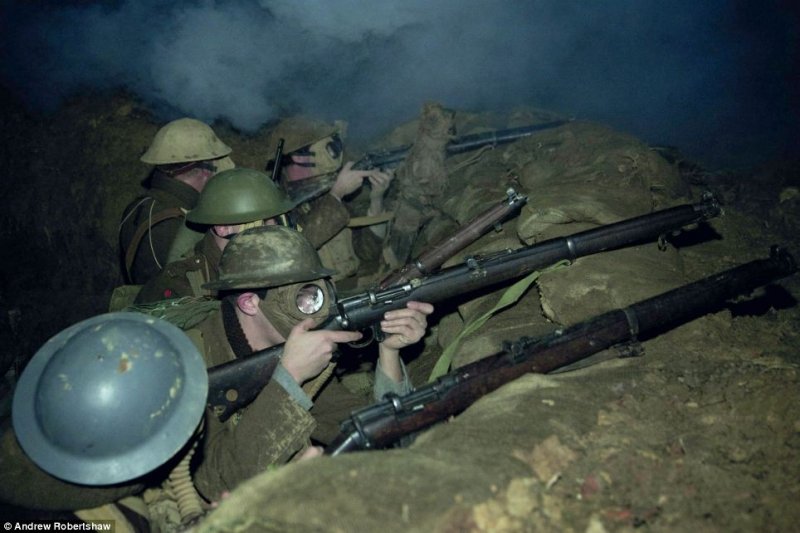
    (Elizabeth’s great uncle)
  • Private David Buller, Highland Light Infantry, died 1915 at Loos, age 35
    (Elizabeth’s great grandfather)
  • Private Walter Porteous, Northumberland Fusiliers, died 1917 at Passchendaele, age 18
    (my great uncle)
  • Corporal John Mulholland, Royal Tank Corps, died 1918 at Harbonnieres, age 24
    (Elizabeth’s great uncle)

The Second World War

  • Flying Officer Richard Porteous, RAF, survived the defeat in Malaya and lived through the war
    (my uncle)
  • Able Seaman John Penman, RN, served in the Defensively Equipped Merchant fleet on the Murmansk Run (and other convoy routes), lived through the war
    (Elizabeth’s father)
  • Private Archie Black (commissioned after the war and retired as a Major), Gordon Highlanders, captured at Singapore (aged 15) and survived a Japanese POW camp
    (Elizabeth’s uncle)

In Flanders fields the poppies blow
Between the crosses row on row,
That mark our place; and in the sky
The larks, still bravely singing, fly
Scarce heard amid the guns below.

We are the Dead. Short days ago
We lived, felt dawn, saw sunset glow,
Loved and were loved, and now we lie
In Flanders fields.

Take up our quarrel with the foe:
To you from failing hands we throw
The torch; be yours to hold it high.
If ye break faith with us who die
We shall not sleep, though poppies grow
In Flanders fields.

Lieutenant Colonel John McCrae, MD (1872-1918)

October 1, 2010

You think you’re struggling with the burden of old debts?

Filed under: Economics, Europe, Germany, History, WW1 — Tags: — Nicholas @ 09:07

Consider the case of Imperial Germany:

First World War officially ends
The First World War will officially end on Sunday, 92 years after the guns fell silent, when Germany pays off the last chunk of reparations imposed on it by the Allies.

The final payment of £59.5 million, writes off the crippling debt that was the price for one world war and laid the foundations for another.

Germany was forced to pay the reparations at the Treaty of Versailles in 1919 as compensation to the war-ravaged nations of Belgium and France and to pay the Allies some of the costs of waging what was then the bloodiest conflict in history, leaving nearly ten million soldiers dead.

H/T to Jon, my former virtual landlord, for the link.

September 2, 2010

If not the founder, at least a notable contributor

Filed under: Books, History, Media, Politics, WW1 — Tags: , , , — Nicholas @ 08:59

John Pilger pays “tribute” to one of the more persuasive contributors to both militarism and commercialism of the 20th century:

Edward Bernays, the American nephew of Sigmund Freud, is said to have invented modern propaganda. During the first world war, he was one of a group of influential liberals who mounted a secret government campaign to persuade reluctant Americans to send an army to the bloodbath in Europe. In his book, Propaganda, published in 1928, Bernays wrote that the “intelligent manipulation of the organized habits and opinions of the masses was an important element in democratic society” and that the manipulators “constitute an invisible government which is the true ruling power in our country.” Instead of propaganda, he coined the euphemism “public relations.”

The American tobacco industry hired Bernays to convince women they should smoke in public. By associating smoking with women’s liberation, he made cigarettes “torches of freedom.” In 1954, he conjured a communist menace in Guatemala as an excuse for overthrowing the democratically-elected government, whose social reforms were threatening the United Fruit company’s monopoly of the banana trade. He called it a “liberation.”

Bernays was no rabid right-winger. He was an elitist liberal who believed that “engineering public consent” was for the greater good. This was achieved by the creation of “false realities” which then became “news events.”

Propaganda definitely existed before Bernays, but he may have been the one who codified and systematized the “science”.

« Newer PostsOlder Posts »

Powered by WordPress