
TimeGhost History
Published 9 Feb 2025In 1946, the old colonial empires of Britain and France struggle to maintain control as nationalist movements rise and their economies crumble. Meanwhile, two new superpowers — the U.S. and the USSR — seek to reshape the world in their image, using decolonization as both an ideal and a tool for influence. As the colonial order fractures, global power shifts, and the battle for dominance begins.
(more…)
February 11, 2025
The End of Empire? Colonialism in Crisis – W2W 003
Comments Off on The End of Empire? Colonialism in Crisis – W2W 003
“As it turns out, you can just cut things”
John Carter outlines the left’s long march through the institutions and explains why a conservative counter-operation of the same kind would utterly fail. Instead, Donald Trump (of all people) launched a political blitzkrieg that used none of the strategies of the long march — because the establishment knew intimately how those worked, as they’d used them for generations to become the establishment:
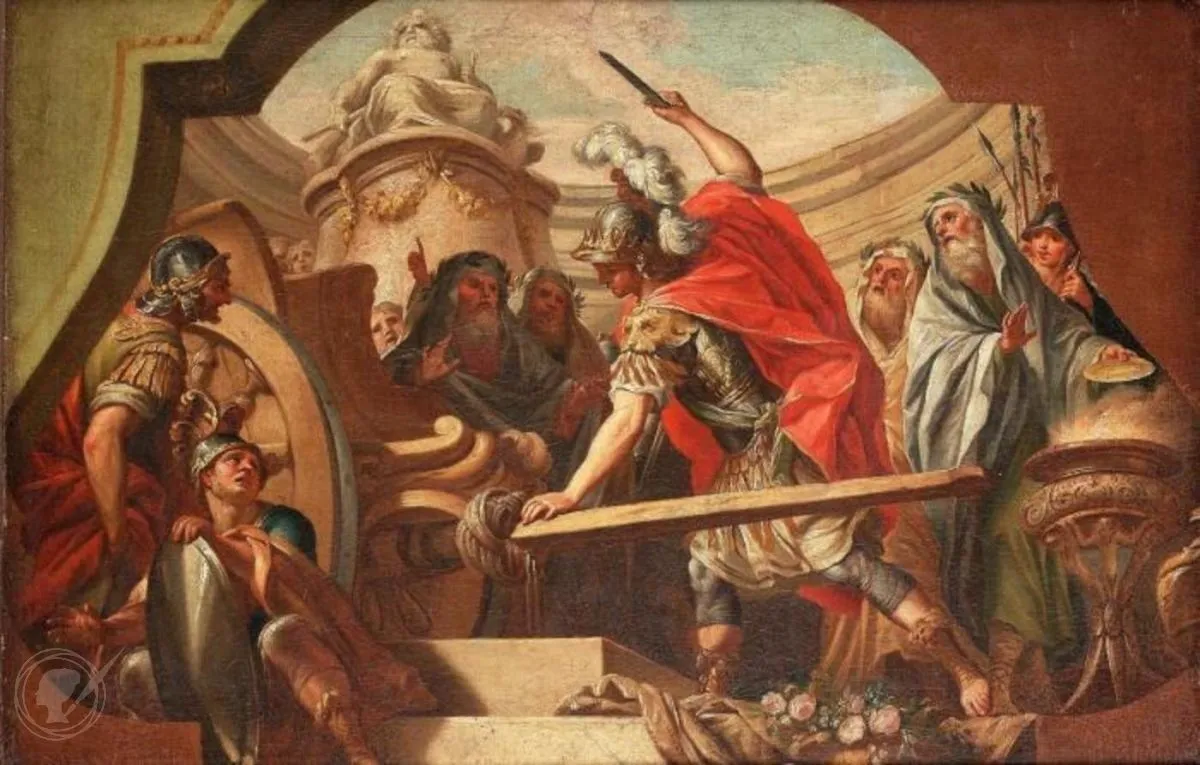
Alexander Cutting the Gordian Knot
Fedele Fischetti, 18th century.
But a counter-revolutionary long march through the institutions was always a doomed project.
The left understands the method quite well, having perfected it themselves, and its defences against counter-infiltration were well advanced. It was never enough merely to say the right things, and not say the wrong things – the left knows how easily such signals are faked, as these are mere words, and words have no meaning to an egregore which sees in discourse nothing but the currents and tokens of power. Much of the seeming insanity of the Cancelled Years is best understood as the imposition of elaborate, difficult to fake displays of loyalty: offering your child’s genitals to the hungry gender gorgon, opening your veins for the gene therapy injection. Then of course there is DEI, whose explicit intent was to simply deny opportunity to those most likely, on a demographic basis, to oppose the left. There is very little point, as a young white man, in keeping your mouth shut if you will be locked out simply because you are white, no matter what you say.
The psychological demands of stealthy infiltration are spiritually toxic. Anyone attempting this path finds himself embedded in a social context in which all of his friends and colleagues adhere to values which he privately despises, and moreover, he knows that the instant they discover his true beliefs he will be not only fired, but ostracized and isolated. Worse, he’s constantly placed in the position of betraying his own convictions, of going along with and even actively supporting things he knows are wrong, because failing to do so would be immediately suspicious. Since the left is a hive mind, he must “pretend” to give up his agency … and insofar as you are what you do, there is very little difference between pretending to give up your agency, and actually doing giving it up. Living like this is miserable. It requires iron discipline, and there is very little reward. Some of you doubtless have direct experience of this.
The most important reason that a long march was never viable, however, was that there was not enough time.
The West is in crisis. Public debt has broken up through the exosphere, its rise ever more vertical as the deficits fuelling it continue to expand, and we can all see in its meteoric rise that its inevitable descent will hit the land like rods from God. Third world invaders pour into our countries by their millions at the open invitation of seditious governments whose open aim is to reduce native white populations to second-class minorities in their own homelands within the space of a generation. These two crises of the Great Inflation and the Great Replacement could never be solved by the tactics the left used to bring them about. Even if such a long march could have succeeded in the face of the barriers the left so astutely erected, by the time it came to fruition the victors would preside over wreckage.
The left’s tactics were those of a chronic disease, gradually wasting the patient, leaching the strength from his limbs. You cannot cure a patient by becoming an opportunistic infection in your own right.
So what to do? Many, despairing, looked to civil war. A coup d’état, likely followed by blue states separating from the Union. Battle lines would be drawn, brother would be set against brother, cities would be ruined, vast pits would be excavated and filled with the stinking dead. Such a war would never have been limited to continental United States. It would have dissolved the Pax Americana, with brushfire wars springing up across the globe as great powers sought to expand their territories by grabbing resources or strategic trade corridors. Those powers would have gotten involved in the Civil War themselves, backing one side or another, prolonging the conflict in order to ensure the Union remained shattered forever.
On J6, the American government teetered on a precipice. Had Trump applied so much as the gentlest pressure with his baby finger, it would have toppled over. The other side would then have screamed that he was a tyrant who had seized power by force; his own supporters would have rallied to the cause that the election had been stolen; America, and the world, would have been bathed in blood. So Trump pulled back, allowed the heroes of J6 to be imprisoned, and permitted the sclerocracy to impose four years of malevolent mismanagement on the American people.
Many were furious with Trump. He’d lost his nerve; he was a coward.
As it turned out, they were all wrong. It was a strategic withdrawal.
And now, instead of a Long March, we are getting a blitzkrieg.
I’ve been silent for the last month partly for personal reasons that deprived me of the time and energy to write, which I won’t elaborate upon here save to note that it’s nothing anyone has to worry about. But I’ve also been silent because I haven’t been sure what to say. The last weeks have been one of those ‘weeks when decades happen’ periods, and that pace of change doesn’t appear to be letting up. Executive Orders flying off of the big man’s desk, birthright citizenship being struck down, entire government departments getting defunded, the J6 heroes being pardoned, trade wars starting and then stopping before they start, the military heading to the border, DOGE siccing broccoli-headed zoomers armed with large language models to rip through the sprawling financial records of acronym agencies like a cyclone of destruction.
As it turns out, you can just cut things.
These are all great, wonderful things. We are winning, and the pace of winning is dizzying. It’s like we’ve spent the last several years slamming again and again against a seemingly immovable wall, bashing our brains out upon it like an enraged tiger, only for that wall to suddenly turn to sand upon our final desperate push, leaving us sprawled and disoriented on the ground.
That is at least what it has felt like to me. The people on the inside of the Trump administration are not disoriented. Far from it. They are executing a detailed, thorough plan. They’ve identified the enemy nerve centres and are neutralizing them precisely, rapidly, and ruthlessly. Handpicked squads of very competent young men have been turned loose inside the Beltway. It is clear that they are not being micromanaged, but are being left to develop their own action plans on the fly as the tactical situation evolves. This is manoeuvre warfare, with small, nimble, lethal teams dropped into the heart of enemy territory and being given maximum latitude to pursue the campaign’s strategic objectives.
Comments Off on “As it turns out, you can just cut things”
February 9, 2025
A “certain niche Canadian’s” prophetic look at Western demography
Mark Steyn reminds us that it’s twenty years since he published America Alone: The End of the World as We Know It, which has become more and more accurate every year:
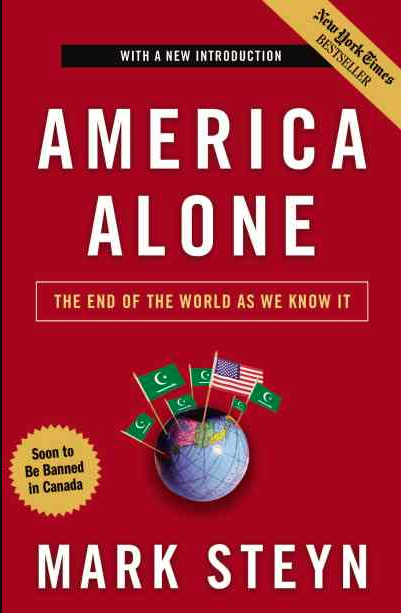
~As some readers may be aware, next year marks the twentieth anniversary of a certain “niche Canadian”‘s boffo international bestseller on demography. So the other day I was musing on whether it was too soon to mark the occasion — only to find I’d been beaten to the punch by the Nigerian media bigfoot Azu Ishiekwene:
It’s nearly 20 years since Mark Steyn wrote a non-fiction book, America Alone: The End of the World as We Know It.
Steyn, a Canadian newspaper columnist, could not have known that the kicker of this book title, which extolled America as the last bastion of civilisation as we know it, would become the metaphor for a wrecking ball.
Steyn thought demographic shifts, cultural decline, and Islam would ruin Western civilisation. The only redeeming grace was American exceptionalism. Nineteen years after his book, America Alone is remembered not for the threats Steyn feared or the grace of American exceptionalism but for an erratic president almost alone in his insanity.
The joke is on Steyn.
Oh, well. It was good while it lasted — which wasn’t as long as it should have, thanks to the dirty stinkin’ rotten corrupt American “justice” system (see below).
~But I thank Mr Ishiekwene for reminding me of the twin theses of my book: on the one hand, “demographic shifts, cultural decline, and Islam” and, on the other, “American exceptionalism”. The first half is undeniable: At one point last year, there were no Anglo-Celtic heads of government anywhere in the British Isles except for Northern Ireland. Nobody even talks about “demographic shifts”, with even “conservative” politicians preferring to focus on “British values” or “French values” or “[Your Country Here] values”, even as those “values”, not least freedom of speech, are remorselessly surrendered. The UK’s “Deputy Prime Minister”, Angela Rayner, is proposing as the state’s reaction to the Southport stabbings, about which the most intemperate Tweeters were less inaccurate than the state propaganda, to restrict free expression even further. Islam? In Britain, Germany, France, the Netherlands, we would rather our children be stabbed and gang-raped than do anything about it, especially if it risks being damned as “Islamophobic”. The delightful Ms Rayner, who once boasted about flashing her soi-disant “ginger growler” across the Commons to Boris Johnson at Question Time, will be keeping it under wraps in the years ahead.
~As for the second part of my book’s arguments — “American exceptionalism” — well, it’s been a rough twenty years. But, to cast Azu Mr Ishiekwene’s contempt for an “an erratic president almost alone in his insanity” in a more generous light, the last three weeks have been a useful reminder that America is still different — or, at any rate, retains the capacity to be different. In his first days in office Trump 47 yanked the US from the World “Health” Organisation and the Paris “climate” accord and the UN “Human Rights” Council. If I have been insufficient in my praise for this energy, it is only because I held out hopes that a man “alone in his insanity” might have simply nuked the WHO. But, such disappointments aside, in Britain (and in the EU it has yet to leave in any meaningful sense), no such decisive acts in the here-and-now can even be contemplated.
And just because I’ve been including a fair bit of USAID-related stuff this week, he comments on Elon Musk’s epic sidequests investigations into US government waste and corruption:

~That’s the good news — and it’s very heartening. The bad news is that almost everything the national government (it is no longer really “federal”) of the United States touches is a racket.
The United States Agency for International Development is so-called in order that gullible rubes who listen to NPR think that it’s something to do with helping starving children in Africa. The cynical rubes who follow Conservative Inc think it’s something to do with helping African dictators’ Swiss bank accounts and endlessly regurgitate the old line about “international aid” taking money from poor people in rich countries to give to rich people in poor countries. But this is the cynicism of the terminally naïve and does a great injustice to the average blood-drenched Somali warlord. As Elon Musk has pointed out, ninety per cent of USAid funds are disbursed in the Washington, DC area. Opponents of that line say, ah, yes, but that’s misleading because some of it then gets passed on outside the Beltway eventually to reach some emaciated Congolese laddie.
Well, I would doubt it. There is no legitimate reason for Bill Kristol and Mona Charen to be receiving any funds from an agency for “international development” — and they surely know it. The least we should expect from them is that they come by their Never Trumpery honestly.
But I wouldn’t be surprised to learn that that 90-10 ratio is pretty standard. The US armed forces account for forty per cent of the planet’s total military spending. Does ninety per cent of that also get disbursed in the District of Columbia? On Thoroughly Modern Milley’s ribbon budget? It’s as good an explanation as any for the failure to win anything since VJ Day. The rube right’s antipathy to foreigners shouldn’t blind us to the fact that the overwhelming majority of the corruption is domestic — and it’s a very bipartisan sewer.
So I wish Trump, Musk et al the best of luck. But, notwithstanding that every rinky-dink District Court judge seems to be labouring under the misapprehension that he’s head of the executive branch of government, Trump has spent the last three weeks doing things. There is no sign that that is even possible in the rest of the west, where the Dutch model seems to prevail: Geert Wilders wins the election, but then gets neutered.
So, in a sense, Azu Ishiekwene is right. There is a yawning chasm between Trump and the poseur attitude-flaunting rest of the west. And yet Mr Ishiekwene is wrong on this: an erratic president is not almost alone in his insanity. In case you haven’t noticed, Panama won’t be renewing its Chinese deal on the Belt & Road Initiative, and El Salvador is happy to gaol anybody Trump sends them. It turns out that the quickest way to solve any international dispute is to threaten the recalcitrant with twenty-five per cent tariffs starting at midnight. If the forty-seventh president doesn’t seem interested in “winning hearts and minds”, it’s because he’s found something more effective.
Comments Off on A “certain niche Canadian’s” prophetic look at Western demography
February 8, 2025
A Love Supreme after 60 years
John Coltrane’s A Love Supreme was one of the first four jazz albums I ever bought. It quickly became my favourite and led me to listening to a lot more of Coltrane’s work. Some I loved nearly as much (Giant Steps, Blue Train, The Complete Africa/Brass Sessions) while others I just bounced off (Sun Ship, Interstellar Space, Stellar Regions), but most became fixtures of my various jazz playlists.
Ted Gioia notes the moment as A Love Supreme hits 60 years after release:

Ivy League theoretical physicist Stephon Alexander will even tell you that John Coltrane has a lot in common with Albert Einstein. People still consult the saxophonist’s mathematical analysis — the so-called Coltrane Circle — as if it were a source of esoteric wisdom.
But in 1964, John Coltrane was also a father. John Coltrane Jr. was born on August 26, 1964 — the first of his three children. Ravi Coltrane arrived in 1965, and Oran in 1967.
You wouldn’t think that Coltrane could find time for anything else at the close of the Summer of 1964. But he did.
At that juncture, he disappeared into an upstairs guest room at his home. And spent day after day with just a pen, some paper, and his horn.
He emerged five days later. “It was like Moses coming down from the mountain,” Alice later recalled. “It was so beautiful. He walked down and there was that joy, that peace in his face, tranquility.”
“This is the first time that I have received all of the music for what I want to record,” he told her.
Note that word: Received. He didn’t say composed. He didn’t say created. It was a gift from something larger than himself.
This was the music John Coltrane would perform in the studio three months later. It’s know today as A Love Supreme.
Coltrane said that his music was his gift back to the Divine.
He made that clear in his liner notes, which opened with an invocation in capital letters: DEAR LISTENER: ALL PRAISE BE TO GOD TO WHOM ALL PRAISE IS DUE…
But if there were still any doubt, Coltrane also included a devotional poem — which began:
I will do all I can to be worthy of Thee O Lord.
It all has to do with it.
Thank you God.
Peace …Needless to say, this was not typical for jazz liner notes in the mid-1960s. Or at any time, for that matter.
Not your typical liner notes.
Photo by Ted GioiaAnd it almost certainly would limit sales — or so the conventional wisdom went back then. A few months later, Capitol Records execs had a meltdown when Brian Wilson wanted to give the name “God Only Knows” to a song. But that was nothing compared to the full-blown ritual that Coltrane was now unleashing on the hip jazz audience.
I use the word ritual advisedly here. I’ve heard other people describe A Love Supreme as a suite, but they’re missing the whole point. I have no doubt that Coltrane intended this ritualistic effect.
He even starts chanting toward the end of the opening track.
This was first time Coltrane’s voice had ever been featured on a studio recording. And he didn’t sing a love song or belt out a blues. Instead he was chanting:
A love supreme
A love supreme
A love supreme
A love supreme
A love supreme …He chants that phrase nineteen times in a row.

Comments Off on A Love Supreme after 60 years
QotD: American gun rights
I was asked last night why, when I talk about politics, I focus on gun rights so much. Surely, said querent, there are lots of other important things for a libertarian like you to weigh in on. Censorship. DEI. AGW hysteria. The list goes on …
Fair question. It’s because many years ago L. Neil Smith, a libertarian SF writer sadly no longer with us, persuaded me of something important.
A politician’s attitude about firearms rights is a very reliable index for his actual attitude about individual freedom and agency.
Never mind what they say about other issues. A politician standing up for the right of ordinary citizens to be armed is sending a very reliable signal that he values their ability to assert their freedom, and trusts them to generally make correct choices about the use of violence even it might be directed against himself.
Conversely, a politician who is against gun rights is telling on himself. He fears the wrath of the people and wants them disempowered. He does not trust them to employ violence only when necessary.
And that’s actually the best case. In far too many cases, anti-gun politicians clearly dream of being the jackboot that stomps on human faces forever, and view the disarmament of the general population as a step towards that end.
If I must have politicians meddling in my affairs, I demand at the very least that they respect my freedom and my agency. That’s why I demand that they respect my right to keep and bear arms.
Gun rights may look like a narrow single issue. It isn’t. It’s an even better index of a politician’s attitude about liberty than questions about free speech and censorship, because it pushes the stakes higher. Because words can’t kill you, but arms wielded by enraged citizens can.
No matter what soothing words drop from his lips, no matter what promises he makes, the politician who tries to disarm you is always, always, always your enemy. Never forget that.
ESR, Twitter, 2024-11-06.
Comments Off on QotD: American gun rights
February 7, 2025
Justice for WW2?! – W2W News 1945
TimeGhost History
Published 6 Feb 2025Join SPARTACUS and INDY on the War2War 1945 Newscast as we explore a world tumbling from war to war. European colonies face fresh conflicts and groundbreaking polymer innovations spark industrial revolutions. All the while Nazi war criminals are brought to justice at the Nuremberg Trials.
(more…)
Comments Off on Justice for WW2?! – W2W News 1945
USAID still very much in the news
Pretty much any libertarian can quote chapter and verse of how governments waste taxpayer money, but even the most doctrinaire libertarian must be boggled at the extent of waste and corruption enabled by the use of the cover organization USAID. And it’s only one federal agency! We may never be able to get a proper accounting, but it seems that a vast share of US tax revenue has been going to things never dreamed of by the framers of the Constitution or even by the legislators that set up all these various agencies.
On MeWe, Marc Adkins shared a post from a friend, discussing the USAID mess:
One of the dangers President Trump, Elon and DOGE face is that there is just so much crazy, bad, virtually unbelievable news coming out of USAID, the sheer volume [de-]sensitizes people to it.
I must admit, I’m beginning to be overwhelmed by the bad news. One begins to feel a sense of futility, especially when you have been paying taxes your entire life — for me, I have paid taxes since I was sixteen (on my part time jobs and gig jobs through high school and college) — that’s 50 years, and while what I have paid is extremely small compared to the USAID budget, it is simple math to calculate that everything I have ever paid, as well as everything many of us have ever paid has been flushed down the toilet. That is a tough thing to take.
And this has been going on since USAID was created by JFK’s executive order in 1961.
One of the hardest things to swallow in recent years is discovering that your tinfoil-hat-wearing conspiracy theorist friends may have been closer to the truth all this time. I mean, yeah, we all knew that the government wasted money as if that was their main job, but all the whacko theories about the CIA destabilizing hostile (and friendly) foreign governments (Ngô Đình Diệm waves hello), humanitarian projects being covers for espionage, all kinds of secret squirrel nonsense all over the globe … may have been far closer to the truth than what CBS, The New York Times, or PBS had to say about them. So instead of being the calm, rational people we thought ourselves to be, we’ve been the chumps for all these years. That will leave a mark.
I don’t think it is a leap too far to say that in some way, each one of us has paid for the enrichment of a vast array of US Senators, Representatives, cabinet members, agency heads and even vice presidents and presidents, as well as funding terrorists and brutal dictators worldwide. Hell, it appears we are paying lower level government employees double because the same people are drawing two paychecks!
Then there are the billions that are being automatically paid, flowing like a river to unknown entities, criminals, fraudsters, and into the accounts of programs, the authorization of which expired years and decades ago.
It is almost too much to take in, especially when, in the face of such obvious money laundering, payola, mismanagement and waste, Democrats hit the streets to protest the people uncovering all of it rather than screaming about the criminal waste and let’s not kid ourselves, this scandal is a left wing Democrat thing, they absolutely own it because this money is flowing to left wing NGOs, media and other organizations — I daresay there is a significant slice of the pie that winds up in Democrat coffers at the end of the process.
The memes are almost always on point:

The simple fact is they do not give two shits about the taxpayer working his ass off just have his entire life’s sum of his taxes from his career of working ten hours a day in the blistering sun and freezing cold just to pay his share of a USAID program for transing handicapped children in Botswana.
It is shameless, of course, but something we have come to expect from Democrats and every single Democrat who protests this should be run out of office and never allowed near government again — ever.
The problem isn’t really Democrats or even RINOs … it’s the seductive nature of political office, and the US government is the biggest, richest, most pervasive government that has ever existed. No matter how pure and noble your aims may be, prolonged contact with the vast resources of the US government and the ability to direct the efforts of that government toward your goals will overpower the scruples of the most honest of men. [Insert Elrond and Isildur “cast it into the fire” meme here.] This is, I think, why DOGE is so disruptive: it has the potential to utterly destroy vast swathes of existing government blight and perhaps even keep it from regenerating. A bit. Maybe. Even a dynamo like Elon will probably find that there’s just too much to tackle in one presidential term.
The butt hurt Democrats are beginning to parse things trying to minimize them. You heard how it works when Martha Raddatz told J.D. Vance after he mentioned that TdA gangs had taken over apartment complexes in Aurora, Colorado. She said, “The incidents were limited to a handful of apartment complexes …” as if the people in those complexes should grin and bear it because it just isn’t that bad.
Democrats have tried this when illegal aliens commit murders. They will trot out numbers that “prove’ American citizens are far more violent and it’s just a few murders anyway — as if the murders of innocents like Laken Riley are a statistic rather than a completely avoidable tragedy.
There are ludicrous people claiming that millions being sent abroad to support DEI, transgender plays, or to teach the Taliban how to be sensitive to women’s rights is just such a small number, it is OK – when, as in the Colorado gang situation, none of it should be happening.
The millions upon million that were sent to the left-wing media outlets that complied with the Democrats’ wishes to have hit pieces written about GOP candidates is harder to defend, but I’m sure some moron on MSNBC or CNN will find a way.
Here in Canada, of course, we’re much more familiar with the government of the day getting the kindest of treatment from the media … because the media get big subsidies from that very government, but at least it’s somewhat out in the open. US media may have been similarly subsidized, but until now it had been completely obscured.
Some people legitimately need help, and I am sure there are programs that do have a benefit to America, but this is the Democrats’ fault because the only way I see to fix it is to burn it all down and start over with an ironclad approval and review process. Every one of these alleged aid agencies should be required to produce an annual report for public view the same way legitimate private charities do.
And the quicker we strike the match, the faster this gets fixed.”
On Substack, Francis Turner points out that we’re only into the third week of the Trumptastrophe, and it’s glorious:
We’re in the third week of the political tsunami that is Trump 2.0. The DOGE boys are getting access to systems and turning off the money flows and the DC swamp creatures are panicking. I think they may be mistaking what happens now for about as bad as it can get, while actually what we have now is that moment when the sea retreats abruptly from the beach and poor widdle crabs and fishies are left flapping in pools that are too small for them. Although the FBI agents and DoJ
persecutorsprosecutors who were involved in the Jan 6 investigations and the Jack Smith fishing investigations are probably feeling the wave coming down on them. In particular I would very much not want to be the agent who pawed through Melania’s underwear.Right now the lacka money, lacka graft and lacka future employment seems bad, and that may be all some of the bottom feeders experience, but in the weeks ahead we’re going to see just what the federal government was spending all that money on and just who was benefiting and what they were doing. People with nice modern automobiles, large houses and so on may be required to explain where the money for those possessions came from. That’s going to lead to prosecutions and, well, as Trump and the Jan 6 guys know the process is part of the punishment. Moreover, since the graft flow will have stopped, paying for defense lawyers etc. is going to be interesting. In particular it’s going to be really interesting because the big firms that might normally step up and offer pro bono support are likely to find the requests for support overwhelming and, simultaneously, their regular income from paying clients drastically reduced.
Well shucks
Mind you we have a while before that wave comes crashing down so it’s worth noting what we have learned so far.
The first is that Trump 2.0 is uninterested in slowing down. As I said in my previous post, DOGE are working 24×7 while the swamp is used to 9-5, Monday to Friday. With generous time for lunch etc. That means Trump/DOGE can (and have) got inside the OODA loop of the enemy. We can see this by how protests about DOGE actions are a couple of days after the action has happened. Moreover we see Trump people saying things like “yes we need to look at the Department of Education” which causes talking heads to rush to its defense. This is quite possibly a ruse and deliberate distraction.


QotD: The Chump Ratio
That’s what you might call the Chump Ratio. In any given crowd, Barnum (or whomever) said, one person in five is a born chump. He’s ready, willing, and able to believe anything you put in front of him, and so long as it’s not skull-fornicatingly obvious fakery — an extremely low bar, as you might imagine — he’s all in. The best part is, chumps don’t know they’re chumps, and they never, ever wise up (poker players have a similar adage: “After a half hour at the table, if you can’t spot the sucker, then you’re the sucker”; it has the same impact on behavior, namely: none whatsoever). You don’t have to do anything to sell the chumps; they’re practically begging you to take their money.
Barnum didn’t say much about these guys, but there’s another ratio that applies to a given crowd, also about one in five: The born skeptic, the killjoy, call them what you will. This is the guy completely unaffected by the lights, the music, the smells of popcorn and cotton candy, the children’s laughter … all he can see at the carny is the tattooed meth head who put everything together overnight with an Allen wrench. He might well show up at your carny — the wife and kids wanted to go — but you’ll never make a dime off him. No show in the world is ever going to sell him, so you don’t need to worry about him.
It’s those other three guys in any given crowd that make you some serious money … or bring the whole thing crashing down on your head. They’re who the show is really for.
It’s pretty easy to sell these folks. After all, they want to be sold. They’re at the carnival, aren’t they? And yet, it’s also pretty easy to screw it up. They’re willing to suspend disbelief — they want to — but the line between “necessary suspension of disbelief” and “an insult to one’s intelligence” is thinner than you think, and lethally easy to cross.
Severian, “Carny World”, Founding Questions, 2021-09-24.
Comments Off on QotD: The Chump Ratio
February 6, 2025
The fascinating (domestic and) transnational role of USAID
One of the most interesting moves of the Trump administration so far has been the lightning strike to shut down the United States Agency for International Development (USAID):

On closing it down Musk said: “USAID is a criminal organisation. Time for it to die.”
On Friday last week, Elon Musk and DOGE wanted access to agency systems of the giant USAID. When senior officials refused, by Saturday they were put on leave.
“Spent the weekend feeding USAID into the wood chipper,” Musk boasted on X.
“It became apparent that it’s not an apple with a worm it in,” Musk said in a live session on X Spaces early Monday. “What we have is just a ball of worms. You’ve got to basically get rid of the whole thing. It’s beyond repair.” — AP News
Elon Musk and DOGE closed the doors, and sent the head honchos packing. One officeworker said staff rushed to take down things like Pride Flags and incriminating books (whatever that means), and now they have lost access to their computers, and the site is down.
As Donald Trump and Elon Musk cut back rogue government agencies, USAID looks more and more like a giant money laundering racket. It has (or had) 10,000 employees and a budget of $50 billion dollars. It’s presented as a humanitarian aid group, but the AID in US-AID means the US Agency for International Development which turns out to mean anything and everything. The humanitarian projects include giving $53 million dollars to the starving EcoHealth Alliance which used that to pay for bioweapon research in Wuhan, China, helping to create Covid-19. USAID also funded the production of heroin in Afghanistan. The WhiteHouse revealed that USAID also funded DEI projects in Serbia, and DEI musicals in Ireland. They spent US Taxpayer money on transgender operas in Colombia and a trans comic book in Peru.
As Mike Benz describes it, USAID was the Ultimate Nerve Center Of A Rogue Foreign Policy Establishment
Mike Benz, former State Department Cyber expert, has studied USAID closely and says:
USAID grantee NGOs literally take their USAID money then turn around and lobby all key members of Congress to give more and more US taxpayer money to USAID each year in the budget. USAID buys an army of lobbyists with your tax dollars to give it more of your money.
He also wonders why USAID gave $27 million to the US fiscal sponsor of the group controlling Soros-funded prosecutors and telling them which American citizens and politicians to prosecute?
Indeed, somehow USAID is also one of the “BBC Media Actions” top ten donors? Go figure? It’s just the US of A helping out third world countries like the UK, right?
As Mike Benz said: the “BBC was in direct cahoots with USAID leadership on Internet censorship efforts to crush BBC’s online populist news competitors since 2017. I went over 9 hours of receipts on this in a 3-part private livestream lecture for my X subscribers”.
The BBC part of The Blob takes Blob money to lobby to cripple the media outside The Blob’s control. The words “Self Serving” come to mind.
Ron Paul agrees — USAID is a key component of US Regime change, meddling in foreign affairs. The news from Ukraine is essentially being controlled by USAID. Ukrainian media is Blob media.
Jo Nova posted a follow-up the next day:
Hands up who is still reeling with the news that USAID had 50 thousand million dollars of political and media influence? The annual budget of $50 billion dollars in the hands of unaccountable activist NGOs buys a lot of “journalists”, editors and teenage protestors. Suddenly a lot of global patterns make more sense.
Today we found out that news outlets like Politico, and the New York Times were being given millions of dollars from the US government.
Benny Johnson says:
This is the biggest scandal in news media history: No employee at Politico got paid yesterday. First time ever the company missed a pay period. This is a crisis. Now we learn Politico — a “news company” — which spent the last 10 years trying to destroy the MAGA Movement was being massively funded by USAID.
It seems some $27 million dollars went to Politico during the Biden years — and that’s just the subscriptions (not the USAID). Truly, Politico charges as much as $10,000 for a single “Politico Pro” subscription — and so the taxpayers fork out big bucks to pay for politicians “work expenses”, and the money ends up covering the salaries of journalists who are working hard to deceive the hapless taxpayers.
As ZeroHedge reminds us, Politico went in hard in the 2020 election to cover for the Hunter Biden laptop from hell.
They also point out that the Blob has many other ways to keep newspapers toeing the line…
It’s not just the subscriptions: there are huge “ad contracts”, dinner parties DC throws itself under the guise of “media conferences”, sponsorships, etc all paid for by taxpayers. Once done with Politico look at its spawn Axios, founded by Politico veterans
Niccolo Soldo included some commentary on the USAID shutdown in his weekend post a few days back:
Today I learned that all NGOs working in foreign countries that are funded by the USGov are having their funding suspended for 90 days. This is already sending shock waves around the world, as not only are State Department officials losing their shit, but local NGO employees are wondering how they can continue operating in the meantime:
People are quickly learning just how much of a footprint the USA has in their countries and how significant an influence they have on politics in their homelands. All of their Trojan horses are being exposed at the same time, meaning that it will take some time for most people to digest the sheer scale and size of US meddling abroad.
Mainstream media is already beginning to push back against this funding suspension, using their typical tricks to try and paint this order as potentially “risking the safety of millions“:
Marocco strode into the offices of USAid this week flanked by members of Elon Musk’s “department of government efficiency”, a special group Trump created, with clipboards in hand. Several hours later, almost 60 senior officials from the office had been put on paid leave. Veteran aid officials with decades of experience at the agency were escorted from the building by security, according to current and former USAid officials, and their email accounts were frozen.
“They wanted to decapitate the organisation,” said a current USAid employee. “And they did it by pushing aside the leadership and decades of experience.”
The purge followed confusion within USAid over the stop-work orders drafted by Marocco and signed by Marco Rubio, the new secretary of state, leading some to believe that limited actions could continue if funds had already been committed.
The Guardian UK has decided to focus its attacks on Mr. Marocco.
“We have identified several actions within USAid that appear to be designed to circumvent the president’s executive orders and the mandate from the American people,” wrote Jason Gray, USAid’s acting administrator, saying the relevant staff would be put on administrative leave.
Some employees have openly rebelled. In an email to all staff seen by the Guardian, Nicholas Gottlieb, USAid’s director of employee and labor relations, said that appointees at USAid and “Doge” had “instructed me to violate the due process of our employees by issuing immediate termination notices”.
Calling the requests “illegal”, Gottlieb said he “will not be a party to a violation of [due process]”. Hours later, he was put on administrative leave.
In a separate email to the sidelined USAid senior staff, Gottlieb wrote that the “materials show no evidence that you engaged in misconduct”.
Fight! Fight! Fight!
The chaotic rollout of the ban has led to whiplash for critical programs around the world, from emergency Aids relief (which has been granted a waiver), to clean-water and sanitation programs, to the Famine Early Warning Systems Network, which the Washington Post reported on Friday had gone offline.
Yet there are few details of a vast review program, which is supposed to evaluate thousands of foreign aid grants as well as an expected torrent of waiver requests. And a number of the senior USAid staff put on administrative leave were lawyers who had helped prepare requests for exemptions from the foreign aid freeze, sources said.
Demoralization:
Previous cables indicated that the people involved would include Marocco or the new director of policy planning, Michael Anton, another political appointee. The state department declined to answer questions from the Guardian about who is evaluating the reviews and how many staff had been detailed to the process.
“We’re all trying to figure out, is there a review process? Who’s part of that review?” said the former senior USAid official. “Is it Pete Marocco and his two best friends?”
At USAid, other directives have been enacted that have both defunded and demoralised staff. Photographs of aid programs around the world have been literally stripped off the walls after a “directive has been issued to remove all artwork and photographs from the offices and common spaces across all buildings”.
Musk’s “efficiency department” has crowed about slashing $45m in scholarships for students from authoritarian Burma.
The $40bn a year that the US spends on foreign aid is less than 1% of its budget. But the US spends $4 out of every $10 spent globally on humanitarian aid, according to the state department, and the sudden cutoff has led to thousands of layoffs among US contractors and local partners around the world.
And of course:
A former USAid official said the decisions could put millions of people around the world at risk.
“If there’s a tropical cyclone that hits Cox’s Bazar tomorrow, then how are you going to save all those people, and then how are you going to rebuild if there’s a stop-work order?” said a former senior USAid official, referring to the city in Bangladesh where more than 1 million Rohingya refugees are living. “You could have people sitting there for 90 days and sitting and waiting for what? That’s what worries more.”
Critics who say that this order effectively reduces US influence abroad are absolutely correct … but what if this is part of a widely-assumed fundamental change in how the USA conducts its foreign policy?

Seen on the social media network formerly known as Twitter:
Forgotten War Ep 8 – Imphal 44 Pt2 – Edge of Chaos
HardThrasher
Published 4 Feb 2025A video discussing the Battles of Imphal and Kohima at the start of 1944.
Please consider donations of any size to the Burma Star Memorial Fund who aim to ensure remembrance of those who fought with, in and against 14th Army 1941–1945 — https://burmastarmemorial.org/
(more…)
Comments Off on Forgotten War Ep 8 – Imphal 44 Pt2 – Edge of Chaos
Trump tariff diary, day 5
The attention shifted away from the BOM kicking the Little Potato around as BOM floated the idea of annexing the Gaza Strip (as Eastern New Jersey?) on social media. There goes at least 24 hours of media hysteria …

Justin Trudeau’s vision of Canada
As I’ve pointed out a few times, the situation didn’t blow up out of nowhere (we’re back to the Trump tariffs, not the Gaza Strip), as Trump had given ample warning that this was an important issue for him. However, as Roxanne Halverson points out, Trudeau’s government paid it not the slightest bit of attention until Trump forced them:
This means Ontario Premier Doug Ford who threatened to cancel a $100 million dollar Starlink contract with Elon Musk to provide high-speed internet to northern and rural Ontario communities because of Musk’s strong ties to Trump. And perhaps BC Premier David Eby shouldn’t have threatened to take alcohol products from “red states” in the US off the shelves of BC liquor stores. And perhaps Team Trudeau shouldn’t been trying to play the mouse that roared by threatening to slap retaliatory tariffs on American products coming into Canada, given that it means Canadians will pay more for products like fruits and vegetables that we simply can’t get here in the winter. And that goes for all the provincial premiers, with the exception of Alberta Premier Danielle Smith.
And for all Canadians — particularly those who voted for Trudeau — who are so angry at Trump that they are blowing up the internet with memes, threatening never to vacation in the States, and booing the singing of the American anthem at hockey games — grow up and smarten up and rethink who your anger should be directed at.
Everyone needs to recognize the fact that Trump made it pretty clear about the tariffs when he was campaigning for the US presidency, after he won the presidency — but had yet been officially sworn in — and as soon as he entered the Oval Office. And yet everyone seemed so shocked when he did it — including Prime Minister Trudeau.
Trump also made it pretty clear what he was after — fix Canada’s porous border and fix the drug trafficking problem — and the fentanyl problem in particular. And thanks to the dithering of the Trudeau government — vacillating between “negotiating and diplomacy” and talking “tough”, as well as using the issue as a campaign tool, this is what it came to. Because, it would seem, Trump didn’t think his request was being taken seriously so he made it serious. One thing Trump recognizes is weakness, and it is something he is willing to take advantage of it. And in Canada he saw weakness — weak leadership and an weak economy. Another thing Trump is very good at, and that is rattling people and he did that in spades on Saturday — and by Sunday he got results.
For all the Canadians who are mad at Trump for starting these tariff wars, particularly those who voted for Trudeau. Remember this … if Canada had a strong economy that hadn’t been driven into the ground by ten years of Liberal economic, monetary, social engineering and “green” policies we wouldn’t be so vulnerable to Trump’s tariffs.
Trump didn’t halt the building of pipelines that could have taken our oil products to both eastern and western coasts to be shipped to markets overseas. This would have expanded markets for Canadian oil, meaning we wouldn’t be selling sell the bulk of it to the Americans at bargain prices. It wasn’t Trump who drove billions, if not trillions of dollars in investments out of the country by overtaxing businesses with ever increasing carbon taxes and various other in sundry operating costs, or stifling business growth with endless crippling green energy policies and regulations, or extinguishing any chance of expanding our natural gas production to sell to overseas markets by claiming “no business case” for it.
The business investment picture in Canada shows a clear decline dating almost exactly to the start of Trudeau’s time in office:

The Canadian government’s (and several provincial governments’) hostility to economic development and infrastructure expansion is clearly illustrated, I think.
Comments Off on Trump tariff diary, day 5
February 5, 2025
The Korean War 033 – A Deadly Game: China & US Both Attack! – February 4, 1951
The Korean War by Indy Neidell
Published 4 Feb 2025The fate of the Korean Peninsula stands on a knife edge as Peng Dehuai’s mighty armies gear up to make their move. The US 8th Army continues to push towards Seoul, now backed up by Edward Almond’s 10th Corps to the east. Violent clashes towards the end of the week confirm what both sides already suspect: a great battle is coming, and in this deadly game of thrust and riposte, there can be but one victor.
Chapters
00:00 Intro
00:47 Recap
01:02 Thunderbolt Continued
06:47 All’s Well That Ends Well
11:38 The Twin Tunnels
15:49 Conclusion
(more…)
Comments Off on The Korean War 033 – A Deadly Game: China & US Both Attack! – February 4, 1951
Trump tariff diary, day 4
The Big Orange Meanie and the Little Potato had a phone call, after which the BOM announced a 30-day delay to the imposition of tariffs. In Canada, all of “peoplekind” were relieved to hear that they won’t have to give up their American-made binkies quite yet. Some appropriate snark from The Free Press:

It was actually a phone call between the BOM and the Little Potato, but we can imagine this is what it would have looked like in person.
Mexican president Claudia Sheinbaum Speedy Gonzales’d her way to a deal with Trump yesterday, promising to deploy 10,000 Mexican troops to the border to stop the flow of illegal immigrants and drugs. In return, Trump agreed to pause his 25 percent tariff on goods coming from south of the border. Soon after, he struck a seemingly identical deal with Justin Trudeau, who said he’d appoint a “fentanyl czar” and promised to send 10,000 Canadian troops to the northern border. Who knew they even had that many?! Tariffs will still be levied against Chinese goods starting today, but Trump says he plans to talk with President Xi Jinping as soon as this week.
The FP isn’t wrong … the Canadian Army doesn’t have 10,000 spare troops just hanging around their barracks who could be sent to the border, so it’s much more likely to be a combination of Canadian Border Services Agency (CBSA) agents, RCMP officers, provincial police (if the respective provinces are willing), and whatever the army can spare. (Trudeau refers only to “nearly 10,000 frontline personnel”, not “troops” as a lot of US reports state … that seems a lot more achievable.)
You may be wondering how the US President has such disruptive and antagonistic tools at his disposal. It’s yet another hangover from the Carter years, as Congress delegated these powers to the president in 1977:

Donald Trump as Napoleon the 47th.
Image generated by Grok.
The emerging on-off-on-off trade war between Canada and the United States has everyone asking “How should we fight?” — understandably enough — but we should not move too quickly beyond the question “How is this literal nonsense at all possible?” How did the U.S. Congress’s clearly specified constitutional power to regulate the country’s commerce with foreign nations fall into naked and unapologetic decrepitude? Why is every new American president now a Napoleon, and why isn’t this at all a political issue in the U.S.?
The American Constitution, it seems, has no political party apart from a handful of cranky, tireless libertarians like Gene Healy, Clyde W. Crews or Ilya Somin, who has a new article spitballing possible litigation approaches for Americans who lie in the path of the tariffs now being wishcasted into existence by Napoleon the 47th. Somin explains that President Donald Trump is using an openly contrived “national emergency” to invoke powers delegated to the White House by Congress in 1977, powers that are to be invoked only in the face of “unusual and extraordinary threats” to the Republic.
Since the president apparently has plenary power to define an emergency, and to do so without offering anything resembling a rational explanation, this act of Congress now appears to be less of a delegation and more of a surrender — a total abandonment of constitutional principle and the classical separation of powers. I pause to observe that the cheeks every Canadian should redden with slight shame at the spectacle of frivolous recourse to the law of emergencies causing obvious and sickening injury to the rule of law in the U.S. (Oh, no, that could never happen here!)
February 4, 2025
Trump tariff diary, days 2 and 3
Posted to social media yesterday:

To celebrate Groundhog Day, Governor Trudeau wore commemorative Groundhog-themed socks. Governor Trudeau’s announced counter-tariffs seem to have made no difference to the Big Orange Meany, so the Great State of Canada proceeds with plans to annex Guam and American Samoa. China has indicated interest in purchasing Vancouver Island or leasing the naval base in Esquimault. The National Post‘s Tristin Hopper suggested “Spend 10 years relentlessly kneecapping the Canadian economy for no reason to show Trump we’re not scared of him”, but we’ve already done that.
Today’s tariff diary entry was going to be:
Reports indicate that the Mexican government is folding to Trumpian pressure. Governor Trudeau insists he won’t budge, regardless of the economic damage to Canadian consumers … what a hero! A few of us may lose our jobs, our businesses, and our economic futures, but he’s willing to take that risk. Update: Trudeau folded like the cheap suit he so resembles. Tariff war on hold for 30 days as Trudeau looks for a way to sign the terms of surrender without any blame attaching to him or his party … he’ll probably blame the provincial governments and the federal NDP (who’ll still support him in Parliament, regardless).
… But the “pause” in tariff enforcement may be enough to let Trudeau and the Liberals — with the active connivance of the bought-and-paid-for Canadian legacy media propagandists — portray this as a great national victory and attempt to turn it into votes for Liberal candidates in the next federal election. I’d love to be proven too cynical here, but the Liberal track record isn’t good.
Comments Off on Trump tariff diary, days 2 and 3
QotD: The American political spectrum
Then on the right you have (4) Right-liberals (“Classical liberals”), who share liberalism with groups (2) and (3) but reject (or at least substantially challenge) the idea that society can be “engineered” with positive results. This group largely left the Republican party between 2016 and the present (though some were already libertarians). Notably, (3) and (4) in the United States tend to share hawkish anti-authoritarian, anti-communist foreign policy views; this is where the foreign policy “blob” lives. To their right are (5) Traditionalist Conservatives. Because the United States was founded as a liberal country, they tend to still hold some liberal views (and respond well to liberal, “freedom-centered” framing) but their main ideological commitment is generally conservative in its literal meaning of being traditionalist, desiring things to not change or to recover that which has changed and there is a willingness to compromise on liberalism in the pursuit of that. This, I’d argue, is where the core of the Republican Party currently exists. Finally, you have (6) Right-Authoritarians, who come in various forms based on the authority they believe ought to structure society, e.g. populist authoritarians are fascists, whereas Catholic religious authoritarians are integralists and so on. But the core idea here is that there exists an authority, be it the “national will” (invariably channeled by an individual charismatic leader and often herrenvolk in nature) or tradition or the church or whatever else, which has a right to structure society which supersedes individual liberties. For our purposes, they key is they generally despise liberalism because it places limits on that authority. They tend to insist that liberalism makes societies weak even as liberal societies pound their favorite dictators into dust over and over again.
To put the spectrum another way, we might think in terms of publications: Jacobin (1) <-> Vox (2) <-> The Atlantic (3) <-> The Bulwark/Dispatch (4) <-> National Review (5); few major publications openly identify as being in (6) in the United States, but you can see editors at The Federalist or First Things platform political visions that [derive] from it. To the degree to which “horse-shoe theory” works it is because the thing that The Left and the Right-Authoritarians have in common is that they believe in an effectively unlimited claim on the individual by the community, whereas the core of liberal ideology is that the social claim on the individual is and must be limited.
Bret Devereaux, In a footnote to “Collections: The Philosophy of Liberty – On Liberalism”, A Collection of Unmitigated Pedantry, 2024-07-05.
Comments Off on QotD: The American political spectrum


