
Extra Credits
Published on 7 Oct 2018What happens when we can’t link physical cause and effect between two actions? Well, quantum bits (or qubits) do this all the time. Let’s look into how quantum entanglement can be used in computing.
Credit to Alisa Bishop for her art on this series: http://www.alisabishop.com/
A tremendous thank-you to Alexander Tamas, the “mystery patron” who made this series possible. We finally found room in our busy production schedule to create and air this series alongside our regularly scheduled, patron-approved Extra History videos. A huge thank you to the multiple guest artists we got to work with, to Matt Krol for his skillful wrangling of the production schedule and keeping everyone happy, and to our Patreon supporters for your patience and support.
Support us on Patreon! http://bit.ly/EHPatreon
October 10, 2018
Quantum Computing – Spooky Action at a Distance – Extra History – #4
Why do we have accents? | James May’s Q&A (Ep 31) | Head Squeeze
BBC Earth Lab
Published on 26 Jul 2013We asked Cheltenham Science Festival goers what burning science question they wanted answered and YOU voted for your favourite one!
October 9, 2018
QotD: The universe
There is a theory which states that if ever anyone discovers exactly what the Universe is for and why it is here, it will instantly disappear and be replaced by something even more bizarre and inexplicable.
There is another theory which states that this has already happened.
Douglas Adams, The Restaurant at the End of the Universe, 1980.
October 8, 2018
The tyranny of testosterone, or why we shouldn’t lie to our kids
Sarah Hoyt, in the latest Libertarian Enterprise tries to talk to young women about the biological reality and how to avoid being fooled by Hollywood fantasy:
Myself and accomplice, neither of us fainting maidens, first went to the cabinet store, and found that cabinets we could barely move with much effort between the two of us were hefted around effortlessly by teenage employee who probably weighed all of 90 lbs and therefore less than either of us, and had arms like boiled spaghetti, but who had the blessings of testosterone making him much stronger than either of us.
I first ran into this with younger son, who at fourteen looked like a twig which I could have broken over my knee (he’d just grown two feet over the previous year, going from a foot shorter than I to a foot taller. This was also the year in which I was unreasonable and would turn around when he came in the room and say “shower, now” even though he’d already showered twice that day. I.e. to quote our old neighbor “that poor boy is being beaten with a stick made of testosterone. Mothers of boys will get it. At least mothers of boys who went through growth spurt from hell.) We went to the store to get cement to repair a crack in a garden path. The bags were 100 lbs. I tried to lift it and (partly because it was at foot-level and was an awkward floppy bulk) just couldn’t budge it.
Younger son gave the theatrical teenage sigh, reached past me, grabbed the bag and threw it into our shopping cart, leaving me open-mouthed in surprise.
So every time 90 lb girl beats a 300 lb trained fighter on TV remember that. And for the love of heaven explain to your daughters that it’s play fantasy. The daughter of old friends of ours has fallen for this hook line and sinker and was telling older son she could beat him. Older son actually has muscles (he was the one who helped me renovate two Victorians from the ground up and build two balconies. He also does all the sawing by hand.) He’s six one but projects taller. He also happens to be built like a brick ****house, as the men on my side of the family are. (As a little girl I keep insisting my cousins were wardrobes. If you think of the old fashioned wardrobe, seven feet tall and six feet wide, that’s the impression they projected.) That poor girl is five five and skinny for her height. She couldn’t even push older son back if he decided to stand still. She MIGHT be able to fend him off long enough to run away, if she fought like a cornered cat and gouged eyes and bit (I’ve done something like that in similar circumstances, but there’s a reason I’m never without a weapon.) but that’s about it.
Watching her brag to my least excitable, very patient son who just sighed and didn’t even bother contradicting her, I thought how lucky she was in her choice of male to annoy. But if she keeps it up, sooner or later her luck will run out.
We shouldn’t lie to the young, and all our fiction and most of our movies lie about what women can and can’t do, all in the name of “there is no difference between men and women.” (“Except men are defective women” is implied.)
October 3, 2018
Quantum Computing – The Einstein-Bohr Debates – Extra History – #3
Extra Credits
Published on 30 Sep 2018To understand the power and the challenges of the quantum computer, we have to spend a little more time watching the intense debates between Neils Bohr and Albert Einstein about the Uncertainty Principle. Can we really know the energy of a photon?
Credit to Alisa Bishop for her art on this series: http://www.alisabishop.com/
A tremendous thank-you to Alexander Tamas, the “mystery patron” who made this series possible. We finally found room in our busy production schedule to create and air this series alongside our regularly scheduled, patron-approved Extra History videos. A huge thank you to the multiple guest artists we got to work with, to Matt Krol for his skillful wrangling of the production schedule and keeping everyone happy, and to our Patreon supporters for your patience and support.
Support us on Patreon! http://bit.ly/EHPatreon
October 2, 2018
It’s time to “fix” the Nobel Prize system, because reasons
Tim Worstall on the demand that the Nobel prizes be awarded more “equitably”:
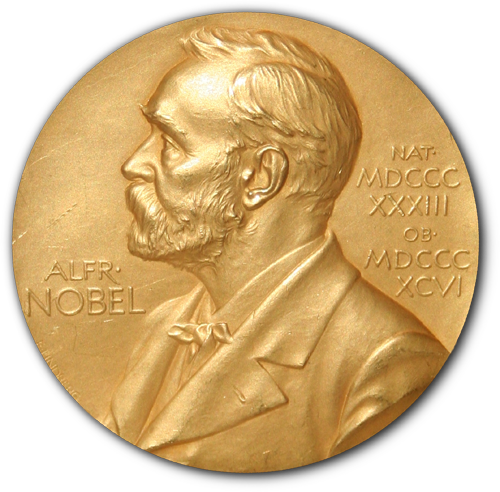
We have a nice example of the standard left wing perniciousness here with this complaint that the Nobels have to be changed because reasons. The pernicity being that instead of doing the honourable thing – go off and create your own – the demand is that an extant part of society be coopted into the Borg and run as those who didn’t create it insist. We do rather see this all around society, don’t we? Google’s search functions must operate as the social justice warriors insist, Facebook and Twitter must not allow anyone not on message to ever say anything publicly, Nobels must be awarded for environmental sciences. And to women. And groups. And as we insist, dammit!
Why Nobel prizes fail 21st-century science
After all, something that’s been around a century and more, gained vast repute by being so, cannot be allowed to continue untamed, can it? That would just be so conservative! Leave this sort of thing alone and people might even think the nuclear family is a pretty good idea. Or clans, tribes, or something.
But many now question this deification of scientists and believe Nobel prizes are dangerously out of kilter with the processes of modern research. By stressing individual achievements, they say, Nobels encourage competition at the expense of cooperation. They want the system to be changed.
Because you didn’t build that, after all. Clearly, the entire society should be awarded prizes for contributing. Just as is true with any form of financial capital, so with human. We all contributed, all should gain the baubles. Filtered through the pure and just who are the nomenklatura, obviously.
September 26, 2018
Quantum Computing – Electron Boogaloo – Extra History – #2
Extra Credits
Published on 23 Sep 2018Today we’re exploring one of Albert Einstein’s most controversial papers: his ideas on the photoelectric effect, which describes light as quanta (discrete packets of energy) instead of a classical wave. This new understanding of light helped Niels Bohr create a new model of the atom.
Credit to Alisa Bishop for her art on this series: http://www.alisabishop.com/
A tremendous thank-you to Alexander Tamas, the “mystery patron” who made this series possible. We finally found room in our busy production schedule to create and air this series alongside our regularly scheduled, patron-approved Extra History videos. A huge thank you to the multiple guest artists we got to work with, to Matt Krol for his skillful wrangling of the production schedule and keeping everyone happy, and to our Patreon supporters for your patience and support.
Support us on Patreon! http://bit.ly/EHPatreon
September 20, 2018
Quantum Computing – The Foundation of Everything – Extra History – #1
Extra Credits
Published on 16 Sep 2018Is light a particle? Is light a wave? Let’s take a look at Thomas Young’s famous double-slit experiment — creating those really super funky interference patterns you might remember from your high school physics classes.
A tremendous thank-you to Alexander Tamas, the “mystery patron” who made this series possible. We finally found room in our busy production schedule to create and air this series alongside our regularly scheduled, patron-approved Extra History videos. A huge thank you to the multiple guest artists we got to work with, to Matt Krol for his skillful wrangling of the production schedule and keeping everyone happy, and to our Patreon supporters for your patience and support.
QotD: Parenthood
What know I about 3 am feedings, Spongebob Squarepants, day care pickups or those special moments when one finds oneself on one’s knees, covered in vomit, as one’s darling child wails uncontrollably? I mean, it all sounds horrible, but I expect that it would be even worse to live it, fighting tears of exhaustion and a post-partum pouch.
[Incidentally, current parents should note that y’all are not doing a good job of selling this child-bearing thing to those of us who are as yet non-reproductive. You know, if you actually succeed in communicating all of the dreadfulness of your parental lives to us, as so many articles currently seem intent upon doing, your social security benefits are going to look pretty darn sad in thirty years or so. But I digress.]
Jane Galt, “Focus on the family”, Asymmetrical Information, 2005-02-18.
September 18, 2018
QotD Breastfeeding
I threw out the baby books that I had been given after the first week of breastfeeding. All those promises/warnings of “don’t be surprised if you experience multiple orgasms while nursing”. Hey, I was always up for multiple orgasms which was no doubt why I had three children in four years but the reality is only a dominatrix could think that the initial stages of breastfeedings could produce an orgasm. Even after the extreme pain vanished there was never the slightest chance of orgasm which leads me to speculate that other people have a much more bizarre sexual life than I could possibly imagine. And if the books were will filled with such utter rot about breastfeeding; I wasn’t willing to chance the rest.
Kate “The Last Amazon”, “When Biology is Destiny”, The Last Amazon, 2005-03-02
September 17, 2018
“Nazis on Drugs” – Wehrmacht & Meth – Wunderwaffe?
Military History not Visualized
Published on 17 Aug 2018There some over-blown claims out there that the “Blitzkriege” were mainly achieved due to the use of Meth (Pervitin) and that historians had ignored this issue. Is it true or false? In this video we take a look at Pervitin, the Wehrmacht, the early German victories aka “Blitzkriege” and various aspects. Was Pervitin a Wunderwaffe? Was the Wehrmacht on Meth? How long was it used? And some aspects.
September 12, 2018
QotD: Origins of India’s caste system
In India, the notion of Hindu culture as a giant conspiracy by Aryan invaders to enshrine their descendants at the top of the social order for the rest of eternity perhaps struck a little too close to home.
But Reich’s laboratory has found that the old Robert E. Howard version is actually pretty much what happened. Conan the Barbarian-like warriors with their horse-drawn wagons came charging off the Eurasian steppe and overran much of Europe and India. Reich laments:
The genetic data have provided what might seem like uncomfortable support for some of these ideas — suggesting that a single, genetically coherent group was responsible for spreading many Indo-European languages.
Much more acceptable to Indian intellectuals than the idea that ancient conquerors from the Russian or Kazakhstani steppe took over the upper reaches of Indian culture has been the theory of Nicholas B. Dirks, the Franz Boas Professor of History and Anthropology at Columbia, that the British malignantly transformed diverse local Indian customs into the suffocating system of caste that we know today.
Now, though, Reich’s genetic evidence shows that caste has controlled who married whom in India for thousands of years:
Rather than inventions of colonialism as Dirks suggested, long-term endogamy as embodied in India today in the institution of caste has been overwhelmingly important for millennia.
This is in harmony with economic historian Gregory Clark’s recent discovery in his book of surname analysis, The Son Also Rises (Clark loves Hemingway puns), that economic mobility across the generations is not only lower than expected in most of the world, but it is virtually nonexistent in India.
Steve Sailer, “Reich’s Laboratory”, Taki’s Magazine, 2018-03-28.
September 6, 2018
Trans-partisan planning
At Coyote Blog, Warren Meyer offers a plan to address man-made climate change, pitched to avoid being dismissed as “typical” of one or the other side:
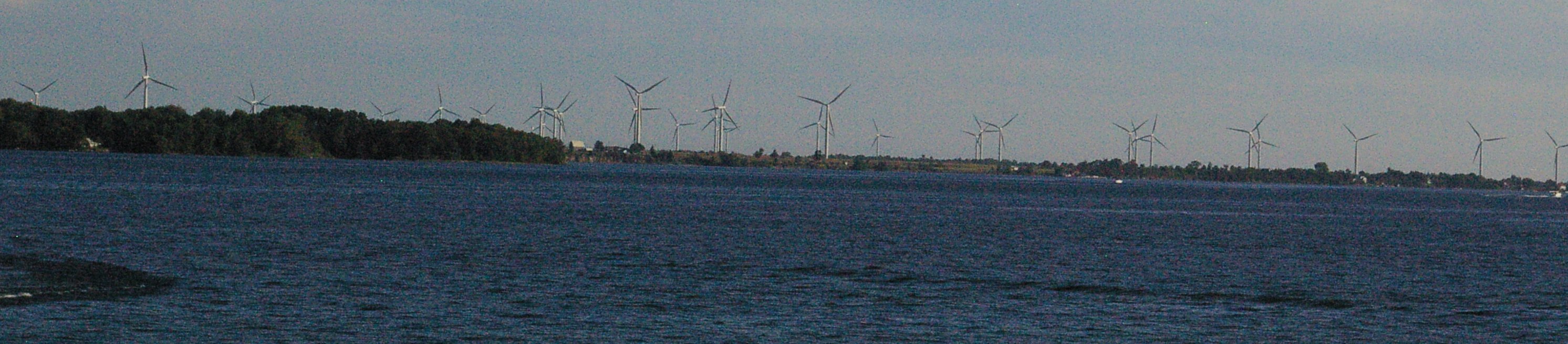
While I am not deeply worried about man-made climate change, I am appalled at all the absolutely stupid, counter-productive things the government has implemented in the name of climate change, all of which have costly distorting effects on the economy while doing extremely little to affect man-made greenhouse gas production. For example:
- Corn ethanol mandates and subsidies, which study after study have shown to have zero net effect on CO2 emissions, and which likely still exist only because the first Presidential primary is in Iowa. Even Koch Industries, who is one of the largest beneficiaries of this corporate welfare, has called for their abolition
- Electric car subsidies, 90% of which go to the wealthy to help subsidize their virtue signalling, and which require more fossil fuels to power than an unsubsidized Prius or even than a SUV.
- Wind subsidies, which are promoting the stupidist form for power ever, whose unpredictabilty means fossil fuel plants still have to be kept running on hot backup and whose blades are the single largest threat to endangered bird species.
- Bad government technology bets like the massive public subsidies of failed Solyndra
Even when government programs do likely have an impact of CO2, they are seldom managed intelligently. For example, the government subsidizes solar panel installations, presumably to reduce their cost to consumers, but then imposes duties on imported panels to raise their price (indicating that the program has become more of a crony subsidy for US solar panel makers, which is typical of these types of government interventions). Obama’s coal power plan, also known as his war on coal, will certainly reduce some CO2 from electricity generation but at a very high cost to consumers and industries. Steps like this are taken without any idea of whether this is the lowest cost approach to reducing CO2 production — likely it is not given the arbitrary aspects of the program.
These policy mess is also an opportunity — it affords us the ability to substantially reduce CO2 production at almost no cost.
September 5, 2018
Mind Your Business Ep. 1: Breaking the Mold
Foundation for Economic Education
Published on 4 Sep 2018Join host Andrew Heaton as we profile the stories of interesting entrepreneurs from around the country for FEE’s newest series, Mind Your Business.
In this episode, we’ll meet Jeremy Umansky. He’s a chef with a true passion for unusual food and his unique brand of cuisine is making a big splash in the culinary world.
September 4, 2018
Debunking claims from The Technology of Orgasm
Alex Tabarrok linked to this paper [PDF] examining the claims that have long since become embedded in academia but appear to have no factual basis at all:
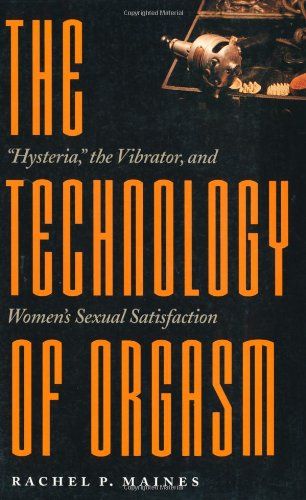
You know the story about the male Victorian physicians who unwittingly produced orgasms in their female clients by treating them for “hysteria” with newly-invented, labor-saving, mechanical vibrators? It’s little more than an urban legend albeit one transmitted through academic books and articles. Hallie Lieberman and Eric Schatzberg, the authors of a shocking new paper, A Failure of Academic Quality Control: The Technology of Orgasm, don’t quite use the word fraud but they come close.
The Technology of Orgasm by Rachel Maines is one of the most widely cited works on the history of sex and technology. Maines argues that Victorian physicians routinely used electromechanical vibrators to stimulate female patients to orgasm as a treatment for hysteria. She claims that physicians did not perceive the practice as sexual because it did not involve vaginal penetration. The vibrator was, according to Maines, a labor-saving technology to replace the well-established medical practice of clitoral massage for hysteria. This argument has been repeated almost verbatim in dozens of scholarly works, popular books and articles, a Broadway play, and a feature-length film. Although a few scholars have challenged parts of the book, no one has contested her central argument in the peer-reviewed literature. In this article, we carefully assess the sources cited in the book. We found no evidence in these sources that physicians ever used electromechanical vibrators to induce orgasms in female patients as a medical treatment. The success of Technology of Orgasm serves as a cautionary tale for how easily falsehoods can become embedded in the humanities.
I was not surprised when I ran a quick search for the cover of the Maines book (embedded above) and the vast majority of images returned were NSFW.


