Quotulatiousness

May 17, 2022

History of Rome in 15 Buildings 09. The Arch of Constantine

toldinstone
Published 27 Sep 2018

The many statues and reliefs from older monuments integrated into the Arch of Constantine – the focus of this ninth episode of our History of Rome – advertise the continuity of traditional Roman values into the fourth century. The Arch’s inscription, however, alludes to the religious revolution set in motion by the first Christian emperor.

If you enjoyed this video, you might be interested in my book Naked Statues, Fat Gladiators, and War Elephants: Frequently Asked Questions about the Ancient Greeks and Romans. You can find a preview of the book here:

https://toldinstone.com/naked-statues…

If you’re so inclined, you can follow me elsewhere on the web:

https://www.reddit.com/r/AskHistorian…
https://www.instagram.com/toldinstone/

To see the story and photo essay associated with this video, go to:
https://toldinstone.com/the-arch-of-c…

May 14, 2022

The Crusades: Part 5 – The Role of Women

Filed under: Europe, History, Middle East, Religion — Tags: , , , , , , — Nicholas @ 04:00

seangabb
Published 19 Feb 2021

The Crusades are the defining event of the Middle Ages. They brought the very different civilisations of Western Europe, Byzantium and Islam into an extended period of both conflict and peaceful co-existence. Between January and March 2021, Sean Gabb explored this long encounter with his students. Here is one of his lectures. All student contributions have been removed.
(more…)

QotD: The farming cycle in pre-modern Mediterranean cultures

As you might imagine, time in agriculture is governed by the seasons. Crops must be planted at particular times, harvested at particular times. In most ancient societies, the keeping of the calendar was a religious obligation, a job for educated priests (either a professional priestly class as in the Near East, or local notables serving as amateurs, as in Greece and Rome).

The seasonal patterns vary a bit depending on the conditions and the sort of wheat being sown. In much of the Mediterranean, where the main concern was preserving a full year’s moisture for the crop, planting was done in autumn (November or October) and the crop was harvested in early summer (typically July or August). In contrast, the Han agricultural calendar for wheat planted in the spring, weeded over the summer and harvested in fall. The Romans generally kept to the autumn-planting schedule, except our sources note that on land which was rich enough (and wet enough) to be continuously cropped year after year (without a fallow), the crop was sown in spring; this might also be done in desperation if the autumn crop had failed. In Egypt, sowing was done as the Nile’s flood waters subsided at the beginning of Peret (in January), with the harvest taking place in Shemu (summer or early fall).

(As an aside on the seasons: we think in terms of four seasons, but many Mediterranean peoples thought in terms of three, presumably because Mediterranean winters are so mild. Thus the Greeks have three goddesses of the seasons initially, the Horae (spring, summer and fall) and Demeter’s grief divides the year into thirds not fourths in the Homeric Hymn to Demeter. In ancient Egypt, there were three seasons: Akhet (Flood); Peret (Emergence [of fertile lands as the waters recede]) and Shemu (Low Water). The perception of the seasons depended on local climate and local cycles of agriculture.)

Bret Devereaux, “Collections: Bread, How Did They Make It? Part I: Farmers!”, A collection of Unmitigated Pedantry, 2020-07-24.

May 10, 2022

How did Jim Jones persuade hundreds of people to commit suicide at his command?

Filed under: History, Religion, USA — Tags: , , , , , — Nicholas @ 06:00

Chris Bray has more disturbing details drawn from Tim Reiterman’s history/biography of Reverend Jim Jones and the Peoples Temple, Raven:

Reverend Jim Jones in front of the International Hotel in San Francisco’s Chinatown on Kearny & Jackson Streets during a rally to save the hotel.
San Francisco Chronicle photo by Nancy Wong, 1977 via Wikimedia Commons.

He broke families, he taught fear, he isolated people, he shamed and demeaned people to break their spirit, he made people dependent, he ran obedience tests with deliberate sadism to see who would take it. That’s it. Those are the tools. Again, all of this comes from Tim Reiterman’s book Raven, which I encourage you to read.

When Jonestown shows up in news stories, Peoples Temple is usually described as a 1970s-era Bay Area cult that moved to Guyana. But that’s not where Jim Jones started the church — he began in Indianapolis in the 1950s. In a moment when there were mostly black churches and white churches, Jones insisted on building a racially integrated congregation. Then he warned them, with increasing urgency, that the church would be attacked by white supremacists who were outraged by their social progress; a flood of menacing phone calls and threatening letters backed up the point. One night, as members of the church visited Jones at home, he stepped into his bedroom alone — just as a brick crashed through the window. The visitors rushed into the bedroom, where Jones told them that the white supremacists had just attacked his house. (Miraculously, the brick and the broken glass had landed outside the window.)

Over the years, the threats built to a crescendo — look, another terrifying letter! — and Jones warned his congregation that the white supremacist threat was moving toward its culmination. At the same time, he began to receive visions about the other great threat hanging over the world: nuclear war. It’s coming, he told them, over and over again, sometimes even naming likely dates for the attack.

Finally, under the increasingly terrifying dual threat of death from local attack or death from Soviet missiles, either of which could happen at any moment, Jones sent an advance party across the country to find a place where his people could survive — and then, with a secure haven located, he led his congregation to safety in a remote area of Northern California. Good thing they made it out, right?

For a congregation of Midwesterners, the journey to California meant a departure from parents, siblings, and adult children; for many, it meant a departure from their birthplace and every social connection they had made outside the church. It put them in the woods a couple thousand miles from their families, in isolation together in a new place.

Then, with church members living in church-built homes on a church-owned property, Jones helped them to see that selfishness was cruel and atavistic. People who loved, who were spiritual, shared together. So what kind of self-involved monster kept a husband or a wife trapped in a limiting one-on-one relationship? Liberating the members of his church, he helped them to start having sex with other church members outside of their marriages. In some instances, particularly close couples with especially stable relationships — like the church attorney Tim Stoen and his wife, Grace — forced Jones to issue direct orders telling them who else they would be having sex with. And yes, it did liberate them from the confinement of their close marriage, quickly and decisively.

Jones also helped by having sex with everybody, teaching them how to become free. One night, Jones had a heart attack — another maneuver he used all the time — in the presence of a church member named Larry Layton; as Layton rushed to help, Jones explained that he needed to fuck Layton’s wife, and had already started, and had brought her to orgasm “no fewer than sixteen or seventeen times” during their first encounter. But no worries, because Jones also assigned another church member, Karen Tow, to have sex with Layton to assuage his pain. After the divorce, Layton and Tow got married — but Tow let Layton know that she still preferred to have sex with Jones. See how liberating this is?

Canadian Armed Forces considering banning Islamic, Jewish, and Christian chaplains for their racist, misogynistic, and bigoted beliefs

Filed under: Cancon, Military, Religion — Tags: , , , , — Nicholas @ 05:00

When an organization goes woke, there’s no halfway measures … it’s all-woke, all the time. Recently the Canadian Armed Forces received a report that could result in current chaplains being forced to resign their commissions because their religious beliefs “are not aligned with those of the Defence Team”. One wonders how future recruiting efforts will go with believing members of those faith-based communities who are potentially going to be explicitly described as “racist, misogynistic, and bigoted”:

Calling other parties racist in the House of Commons is bad. Calling whole religions and their adherents racist, misogynist and bigoted is worse

And yet, this government is being called to support one of the most egregious examples of anti-religious sentiment I have ever seen in Canada, and it was published by the Minister of National Defence Advisory Panel on Systemic Racism and Discrimination. This document is supposed to advise the Canadian Armed Forces on racism and discrimination in the military and, if the government were to follow through on its recommendations, it would effectively disqualify chaplains from Canada’s largest faith groups.

In its final report, this panel recommends that the military should “not consider for employment as spiritual guides or multi-faith representatives Chaplaincy applicants affiliated with religious groups whose values are not aligned with those of the Defence Team.”

As you read the document, it quickly becomes clear that their understanding of “values” appear to be completely ignorant of the actual practice of the very religions they defame. Yet the report would disqualify clergy from — at the very least — the three major Abrahamic religions (Judaism, Islam, and Christianity) under the grounds that these faiths are inherently discriminatory.

Not content to deal with actual cases of misogyny, sexism and discrimination, the government’s panelists have taken a go at determining which beliefs and philosophies are acceptable in Canada’s new modern military.

“The Advisory Panel has observed that there are varying degrees of misogyny, sexism, and discrimination woven into the philosophies and beliefs of some mainstream religions currently represented in the cadre of chaplains in the CAF,” the report says.

Then it gets worse.

The Crusades: Part 4 — Life in Outremer

Filed under: Europe, History, Middle East, Military, Religion — Tags: , , , , , , — Nicholas @ 04:00

seangabb
Published 11 Feb 2021

The Crusades are the defining event of the Middle Ages. They brought the very different civilisations of Western Europe, Byzantium and Islam into an extended period of both conflict and peaceful co-existence. Between January and March 2021, Sean Gabb explored this long encounter with his students. Here is one of his lectures. All student contributions have been removed.
(more…)

May 9, 2022

Reverend Jim Jones and the Peoples Temple

Filed under: Books, History, Religion, USA — Tags: , , , — Nicholas @ 03:00

Chris Bray is reading a book by Tim Reiterman which goes into great detail about the life and career of cult leader and mass murderer Jim Jones:

Reverend Jim Jones in front of the International Hotel in San Francisco’s Chinatown on Kearny & Jackson Streets during a rally to save the hotel.
San Francisco Chronicle photo by Nancy Wong, 1977 via Wikimedia Commons.

In 1971, Jim Jones loaded up some buses in California and took members of his Peoples Temple across the country to Pennsylvania — to Woodmont, the estate of the late spiritual leader Father Divine, who had a much bigger church (and a lot more money) than Jones did.

Reaching Woodmont, Jones tried Plan A, announcing the glorious news that he was the reincarnation of Father Divine and had come to lead his church again, and we might as well just go ahead and put my name on all the bank accounts; the dead leader’s wife suggested, in fairly clear language, that Jones get back on his bus while he could still walk. The delegation from Peoples Temple took the hint. But Jones also executed Plan B, with modest success: He poached some congregants, and drove them across the country to his own church in Ukiah.

Back home, Jones worried that people who had followed Father Divine would struggle to make the transition, feeling more loyalty to their old leader than to their new one. So he showed them that he couldn’t be crossed. One day, as the refugees from Philadelphia sat eating a meal with everyone else in the communal dining room, Jones walked in and caught several of the earlier members of his church being disloyal to him — and so, pointing a finger, he ordered them to die.

They did, immediately. Bodies littered the floor. Jones let the silence linger, standing over the lifeless bodies of the people who had betrayed his trust, the power of death shooting through his fingertips. And then he showed his merciful side: He resurrected them, a choice that allowed the dead to share the horrible feeling of being struck down by the indescribably vast and awesome power of Jim Jones. Terrified, the new members of the church fell into line.

He did this shit all the time. During recruiting trips to rented churches in other cities, visitors had mid-sermon strokes and heart attacks; nurses in the congregation frantically tried to resuscitate them, but announced that it was too late. But no, the Reverend Jones wouldn’t allow death to strike in his own holy church! Rushing forward and shoving the nurses aside, he commanded the dead to ARISE, ARIIIIISSSSEEE yadda yadda whatever. In 1972, a church bulletin proudly announced that Jones had personally resurrected forty dead people so far in just that one year. And here you are feeling proud that you remembered to make the bed this morning.

I take these stories from Raven, a doorstop-thick history of Jones and Peoples Temple written by the journalist Tim Reiterman (with research assistance from a colleague, John Jacobs). Reiterman decided to write about Jones after he was shot at Jonestown, visiting the final Peoples Temple location with the congressional delegation led by Leo Ryan. The research task was made easier by the self-regard the Reverend Jones had felt, because he left behind a giant catalogue of taped sermons and lectures, and a long paper trail of church bulletins and memoranda. The resulting book is an extraordinarily detailed look at every step Jones took along the path to mass murder, starting with the sadistic hucksterism of his strange childhood.

May 7, 2022

The Crusades: Part 3 — The Crusader States

seangabb
Published 6 Feb 2021

The Crusades are the defining event of the Middle Ages. They brought the very different civilisations of Western Europe, Byzantium and Islam into an extended period of both conflict and peaceful co-existence. Between January and March 2021, Sean Gabb explored this long encounter with his students. Here is one of his lectures. All student contributions have been removed.
(more…)

May 3, 2022

The Crusades: Part 2 – The First Crusade

Filed under: Europe, History, Middle East, Military, Religion — Tags: , , , , , — Nicholas @ 04:00

seangabb
Published 5 Feb 2021

The Crusades are the defining event of the Middle Ages. They brought the very different civilisations of Western Europe, Byzantium and Islam into an extended period of both conflict and peaceful co-existence. Between January and March 2021, Sean Gabb explored this long encounter with his students. Here is one of his lectures. All student contributions have been removed.
(more…)

April 26, 2022

The Crusades: Part 1 – The Long Prehistory

Filed under: Europe, History, Middle East, Military, Religion — Tags: , , , , , — Nicholas @ 04:00

seangabb
Published 23 Jan 2021

The Crusades are the defining event of the Middle Ages. They brought the very different civilisations of Western Europe, Byzantium and Islam into an extended period of both conflict and peaceful co-existence. Between January and March 2021, Sean Gabb explored this long encounter with his students. Here is one of his lectures. All student contributions have been removed.
(more…)

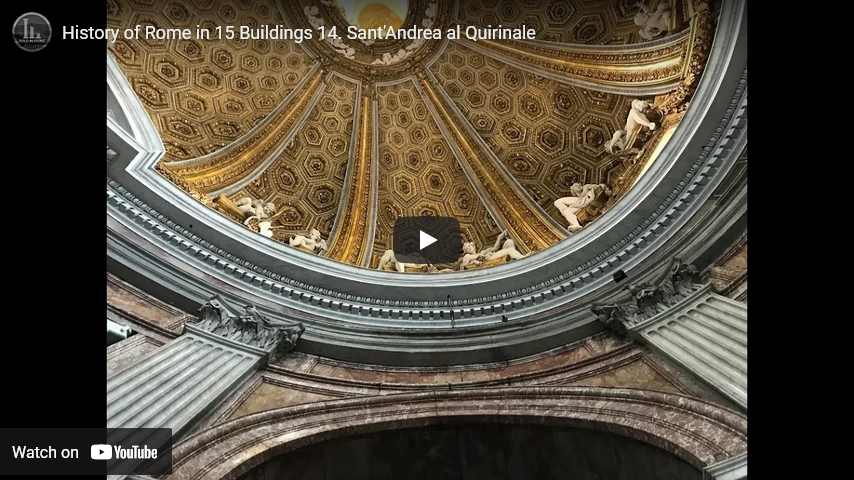
History of Rome in 15 Buildings 06. The Pantheon

Filed under: Architecture, Europe, History, Religion — Tags: , , — Nicholas @ 02:00

toldinstone
Published 27 Sep 2018

The sixth building in our History of Rome, the Pantheon, epitomizes the most stable Roman building material and the most restless Roman emperor – concrete and Hadrian, respectively. This episode discusses the peculiarities of both in some detail.

If you enjoyed this video, you might be interested in my book Naked Statues, Fat Gladiators, and War Elephants: Frequently Asked Questions about the Ancient Greeks and Romans. You can find a preview of the book here:

https://toldinstone.com/naked-statues…

If you’re so inclined, you can follow me elsewhere on the web:

https://www.reddit.com/r/AskHistorian…
https://www.instagram.com/toldinstone/

To see the story and photo essay associated with this video, go to:
https://toldinstone.com/the-pantheon/

Thanks for watching!

April 25, 2022

QotD: The 15th century as a “mulligan”

Filed under: Europe, History, Quotations, Religion — Tags: , , , , — Nicholas @ 01:00

I can’t really recommend Eamon Duffy’s The Stripping of the Altars or Johan Huizinga’s The Autumn of the Middle Ages as casual reading — you don’t have to be a specialist in the field to appreciate them (I’m not), but it surely helps. Nonetheless they’re worth a browse (provided you can find them), for a glimpse inside the head of a once vital, but now senescent, culture.

As I’ve written here before, the 15th century makes much more sense if you consider it a “mulligan” century, a do-over — an attempt to stuff the Early Modern cat back into the High Medieval bag in the wake of the Black Death. One cannot, of course, say that thus-and-such should’ve happened in history — history is the study of what actually did happen — but it’s clear that the Black Death was a giant hiccup in the otherwise “natural” progression from Middle Ages to Early Modern. It was all there in embryo in 1340; had the Black Death not hit the pause button for half a century, the great ructions of the early 1500s would’ve hit in the early 1400s. And they no doubt would’ve been a lot less severe, too — without the Black Death, the “Martin Luther” of 1417 might’ve been one of the great reforming Popes.

Read Huizinga or Duffy, and you get the overwhelming impression of bright children playing dress up. Everything’s cranked way past eleven. Like kids, they know that grownups do these things, and because they’re bright kids they have some idea why grownups do it … but not really, and the nuances utterly escape them. Huizinga tells the story of some churchman who ostentatiously drinks every drink he’s given in five swallows, one for each of Jesus’s wounds … obnoxious enough, but then he goes that characteristically Late Medieval extra mile — because both blood and water flowed from Christ’s side, he takes the second swallow in two gulps.

Knights vow to not open one of their eyes until they’ve met the Turk in battle. Another churchman rails against the kitschy little figurines found in burghers’ homes, a carving of the Virgin Mary with a door in her stomach. You open it up, and there’s the Trinity. Bad enough, but again the Late Medieval twist: He’s not upset at the figure as such (even though it’s the next best thing to idolatry); he’s pissed because you see the entire Trinity there, and not just Jesus, as is theologically proper. Speaking of Mary, academics debate, in all apparent seriousness, whether or not she was an “active participant” in Our Lord’s conception. And so on: Creeping to the Cross, endless novenas and rosaries and vigils, the whole spastically ostentatious public piety of the devotio moderna. The Imitation of Christ is great, everyone should read it, but imagine people doing all that in public, and not in the cloister as Kempis intended.

The old, exhausted, Alzheimery (it’s a word) dregs of a once vital and vibrant spirituality. Sound familiar?

Severian, “Alt Discussion Thread: Sacraments and Superstitions”, Founding Questions, 2022-01-18.

April 17, 2022

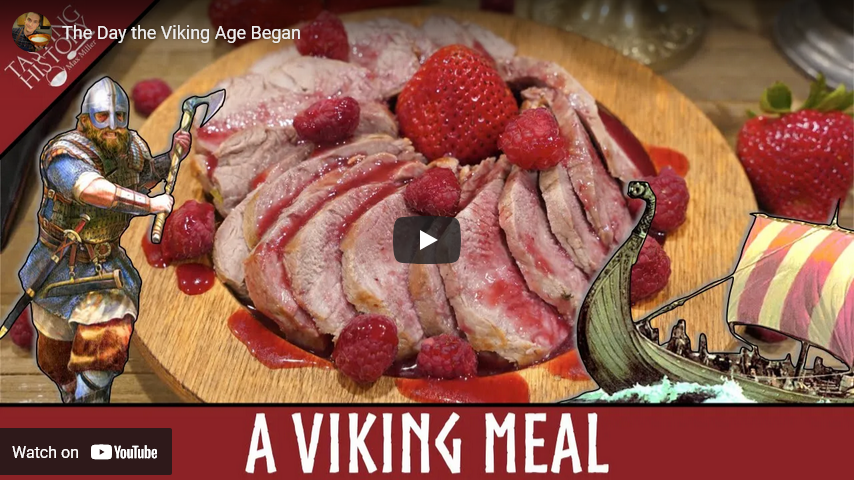
Queen Victoria’s Easter Cake

Filed under: Britain, Food, History, Religion — Tags: , , , , , — Nicholas @ 02:00

Tasting History with Max Miller
Published 23 Mar 2021

Help Support the Channel with Patreon: https://www.patreon.com/tastinghistory
Tasting History Merchandise: crowdmade.com/collections/tastinghistory

Follow Tasting History here:
Instagram: https://www.instagram.com/tastinghist…
Twitter: https://twitter.com/TastingHistory1
Tiktok: TastingHistory
Reddit: r/TastingHistory
Discord: https://discord.gg/d7nbEpy

LINKS TO INGREDIENTS & EQUIPMENT**
Sony Alpha 7C Camera: https://amzn.to/2MQbNTK
Sigma 24-70mm f/2.8 Lens: https://amzn.to/35tjyoW
Self Rising Flour: https://amzn.to/3cKxIoy
Almond Flour: https://amzn.to/3cGN9Ox
Mixed Peel: https://amzn.to/3lp6MP2
Currants: https://amzn.to/3bWEXe4
Castor Sugar: https://amzn.to/3vJMjJR
8 Inch Cake Pan: https://amzn.to/3f3fL7J

LINKS TO SOURCES**
Pot Luck: British Home Cookery Book by May Byron: https://amzn.to/3r1qQIp
The Chronicle of Battle Abbey: https://amzn.to/3ePfrco
Cake: A Slice of History by Alysa Levene: https://amzn.to/2Q7JOAs

**Some of the links and other products that appear on this video are from companies which Tasting History will earn an affiliate commission or referral bonus. Each purchase made from these links will help to support this channel with no additional cost to you. The content in this video is accurate as of the posting date. Some of the offers mentioned may no longer be available.

Subtitles: Jose Mendoza

#tastinghistory #easter #simnelcake

April 16, 2022

Remember all the angst about untold numbers of unmarked graves at former residential schools?

Filed under: Cancon, History, Religion — Tags: , , , , , , — Nicholas @ 05:00

Oh, c’mon man! You must remember the performative grief and anger as even the Prime Minister got into the act by declaring Canada a nation that had committed genocide against as-yet-uncounted First Nations children (oh, and upping the ante, he also implied that this genocide was still ongoing). Do you remember the number of times these graves — often described as “mass graves” rather than merely “unmarked graves” — were investigated in the wake of all this media attention and the fate of at least some of the victims confirmed? No? Well, there’s a good reason for that:

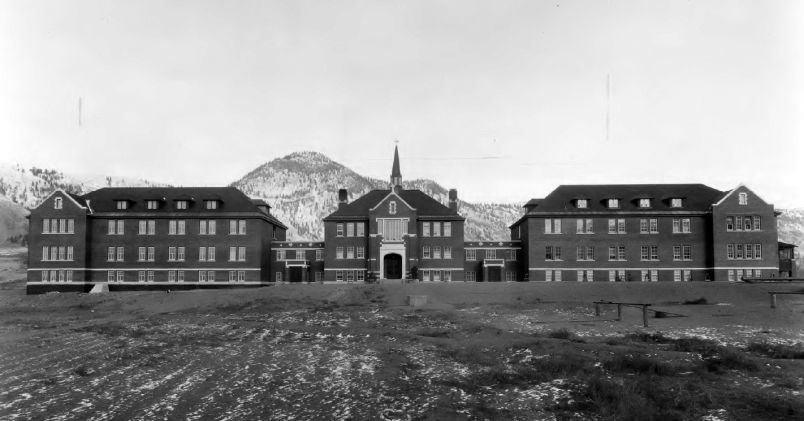
Kamloops Indian Residential School, 1930.
Photo from Archives Deschâtelets-NDC, Richelieu via Wikimedia Commons.

Rosanne Casimir, the chief of the local Tk’emlúps te Secwépemc First Nation, said that “knowledge keepers” within the community had guided investigators to the area to be searched — which had once been an apple orchard on the residential school’s premises. The chief also said that knowledge keepers had already told her that what lay below the surface were graves of children whose deaths had previously been undocumented.

Following that announcement, several other First Nations announced their own discoveries. And in December, the Canadian Press called the discovery of unmarked graves, the “news story of the year”.

If you aren’t from Canada, it’s hard to understand the scale of the national reaction to this story. It’s been known for decades that thousands of Indigenous children died during their time in the residential-school system, many of them from tuberculosis. But this new discovery set the country off emotionally. Justin Trudeau, the prime minister, lowered the Canadian flag on public buildings, and didn’t raise it for another five months. And journalists became unrestrained in the language they used. In one Canadian newspaper, a headline ran, “Is this Canada’s Holocaust moment?”

Canadians were assured that these weren’t just graves, they were the graves of children; and furthermore, it was suggested, these children hadn’t just died from malnutrition or untreated disease — which is obviously bad enough. Some suggested these children were flat out murdered and dumped in shallow graves in the middle of the night. These claims were even aired by the national broadcaster, CBC, on an investigative show called Fifth Estate.

In the Kamloops press, meanwhile, Dr. Sarah Beaulieu, the ground-penetrating-radar expert who’d helped with the discovery, described — as a newspaper put it — “recollections of children as young as six years old being woken up in the middle of the night to dig holes for burials in the apple orchard.”

But there was one odd aspect to the story — and it got odder as the weeks and months marched on: No one seemed to be in any kind of hurry to see what was actually beneath the surface. All we had were ground-penetrating-radar images. And those images don’t show bodies, or caskets, or anything like that. What this technology shows are soil dislocations, which, depending on their depth and spacing, can sometimes indicate the possible presence of grave sites. Why weren’t police, or indigenous authorities, or forensic teams searching for the remains of these poor children?

It’s important to remember that Canadians were being told that this was a crime scene — indeed, not just any crime, but mass murder. If you told Canadians that, say, 215 murdered white children were buried in a field in Toronto, or Ottawa, or Vancouver, there’d be investigators and police all over the place — to see if they could find remains that could be tested and identified. Maybe evidence could be collected showing the manner of death.

And remember that many of the abuses identified at the Kamloops residential school and others like it date to the middle of the 20th century. This means that some of the perpetrators of these claimed child homicides — that is, the teachers, administrators, priests, and ministers who worked at these schools — some of them could still be alive. Shouldn’t we be getting evidence and building a case against them?

April 6, 2022

QotD: Haruspicy and Augury in Roman religious observances

Filed under: Europe, History, Quotations, Religion — Tags: , , , — Nicholas @ 01:00

Perhaps the most important form of divination in Rome was haruspicy (which spell-check insists is not a word, but is). Performed by a haruspex, haruspicy was the art of determining the will of the gods by examining the entrails of animals – particularly sacrificed animals and most commonly (but not exclusively) the liver. The most common thing haruspicy might tell you is if the sacrifice was accepted: a malformed or otherwise ill-omened liver might indicate that the ritual had failed and that the god had refused the sacrifice.

Remember that the do ut des system is essentially one of bargaining with the gods, and the god you are bargaining with always has the option of simply refusing the bargain. This might mean some failure in the mechanics of the ritual (necessitating it be performed again), or that the god had been offended in some way, but it might also mean something more. A lot of sacrificial rituals were done at the outset of important tasks – before battles, political events, etc. What the god might be telling you then with a failed sacrifice is “DO NOT PROCEED”.

The practitioner is given a bit of wiggle room on how to interrupt a failed sacrifice in this way: it might mean “don’t attack at all”, but it might also mean “don’t attack now”. Roman generals, ready to attack, might repeat the same ritual over and over again, like a runner at the start of a race waiting for the “go” signal.

But more information was potentially available, because the exact nature of the liver and its quality might signal more things. In Rome, it was understood that the very best knowledge in this regard came from the Etruscans (an example of how antiquity lends credibility to ritual – Etruscan religion was old even to the Romans, and thus had acquired a strong reputation). The reading of a liver could be complex: we find “liver models” from both Italy and the Near East with guidance on how to interpret different parts of the liver of a sacrificed animal. This could be fairly specific: famously, it was haruspex who warned Caesar about the danger of the Ides of March (Seut. Caes. 81.2).

Another key system for divining the will of the gods in Rome was augury, the reading of the flights of birds (mostly, there are actually other categories of auspicia); doing so is called taking the auspices, and the men who do so are the augurs. Augurs were particularly important in political matters, taking the auspices for elections and the like. Unfavorable auspices could invalidate even a consular election: the gods get a vote too.

Bret Devereaux, “Collections: Practical Polytheism, Part III: Polling the Gods”, A Collection of Unmitigated Pedantry, 2019-11-08.

« Newer PostsOlder Posts »

Powered by WordPress