Quotulatiousness

March 5, 2013

Coming soon: the Police-Industrial Complex

Filed under: Law, Liberty, Media, USA — Tags: , , , , , — Nicholas @ 00:01

Radley Balko interviewed by Vice:

How did 9/11 alter the domestic relationship between the military and police?

It really just accelerated a process that had already been in motion for 20 years. The main effect of 9/11 on domestic policing is the DHS grant program, which writes huge checks to local police departments across the country to purchase machine guns, helicopters, tanks, and armored personnel carriers. The Pentagon had already been giving away the same weapons and equipment for about a decade, but the DHS grants make that program look tiny.

But probably of more concern is the ancillary effect of those grants. DHS grants are lucrative enough that many defense contractors are now turning their attention to police agencies — and some companies have sprung up solely to sell military-grade weaponry to police agencies who get those grants. That means we’re now building a new industry whose sole function is to militarize domestic police departments. Which means it won’t be long before we see pro-militarization lobbying and pressure groups with lots of (taxpayer) money to spend to fight reform. That’s a corner it will be difficult to un-turn. We’re probably there already. Say hello to the police-industrial complex.

Is police reform a battle that will have to be won legally? From the outside looking in, much of this seems to violate The Posse Comitatus Act of 1878. Are there other ways to change these policies? Can you envision a blueprint?

It won’t be won legally. The Supreme Court has been gutting the Fourth Amendment in the name of the drug war since the early 1980s, and I don’t think there’s any reason to think the current Court will change any of that. The Posse Comitatus Act is often misunderstood. Technically, it only prohibits federal marshals (and, arguably, local sheriffs and police chiefs) from enlisting active-duty soldiers for domestic law enforcement. The president or Congress could still pass a law or executive order tomorrow ordering U.S. troops to, say, begin enforcing the drug laws, and it wouldn’t violate the Constitution or the Posse Comitatus Act. The only barrier would be selling the idea to the public.

March 4, 2013

Hollywood accounting tricks … bring your own popcorn for this one

Filed under: Business, Law, Media, USA — Tags: , — Nicholas @ 13:01

At Techdirt, Mike Masnick is looking forward to some amusing courtroom antics as this case comes up:

We’ve discussed a few times the concept of Hollywood Accounting, which covers the various tricks of the trade pulled by the big studios to basically keep all the money for themselves, and guarantees that the movie is never, ever seen as “profitable,” as that would mean they would need to share some of the profits. It appears that we may be about to see significantly more dirty laundry revealing some of that Hollywood Accounting in detail. And this time, it’s extra special because it involves two companies who were corporate siblings for much of the time in dispute, as both were owned by Vivendi. However, StudioCanal is now suing Universal, claiming that Universal pulled accounting tricks to deny giving StudioCanal many, many millions of dollars that were owed.

Florida student punished for taking part in incident with a firearm

Filed under: Bureaucracy, Education, Law, USA — Tags: , , , , — Nicholas @ 10:20

His participation in the incident was to wrestle the loaded revolver out of the hands of the football player who was threatening to shoot another player:

A 16-year-old Cypress Lake High School student, who wrestled a loaded revolver away from a teen threatening to shoot, is being punished.

The student grappled the gun away from the 15-year-old suspect on the bus ride home Tuesday after witnesses say he aimed the weapon point blank at another student and threatened to shoot him.

The student, who Fox 4 has agreed not to identify and distort his voice because he fears for his safety, says there’s “no doubt” he saved a life by disarming the gunman. And for that he was suspended for three days.

[. . .]

The teen we spoke to and authorities both confirm the Revolver was loaded. According to the arrest report the suspect, who Fox 4 is not naming because he is a minor, was “pointing the gun directly” at another student and “threatening to shoot him.”

That’s when the student we spoke with says he and others tackled the teen and wrestled away the gun. The next day the school slapped him with a three day suspension.

“It’s dumb,” he said. “How they going to suspend me for doing the right thing?”

According to the referral, he was suspended for being part of an “incident” where a weapon was present and given an “emergency suspension.”

“If they wouldn’t’ve did what they had to do on that bus,” the teen’s mother said, “I think there would have been a lot of fatalities.”

H/T to Charles Oliver for the link.

March 2, 2013

Chief Justice McLachlin’s “evolving” view of free speech

Filed under: Cancon, Law, Liberty — Tags: , , , , , — Nicholas @ 09:38

In the Ottawa Citizen, Karen Selick explains why the Supreme Court of Canada’s unanimous decision in the Whatcott case was so surprising:

For 22 years, free-speechers have cherished the hope that another case involving censorship and human rights legislation would come back before Chief Justice McLachlin. That’s because in 1990, before becoming chief justice, she wrote dissenting judgments in two cases, Taylor and Keegstra. Her opinion then was that the censorship sections of the Canadian Human Rights Act (CHRA) and the Criminal Code violated the Charter guarantee of freedom of expression, and that the violation was not justified in our free, democratic society. She therefore voted to strike down the censorship clauses as unconstitutional.

Justice McLachlin was outvoted in both Taylor and Keegstra by the narrowest of margins: 4-3. The majority of the 1990 court found both the CHRA and the Criminal Code provisions constitutional. However, Justice McLachlin penned a long and eloquent paean to freedom of expression, recounting its historical value as “an essential precondition of the search for truth,” a promoter of the “marketplace of ideas” and “an end in itself, a value essential to the sort of society we wish to preserve.”

Free-speechers hoped that, given another opportunity to exert her influence among an entirely different panel of SCC judges (she is the only member of the 1990 court still on the bench), she would be able to sway a majority to her 1990 views.

Instead, she herself has apparently abandoned those views, voting with a unanimous court (6-0) in the Whatcott case to uphold the main censorship clause of the Saskatchewan Human Rights Code.

March 1, 2013

Ken at Popehat really does attract the most fascinating legal threats

Filed under: Law, Liberty, Media — Tags: , , — Nicholas @ 13:50

If your Friday routine is a bit dull, go see what sort of crackpots Ken gets to interact with these days:

Today, I received a legal threat purporting to be from Ken Matherne, owner of the Global Wildlife Center. Using people smarter than I (a large set), I confirmed the email came from the Global Wildlife domain. In the email, Mr. Matherne threatens me with litigation and attempts to insult me. It has to be read to be believed.

    OK – your fun was enough – since your cute story, you have hurt my Foundation, I am divorced over this thing that you think was funny. The dad that OD.

    The University that I supported used state university equipment – this will be a test of how the justice system will work. I gave the same people $150K+ to support your liberal views at least that year. And yes I am a conservative, because I am paying all the taxes!

    I gave you the last one. But, you are still playing with my foundation , so you give me no choice You are fucking with my daughter and I will not put up with that – I will not support the Universities and scholarships I give every year. I have given more than 52 percent to democrats over 10 years – don’t care how liberal your group is or have much dope you smoke & drugs you do – nor witch one of you is screwing who – if y’all are all boyfriends on the side – matters not to me.

    You just gave me a new mission in life – to bring the real truth out!

    And this is not a threat , this is a promise – I will spend the rest of my life investigating you and your partners and associates that slander people and companies, even non- profits . I am hiring a team now to work on you and your team. I want to know how your guys can be so sick to do things like this to children.

The crazy goes high octane as the exchanges continue. Oh, and do read the comments at Popehat where Ken’s readers try to make sense of the original and follow-on messages.

Update, March 6th: Now it’s Techdirt getting the crazy legal stalker treatment from the same person who had Popehat in his sights.

Today is Wednesday. At 12:49am California time this morning (2:49am in Louisiana, where the Global Wildlife Center is based), it appears that Ken Matherne subscribed to our daily email. Three minutes later, he unsubscribed. One minute after that, the general catchall email address that is the “from” in the subscription confirmation email, received a message from Matherne with the following subject line and no message:

    you are saved and wait for me!

Leaving aside the vague notions of religious salvation, we waited. Not for long. At 1:39am our time, we received a “reply” to the unsubscribe notice that just said:

    Get ready!

With anticipation building, we continued to wait (actually, we were all asleep). Eight minutes after that email, we got the following:

    What state are you registered in? And if any of your two companies are affiliated – we should start to proceed. My daughter asked me not to last night. But after you new post — I am coming!

    Law is the Law !

[. . .]

I like how he is emailing us after 2am California time, where we are located, and giving us less than 6 hours to respond. While we are curious how reporting on facts means that we have started “a conspiracy,” and find it even more interesting that he appears to directly be admitting that his intention is merely to tie us up in court, we believe that he probably should have heeded the original advice of his daughter that this was not a productive path to take.

He might also want to look up the definition of what a “threat” is, because saying that he will spend the next 20 years taking us to court is pretty much the definition of a threat.

When I read through the messages both Popehat and Techdirt have received, I can’t help hearing them in my head as if read by Mr. Plinkett.

February 28, 2013

“All rights guaranteed under the Canadian Charter of Rights and Freedoms are subject to reasonable limitations”

Filed under: Cancon, Law, Liberty — Tags: , , , , , — Nicholas @ 10:03

The Supreme Court of Canada demonstrated a lack of belief in the value of free speech in yesterday’s Whatcott ruling:

The very first line in the Supreme Court’s calamitous decision in the case of Saskatchewan (Human Rights Commission) v. Whatcott gives a clue to where it is going. “All rights guaranteed under the Canadian Charter of Rights and Freedoms,” it declares, “are subject to reasonable limitations.”

This is a legal truism, but as always it is as important what the Court did not say. It did not choose to begin a ruling on an important freedom of speech case with a ringing affirmation of the importance of free speech, or what an extraordinary thing it is to place restrictions upon it.

Indeed, in its haste to get on with the limiting, it did not even pause to properly quote the section of the Charter that grants the state such authority. The Charter “guarantees” the rights set out in it, Section 1 declares, “subject only to such reasonable limits prescribed by law as can be demonstrably justified in a free and democratic society.” The limits don’t just have to be reasonable. They have to be “demonstrably justified.”

Where the Court’s view of such limits is expansive and approving, the Charter is grudging (“only”) and cautious (“demonstrably”). That’s as it should be. If we accept the bedrock premise of a free society, that government is its servant and not its master, then it is up to the state, always, to ask the citizens’ permission before it intrudes on their liberty, and to prove its necessity: it is never the citizen’s obligation to show why he may remain unmolested. That spirit is lamentably absent from the Court’s reasoning.

The headline really does say it all

Filed under: Cancon, Law — Tags: , , — Nicholas @ 09:51

Jon, my former virtual landlord, sent me a link to this article in the Toronto Star. I’m just gobsmacked:

Black police officer faces charges for not investigating racial taunts against himself
A black York Regional Police officer faces misconduct charges for his handling of a farm party turned ugly, when he was allegedly subjected to repeated racial taunts and told, “I would love to see that guy hanging from a tree.”

A black York Region officer faces Police Act charges for not investigating racial taunts thrown at him when he was called to a bush party.

Const. Dameian Muirhead, 33, is charged with three counts of misconduct for his handling of a farm party turned ugly, where he was allegedly subjected to repeated racial slurs and told, “I would love to see that guy hanging from a tree.”

Muirhead, an eight-year veteran, was charged with insubordination and discreditable conduct over the way he allegedly investigated the party on the Victoria Day long weekend in May 2011. A partygoer lodged the complaint, saying he was rudely treated — but Muirhead also faces a neglect of duty charge for failing to properly investigate the racial remarks.

A police disciplinary hearing which began Tuesday was told that Muirhead and other officers were sent to the party after a woman was seriously injured when run over by an off-road vehicle.

Cybersecurity … can it be anything more than fear + handwaving = “we must have a law!”

Filed under: Business, Government, Law, Technology — Tags: , , , , , — Nicholas @ 00:01

At Techdirt, Mike Masnick fisks “the worst article you might ever read about ‘Cybersecurity'”:

There has been a lot of discussion lately about “cybersecurity” “cyberwar” “cyberattacks” and all sorts of related subjects which really really (really!) could do without the outdated and undeniably lame “cyber-” prefix. This is, in large part, due to the return of CISPA along with the White House’s cybersecurity executive order. Of course, the unfortunate part is that we’re still dealing in a massive amount of hype about the “threats” these initiatives are trying to face. They’re always couched in vague and scary terms, like something out of a movie. There are rarely any specifics, and the few times there are, there is no indication how things like CISPA would actually help. The formula is straightforward: fear + handwaving = “we must have a law!”

However, I think we may now have come across what I believe may top the list of the worst articles ever written about cybersecurity. If it’s not at the top, it’s close. It is by lawyer Michael Volkov, and kicks off with a title that shows us that Volkov is fully on board with new laws and ramping up the FUD: The Storm Has Arrived: Cybersecurity, Risks And Response. As with many of these types of articles, I went searching for the evidence of these risks, but came away, instead, scratching my head, wondering if Volkov actually understands this subject at all, with his confused thinking culminating in an amazing paragraph so full of wrong that almost makes me wonder if the whole thing is a parody.

[. . .]

There’s been plenty of talk about these Chinese hacks, which definitely do appear to be happening. But, what economic activity has been undermined? So far, the hacks may have been a nuisance, but it’s unclear that they’ve done any real damage. It is also unclear how CISPA helps stop such hacks, other than making Congress feel like it’s “done something.”

Are there issues with online security that need to be taken seriously? Yes, absolutely. Do we need legislation to deal with those problems? That’s debatable, and we’re still waiting for some evidence not just of scary sounding threats, but that this kind of legislation will actually help. Unfortunately, this article keeps us waiting. But, it did make us laugh. Unintentionally (we think).

February 27, 2013

Parliamentary Budget Officer conducting “constitutional vandalism”

Filed under: Cancon, Government, Law, Media — Tags: , , , , — Nicholas @ 11:58

Senator Anne Cools is displeased by the PBO’s ongoing legal and media campaign against the Federal government:

An independent senator says the parliamentary budget watchdog, Kevin Page, overstepped his mandate by taking the government to court in a battle for spending figures, and the Senate should force Page to withdraw the legal proceedings.

In a speech to the Senate Tuesday, Sen. Anne Cools argued that Page’s regular comments to reporters and more recent comments to his international counterparts about his battles with the government over spending figures were “provocative and inflammatory public statements” that are “intolerable and unacceptable.”

Page’s actions, Cools argued, were tantamount to contempt of Parliament, were a breach of parliamentary privilege and were affecting the Senate’s credibility to carry out its functions.

“Contemptuous and un-parliamentary,” she said of Page’s actions and comments, “they are constitutional vandalism.”

“They are inappropriate conduct from a Library officer under the direction of the Speakers of the Senate and the House of Commons. This Senate cannot accept this and should take some ‘shock-no-more’ actions.”

Australia’s “human rights enforcement” industry

Australia, like Canada, has a large and over-mighty set of bureaucracies empowered to pursue “human rights” scofflaws (I put “human rights” in scare quotes because the most prominent cases in both countries appear to be enforcement of certain privileges rather than ensuring equal rights for all). Nick Cater says that the joyride for these — if you’ll pardon the expression — kangaroo courts may be coming to an end:

Quietly at first, but with a swelling, indignant chorus, respectable Australians of unimpeachable character began howling Roxon’s bill down. The contrivance of describing race, gender, sexual orientation, disability or 14 other grounds for victimhood as ‘protected attributes’ jarred; the inclusion of industrial history, breastfeeding or pregnancy or social origin suggested overkill; the reversal on the onus of proof, obliging alleged racists, misogynists and wheelchair kickers to demonstrate their innocence, seemed a step too far. The ABC’s chairman, Jim Spigelman, a lawyer of some standing, voiced his concerns about the outcome of the Bolt case. ‘I am not aware of any international human-rights instrument or national anti-discrimination statute in another liberal democracy that extends to conduct which is merely offensive’, Mr Spigelman said. ‘We would be pretty much on our own in declaring conduct which does no more than offend to be unlawful. The freedom to offend is an integral component of freedom of speech.’

[. . .]

Unlike political opinion, attributes like age or gender or sexuality are objective facts. They did not have to be demonstrated. As Senator Brandis pointed out: ‘There is no imperative for a 45-year-old man to go around saying, “I’m 45”. That does not happen.’ Political opinion, however, means nothing unless it is expressed.

Brandis: ‘I do not know if you are familiar with Czeslaw Milosz’s work The Captive Mind, or Arthur Koestler’s book Darkness At Noon… The whole point of political freedom is that there is an imperishable conjunction between the right to hold the opinion and the right to express the opinion. That is why political censorship is so evil — not because it prohibits us holding an opinion but because it prohibits us articulating the opinion that we hold.

‘We all agree that there is no law in Australia that says you cannot have a particular opinion. We all agree that there are certain laws in Australia, including defamation laws, that limit the freedom of speech. My contention is that there should not, in a free society, be laws that prohibit the expression of an opinion… This attempt to say, “Holding an opinion is one thing but expressing an opinion is quite different”, is terribly dangerous in a liberal democratic politic.’

QotD: “There ought to be a law”

Filed under: Law, Liberty, Quotations — Tags: , , , , — Nicholas @ 00:01

Before 25-30 years ago, most people had a sense of what the law was, without having to go to law school, because they understood, intuitively, that some things were bad. Mala in se, the law calls it — “bad in itself.”

But the criminal codes have proliferated mala prohibata offenses — “bad just because the law has prohibited it” — like evil freedom-eating Tribbles for 30 years.

Do you know what you are currently permitted to do? Do you know what you will face a criminal penalty for doing?

You don’t. None of us are aware of the myriad laws we’re breaking every day, simply by doing things that seem obviously legal but some vicious Marxist bureaucrat somewhere decided to put you in jail for.

And this state of affairs works out perfectly for the Marxists.

30 years ago, you’d just assume that anything that wasn’t obviously contrary to morality was legal. That is, you’d have a built-in default setting of assuming liberty. And that assumption of liberty would then propel you to take actions.

But now, you have to assume that many things that aren’t contrary to morality are illegal anyway. And so you now have — quel coincidence! — a built-in default setting of assuming prohibition. And that assumption that many of the things you’d like to do are illegal and criminal thereby reduces your desire to take any action at all.

You become docile, unmotivated, compliant, and risk-averse.

And this state of affairs works out perfectly for those who would control you. Only half the things you’d like to do are actually criminal, but you assume the rest might be too, thus putting it in your head you need State Permission to take virtually any action besides going to work and, of course, paying the state its dues.

Ace, “Enemy of the State”, Ace of Spades HQ, 2013-02-26

February 25, 2013

The difference between professional journalists and mere bloggers

Filed under: Law, Media, USA — Tags: , , , , , — Nicholas @ 13:03

Ken at Popehat explains “the game”:

Here we have the heart of the matter. “Professional” journalists may, indeed, be brilliant, talented, well-trained, professional, with an abiding appetite for hard-hitting but neutral reporting. Yet professional journalists also depend on relationships. Ms. Caldwell calls that fact out, sending law enforcement’s core message to the press: if you want access, play the game.

The game colors mainstream media coverage of criminal justice. Here’s my overt bias: I’m a criminal defense attorney, a former prosecutor, and a critic of the criminal justice system. In my view, the press is too often deferential to police and prosecutors. They report the state’s claims as fact and the defense’s as nitpicking or flimflam. They accept the state’s spin on police conduct uncritically. They present criminal justice issues from their favored “if it bleeds it leads” perspective rather than from a critical and questioning perspective, happily covering deliberate spectacle rather than calling it out as spectacle. They accept leaks and tips and favors from law enforcement, even when those tips and leaks and favors violate defendants’ rights, and even when the act of giving the tip or leak or favor is itself a story that somebody ought to be investigating. In fact, they cheerfully facilitate obstruction of justice through leaks. They dumb down criminal justice issues to serve their narrative, or because they don’t understand them.

This “professional” press approach to the criminal justice system serves police and prosecutors very well. They favor reporters who hew to it. Of course they don’t want to answer questions from the 800-pound bedridden guy in fuzzy slippers in his mother’s basement. But it’s not because an 800-pound bedridden guy can’t ask pertinent questions. It’s because he’s frankly more likely to ask tough questions, more likely to depart from the mutually accepted narrative about the system, less likely to be “respectful” in order to protect his access. (Of course, he might also be completely nuts, in a way that “mainstream” journalism screens out to some extent.)

February 24, 2013

Sherlock Holmes and the case of public domain

Filed under: Books, Law, Media, USA — Tags: , , , , — Nicholas @ 10:36

Following up on an earlier post (“The case of the over-extended copyright“), The Economist explains why there is still legal wrangling going on over the copyright claims on Sherlock Holmes:

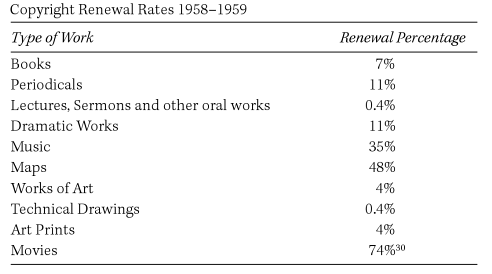
The situation is muddled by differing copyright regimes in America and elsewhere. No one disputes that the copyright has expired on Conan Doyle’s work anywhere where protection ceases 70 years after an author’s death (he died in 1930). Yet when America reformed its copyright rules in 1978 to introduce a “life plus” model in harmony with the rest of the world for works created starting in 1978, it retained its older term-limited system for property created between 1923 and 1977. Works produced within that range have had their expiration extended to a fixed 95-year term from first publication; anything produced earlier is in the public domain. This umbrella of protection covers ten Holmes stories published in America for the first time as part of The Case-Book of Sherlock Holmes in 1927. These stories are still under copyright until January 1st 2023.

[. . .]

The estate also asserts some trademark rights on the Holmes characters, but Mr Klinger confirms to your correspondent that this was not part of the license claim. Jennifer Jenkins, the director of Duke University’s Centre for the Study of the Public Domain, says trademark protection would be inapplicable, in any case. “Trademark law doesn’t fit what they’re claiming to own or what they’re trying to stop,” she says. Ms Jenkins also dismisses any copyright claim the estate might have to any pre-1923 elements of Holmes’s biography. “The problem is that Sherlock Holmes and Watson are quite clearly in the public domain.” The estate did not respond to a request for details about its intellectual property.

[. . .]

An expert in the duration of copyright terms in America, Peter Hirtle of Cornell University finds no basis for the Conan Doyle estate to claim general ownership over aspects of Holmes from stories that are in the public domain. “Let’s imagine that the fact that Holmes plays the violin was included for the first time in one of the copyrighted stories,” he says via e-mail, “then it can’t be included in any new story that draws on the public domain versions.” But if the “Company” stories rely entirely on public-domain elements, then the estate has no ground to stand on, he adds.

February 21, 2013

Reason.tv: How Patent Trolls Kill Innovation

Filed under: Business, Law, USA — Tags: , , , — Nicholas @ 00:01

“My statement to someone that is the victim of a patent troll lawsuit is that you are completely screwed,” says Austin Meyer, who is himself the target of a so-called “patent troll” lawsuit.

Meyer is a software developer and aviation enthusiast. His two passions intersected in the ’90s when he created a flight simulator called X-Plane, which quickly grew in popularity, outlasting even the once-popular Microsoft Flight Simulator. As many software developers do, Meyer made his application available on mobile devices like the iPhone and Android. And this is where he first ran into trouble.

A company called Uniloc has sued Meyer for patent infringement over a patent called, “System and Method for Preventing Unauthorized Access to Electronic Data.” When a computer runs a paid application, one way that developers can assure that a customer has actually purchased the application is by coding the application to match a license code with an encrypted database. This is a method that most paid applications on the Android market use. It’s a method that Meyer argues has been in use since at least the late ’80s. This is the idea that Uniloc claims to own.

February 19, 2013

US Supreme Court okays search warrants issued by dogs

Filed under: Law, Liberty, USA — Tags: , , , , , , — Nicholas @ 15:14

A glum day for civil liberties:

Today the U.S. Supreme Court unanimously ruled that “a court can presume” an alert by a drug-sniffing dog provides probable cause for a search “if a bona fide organization has certified a dog after testing his reliability in a controlled setting” or “if the dog has recently and successfully completed a training program that evaluated his proficiency in locating drugs.” The justices overturned a 2011 decision in which the Florida Supreme Court said police must do more than assert that a dog has been properly trained. They deemed that court’s evidentiary requirements too “rigid” for the “totality of the circumstances” test used to determine when a search is constitutional. In particular, the Court said it was not appropriate to demand evidence of a dog’s performance in the field, as opposed to its performance on tests by police. While the Court’s decision in Florida v. Harris leaves open the possibility that defense attorneys can contest the adequacy of a dog’s training or testing and present evidence that the animal is prone to false alerts, this ruling will encourage judges to accept self-interested proclamations about a canine’s capabilities, reinforcing the use of dogs to transform hunches into probable cause.

Writing for the Court, Justice Elena Kagan accepts several myths that allow drug dogs to function as “search warrants on leashes” even though their error rates are far higher than commonly believed

« Newer PostsOlder Posts »

Powered by WordPress