Quotulatiousness

July 29, 2010

An end to ASBOs in sight?

Filed under: Britain, Law, Liberty, Media — Tags: , , , — Nicholas @ 09:01

BBC News thinks that the much-maligned ASBO may be going away.

Home Secretary Theresa May has signalled the possible end of Asbos in England and Wales, saying it is “time to move beyond” the orders, first introduced by Labour 11 years ago.

They have been imposed on 10-year-old boys and 80-year-old women, used to sober up persistent drunks and mute noisy neighbours.

Of course, one of the more useful aspects of the ASBO has been to allow the media an easy way to find stories to run in the quiet times, like this one:

A 60-year-old man from Northampton was banned from dressing as a schoolgirl.

Peter Trigger’s Asbo stopped him from wearing skirts or showing bare legs on school days between 0830 and 1000 and 1445 and 1600.

The authorities acted after parents complained he was waiting near a primary school dressed in clothes similar to school uniform. He then breached this in December last year by bending over in front of his neighbours repeatedly.

You see, without the ASBO, reporters would have to dig up gems like that themselves, instead of having the local police blotter highlight the most newsworthy items for them.

I often wondered, when reading some of the weird and whacky things that people were hit with ASBOs over, why existing laws weren’t applied (lots of these violations were clearly against the law before ASBOs were created). The intent may have been to give judges more flexibility in sentencing, but in practice it appears to have created a “market” in unusual sentences and distorted the notion of equality before the law.

July 28, 2010

More on that elusive right to photography

Filed under: Law, Liberty — Tags: , , — Nicholas @ 12:13

Jon, my former virtual landlord sent me a link to this article, with more on the “you have the right only if they don’t stop you” aspect of imaginary laws and their not-so-imaginary enforcers:

Legally, it’s pretty much always okay to take photos in a public place as long as you’re not physically interfering with traffic or police operations. As Bert Krages, an attorney who specializes in photography-related legal problems and wrote Legal Handbook for Photographers, says, “The general rule is that if something is in a public place, you’re entitled to photograph it.” What’s more, though national-security laws are often invoked when quashing photographers, Krages explains that “the Patriot Act does not restrict photography; neither does the Homeland Security Act.” But this doesn’t stop people from interfering with photographers, even in settings that don’t seem much like national-security zones.

Tennessee law student Morgan Manning has compiled a list of incidents in which individuals were wrongly stopped. Cases like that of Seattle photographer Bogdan Mohora, who was arrested for taking pictures of police arresting a man and had his camera confiscated. Or NASA employee Walter Miller, who was stopped for photographing an art exhibit near the Indianapolis City-County Building and told that “homeland security” forbade photos of the facility. More recently, a CBS news crew was turned back from shooting the oil-fouled gulf coastline by two U.S. Coast Guard officers who said they were enforcing “BP’s rules.”

All of which leads people to believe that there really are laws restricting peoples’ right to take photographs or videos, because police and other government officials keep acting like there are such laws.

So what should you do if you’re taking photos and a security guard or police officer approaches you and tells you to stop? First, be polite. Security people have tough jobs and probably mean well. Ask them what legal authority they have to make you stop. (If you’re in a public place, like a street, a park, etc., they have none; if you’re in a private place, such as a shopping mall, they may have a basis for banning pictures.) Krages advises those hassled by security guards to threaten to call law enforcement. If it’s an actual police officer who’s telling you to stop shooting, ask to speak to a superior. And remember — you never have a legal duty to delete pictures you’ve taken.

More importantly, we need better education among security guards and law enforcement. In Britain, the country’s police chiefs’ association is attempting to educate officers about the rights of photographers. So far, nothing like that has happened in the U.S., but it should. Trying to block photography in public places is not only heavy-handed and wrong but, thanks to technology, basically useless. With the proliferation of cameras in just about every device we carry, digital photography has become too ubiquitous to stop. Let’s have a truce in the war on photography and set our sights on the real bad guys. Who, it seems, don’t carry cameras anyway.

What is a “fusion center”?

Filed under: Law, Liberty, USA — Tags: , , , , — Nicholas @ 07:50

Wendy McElroy thinks you should know how much domestic surveillance has increased in recent years:

The Fort Wayne Journal Gazette reported on July 25 that “there are 72 fusion centers around the nation, analyzing and disseminating data and information of all kinds. That is one for every state and others for large urban cities.”

What is a fusion center?

The answer depends on your perspective. If you work for the Department of Homeland Security, it is a federal, state, local, or regional data-coordination units, designed to improve the sharing of anti-terrorism and anti-crime data in order to make America safer. If you are privacy or civil-rights advocate, it is part of a powerful new domestic surveillance infrastructure that combines data from both the public and private sectors to track innocent people and so makes Americans less safe from their own government. In that respect, the fusion center is reminiscent of the East German stasi, which used tens of thousands of state police and hundreds of thousands of informers to monitor an estimated one-third of the population.

The history of fusion centers provides insight into which answer is correct.

July 27, 2010

Short form: he’s treating them like civilians

Filed under: Cancon, Humour, Law — Tags: , — Nicholas @ 14:16

In the elevators of my clients’ office building, there are video displays with short news items, stock market performance, weather, and (of course) ads. The short form of this story was something like:

Top RCMP officers claim boss is verbally abusive, close-minded, arrogant and insulting

My immediate reaction was “so he’s acting like a cop dealing with a group of citizens?”

Photography is legal in Britain . . . unless they catch you at it

Filed under: Britain, Bureaucracy, Law — Tags: , , , — Nicholas @ 12:22

The continuing story of police harassment of peaceful photographers has still not come to a middle:

The Metropolitan Police Force cannot be guaranteed to abide by the law when it comes to allowing the public their right to take photographs.

That was the startling admission made last week by Met Police Commissioner John Stephenson under sharp questioning from Liberal Democrat London Assembly Member Dee Doocey during a Police Authority Meeting on 22 July in City Hall. Video footage of the exchange is available on the Metropolitan Police Authority site, with relevant footage from around the 68 minute mark.

[. . .]

He admitted that he was aware of a recent disturbing incident that took place in Romford, which according to Doocey represented “eight minutes of two of your officers intimidating somebody”.

She continued: “At one stage they say that they don’t need a law to stop them photographing, but much more worrying, they don’t need a law to take them away. It’s not a question in my view of . . . It’s so serious that it don’t think it should be somebody giving them words of advice and I don’t also agree with you that it is a question of officers using their discretion.

“This was very black and white: Two of your officers who, despite the fact that I know you have given them guidelines because I have a copy of it, who totally disregarded them and were either so completely ignorant of the law, or decided to ignore the law — they were just going to say they knew the law better than the person they were talking to — they were very seriously intimidating. I find it quite worrying that I don’t think you are taking this quite as seriously as I think you should be.”

In short, the powers-that-be have grudgingly acknowledged that photographers do indeed have the right to take photos unmolested by PC Plod, but admitted that it’s still not actually been properly communicated to Plod and the other coppers on the beat.

We asked the Met for official comment as to why, despite the numerous efforts made by Assistant Commissioner John Yates and other serving officers to get the message about photography across, such incidents kept occurring. They suggested that these incidents were a very small part of the whole story of London policing, that to expect zero incidents was unrealistic, and that when such incidents occurred, they tended to be blown up out of all proportion by the press.

An alternative explanation, suggested to us by current and recently serving police officers with whom we have spoken, is that such incidents represent a far more disturbing aspect of police culture. They suggest that a small minority of officers see the law as being “what they say it is”, and these officers are quite prepared to take their chances, on the basis that the number of times they will be caught out by being recorded is likely to be few and far between.

It’s almost as if the police are sublimating their frustrations with the out-of-control but politically favoured members of certain religious groups and instead victimizing members of the public who don’t have political favour.

July 20, 2010

Welcome back to the draft era

Filed under: Government, Law, Liberty, Military, USA — Tags: , , , — Nicholas @ 07:11

. . . at least, if Representative Charles Rangel gets this piece of dreck through the legislative process:

HR 5741 IH

111th CONGRESS
2d Session
H. R. 5741

To require all persons in the United States between the ages of 18 and 42 to perform national service, either as a member of the uniformed services or in civilian service in furtherance of the national defense and homeland security, to authorize the induction of persons in the uniformed services during wartime to meet end-strength requirements of the uniformed services, and for other purposes.

If this passes, I’ll be happy to welcome the next generation of draft dodgers into Canada. In spite of their sometimes loopy politics, we managed to absorb the last bunch reasonably well.

July 16, 2010

Another round of anti-drug hysteria?

Filed under: Food, Law, Media — Tags: , , , — Nicholas @ 10:00

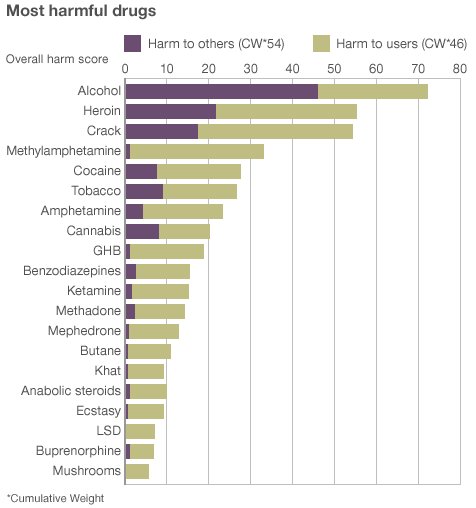
In times of economic uncertainty, we seem to get more off-the-wall panics about other things. Things like kids trying to find legal ways to get high. Jon, my former virtual landlord, sent me this link saying “. . .this is not The Onion! But it is hard to tell. I think I’ll try it when I get home.”

It’s not even news. Nutmeg’s (very mild) hallucinogenic qualities have been known for centuries. As they allude to in the video, the required dosage is so high that it’s the equivalent of smoking a rope: there may be a benefit, but it’s not worth the effort.

Stock up on nutmeg for your ordinary cooking needs, as this inevitably will lead to hysteric calls to ban the substance, or to have it only sold in registered outlets with a log kept.

July 13, 2010

Lacrosse team caught in international issue over passports

Filed under: Britain, Bureaucracy, Law, USA — Tags: , , , , , — Nicholas @ 07:24

This is a confusing situation, as Aboriginal tribes/nations are sometimes considered separate political entities from the country within which they live and other times are not. The Iroquois nation apparently has been issuing their own passports, but now the British and US governments don’t want to honour them as they have in the recent past:

The Iroquois team, known as the Nationals, represents the six Indian nations that comprise the Iroquois Confederacy, which the Federation of International Lacrosse considers to be a full member nation, just like the United States or Canada. The Nationals enter this year’s tournament ranked fourth in the world.

The Nationals’ 50-person delegation had planned to travel to Manchester, England, on Sunday on their own tribal passports, as they have done for previous international competitions, team officials said.

But on Friday, the British consulate informed the team that it would only issue visas to the team upon receiving written assurance from the United States government that the Iroquois had been granted clearance to travel on their own documents and would be allowed back into the United States. Neither the State Department nor the Department of Homeland Security would offer any such promise.

If the US government has allowed the use of Iroquois travel documents before, why are they now pretending they’ve never encountered them before? Is it a formal change in policy or just a bureaucrat flexing his or her ability to cause inconvenience and delay on a whim?

Update, 14 July: The New York Times reports that the team has been allowed to travel on their Iroquois passports:

The State Department’s blessing ends a five-day standoff between the Iroquois team and the federal government over whether the players could travel on their own documents instead of United States passports, as they have done in past international competitions.

Representative Louise M. Slaughter, Democrat of New York, said in a statement that Secretary of State Hillary Clinton personally intervened in the case on Wednesday morning and that the team would be able to depart on Wednesday afternoon.

“I am extremely grateful to Secretary of State Clinton, who responded to this glitch promptly and efficiently,” Ms. Slaughter said. “Going forward, we must find a way to balance homeland security concerns with some common sense and a border policy that does not create unintended consequences.”

Part of the reason appears to have been technical: “The Iroquois passports are partly hand-written and do not include any of the security features that make United States passports resistant to counterfeiting.”

July 10, 2010

More hidden legal changes in Ontario

Filed under: Cancon, Economics, Environment, Government, Law — Tags: , , , , — Nicholas @ 11:33

Kelly McParland finds yet another sneaky change to Ontario law the government tried to slip in un-noticed:

Here’s a great story about the absurdity that ensues when a government tries to force-feed an impractical policy to the population for the sake of environmental posturing.

If you don’t want to read the original, here’s a capsule version:

Ontario sponsors a program to encourage small users of solar power by giving them subsidies. Except it has proved so popular, especially in rural areas, the province quietly slashed the subsidy late last Friday. (You remember Friday, right — quiet sleepy day between Canada Day and the weekend? If you really really wanted to release something at a time no one would notice, you couldn’t pick a better day. Not that the McGuinty government would deliberately try to hide what it was doing, of course. Oh no). The result is that people who bought into the program won’t get nearly the amount they expected. Now they’re upset — having discovered the ruse despite the government’s effort to hide it — and are bombarding MPPs with complaints.

Great eh? That’s good old Dalton McGuinty — absolutely, totally dedicated to energy conservation and environmental improvement, as long as it’s costing someone else money and not him.

This is yet another example of how the McGuinty government loves to sneak in unpopular changes and hope nobody notices for a while. Stealth nanny state tactics? Ladies and gentlemen, I present your Ontario government.

Update, 12 February 2011: The poor folks who took up the McGuinty government’s solar power subsidy are being shafted again:

Added to McGuinty’s problems with wind are similar signs of trouble on the solar front. After strongly encouraging individual solar projects, and offering outrageously generous pricing on solar-generated power, the province unexpectedly announced last summer it was slashing the rate it would pay on some projects. On Friday, hundreds more Ontarians were told that installations they’d erected at the behest of the government can’t be connected to the provincial grid because of technical problems. Rural residents, some of whom have invested large amounts in solar generating operations, will be left high and dry.

[. . .]

Angering rural voters, and battering your credibility with the environmental crowd, aren’t great ideas if you run a government that faces an election in eight months. So it’s no wonder that Ontario’s Liberals sought to hide the bad news by releasing it when (they hoped) no one was watching. But the excitement in Egypt won’t last forever, and eventually people will notice that Ontario’s government, once again, has been forced into a humiliating retreat at considerable trouble and cost to individual Ontarians.

July 9, 2010

Brewing up a real stimulus package

Filed under: Law, USA — Tags: , , — Nicholas @ 20:35

I find it hard to believe that such luminaries as Senator Kerry and Senator Snowe are the moving forces behind this tax reduction scheme:

Can microbreweries revive the economy? That’s the hope of Sen. John Kerry (D., Mass.) and a bipartisan group of senators who are pushing a plan to cut taxes on the nation’s legion of small brewers in hopes of stimulating hiring among craft brewers.

The plan, which was introduced by Sen. Kerry, would lower the per-barrel excise taxes on small breweries’ first two million barrels of beer per year (that’s 62 million gallons) and would triple the size of what the government classifies as a small brewer — to breweries that produce six million barrels a year from two million currently. Some co-sponsors include Sens. Olympia Snowe (R., Maine) and Ron Wyden (D., Ore.), whose states, not surprisingly, rank high on the list of states with the most breweries per capita.

So-called craft brewers are one of the few industries to thrive through the recession. The segment grew from 7.2% by volume last year and 5.9% in 2008. The segment has even become a haven for budding entrepreneurs that have been let go from corporate jobs. “There’s not that many success stories in American manufacturing today and craft beer is one of them,” says Jim Koch, founder of The Boston Beer Co. which makes the various Samuel Adams beers. Mr. Koch — whose company is in Mr. Kerry’s home state — has been leading the charge for a lowering of the excise tax on small brewers.

Admittedly I’m in favour of most tax reductions, but this one in particular seems to be a good idea.

Poll numbers understate unhappiness with police over G20

Filed under: Cancon, Law, Liberty — Tags: , , , , , , — Nicholas @ 18:11

Publius makes a very good point here:

The Greater Toronto Area holds a population of about 5.6 million, stretching from Burlington in the west to Oshawa in the East. The City of Toronto comprises less than half the total population, and less than one-tenth of the total land area. The summit, protests and general mayhem occurred in the downtown core, itself a small area of the City of Toronto. In the lands north of Bloor, west of Bathurst and East of the Don River, the summit meant traffic delays, not riot cops.

Travelling on the 400 series highways that weekend entailed some delays — much of the Gardiner Expressway was closed — and the most notable police presence was at highway interchanges and on / off ramps. Even for those who live in the City of Toronto itself, the vast majority saw the violence of the summit weekend on television. A large number of Torontonians had simply evacuated the City altogether, either to the suburbs to stay with relatives, or to cottage country. As a result, the images fixed in most Torontonians minds are of police cruisers burning — played again and again — and not of officers dragging middle aged men with prosthetic legs across city streets. As the stories of that weekend seep out, expect those poll numbers to change.

I was one of those who chose not to hang around in the city for the entire week leading up to the summit: I didn’t see the point in putting up with the delay and hassle. I still think it was a remarkably stupid idea to hold the G20 meetings in downtown Toronto, and that the police were handed a duff hand to play. But even given that, the police played their hand very badly.

There may or may not be a serious inquiry into the affair, but the police lost a lot of support between Friday night and Saturday night: letting the geeky nihilists get away with dramatic street theatre on national TV, then turning around and arresting innocent bystanders. It took remarkable effort to squander public support, but the police or the politicians directing the police managed to do it. Bureaucratic bipolar disorder isn’t pretty.

July 7, 2010

Delineating the “bounds of the central government’s Constitutional authority”

Filed under: Books, Government, Law, Liberty, USA — Tags: , — Nicholas @ 07:18

Art Carden reviews a new book by Thomas E. Woods:

In Nullification: How to Resist Federal Tyranny in the 21st Century, Professor Woods offers a thorough-but-compact discussion of the doctrine of nullification. As he writes, “(n)ullification begins with the axiomatic point that a federal law that violates the Constitution is no law at all” (p. 3). It is, according to the framework established by the Founders, an essential part of the system of checks and balances that defined the federal union. Even though they established federal-level checks and balances, the founders were troubled by the notion that the Federal government should be its own judge.

Nullification was formalized in the Virginia and Kentucky Resolutions of 1798, and it essentially says that the states are not bound to enforce federal laws that step outside the bounds of the central government’s Constitutional authority. That raises two obvious questions. First, what are “the bounds of the central government’s Constitutional authority”? Second, what is the Constitutional relationship between the states and the central government? Woods discusses the three provisions that have been used to justify expansion of federal power — the “general welfare” clause, the commerce clause, and the “necessary and proper” clause — and argues convincingly that these were largely clauses of convenience that empowered the government to do the things necessary to fulfill their constitutional mandate. In Woods’s interpretation, this meant that the government had the constitutional authority to do mundane tasks in pursuit of their constitutional goals. They could buy lumber to build “needful buildings” and paper on which to print government documents without explicit permission, for example (p. 29). As Woods interprets it, the interstate commerce clause establishes the United States as a free trade zone. It does not give the government carte blanche to do as it pleases as long as it can cook up an “interstate commerce” rationale. Citing James Madison, Woods asks an important question: if the general welfare clause is sufficient to justify pretty much anything the Federal government wants to do, why bother with enumerated powers? Indeed, why even bother with a constitution?

Unfortunately, sympathy for nullification and states’ rights has been smeared by the association of these ideas with slavery. This is most unfortunate because it conflates a question of unambiguous moral evil (slavery) with a legitimate and difficult constitutional question.

July 6, 2010

Men at Work to pay 5% for infringement

Filed under: Australia, Law, Media — Tags: , — Nicholas @ 07:37

Following up from a post earlier this year, an Australian judge has avoided penalizing Men At Work the maximum for using a riff from another song:

A judge in Sydney has ordered the Australian band Men at Work to hand over a portion of the royalties from their 1980s hit Down Under, after previously ruling its distinctive flute riff was copied from a children’s campfire song.

But the penalty he imposed of 5% of the song’s royalties was far less than the 60% sought by publishing company Larrikin Music, which holds the copyright for the song Kookaburra Sits in the Old Gum Tree.

Kookaburra was written more than 70 years ago by Australian teacher Marion Sinclair for a Guides competition, and the song about the native Australian bird has been a favourite around campfires from New Zealand to Canada.

That seems like a remarkably sensible judgement: the song clearly does infringe, but only for a small portion of the entire recording: it’s not critical to the success of the song, but it does contribute to its overall atmosphere.

June 30, 2010

The CCLA weighs in

Filed under: Cancon, Law, Liberty — Tags: , , , , — Nicholas @ 09:19

Clive sent me an email this morning, with a link to the preliminary report from the Canadian Civil Liberties Association, saying:

The fourth paragraph of the Executive summary ends with a cautionary note about the police chasing after 100-150 protester and in the process disregarding the rights of thousands.

My thought was, what do you expect. In Ontario we let the police do this ALL the time. We encourage it. We even applaud it. It is called RIDE.

This is just the next logical step.

The police demonstrated a bipolar attitude to the disturbances, with the “good cop” sitting back on Saturday and letting the nihilists get away with all sorts of property damage (including three police cruisers), while the “bad cop” showed up later on, like the punchline to a Monty Python skit, to arrest the bystanders (“Society is to blame.” “Right, we’ll arrest them instead!”).

Questionable police tactics at the G20 protests

Filed under: Cancon, Humour, Law, Liberty — Tags: , , , , , , — Nicholas @ 09:07

Jon, my former virtual landlord, sent me a link to this video, saying “My support for the police evaporates with [this] video. What the hell were the police thinking?”:

He then suggested that this is a Toronto Police Services training video:

Update: Even better than the ragged charge shown in the first video, now the police are showing off some of the “weapons” they collected during the G20, including LARP (Live Action Role Playing) gear confiscated from a gamer:

Toronto Police are on the defensive this week as they attempt to defend their heavy-handed tactics during the G20. To prove the seriousness of the threat to public security, they took police on a tour of weapons confiscated from activists.

Only there’s a problem: some of these weapons were taken from people who weren’t demonstrators. And some of them weren’t weapons — the police proudly displayed the blunt arrows and chainmail they confiscated from a live-action role-player who was taking the train to a game

If they’d found a random SCA heavy fighter to take the armour and weapons from, they might have a slightly better case: SCA heavy combat gear would be comparable to (in many cases better than) police riot gear. SCA weapons are solid rattan covered with silver duct tape to make them appear to be metal — LARP weapons are non-functional foam or other light material (similar “weapons” are called “boffers” and are used as safe toys for kids). SCA shields are fully functional as protection — LARPers generally carry lightweight shields that just look like protection but would not do much in a real confrontation.

I liked this comment to the BoingBoing post:

I remember seeing this same police press conference, only it was in Miami in 2004 during the FTAA summit. Among the items they presented as having seized from activists:

– Tire iron
– Gas can
– A map of Miami (see, they could use it to plan out their terrorist strike!)

It took me a minute to realize they had just pulled all this stuff out of the trunk of some unfortunate activists’ car, where you’d totally expect to find it.

This kind of press conference is a standard component in the “new model” of protest suppression. It gives the police the hilarious task of taking a whole bunch of mostly innocuous stuff they seized and making up stories about how it could be used to maim, kill, and generally cause mass destruction.

I mean srsly – an empty water bottle could be used to fill with gasoline and throw at cops?

Bruce Schneier would be proud.

« Newer PostsOlder Posts »

Powered by WordPress