
World War Two
Published 20 Sept 2023How did the Allies build and manage an enormous railway supplying the Soviet Union through Iran? How did the Red Cross deliver aid parcels through enemy territory to Allied POWs? And, how effective were the rear gunners in ground attack aircraft like the Stuka and Sturmovik? Find out in this episode of Out of the Foxholes.
(more…)
September 21, 2023
Iranian Railways, Red Cross Care Packages, and Tail Gunners – WW2 – OOTF 31
Comments Off on Iranian Railways, Red Cross Care Packages, and Tail Gunners – WW2 – OOTF 31
September 17, 2023
The Ballad of Chiang and Vinegar Joe – WW2 – Week 264 – September 16, 1944
World War Two
Published 16 Sep 2023The Japanese attacks in Guangxi worry Joe Stilwell enough that he gets FDR to issue an ultimatum to Chiang Kai-Shek, in France the Allied invasion forces that hit the north and south coasts finally link up, the Warsaw Uprising continues, and the US Marines land on Peleliu and Angaur.
(more…)
Comments Off on The Ballad of Chiang and Vinegar Joe – WW2 – Week 264 – September 16, 1944
September 11, 2023
How the Russian Army Collapsed
The Great War
Published 9 Sept 2023As 1917 began, the Russian army was larger and better-equipped than ever before. Within weeks, the Tsar and his dynasty were gone, and by the summer, the Russian army was disintegrating before the eyes of its generals — but how exactly did one of the most powerful armies in the world collapse?
(more…)
Comments Off on How the Russian Army Collapsed
September 10, 2023
Bulgaria at War with Everyone – WW2 – Week 263 – September 9, 1944
World War Two
Published 9 Sep 2023This week the USSR invades Bulgaria … who’ve also declared war on Germany, and who are still at war with the US and Britain, so Bulgaria is briefly technically at war with all four at once. Finland signs a ceasefire, the Germans are pulling out of Greece, the Warsaw and Slovak Uprisings continue, Belgium is mostly liberated, and across the world, the Japanese enter Guangxi, and there are American plans to liberate the Philippines.
(more…)
Comments Off on Bulgaria at War with Everyone – WW2 – Week 263 – September 9, 1944
September 6, 2023
Radical or Ridiculous? | T-14 Armata | Tank Chats #171
The Tank Museum
Published 26 May 2023In this Tank Chat, David Willey takes a detailed look at a vehicle that has garnered significant interest and controversy — The Russian T-14 Armata. David explores why this vehicle draws so much attention, and how it has taken a radical departure from previous Soviet design philosophy.
(more…)
Comments Off on Radical or Ridiculous? | T-14 Armata | Tank Chats #171
September 5, 2023
QotD: “Karl Marx was right after all”
Alas, as my fictional namesake said somewhere, time has a habit of turning all our lies into truths. It turns out Karl Marx was right after all. Who, I ask you, is more cartoonishly evil, more like the caricature capitalist of paranoid Communist fantasies, than Jeff Bezos? Mark Zuckerberg? Tim Cook? Jack Dorsey? Sundar Pichai?
We’re actually living, comrades, in the class-warfare world Marx preached in the 1840s. Everything Marx said about the factory owners of the First Industrial Revolution, that seemed so luridly absurd that even other Socialists criticized him for it, is true of the tech fascists of the Biden-Harris Revolution. Solzhenitsyn cites Russian writers from the late nineteenth century noting that Marxian socialism would end up as nothing more than dialectically-constructed feudalism, and lo, here we are. America in 2021 looks almost exactly like the USSR looked upon Lenin’s death …
… that was 1924, gang, and in case you’ve forgotten, what happened next was a vicious intra-Party civil war, in which Stalin crushed his enemies. AOC makes a pretty unlikely Trotsky, but it’s no less ludicrous than the thought of Nancy Pelosi as Koba … but that’s just the thing, isn’t it? We’ve been noting here for years that the modern Left is dedicated to being the Hollow Men in all things. They’re Revolutionaries without a Revolution — they go on and on (and on and on and on) about fighting the power and sticking it to the Man, even though they, themselves, have been the Man since at least 1974. They’re moralizers without morality — you’ll be scolded for not being as perverse as humanly possible. And, of course, their politics is a cult of personality without the personality — not even Orwell or Kafka could’ve come up with the Party installing an obvious dementia patient as its figurehead, not even if you’d dropped LSD in their tea.
As always — and yes, even in the depths of Stalin’s terror — the real rulers are the nomenklatura, the apparatchiki. Not even Koba the Dread can be everywhere. Being Hollow Men, our Postmodern Leftist masters have decided to dispense with the whole Kremlin thing. Who needs the NKVD, the gulag, the dreaded Lubyanka? The Junior Volunteer Thought Police “fact checking” everything on social media will do it for free, and much more efficiently, at which point their fellow travelers in the banking system will simply cut the badthinkers off. The only reason the gulag persisted after Khrushchev’s “secret speech” was that the Soviets, those fools, wanted to exploit their natural resources themselves, to build things themselves; labor camps were thus integral to the Soviet economy. Our masters don’t care about that, and their masters, the Chinese, certainly don’t. Much more efficient, and psychologically effective, to let the unperson simply starve in the middle of the town square, pour encourager les autres.
But hey, at least we’ll have some fun figuring out who the new Trotsky is. Again, my money’s on AOC — she’s so stupid that she’s bound to do something irrecoverably dumb sooner or later, after which she gets the digital icepick. That’ll be a hoot. Enjoy what parts of the spectacle you can, comrades – if you’re a student of human folly, you’re going to love the next few decades, because Marx was right about that too, the bastard — second time as farce.
Severian, “Marx Was Right After All (on ongoing series”, Rotten Chestnuts, 2021-01-12.
September 3, 2023
The War is Five Years Old – WW2 – Week 262 – September 2, 1944
World War Two
Published 2 Sep 2023Five years of war and no real end in sight, though the Allies sure seem to have the upper hand at the moment. Romania is coming under the Soviet thumb and Red Army troops are at Bulgaria’s borders, the Allies enter Belgium and also take ports in the south of France. A Slovak National Uprising begins against the Germans, and the Warsaw Uprising against them continues, but in China it is plans for defense being made against the advancing Japanese.
(more…)
Comments Off on The War is Five Years Old – WW2 – Week 262 – September 2, 1944
September 1, 2023
QotD: Process thinking about the Russo-Ukraine war
Combining them, consider the Ukraine Narrative as one giant ad campaign. The lack of Outcome-thinking hit all of us from the very moment it became The Current Thing. What, exactly, are we doing in Ukraine?
Note that there is a case to be made. I don’t agree with it, obviously, but I can make one, and of course it’s ruthlessly Outcome-driven: In a world where States have no friends, only interests, it is consistent with Realpolitik to weaken your rivals when it can be done at low cost and minimal risk. We’re doing to Russia what Russia (and China) did to us in Vietnam — they were quite open about aiding their fraternal socialist brothers in the struggle against Capitalism and Western Imperialism.
One can — and of course in this case would — argue that fucking around in Ukraine is neither low-cost nor low-risk, but that too is Outcome-thinking. You can persuade me, an Outcome thinker, with facts and reason. Steve Sailer is almost a caricature of an Outcome thinker at this point, and he’d be just super at demolishing my hypothetical Realpolitik argument for US aid to Ukraine.
But not only do the Process-“thinkers” in [Washington, DC] not have an Outcome in mind, it never crossed their minds to have one in the first place. This is why I keep coming back to Jaynes [Wiki]. We — normal people — keep trying to assign goals to people like Victoria Nuland. The only goals we can come up with, though, are bugfuck insane — she seems to really believe that not only can Ukraine win the current conflict, but that they’ll march all the way to Moscow, Regime-Change everyone, and invite all the Western parasites in to carve up the country …
… nothing else makes sense, but “sense” left the building with Elvis. There is no Outcome. Which is likelier:
- that she has some top secret Master Plan in a manila folder in a safe somewhere, that reads “Ukraine captures Moscow; Exxon CEO is on the first flight in”; or
- Her behavior seems purposive the way the eerily coordinated gyrations of a school of fish or a flock of birds seems purposive? It looks coordinated, but it can’t actually BE coordinated — it happens too fast for all the individual members to process the signals.
I’ve done a lot of Ukraine shit in the stoyak roundups, and I have never once seen a Victory scenario. The closest even the wildest-eyed optimist comes is very clearly Underpants Gnome shit:
- Send Wunderwaffen to Zelensky
- ???
- Victory!!!
And the third term — the crucial one, Victory — is never ever defined. Let’s assume the Wunderwaffen work and the Big Spring Counteroffensive that they’ve almost literally been advertising, Mad Men-style, goes off flawlessly. What then? At what point do we call off the dogs? Again, unless you seriously believe in Victoria Nuland’s Master Plan — a real document in a real safe, that she got Brandon’s puppeteers to forge his signature on — there simply IS no answer. Their “plan” for “victory” on the battlefield is exactly the same as Bud Light’s “plan” for “victory” with the [Dylan Mulvaney] ads.
It’s all Narrative, all Process. The only outcomes anyone involved considers are all small-o, and they’re all interpersonal. Nobody thinks about battlefield victory — the actual movement of lines on a map, let alone the reality of fighting and dying. But they obsess over being seen to believe in victory. To return to Geo. Orwell‘s commentary:
Creatives spend perhaps half their time in protracted meetings where the primary activity is herding cats, making sure everyone agrees on the current direction of things … until the direction changes, a couple of hours later.
And everyone is fine with this, because everything of importance happens interpersonally.
I’m going to reuse this quote, but this time quote it in full. Two paragraphs, and they’re long, but extremely important. Here’s the first:
The art directors and copywriters who dream up what you see in commercials tend to have a few things in common. The copywriters imagine themselves future screenwriters or novelists, the art directors imagine themselves movie directors eventually. For them, every commercial is a little self-contained movie with a plot and characters, even though no one in the real world gives fifty milliseconds of thought to the character of the TV housewife using that new dustbuster. They very seldom discuss sales, in the sense of “Will this sell more widgets?” In fact they mostly loathe “hard sell” advertising, where you emphasize price.
Emphasis mine, because the question “Will this sell more widgets?” is the definition of Outcome thinking. And if you’re trying to herd cats — as anyone who has had to endure this kind of meeting knows — measurable results are the enemy. Because I really want you to consider the answer to the following question: What’s in it for you, personally, if Acme Corp. sells a thousand more widgets?
Unless you’re a salesman on commission, the answer, for all practical purposes, is: Nothing. Maybe a small bump in your end-of-year bonus, if you get a year-end bonus, but that’s the absolute best case scenario: Another hundred bucks on a single paycheck, six months down the line.
And while I’m certainly not going to sneeze at a hundred dollars, consider what that Benjamin cost you. Half the office hates you now, because you were right. You’re smarter than them, you bastard, and now they know it. You showed them up. Oh, and you’ve also alienated the other half of the office, because what should have been a thirty minute meeting stretched for two hours because you stuck to your guns. Thanks, asshole, I got caught in rush hour and didn’t get home until 7:30. I hope you choke on your $100 bonus. (And don’t think you’re going to get any love from the people who agreed with you in the meeting from the get-go, because they’re all jealous they didn’t think of it themselves).
Now consider the second paragraph, that gets to the heart of Process thinking:
They [“creatives”] favor “conceptual” advertising, where instead of telling you why this cellphone is superior to another, they show you an ironic or cute story involving the cellphone, or maybe you merely show exciting, vibrant people dancing with the thing, with bright colors and music video tropes. This goes back to the recent discussion here of cultural conformity and “mood boards”. Mood boards have been a very big thing in advertising, even more so than twenty years ago. “Look and feel” takes precedence over most things, especially in corporate, nationwide campaigns. For example, you will see Lexus nationwide commercials where the car drives heroically through some surreal industrial or desert landscape, with extreme lighting and lots of flashy cinematography. Local dealer ads for Lexus will concentrate on terms and pricing, and art directors hate doing local dealer car ads. Not artsy enough.
“Conceptual” ads are collaborative ads. With Outcomes, you’re either right or wrong; it either sells more widgets or it doesn’t, but everyone contributes to “mood”. No one can be proven right via sales figures, but no one can be proven wrong, either. Jane sucks at Outcome-driven advertising, because none of her ads moved the sales needle. But Jane is great at “mood boards”; Jane’s a real team player; Jane makes everyone in the meeting feel special. When Jane runs the meeting, we achieve consensus in thirty minutes. When you run the meeting, Mr. Will This Sell More Widgets, it goes on for hours, and we never get the answer — IF we get the answer — until the next quarter’s sales figures come in.
Apply that to the Ukraine Narrative, and test it against Nehushtan‘s heuristics:
“We have always been at war with Eurasia”: what you have to support turns on a dime and doesn’t have to be consistent with anything that went before.
Check. What you “believe” changes as the “mood board” changes, and the “mood board” changes as the group consensus changes in the pitch meeting. We’re all susceptible to this to some degree — someone with stronger Google-fu than mine can no doubt find that old psych experiment from the Fifties, with something like Müller-Lyer lines. No doubt you recall hearing about it: They planted some kids in the crowd who insisted that the shorter lines were really longer, and since these kids were absolutely adamant in their “belief”, eventually most of the class “agreed” that the shorter lines were actually longer.
That’s all consensus stuff, Process stuff. What does it really cost me to say that the shorter line is actually the longer? If it’ll get Jane to finally shut the fuck up, ok. If Jane happens to be really popular, and especially if I think agreeing with her will get me closer to her panties, then the faster I’m going to agree. And if Jane happens to hold my entire career in her hands, and can get me kicked out of the Cloud, to wander the Cursed Earth among the Dirt People …
“Two Minutes Hate”: doesn’t matter who or what the target person is, they are always slotted into the same role, given the same attributes, and the same criticisms are made of them.
Severian, “What is Leftism? (and what to call it?)”, Founding Questions, 2023-05-30.
Comments Off on QotD: Process thinking about the Russo-Ukraine war
August 30, 2023
The endless search for the “Easy mode” in military conflict
CDR Salamander on the search for shortcuts to military excellence, despite literal millennia of evidence that there are no such shortcuts:
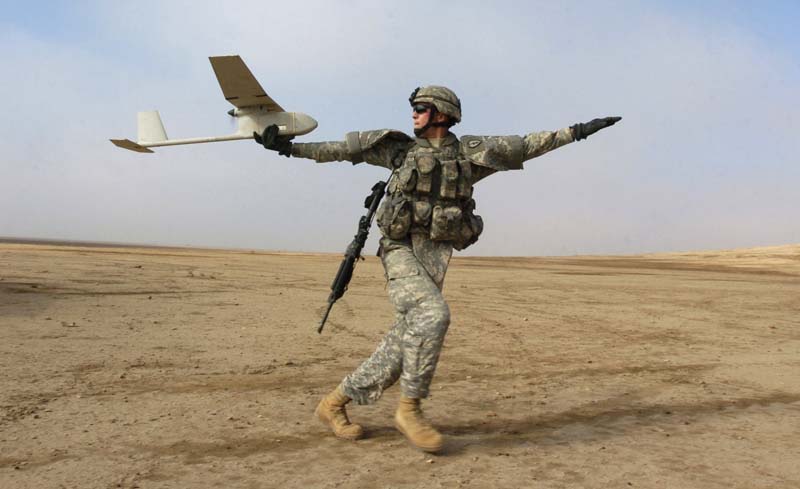
As the Russo-Ukrainian War reaches its 20th month, I hope everyone has been sufficiently sobered up to stand firmly against those promoting the “72-hour War” or spin an attractive story about some transformational secret sauce that provides an “easy button” for those tasked to do the very hard work of preparing a nation for war should, and if, it were to come.
See the Battle of Hostomel if you need a recent example of where buying this wishcasting can get you.
There is a reason we have continually railed against this Potomac Flotilla mindset for the better part of two decades here — it is the self-delusion of faculty lounge theories running up against the Gods of the Military Copybook Headings reality what we have thousands of years of experience to reference.
We are not smarter than previous generations. There is no secret weapon or war winning technology — or magic beans — that will allow us to skip past the hard work of a viable strategy backed up by a properly resourced industrial capacity to build, maintain, deploy, and sustain a fighting force on the other side of the Pacific for years if needed.
Not 24-hours. Not 72-hours. Think 72-weeks to 72-months and you have your mind right.
[…]
We do no one any good allowing free run towards the national security version of the prosperity gospel, a branch of the transformationalist cult, and their “name it and claim it” attitude towards solving hard problems.
From LCS to DDG-1000, to optimal manning, to six-sigma supply nightmares, to 100-hour workweeks, to 72-hour war CONOPS, to the “Deter by Punishment,” to “1,000 ship navy,” to the offset of this POM cycle, to counter-historical excuses for … again … not doing the hard work that takes so long to bear fruit that someone else will get credit for it.
Every time we have our top leaders — smart hard working professionals with the best intentions — step up to sound more like this guy — the worse we will all be.
It degrades them and endangers everyone.
We don’t need to sell the utility of small drones being used down to the lowest levels of responsibility — it is demonstrated every day.
What we do need sold is Congress’s need to fund a revitalization of our defense industrial capacity and a focus on the naval and aerospace forces that will do most of the fighting in any expected war west of the International Dateline.
Supported by swarms of drones of all shapes and sizes.

Comments Off on The endless search for the “Easy mode” in military conflict
August 27, 2023
The Liberation of Paris – WW2 – Week 261 – August 26, 1944
World War Two
Published 26 Aug 2023Paris is liberated by the Allies, a symbolic act that causes the world to rejoice. Something far more important to the course of the war, though, happens this week in Romania. The Allies continue to advance in the south of France and begin a new offensive in Italy, though the Pacific War has quietened down once again.
(more…)
Comments Off on The Liberation of Paris – WW2 – Week 261 – August 26, 1944
6 Strange Facts About the Cold War
Decades
Published 27 Jul 2022Welcome to our history channel, run by those with a real passion for history & that’s about it. In today’s video, we will be exploring 6 odd Cold War facts.
(more…)
Comments Off on 6 Strange Facts About the Cold War
August 25, 2023
Fortress Britain with Alice Roberts S01E03
Fortress Britain with Alice Roberts
Published 16 Apr 2023
Comments Off on Fortress Britain with Alice Roberts S01E03
August 21, 2023
Some good reasons why the Russo-Ukraine war is misunderstood in the West
A few days back, Bruce Gudmundsson outlined a few of the reasons the Western — particularly the English-language — reporting on the ongoing conflict between Russia and Ukraine gets it wrong:
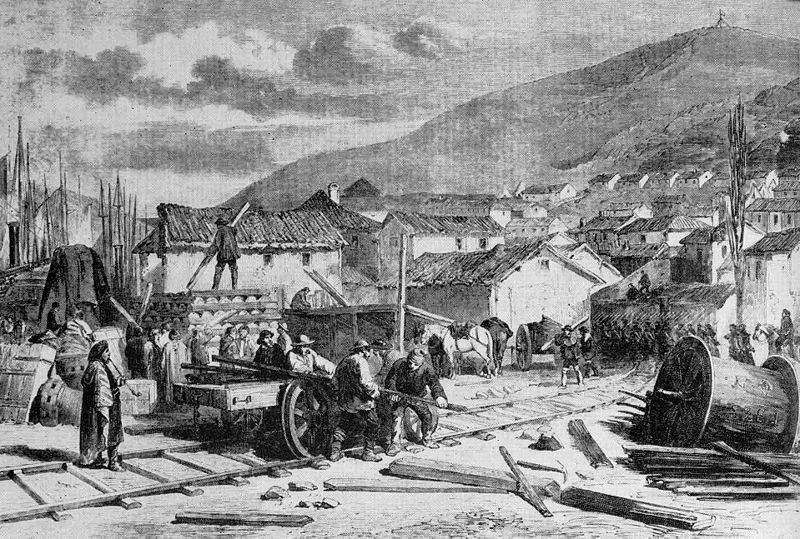
Railways have played a significant role in warfare since at least the Crimean War.
Navvies working on the Grand Crimean Central Railway, 1854. From Thomas Brassey, Railway Builder (1969).
As I live within a bowshot of a railroad crossing, the screech of metal wheels on metal rails frequently reminds me of one of the many things that so many Anglophone commentators get wrong about the war in Ukraine. Coming from places afflicted with (hat tip to Arlo Guthrie [NR: I’d give the credit to Steve Goodman, personally]) “the disappearing railroad blues”, these writers find it hard to imagine the degree to which Russian soldiers exploit the ability of the iron horse to move vast numbers of hundred-pound artillery shells. This blindspot, in turn, causes them to place far too much importance on means of movement, such as ships and trucks, that play second fiddle in the logistical symphony that supplies Russian forces in the field.
Tales of soldiers stealing pickles from convenience stores spark thoughts of another mistake that English-speaking critics have made with respect to the Russian supply system. Wise generals, from Alexander the Great to Francisco Franco, have long deployed vast quantities of food along with their armies. Nonetheless, the enduring fondness of English-speaking soldiers for bully beef, tinned biscuits, and other meals-ready-to-eat sets them apart from most other fighting men, past or present. To put things another way, we should not have been surprised that, when organizing an invasion of one of the great food-producing countries of our planet, Russian logisticians preferred the dispatch of fuel and ammunition to the delivery of items that could have been found in every bodega along the line of march.
Anglophone analysts also drew the wrong conclusions from reports of the loss, in battle, of Russian general officers. Such casualties, they argued, stemmed from an absence of trust. That is, Russian generals were killed because, lacking confidence in the competence of colonels, captains, and corporals, they felt obliged to exercise close supervision over forces engaged in combat.
The participation of generals in firefights, however, need not reflect an absence of faith in the fidelity and abilities of subordinates. Indeed, the original gangsters of “trust tactics” often recommended that the general officers commanding formations lead from the front. I suspect, moreover, that Russian leaders also understood that seeing a general die a soldier’s death usually exercises a positive influence on the morale of his subordinates. (“Say what you will about old General Strelkov, but he never asked us to do anything he wasn’t willing to do himself.”)
Finally, few who made much of the battle deaths of Russian general officers seem to have been aware that the Russian forces that crossed into Ukraine on 24 February 2022 were organized in a way that provided them with an extraordinarily high proportion of fighting generals. That is, when a peacetime formation formed a battalion tactical group, the general in charge of that organization usually took command of the unit it spawned. Thus, rather than having one general for every four or five battalions, the Russian forces of the first few months of the “special military operation” had five or six flag-rank officers for every four or five battalions.
Comments Off on Some good reasons why the Russo-Ukraine war is misunderstood in the West
August 20, 2023
Hitler Has a Bad Day – WW2 – Week 260 – August 19 – 1944
World War Two
Published 19 Aug 2023This week the Allies invade Southern France, and do so very successfully. They’re also successful in the north, closing the Falaise gap and trapping huge numbers of Germans. In the East, however, the Germans manage to stop the Soviet drive on Riga with a counter attack, and in Warsaw they continue to brutally put down the Warsaw Uprising.
(more…)
Comments Off on Hitler Has a Bad Day – WW2 – Week 260 – August 19 – 1944
August 16, 2023
Hitler Youth Murder Canadian Soldiers – War Against Humanity 109
[NR: Between me scheduling this to post and it going live, there’s a strong possibility that YouTube will have retro-actively decided it must be restricted to viewing only on YouTube. My apologies if this is the case when you see this post.]
World War Two
Published 15 Aug 2023In Normandy, the Waffen SS butcher their military and civilian enemies while some Allied soldiers play fast and loose with the laws of the war. In China, hundreds of thousands flee their homes as friend, foe, and famine take their toll. Meanwhile, the spectre of deportation haunts Eastern Europe as Stalin reshapes his new empire.
(more…)
Comments Off on Hitler Youth Murder Canadian Soldiers – War Against Humanity 109


