Quotulatiousness

August 16, 2011

Renaming isn’t enough

Filed under: Cancon, Military — Tags: , , , , , — Nicholas @ 07:51

The National Post editorial board insists that mere renaming for the Royal Canadian Navy and the Royal Canadian Air Force isn’t enough:

Should the unified Forces be replaced by the three original branches, as is expected from Tuesday’s announcement, many members of the military, past and present, will be delighted and indebted to the Conservatives for restoring the honour and pride of their beloved Navy, Army and Air Force. And if the move is limited to new flags and a nod to history, it is indeed something that Canadians should applaud.

But there is danger in allowing symbolic gestures to supplant firm, material support. It is ironic that the government seems set to make a symbolic move to please serving and retired naval personnel when the naval branch of the Canadian Forces is struggling to sustain itself for want of money and manpower, and operates a fleet of vessels in desperate need of modernization. The navy’s list of woes include losing more than 1,100 full-time members since 2004, despite the continued high demand for its services, a submarine fleet that is essentially undeployable and incapable of firing Canada’s stockpiled torpedoes, 40-year-old supply ships and helicopters that are overdue for replacement, and obsolete, elderly air-defence destroyers.

The government intends to begin a major shipbuilding program to replace dozens of navy and coast guard vessels within the next several years, but warships take a long time to build. It will be years before new vessels enter service or receive needed upgrades. The air force is also in need of major equipment purchases (the controversial F-35 purchase being the best known example) and even the army, despite investments made during the war in Afghanistan, needs more troops and equipment.

August 15, 2011

Navy and Air Force to be “Royal” again?

Filed under: Cancon, Government, Military — Tags: , , , , , , — Nicholas @ 14:12

Andrew Coyne linked to this article at the Huffington Post:

Canada’s navy and air force will get a royal name change Tuesday, The Huffington Post Canada has learned.

The Conservative government plans to announce that Maritime Command and Air Command, the official names of the two Canadian Forces’ units, will be returned to Royal Canadian Navy and Royal Canadian Air Force, monikers last used in 1968. Simultaneous announcements on the name change are planned for Tuesday in Halifax, Kingston, Valcartier, Que., Cold Lake, Alta., and Esquimalt, B.C.

The Canadian army, which is officially called Land Command, will also be renamed simply Canadian Army.

The change is mostly symbolic and won’t affect how the Canadian Forces are run.

It may be “mostly symbolic”, but symbols matter.

Up yours, Mr. Hellyer.

August 13, 2011

Colby Cosh digs up the story about the discarded contributions for Slave Lake

Filed under: Cancon, Economics — Tags: , , — Nicholas @ 11:59

After an amusing look at the economics of Christmas (in short: it’s just a modern version of Potlatch), he finds out how those charitable contributions ended up in a landfill:

The containers were labelled with the name of energy company Total E&P, whose employees had gathered clothing and toys for the victims of the fire. “Employees had held a month-long drive to collect donations for Slave Lake victims,” notes the CBC. “They carefully packed up the collection and addressed it to the Red Cross, and called their internal courier to take it away. The Red Cross, though, does not accept items for donation, only cash…”.

So while the packing was “careful”, the research…? Not so much. Someone located another Calgarian with good intentions, Melissa Gunning, who was gathering material to be sent to Slave Lake fire victims. Unfortunately, she didn’t have the means to get all the nice things she accepted to the scene of the fire, and by that time, the brave people of Slave Lake hadn’t the slightest use for any of it.

[. . .]

I fear Paul Nielsen, the appalled discoverer of the items in the landfill, unwittingly saw straight to the heart of the matter. Someone went to a clothing store, bought a bunch of cute outfits for somebody’s else’s children, and “had the foresight to throw something in for the mother”, without the much less impressive foresight required to ask “Hey, will the Red Cross actually take this crap?” This is a “someone” who probably thought herself very clever in finding a absolutely bulletproof excuse for a shopping excursion, perhaps even on company time. The value of her “aid” turned out to be significantly less than zero, but that was surely beside the point to begin with. If it weren’t, the incessant entreaties of professional charitable organizations everywhere — “Please stop showing up with bundles of blankets and cans, and just give us cash already” — would actually have had some effect by now.

August 11, 2011

Canada’s debt crisis happened at a fortunate time

Filed under: Cancon, Economics, History — Tags: , , , — Nicholas @ 12:03

Father Raymond J. de Souza explains why Canada’s financial success story can’t be easily replicated by Europe or the United States:

The slaying of the deficit by Paul Martin saved Canada from the sovereign debt turmoil now afflicting Europe and America. While full credit is due to Mr. Martin, and it is gratifying to see other countries look to our experience, the turnaround in fiscal policy that Canada achieved in the 1990s is simply impossible to achieve in Europe or the United States in the near term. When we had our debt crisis, sparked by downgrades of the federal government’s credit rating between 1993 and 1995, we could make tough choices with the prospect of almost immediate results. No country has that option today.

That is only partly due to politics. Many have observed that the Liberal majority government of the day had the power to take dramatic action. That understates the case. Not only did the Grits have a majority, they had the near-certainty of another majority in 1997, given the disarray among the four opposition parties. The Chrétien government of 1995 was the most electorally secure government in Canadian history. No other country — not even Canada — has that circumstance today.

[. . .]

Europe and America face weak economic growth, rising debt service costs and no tax reforms to provide robust new streams of revenue. Even if granted the vast powers of the Chrétien government — not for nothing was it called the “friendly dictatorship” — neither Europe nor America have a path to slaying their deficits, aside from ever more brutal spending cuts. And indeed, if serious spending cuts add to unemployment and, in the short term, restrain economic growth, then the deficit may not shrink as welfare costs rise and revenues shrink.

Canada did well to respond to our crisis in the 1990s. We were lucky to have had it when we did.

August 8, 2011

“Canada has become the snotty kid at the front of the class that gets every answer right”

Filed under: Cancon, Economics, Government, USA — Tags: , — Nicholas @ 15:39

Kelly McParland reads the fine print:

Near the bottom of the Standard & Poor’s report that downgraded U.S. debt last week is a tribute to the Canadian economy that could contribute to what’s becoming a serious case of swollen-headedness.

In comparing the U.S. situation to “relevant peers”, i.e. other western economies, it notes that Canada has become the snotty kid at the front of the class that gets every answer right. Of five countries — Canada, the U.S., Germany, France and Britain — Canada has the lowest government debt burden (net debt to gross domestic product), at 34%.

It adds: “By 2015, we project that … net public debt to GDP ratios will range between 30% (lowest, Canada) and 83% (highest, France), with the U.S. debt burden at 79%.”

And while the other four are all expected to see their debt declining, in the U.S. it could still be on the rise. So nya-nya to you, rest of western world.

August 7, 2011

Wind turbines totally dominate the skyline over Wolfe Island

Filed under: Cancon, Technology — Tags: , , — Nicholas @ 18:39


Click to see full-size (very wide) image

I took this photo from the Wolfe Island ferry on Friday. It amazed me how many wind turbines were in view (32, I think). I kept having images of James Blish’s “spindizzies“.

July 29, 2011

“This is the first global human rights legislation. How can people not know about it?”

Filed under: Cancon, History, Law, Liberty — Tags: , — Nicholas @ 10:54

I’m ashamed to say that this was news to me:

Monday, August 1, is a holiday in Canada. Everyone knows that. But what is the name of the holiday?

[. . .]

It is “Emancipation Day.”

You’re scratching your head, aren’t you? Don’t be embarrassed. Be angry — angry that you have been denied a truly majestic story all Canadians should know and cherish.

On August 1, 1834, slavery was abolished throughout the British Empire. “Emancipation Day” has been celebrated ever since in Jamaica, Trinidad, Barbados, and elsewhere.

[. . .]

In 1793, a free black man named Peter Martin – who had served with Butler’s Rangers in the American Revolution – told the legislature of the abduction of Chloe Cooley, a black slave who had been bound, gagged, thrown in a boat, and taken to the United States for sale. Simcoe seized the opportunity and moved to immediately abolish slavery.

It was a radical, audacious move. And it was too much. Wealthy slaveowners in the legislature resisted and Simcoe was forced to compromise: Existing slaves would be denied their freedom but the importation of slaves would stop and the children of slaves would be freed when they reached age 25. In effect, slavery would slowly vanish.

It was not the sweeping victory Simcoe wanted. But it was the abolitionists’ first legislative victory anywhere in the British Empire.

July 23, 2011

Today’s drive-by smear courtesy of the Globe & Mail

Filed under: Asia, Cancon — Tags: , , — Nicholas @ 09:50

The Globe‘s Steve Rennie must think he’s blown the lid off a dark, sordid conspiracy, the way he reports on the booze tab of the Canadian embassy in Kabul:

Canada’s diplomatic corps in Kabul did not go thirsty.

Hospitality forms show embassy staff and dignitaries drank plenty of booze while posted to Afghanistan, an Islamic country where imbibing is not just taboo, it’s against the law.

But aren’t the grounds of an official embassy are considered to be part of the country whose embassy it is? If so, then the embassy grounds are under Canadian jurisdiction, where alcohol is quite legal.

The embassy consumed close to 3,000 bottles of alcoholic beverages from mid-2007 to last November. The tab for the beer, wine and hard liquor was at least $20,000.

Unfortunately, no numbers of people are provided — we’re invited to imagine all this booze being consumed by a few red-nosed diplomats with livers the size of Etobicoke. No, later in the article, he mentions that it was more than just a couple of soused embassy officials keeping the bar open:

There were sendoffs for departing staffers and shindigs to welcome new ones. The embassy entertained visiting generals, diplomats, journalists and politicians.

At about this point, after sneering at the diplomat’s choices of beer, Rennie realizes perhaps he needs to heighten the contrast, by showing that the soldiers and civilians operating in Kandahar had it tougher:

It was not the same for Canadians serving in the country’s restive south. Booze was banned at Kandahar Airfield and at Camp Nathan Smith in Kandahar City. Soldiers, diplomats and civilians stationed there had to wait until holidays or special events for a cold one. And there was little danger of getting tipsy with a strict two-beer limit.

But as Rennie had already pointed out, the Kandahar installations were in the middle of an Islamic country that formally prohibits booze. Even if it’s a Canadian Armed Forces base, it has to observe the laws of the country in which it’s situation — it’s not Canadian soil in the way the embassy is. Not to mention that Kandahar was a fricking war zone: armies that drink booze while on active operations against an enemy are less effective armies.

Oh, but then we’re back to those awful alcoholics in the diplomatic corps, who were drinking in “an Islamic country where imbibing is not just taboo, it’s against the law”. Rennie must have forgotten writing that in the first few paragraphs, as it doesn’t mesh well with this later assertion:

Beyond the fortified walls of the embassy, there is no shortage of watering holes around Kabul for the many diplomats, aid workers and journalists who call the city home.

At one time, some popular hang outs included the Tex-Mex restaurant La Cantina and the Gandamak Lodge, a guest house with a British pub in the basement set up by a BBC journalist a decade ago after the Taliban regime fell.

Under Afghan law, anyone caught drinking alcohol can be fined, jailed or whipped. But these punishments are rarely handed down.

Didn’t you just trump your own ace there?

H/T to Chris Myrick for posting the link to this article on Google+, saying “I don’t blame them at all. I imagine Kabul would be intolerable otherwise.”

July 21, 2011

Ontario Finance Minister lashes out after “backroom work-over” by “bare-knuckle bruiser(s)”

Filed under: Cancon, Economics, Media, Politics — Tags: , , , , — Nicholas @ 10:30

Terence Corcoran admits to roughing up poor Dwight Duncan along with his fellow thugs in the National Post dungeon editorial board meeting last week:

Speaking to reporters Wednesday, Mr. Duncan said the Post, along with other Ontario newspapers, are part of what he described as an intellectually dishonest, right-wing, Rupert Murdoch, conservative cabal.

Mr. Duncan, whose Liberal party faces what looks like a tough election this fall, had just been asked questions about Ontario’s alleged decline into “have-not” status. For some reason not explained, this line of questioning triggered a bizarre critique of Ontario’s newspapers and media: “The intellectual dishonesty, particularly of the right wing in this country, and the right-wing media, is they don’t tell the truth. It’s kinda like Rupert Murdoch.”

[. . .]

Not that the Post has been all that harsh of late. That editorial board meeting last Wednesday was a mild affair, a friendly exchange followed by polite banter, which Mr. Duncan said he enjoyed.

The next day the Post‘s editorial board produced an editorial of such modest criticisms and waffling ambiguity that the McGuinty Liberals could use excerpts as an endorsement.

This is why the Bank of Canada will raise rates soon

Filed under: Cancon, Economics — Tags: , , — Nicholas @ 09:58

Stephen Gordon explains why the Bank of Canada will be raising interest rates in the near term:

The relatively hawkish language in the Bank of Canada’s interest rate decision — most notably the removal of the word ‘eventually’ from the sentence describing the conditions in which interest rates will increase — took financial markets by surprise.

Central banks try to avoid surprises when they can, but in this case the Bank has the best of excuses: the facts changed.

[. . .]

These new numbers may well be revised away in the coming months, but policy makers have to work with the data they have before them. If you take an output gap that is shrinking much faster than you thought and add it to a core inflation rate that is drifting towards and perhaps past the Bank’s 2 per cent target, you will find yourself in a position where you have to start preparing to increase interest rates earlier than you had planned.

Quebec-based botnet taken down

Filed under: Cancon, Law, Technology — Tags: , , , — Nicholas @ 09:19

John Leyden reports on the Laval, Quebec man who has been arrested:

Joseph Mercier, 24, of Laval, Quebec, allegedly hacked school board systems in Canada as well as computer networks in the US, France, Russia and the United Arab Emirates. Mercier — who was in charge of his employer’s information security — reportedly ran his alleged botnet scam at home and at work, the Canadian Broadcasting Corporation reports.

Mercier was released on bail following a brief court appearance on Tuesday. The Royal Canadian Mounted Police are still investigating the scope of his alleged misdeeds. It’s unclear whether any banking fraud resulted from the scam, the precise motive for which remains unclear.

July 19, 2011

Tax-wary millionaires flee to . . . Canada?

Filed under: Cancon, Economics, Liberty — Tags: , , , — Nicholas @ 12:56

Jason Kirby is either smoking some really premium weed, or the world is changing even faster than we thought it was, in an article titled “The Great White tax haven”:

For decades, Canadians have been told this country is a high-tax, unwelcoming place for business people and the wealthy. It’s a reputation we came by honestly. But a shift has taken place both here and abroad, say experts. While Canada is reforming and lowering its taxes, politicians in other developed countries — those faced with crushing debt loads and economic stagnation — are turning a hungry eye to the bank accounts of their richest citizens. At the same time, instability in the Middle East and Asia means wealthy individuals are looking for a safe place to move their families. Where they might have flocked to the U.S. in the past, many now see Canada as the better option. Tax specialists even use terms like “the Great White tax haven” and “Switzerland of the North” when talking about Canada.

The world’s rich are restless, says Lesperance, whose clients are worth between $30 million and $1 billion. Most work in financial services, but in every sector and every country wealthy individuals are on the move. Lesperance calls these ultra-rich the Golden Geese, arguing that wherever they go, they generate economic benefits—they start companies, buy real estate, keep restaurants busy and spend money on big-ticket items. Along with Ian Angell, a professor at the London School of Economics, he’s writing a book entitled Flight of the Golden Geese, which argues that as countries squeeze wealthy taxpayers, they will pull up stakes and flee. “Canada has an unprecedented, once-in-several-generations opportunity to put up its hand and offer itself as an alternative,” he says.

The migration is well under way. Last year, nearly 12,000 people moved here under the federal government’s Immigrant Investor Program, up from 4,950 a decade ago, according to Citizenship and Immigration Canada. (The figure includes spouses and dependents.) To qualify, immigrants must have a minimum net worth of at least $1.6 million, and are required to “invest” $800,000 with the government, which is returned after five years. (Ottawa says the money is used to fund economic development programs, though critics call it a cash grab.)

Of course, there’s no chance that anyone would abuse anonymous, unverified accusations

Filed under: Cancon, Media, Randomness — Tags: , , — Nicholas @ 12:03

Their ad claims that “22% of married men have had at least one affair during their marriage”. That’s Cheaterville.com:

Cheaterville.com, which was launched in Canada over the weekend, has in excess of 10,000 profiles of suspected cheaters — including full names, photographs and hometowns of those accused of stepping out. Despite the fiery accusations included in the stories posted online, no checks are done and it’s up to the users to ensure the validity of content, which includes accusations of sexually transmitted infections and other pointed claims.

Norm Quantz, a relationship expert based just north of Calgary, said the site will undoubtedly attract viewers and anonymous posters from Canada, but questions its true value.

“It’s usually a panic in the moment they’re reacting to (by publicly venting), thinking that will help, but in the long run, it doesn’t help,” Mr. Quantz said Monday. “It actually hinders their ability to deal with the fact somebody is cheating on them and what the ramifications are for them and the relationship. It’s an inadequate, short-term solution to a long-term problem.

“The website will be a success . . . It will be a place for people to vent their anger, but I would caution them in the long term, because once it’s online, it’s there forever and there are usually more complex issues involved.”

July 17, 2011

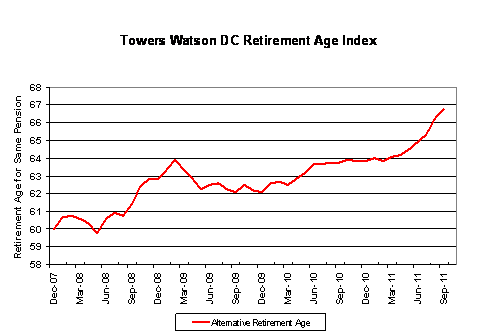
Federal government to unveil new retirement scheme

Filed under: Cancon, Economics, Government — Tags: , — Nicholas @ 12:09

Jonathan Chevreau looks at the federal government’s plan to introduce Pooled Registered Pension Plans (PRPPs):

This is a giant potential opportunity for the nation’s banks, mutual fund companies, insurance firms and a growing number of manufacturers of exchange-traded funds. Pension consultants, actuaries, financial planners and investment advisors will also see various business opportunities created as PRPPs catch on — primarily with small- and medium-sized businesses that never before offered its workers a pension plan. Mr. Menzies, the cabinet minister responsible for PRPPs, says he’s travelled the country consulting with the provinces.

“When the concept of the pooled RPP was shared with the provinces and territories they all came together to agree this makes sense.”

[. . .]

PRPPs will be (hopefully) low-cost defined contribution schemes run by the private sector where ultimate benefits will depend on how financial markets perform. The PRPPs would resemble the United States’ 401(k)s or Australia’s superannuation scheme.

They will be administered by financial institutions rather than employers, which is why Bay Street views them as a potential bonanza. As the “pooled” part of their name suggests, assets are co-mingled for investment purposes to keep down costs.

The original idea was that PRPPs would be mandatory for employers that don’t offer their own registered pension plan but Mr. Menzies says that decision would be up to the provinces. “We’re putting it out there that there is an option for the employer and for the employee. I’ve spoken to many small businesses that said ‘finally here’s a low-cost affordable plan I can enroll my employees in.’ It will be a retention and enticement tool.”

Employers won’t be forced to make contributions, but may choose to do so. Employees will be automatically enrolled at a base contribution rate, but they can opt out.

There will be two types of members: Employed and individuals. The latter include the self-employed and employees of organizations that do not offer PRPPs. Benefits are portable. Employers offering PRPPs can move to a new plan if they wish. There are fewer portability restrictions for individual members, making them convenient if they later change jobs and want to take their pension with them.

That portability is key: I’ve wondered for years why unions have not been hammering on that aspect in their negotiations with big employers (although unions generally pay most attention to the needs of current union members at the expense of both retired and future members). By the time you’ve worked at a company long enough to qualify for their pension scheme, you’re often locked in due to the lack of portability of your pension. If you leave the firm, voluntarily or not, you lose much of the potential return on the pension contributions you’ve already made (if you don’t lose them altogether).

This proposal may well solve much of that problem.

July 14, 2011

Canadian withdrawal from Afghanistan being spun as a Taliban victory

Filed under: Cancon, Media, Military — Tags: , , , , — Nicholas @ 17:15

To the surprise of nobody, the Taliban is claiming a clear win in driving the Canadian infidels out of Afghanistan:

During nine years of operations in Afghanistan, 157 Canadian troops died (87 percent because of the Taliban.) For most of that time, Canada suffered, proportionately, twice as many dead in Afghanistan as the United States. During this period, the U.S. had ten times as many troops in Afghanistan. The U.S. also has ten times the population of Canada, so the 3,000 Canadians are making the same scale of effort, but suffering more losses in the process. But most of those losses were not from “fighting the Taliban,” but from mines in the road. Back in early 2007, 81 percent of Canadian deaths were from IEDs (roadside bombs). But that declined as Canadian troops received more bomb resistant armored vehicles.

Since the Taliban couldn’t cope with Canadian troops in head-to-head combat, they devoted much of their roadside bombing effort against the Canadians. But in the last year, the Taliban were only able to kill four Canadian troops. Still, the constant Taliban propaganda about how killing even a few Canadian troops would eventually force the Canadians to withdraw, is believed by most Afghans. Canada decided to withdraw all their troops from Afghanistan back in 2008, and more American troops have moved in to replace them.

It’s ironic that the reason the government of the day originally committed troops to the Afghanistan campaign was that they thought it would be “safer” than being involved in Iraq. Rather than being seen to support George Bush, the Canadian contingent was sent to a “less tainted” operation instead. The party that sent the troops in the first place lost few opportunities to call for them to leave, once the current government was in power.

« Newer PostsOlder Posts »

Powered by WordPress