Quotulatiousness

July 26, 2009

QotD: Over-eager fans

Filed under: Books, Humour, Quotations — Tags: , — Nicholas @ 09:14

Whoever asked “What’s next?” Note that I just finished the book on Tuesday.

There are people who inquire brightly of new mothers, as they are being wheeled out of the delivery room, “So, when are you going to have another?” These people would deservedly be in want of their kneecaps, if only the mothers could get up.

Lois McMaster Bujold, posting to the Bujold mailing list, 2009-07-26

July 21, 2009

How to respond to a Hugo list kvetch

Filed under: Books, Media — Tags: , — Nicholas @ 16:34

John Scalzi is in fine form:

What makes this an error is the tangential fact Mr. Roberts is a science fiction author himself. Here’s something that we in the kvetching industry like to call a “pro tip”: If you take the time to squat and pinch off a steaming ass-loaf of condescension onto the heads of the people most committed to the genre of literature you happen to write in, you may find they will remember that fact when they see your books in the stores. As in “oh, here’s the book of that guy who thinks my taste in literature sucks.” How motivated does that make the average science fiction fan to buy a book? Well, you know: How motivated would it make you?

Now, I assume Mr. Roberts didn’t intend to come across as arrogant and hectoring to his primary audience, because very few people so willfully attempt to ankle-shoot their own career, even the ones with an academic aerie such as Mr. Roberts possesses. I suspect he believed he was being stern but fair. However, I also suspect that science fiction fandom, not in fact being comprised of students who have to sit for a lecture in order to graduate, may have its own opinions on the matter. In the real world, people don’t like being told, while being gently and paternalistically patted on the head, that they’re goddamned idiots. Especially from someone who then turns around and hopes to sell them a book.

The short form of this is to say that it’s one thing to believe a book on the Hugo shortlist (or, as is the case of Mr. Roberts, all the books on the shortlist) is or are mediocre. It’s another thing entirely as a writer to criticize a reader (and someone you’d presumably like to make your reader) for his or her taste in books. The first of these is perfectly valid; taste is subjective. The second of these makes you look like a jerk to the people upon whom you presumably hope to build your career.

Which is of course perfectly fine, if that’s what you intend to do. I’d just make sure that it is, in fact, what you intend to do.

July 18, 2009

Testing the WordPress iPhone utility

Filed under: Administrivia, Books — Tags: , — Nicholas @ 18:45

Just trying out an iPhone app that allows posting to the blog remotely.

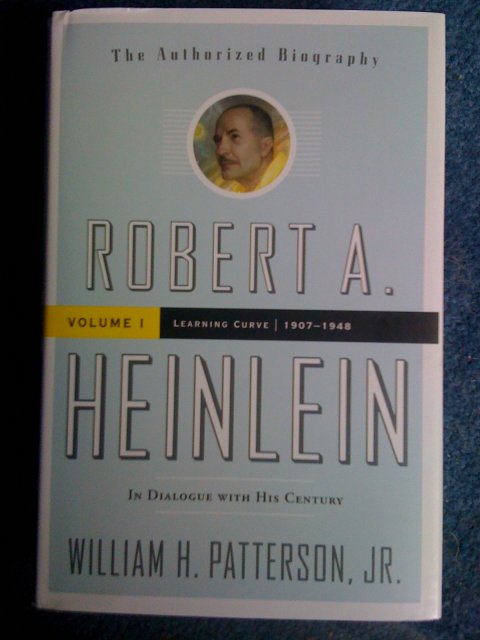
If things work as expected, there should be a photo of some light summer reading below:

Update: Yep, looks like it worked. And yes, Herodotus is next on my reading list after the latest Theodore Dalrymple.

Not for Ayn Rand fans

Filed under: Books, Humour — Tags: , — Nicholas @ 12:10

Brian Doherty links to this totally unfair and hilariously funny flowchart on how to succeed as an Ayn Rand character.

True Randians will find that “red curtain of blood” descending by step 5 . . .

July 17, 2009

QotD: CanLit

Filed under: Books, Cancon, Quotations — Nicholas @ 00:08

To mark Dominion Day (as you’d expect a squaresville loser like me to call it), the New York Times asked 11 Canadian expatriates to write on “what they most miss about home.” The cutting-edge funnyman Rick Moranis riffed on toques and beavers and the lyrics of God Save the Queen, raising the suspicion he’d simply recycled his beloved Dominion Day column of 1954 — which is not just environmentally responsible but very shrewd given New York Times rates for freelance contributors.

But thereafter the expats got with the program. The musician Melissa Auf der Maur, after years in the “American melting pot,” pined for “the Canadian mosaic.” But the great thing about the Canadian mosaic is that it engages in “a national conversation about literature like a big book club,” so the bookseller Sarah McNally said she missed “the pride and simplicity of a national literature, which probably wouldn’t exist without government support. We even have a name, CanLit, that people use without fearing they’ll sound like nerds.”

Multiculturalism, government books, using phrases like “Canadian mosaic” with a straight face, hailing the ability to say “CanLit” with a straight face as a virtue in and of itself . . .

[. . .]

Canada has done everything David Rakoff, Sarah McNally and Melissa Auf der Maur want—not least in their own fields. It taxes convenience-store clerks to subsidize books and writing and publishing and that wonderful “national conversation about literature like a big book club” in which everyone’s membership dues are automatically deducted from your bank account whether you go to the meetings or not. And still Mr. Rakoff and Ms. McNally and Ms. Auf der Maur leave. They applaud the creation of a “just” and “equitable” society, and then, like almost all the members of the Order of Canada you’ve actually heard of, they move out. Despite commending the virtues of a social “safety net” for you and everyone else, they personally can only fulfill their potential somewhere else, without one. Usually in a country beginning with “Great” and ending in “Satan.”

Mark Steyn, “Why do you leave the one you love? Our ‘funny creative people’ adore our social safety net, not that they stick around to use it”, Macleans, 2009-07-16

July 11, 2009

Parkinson: the man behind “the Law”

Filed under: Books, Bureaucracy, History — Tags: — Nicholas @ 00:04

He may be less familiar now, but most of us have heard of his most popular work: Parkinson’s Law:

The book expanded on an article of his first published in The Economist in November 1955. Illustrated by Britain’s then leading cartoonist, Osbert Lancaster, the book was an instant hit. It was wrapped around the author’s “law” that “work expands to fill the time available for its completion”. Thus, Parkinson wrote, “an elderly lady of leisure can spend the entire day in writing and dispatching a postcard to her niece at Bognor Regis . . . the total effort that would occupy a busy man for three minutes all told may in this fashion leave another person prostrate after a day of doubt, anxiety and toil.”

Parkinson’s barbs were directed first and foremost at government institutions — he cited the example of the British navy where the number of admiralty officials increased by 78% between 1914 and 1928, a time when the number of ships fell by 67% and the number of officers and men by 31%. But they applied almost equally well to private industry, which was at the time bloated after decades spent adding layers and layers of managerial bureaucracy.

(Crossposted to the old blog, http://bolditalic.com/quotulatiousness_archive/005572.html.

« Newer Posts

Powered by WordPress