Quotulatiousness

October 8, 2011

Japan grounds their F-15 aircraft after external fuel tank falls off in flight

Filed under: Japan, Military, Technology — Tags: , , — Nicholas @ 11:32

The Japanese are taking no chances after an external fuel tank fell off one of their F-15 fighters, grounding the fleet for investigation:

Japan has grounded more than 200 F-15 fighter jets after a fuel tank fell off one of the war planes during a training mission.

Flames were seen under the wing and fallen parts were scattered at sites near the western city of Komatsu.

No-one was injured in the incident and the plane landed safely.

It is the second time in three months that officials have suspended F-15 flights.

The 155-kg (340lb) tank, which was empty, and parts of a dummy missile came free and fell from the plane as it was nearing a field for landing. The debris fell on 10 locations, including a sewage plant, officials said.

August 27, 2011

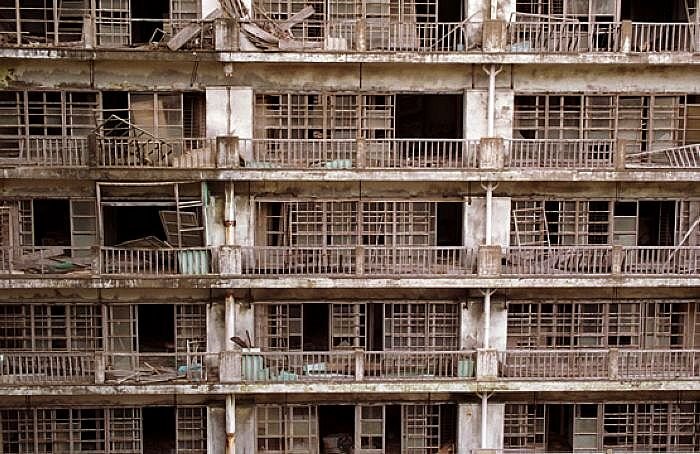
More photos from Japan’s abandoned “Battleship Island”

Filed under: Asia, History, Japan — Tags: , — Nicholas @ 12:42

I blogged about this last year, including a few photos of the island’s skyline. This post at How to be a Retronaut includes lots of interior photos:

July 6, 2011

The fine distinction between actual disaster relief and mere tokenism

Filed under: Environment, Japan, Randomness — Tags: , — Nicholas @ 07:26

In the aftermath of the earthquake and tsunami that hit the coast of Japan, many nations offered assistance and supplies to help the battered area. Some of these offers were both timely and appropriate. Others, however. . .

Stranger still was the arrival on May 11th, a full two months after the earthquake and tsunami, of Sri Lanka’s Disaster Relief Team. Some 15 officials from Colombo’s Ministry of Disaster Management came to help clear debris, via a local NGO called Peace Boat. An extremely decent gesture, likewise. But the flights to and from Japan must have cost the ministry a fortune, relatively. This follows an equally quixotic donation by the Sri Lankan government of 3m tea bags.

Then there is the matter of blankets. Since the disaster some 17 countries as well as the European Union have offered blankets as part of their emergency relief supplies. In March this made sense. Some 25,000 blankets from India, 25,000 from Canada and 30,000 from Thailand were donated within days of the disaster. But did Chile really need to deliver 2,000 blankets on May 31st, by which time the temperatures were balmy to say the least?

Earlier Chile donated 100 kilograms of rice, purchased in Japan, to the city of Minamisanriku. Yet considering the Japanese government stockpiles about one million tonnes of rice in case of a crisis—which it buys under World Trade Organisation commitments, keeps off of the market to support local farmers, and burns after it rots—Chile’s altruism was more likely symbolic than satiating.

In the aftermath of natural disasters, the media usually makes a big, hairy deal if the head of government for the region, state, province, or country isn’t immediately seen touring the area. While it makes for useful video footage for the TV news shows, it’s often counter-productive for the people whose lives have been overturned by the disaster. Heads of state, in particular, don’t just jump in a taxi and head off — there’s a huge entourage that have to precede and accompany the leader. This takes up cargo space, landing slots, and flight paths that might be more usefully devoted to providing help to the afflicted area.

It may be useful psychologically for the victims and the relief workers to see the prime minister or the governor, or whatever, but between the TV and other media folks, the dignitaries themselves, their security detachments, and the other support staff, it almost certainly delays the disaster-struck area actually recovering.

June 1, 2011

New report from the Obviousness Bureau: TEPCO underestimated earthquake/tsunami risks

Filed under: Bureaucracy, Japan, Technology — Tags: , , , , , — Nicholas @ 07:55

Hands up, anyone who didn’t see this coming? Okay, put your hands down board members of TEPCO:

Japan underestimated the risk of a tsunami hitting a nuclear power plant, the UN nuclear energy agency has said.

However, the response to the nuclear crisis that followed the 11 March quake and tsunami was “exemplary”, it said.

The Fukushima Daiichi nuclear plant, which was badly damaged by the tsunami, is still leaking radiation.

Japan’s Prime Minister Naoto Kan is facing a no-confidence vote submitted by three opposition parties over his handling of the crisis.

They say he lacks the ability to lead rebuilding efforts and to end the crisis at the Fukushima plant, public broadcaster NHK reported.

Some politicians from Mr Kan’s governing Democratic Party of Japan (DPJ), including former Prime Minister Yukio Hatoyama, are backing the motion.

If it is passed in a vote expected on Thursday, Mr Kan would be forced to resign or call a snap election.

However, given the thousands of dead and missing from the earthquake and tsunami, the attention paid to Fukushima has been rather disproportional. As someone joked yesterday, radiation from Fukushima has killed fewer people (none) than e.coli tainted food in Germany (16 at last report).

Update: In case I’m being too obscure, the “this” I refer to in the initial paragraph is the with-the-benefit-of-hindsight conclusion that the Fukushima plant was inadequately prepared for the earthquake and subsequent tsunami.

May 21, 2011

President of TEPCO falls on his sword a few months late

Filed under: Environment, Health, Japan, Media, Technology — Tags: , , , , — Nicholas @ 11:04

The president of the Tokyo Electric Power Co. (TEPCO) has resigned:

In a business practice that recalled the ritual seppuku suicides of samurai warriors, the president of Japan’s largest power company resigned Friday to assume responsibility for the world’s worst nuclear disaster since Chernobyl.

At a nationally televised news conference, Masataka Shimizu bowed deeply in an exhibition of remorse and declared, “I am resigning for having shattered public trust about nuclear power and for having caused so many problems and fears for the people.

“I want to take managerial responsibility and bring a symbolic close.”

Whether it’s a hearkening-back to Samurai ethos or not, he should have resigned long ago, as soon as it became clear that the company he headed was doing everything it could to conceal the extent of the actual damage both from the media and from the government.

There is a widespread feeling the government and TEPCO officials did not disclose all they knew during the early days of the crisis and have been less than forthcoming since.

In the first weeks after the earthquake, TEPCO officials received 40,000 complaints a day about the lack of information. Police had to be assigned to guard the company’s offices from anti-nuclear protesters.

This week, TEPCO released documents showing it was dealing with three simultaneous nuclear meltdowns, while reassuring people the fuel rods were safely intact in all the reactors.

“Why did it take two months to get to this point?” demanded a Wednesday editorial in the Nikkei business newspaper.

“Even a rough calculation of conditions inside the reactors would have helped in choosing the best response.”

Public confidence was shaken further when it emerged engineers at Fukushima were so unprepared for the disaster, they had to scavenge flashlights from nearby homes and used car batteries to try to reactivate damaged reactor gauges.

Nobody with an ounce of sense is criticizing the workers at the plant for their reaction to an earthquake that was far in excess of the design for the reactors, or a tsunami that was much higher than anything the designers had foreseen. Shit happens, and it was the daily double of fantastically unlikely natural disasters that struck the plant.

The company, however, deserves more than just a light dusting of shame for the way they appear to have been actively preventing the real state of the plant becoming known to the international nuclear community and the national government. A nuclear disaster is everyone’s business, and there were resources available to TEPCO that they signally failed to draw upon. Saving face is not an acceptable reaction to this kind of catastrophe.

May 20, 2011

Only one high speed rail line in the world is profitable

Filed under: Economics, Government, Japan, Technology, USA — Tags: , , , — Nicholas @ 09:39

Babbage looks at the economics of the various high speed railway lines both in service and planned:

Of all the high-speed train services around the world, only one really makes economic sense — the 550km (350-mile) Shinkansen route that connects the 30m people in greater Tokyo to the 20m residents of the Kansai cluster of cities comprising Osaka, Kobe, Kyoto and Nara. At peak times, up to 16 bullet trains an hour travel each way along the densely populated coastal plain that is home to over half of Japan’s 128m people.

Having worked for many years in Tokyo, with family in Osaka, your correspondent has made the two-and-a-half hour journey on the Tokaido bullet-train many times. It is clean, fast and highly civilised, though far from cheap. It beats flying, which is unbearably cramped by comparison, just as pricey, and dumps you an hour from downtown at either end.

The sole reason why Shinkansen plying the Tokaido route make money is the sheer density — and affluence — of the customers they serve. All the other Shinkansen routes in Japan lose cart-loads of cash, as high-speed trains do elsewhere in the world. Only indirect subsidies, creative accounting, political patronage and national chest-thumping keep them rolling.

California’s planned 800-mile high speed rail route cannot possibly earn a profit, for many reasons (not least of which is that the first segment of the network won’t even run high speed trains until the entire system is built). It’s going to cost an eye-watering amount of money even to build that first section:

Between them, the federal government, municipals along the proposed route and an assortment of private investors are being asked to chip in $30 billion. A further $10 billion is to be raised by a bond issue that Californian voters approved in 2008. Anything left unfunded will have to be met by taxpayers. They could be dunned for a lot. A study carried out in 2008 by the Reason Foundation and the Howard Jarvis Taxpayers Association put the final cost of the complete 800-mile network at $81 billion.That is probably not far off the mark. Last week, the state’s Legislative Analyst’s Office came out with a damning indictment of the project’s unrealistic cost estimates and poor management. The bill this legislative watchdog put on the first phase of the high-speed rail project alone is $67 billion — and higher still if the project runs into trouble gaining route approval in urban areas.

If the latter number is correct, then the first phase of the system is clocking in at nearly $1 billion per mile. And this is the “cheap” section running through mostly thinly populated farming areas. If, somehow, the more expensive sections of the planned network don’t cost much more, the total construction bill will top $800 billion. The original plan had the entire system costing $43 billion.

Cost overruns are an expected part of major government construction projects, but that’s insane.

April 2, 2011

Cultural bias and bad reporting

Filed under: Japan, Media — Tags: , , , , , , — Nicholas @ 11:01

Jon sent me this link, which discusses the media coverage of the Fukushima workers:

We hear of Fukushima workers “fleeing” the plant, when what happened is they left for a few hours.

We hear about the appearance of tiny amounts of radioactive iodine in Tokyo tap water — but nothing the next day, when it returns to safe levels.

We hear a thousand commentators mention one measurement that was ten million times normal — but nothing when that turns out to have been a measurement error, made by someone who had little sleep and the weight of the world on his shoulders.

We hear people spinning tales of “worst case scenarios” ten thousand times worse than anything that could plausibly happen — and almost nothing about the fact that the Fukushima reactors endured an earthquake 32 times as forceful as they had been designed for, followed by a tsunami twice as high, and still largely survived.

We hear about “plutonium in the soil” — but not that it’s an amount so tiny that pound for pound, bananas in the grocery store are five thousand times more radioactive.

The London Daily Mail reports that the workers “expect to die,” but not that the worst radiation exposure among all the workers amounts to about as much as 15 CT scans, a dose that not only isn’t fatal, but that has no observable health effects.

A lot of bad reporting seems to come from mere scientific illiteracy.

Not only scientific illiteracy, but willful illiteracy. Combine the need to file a story — the more sensational, the better — with the anti-scientific bias that’s been “baked in” to journalism students for two generations, and this is what you get.

Some of it may be simply that fear sells papers, and a headline that says “Catastrophe imminent” sells more papers than “Catastrophe averted.”

But a lot of it appears to be purposeful — it’s no coincidence that the people spinning the wildest tales of catastrophe have also turned out to be associated with vehemently anti-nuclear think tanks and political pressure groups.

Whether it’s because of ignorance or on purpose, the effect of this misreporting it to keep people afraid.

March 31, 2011

Manga translator convicted under Swedish child-porn law

Filed under: Europe, Japan, Law, Media — Tags: , , , — Nicholas @ 12:13

It’s a telling result that someone who is paid to translate Japanese manga can fall afoul of child porn laws:

Last year, Lundström was convicted of possession of pornographic material after 50-odd Manga images stored on his hard drive were classified as child porn. The Swedish court of appeal later agreed that 39 of the illustrated images, none of which has been banned in Japan and none of which shows real people, fitted the definition of child porn. Lundström was fined 5,000 Swedish Crowns (£500). Meanwhile, his main employer, publisher Bonnier Carlsen, has stopped giving him translating commissions, and Lundström has been burdened with a reputation of traversing the biggest taboo of our time: getting off on kids. The case has now been appealed to the Supreme Court.

Cultural commentator Ulrika Knutson did not exaggerate when, earlier this week, she described the case as a ‘Swedish censorship scandal, perhaps the worst one in modern times’. As she points out, it should not simply be left to ‘other young cartoon nerds and Manga fans’ to defend Lundström against the legal and moral trials he has been subjected to since a note informing him that he was suspected of child pornography crimes was slipped through his home mailbox last summer. Instead, anyone who values freedom of speech must also defend the renowned Manga expert.

Whether you like or dislike Manga, it’s one of Japan’s biggest cultural exports. It may not be mainstream entertainment, but there are lots of fans in all western countries. If Sweden and other countries are going to retroactively decide that they are considered child porn, the courts are going to be very, very busy:

In other words, Swedes are not allowed to own or intentionally look at drawn images of non-real characters that a court could determine might to some people resemble child-like figures in situations that for some could be sexually arousing.

It’s an absurd situation: judges deliberating over the artistic merits of images, trying to determine what stage of puberty illustrated characters might be at and speculating over what kind of thoughts they might stimulate among adults. As for Lundström’s images, apparently the judges who convicted him felt that Manga comics, which are read and loved by millions around the world, violate children.

Real world influence of bad science reporting

Filed under: Health, Japan, Media — Tags: , , , — Nicholas @ 09:41

If I seem to be linking to wormme’s blog a lot lately, it’s because he is a great source of practical information . . . and he hates sensationalist media reports even more than I do. Normally, the effect of junk science sensationalism is pretty small: people worry a bit more about stupid things, but generally get on with their lives.

Sensational — and badly mistaken — reporting on radiation is a big exception to that:

Hundreds of people evacuated from towns and villages close to the stricken Fukushima nuclear plant are being turned away by medical institutions and emergency shelters as fears of radioactive contagion catch on.

Medical personnel turning them away.

Hospitals and temporary refuges are demanding that evacuees provide them with certificates confirming that they have not been exposed to radiation before they are admitted.

Do you readers see the error here? If not, this blog is failing you.

When trained, professional medical staff are confusing radiation with contamination, things are really, really bad.

The article goes on to quote some medical experts — i.e., non-insane people.

“If someone has been contaminated externally, such as on their shoes or clothes, then precautions can be taken, such as by removing those garments to stop the contamination from getting into a hospital,”

But what if it’s on the person?!

In my trade, we have a secret special decontamination technique. I’m violating all kinds of unwritten laws by sharing it, but this is an emergency, right? When a person needs general decontamination we always do this first, and it almost always works. Are you ready?

Soap and warm water.

I’ll probably be drummed out of the National Registry of Radiological Protection Technicians for revealing that.

“Free neutrons don’t beam, homie”

Filed under: Japan, Media, Science — Tags: , — Nicholas @ 09:33

The ever-informative wormme has another good post up, this one is about misunderestimating neutrons:

We can’t say for sure TEPCO was monitoring for neutrons there — they’ve made some pretty big mistakes so far — but they’d be hard to miss. All those emergency responders sprawled lifelessly on the ground would have been a clue. From that absolute godawfully unimaginable flux of ground-zero neutrons, doncha know. Because despite “reporting” like this:

…observed a neutron beam…(snip snip)…when a beam of neutrons…

Free neutrons don’t beam, homie. (emphasis added, obviously) Apart from neutrinos and anti-neutrinos, nothing’s harder to beam than neutrons. They like to spread, not bunch. (Okay, Leopold, maybe muons and the like are worse.)

A neutron walks into a bar and says, “how much for a drink?”. Bartender says, “for you…no charge.” The neutron beamed…

March 28, 2011

TEPCO still seems to be more a hindrance than a help over Fukushima

Filed under: Bureaucracy, Japan, Technology — Tags: , , — Nicholas @ 12:36

A report from Kyodo News shows that Tokyo Electric Power Co. (TEPCO) is still not fully co-operating or providing all the information needed to clean up the Fukushima reactor sites:

While efforts at containing troubled reactors have not been making rapid progress at its Fukushima Daiichi nuclear power plant, signs were emerging that Tokyo Electric Power Co., in the absence of a top officer, is losing its grip on accurately informing the public about risks from radiation.

On Sunday, the utility, known as TEPCO, announced in the morning that the concentration of radioactive materials of water found inside a turbine building adjacent to a rector housing was ”around 10 million times (that of) water in a normal reactor core” but later corrected the information, saying it ”made a wrong estimation.”

[. . .]

On March 20, TEPCO said, ”There were no increases in radiation levels in adjacent areas.” But increases were logged in various parts of adjacent areas, prompting skeptical reporters to raise a series of questions at a news conference but TEPCO officials remained mum.

TEPCO has been giving a series of news conferences since Fukushima Daiichi got into trouble after the March 11 quake. Attending officials have not been able to provide satisfactory answers to a majority of questions raised, only repeating words of apology and, ”We will check it.” It has left the impression they are unable to reply to questions because they are not given enough information.

[. . .]

But on Saturday, it was disclosed that the company had not informed workers who suffered high levels of radiation at the No. 3 reactor unit about radiation levels of the place where they would be working. The government was also found to have not been informed.

Top government spokesman Yukio Edano expressed his displeasure, telling a news conference, ”We cannot give appropriate instructions unless accurate information is provided swiftly.”

TEPCO is allowed to monopolize the power utility market in Tokyo and surrounding regions by law. As the nation’s biggest utility, it has also been the key promoter of the nuclear power policy and one of the main employers of retiring bureaucrats.

Critics say the company lacks cost consciousness and apparently has no idea about what competition is. It is more like a bureaucracy rather than a business being run, they said.

March 27, 2011

Panic-mongers still hard at work over Fukushima

Filed under: Health, Japan, Media, Technology — Tags: , , — Nicholas @ 10:58

Lewis Page is less than impressed with the media’s ongoing coverage of the Fukushima reactor clean-up:

The situation at the quake- and tsunami-stricken Fukushima Daiichi nuclear powerplant in Japan was brought under control days ago. It remains the case as this is written that there have been no measurable radiological health consequences among workers at the plant or anybody else, and all indications are that this will remain the case. And yet media outlets around the world continue with desperate, increasingly hysterical and unscrupulous attempts to frame the situation as a crisis.

[. . .]

Nonetheless, in the hyper-cautious nuclear industry, any dose over 100 millisievert is likely to cause bosses to pull people out at least temporarily. Furthermore, the three workers had sustained slight burns to their legs as a result of standing in the radioactive water – much as one will burn one’s skin by exposing it to the rays of the sun (a tremendously powerful nuclear furnace). They didn’t even notice these burns until after completing their work. Just to be sure, however, the three were sent for medical checks.

So — basically nothing happened. Three people sustained injuries equivalent to a mild case of sunburn. But this was reported around the globe as front-page news under headlines such as “Japanese Workers Hospitalized for Excessive Radiation Exposure”. Just to reiterate: it was not excessive.

Reporters clamoured to know more — in particular how could the water in the basement of the reactor building have become so radioactive — no less than “10,000 times normal”. One might note that in general radiation levels 10,000 times normal mean that you could achieve a tiny fraction of an extra percentage point of cancer risk by being exposed for a fortnight or so.

[. . .]

Then there’s the matter of the tapwater in Tokyo. Two days ago, levels of radioactive iodine-131 were found in the city’s water which were above the safety limit for baby milk calculated on the basis of a year’s consumption: in other words, if babies drank such water for a year constantly they would have a tiny, minuscule extra risk of thyroid cancer.

[. . .]

There was never any chance whatsoever that levels of iodine-131 in the tapwater would remain noticeable for a year, which is what would be necessary for any effects at all on the city’s babies. It was really quite irresponsible of the authorities to recommend that infants shouldn’t drink it. (One can’t help noticing that the first such recommendation reportedly came from the city authorities, belatedly followed by the national government. The Tokyo city governor is from the national opposition party and is facing a tough re-election battle. He had previously sought to use the Fukushima situation to cast his political rivals in a bad light over the deployment of Tokyo’s elite Hyper Rescue firefighters.)

I’d also recommend that you keep an eye on the World’s Only Rational Man for his professional take on what the media is currently panicking over at any given moment:

If modern “journalism” wasn’t the single most incompetent industry in human history we wouldn’t be pulling our hair out over this. Where’s the followup to the reports of Cl-38?

How freakin’ incompetent is the entirety of Big Media?!

You’ve had two weeks to learn a minimum about this subject you obsessively “cover”.

“But…but math is hard!” you whine? Then find some dad-gum folks who do this crap for a living rather than cultivate ivory tower media-hounds.

Sorry. Forgive the venting. Tired and P.O.ed.

Apparently going beddy-bye to the thought of runaway nuclear excursions isn’t warm milk and happy stories. Monsters Inc. could have stayed in the scaring business if they’d taken lessons from The Media.

This blogging day began with concern about neutrons. And so it ends.

I wish we still had reporters.

Because I hate journalism.

Once again, wormme is a radiological control technician, so he actually knows what the hell he’s talking about, unlike just about everyone “covering” the news.

March 24, 2011

China’s “sexy spies” score another intelligence goal

Filed under: China, Japan, Military, Technology — Tags: , — Nicholas @ 09:52

Strategy Page says that the Chinese are “probably the most enthusiastic, and successful, users of this technique these days”:

China is widely known to use sex to obtain secrets from foreigners, inside and outside of China. Four years ago, Japan uncovered a widespread Chinese effort to use sex to steal military technology. Attractive Chinese female intelligence agents in Japan were marrying members of the Japanese armed forces, and then using that access to obtain military secrets. The situation was complicated by the military attempts to keep these “embarrassing incidents” secret. The government was particularly anxious to keep the Americans in the dark about all this, since the Chinese apparently got their hands on Aegis anti-aircraft system technology via their sexy spies.

Actually, most of the Chinese agents don’t have to marry Japanese troops. Just putting out usually does the trick. In Japan, the military doesn’t get much respect, and many of the bases are in backwaters. So the troops are pretty lonely. It’s not unusual for Chinese women to be in the country, as many come, legally or illegally, looking for jobs. The set-up is perfect for using the old “honey pot” (sexual entrapment) routine to extract military secrets.

The military geeks are the most sought after, as these guys have access to the most valuable military secrets. Geeks tend to be least experienced with women, and most vulnerable to a clever, and shapely, Chinese spy. Military commanders are not sure if they have the problem under control, but now that the situation is out in the open, there will be more efforts to tighten up security. As the Japanese expected, the Americans were not amused. And the Chinese honey pot scandal was apparently one reason for refusing to sell F-22s to Japan. To make matters worse, part of the Japanese cover-up involved prosecuting the Chinese spies on immigration, not espionage, charges.

March 21, 2011

Japan’s bifurcated power grid

Filed under: Health, History, Japan, Technology — Tags: , , , — Nicholas @ 10:00

Charles Stross points out something I was completely unaware of:

Western Japan and Eastern Japan do not share an electricity grid; because of an historical accident, in the 1890s when they were first getting electric lighting, Osaka, in the west, chose to run at 60Hz and Tokyo, in the east, picked 50Hz. Consequently there’s no grid interconnect between the two halves of the Japanese electricity supply system.

Eastern Japan has had 15 nuclear reactors scrammed by an an earthquake. Some of them may be checked out and approved to start delivering base load again over the coming months, but they all need a thorough inspection at this point — and we know for sure that at least three of them will never work again (not after they’ve had seawater pumped through their primary coolant circuit).

We are now heading into summer. And Tokyo doesn’t have enough electricity to maintain power everywhere even in spring.

Summer in Tokyo is savage: temperatures routinely top 35 celsius with 100% humidity. In a heat wave, it can top 40 degrees for days on end. Back when I visited in late August of 2008, the heat wave had broken and daytime temperatures were down under 37 degrees again — the week before it had been over 42, and joggers had been dropping dead in the street.

Greater Tokyo also has 30-million-odd people, of whom a large proportion — maybe 20% — are 75 years or older.

Elderly folks do not handle heat waves well; they get dehydrated easily and if they don’t have air conditioning they die in droves. Normally it’s not a problem in Tokyo because 80% of households have air conditioning, but with rolling blackouts and insufficient power it’s another matter.

It was bad in France, but the death toll among the elderly in Japan may be much higher.

March 19, 2011

Trying to sort out truth from speculation at Fukushima

The only thing that is certain about the Fukushima situation right now is that both the operating company (Tokyo Electric Power Co. aka TEPCO) and the Japanese government have been ridiculously slow to provide information. They may or may not be actively concealing what they know, but they’re taking far too long to share what they do know with the rest of the world.

Inline update: New Scientist has a timeline of Japanese nuclear cover-ups and accidents. [end update]

wormme is a radiological control technician, so he’s very well informed about the overall picture — in a way non-specialists are not — and he’s had an epiphany about Fukushima:

See the light bulb above my head? Lesson Learned!

My first post on Fukushima is still the most widely read. Alas. I’m a radiological control technician who wasn’t paranoid about a radiological situation. Never good. Never acceptable. So I’ve been “hotwashing” myself ever since.

Where did I go wrong? What was the first cause, the primary mistake? I had to know in order to answer the most important question of all:

How do I never make that mistake again?

I turned a nifty phrase in “incalculable danger”, got generous links . . . then steam began venting and cores melting and hydrogen exploding and fuel pools leaking and spent fuel smoldering, all at once, with my brain sprinting like a hamster on a wheel and making about as much progress.

How did Fukushima have several quiet days after the event and only then have the Hellmouth open?

No lesson learned.

Then a couple of days ago we learned the site went six days without electricity. That monstrous tsunami took out the electrical backups, the backup-backups, and the backup-backup-backups in one fell swoop.

And I thought, ”well, that explains most everything”.

But still, no lesson learned.

It’s only now, right now, the realization: I wrote the post assuming that they had electrical power.

Not even an assumption, really. It wasn’t even a consideration. Of course they had power. They couldn’t possibly not have power.

But they did not have power.

Lesson Learned: the Japanese are different from Americans.

He also has interesting and highly informative posts (earlier than the one quoted above, so perhaps to be read with that in mind) on radiation poisoning, stuff that can cause a meltdown, some crappy radiological terminology, characteristics of radiation(s) and shielding(s), why the spent fuel is a bigger problem than the reactors, nuclear triage, time, distance, and shielding, spent fuel pools, first notes on the “Event Summary” file, and how NOT to wear a respirator.

« Newer PostsOlder Posts »

Powered by WordPress