
I’ve been noticing more and more when I’m forced to sit in a waiting room that I’m often the only person actually reading a physical book … some are distracted by the omnipresent TV screens (usually with the sound off, thank goodness, but not always) but most are staring into their pocket molochs, the wrecktangles. Books are becoming less and less a part of peoples’ daily lives, including the time children spend in school. James Pew implores us to return to books for our own sakes:
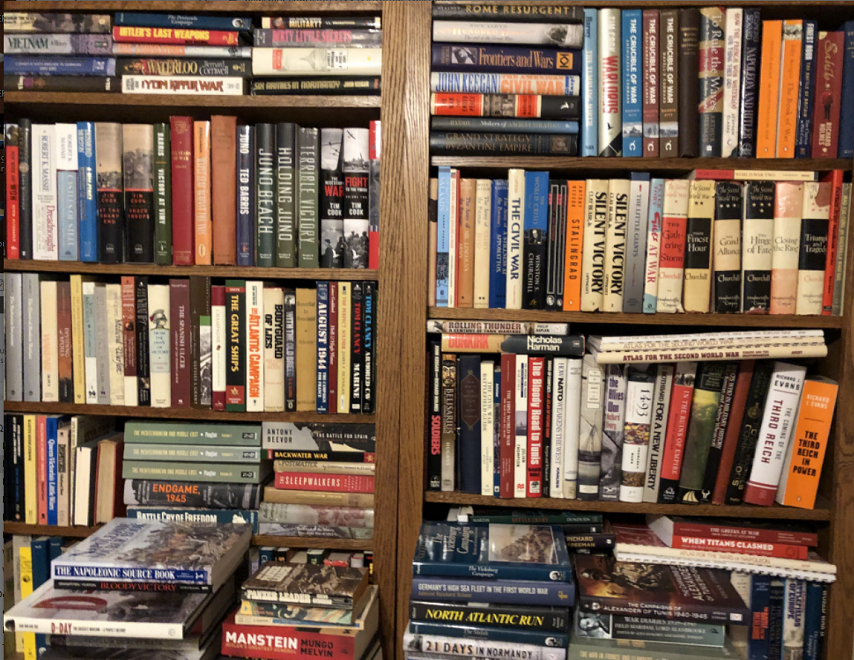
Books are the answer.
(Books) are no longer an important part of the lives of students. “Information” is important, but profound and beautiful books are not where they go for it. They have no books that are companions and friends to which they look for counsel, companionship, inspiration, or pleasure. They do not expect to find in them sympathy for, or clarification of, their inmost desires and experiences.
— Allan Bloom, The Closing of the American Mind (1987).Friends, Romans, countrymen, lend me your ears. At the precise moment in which I write these words, all are implicated, the lot of us, complicit in scandalous folly of inestimable proportions. We have gone, nay we have slid downward, fallen away from a worthy and self-actualizing path, into an abysmally irrational state hostile to the enlightenment reason which guided our extraordinary age of progress for so many generations. We have turned so completely to the new media — and inward where it directs us — to the new technologies that display video and connect users through cyber worlds. This turning has engendered a post-literate condition, where each and practically every person plays a role but sadly pays a hefty price for their wayward participation.
The antidote is quite simple, and I beg you: Turn back to books.
A literary revival is what is needed more than anything. The reasons for this are many and worth arguing for over several essays where key planks can be expounded, on a general thesis of the existential import of literacy, which should be understood as something far beyond the ability to decipher words or master grammar, but a higher order which in part trains one’s mind to grapple with complex ideas, while accustoming it to modes of introspection and examination involving a myriad of phenomena plucked from human affairs, such as moral puzzles, ambiguities or contradictions. Along with the near infinite variety of things encountered throughout the spectrum of good and evil, that kaleidoscopic tapestry of human condition. But alas, have you noticed how cold young people have become?
But the shelves of the libraries and bookstores found in our communities still hold the greatest stories of the grandest wonders, the bravest heroes, the most eloquent feats of chivalry, full of romance and adventure and mystery and tragedy and magic. My friends, my friends, why hast thou forsaken books? What madness have we wrought upon ourselves? We have turned from deeply thoughtful, to comparatively thoughtless. There was a time, within the broad container of this modern period, where we regularly explored the depths, but today our digital lives barely tempt us to skim the surface. The media mediates us, reduces us, and sidelines our most complex and nuanced human aspects, where the sublime mystery of it all once energized common everyday ponderings wrapped up and smeared with the stuff that dreams were made of. There was eloquence and astonishment and miracles. Where have they gone?
We have been distracted into shallowness at the concurrent moment when relentless suggestion and over-stimulation pushed and prodded us to emotional states impervious to rational modes of being. We transformed into feelings creatures who inherited magical realms from thinking creatures who once had the audacity not just to dream and conceive of those enchanted realms, but to actually construct them.
Literature, for all its fantasy and thaumaturgy, when it pervades a society, creates a state essentially of reified magic. A resplendent sorcery casting spells somehow as capable of transferring the stores of civilization, as of delighting and dazzling those who receive it. There is no high tech modern society that did not emerge from a sophisticated literate one. It is not enough that books still exist, that the geniuses of tomorrow will find them and devour them. It is a general democratized condition of high literacy we are after. This is what will most harness and unleash the potential creative energies found within each person. The mind must ripen through literacy, and high forms of it, damn it — I must not stop repeating this! In developing craniums, latent creative forces must be unlocked, nurtured, and fed with the stories of mankind. The books of myth and fairy tales are the most important books in the elementary school library, and this should be obvious. I don’t think it is. It would be in a society where print literacy was the dominant medium.


