Quotulatiousness

May 12, 2015

Step aside, Sun Tzu, Heinlein’s Starship Troopers is the new guide to warfare

Filed under: Books, Military, Technology — Tags: — Nicholas @ 03:00

In Popular Mechanics, Joe Pappalardo makes the claim that Robert Heinlein’s 1959 novel Starship Troopers is replacing Sun Tzu’s Art of War due to its greater relevance to 21st century warfare:

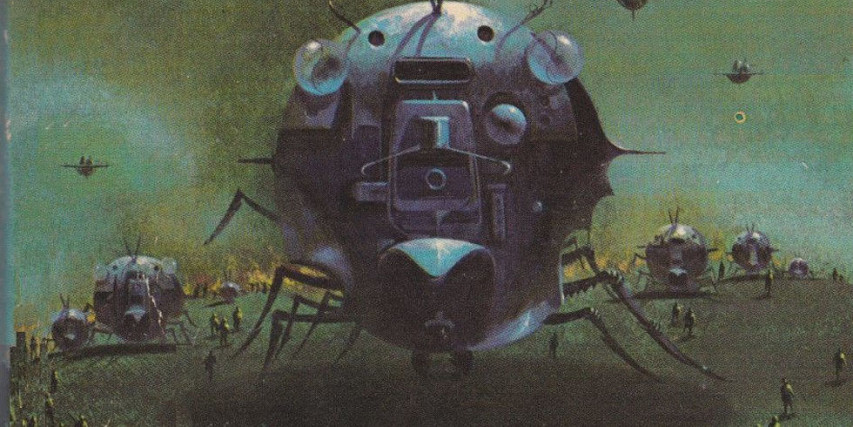
Starship Troopers cover detail

It’s not just generals and soldiers who keep the The Art of War in print. Businessmen, coaches, and lawyers all seem to get something out of Sun Tzu’s 6th century military tome — memorizing and repeating passages that speak to the tactics and strategy of success, whether that’s on Wall Street or in a war zone.

But for all its long-lasting cultural influence, the book is limited by its lack of specifics. “Know your enemy” and “win without fighting” are all well and good, but such axioms don’t really help today’s GI prepare to deploy with a robotic squadmate or decide what information to place on a digital head’s-up display. Modern warriors, surrounded by sophisticated gear and nuanced rules of engagement, need to meditate on the balance between technology and soldier, man and machine, civilian and veteran. For that kind of wisdom, they must go to military science fiction — and one great book in particular.

Robert A. Heinlein’s Starship Troopers, published in 1959, is aging remarkably well. The tome chronicles the early military career of Johnnie Rico, who fights alien arachnids while clad in a heavily armed exoskeleton. The troopers drop from orbit one by one to wreak havoc on whatever target the Sky Marshal deems worthy of the attention. It’s a cool adventure novel with a soldier’s eye view that doubles a treatise on modern warrior culture, the limits of military technology, and the awful glories of fighting infantry. There’s a reason military academies like West Point recommend cadets read the book.

Like Sun Tzu’s masterpiece, Heinlein’s abounds with quotable axioms. You may not hear overly intense car salesman quoting from Starship Troopers anytime soon, but here are six reasons why the book is a practical guide to 21st century warfare.

Jeffrey Taylor says the left has Islam all wrong

Filed under: France, Politics, Religion, USA — Tags: , , , — Nicholas @ 02:00

An interesting article in Salon:

Whatever her views on other matters are, Pamela Geller is right about one thing: last week’s Islamist assault on the “Draw Muhammad” cartoon contest she hosted in Texas proves the jihad against freedom of expression has opened a front in the United States. “There is,” she said, “a war on free speech and this violent attack is a harbinger of things to come.” Apparently undaunted, Geller promises to continue with such “freedom of speech” events. ISIS is now threatening to assassinate her. She and her cohorts came close to becoming victims, yet some in the media on the right and the center-right have essentially blamed her for the gunmen’s attack, just as far too many, last January, surreptitiously pardoned the Kouachi brothers and, with consummate perfidy to human decency, inculpated the satirical cartoonists they slaughtered, saying “Charlie Hebdo asked for it.”

No.

[…]

One must, though, call out New York Times columnist Nicholas Kristof for backing up Affleck on the same show, and, later, in an editorial. Kristof, after all, should know better. He trades in words and ideas, and his acceptance of the fraudulent term “Islamophobia” contributes to the generalized befuddlement on the left about the faith in question and whether negative talk about it constitutes some sort of racism, or proxy for it. It patently does not. Unlike skin color, faith is not inherited and is susceptible to change. As with any other ideology, it should be subject to unfettered discussion, which may include satire, ridicule and even derision. The First Amendment protects both our right to practice the religion of our choosing (or no religion at all) as well as our right to speak freely, even offensively, about it.

One must, however, recoil in stupefaction and disgust at the consortium of prominent writers who just signaled de facto capitulation to the Enforcers of Shariah. I’m referring, of course, to the recent decision of 204 authors to sign a letter dissociating themselves from PEN’s granting the Toni and James C. Goodale Freedom of Expression Courage Award to the brave, talented surviving artists of Charlie Hebdo. (Disclosure: I have friends among Charlie Hebdo’s staff.) The authors objecting did so out of concern, according to their statement, for “the section of the French population” – its Muslims – “that is already marginalized, embattled, and victimized, a population that is shaped by the legacy of France’s various colonial enterprises.” A “large percentage” of these Muslims are “devout,” contend the writers, and should thus be spared the “humiliation and suffering” Charlie Hebdo’s cartoons allegedly caused them.

Europe’s colonial past and the United States’ current (endless) military campaigns in the Islamic world, as well as prejudice against nonwhites in Europe, have predisposed many to see, with some justification, Muslims as victims. But apart from the blundering wrongheadedness of the PEN writers’ dissent (Charlie Hebdo’s undeniable courage won them the award, not their artwork) and putting aside the question of whether France’s Muslims are necessarily “devout” (French law prohibits religion-based polling, so who could know?), or uniformly “humiliated” by Charlie Hebdo, or necessarily “embattled,” one thing transpires with arresting clarity from the authors’ declaration: Among the left, the confusion surrounding Islam and how we should relate to it imperils the free speech rights without which no secular republic can survive. We have to clear this up, and fast.

There is no legitimate controversy over why the Kouachi brothers targeted Charlie Hebdo. They murdered not to redress the social grievances or right the historical wrongs the PEN authors named. They explicitly told us why they murdered — for Islam, to avenge the Prophet Muhammad. Progressives who think otherwise need to face that reality. Put another way, the Kouachi brothers may have suffered racial discrimination and even “marginalization,” yet had they not been Muslims, they would not have attacked Charlie Hebdo. They would have had no motive.

QotD: When advertising becomes propaganda

Filed under: Britain, Humour, Quotations — Tags: , , , — Nicholas @ 01:00

The problem with the posters in the airport was that they resembled the political propaganda of a totalitarian regime, insinuating what could not be dissented from without some danger or personal inconvenience. I do not mean to say that we now live in such a regime in the most literal sense, that we have already to fear the midnight knock on the door, but rather that the posters contribute to a miasma of untruth, the kind of untruth that is becoming socially dangerous, or at least embarrassing, to point out. For if you do dissent from such a slogan you will be immediately cast into the social Gehenna where the reactionaries are sent, whose cries of outrage can be dismissed merely by virtue of who they are. If you say that science does not need women, you will be taken to mean that you think that women should be confined to children, kitchen, and church, and that you are an advocate of the burqa (though actually I would make it compulsory for young English women in the center of English towns and cities on Friday and Saturday nights, though only for aesthetic, not for moral or religious, reasons).

Not to be able to answer back to perceived untruths: such is the powerlessness that can eventually drive people to espouse the worst causes.

Theodore Dalrymple, “A Miasma of Untruth”, Taki’s Magazine, 2014-06-29.

May 11, 2015

The Oberlin College Choir performs “Please keep me from the real world”

Filed under: Humour, Media, Politics, USA — Tags: , , , , — Nicholas @ 05:00

By way of Amy Alkon’s blog, here’s the Oberlin College Choir (motto: “Feelz before Realz”) responding to the Christina Hoff Sommers controversy at the college:

Nepal’s tragic unpreparedness for disaster

Filed under: Asia, Government — Tags: , , , , , — Nicholas @ 04:00

In The Walrus, Manjushree Thapa explains why Nepal was so badly prepared for the earthquake:

Following the April 25 earthquake, Nepalis have had to learn the value of preparedness in the most painful way possible. In the aftermath, Pushpa Acharya, a Nepali friend at the University of Toronto, observed, “Knowledge was not our problem.” Indeed. We all knew that our country sits on an active fault line, where the subcontinent collided with the Eurasian plate with such force it created the Himalayas. The last big quake took place in 1934. Others have since struck, but none with the force of 1934’s 8.0 or April 25’s 7.9. We knew that a big earthquake was due.

It was our duty to prepare, and though some of us did so individually, as a society we ignored the warnings. In the past ten days, during search and rescue, and then the beginnings of relief, we’ve had to do some hard thinking about how our country could become more responsible going forward. The root problem may seem obvious: Nepal is one of the poorest countries in the world. Its poverty is, however, a symptom of our history of ill governance, and the reason for our national failure to prepare, which has kept us from becoming a functioning democracy.

When the earthquake struck, the country was in a deep and deeply depressing stupor. The governing parties — a coalition of the Nepali Congress Party and the Unified Marxist Leninists — had reached an impasse with Nepal’s thirty-three opposition parties about what kind of constitution to draft. There was no plan for the country as a whole, let alone in the case of an emergency. The drafting of a constitution has preoccupied, confounded, and eluded Nepal’s polity since 2006, when the Maoists ended a ten-year insurgency to join forces with other parties to remove Gyanendra Bir Bikram Shah. Nepal’s king had used the war as an excuse to end a fragile fifteen-year spell of democracy and install his own military-backed rule. A mass movement restored democracy, and the subsequent peace process promised to restructure the country along just and equitable lines through the drafting of a new constitution

Who Pays the Tax?

Filed under: Economics — Tags: , , — Nicholas @ 03:00

Published on 27 Jan 2015

Who bears the burden of a tax? Buyers or sellers? Why is it that the more elastic side of the market pays a smaller share of a tax? Again, we’ll apply what we know to the example of Social Security taxes and also look at the health insurance mandate as a part of the Affordable Care Act. Who pays for the mandate? The employers or the workers? We’ll also look at supply and demand of labor. Is the demand for labor more elastic than the supply?

After 74 years, the remains of HMS Urge discovered off the Libyan coast

Filed under: Britain, History, Military, WW2 — Tags: , , — Nicholas @ 02:00

In The Telegraph a report on the discovery of a Royal Navy submarine wreck from 1942:

British U class submarine HMS URGE underway. (via Wikipedia)

British U class submarine HMS Urge underway. (via Wikipedia)

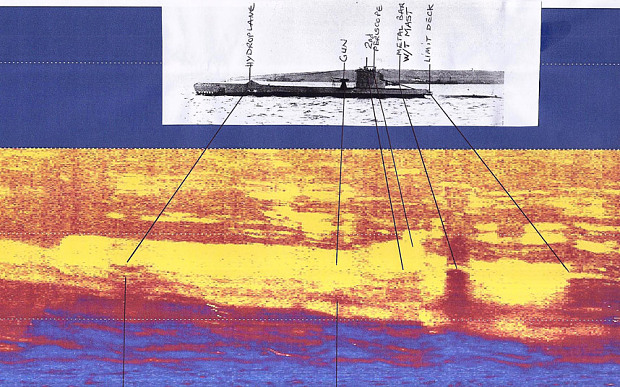
A Royal Navy submarine paid for by a town holding dances and whist drives is believed to have been discovered more than 70 years after it vanished during the Second World War.

The British submarine HMS Urge was paid for by the townspeople of Bridgend, South Wales, but sunk without trace in the Mediterranean in 1942.

It disappeared while making a voyage from the island of Malta to the Egyptian city of Alexandria – and families of the 29 crew and 10 passengers never knew what happened.

For more than 70 years, its resting place has remained a mystery. But a 76-year-old scuba diver claims he has discovered its wreck 160ft (50m) below the waves off the Libyan coast.

HMS Urge sonar image

QotD: Tariffs are generally harmful, but persist anyway

Filed under: Economics, Politics, Quotations — Tags: , , , , — Nicholas @ 01:00

For another example, consider trade barriers such as tariffs. There are good economic arguments to show that we would be better off if we went to complete free trade. That seems puzzling — if we would be, why don’t we?

The answer is provided by public choice theory, the branch of economics that deals with the workings of the political market. A tariff makes the inhabitants of the country that imposes it worse off but the politicians who pass the tariff better off, since it benefits a concentrated interest group at the cost of dispersed interest groups. More concentrated interest groups are better able to pay politicians to do things for them. Trade policy is optimized, but for the wrong objective.

David D. Friedman, “Why Improving Things Is Hard”, Ideas, 2014-07-08.

May 10, 2015

In the Netherlands, 1945, nobody “swaggered”

Filed under: Cancon, Europe, Germany, History, Military, WW2 — Tags: , — Nicholas @ 05:00

David Warren on the task of the First Canadian Army after liberating The Netherlands:

It wasn’t only the liberation, but what our boys did after, in that devastated country. The Netherlands — but Canadians call her “Holland” — had suffered proportionally more than any other country the Wehrmacht had crushed and occupied, and would continue to suffer — famine — after their final defeat. The bastards blew the dikes to slow our allied advance. Breached, the lands flooded; … deaths heaped on deaths.

Victory is sweet, but there was no swagger, from the Dutch still mired in Hell.

And memorably, neither from our boys, who had liberated them. They didn’t swagger. Instead, they set down their guns and their helmets and went to work — spontaneously, voluntarily, on the enormous task of repair; of fixing the dikes and clearing the farms of salt-mud and debris. Of breaking the stones, and smoothing the roads, and shifting the rubble. The food bags, too, were starting to arrive, from Canada and the States — the tins and boxes; the cigarettes and medical supplies; and the candy, for the little children.

This wasn’t the Marshall Plan. It was three years before that. The Royal Canadian Air Force was dropping food from the sky, as fast as it could. (Our pilots read, “Thank you Canadians!” on rooftops.) Crates and drums were being discharged through the busted ports, wheat and flour from our Prairies. Yet thousands were still perishing from hunger.

And more: all the stuff sent by unorganized people, to wherever they thought it would do some good; to Germany as well as Holland; to wherever people must be desperate and starving. And back home our boys’ own families were throwing themselves into action, packing and shipping; and slipping in the letters of love and encouragement to strangers and new friends over the sea.

We were already hand-in-glove with the Dutch, from sheltering their royal family in exile. The magnificent Queen Wilhelmina, scourge of politicians (Churchill called her “the only real man” among all the exiled governors in London), no longer speaking in the nights, through the radio. For she had returned, to a rapturous welcome. And now, too, their little princess — Margriet Francisca — born in Ottawa Civic Hospital, in a maternity ward that had been declared Dutch sovereign territory for the occasion.

Every year, the tulips still come from Holland to decorate our Parliament Hill. And Dutch kids are still taught in school how to sing, “O Canada.”

Boozing “properly” during the Great War

Filed under: Europe, History, Military, WW1 — Tags: , , — Nicholas @ 04:00

At War on the Rocks, Jake Hall talks about the pervasive inflence of intoxication during the First World War:

The assassination of Archduke Franz Ferdinand is often regarded as the proverbial match in the tinderbox where World War I is concerned. The imperial-nationalist tensions surrounding Austria-Hungary’s waning empire, tensions which inspired the assassination and ensuing conflict, were frankly unwarranted, considering the swill these regions were, and still are, trying to pass off as potable spirits. Then again, what’s a tragic war of global scope without tragically misguided motivations at the start? One contributing factor to the war-primed Europe of 1914 sounds oddly familiar. Disenfranchised youth of marginalized states resorting to suicidal violence. It’s easy to see how the seven agents of Ferdinand’s assassination could be lining up to enlist in ISIS today. Youthful, “angsty,” and driven by an unhinged sense of importance and righteousness, it was a 19 year old, Gavrilo Princip, who carried out the clumsy assassination on the streets of Sarajevo. After a failed bombing attempt, failed suicide attempt, and a major security lapse by Ferdinand’s guards, the conspirators succeeded in gunning down the Archduke and Duchess almost by chance. With that act the Serbian nationalists, on a quest for south Slavic unification, killed a couple that were by many accounts lovely people, and started the July Crisis that led to the Great War.

The conflict that followed became the then-largest mobilization of military force ever, until the rematch 21 years later. HG Wells was the first to declare WWI the “war to end war,” and though that designation had contemporary critics, it quickly became a motto for the hostilities. A war to end war seems like an occasion for a drink, no? If it doesn’t, you’ve either never had a drink or you’ve never had a soul. In any case, what follows is an account of which powers were most benevolent during the war, measured chiefly by the alcohol rations secured and distributed to their soldiers. It presumes that the men fighting in the trenches on all sides had drawn short straws in life, and the side most willing to allow a little buzz on the front line exhibited a little humanity.

[…]

So how does all this play out in the end? France occupied the role of major supplier to all sides drinking needs. The Germans made large gains at the start of the war, and enabled rear-echelon troops to frequent taverns in their newly conquered territories. Couple that privilege with their substantial liquor rations, and the German rank-and-file were well situated for some time. Ultimately, the British naval blockade started affecting German supplies, which directly cut into their drinking. When the Allies reversed Germany’s advances and ended the war, they virtually ensured the Germans would only be drinking regret and resentment for nearly two decades. The French military was also generous with its rations where allies were concerned, attempting in a small way to soften the hard line the British and American citizens and leadership held with regard to their troops’ drinking. Russia incurred the mother of all hangovers when it finally stopped drowning itself in vodka for a minute, and basically played the role of your friend who passes out at the bar. Final outcome? À votre santé, France.

“…the Venn diagram circles of ‘scientists’ and ‘Lord of the Rings fans’ have a large overlap”

Filed under: Books, Science, Technology — Tags: , — Nicholas @ 03:00

In The Atlantic, Julie Beck wonders “What has it got in its academic journals, precious?”

Though at first glance, science and fantasy seem to be polar opposites, the Venn diagram circles of “scientists” and “Lord of the Rings fans” have a large overlap. One could (lovingly!) label that region “nerds.”

Fight me on that if you want, but there’s plenty of evidence that suggests scientists love J.R.R. Tolkien’s epic. Several newly discovered animal species have been named after characters from the books — a genus of wasps in New Zealand is now called Shireplitis, with species S. bilboi, S. frodoi, S. meriadoci, S. peregrini, S. samwisei and S. tolkieni. The wasps bear the names of the hobbits because they too are “small, short, and stout,” according to a press release. On the other side of the size spectrum, paleontologists named a 900-pound ancient crocodile Anthracosuchus balrogus, after the Balrog, a giant whip-wielding fire monster from The Lord of the Rings. There is also a dinosaur named after Sauron, which seems kinda harsh to me. And many, many more, if the website “Curious Taxonomy” is to be believed.

“Given Tolkien’s passion for nomenclature, his coinage, over decades, of enormous numbers of euphonious names — not to mention scientists’ fondness for Tolkien — it is perhaps inevitable that Tolkien has been accorded formal taxonomic commemoration like no other author,” writes Henry Gee in his book The Science of Middle Earth.

It can’t really be eleven years already, can it?

Filed under: Administrivia — Tags: — Nicholas @ 02:00

Once again, I almost missed my own blog’s anniversary. It’s now eleven years since I started blogging … but I won’t say it seems like yesterday (it seems like maybe two or three years ago, actually). In rather the same way that I still don’t know what I want to be when I grow up, I still don’t really know what I’m trying to do with the blog. It just keeps dragging me back when I think I’m done with it…

Earlier anniversary postings:

QotD: The German love of order

Filed under: Europe, Germany, Humour, Quotations — Tags: , — Nicholas @ 01:00

In Germany one breathes in love of order with the air, in Germany the babies beat time with their rattles, and the German bird has come to prefer the box, and to regard with contempt the few uncivilised outcasts who continue to build their nests in trees and hedges. In course of time every German bird, one is confident, will have his proper place in a full chorus. This promiscuous and desultory warbling of his must, one feels, be irritating to the precise German mind; there is no method in it. The music-loving German will organise him. Some stout bird with a specially well-developed crop will be trained to conduct him, and, instead of wasting himself in a wood at four o’clock in the morning, he will, at the advertised time, sing in a beer garden, accompanied by a piano. Things are drifting that way.

Your German likes nature, but his idea of nature is a glorified Welsh Harp. He takes great interest in his garden. He plants seven rose trees on the north side and seven on the south, and if they do not grow up all the same size and shape it worries him so that he cannot sleep of nights. Every flower he ties to a stick. This interferes with his view of the flower, but he has the satisfaction of knowing it is there, and that it is behaving itself. The lake is lined with zinc, and once a week he takes it up, carries it into the kitchen, and scours it. In the geometrical centre of the grass plot, which is sometimes as large as a tablecloth and is generally railed round, he places a china dog. The Germans are very fond of dogs, but as a rule they prefer them of china. The china dog never digs holes in the lawn to bury bones, and never scatters a flower-bed to the winds with his hind legs. From the German point of view, he is the ideal dog. He stops where you put him, and he is never where you do not want him. You can have him perfect in all points, according to the latest requirements of the Kennel Club; or you can indulge your own fancy and have something unique. You are not, as with other dogs, limited to breed. In china, you can have a blue dog or a pink dog. For a little extra, you can have a double-headed dog.

On a certain fixed date in the autumn the German stakes his flowers and bushes to the earth, and covers them with Chinese matting; and on a certain fixed date in the spring he uncovers them, and stands them up again. If it happens to be an exceptionally fine autumn, or an exceptionally late spring, so much the worse for the unfortunate vegetable. No true German would allow his arrangements to be interfered with by so unruly a thing as the solar system. Unable to regulate the weather, he ignores it.

Among trees, your German’s favourite is the poplar. Other disorderly nations may sing the charms of the rugged oak, the spreading chestnut, or the waving elm. To the German all such, with their wilful, untidy ways, are eyesores. The poplar grows where it is planted, and how it is planted. It has no improper rugged ideas of its own. It does not want to wave or to spread itself. It just grows straight and upright as a German tree should grow; and so gradually the German is rooting out all other trees, and replacing them with poplars.

Your German likes the country, but he prefers it as the lady thought she would the noble savage — more dressed. He likes his walk through the wood — to a restaurant. But the pathway must not be too steep, it must have a brick gutter running down one side of it to drain it, and every twenty yards or so it must have its seat on which he can rest and mop his brow; for your German would no more think of sitting on the grass than would an English bishop dream of rolling down One Tree Hill. He likes his view from the summit of the hill, but he likes to find there a stone tablet telling him what to look at, find a table and bench at which he can sit to partake of the frugal beer and “belegte Semmel” he has been careful to bring with him. If, in addition, he can find a police notice posted on a tree, forbidding him to do something or other, that gives him an extra sense of comfort and security.

Jerome K. Jerome, Three Men on the Bummel, 1914.

May 9, 2015

A rather satisfying way to punish an in-game cheater

Filed under: Gaming — Tags: , , , — Nicholas @ 08:24

BBC News picked up the story of a Guild Wars 2 player who’d been cheating on a massive scale:

A character controlled by a hacker who used exploits to dominate online game Guild Wars 2 has been put to death in the virtual world.

The character, called DarkSide, was stripped then forced to leap to their death from a high bridge.

The death sentence was carried out after players gathered evidence about the trouble the hacker had caused.

This helped the game’s security staff find the player, take over their account and kill them off.

Over the past three weeks many players of the popular multi-player game Guild Wars 2 have been complaining about the activities of a character called DarkSide. About four million copies of the game have been sold.

Via a series of exploits the character was able to teleport, deal massive damage, survive co-ordinated attacks by other players and dominate player-versus-player combat.

To spur Guild Wars‘ creator ArenaNet to react, players gathered videos of DarkSide’s antics and posted them on YouTube.

The videos helped ArenaNet’s security head Chris Cleary identify the player behind DarkSide, he said in a forum post explaining what action it had taken. Mr Cleary took over the account to carry out the punishment.

H/T to MassivelyOP for both the original story and the BBC News link.

Everybody panic! The robots are coming to steal our jobs!

Filed under: Economics, Technology — Tags: , — Nicholas @ 04:00

Tim Worstall explains why we can easily disregard the calls to panic about the impending invasion of our new robotic overlords:

Essentially, what [economist Joe] Stiglitz is saying is that under certain conditions the advance of the robots means that we all lose our jobs and the capitalists, the people who own the robots, get to have all of the economy. And one can see his mechanism to get there: if robots become ever more productive then yes, we can see the idea that there will be more robots and fewer people employed by the capitalists and so on. But it’s still impossible for that end state to arrive: simply because we non-capitalists aren’t going to let it.

[…]

So, let’s recast that end state. There’s the 1% (the plutocrats, the capitalists, whatever) and then there’s us, the 99%. Robots become ever more productive and we the 99% all lose our jobs working for the capitalists. Hmm, tant pis in one telling of this story because as Karl Marx pointed out that’s a precondition for true communism, that we overcome the scarcity problem. But even leaving that aside what is going to happen next?

That 1% owns all the robots and gets all the production from them. We, the 99%, have no jobs and thus no incomes. We cannot purchase any of that robotic consumption from the capitalists. This is the very point that Stiglitz is making, that the capitalists will own and consume 100% of the robotic output. Well, yes, OK, but what are we the 99% going to do? This new peasantry: do we all just wander around the fields until we keel over from starvation? No, quite obviously we don’t. Sure, the robots are more efficient than we are, produce things for much lower prices. But we don’t have any of the currency with which we can buy that production. So, what are we going to do?

« Newer PostsOlder Posts »

Powered by WordPress