Quotulatiousness

May 18, 2013

The micro-state of Sealand

Filed under: Britain, Europe, Government, Liberty — Tags: , , , , — Nicholas @ 08:56

Thomas Hodgkinson reports on his week-long visit to the tiny nation of Sealand:

Sealand

Seven miles off the coast of Suffolk, there is a country. It isn’t a very big country. In fact, its surface area extends to no more than 6,000 square feet, which is about twice the size of a tennis court. You won’t find it on Google Maps and it isn’t a member of Nato or, indeed, the EU. But it exists. And I know, because I’ve been there.

[. . .]

The reason for this suspicion of strangers in general lies in the violent, picaresque nature of its past. Sealand was built in 1943 by the Royal Navy as an anti-aircraft fortress designed to shoot down Luftwaffe planes. In those days it was equipped with two 94mm Vickers heavy anti-aircraft guns and two 40mm Bofors light anti-aircraft guns, and manned by 120 seamen crammed into accommodation in the hollow concrete towers. It was known as HM Fort Roughs, or Roughs Tower for short. Abandoned after the War, it gathered rust and guano, a gloomy relic of conflict, until the era of pirate radio in the 1960s.

Then two rival entrepreneurs competed for possession, regarding the fort as the perfect place (since it was outside the three-mile zone that then constituted British territorial waters) from which to broadcast pop music to a grateful generation of teenagers. The piratical pair were the long-haired Irish chancer Ronan O’Rahilly, of Radio Caroline fame, and one Roy Bates, a cravat-wearing former Army major.

Each time one of them put men on Roughs Tower, the other would send people to eject them, sometimes forcibly. It was a question of who was prepared to go further, and the answer turned out to be the Englishman. For Bates, the solitary fortress became far more than a radio project. It became an obsession that would absorb not only his life, but also the lives of his wife and children.

The key thing, he knew, was to maintain a presence. With even one occupant, Roughs Tower was tough to take. But Roy couldn’t afford a guard, so instead he plucked his 14-year-old son Michael out of school and put him up there, sometimes with his daughter Penny, sometimes with his wife Joan. For Michael, this was a welcome escape from the dreary rigours of a public-school education, but as he confided to me during a long lunch on-shore after my visit, “I expected it to last six months, not 40-something years”.

Sealand2

April 24, 2013

More on the currency choices facing an independent Scotland

Filed under: Britain, Economics, Europe — Tags: , , , , , — Nicholas @ 10:49

John Kay works through the short list of options about money that a newly independent Scotland would need to decide about:

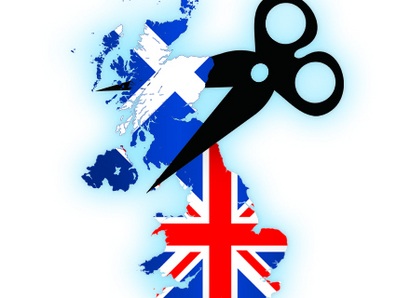
Speculation about Scotland’s currency future would begin on the day Scotland voted for independence — or the day on which a poll showed that this result was likely. Scotland would have three main options — the euro, the pound sterling, or its own distinct money.

The euro is the official currency of the EU, and Scotland would in principle be committed to its adoption. But there would be little enthusiasm for that course in either Edinburgh or Brussels, and Scotland — like the UK — would not meet the criteria on debt and deficits for joining the euro. A vague Scottish aspiration to join the single currency at some distant date would probably satisfy everyone.

The sensible outcome would be continued currency union with England — or with the entity that, in deference to Wales and Northern Ireland, participants in the Scottish debate call rUK — rest of UK. Scotland might ask for — and get — a Scottish economist on the Bank of England’s Monetary Policy Committee (not a representative of Scotland — the rules of the committee preclude representative roles). But that would be the extent of Scottish influence on monetary policy.

[. . .]

If I represented the Scottish government in the extensive negotiations required by the creation of an independent state, I would try to secure a monetary union with England, and expect to fail. Given experience in the eurozone, today’s conventional wisdom is that monetary union is feasible only as part of a move towards eventual fiscal union. But desire to break up fiscal union was always a major — perhaps the principal — motive for independence in the first place.

Scotland could continue to use the pound unilaterally, whether the Bank of England liked it or not — as Ecuador uses the dollar and Montenegro the euro. But this is not really an attractive course, and the only countries that have adopted it are those — such as Ecuador and Montenegro — whose monetary histories are so dire that they prefer to entrust their policies to foreigners.

April 23, 2013

Independent Scotland would not be in currency union with the UK

Filed under: Britain, Economics — Tags: , , , — Nicholas @ 09:08

In the Guardian, Patrick Wintour and Severin Carrell cover the latest provocative notion coming out of London, directed at the Scottish separatists:

An independent Scotland would be forced to adopt new currency arrangements that would be a “very deep dive into uncharted waters”, George Osborne has warned. The chancellor said an independent Scotland would be unable to operate with a currency linked to sterling, let alone be able to form a currency union with it.

“The best arrangement is if they stay in the UK,” he said.

Osborne said he thought it “unlikely” the rest of UK would agree to a currency union with Scotland, noticeably hardening his rhetoric against Alex Salmond’s proposal.

Speaking on BBC Radio Scotland, the chancellor said: “Why would it want to risk a currency union? We’ve got a currency union in Europe and it’s called the euro, and look at all the problems that has had trying to co-ordinate the economic policies of different countries.”

Setting out the options, the chancellor said: “I think Scotland could either join the euro, and Alex Salmond is very nervous of saying that, or Scotland can set up its own currency. That is what lots of countries do, but Alex Salmond is again nervous of saying that.

“They can use the pound without our consent, like Panama uses the American dollar, or they can negotiate with the rest of the UK to form a currency zone. But Britain has had poor experience with things like the ERM [exchange rate mechanism], when it has tried to lock or peg its currency together with other currencies. So it is not clear that it would be in the rest of the UK’s interest to enter into a euro-style currency zone with the rest of Scotland.”

January 31, 2013

Talking secession … again … and again … and again

Filed under: Cancon, Government, Law — Tags: , , , — Nicholas @ 09:28

Paul Wells has a few thoughts on secession:

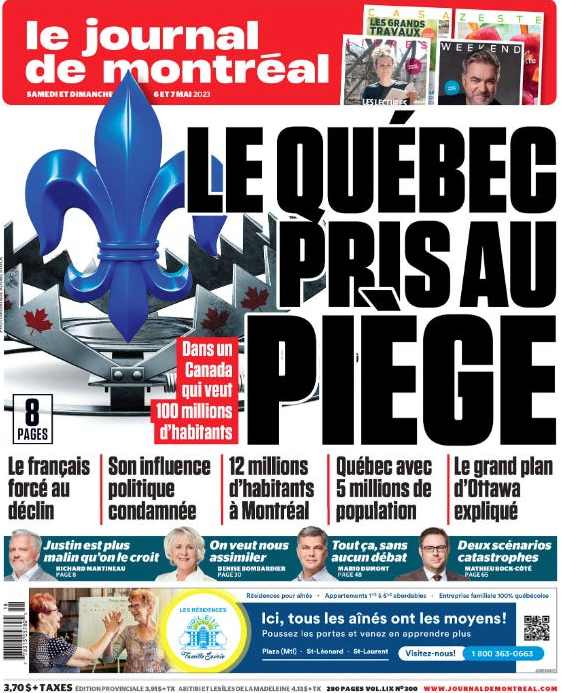
The reason we have spent nearly 40 years debating the effect of referendum results a few points this side or that of 50 per cent is because we have all known for nearly that long that any separatist “victory” in a referendum will be a close thing. If there ever were such a vote, 50 per cent plus a bit on a confusing question, then a sovereignist Quebec government would run into difficulties that don’t have much to do with the text of the Clarity Act and would not be eased by Tom Mulcair’s attempted compromise.

The Supremes sing the hits better than anyone. In their opinion on the Secession Reference, the top court got everyone excited with Paragraph 88, which identifies (Andrew Coyne and many others have said it “invents”) an “obligation on all parties to Confederation to negotiate constitutional changes to respond” to “the clear expression of the desire to pursue secession by the population of a province.” Every six weeks ever since there has been an op-ed in Le Devoir invoking the “obligation to negotiate” as Quebec secessionists’ trump card after a future third-time-lucky majority referendum vote.

It would be so lovely if somebody read more than one paragraph. Having discerned an obligation to negotiate where few had seen one before, the Supremes then ask the obvious question: “What is the content of this obligation to negotiate?” That’s a hell of a question, and since it comes precisely one paragraph after the one that gets everyone so excited, it’d be swell if a few people followed what comes next. The justices promptly “reject two absolutist propositions.” The first is “that there would be a legal obligation on the other provinces and federal government to accede to the secession of a province, subject only to negotiation of the logistical details of secession.” To anyone who says a Yes vote must lead to secession on Quebec’s terms, “we cannot accept this view.” Make the Yes vote as big as you like — Quebec could still not “dictate the terms of a proposed secession to the other parties: that would not be a negotiation at all.”

[. . .]

So a secession attempt would be just about infinitely more complex than the conventional wisdom usually assumes. I haven’t even considered the near-certainty that local secessionist, purely dissolutionist, or U.S.-annexationist movements would pop up across Canada if Quebec began a secession attempt. But surely governments of good will can overcome dissent? Well, maybe, except that the last time Canada’s governments attempted a coast-to-coast set of constitutional amendments — the Charlottetown process of 1992 — the unanimity and best efforts of every head of government in the land wasn’t enough to ensure passage.

There’s a powerful narcotic quality to any conversation that mentions the “Charlatan Accord” for most Canadians over the age of 40: you can see eyes glaze over and lids get heavy the instant that process enters the discussion.

January 25, 2013

Canada and the First Nations — separate nations, separate worlds

Filed under: Cancon, Government, Law — Tags: , , , , — Nicholas @ 13:56

In the Globe and Mail, Tom Flanagan explains why the Idle No More protestors insisted on negotiating with the Governor-General:

Actually, native leaders’ focus on the governor-general as the representative of the Crown is based not on a lack of information about the Constitution but on a different understanding of it. They know perfectly well that the prime minister and government of the day are installed by the political process of the nation of Canada, but they don’t see themselves as part of that process and that nation. They see themselves as separate nations, dealing with Canada on a “nation to nation” basis. They see the Crown as a governmental structure above Canada – and therefore the authority with whom they should deal.

Sovereign nations do not legislate for each other; they voluntarily agree to sign treaties after negotiations. The radical conclusion from this premise is that Parliament has no right to legislate for aboriginal people without first getting their consent. Hence the hue and cry about consultation and the demand to repeal those parts of the government’s Budget Implementation acts that allegedly impinge on aboriginal and treaty rights. Today’s claim is that Parliament had no right to amend the Indian Act and the Navigable Waters Protection Act before consulting with (read: getting the approval of) first nations. But the same claim could be made regarding any legislation, for all laws made by Parliament affect native people. Enforcement of the Criminal Code arguably affects aboriginal rights by putting large numbers of aboriginal people in jail, and so on.

This indigenist ideology is not new. It started to appear in the 1970s, as a reaction to Jean Chrétien’s 1969 White Paper, which proposed repealing treaties and abolishing the special legal status of Indians. In its usual well-meaning but sometimes witless way, the Canadian political class thought it could deal with the reaffirmation of indigenism through word magic. Adopt the vocabulary of the radicals. Start calling Indian bands “first nations.” Pretend to recognize their “inherent right of self-government” or even “sovereignty.”

August 23, 2012

Quebec election: why is Pauline Marois getting a free pass for xenophobia?

Jonathan Kay wonders why the English language media in the “rest of Canada” are being so careful to avoid calling out PQ leader Pauline Marois for far greater sins than any Alberta politician committed during the recent Alberta election:

Given the close scrutiny that surrounded the recent Alberta election, it is somewhat surprising that more attention is not being paid to the genuinely alarming things coming out of the mouth of Parti Québécois leader Pauline Marois.

During the Alberta campaign, every gaffe committed by a member of the right-wing Wildrose Party became a national news item. The Toronto media, in particular, lapped it up — because it played to our outdated stereotype of Alberta as a land of rural hicks. Yet nothing that was said in the Alberta campaign can compare to the declarations of Ms. Marois, who has easily established herself as the most xenophobic major-party leader in all of Canada.

So why has there been comparatively little uproar over Ms. Marois? It is as if Canadians in the rest of the country have become so accustomed to watching Quebec nationalists bottom-feed for votes that we no longer are shocked by it. But Quebec is, after all, part of Canada. And Ms. Marois might become the province’s next premier on Sept. 4. Surely, it is worth rousing ourselves to pay attention to the fact that this woman is proposing policies that are unconstitutional and even bigoted.

August 13, 2012

PQ promises to “strengthen” language laws in Quebec

Filed under: Cancon, Law, Liberty — Tags: , , , , , — Nicholas @ 14:31

It’s mind-blowing that a minority in Canada are legally oppressed by their provincial government, but in Quebec, it’s just language business as usual. The opposition Parti Quebecois, who brought in the language law in question, are promising to make it even more oppressive to non-French-speaking Quebecers:

It’s an easy political move for Marois. It will appeal to her separatist base and thoroughly annoy the anglophones … which will also appeal to the base. And given that the stated intention of her party is to go pick fights with Ottawa and drive a wedge between Quebec and the Rest of Canada, it’s a good plan. Language politics are always hot-button issues in Quebec, and Marois is pushing those buttons gleefully.

But it is interesting to note her position on the issue. Marois holds that the Liberals, under Premier Jean Charest, have not done enough to promote the French language in Quebec. From the perspective of the PQ, that’s almost certainly true. But Bill 101 is a creation of the Parti Quebecois. The provincial Liberals have certainly left it intact and haven’t dared to try and strengthen it, but fundamentally, Bill 101 is a PQ law. If it isn’t working, that’s not Premier Charest’s fault.

The bigger issue, of course, is that such a law already exists. Uninformed citizens in the Rest of Canada would be rightly horrified to learn that such a bizarre, anti-democratic law exists in their country at all. Bill 101′s intrusions into the private interactions of businesses and the decisions of individual families are justified as being necessary by Quebec nationalists to preserve the primacy of French in Quebec, but to anyone who is not a language warrior, seem more like a cross between a French tutor and a Orwellian nightmare.

Of course, tougher laws will still not accomplish the intended task: forcing everyone in Quebec to speak French at all times.

June 14, 2012

The “victim” mindset among Quebec protestors

Filed under: Cancon, History, Liberty — Tags: , , , , — Nicholas @ 10:13

Dan Delmar on some of the long-standing grievances being channelled by Quebec’s most recent protestors:

“White Niggers of America:” That’s how author Pierre Vallières famously described the Québécois people in his 1968 book, which the former Quebec Liberation Front (FLQ) terrorist leader wrote from his prison cell.

Vallières argued that the struggles of French settlers in British North America were similar to those of pre-segregation era blacks in America, and the lingering effects of English repression were reason enough to issue a call to arms in the late 1960s. FLQ members then kidnapped and murdered Pierre Laporte, who was Quebec’s deputy premier, and sparked a national crisis that ended in martial law.

Vallières and the FLQ may be dead, but the notion that Quebecers are an oppressed people lives on.

[. . .]

Although the “N Word” hasn’t made a noticeable comeback just yet, it’s only a matter of time before fringe elements search for new and more shocking tactics to attract attention to their cause which, at least legislatively, has hit a dead end.

Upon seeing the salute images, many jumped to the conclusion that protesters were racists or that Neo-Nazism was on the rise in Montreal; neither is true. They aren’t racist – at least not intentionally. There is a genuine belief, as Vallière expressed, that Quebecers are in the midst of an epic battle to save democracy and break away from the shackles imposed on them by their Anglo overlords.

[. . .]

In many ways, he [Amir Khadir] embodies the Quebecois victim mentality. At a press conference last week, he compared his struggle with those of Martin Luther King Jr. and Gandhi. He turned to a CTV News reporter, a black woman, and said that “Law 78 is as unacceptable as segregation of blacks was in the 60s.” And he said that in all sincerity, with a straight face.

The culture of victimization runs deep. Some Quebec laws are based on the concept that Francophone culture is under attack, and restricting the use of other languages, as is the case with Bill 101, is an important weapon in the war against Americanization. And make no mistake: This is a war, ideologically speaking. Political elites, particularly within the separatist movement and the opposition Parti Québécois, believe the mere existence of the English language in this province is an assault on French.

April 27, 2012

Michael Ignatieff’s incautious remarks prove he was the wrong leader for the Liberal party

Filed under: Britain, Cancon, Media — Tags: , , , , , — Nicholas @ 10:05

Matt Gurney on the media kerfuffle over Michael Ignatieff’s perhaps-quoted-out-of-context remarks on Quebec and separation:

Michael Ignatieff is not entirely right when he claims his now infamous remarks on the inevitability of Quebec’s independence, made during a BBC interview discussing Scotland’s possible exit from the United Kingdom, were taken out of context. He is correct that the sound bites that aroused so much media interest in Canada did not do justice to the full interview. But, in the final analysis, he did indeed say, in clear terms, that Canada and Quebec are essentially two counties, that they have little to say to each other and that Quebec is at a “way station” on its inevitable road to full sovereignty. Ignatieff, a brilliant man whose political instincts remain as faulty as ever, may regret saying what he did, but he did say it.

Separatist politicians welcomed his comments, as it “confirms” that Quebec’s independence is inevitable. Federalist politicians, particularly those unkindly disposed toward the Liberals, slammed Ignatieff, and the party he led for good measure. It was all premised upon the idea, whether sincerely believed by Ignatieff’s critics or not, that his comments may in some way encourage Quebec to leave.

That’s unlikely. But it might — just might — hasten along the day when the Rest of Canada (the ROC, as it’s called) decides to rid itself of Quebec.

Ignatieff described the situation we face as Quebec and Canada having nothing to say to each other. That’s not exactly it. It’s not that we don’t have anything to say, it’s just that we don’t have anything in common. And the more we talk to each other, the clearer that becomes. But that growing distance between Quebec and the ROC is not, as Ignatieff described it, a “contract of mutual indifference.” If it was, that would be fine. But that isn’t the system we built. Quebec’s indifference to the ROC comes at a cost — almost $7.4-billion in transfers from other Canadian provinces a year. That’s effectively half of the total sum dispersed through the equalization process. That’s not indifference, that’s bribery. And the price Quebec is willing to settle for is not necessarily the price the ROC will be willing to pay indefinitely.

April 14, 2012

The fall of the House of Bossi?

Filed under: Europe, Politics — Tags: , , , , , — Nicholas @ 11:59

BBC News has a profile of Umberto Bossi, who recently had to resign as head of the political party he founded, Italy’s Northern League:

… Mr Bossi made one of his charismatic, raucous and fiery speeches, declaring in essence that northern Italians were no longer going to kow-tow to Rome’s greedy politicians and to pay their taxes to enable lazy southern Italians to live on public welfare.

One of his famous phrases was “Roma ladrona” meaning “Thieving Romans!”

It was all pretty provocative stuff, and had strongly racist undertones.

The League mocks the accents and the origins of Southerners whom they derisively call “terroni”. I suppose “ignorant peasant” would be the nearest English translation.

[. . .]

Sixteen years later it turns out that Umberto Bossi has apparently been dipping into the public trough, even more deeply than the Roman politicians he was so critical of when he founded his separatist party, and set up the phantom north Italian state he dubbed “Padania” – meaning the country of the river Po.

In 2004 Mr Bossi suffered a stroke which left him with impaired speech, but failed to quench his political ambitions or his vulgar public manners.

He frequently uses swear words in public to smear anyone he does not like and often gives the finger in front of TV cameras to make his message even more clear.

[. . .]

According to court documents, Mr Bossi’s wife bought no fewer than 11 houses and apartments with Northern League party funds.

Mr Bossi himself had his own house done up with public money and his son Renzo — nicknamed by his father the Trout, who in fact does have a somewhat fish-like expression — also had access to apparently unlimited cash to indulge in his taste for fast cars.

The party even paid for the Trout’s speeding tickets, not to mention medical expenses. The 23-year-old has now been forced to resign from his sinecure as a regional government official, which brought him 12,000 euros (£10,000, $16,000) a month.

April 7, 2012

“[Dalton] McGuinty … has led Ontario from the commanding heights almost to the low-rent district of the Canadian economy”

Conrad Black, on the dangers of regional politics played out at the national and international level:

One of the points I was trying to make in last week’s column, in general support of Pierre Trudeau’s efforts to make both official languages present in all parts of the country, was that in any federal state, some concessions to particular regional concerns are necessary or the country will fall apart, or even atomize. In a little over a century, this fate has split Norway from Sweden, Singapore from Malaysia, Bangladesh from Pakistan, the Czechs from the Slovaks and, most painfully, the Sudanese and South Sudanese.

This was what made the Quebec separatist threat so dangerous; though there was never much prospect of heavy violence, there was a danger of the permanent diminution of the country after a prolonged and immobilizing constitutional crisis. Of course, the separatist leaders greatly and treacherously underestimated the complexities and problems of any such step, and aggravated the problem with trick referendum questions about seeking authority to negotiate sovereignty and association with Canada: Simultaneously to eat and retain the same rich cake.

[. . .]

The Copenhagen Environmental Conference of 2009 was probably the most inane and redundant international conference in all history, as every climate alarmist capable of crawling to a television studio or buttonholing a journalist (except perhaps for Canada’s inimitable Gwyn Dyer), competed in foreseeing the imminence, almost literally, of the fall of the sky. But more demeaning by far at Copenhagen was the spectacle of the premiers of Canada’s two most populous provinces, Dalton McGuinty and Jean Charest, attacking Alberta’s oil sands in that over-suggestible ideological environment infested by kooks and charlatans.

The oil sands must be developed, and a pipeline built either into the U.S. or to the West Coast to transport the oil to market. These projects must be managed with great care for the environment. But Canada’s manifest destiny as an energy exporter cannot be held hostage by eco-terrorists, nor by the economic growth of one Canadian region being stunted by the slovenly dependence of other regions on an artificially depreciated Canadian dollar. Intra-Canadian partisanship and regional rivalries must end at the border and the water’s edge.

The antics of McGuinty, who has led Ontario from the commanding heights almost to the low-rent district of the Canadian economy, blaming the prosperity of Alberta for raising the value of the Canadian dollar and inconveniencing Ontario, is an outrage. The new federal NDP leader, Thomas Mulcair, has been uttering something perilously close to the same inexcusable flimflam. Alberta, per capita, has done more than any other province to carry the cost of federalism, including oceanic largesse to Quebec. And all Canadians should rejoice at the prospect of Canada becoming a world energy giant, especially as it entails the prosperity of Newfoundland after centuries of economic struggle, and also the flowering of the hydroelectric wealth and technical sophistication of Quebec.

February 15, 2012

Justin Trudeau: soft separatist

Filed under: Cancon, Politics — Tags: , , , , , — Nicholas @ 09:22

Josée Legault is busily trying to walk back her scoop, as she claims now that the information being presented in English is distorted and a false characterization of what Justin Trudeau actually said. Colby Cosh isn’t convinced:

Legault goes on to gripe about the “honesty” of this characterization. In fact, it is perfectly honest and in perfect concord with what Trudeau said, and Legault was correct to recognize it as news in the first place, even if she does not now like the result (perhaps because she has lost ownership of the scoop).

Justin Trudeau did say he was willing to contemplate separation under real-world circumstances. “One day, who knows?” is more or less exactly what he told the interviewer. This is a legitimate surprise. And while I believe that a forty-year-old man is entitled to his own opinions — not that any Quebecois baby boomer can stand to think of Justin as a person entering the era of back pain and prostate problems — the contrast with his father’s extreme anti-sovereigntist position really is worth remarking upon, if only because Justin’s surname is the source of much of his influence.

[. . .]

And yet, as sane and worthy of imitation as he seems in these respects, does anybody recognize the “Canada of Stephen Harper” Trudeau ranted against so excitingly today in front of a scrum in Centre Block? Harper’s party has not only accepted the legal fact of same-sex marriage, but has promised to shore it up against the disrepair in which the prior Liberal regime left it. The pro-life agitators in the Conservative caucus are a few barely-detectable grains of pepper amidst a kilogram of salt; on the whole, they are little more numerous and noisy than the pro-lifers in the pre-2011 Liberal caucus (who were, in one of history’s petty ironies, disproportionately victims of Conservative gains in non-metro Ontario).

January 10, 2012

Scottish independence on the front-burner

Filed under: Britain, Government, History — Tags: , , , — Nicholas @ 09:31

An interesting summary of the independence debate in Scotland from The Economist:

Put up or shut up. That is the risky (but arguably rather canny) message that David Cameron has sent to the pro-independence head of the Scottish devolved government in Edinburgh, Alex Salmond. Specifically, Mr Cameron has announced that the British government and Westminster Parliament are willing to give Mr Salmond the referendum on Scotland’s future that he says he wants — as long as it is a proper, straight up-and-down vote on whether to stay in the United Kingdom or leave, and is held sooner rather than later.

It is not that Mr Cameron wants to break the three hundred year old union between London and Edinburgh. Both emotionally and intellectually, he is fiercely committed to the union as a source of strength for both Scotland and Britain, insist Conservative colleagues who have discussed the question with him. Publicly, he has pledged to oppose Scottish independence with “every fibre” of his being.

But Mr Cameron and his ministers also feel that Scotland has been drifting in a constitutional limbo, ever since Mr Salmond’s Scottish National Party (SNP) won an outright majority at Scottish parliamentary elections in 2011 (a feat that was supposed to be impossible, under the complex voting system used in Scotland). The SNP campaigned on a simple manifesto pledge to hold a referendum on the future of Scotland. But after his thumping win Mr Salmond slammed on the brakes and started talking about holding a consultative vote in the second half of his term in office, ie, some time between 2014 and 2016.

April 24, 2011

Duceppe throws down the gauntlet: “This election is a battle between… Canada and Quebec”

Filed under: Cancon, Media, Politics — Tags: , , , , , , — Nicholas @ 13:20

The rise of the NDP in Quebec is forcing Bloc Québécois leader Gilles Duceppe to take a much stronger line against Jack Layton:

The NDP’s newfound status proved jarring enough for Duceppe to make a strident, emotional appeal to his base Saturday:

“This election is a battle between… Canada and Quebec,” said a message Saturday from the Bloc leader’s Twitter account.

He later erased that note and replaced it with a toned-down appeal for all sovereigntists to back his party. The message is a clear departure from previous campaigns that saw Duceppe work to broaden his appeal beyond sovereigntist voters.

“This election is not a left-right battle, but a battle between federalists and sovereigntists,” said the later message from Duceppe’s account. “Between the parties of the Canadian majority and Quebec.”

There are even anti-NDP attack ads, including a new one from the Liberals featuring a yellow traffic light and the message, “Not so fast, Jack.”

The Liberals have been forced to pay more attention to the NDP than they had planned, especially with the parties in a statistical tie in the latest polls. Liberal Leader Michael Ignatieff was even booed loudly at at hockey game last night, which has only been lightly mentioned in the media. His low personal popularity is starting to be seen as a big reason for the Liberals’ plight in the polls — although it can’t be the only reason.

The NDP’s financial promises are one area the Liberals can safely attack:

The Liberals are pointing out a series of alleged exaggerations in the NDP platform, saying the promises are based on invented revenues like a supposed $3.6 billion that would come in the first year of a climate cap-and-trade system. The Liberals call it, “fantasy money.”

The Liberals also heaped ridicule on the NDP promise to hire 1,200 new doctors and 6,000 nurses for the bargain-basement rate of $25 million.

They said the NDP promise to save $2 billion by slashing subsidies to the oil sands overstates the possible savings by four times, and that the math is similarly wonky on the NDP’s pledge to crack down on foreign tax havens.

“It’s time to take a close look at what Jack Layton’s saying to the Canadian people. The numbers add up and up and up,” Ignatieff said.

“Mr. Layton has got a platform that when you look at it closely has . . . $30 billion of spending, which we think is not going to be good for the economy and he derives it from sources we just don’t think are credible.

“He’s got a cap-and-trade system that’s going to deliver $3.5 billion in the first year. We don’t even have a cap and trade system. It’s science fiction.”

May 24, 2010

Why the Canadian political sphere lacks zest

Filed under: Britain, Cancon, Politics — Tags: , , — Nicholas @ 17:33

It’s a fundamental issue that prevents any form of excitement from being discussed, or acted upon:

In Britain, even post-Blair, many of the best and brightest still go into politics. Until the expenses scandal, there was something of a cache to being an MP, something which will probably return in time. The typical Canadian Cabinet is, by comparison, made of poorer quality timbers. The average minister of the crown, here in the Elder Dominion, might make it as a parliamentary secretary back in the Mother Country. Our best and brightest go into business, science and down South. In Canada, those who can’t do, teach, those who can’t teach, teach gym, and those who fail at that run for elected office. There are exceptions. Very few.

The other reason British parties are, relatively, more principled than their Canadian derivatives is national unity. Until about the mid-1990s, no one seriously talked about the break up of the United Kingdom. Even the bleeding ulcer of Ulster was unlikely to be resolved by uniting North and South. This is not the case in Canada. On pretty much every major national issue of the last century and a half — Catholic Schools, prohibition, conscription, foreign policy, Medicare, Afghanistan — English speaking Canada leans one way, and French Canada the other. Raise controversial issues and you might start reminding the Solitudes how much they dislike each other. Thus our national politics has the colour, consistency and firmness of oatmeal. It’s why Mackenzie King, the Great Equivocator, was our longest serving Prime Minister.

Older Posts »
« « Jinxed train? Or jinxed by-standers?| Racy archaeology » »

Powered by WordPress