Quotulatiousness

February 28, 2026

The by-election in the British riding of Gorton and Denton

Filed under: Britain, Media, Politics — Tags: , , , , — Nicholas @ 03:00

A few surprises in the outcome, although the expected winner — the Green Party — did manage to pick up the seat by pandering harder than anyone else for the Muslim vote (according to multiple sources). And, as Francis Turner points out, this may be a problem:

The Gorton and Denton by-election has happened, and as I predicted, Labour came third.

Though more people voted Labour than I expected (25% actual vs 10-15% prediction) and sadly not enough people were convinced to vote Reform so the Greens won. But, while turnout was lower than one might have hoped, there’s a real humdinger of an allegation that makes the Green victory very iffy.

    Today we have seen concerningly high levels of family voting in Gorton and Denton. Based on our assessment of today’s observations, we have seen the highest levels of family voting at any election in our 10 year history of observing elections in the UK.

Family voting is not a term I’ve heard of before, but it is the situation where two voters either confer, collude or direct each other on voting. And obviously cases where one voter oversees the votes of more than one other person as well.

Democracy Volunteers, the organization making the allegation, is a reputable decade plus old organization and not a partisan one.

    Democracy Volunteers is run by Dr John Ault, a former Liberal Democrat politician who has observed elections in countries including Britain, Sweden, Norway and Finland.

They give more detail on their webpage

    2023 saw the enactment of the Ballot Secrecy Act, which made the practice of family voting more clearly a breach of the secret ballot, making it more enforceable by staff in polling stations. Signage is now available to discourage the practice. Signage was only seen in 45% of the polling stations observed.

    The observer team saw family voting in 15 of the 22 polling stations observed, some 32 cases in total, nine cases in one polling station alone. The team observed a sample of 545 voters casting their vote – meaning 12% of those voters observed either caused or were affected by family voting.

    Commenting John Ault, Director of Democracy Volunteers said;

    “Today we have seen concerningly high levels of family voting in Gorton and Denton. Based on our assessment of today’s observations, we have seen the highest levels of family voting at any election in our 10 year history of observing elections in the UK.”

    “We rarely issue a report on the night of an election, but the data we have collected today on family voting, when compared to other recent by-elections, is extremely high.”

    “In the other recent Westminster parliamentary by-election in Runcorn and Helsby we saw family voting in 12% of polling stations, affecting 1% of voters. In Gorton and Denton, we observed family voting in 68% of polling stations, affecting 12% of those voters observed.”

    […]

    The team also saw a number of voters taking photographs of their ballot papers and one voter being authorised to vote despite them already having been marked as voted earlier in the day.

What they do not say, unfortunately, is which polling stations they observed this in. We can guess. In fact the Torygraph reports that Reform has explicitly made the obvious accusation:

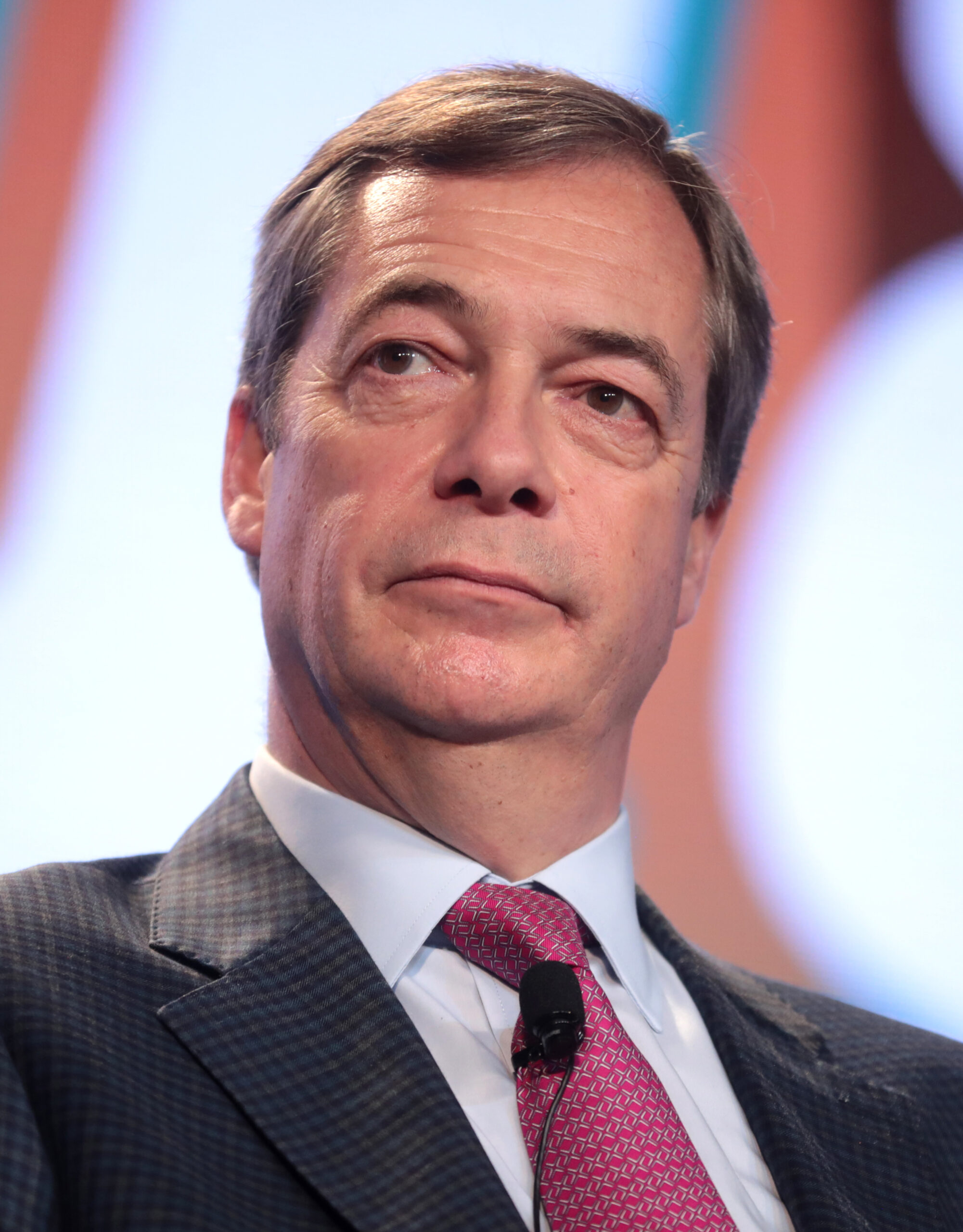
    Nigel Farage, the Reform leader, said allegations of family voting raised “serious questions about the integrity of the democratic process in predominantly Muslim areas”.
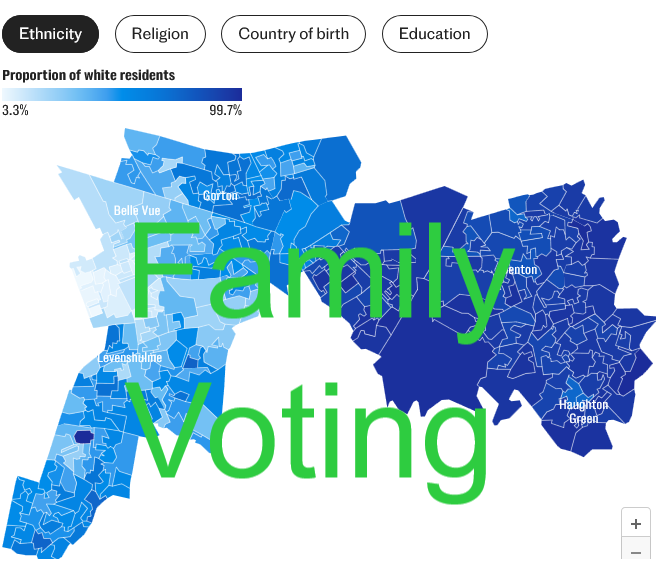
I would imagine such things are happening all over the Anglosphere with the large increase in Muslim voters in recent years — many of whom may be voting for the first time, depending on their national origin. In the free-to-cheapskates portion of this post, Ed West considers the evolution of the UK Green Party from granola-eating no-nukes freaks into a consciously sectarian party aiming to leverage the rising Muslim vote:

A good pub quiz question in the year 2050 will go something like this: “True or false, the ‘green’ in the ‘Green Party’ originally referred to the environment”. By this point, the etymological origins of Britain’s sectional Islamic party will be as obscure as the relationship between British Conservatives and 17th century Irish bandits.

A key milestone, our mid-century quiz regular will inform his teammates, was the 2026 Gorton and Denton by-election in which the Greens stood neck and neck in a three-way race with Labour and Reform.

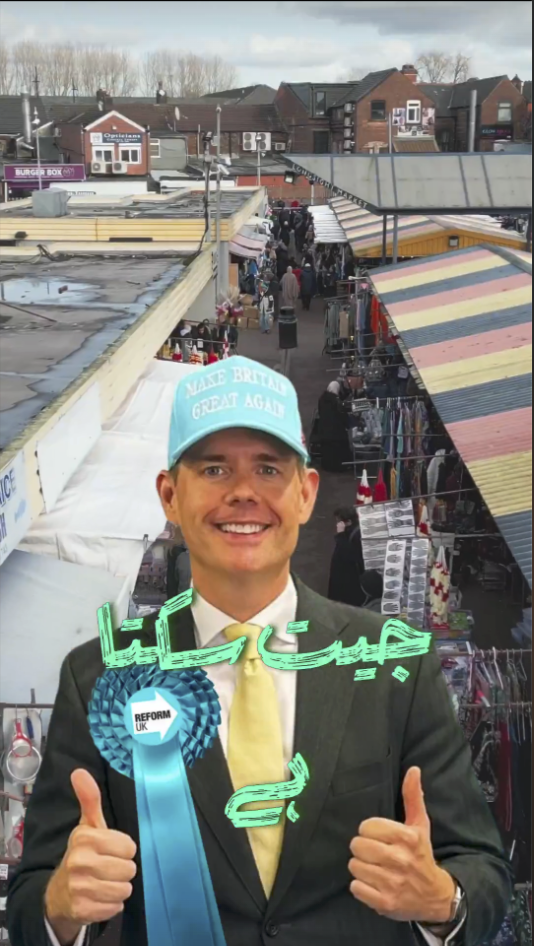
Eagle-eyed observers these past weeks will have noted how the once environment-focused party have been pitching at particular sections of “the community”, with campaign leaflets featuring candidate Hannah Spencer wearing a red and black keffiyeh while posing in front of a mosque.

Written in Urdu, the pamphlet calls for voters to: “Push the falling walls one more time. Labour must be punished for Gaza. Reform must be defeated and Green must be voted for. Vote for the Green Party for a strong Muslims voice.” Then it adds, in English, “Stop Islamophobia. Stop Reform.”

There was also an Urdu-language video linking Reform Party candidate Matt Goodwin and leader Nigel Farage with Donald Trump and ICE deportation raids. The video then cuts to Gaza, before showing Keir Starmer beside India’s Narendra Modi. Subtle stuff.

The video states in Urdu: “A cruel politician can win if we don’t vote Green to stop the Reforms … Workers, cleaners, drivers, mothers – it’s us who keep this area running. But the politicians are not working for us … The Reforms want to break up our communities. They want to deport families who have lived here for years, and they want to tax people born abroad even more. They give air to Islamophobia, and they put our safety and dignity at risk.”

[…]

Britain’s Green Party has historically been a thing of amusement to many, a bunch of harmless hippies and Quakers with wacky beliefs; at the time of their first breakthrough in the early 1990s their most high-profile figure was David Icke, then seen as an amusing crank with interests in new age mysticism and alternative medicine.

As traditional politics fractured, the Greens came to fill the space inhabited by high-education, low-income graduates, the group who most favour redistributive economics and highly progressive social policies. Yet political parties have no souls, as such, being merely vote-seeking businesses, and they go where the market is — and now they find the lowest hanging fruit in appealing to sectarian interests.

If decades of generous immigration policies have created constituencies where people vote along religious lines, and are more comfortable with the national language of Pakistan than English, there is nothing to stop someone appealing to that market. It’s within the rules of democracy, if not the spirit.

Gorton and Denton is among the increasing number of constituencies in which a candidate can win by appealing overtly to the Islamic vote; “Gaza independents” won 5 seats in 2024 and could win 10 or 12 by 2029 and 20 or 30 by the election that follows; after that, the ceiling is limited by high levels of segregation. This could be good news for the Green Party, if that’s the path they want to go down, and they certainly don’t seem to shy away from the prospect.

Polanski has welcomed the endorsement of the Muslim Vote, an organisation which instructs people how to cast their ballot along religious lines, even if adding the caveat that people should vote as individuals. In February he told PoliticsHome that “I think any organisation that wants to back the Green Party because they align with our values is something that I applaud and welcome”.

February 20, 2026

Reform UK falters, but Restore Britain rises to challenge it

Filed under: Britain, Media, Politics — Tags: , , , , , — Nicholas @ 04:00

Since the last general election in Britain, the rising power has been Reform UK under the unsteady leadership of Nigel Farage. A right-wing alternative to the horrifically incompetent Conservative Party, led by the man who kept the fires burning for Brexit? Seems like an obvious winner over the sagging Labour Party under Keir Starmer who just had to be less incompetent than the Conservatives but couldn’t manage even that low bar. But all was not well with Reform UK, despite being likely winners of the next election, and a lot of it comes down to Nigel Farage’s weaknesses. He seems incapable of dealing with strong personalities in his own party and seems to see any disagreement as a form of betrayal. One of the men he exiled from the party has now raised his own banner to much acclaim from the people who once were strong Farage supporters:

On Friday, Rupert Lowe, the independent Member of Parliament formerly of Reform UK, launched his own political party named Restore Britain. At the time of writing, the announcement video has amassed upwards of 30 million views on X, with many of the Western world’s most popular right-wing social media accounts — from Raw Egg Nationalist to Wall Street Mav — cheering him on.

Critics of Lowe argue that few outside of the culture war circles on X have heard of him, but these claims don’t track — Lowe has over 250,000 followers more on Facebook than he does on X, and has stated that he reaches “far more people on Facebook than X”. Still, while Lowe’s popularity has dramatically increased in the short year-and-a-half following his election to Parliament, he does not carry the same name recognition as Nigel Farage, let alone the latter’s proven experience of winning elections, as recent Reform victories have demonstrated, and contentious campaigns, being a key figure in the pro-Brexit campaign.

Restore Britain has the potential to be both very positive and hugely detrimental to Britain’s political future. Lowe’s announcement video was a masterclass in giving his admirers exactly what they want: decisive language promising a rebirth of a pre-Blair Britain, with fewer foreign nationals, fewer people on benefits, and more money to go round. The sober nature of the message was appealing — Lowe made it clear that the challenge facing the party, and the country, is not an easy one, but nor is it insurmountable. With stronger language than we have heard from Reform, Lowe promised to remove all people who arrived in Britain illegally, along with legal foreign nationals who do not meaningfully contribute to society.

Policy proposals like this — from a brand-new party with very little in the way of a party infrastructure as yet — do not have to be fully fleshed out to grab hold of the public imagination. What is likely is that it pushes the Overton window even farther rightward, and we begin hearing traditional centre-right figures like Kemi Badenoch (as she is centre-right in the political landscape of 2026) parroting some of the same points. With much of the online right rallying behind Lowe, we may begin to see a surge in the early stages of the posting to policy pipeline, whereby anonymous meme accounts — the modern politician’s crowdsourced spin doctor — churns out a large volume of pro-Lowe content, driving the narrative as others strive to keep up.

Lowe’s party may inadvertently help Reform, though, this by helping solve one of the main problems it has faced: attracting too many nutcases. Restore is positioning itself further to the right than Reform — and while this is no bad thing in and of itself, it will likely mean that those who believe in the most extreme solutions see Restore as the closest party to what they believe.

In UnHerd, Rob Lownie calls the movement “Lowe’s Powellite revolution”:

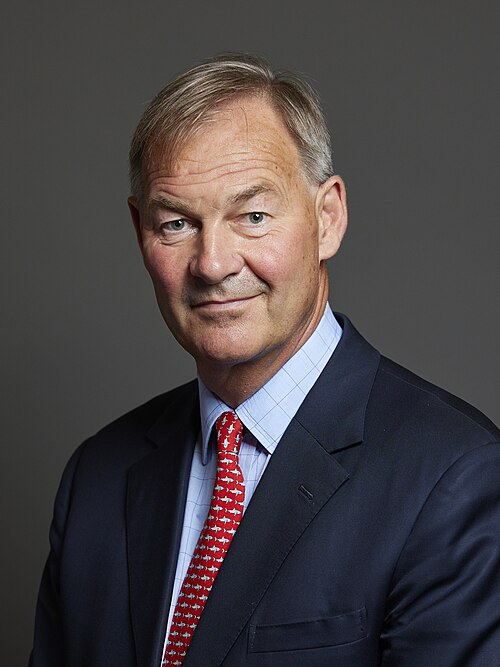
Rupert Lowe’s official portrait by Laurie Noble, 10 July, 2024 via Wikimedia Commons

Rupert Lowe deals in the politics of return: illegal immigrants are going back, and so is Britain. The Great Yarmouth MP, formerly of Reform UK, has now launched Restore Britain as a new political party, and on Wednesday evening claimed that it had passed 70,000 members. The launch announcement was marked with a stirring video of Lowe in his farmer’s get-up, as well as a series of semi-ironic nationalist compilations presumably made by Restore’s Zoomer footsoldiers. In one of these, among nostalgic nods to Geoff Hurst and Zulu, 1997 is invoked as the year when everything started to go wrong. Speaking over grainy images of a lost Britain, Lowe sums up his political outlook: “I think the state is bad, and I think the individual is good.

One area where the state has undoubtedly failed, in Lowe’s eyes, is on the matter of immigration. While Reform has pledged to deport all illegal immigrants, Restore wants to go further. Lowe has promised to scrap the asylum system entirely, also stating last week that “legal immigration will almost come to a complete halt”. The goal is not just to halt migrant influxes but to reverse them. “Net zero immigration is weak, weak, weak. It is insufficient and it is too late,” he said in the speech with which he launched the party. “The barbarians are already in the gates.”

The remedy, Lowe warns, will be “incredibly painful”: a characteristically abrasive verdict. It is one thing to criticise quangos, and quite another to say that “we must crush parasitic Britain”. And as for the dissonance between government and individual? “The state has definitively become the enemy of the people.”

In his doom-laden pronouncements, Lowe resembles no British political figure so closely as Enoch Powell, whose 1968 “Rivers of Blood” speech has led a radioactive afterlife in the national consciousness. For Powell, Britain’s willingness to take in tens of thousands of immigrants rendered it “a nation busily engaged in heaping up its own funeral pyre”. And compare Lowe’s talk of necessary pain to that 1968 call for an “extreme urgency of action now, of just that kind of action which is hardest for politicians to take”. For better or worse, Powell presaged contemporary debates over migration and nationhood. The challenge, as Keir Starmer found out with his more milquetoast “island of strangers” line, is to acknowledge voters’ frustrations without sounding like him.

Powell has been a political lodestar of sorts for Nigel Farage, Lowe’s bête noire and former boss who suspended him last year over dubious accusations of bullying. The Reform leader recalled being “dazzled”, as a schoolboy in the Eighties, listening to the former Tory MP speak. Last year, he insisted that Powell was fundamentally right about the scale of “community change” in the country.

On The Podcast of the Lotus Eaters, Carl Benjamin interviews Rupert Lowe:

January 16, 2026

Rapidly declining democracy in the home of the “Mother of Parliaments”

As I’ve mentioned before, it sometimes seems that Australia, Britain, and Canada are in a three-way race to de-democratize themselves as fast as they possibly can. Here’s the free-to-cheapskates portion of Ed West‘s essay on the return of liberal authoritarianism:

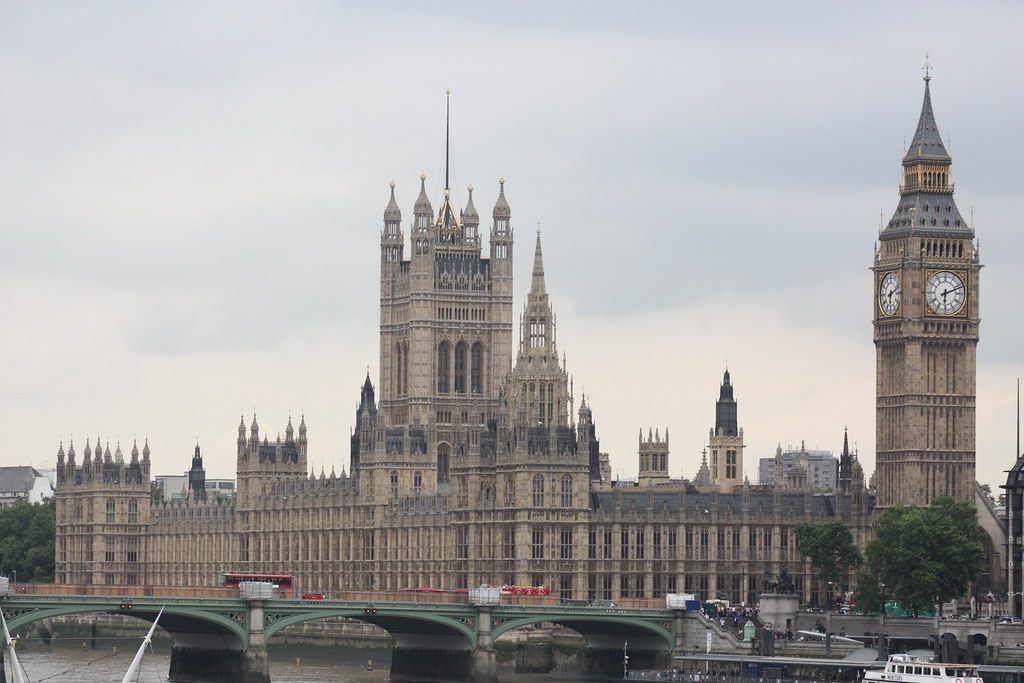
“Palace of Westminster” by michaelhenley is licensed under CC BY-NC-SA 2.0

It’s around this time of year that various NGOs give their assessment on the state of democracy and freedom of the world. The Fraser Institute’s Human Freedom Index was published earlier in December and Freedom House’s next report will arrive in February. It was at the start of last year that Romania was downgraded to a “hybrid democracy” by another body, the Economist Intelligence Unit (EIU), while France is now merely a flawed democracy. Sacré bleu!

What about our own beloved island, the mother of Parliaments? It will be interesting to see where Britain features in this year’s reports, and whether recent developments will impact on our rating.

Just recently, for instance, the British government postponed four mayoral elections until 2028, elections they are certain to lose. The Electoral Commission warned that it risked undermining “the legitimacy of local decision making and damaging public confidence”, while the chairwoman of the Labour Party even refused to rule out delaying the next General Election, leading Nigel Farage to accuse her of having “total contempt for democracy”.

Keir Starmer has also taken effective control of the House of Lords and will almost entirely eliminate opposition among peers by 2027, which he is able to do to the second chamber thanks to Tony Blair’s constitutional reforms. While the government extends the franchise to children, and even plans to place voting booths in schools, a clear violation of rules about politicising the education system, they’re also keen to restrict who can stand in elections.

As the i reported, Emily Darlington, Labour MP for Milton Keynes Central, “is seeking to make the Electoral Commission recommend enhanced DBS checks for candidates and then publish whether or not parties have agreed to the vetting. The aim is to ensure political parties justify whether their candidates are fit for office and name and shame those who refuse to participate.”

This is troubling when one considers that DBS (Disclosure and Barring Service) checks include not just criminal history but “non-crime hate incidents“, which may even appear on the records of people who haven’t been contacted by police. These highly-political charges are far more likely to be directed at those with Right-wing opinions.

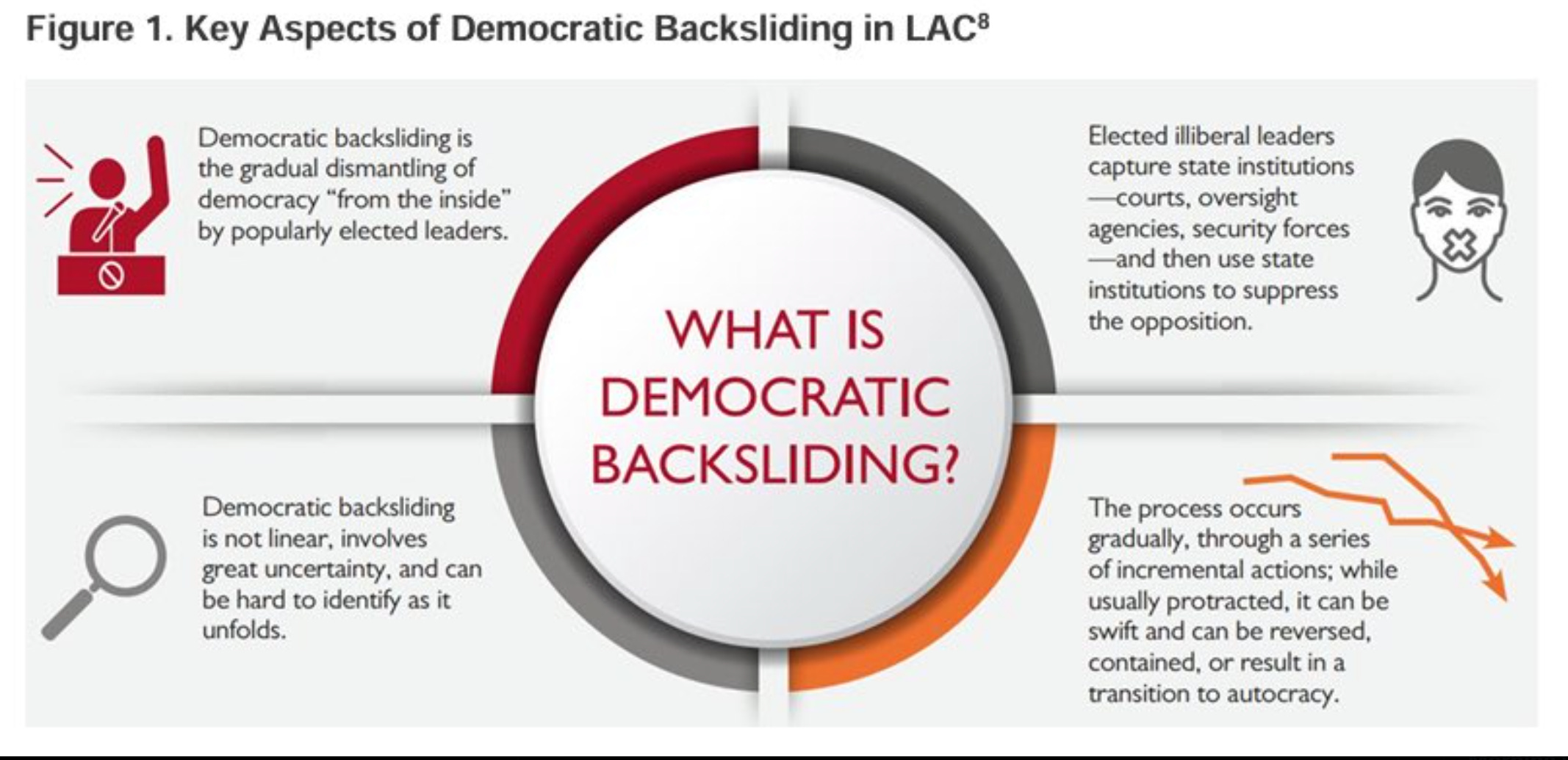
When western European countries do things like this, I try to gauge whether this is normal by asking the question: what if Hungary did this? In most of these cases, I imagine the assessment would be that it was an assault on liberalism and democratic norms. In which case, what if Britain is undergoing the sort of “democratic backsliding” usually levelled at central European countries with conservative governments? What if Keir Starmer is actually one of these illiberal “strongmen” we read about, just not a very effective one.

There are a number of accepted symptoms of democratic backsliding, among the most commonly listed being rejection of democratic rules, a disregard for constitutional norms, attempts to use legal mechanism to sidestep democracy, which is described as “stealth authoritarianism”, denial of opponents’ legitimacy, and the tendency to characterise them as outsiders or a threat to national security; on top of this, one might consider a willingness to curtail civil liberties, restricting the power of the media, and violating freedom of speech and association. Finally, and worst of all, is the toleration or encouragement of violence against opponents.

Credit: the National Opinion Research Center at the University of Chicago

By these broad definitions, Britain arguably meets many of these criteria (but not, most importantly, the last). There is certainly censorship, which has increased with the Online Safety Act, designed to combat “hate” as well as “misinformation”. Misinformation, of course, is everywhere, but its existence certainly provides a convenient excuse for governments to clamp down on the sort of information they dislike. The Government has also pondered banning Twitter, and while I feel that the widespread disgust at the Grok “deepfake” feature is reasonable, such a ban would completely cripple opposition, returning control of the discourse to the old media.

As for the British state’s definition of “hate”, there is a widespread belief that people motivated by hostility to mass immigration are extreme and dangerous, so the full force of the law must be used to stop them gaining support among a public who are totally guileless when it comes to absorbing information. This belief has grown more entrenched with the rise of populism, and makes western European governments increasingly sceptical of democracy itself.

It’s obvious that many people are concerned about the prospect of Nigel Farage becoming prime minister, and as the election date comes closer, and if he’s still in a position to win, the tone will become more shrill. Starmer admitted to this terror when he said, tellingly, that “If there is a Conservative government I can sleep at night. If there was a right-wing government in the United Kingdom, that would be a different proposition.”

Update, 17 January: Welcome, Instapundit readers! Have a look around at some of my other posts you may find of interest. I send out a daily summary of posts here through my Substackhttps://substack.com/@nicholasrusson that you can subscribe to if you’d like to be informed of new posts in the future.

October 4, 2025

What did poor Liverpool do to deserve “the worst speech in modern British political history”?

In The Conservative Woman, Sean Walsh wonders why his home city of Liverpool was chosen to be the site of a modern political crime-against-humanity in the form of a Two-Tier Keir speech to the Labour faithful:

LIVERPOOL happens to be my city of birth, and my family is generational CIA (Catholic, Irish, Alcoholic). I get back there when I can, usually for funerals family reunions. I can confirm that if you don’t mention Thatcher, the Sun, any Manchester band, the Wirral, or ask a native to pronounce the word “chicken”, you will be made to feel more than welcome as a visitor there. Scousers are rightly celebrated for a quick, if chippy, wit and unique sense of humour. Not least by ourselves.

Hopefully that last quality will help the city survive this week’s invasion by activist lawyers, Islington familiars, boilerplate career MPs, lanyard fetishists, lobbyists, and the process algorithm who was slush-funded to the Labour leadership.

For years Liverpool dodged hosting the Labour conference and was probably resentful at the snub. Now its rejuvenated docklands are the go-to venue for this annual festival of enforced fun/confected joyfulness. It’s probably resentful at that as well.

I’m not sure British politics has seen a speech as bad as the one the Prime Minister gave to this year’s wake gathering. And before you mention Enoch Powell and “rivers of blood”, that speech was “bad” only in the minds of those who never read it or were unable or unwilling to appreciate the deep truths Powell was advancing behind the veil of metaphor.

The Prime Minister was vindictive and politically maladroit in equal measure. Powell, a genuine member of the British working class, was a trained classicist who thought, spoke and wrote in the languages and metaphors of the ancient world. Powell’s lack of condescension and unwillingness to dumb down created room for bad faith and mischievous interpretation.

Starmer, who thinks and speaks the language of the petty bureaucrat, has no such defence. Where Powell made his predictions in poetry (which have proven correct, let’s not forget), Starmer rams home his malevolence in bullet points and crass soundbites.

I make this unhappy comparison partly to draw attention to the decades-long decline in the culture of political speechcraft, which TCW recently wrote about, and to affirm that even by the standards of today Starmer was awful.

We expect our political speeches to be unlovely now. Starmer’s went beyond that and managed to be offensive and yet boring all at once. As I said, the Prime Minister is an algorithm, and there are three things you can say about algorithms: they lack memory, have no sense of humour, and are unaware that they are, well, an algorithm.

On his Substack, Christopher Gage offers “A forward-thinking manifesto to deliver change for stakeholders”. That’s just the sort of bafflegab progressive thinkers think the general public wants to hear, apparently:

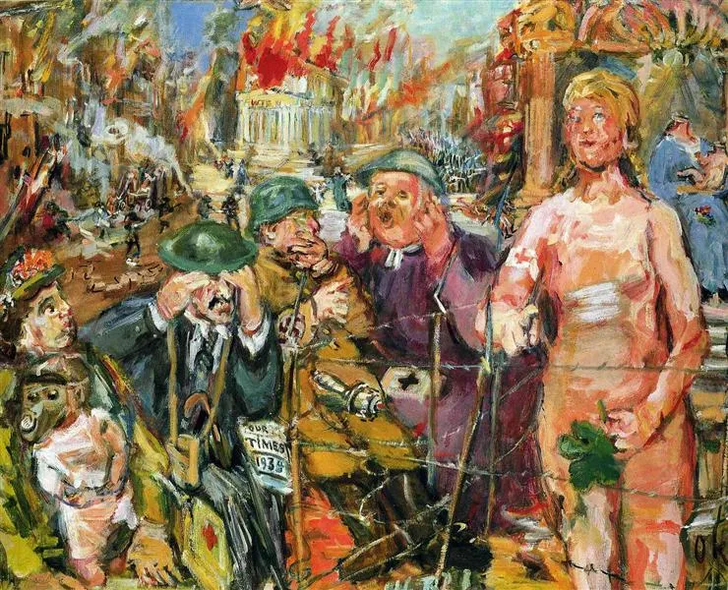
Alice in Wonderland by Oskar Kokoschka (1942)

This year’s Labour Party conference kicked off in the idiosyncratic style befitting its more excitable, green-haired cohort: confusion, contradiction, and faux contrition.

On Sunday, Sir Keir Starmer, our accidental prime minister, condemned Reform’s plan to deport migrants as “racist and immoral”. By Tuesday, it was Labour policy.

Politicians will say anything to keep suckling on the erect nipples of eternal power. And Labour politicians, despite their holier-than-thou affectations, are no different. They’ve seen the polls. Reform has led with room to spare in the last one hundred.

Labour has changed its spots. Starmer’s new Home Secretary, the combative and admirable Shabana Mahmood, is one foot on planet earth, at least.

At the conference, Mahmood warned the Guardian-reading element that they “won’t like the things I do”. She duly unveiled plans to ensure migrants “earn the right” to stay here: speak English, pay their way, and don’t expect their family to follow.

These once radioactive proposals are now common sense — two-thirds support immigration restrictions, whilst one-half wants not only the door welded shut but for many recent arrivals to be ushered politely through it. If Labour wants to win another election, they’d better listen to Wetherspoon Man over Performative Male.


As the week spluttered on, Starmer opted in to opting out to opting in to opting out. But Labour is listening. Nigel Farage, the Wetherspoon Man high priest, must feel his pockets lightened this week. Just glance at the swathes of Labour members waving the Union Jack, faces stretched incredulously like those masks from The Purge.

One impression emerges from this blancmange of bodily fluids: Farage has won the argument. Labour loves Britain, mate. Britain, big tits, Stella Artois, and XL Bullies.

Starmer even took it to Boris Johnson, onetime prime minister and two-time shagger of the year. The epithet “Boriswave” leapt from Starmer’s tongue with pace-sticked regularity. According to the prime minister, letting in four million people in two years — the Boriswave in Twitter slang — is an affliction so terrible that to reverse it would be, erm, even worse.

To be fair, such logic is not so much witless as it is anti-sense. And anti-sense has defined the Labour Party since I was spermatozoa.

One thing is clear. The Labour party, which presides over the sputtering, worn-out appendage known as Great Britain, needs some dire advice.

Here are a few proposals, the wholesale adoption of which would solve every problem befalling broken Britain.

July 7, 2024

More on the British general election results

Filed under: Britain, Media, Politics — Tags: , , , , , — Nicholas @ 05:00

At Postcards from Barsoom, John Carter has some further thoughts on the Sunak implosion on the 4th of July:

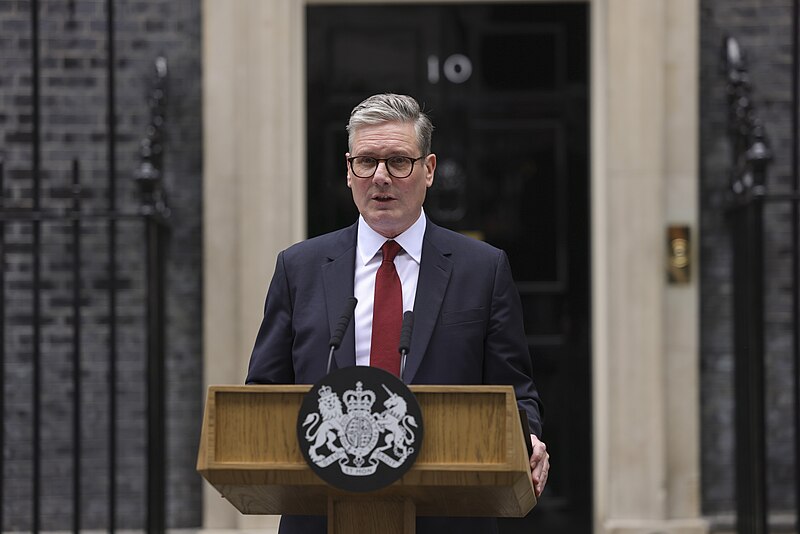
Sir Keir Starmer speaking to the media outside Number 10 Downing Street, 5 July, 2024.
Picture by Kirsty O’Connor/ No 10 Downing Street via Wikimedia Commons.

The Conservative wipeout was disappointingly not the annihilation that early polls predicted. The Tories were successful in scaring a critical mass of boomers in a last minute get-out-the-vote effort. At the same time, I suspect that some incidents late in the election that were used to paint Reform as raving Nazis were successful in driving down the Reform vote. One such incident involved a marginal Reform candidate caught on microphone being extraordinarily vulgar, who later turned out to be an actor that specialized in playing precisely the sort of character he was portraying for the media, which is of course all rather suspicious.

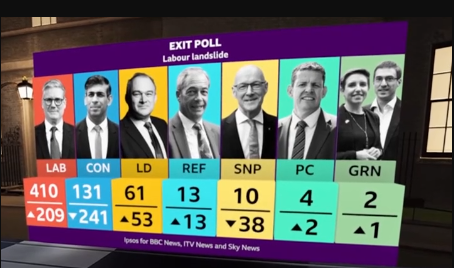
As a result, Reform only got 4 seats. This was less than the 13 that were predicted by the BBC based on exit polling, which prediction was revised to the 4 that Reform in fact won partway through counting, as the models’ Bayesian priors were updated accordingly, no doubt. That said, among those 4 seats is Nigel Farage, who is now a sitting member of Parliament.

That Parliament is now, in all likelihood, in the hands of the weakest massive majority government in its history, and if that’s not true (British history in its entirety being rather extensive), certainly close to it.

Keir Starmer’s Labour has 412 seats of Parliament’s total 650, giving it an unassailable majority. This is not because of a sudden surge in their popularity: their share of the popular vote didn’t budge, from around a third of the population. Turnout was moreover unenthusiastic, about 59% of the population I think, which while not as wince-inducing as the nearly 50% participation that the BBC was claiming throughout most of the counting period, is still nothing to write home about. The total number of people who voted for Labour decreased by 600,000. Labour cannot claim any sort of popular mandate, and they know it.

Not that Labour — or any western political party elected under these circumstances — could be expected to take it into consideration. From their point of view, all that matters is the seats in the House of Commons, and they’ve got them in spades.

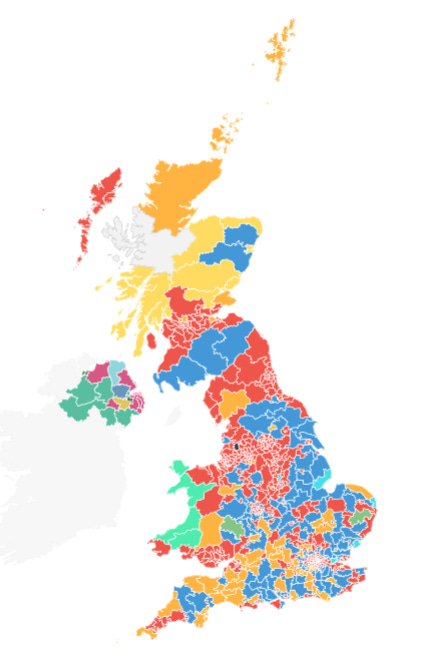
Reform and the Lib Dems were not the only beneficiaries of the Conservative collapse. This can be seen immediately in the crazy quilt of the electoral map, which despite Labour’s two-thirds majority, is planted with the flags of all sorts of weird political tribes.

My favourite part is Northern Ireland, where Sinn Fein held its 7 seats (making it the fifth-largest party after the SNP), and the rest of it is split up in an impenetrable jumble of splinter parties vaguely associated with different reasons for remaining part of the UK and/or the EU. Wales has been painted bright green by Plaid Cymru, the Party of Wales, who doubled their presence in parliament to 4. This is the same number of seats as Reform got, despite Plaid Cymru having gotten just under 200,000 votes, as compared to Reform’s 4.1 million, yet another perversity of first-past-the-post.

To everyone’s disappointment, first-past-the-post did not deliver a seat into the hands of the Monster Raving Loony Party, who received only 5,814 votes, a dismal 0.02% of the total 28.4 million votes cast. I do not know what kind of person votes for the Monster Raving Loony Party, but I bet they are absolutely fascinating. They should consider moving to one of Britain’s remote underpopulated islands, the Orkneys perhaps, where they might just be able to take over a seat. Having a strong, concentrated regional presence seems to be the best way to get members into Parliament in a first-past-the-post system, and having a sitting member for the Monster Raving Loonies would be even funnier than having Nigel in there.

First-past-the-post gets a lot of hate, and I’ve been ripping on it here, but it actually seems well-suited to an island which is shared by a bunch of squabbling ancient tribes. While it tends to produce majorities quite easily due to the winner-take-all nature of the contest within each riding, this also allows areas with strong regional identities to assert a disproportionate presence in parliament, despite getting a measly percentage of the vote. Not that that especially matters, given the aforementioned tendency for the system to hand out crushing jackpot majorities to the dominant players, as it has indeed done once again.

With the sole exception of Reform, there has not been any wave of enthusiasm for any of the parties in parliament. Large numbers of voters simply stayed home, whether tuning it all out or punishing their home parties while failing to see anything they wanted to vote for. It is as though the tide has gone out, exposing the sand and rocks of the sea shore. Whether this is a regular tide, which will gently slosh back in again in time, or a tsunami, remains to be seen. Certainly it feels that the water has receded very far indeed, exposing more of the seafloor’s surface than one normally sees. Say, is that Doggerland over there?

July 6, 2024

Labour’s “landslide”

Filed under: Britain, Media, Politics — Tags: , , , , , , , — Nicholas @ 04:00

I put the scare quotes around the word “landslide” because Labour’s eye-popping total of seats in Parliament was won on a remarkably narrow share of the actual votes cast in the British general election on Thursday (less than Jeremy Corbyn’s Labour party won in 2019). Fratricide on the right allowed a lot of Labour candidates to squeak in the win as the combined Tory/Reform votes would have been more than enough to top Labour.

Labour has won a landslide and the largest swing in British history without even increasing its vote share in England, and winning perhaps only 35% nationally. Its only significant gains in proportional terms were in Scotland, largely at the expense of the SNP, who have suffered catastrophic losses, meaning they are only 1 seat ahead of Sinn Fein, now the largest party in Northern Ireland — who are in turn 3 seats ahead of Reform, the third largest party in Britain by vote.

But these Reform MPs are — as I write — outnumbered by the five pro-Gaza independents, who won seats in Yorkshire, Lancashire, the Midlands and London in reaction to Keir Starmer’s position on Israel. Labour are down an average of 18 points in seats where the Muslim population is 20%, and in seats where that figure is above 25%, they are down 23 percentage points. While Labour lost a huge share of the Muslim vote, what is more worrying is the atmosphere in which this has taken place.

In Birmingham Yardley Jess Phillips held on by 700 votes, and in a remarkably unpleasant – I might even say upsetting, although I’ve only had three hours’ sleep — count she lamented that “This election has been the worst election I have ever stood in”, as she was booed.

“I understand that a strong woman standing up to you is met with such reticence”, she told her antagonists, and described how opponents had filmed a Labour activist in the streets and slashed her tyres, while another was screamed at by a man. She told how Jo Cox’s family had wanted to come and campaign but she couldn’t let them endure it. “Can you throw them out?” she asked the authorities of her hecklers.

There were similar scenes in Birmingham Ladywood as Shabana Mahmood was heckled as she gave her speech, the returning officer pleading with the supporters of independent Ahkmed Yakoob to stop.

Yakoob was described by the Sunday Times‘s Will Lloyd as “the one man in Britain who embodies the way our politics have changed”. He described “a 36-year-old defence solicitor who wears black Prada trainers, a glittering diamond watch, tinted gold-framed sunglasses and Gareth Southgate-like waistcoats. He has 195,000 followers on TikTok, a platform he understands more intuitively than 99 per cent of the politicians in this country. He speaks in clipped, brutal epigrams that sound like they are only ever a few” and “The word ‘genocide’ is never far from his mouth with ‘For Gaza’ printed on his leaflets.”

Labour hung on in Ladywood, a historic constituency in England’s second city where in 1924 Neville Chamberlain very narrowly beat a rising star of the Labour Party called Oswald Mosley.

Gaza independents also narrowly lost Birmingham Hodge Hill by just 1000 votes, and Ilford North, the constituency of Wes Streeting by just 528 votes.

While the media focus was largely engaged in catching out the musing of some of Reform’s less intellectually capable candidates, this other populist revolt has been carried out in an atmosphere of anger and intimidation perhaps not seen in English elections since the days of Rotten Boroughs.

There was police intervention in Oldham last month, Naz Shah MP was abused as a “dirty, dirty Zionist … paid by Friends of Israel”.

Fellow Canadian observer Damian Penny refuses to apologize for his headline “The Sunak Sets over the British Empire” (and I don’t blame him in the slightest):

Canadian readers, stop me if you’ve heard this before: an historically unpopular center-right Tory government heads into an election under a hapless leader running a catastrophically poor campaign and finds that even its traditional support is being badly eroded by an upstart right-wing populist party called Reform.

What happened in Britain on July 4 (weirdly symbolic, that) is not exactly what we experienced in Canada in 1993 – the Tories suffered the worst election result in their history, but they’re left with 119 more seats than the venerable Progressive Conservative party under Twitter-troll-in-waiting Kim Campbell, and at least the outgoing PM managed to hold on to his own seat — but it’s kind of nice to see the Mother Country adopting our traditions for once.

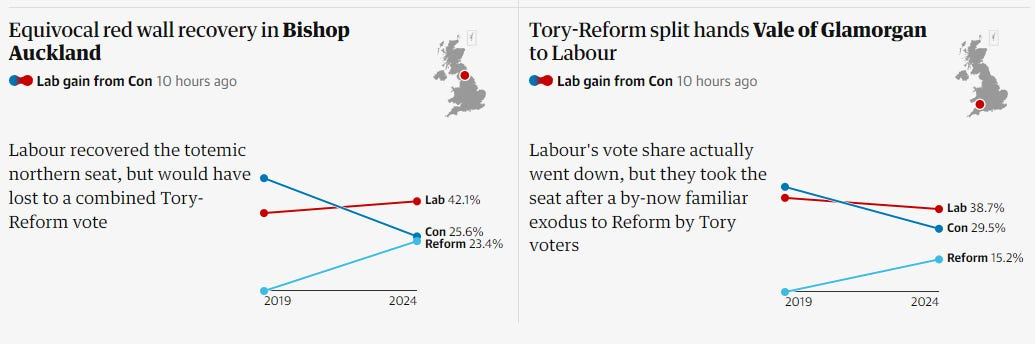
Honestly, 121 seats for Rishi Sunak’s Conservative Party is much better than I’d expected at the start of this campaign. And had it not been for Nigel Farage’s Reform Party, they might have managed a much less embarrassing defeat, because this kind of thing happened many times over last night:

Not everyone who voted Reform defected from the Conservatives – had Farage’s protest party not been on the ballot, many of its supporters would have stayed home or cast their votes for fringe parties and independent candidates — but it might have made the difference between a bad night for the Tories and the worst election in the Tories’ history.

Reform won four seats outright – less than a hyperbolic exit poll predicted, but four more than most observers expected at the start of the campaign. They can’t really affect much at the national level, especially with Keir Starmer’s Labour Party holding an absolutely massive majority of seats in Parliament, but they will make things very difficult for the Conservatives.

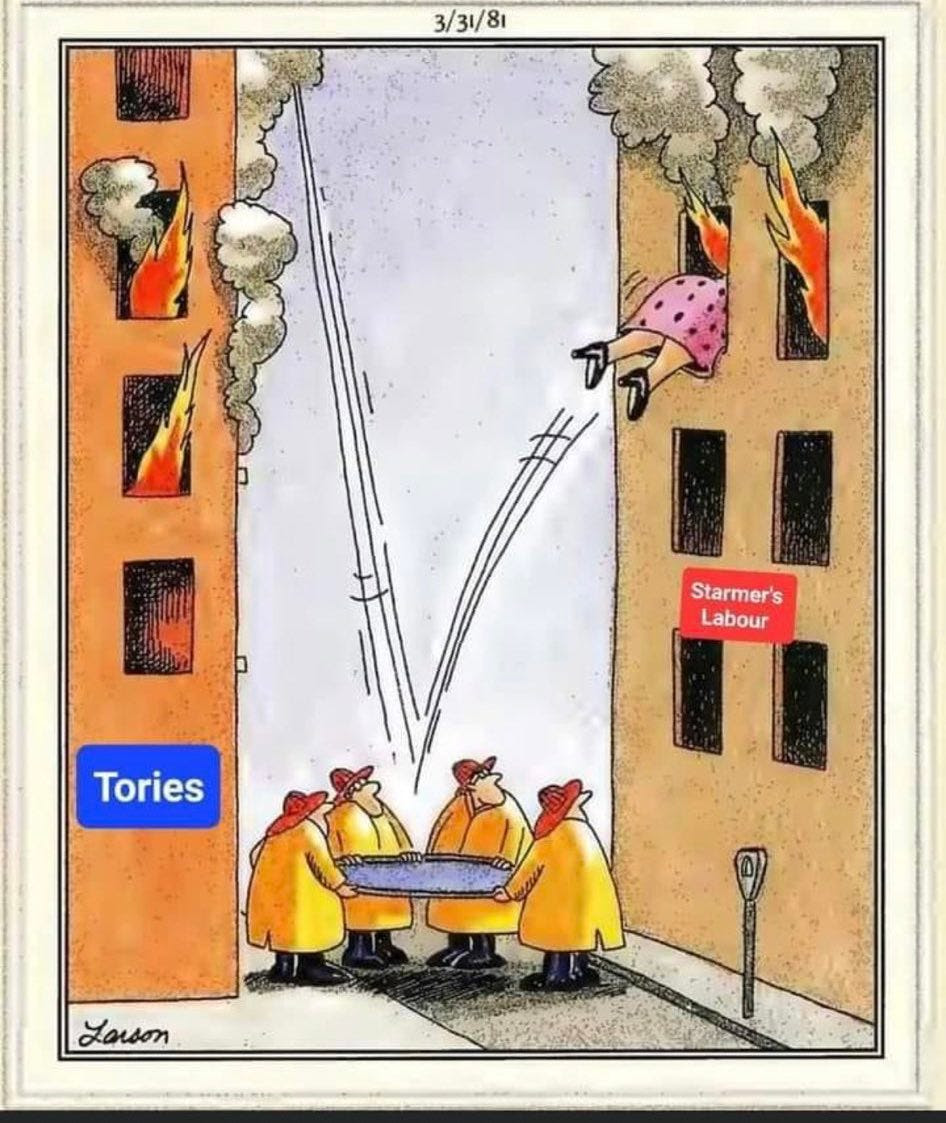
Helen Dale summarized the British general election result in a modified Gary Larson image:

Andrew Doyle points at the disproportional share of the vote won by Nigel Farage’s new Reform UK party compared to the tiny number of seats as a condemnation of the first-past-the-post system (also used here in Canada):

Keir Starmer surely cannot believe his luck. He has achieved a landslide victory by doing very little. He received fewer votes than Jeremy Corbyn in 2019, and yet has ended up with a whopping 412 seats in parliament. The rise of Nigel Farage’s Reform Party has split the right-wing vote and ushered the Conservatives along to their worst ever election result, plunging them to even greater depths than the disastrous election of 1906 under Arthur Balfour.

This was very much a Conservative loss rather than a Labour victory. There is no great enthusiasm for Starmer, and his majority is an indictment of the “First Past The Post” system which, as I have argued previously, should be abandoned in favour of Proportional Representation. It is unsurprising that upon his victory in Clacton-on-Sea, one of Farage’s first public statements has been a commitment to campaign for electoral reform. His party received over 4 million votes and has returned only 5 seats. So that’s 1% of the seats for 14% of the votes. Compare that with the Liberal Democrats, who have 11% of the seats for only 12% of the votes. Most of us will see that there is a problem here, irrespective of our political affiliations.

Worse still, Labour’s victory will empower the culture warriors, those identity-obsessed activists who have accrued so much power already in our major institutions. While the Tory party claimed to be fighting a “war on woke”, all the while enabling the ideology of Critical Social Justice to flourish, leading Labour politicians have cheered on the culture warriors while pretending that they were nothing more than a right-wing fantasy. We have seen some pushback over the past two years in regards to the worst excesses of this movement, but all of this may soon be undone. Now that the identitarians have their political wing in power, we should expect a few years of regression.

In Spiked, Brendan O’Neill thinks the real lesson to be learned from this election is that populism is here to stay:

To see the true quake, you need to look beyond Labour’s mirage-like landslide. As is now becoming clear, Labour has not been swept to power on anything like a wave of public enthusiasm. On the contrary, it won its 412 seats on the second lowest electoral turnout since 1885, and more as a result of people’s exhaustion with the Tories than their love for Sir Keir. No, it is those who refused to vote Labour who have brilliantly unsettled British politics. It is those who took a punt on Nigel Farage’s Reform party who have planted a bomb in the political landscape that will not be easily defused.

For me, the most fascinating stat of the election is the share of the vote received by Labour and the Tories. Labour won around 34 per cent of vote, the Tories around 24 per cent. Let’s leave to one side what a lame landslide it is if only 34 per cent of the people who could be bothered to vote put an X in your box. More striking is the fact that the combined vote share of Labour and the Tories, the parties that have dominated British politics for a century, was 58 per cent. That is staggeringly – and, if you will allow me, hilariously – low.

To put it in historical context: at the last General Election, in 2019, their combined vote share was 75.8 per cent. In 2017 it was even higher: 82.4 per cent. In the elections of the 2000s it hovered around 70 per cent. Why has it now dropped to less than 60 per cent, giving rise to the possibility that in the next few years the two parties that have run this country for decades might see their combined vote drop to less than half of all votes cast? Largely, because of Reform. And a few independents, too. Reform’s vote share is around 14 per cent, enough to shatter the Labour / Tory duopoly and to unravel the two big parties’ arrogant belief that they and they alone have a right to rule.

The speedy turnaround of the Reform revolt was extraordinary. It was only a few weeks ago that Farage ditched his plans to go to America to assist the Trump campaign and instead decided to become leader of Reform. He has now been elected MP for Clacton. Reform has won four seats in total. What’s shocking is that the Liberal Democrats won 71 seats despite getting fewer votes than Reform. The Lib Dems got around 12 per cent of the vote, to Reform’s 14 per cent. That the democratically less popular party of the two will wield far greater power in the Commons is a testament to how busted our first-past-the-post electoral system is. This is unsustainable. It is outright undemocratic.

And yet, even without the parliamentary representation their vote share deserves, Reform has struck a blow for democracy. Their voters, in thinking for themselves and rejecting both the Labour and Tory variety of technocracy, have forcefully created a new opening in political life. They have burst a few of the buckles on the political straitjacket that is our two-party system. The last time this happened was with Farage’s UK Independence Party, in the 2015 General Election, when it won 12.6 per cent of the vote, reducing the Tory / Labour vote share to 67.3 per cent. But where UKIP was mostly a one-issue party, dedicated to getting Britain out of the EU, Reform has broader policy goals. The millions of working-class people who voted for it are saying something very clear indeed: “We want something different”.

June 25, 2024

“Nigel Farage’s sin […] was to tell the truth which our rulers and their bought, sycophantic media are desperate to hide from us”

Filed under: Britain, Media, Military, Politics, Russia, USA — Tags: , , , , , — Nicholas @ 04:00

As the British general election rumbles into its final days, most media outlets reacted very strongly to Nigel Farage’s willingness to break with the narrative over the outbreak of the Russo-Ukrainian war:

Nigel Farage has really got the elites and their prostitute mainstream media panicking, this time by being the only politician who dares tell the truth about the origins of the Russia-Ukraine war.

First let me stress that I am not condoning Putin’s invasion of Ukraine. But Putin has made it very clear for at least the last 15 years that he saw Ukraine and Georgia, which both have long borders with Russia, joining Nato as an existential threat to his country and warned “not an inch eastwards”.

The West arrogantly ignored Putin’s warnings. That was dumb.

At a conference in April 2008, where Putin was invited to address Nato leaders, he warned that inviting Ukraine and Georgia to join Nato, and thus parking Nato troops and missiles directly on Russia’s borders, would be seen as an existential threat to Russia’s security. This was even reported in the BBC’s in-house rag, the Guardian, on April 4 2008: “The Russian president, Vladimir Putin, today repeated his warning that Moscow would view any attempt to expand Nato to its borders as a ‘direct threat'”.

In December 2021, Putin yet again warned the West that allowing Ukraine and Georgia to join Nato would be unacceptable, in the first minute of this three-minute video. In this video Putin (sensibly in my opinion) asks whether the US would allow Russian troops and missiles to be positioned along its borders with Canada or Mexico and reiterates his “not an inch eastwards” threat.

Yet in January 2022, the US presented its written response to Russian demands on Ukraine not joining Nato and on Nato troops being withdrawn from Romania and Bulgaria, but made clear that it did not change Washington’s support for Ukraine’s right to pursue Nato membership, the most contentious issue in relations with Moscow.

The reply, which was delivered to the Russian Foreign Ministry by the US ambassador in Moscow, John Sullivan, repeated the US offer to negotiate with Russia over some aspects of European security, but the Secretary of State, Antony Blinken, said the issue of eventual Ukrainian membership of the alliance was one of principle.

Blinken was speaking hours after his Russian counterpart, Sergei Lavrov, threatened “retaliatory measures” if the US response did not satisfy the Kremlin.

“Without going to the specifics of the document, I can tell you that it reiterates what we said publicly for many weeks, and in a sense for many, many years. That we will uphold the principle of Nato’s open door”, Blinken said, adding: “There is no change. There will be no change.”

June 23, 2024

The amazing range of things Britain’s Ofcom gets its tentacles into

Earlier this week, Mark Steyn discussed the British government’s Office of Communications (Ofcom) and the way it rigs regulates who can say what during British election campaigns:

Why do I think the UK state censor Ofcom should be put out of business? Because there are very few areas of British life that this strange, secretive body does not “regulate”. Take, for example, this current UK election campaign, which the media are keen to keep as a torpid Potemkin struggle between TweedleLeft and TweedleRight. So, on Thursday night, BBC bigshot Fiona Bruce will host a debate between the four party leaders – that’s to say, the head honchos of the Conservatives, Labour, the Liberal Democrats and the Greens.

Wait a minute: what about Nigel Farage, leader of the Reform party? Since the beginning of the year, Reform has been third-placed in the polls, ahead of the LibDems and Greens, and last week they rose to second place ahead of the unlovely Tories.

So why wouldn’t the second-place party get a spot in the leaders’ telly debate?

Ah, well, you’re looking at it all wrong, you hick. Here’s how the Beeb explain it:

    The Ofcom guidance gives “greater weight on the actual performance of a political party in elections over opinion poll data” taking into account the “greater uncertainty associated with support in opinion polls”.

The “actual performance of a political party” refers to their results in the two previous elections — 2019 and 2015 — when Reform didn’t exist. A lot of other things didn’t exist in 2015: Brexit, Covid, lockdown, the Ukraine war, legions of vaccine victims, the massed ranks of Albanian males occupying English country-house hotels …

But, per “Ofcom guidance”, Campaign 2024 has to be conducted on the basis of how things stood a decade ago.
You know who would also be ineligible to participate under Ofcom’s rules? Everyone’s favourite Lana Turner sweater-girl in Kiev, Volodymyr Zelenskyyyyy. He only formed his Servant of the People party in late 2017, so no election debates for you, sweater-girl. And don’t try blaming it on Putin, because it’s “Ofcom guidance” so we all know it’s on the up-and-up.

Because, as their barrister assured the High Court, Ofcom are “expert regulators”. Lord Grade and Dame Melanie Dawes probably did a module in regulation at Rotherham Polytechnic or whatever.

I can see why the likes of Naomi Wolf’s creepy stalker-boy Matthew Sweet like this system: it’s a club and they get to decide who’s admitted. It’s less obvious why the generality of the citizenry put up with it. At any rate, get set for another thrilling BBC election debate in which all four “opponents” agree on Covid, climate, Ukraine, the joys of mass Muslim immigration and the inviolability of the NHS … but ever more furiously denounce each other for not tossing enough money that doesn’t exist into the sinkhole.

Don’t get me wrong, I quite like that pixie Green leader who describes herself as a “pansexual vegan”, and I certainly don’t have the personal baggage with her that I have with Nige. But under what rational conception of media “regulation” does the six per cent basement-dweller get guaranteed a seat at the table but not Reform?

And you wonder why nothing changes?

June 11, 2024

Mark Steyn on Nigel Farage

This is from his Friday round-up post at SteynOnline:

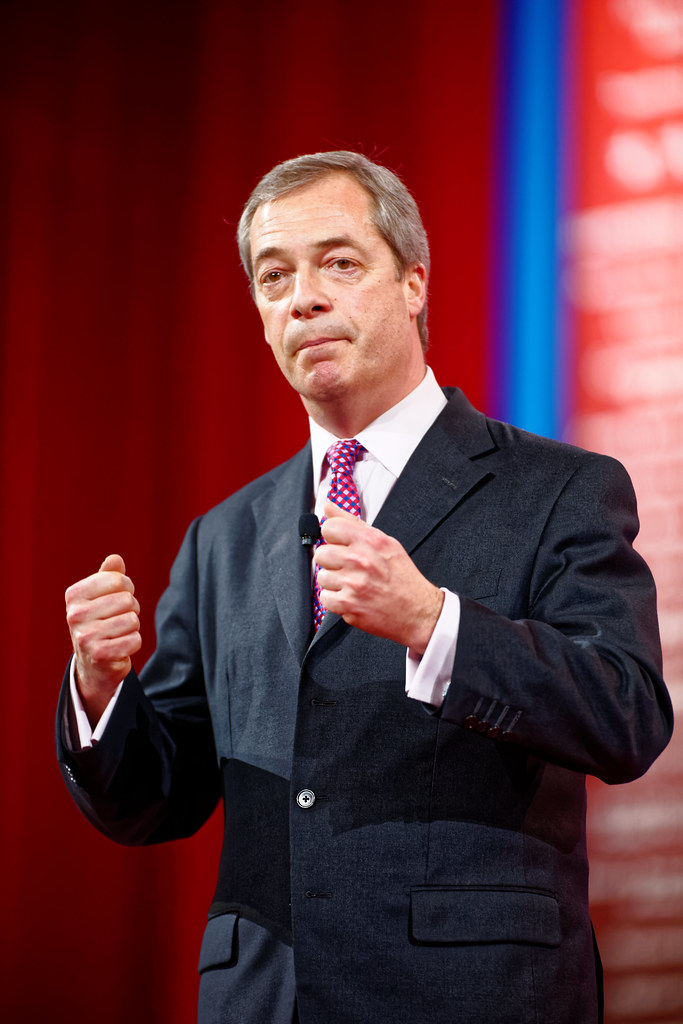
“Nigel Farage” by Michael Vadon is licensed under CC BY-SA 2.0 .

Demography is relentless. Douglas Murray notes that the BBC is always warning that the “far right” is “on the march“, but in the west it is demographic transformation that is truly on the march, quietly and unreported, picking up pace every month. By comparison, the wretched Sunak/Starmer dinner-theatre of the UK election campaign is completely irrelevant to Britain’s future. So I am glad to see that Nigel Farage has had a change of heart and opted to join the battle. Back in 2016, in the days after the Brexit vote, I said he was the most consequential figure in UK politics since Mrs Thatcher. Which was true. Alas, people most Britons have never heard of then set about subverting Brexit, and very effectively.

So here we are eight years later, with half-a-million Anglo-Celts abandoning the UK each year and a million Pushtun warlords and Sudanese clitoridectomists and Albanian sex-traffickers taking their place. Demography is relentless, and the hour is late.

Over a decade ago — in fact, closer to two, as I estimate it — Nigel Farage said to me that the first thing you have to do when you found a new political party on the right is to accept the burden of being its only member — at least for a while. Because the first 10,000 people who want to join are neo-Nazis and skinheads and the like. It was a clever insight, and he spread it around. So I had it told back to me many times over the years by populist politicians from all over the Continent, Danes and Dutch, Swedes and Spaniards alike.

Nigel took his gatekeeping seriously — and not just on the domestic front, “distancing” himself from Tommy Robinson and Tommy-associated issues such as Islam and the industrial-scale sex-slavery of thousands of English girls. As Gavin Mortimer reminds us, a decade ago Farage also rejected any Euro-collaboration with Marine Le Pen because her party had “anti-Semitism and general prejudice in its DNA“. Geert Wilders (for whose fine book I am proud to have written the introduction) was furious with Farage and attempted to broker a rapprochement. Nigel was having none of it.

So here we are a decade later:

    * in the Netherlands, Wilders is currently the most powerful politician, leading the most popular party, and has helped move the electorate significantly;

    * in France, Mme Le Pen’s party will, in just two days’ time, win the European elections. She is the de facto leader of the opposition, and her caucus in the National Assembly is the largest and most effective opponent to Macron. She has also helped move the electorate significantly;

    * in the United Kingdom, by contrast, voters are about to elect a left-wing government led by a fellow, Sir Vics Starmer, who thinks men can have a cervix.

I think Nigel over-gatekept.

He has been very good at founding personal vehicles (Ukip, the Brexit Party) that deflate like punctured soufflés when he steps down as leader. Yes, he was very watchable in the jungle on “I’m a Celebrity — Get Me Out of Here”, and, in my GB News days, he certainly handed me a bigger audience at 8pm than any of his guest-hosts. But, as that station’s currently Farageless ratings reveal, you can’t build a sustained movement on one man. Nigel’s advice was clever twenty years ago. Wilders, LePen, Meloni et al were wise to recognise its limitations.

So I’m pleased Farage changed his mind on this election. He should change his mind on the over-gatekeeping, too.

Time and demography march on.

June 9, 2024

Rishi Sunak “promised to run Britain like a start-up. On that account, he has delivered. Over one-third of start-ups crash and burn within two years.”

Filed under: Britain, Media, Politics — Tags: , , , , , , , — Nicholas @ 05:00

Christopher Gage pokes a bit of goodnatured fun at British Prime Minister Rishi Sunak’s awful start to his re-election campaign:

This week on the campaign trail might just enter the political history books. Rishi Sunak, the man who themed his cheese-melting campaign on national pride and security, slipped off home early from the D-Day commemorations in France.

World leaders gathered at the event on Thursday to honour the eightieth anniversary of the Normandy landings. You know, the one attended by a dwindling platoon of demigod veterans in what might be the final year graced by their presence. To riot in understatement, this Irish goodbye was inadvisable. Sunak might as well have fed Dame Judi Dench to a ravenous gang of XL bullies.

Our prime minister is one of life’s thoroughbred winners. From one of the most exclusive schools in the country, Sunak went on to Oxford and then to Stanford university. Cultured in our meritocratic petri-dish, Sunak has never failed a thing in his 44 years. Until now.

Twenty-odd points behind Sir Keir Starmer’s Labour, Sunak is on course to finish third in a two-horse race.

It gets worse. This week, Nigel Farage announced he would stand for election as the Reform Party candidate in Clacton. That Essex seat is the living, breathing symbol of pissed-off, left-behind, white-working-class, fucking furious Great Britain.

The polls have broken Tory brains. Clamped around the Conservative Party’s noodle neck is Reform’s roid-head paws. The right-wing upstarts trail the Tories by just two points. And that was before Sunak committed the social equivalent of tarmacking over the Princess Diana memorial garden on Mothering Sunday.


Sunak is a one-colour pie chart of hubris. After losing the Tory leadership election to the ludicrous Liz Truss, Sunak got handed the top job by knowing the right string-pullers.

Breathless commentary from back then christened Sunak as a Silicon Valley start-up guru, furnishing the boy wonder with LinkedIn adjectives such as “brilliant” and “dynamic”.

Sunak parrots the pediculous babble beloved of that skulk of Babbitts. With blue-sky thinking, and by sticking to core competencies, Sunak has a plan to deliver. He promised to run Britain like a start-up. On that account, he has delivered. Over one-third of start-ups crash and burn within two years.

What went wrong? Sunak’s indulgent reboots have crashed his operating system. Not so long ago, he was an anti-woke culture warrior reeling off tiresome jibes about trans people. Then came spartan Sunak, trusted centurion of the Telegraph comment section.

Too late. For the best part of two years, Sunak has circulated in meme-form around this teetering island, his existence a boundless source of second-hand embarrassment and ridicule.

With each reboot, Sunak sunk further. Ordinary people have a radar for bullshit. They don’t see such shapeshifting as necessary brand correction to meet market demands. They see duplicity and serpentine salesmanship bordering on fraud. In the plain English of my council-estate youth: Sunak is full of shit.

With his wings smeared in beeswax, Rishi Sunak is Icarus. And Nigel Farage is the sun.


Farage is more than the sun. Farage is Wetherspoon Man.


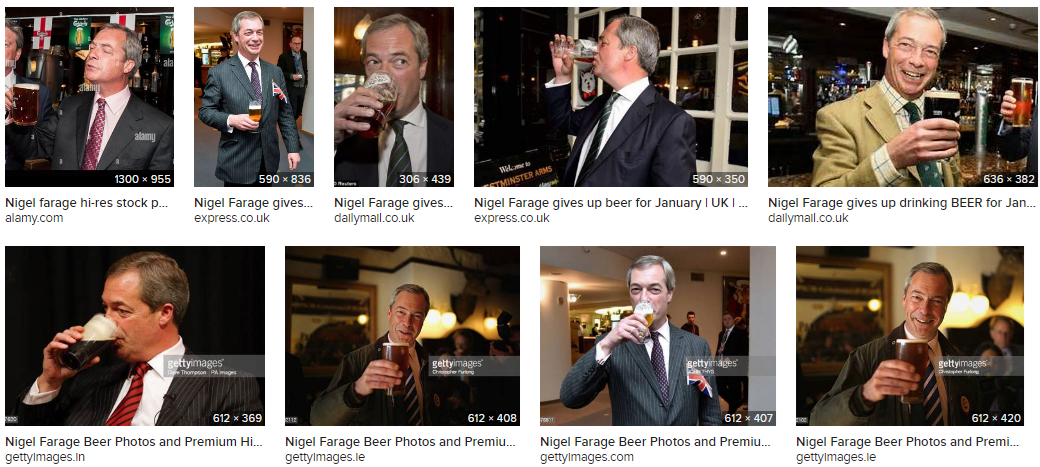
A quick image search for “Nigel Farage beer” provides lots of evidence for “Wetherspoon Man”

During his visit to Clacton, Farage fittingly visited a Wetherspoon pub. For the unfamiliar, Wetherspoon pubs owe their undeniable success to their reliability and recognition. Wherever you may be in Britain, you know what you’ll get in one of Wetherspoons’ 800-odd cavernous boozers: A decent burger, chips, and a pint for half an hour on the minimum wage, alongside cheap, cheap booze.

Critics scoff. But they’ll never find a Wetherspoon empty at any time of day or on any day of the week.

Farage announced his plans and doubled the Reform vote in Clacton. His appeal relies on the Wetherspoon model. Farage is the same wherever he may be and to whomever he may talk. Dressed like a hobbyist gamekeeper, he sinks pints, smokes fags, and cracks jokes. “Nigel” says what a sizeable swathe of left-behind Britain thinks and wants to hear.

His many detractors don’t get it. How can a privately educated former metals trader claim to speak for the people? For the same reason that populist parties are lapping at the walls of power across Europe: their erstwhile champions are too busy peacocking their pronouns in their Twitter bios.

June 7, 2024

Nigel Farage’s challenge to the Conservatives

Ed West perhaps goes a bit far in comparing Nigel Farage and his Reform UK to Lenin’s Bolsheviks in the October Revolution, but he’s not wrong about what the rise of Farage’s party might mean to the already dim re-election hopes of Rishi Sunak’s bedraggled clown posse:

“Nigel Farage” by Michael Vadon is licensed under CC BY-SA 2.0 .

I imagine that the last remaining serotonin emptied from the bodies of the Tory election team when they heard that Nigel Farage was to return as leader of the Reform Party and stand at Clacton.

The likelihood is that Farage will win that seat, and the reception he received was certainly electric. And Clacton is not even among Reform’s top 20 targets, according to Matt Goodwin.

It’s possible that the party could overtake the Tories in some polls, although I doubt that they will beat them on election day. That is certainly Farage’s aim, and as he said on Monday: “I genuinely believe we can get more votes in this election than the Conservative Party. They are on the verge of total collapse … I’ve done it before. I’ll do it again. I will surprise everybody.”

Contrary to the jokes about Farage failing to get elected, or the criticism that he is a “serial loser“, he is arguably the most successful politician of the past decade. He built up a minuscule party of ‘fruitcakes and gadflies’ to win two successive European elections. He made Brexit happen, and then stood his candidates down in a number of seats to ensure the Leave alliance remained united in 2019, securing Boris Johnson a victory.

For which he didn’t get the thanks he felt was due, something he alluded to at Monday’s press conference. From what I understand the Tory establishment treated him with a snooty disdain which many an outsider has experienced with the British upper class. And for those making the old point that Farage’s private school background bars him from being a true outsider, that’s not how high society works. Populist movements claiming to represent the downtrodden or disenfranchised have invariably been led by people from highly educated or privileged backgrounds, whether of the Left or Right.

Farage’s targeted constituency certainly fits that bill. Clacton is the town that Matthew Parris called “Britain on crutches” in a piece warning the Tories not to desert their traditional middle-class voters. But the problem for the party is that, through a combination of authoritarian vibes and very liberal policies, they have managed to lose both. Rather than making moderate, soothing sounds while using the British executive’s immense power to shape the country around their will, they have done the exact opposite.

The Government’s disastrous polling figures are not some great mystery. Conservatives don’t tend to have the same emotional attachment to their party as the Labour family does. They vote Tory because they want them to do three things: cut immigration, put more criminals away, and lower taxes. It’s nothing more complicated than that, and they’ve failed on all three.

It is obviously the former that has provoked the most bitterness towards the party. I’m a great believer in Stephen Davies’s analysis of alignment in politics, and the central issue in British politics is immigration, multiculturalism and diversity. Labour are unquestionably on one side of this issue; the Tories are broadly pro-multiculturalism and, while issuing soundbites critical of high immigration, have raised it to record levels. If both main parties are seen to be on one side, something else will fill that gap in the market. Political parties are amoral bodies seeking voting coalitions, and the side which is most united in aligning its core groups around primary and secondary issues will win.

June 3, 2024

Decoding Nigel Farage’s “hidden agenda” … that isn’t actually hidden at all

Filed under: Britain, Cancon, Media, Politics — Tags: , , , , — Nicholas @ 04:00

I’ve been theorizing that the reason Nigel Farage didn’t plunge immediately into the British election campaign was that he was expecting Rishi Sunak to do his very best Kim Campbell impersonation and utterly destroy the Conservatives as a viable political party. It turns out that that’s pretty much exactly what he’s doing:

Nigel Farage at the ULEZ protests in London, 30 August 2023.
Image from JoNova.

The biggest question of all, however, is what Farage wants to do after polling day. For months now, a growing band of Conservative MPs have been agitating openly for him to be admitted to the party; even Rishi Sunak now says he “respects” him.

Close friends of Farage believe his real plan is to wait for the Tories to implode, and in the aftermath arrive as a saviour in waiting. “He doesn’t want to be the person who puts the bullet in the back of their heads, why be seen to alienate Conservative voters?” said one, while a second, a senior Tory, said: “Our party needs to be able to come back with people like Nigel, where we basically go back to be that authentic Thatcherite party — his natural home.”

[Reform UK leader Richard] Tice says he wants to destroy and replace the Conservative Party, but when asked if he feels the same, Farage says: “I certainly don’t have any trust for them or any love for them”. So does he want to change it? “I want to reshape the centre-right, whatever that means.”

Asked directly if his friends are right and he wants to join the Tories, he adds: “Why do you think I called it Reform? Because of what happened in Canada — the 1992-93 precedent in Canada, where Reform comes from the outside, because the Canadian Conservatives had become social democrats like our mob here. It took them time, it took them two elections, they became the biggest party on the centre-right. They then absorbed what was left of the Conservative Party into them and rebranded.”

I suggest this sounds a lot like he’s floating a merger. “More like a takeover, dear boy,” he replies, grinning like a Cheshire Cat.

May 26, 2024

Will Rishi Sunak be the British Kim Campbell?

Filed under: Britain, Media, Politics — Tags: , , , , , — Nicholas @ 05:00

The British election is now underway and if the polls are accurate, Rishi Sunak’s Conservatives are in for one heck of a thrashing. If he’s particularly unlucky, he could come close to former Canadian Prime Minister Kim Campbell’s electoral shipwreck in 1993 (losing a Parliamentary majority and being reduced to two seats in the Commons), but perhaps Labour leader Sir Keir Starmer isn’t quite the <sarc>charismatic juggernaut</sarc> that Canada’s Jean Chrétien was:

Rishi Sunak shortly after becoming Chancellor of the Exchequer in 2020.

I’m old enough to remember the sense of optimism, hope and promise felt when Tony Blair was elected back in 1997; not by me, obviously, but I could at least appreciate that other people felt that ‘things can only get better’.

Whether you think they did or not, Blair transformed the country in his own image, just as his predecessor Margaret Thatcher had done during her similarly long reign. No one could say the same of the recent fourteen years of Tory-led governments, a period that has been marked by a continual drift away from conservatism both within civil society and in many ways driven by the administration itself.

As I have said one or two times before, you could have woken up from a long coma and had no idea who had been in charge the whole time. It’s an indication of how far the Overton Window has shifted that proposals to limit student-led immigration are considered way out there despite being mainstream only a decade ago – proposals which the Prime Minister backed out of. One of the benefits of being in government should be the ability to shift the terms of debate, but whereas the rest of Europe is mostly turning Right, Britain under the Tories has gone the other way.

In retrospect, and I have definitely said this more than once or twice, the post-Brexit immigration policy was their biggest mistake. It meant the worst of both worlds for the country and for Tory coalition building, alienating both a large section of cautious voters over leaving the EU, and the many cultural conservatives they picked up in 2019 who saw the referendum as a vote on immigration.

In a parallel universe where the government reduced net migration to five figures, there may well have been immediate pain: struggles to fill vacancies, inflationary pressure caused by rising wages, and universities which now cannot survive without using the immigration system as a funding mechanism. But the Tories would have been on 30% rather than 20%; that they aren’t aware enough to understand this is strange, but then they aren’t an ideological party.

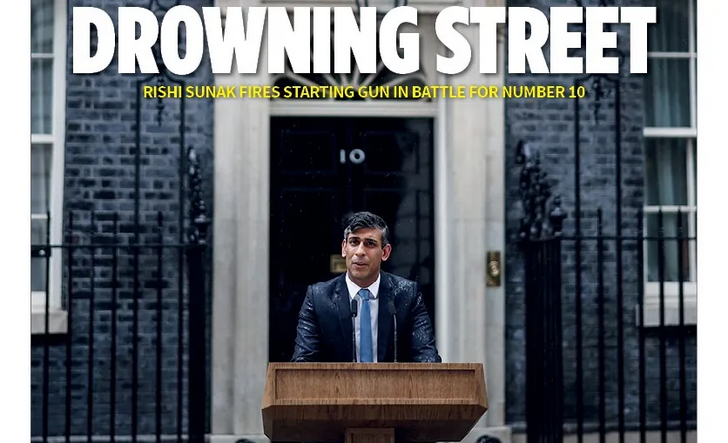
Rishi Sunak’s decision to hold the election early is very curious. Perhaps he was worried that enough letters would be handed in triggering a leadership contest; perhaps he feared that Nigel Farage would reappear and make the Reform Party even more of a problem. Perhaps he’s just impetuous and has had enough, but the announcement itself, in pouring rain and drowned out by a New Labour anthem played by a public nuisance, was fitting.

The prime minister is very unpopular, and the Tories are currently polling at catastrophic levels, but there is little enthusiasm for Labour and more people think the country will get worse than better after they are elected.

Powered by WordPress