
The intensity with which they are held does not prevent nationalist loyalties from being transferable. To begin with, […] they can be and often are fastened up on some foreign country. One quite commonly finds that great national leaders, or the founders of nationalist movements, do not even belong to the country they have glorified. Sometimes they are outright foreigners, or more often they come from peripheral areas where nationality is doubtful. Examples are Stalin, Hitler, Napoleon, de Valera, Disraeli, Poincare, Beaverbrook. The Pan-German movement was in part the creation of an Englishman, Houston Chamberlain. For the past fifty or a hundred years, transferred nationalism has been a common phenomenon among literary intellectuals. With Lafcadio Hearne the transference was to Japan, with Carlyle and many others of his time to Germany, and in our own age it is usually to Russia. But the peculiarly interesting fact is that re-transference is also possible. A country or other unit which has been worshipped for years may suddenly become detestable, and some other object of affection may take its place with almost no interval. In the first version of H. G. Wells’s Outline of History, and others of his writings about that time, one finds the United States praised almost as extravagantly as Russia is praised by Communists today: yet within a few years this uncritical admiration had turned into hostility. The bigoted Communist who changes in a space of weeks, or even days, into an equally bigoted Trotskyist is a common spectacle. In continental Europe Fascist movements were largely recruited from among Communists, and the opposite process may well happen within the next few years. What remains constant in the nationalist is his state of mind: the object of his feelings is changeable, and may be imaginary.
But for an intellectual, transference has an important function […]. It makes it possible for him to be much more nationalistic — more vulgar, more silly, more malignant, more dishonest — that he could ever be on behalf of his native country, or any unit of which he had real knowledge. When one sees the slavish or boastful rubbish that is written about Stalin, the Red Army, etc. by fairly intelligent and sensitive people, one realises that this is only possible because some kind of dislocation has taken place. In societies such as ours, it is unusual for anyone describable as an intellectual to feel a very deep attachment to his own country. Public opinion — that is, the section of public opinion of which he as an intellectual is aware — will not allow him to do so. Most of the people surrounding him are sceptical and disaffected, and he may adopt the same attitude from imitativeness or sheer cowardice: in that case he will have abandoned the form of nationalism that lies nearest to hand without getting any closer to a genuinely internationalist outlook. He still feels the need for a Fatherland, and it is natural to look for one somewhere abroad. Having found it, he can wallow unrestrainedly in exactly those emotions from which he believes that he has emancipated himself. God, the King, the Empire, the Union Jack — all the overthrown idols can reappear under different names, and because they are not recognised for what they are they can be worshipped with a good conscience. Transferred nationalism, like the use of scapegoats, is a way of attaining salvation without altering one’s conduct.
George Orwell, “Notes on Nationalism”, Polemic, 1945-05.
December 16, 2018
QotD: Transferring nationalist passions
December 8, 2018
QotD: The nationalist obsession
As nearly as possible, no nationalist ever thinks, talks, or writes about anything except the superiority of his own power unit. It is difficult if not impossible for any nationalist to conceal his allegiance. The smallest slur upon his own unit, or any implied praise of a rival organization, fills him with uneasiness which he can relieve only by making some sharp retort. If the chosen unit is an actual country, such as Ireland or India, he will generally claim superiority for it not only in military power and political virtue, but in art, literature, sport, structure of the language, the physical beauty of the inhabitants, and perhaps even in climate, scenery and cooking. He will show great sensitiveness about such things as the correct display of flags, relative size of headlines and the order in which different countries are named. Nomenclature plays a very important part in nationalist thought. Countries which have won their independence or gone through a nationalist revolution usually change their names, and any country or other unit round which strong feelings revolve is likely to have several names, each of them carrying a different implication. The two sides of the Spanish Civil War had between them nine or ten names expressing different degrees of love and hatred. Some of these names (e.g. ‘Patriots’ for Franco-supporters, or ‘Loyalists’ for Government-supporters) were frankly question-begging, and there was no single one of the which the two rival factions could have agreed to use. All nationalists consider it a duty to spread their own language to the detriment of rival languages, and among English-speakers this struggle reappears in subtler forms as a struggle between dialects. Anglophobe-Americans will refuse to use a slang phrase if they know it to be of British origin, and the conflict between Latinizers and Germanizers often has nationalists motives behind it. Scottish nationalists insist on the superiority of Lowland Scots, and socialists whose nationalism takes the form of class hatred tirade against the B.B.C. accent and even the often gives the impression of being tinged by belief in sympathetic magic — a belief which probably comes out in the widespread custom of burning political enemies in effigy, or using pictures of them as targets in shooting galleries.
George Orwell, “Notes on Nationalism”, Polemic, 1945-05.
December 1, 2018
QotD: Toxic self-esteem
For a number of years I have been fighting a lonely one-man (or should I say one-person?) battle against self-esteem — not my own, of course, because I have just the right amount, but as the master key to human happiness.
Of the many possible human qualities, self-esteem, far from being desirable, is one of the most odious. It is much more closely related to conceit and self-importance than it is to self-respect or even self-confidence. People who talk of self-esteem do so as if it were an inalienable human right rather than something to be earned. In other words, self-esteem is like a fair trial: It doesn’t matter what you are like or what you have done, you have a right to it, at all times and in all places.
Of course, people who speak of lack of self-esteem know in their hearts that they are talking bilge. Sometimes patients would come to me and tell me that they had low self-esteem and I would tell them that at least they had one thing right. Instead of growing angry, as perhaps you might have expected, they would laugh, as if they had been caught out in an outrageous prank — which in a sense they had. As old-fashioned burglars in England used to say when caught red-handed by a policeman, “It’s a fair cop, guv.”
“Suppose,” I would ask, “someone told you that he had allowed his children to starve to death because he preferred taking crack to feeding them and that he had stolen all his aged mother’s savings, but that at least he had no problems with his self-esteem, what would you say?”
In fact, this was only just a rhetorical question because I had met many such persons, bursting with self-esteem and quite without any discernible virtues. Indeed, one of the sources of their bad character may have been their self-esteem, insofar as nothing could dent it, not even the hatred or contempt of everyone around them. If I were younger and more energetic, I would found a Society for the Prevention and Suppression of Self-Esteem.
Theodore Dalrymple, “Lose Yourself”, Taki’s Magazine, 2018-11-10.
November 29, 2018
QotD: Overprotecting children
While it’s hard to argue against safer playgrounds, it’s also true that by design the transparent playground offers kids no privacy. “As [playgrounds] were childproofed to improve safety, they inadvertently reduced the opportunities for the young to take part in forms of fantasy, sensory, and exploratory play, and construction activities apart from adults,” writes historian Mintz. “Unstructured, unsupervised free play outside the home drastically declined for middle-class children. As more mothers joined the labor force, parents arranged more structured, supervised activities for their children. Unstructured play and outdoor activities for children 3 to 11 declined nearly 40 percent between the early 1980s and the late 1990s. Because of parental fear of criminals and bad drivers, middle-class children rarely got the freedom to investigate and master their home turf in ways that once proved a rehearsal for the real world.”
So much for the roving pack of kids each block boasted during Mintz’s childhood, and my own. “The empty lot has disappeared,” he quips. “And we are so concerned with legal liability that if kids do find one, you’d better be sure you’ll get a call from the police.”
Beth Hawkins, “Safe Child Syndrome: Protecting kids to death”, City Pages, Volume 26 – Issue 1267.
November 18, 2018
QotD: “Sexist” toys
As a female journalist who writes mostly about traditionally “male areas” such as economics and business, I should perhaps be expected to endorse a “blank slate” theory of male and female gender roles, where the preference for certain kinds of activities is driven by sexist socialization and discrimination, not innate ability. The problem is that this doesn’t necessarily match up with the evidence. Human children show gender-driven preferences for toys, as can be attested by those faultlessly progressive parents who have seen their boys turn their hands into a gun while their daughters make a doll out of an ear of corn. These preferences show up even in children too young to have gotten much socialization; they turn up even in rhesus monkeys, as males show a marked preference for wheeled toys over soft plush animals. I certainly believe that human society has a lot of sexist hangovers from its past. I draw the line at believing that this hangover is influencing rhesus monkey infants.
Megan McArdle, “Some Blue-Collar Workers Probably Shouldn’t Do Pink Jobs”, Bloomberg View, 2017-01-06.
November 17, 2018
QotD: Positive and negative nationalism
…nationalist feeling can be purely negative. There are, for example, Trotskyists who have become simply enemies of the U.S.S.R. without developing a corresponding loyalty to any other unit. When one grasps the implications of this, the nature of what I mean by nationalism becomes a good deal clearer. A nationalist is one who thinks solely, or mainly, in terms of competitive prestige. He may be a positive or a negative nationalist — that is, he may use his mental energy either in boosting or in denigrating — but at any rate his thoughts always turn on victories, defeats, triumphs and humiliations. He sees history, especially contemporary history, as the endless rise and decline of great power units, and every event that happens seems to him a demonstration that his own side is on the upgrade and some hated rival is on the downgrade. But finally, it is important not to confuse nationalism with mere worship of success. The nationalist does not go on the principle of simply ganging up with the strongest side. On the contrary, having picked his side, he persuades himself that it is the strongest, and is able to stick to his belief even when the facts are overwhelmingly against him. Nationalism is power-hunger tempered by self-deception. Every nationalist is capable of the most flagrant dishonesty, but he is also — since he is conscious of serving something bigger than himself — unshakeably certain of being in the right.
George Orwell, “Notes on Nationalism”, Polemic, 1945-05.
October 24, 2018
How long can you go without sleep? | James May’s Q&A (Ep 14) | Head Squeeze
BBC Earth Lab
Published on 5 Apr 2013James May talks us through how long you can go for without any sleep.
October 23, 2018
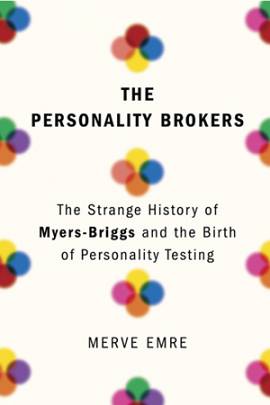
Myers-Briggs Type Indicators as a “variety of psychobullshit rune-gazing”
In the latest issue of Reason, Katrina Gulliver reviews a new book on a pop psychology notion that escaped into the wild for a generation, wreaking havoc in corporate HR departments across the country:
The Myers-Briggs test and others like it were huge in the corporate world in the 1980s and ’90s. Individuals took them to see what kind of careers they should pursue; H.R. offices used them to decide who to hire or promote. In The Personality Brokers, Merve Emre explores how, precisely, this variety of psychobullshit rune-gazing was born.
Briggs and Myers were a mother and daughter who shared a personal fascination with psychology. Katharine Briggs, born in the last quarter of the 19th century, was one of the few women of her generation to gain a college degree. Like most female members of the upper-middle-class in her time, however, she didn’t pursue a career, instead marrying young and raising a family. Rather than the chemistry she had studied at college, children became her research subject.With an intensity that sounds frightening, Briggs believed she could develop a scientific approach to raising well-behaved, intelligent children. She seemed to do a good job with her daughter Isabel, and other parents soon sought her advice. Briggs was well-connected — her husband was a Washington bureaucrat, so of course she knew magazine editors. Soon she was writing columns for various publications about ideal parenting and child behavior.
As a devotee of psychology, she developed a correspondence with Carl Jung. She drew on his psychological theories to interpret the personalities of kids, the better to advise their parents on behavior management. The 16 “types” of the Myers-Briggs index directly relate to Jung’s thinking, and Jung’s approval of her ideas offered validation for her explorations.
But the commercial Myers-Briggs test came later, and it was far more her daughter’s achievement. Isabel Myers was also fascinated with psychological type. But being a generation younger, she was better placed to pursue this professionally. Again, she had the advantages of social connection: Her husband was an attorney, and she happened to know Edward Northup Hay, one of the first personality consultants in the United States.
In 1943, Hay allowed Briggs — despite her having no formal qualifications or experience — to offer her test to his clients. The takers were few: mostly small outfits, sometimes just a single test for a potential employee. She continued working to perfect the evaluation, trying it on friends and neighbors.
Finding Meaning in The Incredibles
Foundation for Economic Education
Published on 4 Oct 2018What sustains people through difficult times is a sense of meaning, not happiness or wealth. In The Incredibles, Bob had to learn to find the same level of meaning in being a husband and father as he did in being a superhero. How do you find meaning in your life?
October 19, 2018
QotD: “None of us are standard issue”
Our own age, still, has the “image” of the mass-producing society that brought unparalleled prosperity and riches to the world in the last century (along with some truly horrible mass killings.)
The mass killings, Marxism (which people inhale without knowing, even in American Universities), behaviorism, and a passion for numbered, standardized everything are part of the ethos of the industrial age.
It is perhaps too much to ask people working on standard machines, to produce standard sizes, using standardized movements to conform to the machine’s mechanical exactness not to think in terms of “standard sizes” and “Models.”
You see this more strongly in the works of early science fiction writers, who expected psychology to to be standardized, numbered and filed and then all problems of mankind would be solved.
This stopped around the forties or fifties, when there was starting to be a suspicion that humans were not in fact standard issues, and that they had a disturbing tendency to be … human on an individual scale. I.e. “Nobody is normal” started penetrating the collective consciousness, but people STILL try to be normal. A part of the craze for transgenderism (other than that the progressives decided this was the next hill to die on) is this idea that there are standard models of people. Note I don’t say every transgender person is the result of that. There are cases of such profound mismatch between mind and body that even flawed and ultimately mutilating surgery (which is all we can do right now) is preferable to going on with the mismatch. These cases are, needless to say, very rare. But I swear at least half of the generation after my kids identifies as transgender, or gender queer, or gender fluid, or some other form of gender nonsense that has absolutely nothing to do with sex, and everything to do with the fact the poor dears have imbibed this flawed version of humanity as easily filable and definable. If you think that a girl who prefers trains and toy cars, a boy who prefers dolls […] a boy who is better at verbal than math, a girl who is the reverse, all of these are TOLD they are abnormal, if not in words, in the reaction of other people, until they feel they must have a problem.
In fact, none of us are standard issue. The very fact that, say, the medieval world, a communitarian world under stress (compared to us) of disease and famine, which needed to eliminate odds to operate, spent SO MUCH time decreeing what men and women COULD do meant that men and women kept blurring those lines, which for that time and place were FAR more clear than they are now. (I am an odd. In the world I grew up in, which retains a lot of medieval characteristics, I not only was pulled away from groups of boys I was playing with and told that girls play with girls and boys with boys (sounds like a motto for a gay bar) but I was also severely suppressed when I was about 8 and developed a fascination with whistling. I was told that women who whistle and men who spin (thread) are both going to hell. This must be a medieval thing, as I have clue zero why whistling should be masculine. In my family’s defense, this might have been an attempt at just getting the horrible noise to stop.
Sarah Hoyt, “Gears and Patterns”, According to Hoyt, 2016-12-16.
October 18, 2018
QotD: Relationships with much younger partners
A contemporary of mine, after a number of marriages, found a girlfriend less than half his age of a transcendent pneumatic beauty who hung on his every word — and dumped her after a couple of months. Why, I asked — she was perfect! “Too many things we didn’t have in common,” he said sadly. Like what? “Well, the Eighties.”
Which brings us to sex. Nicola has just exclaimed with unusual force that she has never slept with a 60-year-old and she’s not planning on starting now. Nobody wants to think about 60-year-olds doing it, least of all 60-year-olds. Another contemporary pointed out that it wasn’t finding the first grey pubic hair on yourself that was the doom-laden shock, it was finding it on the person you were sleeping with.
A.A. Gill, “Life at 60”, Sunday Times, 2014-06-29.
October 14, 2018
QotD: Variant forms of Kafkatrapping
Sometimes the kafkatrap is presented in less direct forms. A common variant, which I’ll call the Model C, is to assert something like this: “Even if you do not feel yourself to be guilty of {sin, racism, sexism, homophobia, oppression, …}, you are guilty because you have benefited from the {sinful, racist, sexist, homophobic, oppressive, …} behavior of others in the system.” The aim of the Model C is to induce the subject to self-condemnation not on the basis of anything the individual subject has actually done, but on the basis of choices by others which the subject typically had no power to affect. The subject must at all costs be prevented from noticing that it is not ultimately possible to be responsible for the behavior of other free human beings.
A close variant of the model C is the model P: “Even if you do not feel yourself to be guilty of {sin, racism, sexism, homophobia, oppression, …}, you are guilty because you have a privileged position in the {sinful, racist, sexist, homophobic, oppressive, …} system.” For the model P to work, the subject must be prevented from noticing that the demand to self-condemn is not based on the subject’s own actions or choices or feelings, but rather on an in-group identification ascribed by the operator of the kafkatrap.
It is essential to the operation of all three of the variants of the kafkatrap so far described that the subject’s attention be deflected away from the fact that no wrongdoing by the subject, about which the subject need feel personally guilty, has actually been specified. The kafkatrapper’s objective is to hook into chronic self-doubt in the subject and inflate it, in much the same way an emotional abuser convinces a victim that the abuse is deserved – in fact, the mechanism is identical. Thus kafkatrapping tends to work best on weak and emotionally vulnerable personalities, and poorly on personalities with a strong internalized ethos.
In addition, the success of a model P kafkatrap depends on the subject not realizing that the group ascription pinned on by the operator can be rejected. The subject must be prevented from asserting his or her individuality and individual agency; better, the subject must be convinced that asserting individuality is yet another demonstration of denial and guilt. Need it be pointed out how ironic this is, given that kafkatrappers (other than old-fashioned religious authoritarians) generally claim to be against group stereotyping?
There are, of course, other variants. Consider the model S: “Skepticism about any particular anecdotal account of {sin, racism, sexism, homophobia, oppression, …}, or any attempt to deny that the particular anecdote implies a systemic problem in which you are one of the guilty parties, is itself sufficient to establish your guilt.” Again, the common theme here is that questioning the discourse that condemns you, condemns you. This variant differs from the model A and model P in that a specific crime against an actual person usually is in fact alleged. The operator of the kafkatrap relies on the subject’s emotional revulsion against the crime to sweep away all questions of representativeness and the basic fact that the subject didn’t do it.
Eric S. Raymond, “Kafkatrapping”, Armed and Dangerous, 2010-07-18.
October 7, 2018
QotD: Hitler’s over-arching “grand strategy”
… on the internal evidence of Mein Kampf, it is difficult to believe that any real change has taken place in Hitler’s aims and opinions. When one compares his utterances of a year or so ago with those made fifteen years earlier, a thing that strikes one is the rigidity of his mind, the way in which his world-view doesn’t develop. It is the fixed vision of a monomaniac and not likely to be much affected by the temporary manoeuvres of power politics. Probably, in Hitler’s own mind, the Russo-German Pact represents no more than an alteration of time-table. The plan laid down in Mein Kampf was to smash Russia first, with the implied intention of smashing England afterwards. Now, as it has turned out, England has got to be dealt with first, because Russia was the more easily bribed of the two. But Russia’s turn will come when England is out of the picture — that, no doubt, is how Hitler sees it. Whether it will turn out that way is of course a different question.
Suppose that Hitler’s programme could be put into effect. What he envisages, a hundred years hence, is a continuous state of 250 million Germans with plenty of “living room” (i.e. stretching to Afghanistan or thereabouts), a horrible brainless empire in which, essentially, nothing ever happens except the training of young men for war and the endless breeding of fresh cannon-fodder. How was it that he was able to put this monstrous vision across? It is easy to say that at one stage of his career he was financed by the heavy industrialists, who saw in him the man who would smash the Socialists and Communists. They would not have backed him, however, if he had not talked a great movement into existence already. Again, the situation in Germany, with its seven million unemployed, was obviously favourable for demagogues. But Hitler could not have succeeded against his many rivals if it had not been for the attraction of his own personality, which one can feel even in the clumsy writing of Mein Kampf, and which is no doubt overwhelming when one hears his speeches …. The fact is that there is something deeply appealing about him. One feels it again when one sees his photographs — and I recommend especially the photograph at the beginning of Hurst and Blackett’s edition, which shows Hitler in his early Brownshirt days. It is a pathetic, dog-like face, the face of a man suffering under intolerable wrongs. In a rather more manly way it reproduces the expression of innumerable pictures of Christ crucified, and there is little doubt that that is how Hitler sees himself. The initial, personal cause of his grievance against the universe can only be guessed at; but at any rate the grievance is here. He is the martyr, the victim, Prometheus chained to the rock, the self-sacrificing hero who fights single-handed against impossible odds. If he were killing a mouse he would know how to make it seem like a dragon. One feels, as with Napoleon, that he is fighting against destiny, that he can’t win, and yet that he somehow deserves to. The attraction of such a pose is of course enormous; half the films that one sees turn upon some such theme.
George Orwell, “Review of Mein Kampf” by Adolf Hitler”, 1940.
October 4, 2018
The True Frontier – Cordwainer Smith – Extra Sci Fi
Extra Credits
Published on 2 Oct 2018The godson of Dr. Sun Yat-Sen, Paul Linebarger led an exciting life of unusual achievements well before he got into writing science fiction — including setting up one of the United States’ first psychological warfare units. Under his pen name, he wrote the trend-bucking work Scanners Live in Vain.
September 27, 2018
France moves toward the Soviet system of psychological “treatment” for dissidents
You may not agree with much that prominent French nationalist politician Marine Le Pen stands for, but the recent court order that she must undergo a psychological evaluation as part of the investigation of a “hate crime” should worry everyone. Jacob Sullum writes:

Marine Le Pen speaking in Lille during the 2017 French presidential election
Photo by Jérémy-Günther-Heinz Jähnick via Wikimedia Commons
France ranked 12 notches above the United States in this year’s World Press Freedom Index, produced by Reporters Without Borders. But such ratings can be misleading, as illustrated by the prosecution of Marine Le Pen, head of the right-wing National Rally party (formerly the National Front), for posting images of ISIS atrocities on Twitter. Last week Le Pen revealed that she had been ordered to undergo a psychiatric examination as part of the investigation into her speech crime, which added another layer of Soviet-style thought control to the story.
It is inconceivable that an American politician, no matter how extreme his views, would be prosecuted for doing what Le Pen did, because a law like the one she is charged with violating would be clearly inconsistent with the First Amendment. That law, Article 227-24 of the French Criminal Code, makes it a crime, punishable by a fine of €75,000 (about $88,000) and up to three years in prison, to distribute “a message bearing a pornographic or violent character or a character seriously violating human dignity…where the message may be seen or perceived by a minor.” Le Pen allegedly ran afoul of that prohibition in 2015 by posting three pictures of men murdered by ISIS—one beheaded, one burned alive, and one run over by a tank—in response to a Twitter user who likened her party to the terrorist organization. “Daesh [the Arabic acronym for ISIS] is this!” she tweeted.
This case vividly illustrates why Article 227-24 would never pass constitutional muster in the United States. Le Pen’s tweet is indisputably political speech, sitting at the core of the expression protected by the First Amendment. The terms of Article 227-24 (especially the phrase “seriously violating human dignity”) are broad and vague, encouraging self-censorship and inviting politically motivated prosecution of people who irk the powers that be. Le Pen, who unsuccessfully ran against Emmanuel Macron in a presidential runoff last year, was stripped of her parliamentary immunity six months later, leaving her open to prosecution.


