realtimehistory
Published 22 Jul 2021Support Glory & Defeat: https://realtimehistory.net/gloryandd…
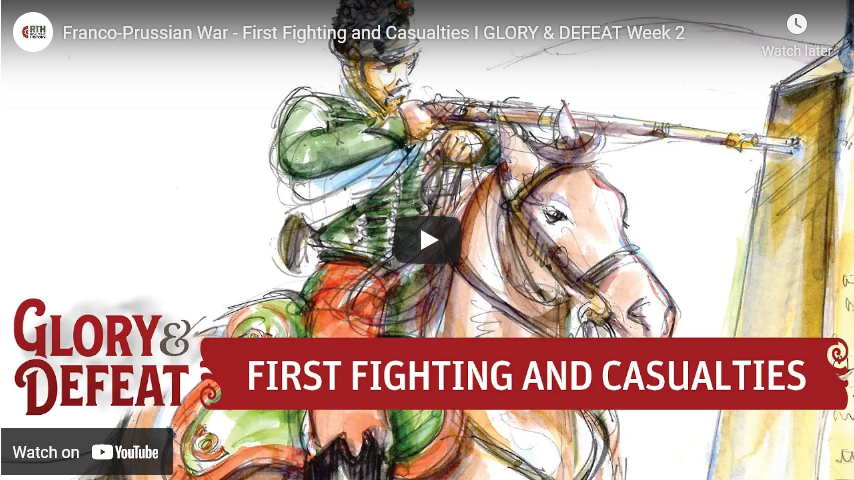
With the official declaration of war from France, Prussia mobilizes and calls in the defensive alliances with the other German states within the North German Confederation but also with Bavaria, Württemberg and Baden. And while the bigger armies still assemble, the first skirmishes happen near the French border.
» OUR PODCAST
https://realtimehistory.net/podcast – interviews with historians and background info for the show.» LITERATURE
Arand, Tobias: 1870/71. Der Deutsch-Französische Krieg erzählt in Einzelschicksalen. Hamburg 2018Arand, Tobias / Bunnenberg, Christian (Hrsg.): Karl Klein. Fröschweiler Chronik. Kriegs- und Friedensbilder aus dem Krieg 1870. Kommentierte Edition. Hamburg 2021
Bourguinat, Nicolas / Vogt, Gilles: La guerre franco-allemande de 1870. Une histoire globale. Paris 2020
Howard, Michael: The Franco-Prussian War. London 1961
Milza, Pierre: L’année terrible. La guerre franco-prussienne septembre 1870 – mars 1871. Paris 2009
» SOURCES
Becker, Josef (Hrsg.): Bismarcks spanische «Diversion« 1870 und der preußisch-deutsche Reichsgründungskrieg. Bd. III. Paderborn, München, Wien, Zürich 2003
Bebel, August / Bernstein, Eduard (Hrsg.): Der Briefwechsel zwischen Friedrich Engels und Karl Marx. Bd. IV. Stuttgart 1921
Fontane, Theodor: Krieg gegen Frankreich, Bd. 1. Berlin 1873
Napoléon III: Proclamation de l’Empereur. Paris, 23. Juillet 1870
» OUR STORE
Website: https://realtimehistory.net»CREDITS
Presented by: Jesse Alexander
Written by: Cathérine Pfauth, Prof. Dr. Tobias Arand, Jesse Alexander
Director: Toni Steller & Florian Wittig
Director of Photography: Toni Steller
Sound: Above Zero
Editing: Toni Steller
Motion Design: Philipp Appelt
Mixing, Mastering & Sound Design: http://above-zero.com
Maps: Battlefield Design
Research by: Cathérine Pfauth, Prof. Dr. Tobias Arand
Fact checking: Cathérine Pfauth, Prof. Dr. Tobias ArandChannel Design: Battlefield Design
Contains licensed material by getty images
All rights reserved – Real Time History GmbH 2021
August 10, 2021
Franco-Prussian War – First Fighting and Casualties I GLORY & DEFEAT Week 2
August 9, 2021
The German Wars of Unification – Bismarck’s Rise I GLORY & DEFEAT
realtimehistory
Published 19 Jul 2021Support Glory & Defeat: https://realtimehistory.net/gloryandd…
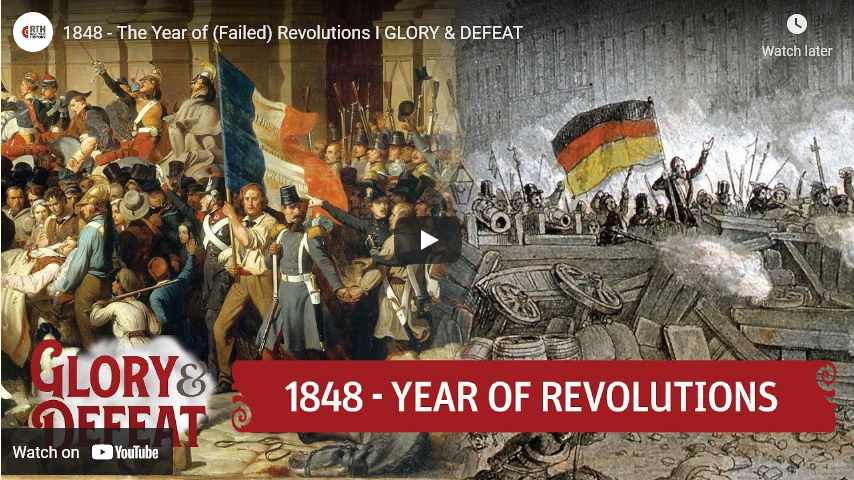
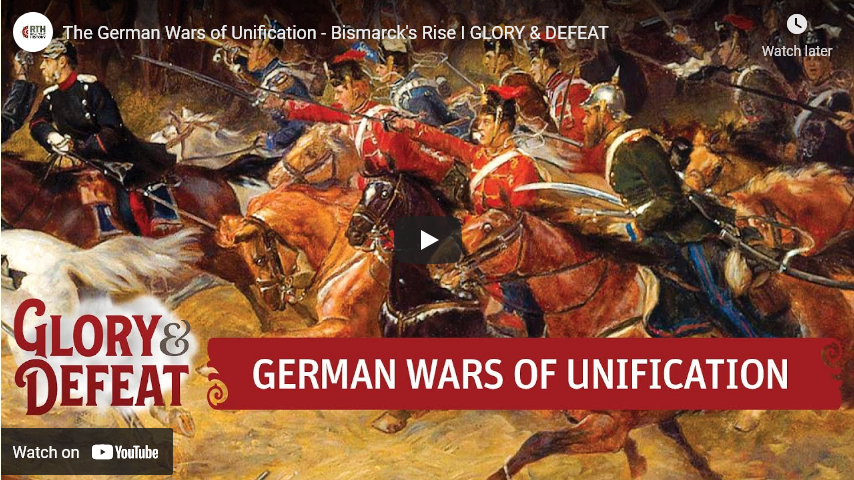
After the failed revolution of 1848, the German states within the German confederation were still moving towards unification. This movement would come from the citizens this time though but from the top. Prussia’s chancellor Otto von Bismarck was using clever and aggressive diplomacy to outmaneuver his biggest German rival: Austria.
» OUR PODCAST
https://realtimehistory.net/podcast – interviews with historians and background info for the show.» LITERATURE
Arand, Tobias: 1870/71. Der Deutsch-Französische Krieg erzählt in Einzelschicksalen. Hamburg 2018
Bremm, Klaus-Jürgen: 1866. Bismarcks Krieg gegen die Habsburger. Darmstadt 2016
Buk-Swienty: Schlachtbank Düppel. Geschichte einer Schlacht. Hamburg 2015
Fesser, Gerd: Königgrätz – Sadowa. Bismarck Sieg über Österreich. Berlin 1994» SOURCES
Böhme, Helmuth (Hrsg.): Die Reichsgründung. dtv-Dokumente. München 1967Dollinger, Hans: Das Kaiserreich. Seine Geschichte in Texten, Bildern und Dokumenten. München, 1966
Hardtwig, Wolfgang /Hinze, Helmuth (Hrsg.): Deutsche Geschichte in Quellen und Darstellungen. Bd. 7: Vom Deutschen Bund zum Kaiserreich 1815 – 1871. Stuttgart 1997
Huber, Ernst Rudolf (Hrsg.): Dokumente der Verfassungsgeschichte, Bd. 2. 1851 – 1900. Stuttgart u.a. 1961
N.N.: Helmuth von Moltkes Briefe an seine Braut und Frau. Stuttgart u.a. 1911
Low, Sidney / Sanders Lloyd C.: The History of England During the Reign of Victoria (1837-1901) Volume 12 of 12, [Part of Series: The Political History of England in Twelve Volumes, Edited by William Hunt and Reginald L. Poole], Longmans, Green, and Co., London. 1907
» OUR STORE
Website: https://realtimehistory.net»CREDITS
Presented by: Jesse Alexander
Written by: Cathérine Pfauth, Prof. Dr. Tobias Arand, Jesse Alexander
Director: Toni Steller & Florian Wittig
Director of Photography: Toni Steller
Sound: Above Zero
Editing: Toni Steller
Motion Design: Philipp Appelt
Mixing, Mastering & Sound Design: http://above-zero.com
Maps: Battlefield Design
Research by: Cathérine Pfauth, Prof. Dr. Tobias Arand
Fact checking: Cathérine Pfauth, Prof. Dr. Tobias ArandChannel Design: Battlefield Design
Contains licensed material by getty images
All rights reserved – Real Time History GmbH 2021
August 5, 2021
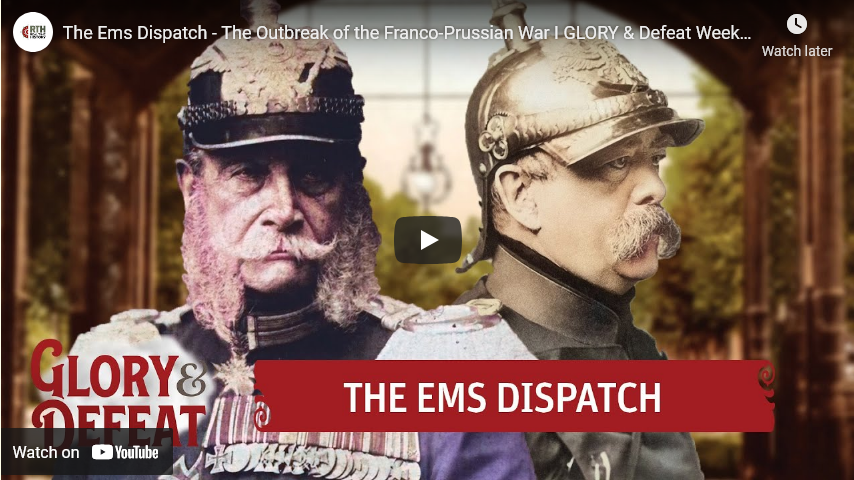
The Ems Dispatch – The Outbreak of the Franco-Prussian War I GLORY & Defeat Week 1
realtimehistory
Published 13 Jul 2021Support Glory & Defeat: https://realtimehistory.net/gloryandd…
French and Prussian animosity have been swelling in the background since the German Wars of Unification started in the 1860s. The French Duc de Gramont hopes that a victory over Prussia could restore French prestige while Prussian Chancellor Bismarck needs a reason to fulfill his dream of German unification from above. When the crisis about the Spanish throne escalates with the Ems Dispatch, the die is cast and the Franco-Prussian War begins.
» OUR PODCAST
https://realtimehistory.net/podcast – interviews with historians and background info for the show.» LITERATURE
Arand, Tobias: 1870/71 – Die Geschichte des Deutsch-Französischen Krieges erzählt in Einzelschicksalen. Hamburg 2018Böhme, Helmut: (Hrsg.): Die Reichs-gründung. dtv-Dokumente. München 1967
Gall, Lothar (Hrsg: Deutschland Archiv). Kaiserreich Bd. I. o.O. 2007
Girard Louis: Napoléon III. Paris 1986
Mährle, Wolfgang (Hrsg.): Nation im Siegesrausch. Württemberg und die Gründung des Deutschen Reiches 1870/71. Stuttgart 2020
Milza, Pierre: L’année terrible. La guerre franco-prussienne septembre 1870 – mars 1871. Paris 2009
» SOURCES
Fontane, Theodor: Der Krieg gegen Frankreich Bd. I. Berlin 1873Louis L. Snyder, ed., Documents of German History. New Brunswick, N.J.: Rutgers University Press, 1958
» OUR STORE
Website: https://realtimehistory.net»CREDITS
Presented by: Jesse Alexander
Written by: Cathérine Pfauth, Dr. Tobias Arand, Jesse Alexander
Director: Toni Steller & Florian Wittig
Director of Photography: Toni Steller
Sound: Above Zero
Editing: Toni Steller
Motion Design: Philipp Appelt
Mixing, Mastering & Sound Design: http://above-zero.com
Maps: Battlefield Design
Research by: Cathérine Pfauth, Prof. Dr. Tobias Arand
Fact checking: Cathérine Pfauth, Prof. Dr. Tobias ArandChannel Design: Battlefield Design
Contains licensed material by getty images
All rights reserved – Real Time History GmbH 2021
August 3, 2021
August 2, 2021
The World of the Franco-Prussian War – The 19th Century up to 1870 I GLORY & DEFEAT
realtimehistory
Published 30 Jun 2021Support Glory & Defeat: https://realtimehistory.net/gloryandd…
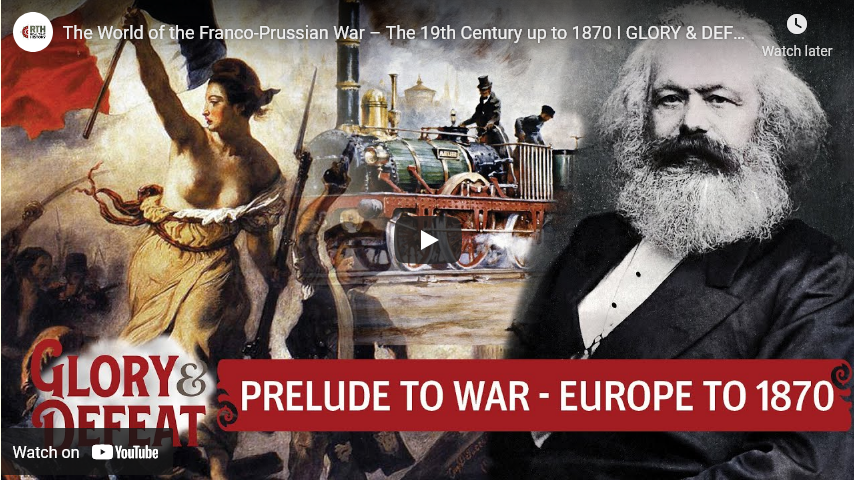
Welcome to the first primer episode for Glory & Defeat. In this first primer episode we will take a broad look at the industrial revolution and the emerging new ideologies of the 19th century: Communism and Nationalism.
» OUR PODCAST
https://realtimehistory.net/podcast – interviews with historians and background info for the show.» LITERATURE
Hobsbawm, Eric: The long nineteenth century. 3 Bände. London 1962-1987Kugler, Martin: “Fehleinschätzungen der Menschheit”, in: Die Presse v. 28.2.2010. o.S
Osterhammel, Jürgen: Die Verwandlung der Welt. Eine Geschichte des 19. Jahrhunderts. München 2009
Bruckmüller, Ernst et. al. (ed.): Putzger. Historischer Weltatlas. Berlin 2001
Staas, Christian: “Im Schatten der Schlote”, in: Geo Epoche Nr. 30. Die industrielle Revolution. 2008. S. 72-85
Bischoff, Jürgen: “Vorwärts durch Raum und Zeit”, in: Geo Epoche Nr. 30. Die industrielle Revolution. 2008. S. 56-71
» SOURCES
Engels, Friedrich: Die Lage der arbeitenden Klasse in England. Leipzig 1845» OUR STORE
Website: https://realtimehistory.net»CREDITS
Presented by: Jesse Alexander
Written by: Cathérine Pfauth, Prof. Dr. Tobias Arand, Jesse Alexander
Director: Toni Steller & Florian Wittig
Director of Photography: Toni Steller
Sound: Above Zero
Editing: Toni Steller
Motion Design: Philipp Appelt
Mixing, Mastering & Sound Design: http://above-zero.com
Maps: Battlefield Design https://www.battlefield-design.co.uk/
Research by: Cathérine Pfauth, Prof. Dr. Tobias Arand
Fact checking: Cathérine Pfauth, Prof. Dr. Tobias ArandChannel Design: Battlefield Design
Contains licensed material by getty images
All rights reserved – Real Time History GmbH 2021
July 29, 2021
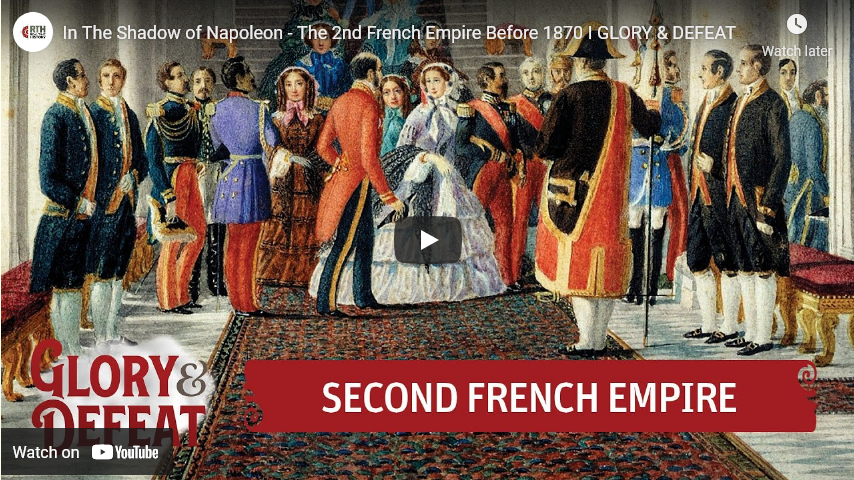
In The Shadow of Napoleon – The 2nd French Empire Before 1870 I GLORY & DEFEAT
realtimehistory
Published 12 Jul 2021Support Glory & Defeat: https://realtimehistory.net/gloryandd…
After Napoleon I had conquered and then lost Europe, France went through multiple revolutions. In 1851, Napoleon’s nephew and French president Louis-Napoléon Bonaparte took control and in 1852 crowned himself Emperor Napoleon III. The new French Empire wanted to regain the glory of Napoleon’s uncle and together with his wife Empress Eugenie he ruled a state known for lavish balls and spending.
» OUR PODCAST
https://realtimehistory.net/podcast – interviews with historians and background info for the show.» LITERATURE
Arand, Tobias: 1870/71. Die Geschichte des Deutsch-Französischen Kriegs erzählt in Einzelschicksalen. Hamburg 2018Arand, Tobias/Bunnenberg, Christian (Hrsg.): Karl Klein. Fröschweiler Chronik. Kriegs- und Friedensbilder aus dem Krieg 1870. Kommentierte Edition. Hamburg 2021
Gouttman, Alain. La grande défaite de 1870-1871. Paris 2015
Herre, Franz: Eugénie. Kaiserin der Franzosen. Stuttgart, München 2000
Rieder, Heinz: Napoleon III. Abenteurer und Imperator. München 1998
» SOURCES
Bonaparte, Prince Napoléon-Louis: Des Idées Napoléoniennes. London 1839Marx, Karl: Der achtzehnte Brumaire des Louis Napoleon. Hamburg 1869
Maupassant, Guy de: Bel-Ami. Paris 1901
N.N. (Hrsg): Fontane, Theodor. Aus den Tagen der Okkupation. Eine Osterreise durch Nordfrankreich und Elsaß-Lothingen 1871. Berlin (Ost) 1984
» OUR STORE
Website: https://realtimehistory.net»CREDITS
Presented by: Jesse Alexander
Written by: Cathérine Pfauth, Dr. Tobias Arand, Jesse Alexander
Director: Toni Steller & Florian Wittig
Director of Photography: Toni Steller
Sound: Above Zero
Editing: Toni Steller
Motion Design: Philipp Appelt
Mixing, Mastering & Sound Design: http://above-zero.com
Maps: Battlefield Design
Research by: Cathérine Pfauth, Prof. Dr. Tobias Arand
Fact checking: Cathérine Pfauth, Prof. Dr. Tobias ArandChannel Design: Battlefield Design
Contains licensed material by getty images
All rights reserved – Real Time History GmbH 2021
June 12, 2021
QotD: The assassination attempt(s) on Bismarck
… 19th-century history, particularly the years from the 1848 revolutions to the outbreak of the First World War in 1914. The key was Bismarck, the Prussian minister-president who unified Germany. If you want to learn about Bismarck, you will probably pick up a book by some historian of international relations, such as A.J.P. Taylor. That’s the right place to start. But it means you can read a lot about Bismarck before finding out about the time in May 1866 when a guy shot him.
Ferdinand Cohen-Blind, a Badenese student of pan-German sentiments, waylaid Bismarck with a pistol on the Unter den Linden. He fired five rounds. None missed. Three merely grazed his midsection, and two ricocheted off his ribs. He went home and ate a big lunch before letting himself be examined by a doctor.
But even the books that condescend to mention this triviality may not tell you about the other time a guy shot Bismarck: A young Catholic tried to kill him in July 1874, during the anti-Catholic Kulturkampf Bismarck had engineered, but only managed to score his right hand with a bullet.
The point is not that Bismarck was particularly hated, although he was. The point is that this period of European (and American) history was crawling with young, often solitary male terrorists, most of whom showed signs of mental disorder when caught and tried, and most of whom were attached to some prevailing utopian cause. They tended to be anarchists, nationalists or socialists, but the distinctions are not always clear, and were not thought particularly important. The 19th-century mind identified these young men as congenital conspirators. It emphasized what they had in common: social maladjustment, mania, an overwhelming sense of mission and, usually, a prior record of minor crimes.
[…]
Bismarck was not much of a democrat, but his example is instructive. He was so phlegmatic about being shot that he obtained both of the guns he had been shot with. He kept them in his desk, ready for use against a third guy with the same bright idea.
Colby Cosh, “Those old terrorist tendencies”, Maclean’s, 2014-12-07.
March 15, 2021
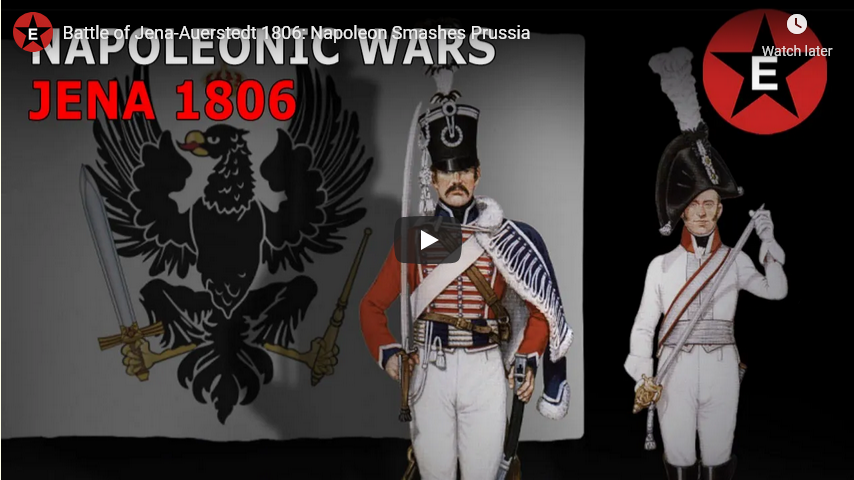
Battle of Jena-Auerstedt 1806: Napoleon Smashes Prussia
Epic History TV
Published 28 Aug 2018Fresh from his great victory at Austerlitz, Napoleon’s next campaign saw him take on Prussia in the autumn of 1806. Prussia’s army had been feared throughout Europe since the days of Frederick the Great, but in just 5 weeks of “Napoleonic Blitzkrieg”, the French Emperor showed that those days were long gone.
Start your FREE trial with The Great Courses Plus here: http://ow.ly/Fq9R30kFTgf
Get early access and a vote on future topics by supporting Epic History TV on Patreon: https://www.patreon.com/epichistorytv
With thanks to HistoryMarche, check out his channel here: https://www.youtube.com/channel/UC8MX…
Learn more about the Napoleonic Wars with books from our co-production partner Osprey Publishing (as an Amazon Associate I earn from qualifying purchases):
Jena 1806 http://geni.us/C8ieSe
Napoleon’s Cuirassiers & Carabiniers http://geni.us/AZ4nWU
Prussian Cavalry of the Napoleonic Wars http://geni.us/xepcMusic from Filmstro: https://filmstro.com/?ref=7765
Get 20% off an annual license with this exclusive code:EPICHISTORYTV_ANN#EpicHistoryTV #NapoleonicWars #Napoleon
“The Great Courses Plus is currently available to watch through a web browser to almost anyone in the world and optimized for the US, UK, and Australian markets. The Great Courses Plus is currently working to both optimize the product globally and accept credit card payments globally.”
February 8, 2021
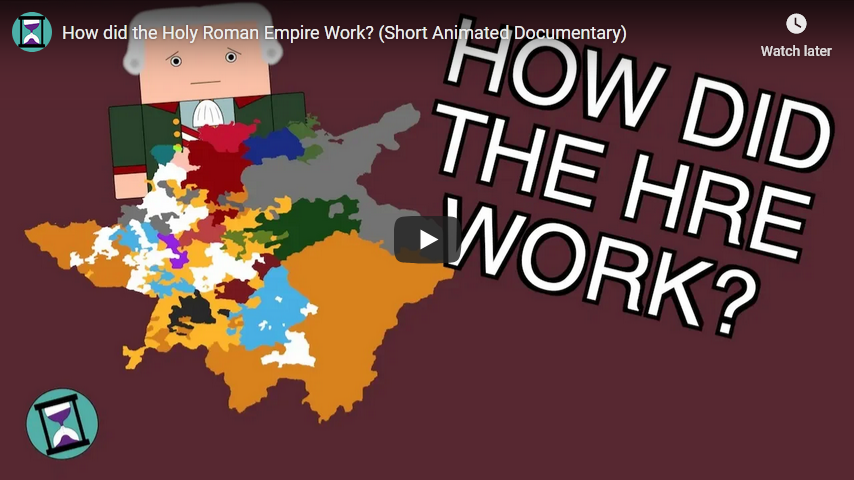
How did the Holy Roman Empire Work?
History Matters
Published 25 Aug 2019Twitter: https://twitter.com/Tenminhistory
Patreon: https://www.patreon.com/user?u=4973164
Merch: teespring.com/stores/history-matters-…Special Thanks to the following Patrons for their support on Patreon:
Kevin Sanders
Chris Fatta
Daniel Lambert
Richard Wolfe
Joshua
Tom Loghrin
Warren Rudkin
Andrew Niedbala
Mitchell Wildoer
Blaine Tillack
Bernardo Santos
Matthew
John Garcia
Richard Hartzell
Will Davis-Coleman
Danny Anstess
Henry Rabung
August Block
Perry Gagne
Shaun Pullin
Joooooshhhhh
Vesko Dinev
PaulToon
Kelly Moneymaker
FuzzytheFair
Armani_Banani
Jeffrey Schneider
Byzans_Scotorius
Seth Reeves
Haydn Noble
Josh Cornelius
Gideon Rashkes
Spencer Smith
Cornel Borină
Roberto
Andrew Keeling
Richard Manklow
Chance Cansler
João Santos
Gabriel Lunde
Pierre Le Mouel
anonHow did the Holy Roman Empire work? It was an antiquated mess but it did have a system of government that did work. Sort of. If everyone felt like it.
Sources:
Prussia’s Relations with the Holy Roman Empire, 1740-1786 by Peter H. Wilson.
Benjamin Franklin, Student of the Holy Roman Empire: His Summer Journey to Germany in 1766 and His Interest in the Empire’s Federal Constitution by Jürgen Overhoff.
The Constitution of the Holy Roman Empire after 1648: Samuel Pufendorf’s Assessment in His Monzambano by Peter Schröder.
Bolstering the Prestige of the Habsburgs: The End of the Holy Roman Empire in 1806 by Peter H. Wilson.
October 7, 2020
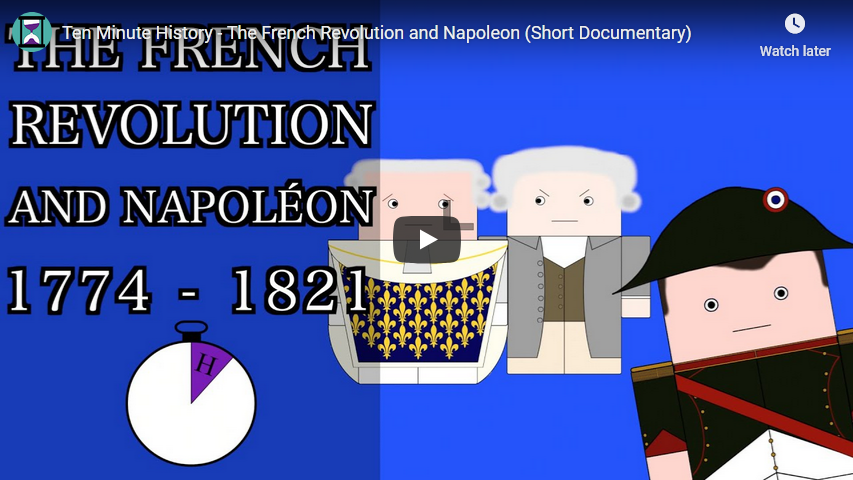
Ten Minute History – The French Revolution and Napoleon
History Matters
Published 12 Sep 2016Twitter: https://twitter.com/Tenminhistory
Patreon: https://www.patreon.com/user?u=4973164This episode of Ten Minute History (like a documentary, only shorter) covers the French Revolution and the Napoleonic Wars from the beginning of King Louis XVI’s reign all the way to the death of Napoleon Bonaparte in 1821. The first half covers the life and death of Louis XVI during the events of the revolution, including the rise and fall of Robespierre and the Reign of Terror. The second half covers the rise of Napoleon, the Napoleonic Wars and the eventual allied victory over France.
Ten Minute History is a series of short, ten minute animated narrative documentaries that are designed as revision refreshers or simple introductions to a topic. Please note that these are not meant to be comprehensive and there’s a lot of stuff I couldn’t fit into the episodes that I would have liked to. Thank you for watching, though, it’s always appreciated.
October 5, 2020
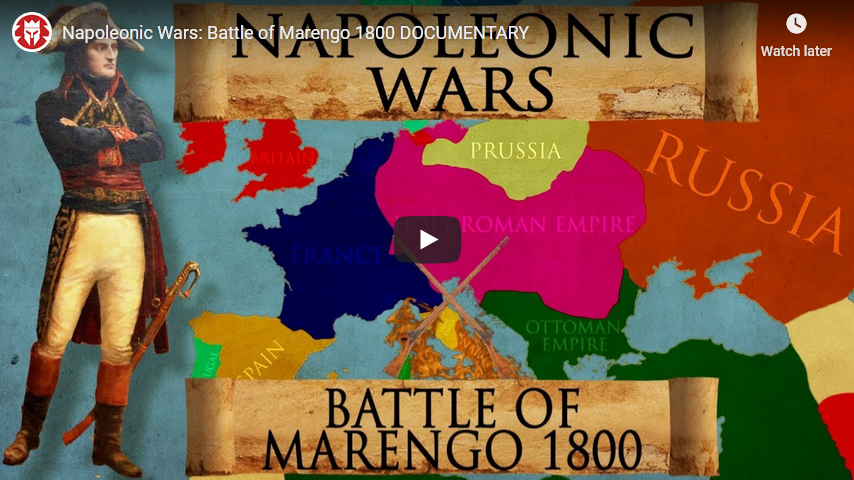
Napoleonic Wars: Battle of Marengo, 1800
Kings and Generals
Published 1 Oct 2017Napoleon Bonaparte is one of the most talented military leaders in the history, so every battle he fought is fascinating, as well as his complete knowledge of tactical and strategic aspects of the war. He was part of the French Revolution and ended it, he was the biggest conqueror of Europe, but also brought its unity closer. The battle of Marengo of 1800, which took place during the War of the Second Coalition between Napoleon and Austrian troops under Baron Michael von Melas is interesting, as French leader committed a big mistake, but was able to score a big victory through sheer will and tactical acumen.
Support us on Patreon: http://www.patreon.com/KingsandGenerals or Paypal: http://paypal.me/kingsandgenerals
We are thankful to our patreons, who made this video possible: Koopinator, Ibrahim Rahman, Daisho, Łukasz Maliszewski, Nicolas Quinones, William Fluit and Juan Camilo Rodriguez
This video was narrated by good friend Officially Devin. Check out his channel for some kick-ass Let’s Plays. https://www.youtube.com/user/Official…
✔ Twitch ► https://www.twitch.tv/nurrrik_phoenix
✔ Twitter ► https://twitter.com/KingsGenerals
✔ Instagram ► https://www.instagram.com/nurrrrrik
✔ Steam ► http://steamcommunity.com/id/nurrrikPrimary sources used:
Chandler, David (1966). Campaigns of Napoleon. Scribner.
Hollins, David (2000). The Battle of Marengo 1800. Osprey Publishing
Тарле Е. В. Наполеон // Собрание сочинений: в 12 томах. — М.: Издательство АН СССР, 1959.Inspired by: BazBattles, Invicta (THFE), Epic History TV and Historia Civilis, Time Commanders
Machinimas made on Napoleon: Total War
Production Music courtesy of Epidemic Sound: http://www.epidemicsound.com, Napoleon: Total War
Songs used:
Richard Beddow – “Napoleon Bonaparte” – Total War Napoleon Soundtrack
Peter Sandberg – “Subtle Substitutes 3”
Johannes Bornlof – “Solemn”
Magnus Ringblom – “Marching In”
Johannes Bornlof – “Exile Before Dishonor”
Rannar Sillard – “Emperors of Tomorrow 13”
Rannard Sillard – “Deathmatch 3”
Johannes Bornlof – “Barbarians”
September 29, 2020
Frederick the Great – A First Glance
Military History not Visualized
Published 22 May 2018» patreon – https://www.patreon.com/mhv
Frederick the Great – Friedrich der Große – is a very controversial figure. Regarded by many as one of the great field commanders of his time, enlightened, strict, aggressive and militaristic. For a long time he was the example and icon of the Prussian general staff. What were his characteristics, traits, his background and his views on various military issues? After all, he wrote about the principles of war and other aspects.
»» SUPPORT MHV ««
» patreon – https://www.patreon.com/mhv
» paypal donation – https://www.paypal.com/cgi-bin/webscr…
» Book Wishlist https://www.amazon.de/gp/registry/wis…»» MERCHANDISE – SPOILS OF WAR ««
» shop – https://www.redbubble.com/people/mhvi…»» SOCIAL MEDIA ««
» minds.com – https://www.minds.com/militaryhistory…
» twitter – https://twitter.com/MilHiVisualized
» twitch – https://www.twitch.tv/militaryhistory…
» RallyPoint – https://www.rallypoint.com/organizati…Military History for Adults is a support channel to Military History Visualized with a focus personal accounts, answering questions that arose on the main channel and showcasing events like visiting museums, using equipment or military hardware.
» SOURCES «
Showalter, Dennis: Frederick the Great. A Military History. Frontline Books: London, 2016.
Militärgeschichtliches Forschungsamt (Hrsg.): Friedrich der Große und das Militärwesen seiner Zeit. Vorträge zur Militärgeschichte – Band 8. E. S. Mittler & Sohn: Herford – Bonn, 1987.
Clark, Christopher: The Iron Kingdom. The Rise and Downfall of Prussia 1600-1947. Penguin Books: London, 2007.
Citino, Robert M.: The German Way of War. From the Thirty Years’ War to the Third Reich. University Press of Kansas: USA, 2005.
Militärgeschichtliches Forschungsamt (Hrsg.): Deutsche Militärgeschichte 1648-1939 in sechs Bänden – Band 6. Bernard & Graefe Verlag; München, 1983.
Browing, Peter: The Changing Nature of Warfare. The Development of Land Warfare from 1792 to 1945. Cambridge University Press: Cambridge, UK, 2002.
Margiotta, Franklin D.: (Executive Editor): Brassey’s Encyclopedia of Military History and Biography. Brassey’s, Inc.: USA, 1994.
» CREDITS & SPECIAL THX «
Song: Ethan Meixsell – “Demilitarized Zone”
June 13, 2020
The CHAZ is a little bit 1968, a little bit 1789, but perhaps more 1871
Lawrence W. Reed finds the developments in the Capitol Hill Autonomous Zone of Seattle remind him of the Paris Commune:
“‘Autonomous zone’ has armed guards, local businesses being threatened with extortion.”
That was quite a striking headline to behold. My immediate reaction was, “Oh my gosh, the Paris Commune is back!”
Except that it wasn’t Paris, and it wasn’t 1871. It was Seattle, Washington, USA — today. According to multiple reports, radical protesters seized a six-block area of the city. They declared it a police-free fiefdom, posted armed guards at its perimeter, began extorting money from local businesses (normally called “taxation”) and were even requiring residents to provide ID to enter their own homes.
The Paris Commune that lasted just 70 days in the spring of 1871 was born amid the ruins of France’s wartime loss at the hands of Prussia in the fall of the previous year. When the Prussians captured France’s Emperor Napoleon III, the monarchy collapsed, and the French Third Republic was born. In Versailles, just a few miles from Paris, its leaders sat on their hands as Parisians stewed in the toxic juices of defeat, resentment, and a rising tide of Marxist-inspired class warfare. The voices of the big mouths increasingly drowned out those of the more moderate citizens who preferred to get the city back to normal and work for a living.
On March 18, 1871, the socialist radicals seized the upper hand in the City of Lights. They occupied government buildings and ousted or jailed their opposition. It was a “People’s Revolution” (unless you were one of the people who didn’t support it). Karl Marx’s communist scribblings provided the radicals — called “Communards” — with their primary inspiration, but Marx himself later criticized their failure to immediately seize the Bank of France and march on the government in Versailles. In the early days of the Paris Commune, however, he hoped he was witnessing a fulfillment of his own delusions:
The struggle of the working class against the capitalist class and its state has entered upon a new phase with the struggle in Paris. Whatever the immediate results may be, a new point of departure of world-historic importance has been gained.
June 12, 2020
History of Prussia | Animated History
The Armchair Historian
Published 14 Sep 2018Sign up for The Armchair Historian website today:
https://www.thearmchairhistorian.com/Our Twitter: https://twitter.com/ArmchairHist
Sources:
The Rise and Fall of Prussia, Sebastian Haffner
Germans and Slavs, Arno Lubos
Frederick the Great, Tim BlanningMusic:
“Hungarian Rhapsody” by Franz Liszt“Twenty six variations on La Folia de Spagna”, London Mozart Players
Matthias Bamert, conductor*Correction 1: In 1648, Brandenburg-Prussia also acquired parts of Pomerania, which isn’t shown in the video. Pomerania is a state directly above Brandenburg.
December 11, 2019
Franco-Prussian War | Animated History
The Armchair Historian
Published 4 Feb 2018What was the Franco Prussian War?
Our Website: https://www.thearmchairhistorian.com/
Our Twitter:
@ArmchairHistOur Discord:
https://discord.gg/Ppb2cUdSources:
https://www.britannica.com/event/Fran…
http://francoprussianwar.com/
http://history-world.org/franco_pruss…
http://www.newworldencyclopedia.org/e…
https://www.warhistoryonline.com/hist…
http://geacron.com/home-en/?v=m&lang=…Music: Music: Antonio Salieri: “Twenty six variations on La Folia de Spagna“