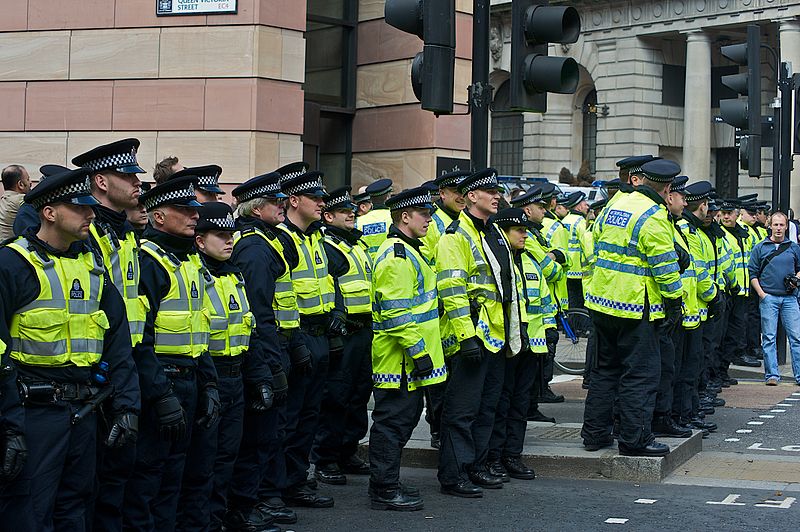
Ruling elites have three basic ways to keep the subject population under their thumb: threaten, bribe, and bamboozle. Everything they do is a variant of one of these basic actions. So, if the lush, misleading overgrowth were cut away, all government activities could be undertaken by only three departments: the Department of Cops and Soldiers; the Department of Santa Claus; and the Department of Delusion. However, if such a drastic, visible simplification were undertaken, the efficacy of the bamboozlement would be greatly diminished. It would be a public disservice to load more truth on the public than it can stand.
Much of what the government does ostensibly to carry out some valuable purpose (e.g., assisting the deserving poor, the sick, the struggling millionaire farmers, the domestic sellers facing allegedly unfair import competition, the sober college students, the elderly, people suffering ethnic or racial discrimination; protecting the nation against menacing foreigners and aliens from outer space; containing disastrous global warming; promoting a cleaner, healthier environment; undertaking or subsidizing scientific and technological research) amounts to specific forms of bribery, to buying people’s loyalties by giving them a portion of the loot the government acquires by means of its threats of enforcement and its bamboozlement in regard to the subjects’ “civic duty” to cough up taxes as the government stipulates. The state’s organizational complexity and its associated pragmatic and ideological veils prevent the general public from seeing what is really going on and then, perhaps, opposing it or becoming more recalcitrant in complying with government edicts and demands for tribute, thereby throwing sand in the state’s machinery of oppression and plunder.
As an exercise, you might test the TBB (threaten, bribe, bamboozle) hypothesis. See if you can find any significant government activity that does not fit under one or more of these three rubrics.
Robert Higgs, “The Three Basic Means by Which Ruling Elites Maintain Their Control”, The Beacon, 2016-09-07.
May 23, 2018
QotD: The threaten, bribe, bamboozle hypothesis
May 16, 2018
“Congrats, you have trained me to ignore Emergency Alerts”
The national emergency alert system for mobile phones just went online, and it’s already training people to ignore them:
When the siren-like sounds from an Amber Alert rang out on cellular phones across Ontario on Monday, it sparked a bit of a backlash against Canada’s new mobile emergency alert system.
The Ontario Provincial Police had issued the alert for a missing eight-year-old boy in the Thunder Bay region. (The boy has since been found safe.)
But gripes about the system soon began to pour in. Kingston police said they received “several complaints” regarding the Amber Alert notice. On social media, people startled by the alerts complained about the number of alerts they received and that they had received separate alerts in English and French.
“Sooo, is that emergency alert going to happen at like 4 a.m. with sleep mode enabled? Just asking for my heart health,” tweeted James G.
Meanwhile, others who were located far from the incident felt that receiving the alert was pointless.
“I’ve received two Amber Alerts today for Thunder Bay, which is 15 hours away from Toronto by car,” tweeted Molly Sauter. “Congrats, you have trained me to ignore Emergency Alerts.”
Mark Blevis, an Ottawa-based digital public affairs analyst, said he understands the importance of Amber Alerts, but system managers risk alienating cellphone users at some point if these types of alarms go off regularly.
“If they’re going to send out multiple alerts on the same thing, you need to find a way to streamline it so they don’t breed that apathy that causes the whole system to break down,” Blevis said.
At the very least, they should be able to figure out how to avoid the duplication of English and French alerts, he said.
April 20, 2018
Food for thought on those “second US civil war” comments
Tom Kratman, Mil-SF author and former US Army officer responds to a Quora article titled “Why does the 2nd Amendment bother Europeans so much?” and shared some of his answer on Facebook:
More fun on Quora:
https://www.quora.com/Why-does-the-2nd-Amendment-bother-Europeans-so-much/answer/Pietro-Del-Buono#
A Sample: And here; since you’re not apparently ambitious enough to read it, I’ll copy you what I sent Stafford on just this question:
The Viet Cong, the Taliban, and the Iraqi resistance would all, at this point in time, be terribly surprised to learn of the omnipotence of the US Army, Navy, Air Force, and Marine Corps (retired lieutenant colonel, Infantry, former faculty of the war college, to boot; yes, I’ve had a varied and fun life). It isn’t, remember, a million citizens with arms, it’s probably over 80 million, just to begin with, most of us armed to deck out the wives, children, grandchildren, and no small number of the neighbors. I can, personally, outfit at least one short platoon while my former law firm, when I was in practice, could have fielded a company, less mortars and anti-tank, yes, to include with automatic weapons (machine guns, which are also legal here, though pricey).
How they would do this is perhaps more detailed and more bloody minded than you want, but, basically, tanks do not move when small arms dominating the roads mean they don’t get fuel delivered (no, aerial resupply is highly problematic). Neither do aircraft fly when no trucks or rail bring aviation fuel. Police, who are actually the decisive arm of counter-insurgency (see your own Sir Robert Thompson), pretty much require a disarmed citizenry to exercise control. Facing an armed citizenry willing to kill them, their risks and losses are too great for effectiveness. And then there’s sheer terror: “Nice family you have, Officer Quigley; be a damned shame if, say, you didn’t look the other way when we tell you to and they all ended up dead, don’t you think?”
Most of the US military preponderance is technological. Martin van Creveld has an interesting observation on that, which goes to the effect that high tech really only works well in very simple environments, air, open desert, at sea, and that a) it tends to fail badly when the environment gets more complex, while b) the human heart is the most complex environment of all. In other words, the forces of government would rarely know just who their enemies were in order to bring that tech to bear.
And then there’s the last aspect, an aspect, I think, Euros have the greatest difficulty understanding. Our police and armed forces are simply not reliable, over most of the country (remember, too, we have no real national police force or gendarmerie, not of any size and power, anyway) to the federal government. No, I don’t mean only the state based National Guards; the _regular_ forces actually draw most of their personnel from areas where folk revere the country and the constitution, but tend to detest the federal government. Called on to suppress a rebellion with which they by and large agreed, they’d defect in droves.Indeed, they might be at the forefront of rebellion. You may recall Obama talking about a civilian force, equal in size, budget, and power to DoD? I’ve never been able to shake the feeling that he had Pinochet and Allende in mind when he spoke those words, because he knew, deep down, that he and the left (our left, which is, of course, to the right, generally, of the Euro left) could not rule out a coup in the event of their pushing their agenda just that little bit too far.
March 25, 2018
February 13, 2018
Forensic (junk) science
In The Nation, Meehan Crist and Tim Requarth report on a solved-by-forensic-science case that opens a lot of valid questions about the “science” part of forensic science:
Today, Genrich is 55 years old and has been in prison for nearly 25 years for crimes he says he didn’t commit. His latest appeal has been taken up by the Innocence Project, in the hopes of not only freeing Genrich, but getting the courts to recognize recent scientific challenges to forensic pattern-matching techniques that affect hundreds of thousands of people at all levels of the criminal-justice system. In our investigation, we comprehensively reviewed the literature on handheld toolmarks published in forensic trade journals, dug through past legal rulings, pored over nearly 7,000 pages of trial transcripts, and conducted dozens of interviews with prosecutors, defense attorneys, forensic practitioners, judges, academics, and scientists, from Grand Junction to the Department of Justice. What we found was a startling lack of scientific support for forensic pattern-matching techniques such as toolmark analysis; a legal system that has failed to separate nonsense from science even in capital cases; and a consensus among prosecutors all the way up to the attorney general’s office that scientifically dubious forensic techniques should be not only protected, but expanded. With Donald Trump in the White House and Jeff Sessions at the helm of the DOJ, the nominal momentum for forensic-science reform spurred by the two major reports is slowing. Genrich’s case reveals a system that makes it nearly impossible to throw unproven forensic science out of courts and may be keeping thousands of innocent people behind bars.
[…]
Firearm and toolmark analysis emerged out of a national push in the early 20th century to professionalize police investigative techniques at a moment when Americans were particularly enamored with science. Law enforcement borrowed terms from science, establishing crime “laboratories” staffed by forensic “scientists” who announced “theories” cloaked in their own specialized jargon. But forensic “science” focused on inventing clever ways to solve cases and win convictions; it was never about forming theories and testing them according to basic scientific standards. By adopting the trappings of science, the forensic disciplines co-opted its authority while abandoning its methods.
Amid the swirl of new forensic techniques, the courts realized there had to be a gatekeeping mechanism to filter out quackery. In 1923, the DC Court of Appeals provided that mechanism in Frye v. United States. The judges rejected a doctor’s dubious claim that he could use a polygraph to detect when a person was lying from a rise in their blood pressure. In the ruling, the court said that in order for scientific evidence or expert testimony to be admitted, it must be offered by an experienced practitioner making inferences from a “well-recognized scientific principle” that has “general acceptance in the particular field in which it belongs.” In Frye, the judges deemed the scientists in the “particular field” relevant to polygraph use to include psychologists and physiologists—not just polygraph practitioners who would, presumably, be biased toward preserving the technique’s reputation. The effectiveness of Frye in keeping dubious science out of the courts depends on whom judges include in their definition of the “relevant scientific community.” But as the decades wore on, and the forensic disciplines gained influence, judges tended to restrict their definition of the “relevant scientific community” to the forensic examiners themselves. Judges began taking advice on what counted as good forensics from the very people who invented the techniques and made a living off of them.
In the American criminal-justice system, where prosecutors regularly battle defense attorneys over what constitutes valid evidence, judges’ rulings on admissibility are the final word. Once a technique has made it into court and survived appeals, subsequent judges, most of whom have no scientific training and little ability to assess the scientific validity of a technique, will continue to allow it by citing precedent. Forensic examiners, in turn, cite precedent in order to claim that their techniques are reliable science. Prosecutors point to guilty verdicts as evidence that the science brought to court was sound. In this circular way, legal rulings — which never really vetted the science to begin with — substitute for scientific proof. This is Frye’s fatal flaw: Nowhere in this process is anyone required to provide empirical evidence that the techniques work as advertised. Frye aimed to keep pseudoscience out of the courts, but instead has helped create the perfect conditions to keep it in.
[…]
No human endeavor is perfect, yet many forensic examiners claim “zero” or near-zero error rates. In a widely cited 1984 paper in the Journal of Forensic Sciences, bite-mark examiners claimed a coincidental match would occur less than one in 10 quadrillion times. But when actually tested, even the most experienced examiners were wrong about one in six times, and in one study they struggled to distinguish a child’s bite mark from an adult’s. In 2009, the chief of the FBI Firearms-Toolmarks Unit wrote that a qualified examiner will “rarely if ever commit a false positive error (misidentification).” In practice, error rates for matching bullets to firearms can be dramatically higher: In 2008, the Detroit Police Department’s crime lab was shuttered when auditors found that its examiners made one error in every 10 cases. The head of the FBI’s fingerprint laboratory testified that its error rate was one in 11 million—because he knew of only one error in the FBI’s 11 million comparisons—but subsequent tests of fingerprint examiners show error rates ranging from one in 680 to one in 24.
January 15, 2018
Top Gear Discusses Emergency Sirens
Jacob Epstein
Published on 12 Jun 2014Series 18, Episode 7
December 14, 2017
Canadian politicians and police chiefs still struggling with notion of “legal” marijuana
The federal government will legalize the use of marijuana across Canada in July, 2018. You’d think that would be plenty of time for provincial, regional, and municipal governments and police forces to make adequate changes for the newly legal product, right? No, this is Canada, the home of the overblown local concern:
Saskatchewan might need larger police force for legalized marijuana: finance minister; "We may, in all good likelihood, need a larger police force in order to police this." https://t.co/ihgyKC5Hiy #cdnpoli #skpoli #cannabis @JodieEmery @DanaLarsen
— Marijuana Laws (@CannabisExperts) December 13, 2017
It's just part of our mass national brain-fail that causes us to perceive legalizing marijuana as *inventing* marijuana. https://t.co/xFAm034KQy
— Chris Selley (@cselley) December 13, 2017
policing is the least of our worries. Stop focusing on the past. What will legal look like? liability? workplace safety? public transit? public spaces? tolerance? culture? mental health? facing the statistics head on?
— toujoursgai61 (@mforsis) December 13, 2017
It will look like how alcohol and/or smoking relates to all those things, except with far fewer deleterious social effects. https://t.co/RRMHvUdXCT
— Chris Selley (@cselley) December 13, 2017
October 10, 2017
This is not what unions are supposed to do – getting bad cops back on the job
Ed Krayewski explains why it’s so tough to fire a police officer who is proven to be dangerous to the public:
Since 2008, the Philadelphia Police Department has fired more than 150 cops, of whom at least 88 had been arrested and at least 48 were eventually convicted on charges like murder, rape, and extortion. Seventy-one of those officers tried to get their jobs back, and of those 71, at least 44 were successful.
In reviewing 37 of the nation’s largest police departments, including Philadelphia, the Post found that since 2006 at least 451 of about 1,800 fired officers got their jobs back, thanks to provisions in their union contracts. Campaign Zero, an effort of a group of Black Lives Matter activists, tracks union contracts and their content; it finds that such arrangements are guaranteed in some way in virtually each contract they reviewed. That ubiquity makes many efforts at reducing police violence futile. Cities must have the ability to fire cops who are unable to do their jobs without resorting to excessive force.
[…]
Public employees have a right to associate and assemble, of course. But public unions have the power they enjoy today only because of expansive privileges granted to them by government. Labor unions in the private sector must be careful not to make demands that would make their employers fiscally unsustainable. With public-sector unions, by contrast, the government will always be there for a bailout. And no matter how much a service declines in the public sector, the “customers” often have no other place to go. There is no competitive pressure for institutions like police to be responsive to consumer demands. Single-party rule in most major cities offers additional inoculatation from facing consequences for subpar performance.
Bad cops will keep getting rehired as long as public sector unions are among the most powerful forces in government, setting rules that protect public employees at the expense of the people they’re supposed to serve.
October 5, 2017
QotD: Legalizing drugs
It is not the business of the State to tell adults what to do with themselves, or how they interact with other consenting adults. Where drugs are concerned, any disadvantages in leaving people alone are greatly outweighed by the costs of the War on Drugs, which has reduced large parts of the world to violent chaos, and corrupted every law enforcement agency involved in fighting it, and been made an excuse for the destruction of due process rights in England and America.
Sean Gabb, quoted in “Wayne John Sturgeon talks to Sean Gabb of the Libertarian Alliance”, Sean Gabb, 2013-08-26.
September 16, 2017
It’s “as if Justin Trudeau had just invented marijuana, and the stuff’s mystical properties are unfamiliar to every police officer in the land”
As the old joke had it, marijuana can cause paranoia, confusion, and total loss of reality in people who’ve never taken them. Canadian police organizations are desperate to keep legal marijuana from becoming a thing:
I cannot be the only one who feels the world is a little upside-down after Wednesday’s hearings on marijuana held by the House of Commons standing committee on health. The day’s proceedings were essentially broken into two parts. First, high-ranking Canadian police came before the committee to complain that they didn’t have the technical resources or the training to deal with legalized marijuana. They pleaded for the passage of the Liberals’ Cannabis Act to be delayed.
Then officials and scholars from the states of Colorado and Washington appeared to talk about their initial experiences with legalized marijuana. The contrast was remarkable. Canadian cops are behaving as if marijuana is a new problem for them—as if Justin Trudeau had just invented marijuana, and the stuff’s mystical properties are unfamiliar to every police officer in the land. The general thrust of the American testimony was not in conflict with the police demand to delay the legislation. Indeed, their major messages included going slow, getting it right, and learning from the history of the pot states. But none of the American witnesses, particularly the Washington and Colorado revenue bean-counters, showed any particular appetite for going back to the days of prohibition.
They could have come to Canada and said, “Oh, God, what are you crazy SOBs thinking?” There was little evidence of any such sentiment. I think it is safe to say that committee members who favour legalization, or who are anything other than implacably hostile to it, must have come away from the testimony broadly reassured.
Washington and Colorado have not descended into a nightmare of chaos because they have legalized “recreational marijuana.” By most social measures these states are about what they were before legalization. Youth use of pot is being watched closely, and it appears to be steady, possibly reduced. The states’ coffers have seen a modest benefit, and some of the money from pot taxation is made available for general drug education and abuse prevention—not just the more intensive outreach to young people about weed.
August 28, 2017
“Convicting Arpaio of contempt of court was like busting Al Capone on tax evasion”
Jon Gabriel on Il Donalduce‘s pardon of the world-class authoritarian scumbag and all-around thug, ex-Sheriff of Maricopa County, Joe Arpaio:
President Trump asked the crowd last week at his Phoenix rally, “Was Sheriff Joe convicted for doing his job?” Had the hall been filled with an accurate cross-section of Arpaio’s former constituents, the answer would have been a resounding “no.”
Nevertheless, Trump pardoned the ex-sheriff on Friday, though he had not yet been sentenced and had shown zero remorse for his crime.
America’s self-proclaimed “toughest sheriff” was convicted of criminal contempt of court last month after refusing to obey court orders. This most recent legal battle involved numerous federal attempts to get Arpaio to stop racially profiling residents of Maricopa County.
Not only did Arpaio refuse, he bragged about it. “Nobody is higher than me,” he said. “I am the elected sheriff by the people. I don’t serve any governor or the president.”
Many conservatives outside of Arizona celebrated his headline-grabbing antics, but they don’t know the real story. I’m a conservative Maricopa County resident who has lived under Arpaio throughout his decades-long reign. Arpaio was never a conservative; he just played one on TV.
I saw his love of racial profiling firsthand, especially on my daily commutes through the tiny Hispanic community of Guadalupe, Ariz. When conducting these “sweeps,” helicopters buzzed houses, an 18-wheeler marked “Mobile Command Center” was planted in the center of town, and countless sheriff’s deputies stood on the roadsides, peering into the cars rolling by. Being Caucasian, I was always waved through. The drivers ahead and behind me weren’t so lucky.
Washington’s laxity in border enforcement led many right-of-center Americans to appreciate more robust enforcement, even when it regularly included authoritarian scenes like the one in Guadalupe. But even if you turn a blind eye to the human cost of such race-based enforcement, Arpaio’s other misdeeds are legion.
August 8, 2017
Civil asset forfeiture in Las Vegas – kick’em while they’re down
C.J. Ciaramella summarizes the findings of a new report on civil asset forfeiture in Nevada, where the Las Vegas police have been profiting nicely by confiscating even from the poorest members of society:
When Las Vegas police seized property through civil asset forfeiture laws last year, they were mostly likely to strike in poor and minority neighborhoods.A report [PDF] released last week by the Nevada Policy Research Institute (NPRI), a conservative think tank, found the Las Vegas Metropolitan Police Department raked in $1.9 million in asset forfeiture revenue in 2016. Two-thirds of those seizures occurred in zip codes with higher-than-average rates of poverty and large minority populations.
The 12 Las Vegas zip codes most targeted by asset forfeiture have an average poverty rate of 27 percent, compared to 12 percent in the remaining 36 zip codes. Clark County, Nevada, has an average poverty rate of 16 percent.
The 12 most targeted zip codes also have an average nonwhite population of 42 percent, compared to 36 percent in the other remaining zip codes.
Under civil asset forfeiture laws, police may seize property they suspect of being connected to criminal activity. The owner then bears the burden of challenging the seizure in court and disproving the government’s claims. Law enforcement groups say civil asset forfeiture is a vital tool to disrupt drug trafficking and other organized crime by cutting off the flow of illicit proceeds.
But a bipartisan coalition of civil liberties groups and lawmakers have been calling for the laws to be reformed, saying asset forfeiture’s perverse profit incentives and lack of safeguards leads police to shake down everyday citizens, who often lack the resources to fight the seizure of their property in court.
July 12, 2017
Someone at the NRA finally speaks out on the shooting death of Philando Castile
Radley Balko on the problems the NRA creates for itself by its reflexive support of the police, which weakens its efforts on upholding gun rights for ordinary Americans:
At long last, someone from the National Rifle Association has spoken up about Philando Castile. Sort of. During a CNN segment, NRA spokeswoman and pundit Dana Loesch said this:
I think it’s absolutely awful. It’s a terrible tragedy that could have been avoided. I don’t agree with every single decision that comes out from courtrooms of America. There are a lot of variables in this particular case, and there were a lot of things that I wish would have been done differently. Do I believe that Philando Castile deserved to lose his life over his [traffic] stop? I absolutely do not. I also think that this is why we have things like NRA Carry Guard, not only to reach out to the citizens to go over what to do during stops like this, but also to work with law enforcement so that they understand what citizens are experiencing when they go through stops like this.
As Jacob Sullum points out at Reason, this is pretty weak stuff. A law-abiding gun owner was shot and killed by a cop after doing everything he was supposed to do. It then took more than a year for anyone from the nation’s largest gun rights organization to comment, and when she did, she offered a vague, heavily qualified, quasi-criticism of the cop while implying not only that Castile contributed to his death but also that he might be alive if only he were carrying an NRA Carry Guard card.
This is about par for the course for the NRA. This is the group that claims to be the only thing preventing the government from obliterating the Second Amendment, yet they’re noticeably quiet about the people doing the most violence to the Second Amendment — the armed, badge-wearing government employees we call law enforcement officers. For all the NRA’s dire warnings about government gun confiscation, the real, tangible threat to gun-owning Americans today comes not from gun-grabbing bureaucrats but from door-bashing law enforcement officers who think they’re at war — who are too often trained to view the people they serve not as citizens with rights but as potential threats. Here, the NRA just doesn’t want to get involved.
[…]
In short, the NRA seems to think we’re at risk of creeping tyranny and abuse of power from all sectors of government except from the men and women armed, badged and entrusted with the power to kill. That’s a problem, because if armed agents who enforce the laws on the ground aren’t required to respect our rights, our rights don’t really exist.
The Supreme Court could rule the NRA’s way on the Castle Doctrine for the next 25 years, but if the police continue to kick down doors with impunity, law-abiding gun owners will be at risk, and the Second Amendment will be more of an empty gesture than a constitutional protection. The Supreme Court could rule the NRA’s way on conceal carry for the next 25 years, but if the organization keeps pushing the line that cops are at war, that the populace is dangerous, and that every citizen is a possible threat, the right to carry a gun in public will always be constrained by cops conditioned to see every weapon as a threat to their existence.
Finally, the Supreme Court could rule the NRA’s way and abolish all the state laws like those that ensnared Shaneen Allen, but as long as the NRA and its allies push rhetoric that makes white people (and white cops) see all crime with a black face, the right to bear arms for people who look like her — or who look like Philando Castile — exist only in theory.
June 24, 2017
The murder of Philando Castile
Thomas Knapp on what he calls “The Castile Doctrine” … the police being held to far lower standards than ordinary citizens:
On June 16, a jury acquitted St. Anthony, Minnesota police officer Jeronimo Yanez of all charges in the 2016 killing of motorist Philando Castile. That acquittal was, in a sense, also a death sentence — not for Yanez, but for future motorists unfortunate enough to encounter cops like him.
No, this is not a “bad cop” story. It’s a sad tale and I actually feel sorry for Yanez. But the facts are what they are.
Yanez killed Castile. The killing was caught on video and neither Yanez nor his attorneys denied it.
His defense (that he feared for his life) was based on ridiculous grounds relating to the smell of cannabis and the presence of a child (“I thought, I was gonna die, and I thought if he’s, if he has the, the guts and the audacity to smoke marijuana in front of the five year old girl and risk her lungs and risk her life by giving her secondhand smoke and the front seat passenger doing the same thing, then what, what care does he give about me?”).
I find his justification to be astonishing … how can a man who thinks like this have ever been trusted with a gun and a badge?
Castile had informed Yanez that he possessed a concealed weapon and a permit for it, and was following Yanez’s orders to produce the permit when Yanez panicked and fired.
Key word: Panicked. His fear wasn’t justified. It wasn’t reasonable. It was unthinking and irrational. That made him culpably negligent in the killing.
[…]
The jury, in relieving him of the consequences of that failure, continued a sad tradition of holding law enforcement officers to a lesser standard of conduct than ordinary Americans. In doing so, they made the world a safer place for cops who shouldn’t be cops — and a more dangerous place for the rest of us.
US law generally holds civilian gun owners to much higher standards in cases like this than they ever seem to expect their own law enforcement officers to meet. A civilian who shot a driver in a similar situation would be lucky to only be facing manslaughter charges, but might well be convicted of first degree murder. A cop? Every extenuating circumstance is given full weight by both judge and jury. A person with no formal training is expected (and required) to be cool, calm, and collected under unexpected extreme stress, while a trained officer is given a pass for “panic” and irresponsible gunplay. Where’s the justice?
Update, 27 June: Even more puzzling is the virtual silence of the National Rifle Association (NRA) over this judicial killing:
These are gruesomely interesting times in the American gun debate. The footage of Minnesota police officer Jeronimo Yanez killing motorist Philando Castile wasn’t enough to convict him in a court of law, but it’s no less damning for that. The more these videos pile up, the harder it gets to rationalize American police forces’ objectively insane collective death count.
The circumstances of Castile’s death are particularly enraging for gun rights activists — or, rather, they ought to be. Castile calmly informed Yanez he was legally armed, just as he should have; Yanez freaked out and, seconds later, pumped seven bullets into the car. By rights, many have observed, the NRA should be leading marches through the Twin Cities. Instead it’s saying and doing bugger all. Not a good look.
On the other side of the great divide, the gun control movement is almost in hibernation — and understandably so. Theirs is a tough climb at the best of times; with a Republican House and Senate it’s a sheer cliff.
June 18, 2017
Meet the Texas Lawmaker Fighting Trump on Civil Asset Forfeiture
Published on 7 Jun 2017
Konni Burton has emerged as the state’s fiercest opponent of civil asset forfeiture.
When the White House hosted a meeting of sheriffs from across the country last February, President Donald Trump joked about destroying the career of a Texas state senator who supported reforms to civil asset forfeiture laws — a controversial practice where police can seize cash and property of people suspected — but in most cases never convicted or charged with a crime.
Though Trump’s comments were meant to support police, they’ve had the opposite of their intended impact — it’s re-energized the push for reform.
Texas state senator Konni Burton was one of many local lawmakers outraged by Trump’s comments. She’s a tea party leader from the Dallas-Fort Worth area who also happens to be pro-life and pro-borders. Burton isn’t the unnamed state senator Trump offered to destroy, but she’s emerged as the state’s fiercest opponent of civil asset forfeiture.
“When you give law enforcement the ability to take your property without a conviction that’s big government,” Burton says.
Last December, Burton filed legislation that would repeal civil asset forfeiture in the state and replace it with criminal asset forfeiture.
“Police can still seize property that they think has been involved in a crime,” says Burton, “but for them to keep it … you have to be convicted of a crime.”
Texas has tried for years to reform civil asset forfeiture laws after horror stories began to emerge about the practice.
One of the most horrifying cases occurred in 2005, when cops seized $10,000 from Javier Gonzales who was driving from Austin to the border town of Brownsville to make funeral arrangements for his dying aunt. The cops didn’t find any drugs or contraband in his car, but they pressured Gonzales to sign away his rights to the cash under the threat of a felony money laundering charge.
Gonzales took the case to court and eventually won his money back in April of 2008.
And in 2012 the ACLU settled a class action lawsuit against the city of Tenaha where cops illegally seized nearly $3 million from traffic stops involving mostly Black and Latino drivers. Victims were told that they could either sign their cash over to the city or go to jail.
Cases like this have earned Texas a D+ from the Institute for Justice for forfeiture laws. Data from the libertarian legal organization shows that the state takes in an average of $41.6 million dollars a year to local law enforcement agencies as a result of these seizures.
Burton’s bill has bipartisan support, but it faces an uphill battle in the Texas legislature where it’s faced opposition from “tough on crime” lawmakers and law enforcement agencies. Burton says her legislation isn’t about stopping police from doing their job, but protecting the property rights of all Texans.
“Everybody is ready for this to be reformed,” Burton says. “You know it’s just upside down and antithetical to what our country should stand for.”
Produced by Alexis Garcia. Camera by Paul Detrick, Austin Bragg, and Meredith Bragg. Music by the Unicorn Heads.