Quotulatiousness

November 11, 2019

QotD: The British army from WW1 to the end of the Cold War

Filed under: Britain, History, Military, Quotations, WW1, WW2 — Tags: , , — Nicholas @ 01:00

Before WW1 the army was optimised primarily as a colonial police force, coupled with a small expeditionary force of regular soldiers intended to deploy to the continent to work alongside the French or other allies in the event of war. WW1 was an event that really constituted three armies – the small regular/territorial force of barely 300,000 soldiers that mobilised in 1914 and was wiped out to buy time. The interim force of Territorials and Reservists that held the line in 1915-1916 while the army reconstituted, and the civilian volunteer/conscript force from 1916 onwards that saw the army grow to over 4 million men by 1918.

Rapid demobilisation followed, followed by regeneration in the 1920s and 30s to become the most mechanised army in the world by 1939, comprising some 224,000 regulars. It is often forgotten that the British army of 1940 had many more tanks and vehicles than the German Army – history is not kind to the losers. The army in WW2 grew to a citizen force of roughly 3.5 million men, before shrinking post war.

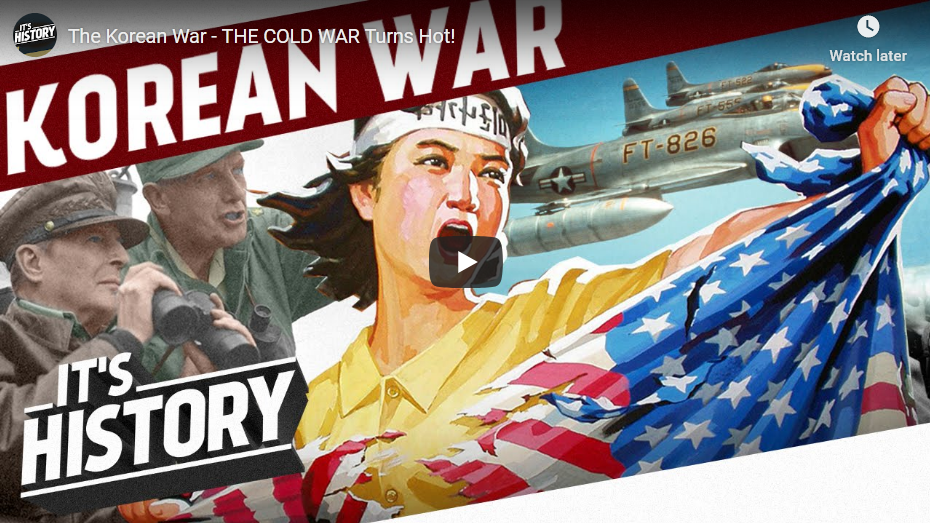
The continuation of National Service, the war in Korea and the end of empire saw the army stay at roughly 330,000 soldiers for much of the 1950s, causing significant damage to the national economy due to the cost and lack of manpower for rebuilding. By 1957 the army estimated that its regular strength was roughly 80,000 personnel (only a quarter of the whole force), many of whom were tied up training two-year National Servicemen. A major factor in the 1957 Sandys Defence White Paper was the need to reduce manpower costs and free people up for other economically important tasks.

The Sandys Review led to a reduction to 165,000 troops most of whom were focused on either colonial policing actions (it is often forgotten that in the early 1960s there were over 100,000 UK service personnel in the Far East) or deployed in Germany as part of the British Army of the Rhine (BAOR). The withdrawal from empire saw the army shrink to a strength of approximately 150,000 by the 1980s, where its role was primarily to provide a corps of four divisions in Germany in the event of general war, supported by mobilisation units from the UK which would provide further divisions to augment BAOR and conduct home defence roles.

The end of the Cold War saw the first deployment of a divisional-sized force, with an armoured division sent to the Gulf in 1990 for Operation Desert Storm. This happened just as the Options for Change review cut BAOR and reduced the army to approximately 120,000. Further deployments to Bosnia and Kosovo in the 1990s followed by the deployment of an armoured division to Iraq in 2003. Operations in Iraq and Afghanistan from 2003-2014 saw the army struggle to sustain itself on two fronts without heavy support from the RN and RAF providing extra manpower and resources.

The 2010 SDSR initially preserved the army at just under 100,000 personnel, although later reviews cut this down to 82,000 regulars supported by a target of approximately 30,000 reservists working in a far more integrated manner. Today the army is struggling to sustain itself at 82,000, with recent manpower figures showing a total of roughly 78,000 troops.

Sir Humphrey, “How Do You Solve a Problem Like a Deployable Division?”, Thin Pinstriped Line, 2017-08-06.

September 6, 2019

QotD: The horrors of war

Filed under: History, Media, Military, Quotations, USA, WW2 — Tags: , , , — Nicholas @ 01:00

There’s no point in pretending that war isn’t horrible — flag-draped coffins are, in fact, a rather pristine symbol of those horrors. There’s a good reason societies honor their warriors.

An aside: I’ve long thought that prettifying World War II for domestic consumption contributed to both the media shock of Vietnam and the generation gap. WWII and Korea vets, who knew war first-hand, didn’t understand just how shocked their doted-on boomer kids were. “The Good War” wasn’t any more pleasant when you were experiencing it.

Virginia Postrel, “Horrors of War”, Dynamist.com, 2004-04-27.

August 4, 2019

QotD: The post-WW2 American army

Filed under: Asia, China, History, Military, Quotations, USA — Tags: , , , , — Nicholas @ 01:00

The men of the Inmun Gun and the CCF were peasant boys, tough, inured to hunger and hardship. One-third of them had been in battle and knew what battle meant. They had been indoctrinated in Communism, but no high percentage of them were fanatic. Most of them, after all, were conscripts, and unskilled.

They were not half so good soldiers as the bronzed men who followed Rommel in the desert, or the veterans who slashed down toward Bastogne.

They were well armed, but their weapons were no better than those of United States design, if as good.

But the American soldier of 1950, though the same breed of man, was not half so good as the battalions that had absorbed Rommel’s bloody lessons, or stood like steel in the Ardennes.

The weapons his nation had were not in his hands, and those that were were old and worn.

Since the end of World War II ground weapons had been developed, but none had been procured. There were plenty of the old arms around, and it has always been a Yankee habit to make do. The Army was told to make do.

In 1950 its vehicles in many cases would not run. Radiators were clogged, engines gone. When ordered to Korea, some units towed their transport down to the LST’s, because there was no other way to get it to the boat. Tires and tubes had a few miles left in them, and were kept — until they came apart on Korean roads.

In Japan, where the divisions were supposedly guarding our former enemies, most of the small arms had been reported combat unserviceable. Rifle barrels were worn smooth. Mortar mounts were broken, and there were no longer any spare barrels for machine guns.

Radios were short, and those that were available would not work.

Ammunition, except small arms, was “hava-no.”

These things had been reported. The Senate knew them; the people heard them. But usually the Army was told, “Next year.”

Even a rich society cannot afford nuclear bombs, supercarriers, foreign aid, five million new cars a year, long-range bombers, the highest standard of living in the world, and a million new rifles.

Admittedly, somewhere you have to cut and choose.

But guns are hardware, and man, not hardware, is the ultimate weapon. In 1950 there were not enough men, either — less than 600,000 to carry worldwide responsibilities, including recruiting; for service in the ranks has never been on the Metropolitan Life Insurance Company’s preferred list of occupations.

T.R. Fehrenbach, This Kind of War: A Study in Unpreparedness, 1963.

July 13, 2019

Local Boy Saves Nation: The Australian Owen SMG

Forgotten Weapons
Published on 8 May 2019

Preorders now open for my book, Chassepot to FAMAS: French Military Rifles 1866-2016! Get your copy here: https://www.kickstarter.com/projects/…

http://www.patreon.com/ForgottenWeapons

Cool Forgotten Weapons merch! http://shop.bbtv.com/collections/forg…

The Owen submachine gun is one of the ugliest SMGs ever designed, and yet also one of the most beloved by its users. The original basis for the gun was a .22 rimfire submachine gun designed by 23-year-old Australian Evelyn Owen. That prototype was found by his neighbor Vincent Wardell after Owen left for military service. Wardell was the manager of Lysaght Works, an engineering firm, and thought that the gun might be the basis for a useful military SMG. As it turned out, he was right – it became the standard SMG of The Australian military through World War Two and the Korean War, and was one of the best such guns of that period. For more details on the history of the Owen, see my full article:

https://www.forgottenweapons.com/subm…

Thanks to Movie Armament Group in Toronto for giving me the opportunity to bring you this video! Check out MAG on Instagram: https://instagram.com/moviearmamentsg…

http://www.moviearms.com

Contact:
Forgotten Weapons
PO Box 87647
Tucson, AZ 85754

June 8, 2019

Tank Chats #48 Centaur Dozer | The Funnies | The Tank Museum

Filed under: Britain, History, Military, Technology, WW2 — Tags: , , — Nicholas @ 02:00

The Tank Museum
Published on 9 Mar 2018

A Centaur tank converted into a dozer, part of the Tank Chat Funnies specials. The design had been worked out by 79th Armoured Division in Belgium in autumn 1944. In early 1945, the first conversions were issued to 87th Assault Dozer Squadron, 6th Assault Regiment Royal Engineers; a few saw action in Germany. Some were deployed during the Korean War and the intervention around the Suez Canal in 1956.

Support the work of The Tank Museum on Patreon: ► https://www.patreon.com/tankmuseum
Or donate http://tankmuseum.org/support-us/donate

Visit The Tank Museum SHOP: ►https://tankmuseumshop.org/

Twitter: ► https://twitter.com/TankMuseum
Tiger Tank Blog: ► http://blog.tiger-tank.com/
Tank 100 First World War Centenary Blog: ► http://tank100.com/ #tankmuseum #tanks

January 26, 2019

The Cold War – OverSimplified (Part 1)

Filed under: Asia, Europe, History, Military, Russia, USA — Tags: , , , , , , — Nicholas @ 04:00

OverSimplified
Published on 24 Jan 2019

December 19, 2018

HMCS Haida – Guide 027 (Special)

Filed under: Cancon, History, Military, WW2 — Tags: , , , , — Nicholas @ 02:00

Drachinifel
Published on 13 Aug 2017

The most successful Canadian warship, HMCS Haida, is the subject of today’s video

The robotic narration on this video is painfully irritating!

Update, 14 February 2021: Drachinifel updated the narration at some point after I posted the original.

November 11, 2018

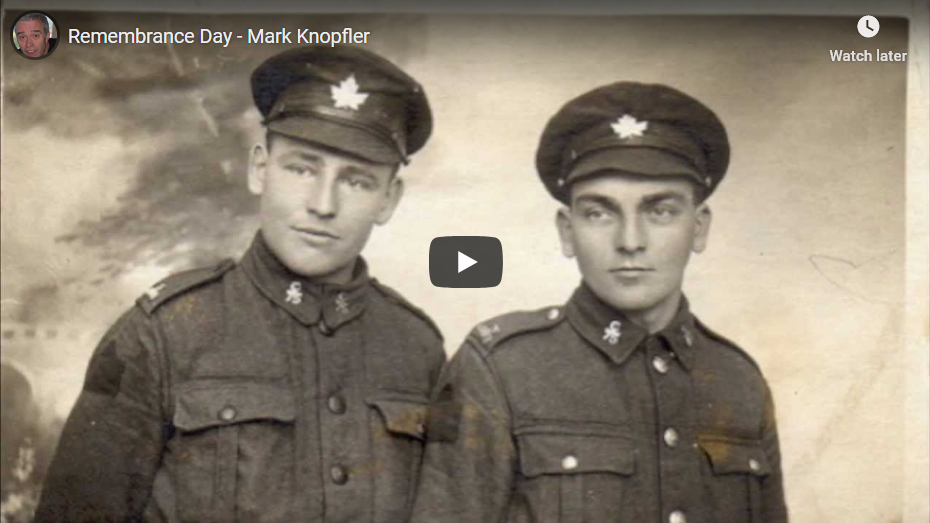
Mark Knopfler – “Remembrance Day”

Filed under: Britain, Cancon, History, Military, WW1, WW2 — Tags: , — Nicholas @ 04:00

Bob Oldfield
Published on 3 Nov 2011

A Remembrance Day slideshow using Mark Knopfler’s wonderful “Remembrance Day” song from the album Get Lucky (2009). The early part of the song conveys many British images, but I have added some very Canadian images also which fit with many of the lyrics. The theme and message is universal… ‘we will remember them’.

July 5, 2018

World of Warships – HMCS Haida

Filed under: Cancon, Gaming, History, Military, WW2 — Tags: , , , — Nicholas @ 04:00

The Mighty Jingles
Published on 3 Jul 2018

Oh Canada! Your ship finally made it into World of Warships even if your flag didn’t. I could just tell you what I think of her right now but that would spoil the video, so go on, watch it!

Little White Mouse Haida Review: https://forum.worldofwarships.com/top…

All music licensed from www.epidemicsound.com and www.machinimasound.com Really, I’m not kidding. Stop trying to claim license-free music you record company scumbags!

July 1, 2018

Naval Legends: HMCS Haida | World of Warships

Filed under: Cancon, History, Military, WW2 — Tags: , , , , — Nicholas @ 04:00

World of Warships Official Channel
Published on 28 Jun 2018

“The most fightingest ship of the Royal Canadian Navy”, and the last survivor of the Tribal-class! Find out more in the new Naval Legends episode!

Naval Legends is a series about the construction, service, and daring deeds of legendary 20th-century ships. Very few vessels survived World War I and II — most were decommissioned and scrapped. The Naval Legends production crew travels all across the globe to visit almost every active museum ship and chronicle her story.

Each episode has our own footage, military chronicles, and data from archives. The story of each ship is narrated by military historians, museum staff, and navy veterans for maximum historical accuracy. Computer graphics based on archival blueprints illustrate critical engineering elements and components, along with the ship’s armament, so you can observe these colossal war machines from your armchair!

January 30, 2018

DicKtionary – A is for Air Force – Curtis LeMay

Filed under: History, Military, USA, WW2 — Tags: , , , , , — Nicholas @ 04:00

TimeGhost
Published on 17 Jan 2018

A is for Air Force, you know that of course
And we turn to the states to look at the dates
When the man in command, that some couldn’t stand
Is our hero today, General Curtis LeMay.

Join us on Patreon: https://www.patreon.com/TimeGhostHistory

Like TimeGhost on Facebook: https://www.facebook.com/TimeGhostHistory/

Written and Hosted by: Indy Neidell
Based on a concept by Astrid Deinhard and Indy Neidell
Produced by: Spartacus Olsson and Astrid Deinhard
Executive Producers: Bodo Rittenauer, Astrid Deinhard, Indy Neidell, Spartacus Olsson
Camera and Edit by: Spartacus Olsson

November 11, 2017

Mark Knopfler – “Remembrance Day”

Filed under: Britain, Cancon, History, Military, WW1, WW2 — Tags: , — Nicholas @ 04:00

Bob Oldfield
Published on 3 Nov 2011

A Remembrance Day slideshow using Mark Knopfler’s wonderful “Remembrance Day” song from the album Get Lucky (2009). The early part of the song conveys many British images, but I have added some very Canadian images also which fit with many of the lyrics. The theme and message is universal… ‘we will remember them’.

August 4, 2017

Experimental Lightweight Browning High Power

Filed under: Britain, Cancon, History, Military, USA, Weapons — Tags: , , , — Nicholas @ 02:00

Published on 3 May 2017

One of the handguns that resulted from the post-WW2 interest in standardizing arms among the future members of NATO was a lightweight version of the Canadian produced Browning High Power. Experiments began in 1947 to create first a lightened slide by milling out unnecessary material, and then additionally with the use of machined and cast aluminum alloy frames. The first major batch of guns consisted of six with milled alloy frames, with two each going to the Canadian, American, and British militaries for testing.

This would reveal that the guns were in general quite serviceable, except that the locking blocks tended to distort their mounting holes in the alloy frames under extended firing. The cast frames were generally unsuccessful, suffering from substantial durability problems. The program was cancelled in 1951 by the Canadian military, and the last United States interest was in 1952. The example in today’s video is one of the two milled frame guns sent to the US for testing.

November 11, 2016

Mark Knopfler – “Remembrance Day”

Filed under: Britain, Cancon, History, Military, WW1, WW2 — Tags: , — Nicholas @ 13:41

A Remembrance Day slideshow using Mark Knopfler’s wonderful “Remembrance Day” song from the album Get Lucky (2009). The early part of the song conveys many British images, but I have added some very Canadian images also which fit with many of the lyrics. The theme and message is universal… ‘we will remember them’.

November 11, 2015

Mark Knopfler – “Remembrance Day”

Filed under: Britain, Cancon, History, Military, WW1, WW2 — Tags: , — Nicholas @ 02:00

A Remembrance Day slideshow using Mark Knopfler’s wonderful “Remembrance Day” song from the album Get Lucky (2009). The early part of the song conveys many British images, but I have added some very Canadian images also which fit with many of the lyrics. The theme and message is universal… ‘we will remember them’.

« Newer PostsOlder Posts »

Powered by WordPress