
Bob Oldfield
Published on 3 Nov 2011A Remembrance Day slideshow using Mark Knopfler’s wonderful “Remembrance Day” song from the album Get Lucky (2009). The early part of the song conveys many British images, but I have added some very Canadian images also which fit with many of the lyrics. The theme and message is universal… “we will remember them”.
November 11, 2022
Mark Knopfler – “Remembrance Day”
Comments Off on Mark Knopfler – “Remembrance Day”
September 30, 2022
M1C Sniper Garand
Forgotten Weapons
Published 18 Sep 2016The M1C was an M1 Garand with a telescopic sight, using a mounting system developed by the Griffin & Howe company of New York. It utilized a rail pinned and screwed to the left side of the receiver, coupled with a quick-release scope on top. The rails had to be installed prior to heat treating the receivers, which had the unfortunately consequence of preventing rifles form being chosen for sniper conversion based on their mechanical accuracy. Instead, accuracy would be tested only after rifles were complete, leading to a 60% rejection rate.
The scope was offset to the left of the receiver so as not to interfere with the Garand’s clip loading, and issued with a leather cheek pad to give the shooter’s cheek weld a matching offset to the left. The scope used with the M1C was the M73B1, later replaced with the M81 and M82 scopes — all military versions of the 2.5x Lyman Alaskan hunting scope (which was a very good piece of equipment despite its low magnification)
The M1C was adopted in 1944, but production and quality control delays would prevent it from seeing any action in WWII. It was in use during the Korean War, however, before being replaced by the M1D.
(more…)
Comments Off on M1C Sniper Garand
September 21, 2022
QotD: Why postwar western economic and humanitarian “interventions” almost always failed
… it is a general truism that the majority of persons who run for office in North America and various European countries do so because they sincerely want to help and improve their communities/countries. However, in all of Africa and most of Asia, persons who seek public office do so for one purpose, and one purpose only: to steal everything that they can get away with. So when some ignorant, naïve, American shows up with buckets full of money, oblivious of the culture and the longstanding, entrenched, corruption, and with an announced intention to make the local community more like an American community, they are welcomed with open arms while suppressing their snickering. This also explains something where Americans exhibit willful blindness: other cultures don’t play fair. Honesty is seen as the trait of fools. Fools are to be taken advantage of. Especially in trade and diplomacy. Just look at China.
Prior to the Cold War, America’s interference in other countries’ internal affairs was practically nonexistent outside of the Caribbean where America’s preoccupation was with the stability in the region. What went on in Egypt, Thailand, Argentina, or Greece was none of our business, nor did we frankly care. However, having just survived the cataclysm of WWII, and the realization that Communism was a danger bent on world domination, and that each country that became Communist made that possibility much more likely changed that laissez faire attitude 180 degrees. Whereas NATO was formed for the purpose of deterring a military attack on Western Europe by the Soviet Union (the generals mentally fighting the last war as is always the case, not realizing that the war now was ideological and propagandistic rather than military), diplomats began to question how to best combat Communist insurgencies in the Third World. The arrived (wrong) conclusion was that the reason a country became Communist was because the dirt-poor people were so desperate that they became Marxists in order to improve their lives, so if the West helped poor countries economically Communists could not gain a foothold. As such, they ignored the fact that most Communist movements are organized and headed not by poor people, but by a cadre of power-hungry middle-class intellectuals.
As has been mentioned, the first approach was with foreign aid. The second was with military intervention, in Korea, Vietnam, Santo Domingo, Grenada, and Lebanon. Although such interventions were mostly successful, they carried a heavy price as American blood was spilled in foreign countries. America’s supposed allies hardly helped at all, including the citizens of the countries (Korea and Vietnam) that themselves were in danger of being conquered by Communist forces.
Armando Simón, “Schlimmbesserung“, New English Review, 2022-06-16.
Comments Off on QotD: Why postwar western economic and humanitarian “interventions” almost always failed
September 2, 2022
Alliance For Peace (1951) North Atlantic Treaty Organization Promo Film
PeriscopeFilm
Published 14 May 202sProduced by NATO and the Signal Photographic Service of the U.S. Army, this black & white film is about the formation of NATO and its importance in the defense of the free world. Copyright 1951. The film features a score by William Alwyn. The film dates from the time when Gen. Dwight Eisenhower was supreme commander of NATO (1950-52), a post he left in order to run for President of the United States.
(more…)
Comments Off on Alliance For Peace (1951) North Atlantic Treaty Organization Promo Film
March 10, 2022
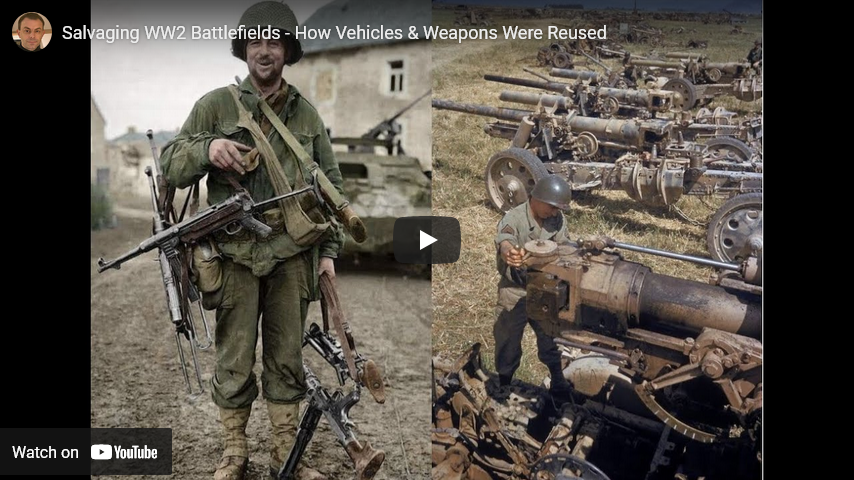
Salvaging WW2 Battlefields – How Vehicles & Weapons Were Reused
Mark Felton Productions
Published 25 Nov 2021After the wounded and dead had been removed from a battlefield, what happened to all the military vehicles and weapons left lying around? Find out here.
Dr. Mark Felton is a well-known British historian, the author of 22 non-fiction books, including bestsellers Zero Night and Castle of the Eagles, both currently being developed into movies in Hollywood. In addition to writing, Mark also appears regularly in television documentaries around the world, including on The History Channel, Netflix, National Geographic, Quest, American Heroes Channel and RMC Decouverte. His books have formed the background to several TV and radio documentaries. More information about Mark can be found at: https://en.wikipedia.org/wiki/Mark_Fe…
Help support my channel:
https://www.paypal.me/markfeltonprodu…
https://www.patreon.com/markfeltonpro…Disclaimer: All opinions and comments expressed in the ‘Comments’ section do not reflect the opinions of Mark Felton Productions. All opinions and comments should contribute to the dialogue. Mark Felton Productions does not condone written attacks, insults, racism, sexism, extremism, violence or otherwise questionable comments or material in the ‘Comments’ section, and reserves the right to delete any comment violating this rule or to block any poster from the channel.
Credits: US National Archives; Library of Congress
Thumbnail colorisation (left image) by Paul Reynolds
Comments Off on Salvaging WW2 Battlefields – How Vehicles & Weapons Were Reused
February 26, 2022
Tank Chats #140 | M24 Chaffee | The Tank Museum
The Tank Museum
Published 19 Nov 2021Our Patreons have already enjoyed Early Access and AD free viewing of our weekly YouTube video! Consider becoming a Patreon Supporter today: https://www.patreon.com/tankmuseum
David Fletcher is back with another Tank Chat on the M24 Chaffee. Learn all about this American light tank and how it was used at the end of the Second World War and in post-WW2 conflicts.
(more…)
Comments Off on Tank Chats #140 | M24 Chaffee | The Tank Museum
February 10, 2022
HMCS Quebec – Guide 145
Drachinifel
Published 28 Sep 2019HMCS Quebec, formerly HMS/HMCS Uganda, is today’s other entry.
Want to support the channel? – https://www.patreon.com/Drachinifel
Want a shirt/mug/hoodie – https://shop.spreadshirt.com/drachini…
Want a medal? – https://www.etsy.com/uk/shop/Drachinifel
Want to talk about ships? https://discord.gg/TYu88mt
Want to get some books? www.amazon.co.uk/shop/drachinifel
Drydock Episodes in podcast format – https://soundcloud.com/user-21912004

Comments Off on HMCS Quebec – Guide 145
February 5, 2022
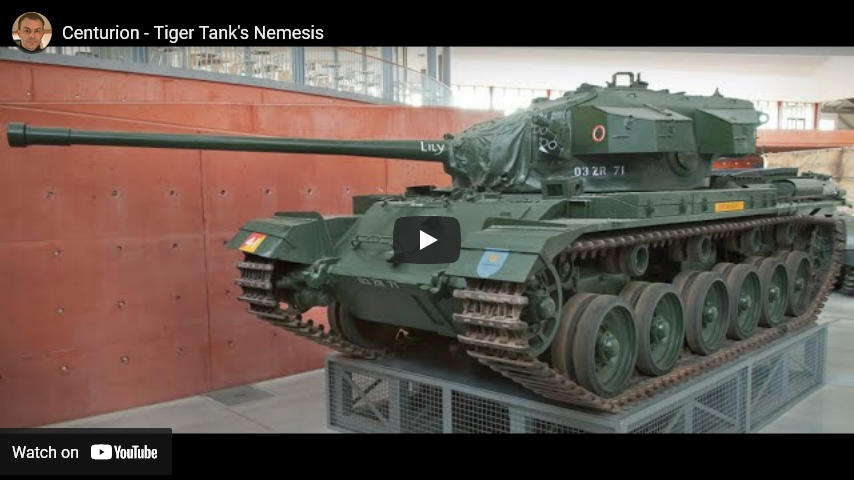
Centurion – Tiger Tank’s Nemesis
Mark Felton Productions
Published 22 Oct 2020The Centurion, the famous Cold War tank, was actually developed to take on the dreaded German Tiger in WW2. Find out whether they ever met on the battlefield in 1945.
Dr. Mark Felton is a well-known British historian, the author of 22 non-fiction books, including bestsellers Zero Night and Castle of the Eagles, both currently being developed into movies in Hollywood. In addition to writing, Mark also appears regularly in television documentaries around the world, including on The History Channel, Netflix, National Geographic, Quest, American Heroes Channel and RMC Decouverte. His books have formed the background to several TV and radio documentaries. More information about Mark can be found at: https://en.wikipedia.org/wiki/Mark_Fe…
Visit my audio book channel ‘War Stories with Mark Felton’: https://youtu.be/xszsAzbHcPE
Help support my channel:
https://www.paypal.me/markfeltonprodu…
https://www.patreon.com/markfeltonpro…Disclaimer: All opinions and comments expressed in the ‘Comments’ section do not reflect the opinions of Mark Felton Productions. All opinions and comments should contribute to the dialogue. Mark Felton Productions does not condone written attacks, insults, racism, sexism, extremism, violence or otherwise questionable comments or material in the ‘Comments’ section, and reserves the right to delete any comment violating this rule or to block any poster from the channel.
Credits: David Holt; Simon Q.; Tony Hisgett; Danie van der Merwe; Oliver Gottlob.
Thumbnail: The Tank Museum
Comments Off on Centurion – Tiger Tank’s Nemesis
September 23, 2021
Tank Chats #125 | Sherman M74 ARV | The Tank Museum
The Tank Museum
Published 7 May 2021David Fletcher takes a look at the mighty M74 Armoured Recovery Vehicle (ARV), built on a Sherman M4A3 chassis.
(more…)
Comments Off on Tank Chats #125 | Sherman M74 ARV | The Tank Museum
September 9, 2021
Tank Chats #123 | Oxford and Cambridge Carriers | The Tank Museum
The Tank Museum
Published 16 Apr 2021Tank Museum Historian David Fletcher presents a Tank Chat on the Carrier, Tracked, CT20, otherwise known as the Oxford Carrier. This unusual vehicle was an early post-Second World War British Armoured Personnel Carrier and Gun Tractor, which saw service in the Korean War. David also touches upon the Cambridge Carrier, built by Rolls-Royce as an updated and improved version of the Oxford, which never got out of the prototype stage.
(more…)
Comments Off on Tank Chats #123 | Oxford and Cambridge Carriers | The Tank Museum
January 22, 2021
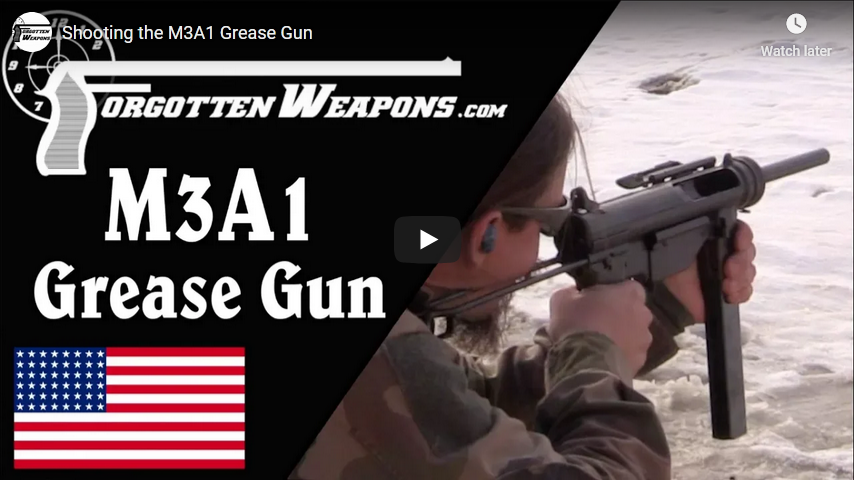
Shooting the M3A1 Grease Gun
Forgotten Weapons
Published 9 Mar 2018The M3 (and its followup improved M3A1 model) was the United States’ answer to the high cost and manufacturing complexity of the Thompson submachine gun. The M3 “Grease Gun” (because really, that is what it looks like) was a very inexpensive weapon with a stamped and welded receiver and only a few milled parts. It also had the slowest rate of fire of any World War 2 submachine gun at about 450 rounds/minute. Its weight, compactness, and controllability made it almost universally preferred over the Thompson, at least by soldiers who had to carry and fight with either of them.
The Grease Gun is reputedly extremely controllable because of its low rate of fire, but this is my first time to actually try shooting one. Will it live up to that reputation?
http://www.patreon.com/ForgottenWeapons
Cool Forgotten Weapons merch! http://shop.bbtv.com/collections/forg…
If you enjoy Forgotten Weapons, check out its sister channel, InRangeTV! http://www.youtube.com/InRangeTVShow
Contact:
Forgotten Weapons
6281 N Oracle #36270
Tucson, AZ 85704
Comments Off on Shooting the M3A1 Grease Gun
January 19, 2021
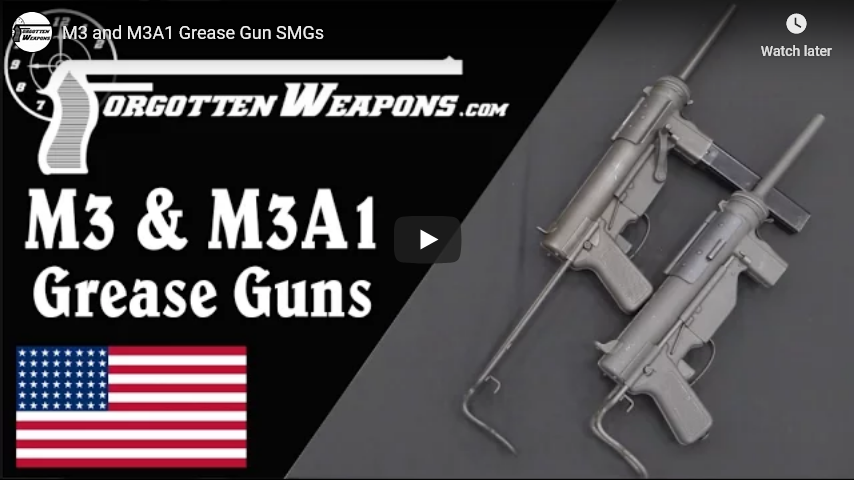
M3 and M3A1 Grease Gun SMGs
Forgotten Weapons
Published 14 Apr 2017The US began looking for a cost-effective replacement for the Thompson submachine gun in 1942, and the “Grease Gun” was the result. Designed by George Hyde (a noted firearms designer at the time) and Frederick Sampson (GM/Inland chief engineer), it was a very simple and almost entirely stamped firearm. Chambered for the .45ACP cartridge, it is notable for its very low rate of fire — 350-400 rpm, which made it quite controllable and easy to shoot for relatively inexperienced troops.
The M3 was a quite reliable gun (and what problems it did have were mostly due to its single-feed magazine and not the gun itself), but a revision program was begun in April 1944. This would produce the M3A1, which further simplified the design by removing the charging handle (which had been the one mechanical trouble point of the M3 anyway) and replacing it simply with a notch in the bolt to cock the gun with a finger.
While the M3 and M3A1 were replaced in front-line service in 1957, they would remain in military inventory as armament for tank crews and truck drivers until 1992 — quite the legacy for such a crude looking weapon!
http://www.patreon.com/ForgottenWeapons
Cool Forgotten Weapons merch! http://shop.bbtv.com/collections/forg…
If you enjoy Forgotten Weapons, check out its sister channel, InRangeTV! http://www.youtube.com/InRangeTVShow
Comments Off on M3 and M3A1 Grease Gun SMGs
January 16, 2021
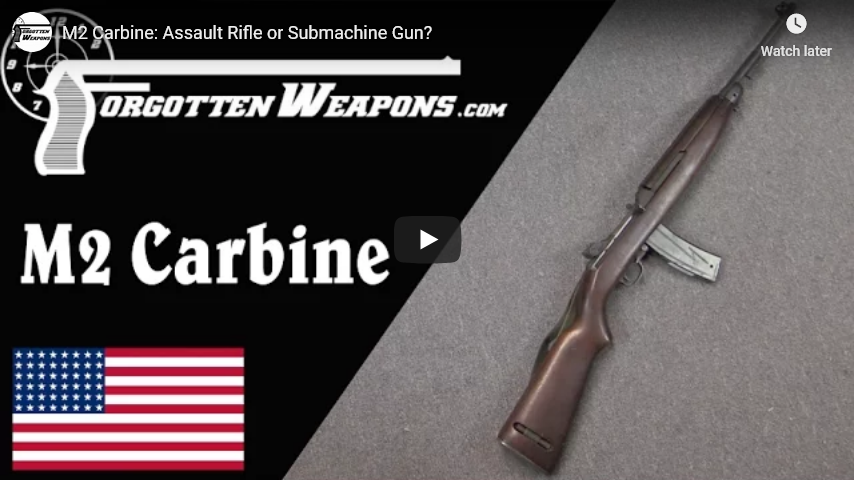
M2 Carbine: Assault Rifle or Submachine Gun?
Forgotten Weapons
Published 23 Mar 2017The M2 Carbine was a mechanically simple modification of the M1 Carbine to allow fully automatic fire. The fire prototypes of the M1 Carbine had actually been selective-fire guns, but that requirement had been dropped by the time the Winchester design was officially adopted as the M1. It was a feature quickly requested by troops once the Carbine entered active service, though.
In 1944 the US Army acknowledged this, and introduced the M2. A total of 217,000 were manufactured at the end of WW2, and did see limited service on Okinawa — and then extensive use in the Korean War and Vietnam War.
The M1 Carbine has long generated controversy among those attempting to rigidly define its role, as it falls awkwardly between the notion of submachine gun and assault rifle, firing a cartridge that is clearly more powerful than a pistol round but equally clearly less powerful than an intermediate rifle round. Its originally intended role was as a personal defense weapon more effective than the 1911 pistol, and in service it always scored high marks for handiness and poor marks for combat effectiveness. The opinion of soldiers using the Carbine in either its M1 or M2 form was very much dependent on what role they expected it to serve.
In my opinion, its light weight and stock design make it a sub-optimal submachine gun, and its light cartridge makes it a sub-optimal assault rifle. But if you need a light and handy carbine to carry a lot and only use in emergencies, it is hard to beat for its time.
http://www.patreon.com/ForgottenWeapons
Cool Forgotten Weapons merch! http://shop.bbtv.com/collections/forg…
If you enjoy Forgotten Weapons, check out its sister channel, InRangeTV! http://www.youtube.com/InRangeTVShow
Comments Off on M2 Carbine: Assault Rifle or Submachine Gun?
January 9, 2021
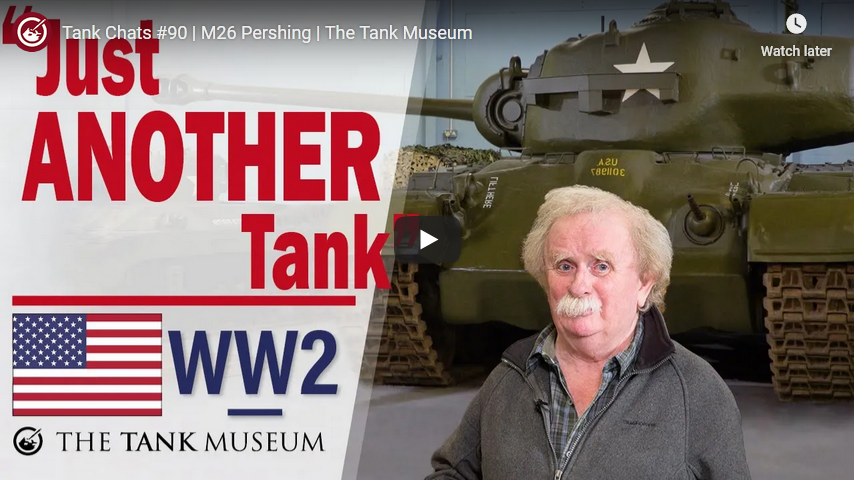
Tank Chats #90 | M26 Pershing | The Tank Museum
The Tank Museum
Published 29 Nov 2019David Fletcher examines the American M26 Pershing “Heavy” tank. The Pershing saw service in the latter days of the Second World War and Korea.
Support the work of The Tank Museum on Patreon: ► https://www.patreon.com/tankmuseum
Visit The Tank Museum SHOP: ►tankmuseumshop.org
Twitter: ► https://twitter.com/TankMuseum
Instagram: ► https://www.instagram.com/tankmuseum/
Tiger Tank Blog: ► http://blog.tiger-tank.com/
Tank 100 First World War Centenary Blog: ► http://tank100.com/
#tankmuseum #tanks
Comments Off on Tank Chats #90 | M26 Pershing | The Tank Museum
November 18, 2020
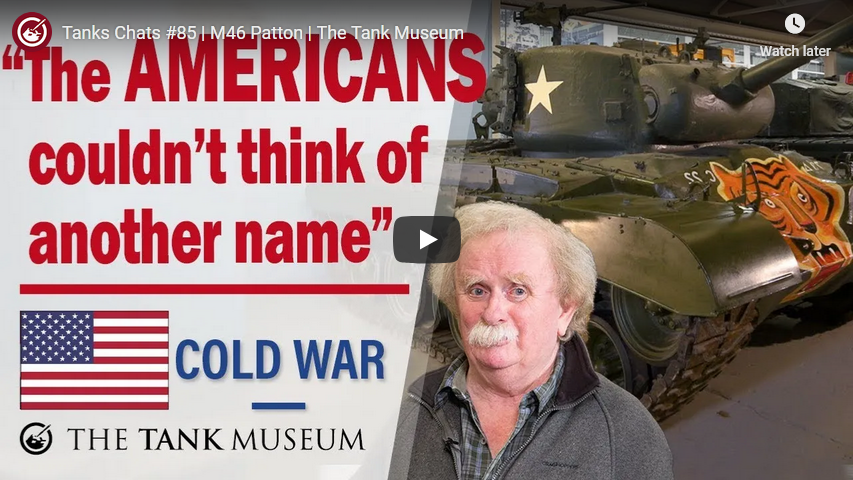
Tanks Chats #85 | M46 Patton | The Tank Museum
The Tank Museum
Published 11 Oct 2019David Fletcher takes a look at the M46 Patton tank designed by the United States, which saw action during the Korean War.
Support the work of The Tank Museum on Patreon: ► https://www.patreon.com/tankmuseum
Visit The Tank Museum SHOP: ► https://tankmuseumshop.org/
Twitter: ► https://twitter.com/TankMuseum
Instagram: ► https://www.instagram.com/tankmuseum/
Tiger Tank Blog: ► http://blog.tiger-tank.com/
Tank 100 First World War Centenary Blog: ► http://tank100.com/
#tankmuseum #tanks
Comments Off on Tanks Chats #85 | M46 Patton | The Tank Museum


