Quotulatiousness

May 17, 2022

The Canadian government has a much more expansive view of “use of journalistic content” than most Canadians do

Filed under: Cancon, Government, Media, Technology — Tags: , , , — Nicholas @ 03:00

Michael Geist continues looking at the differences between what the Canadian government says they’re trying to do with their Online News Act (Bill C-18) and how the actual wording of the bill will operate:

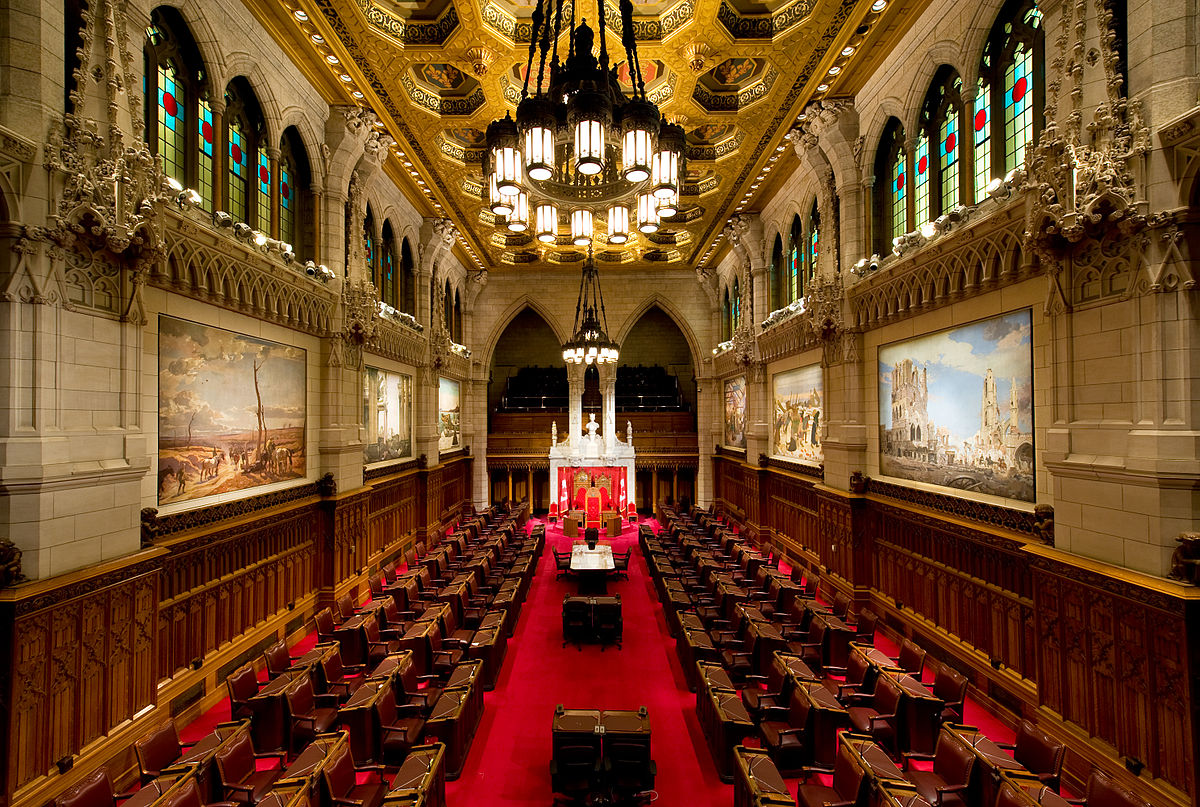
Parliament Hill in Ottawa.
Photo by S Nameirakpam via Wikimedia Commons.

But is it reasonable to legislate that posting a news headline constitutes making that news content available? Can Canada even do that and still remain compliant with international copyright laws under the Berne Convention which require countries to feature an exception for quotation? Indeed, international copyright law recognizes the critical importance of enabling quotation free from limitations as an essential element of expression, yet Bill C-18 adopts an approach that may violate that principle by requiring compensation for quotation.

Sub-section (b) moves far beyond reproduction into a realm that bears little resemblance to use or a reasonable definition of “making available”. It covers facilitating access to news by any means. In what way is facilitating access to news the same as making it available (much less using it)? A facilitating access to news standard is virtually limitless: newsstands, news screens in elevators or taxis, television manufacturers, or newspaper box makers can all be said to be facilitating access to news. The bill limits its scope to DNIs, but the policy principle that this bill is simply compensating for the use of content is twisted beyond all recognition.

In fact, it is clear that this extreme approach is precisely what the government intends. By citing examples such an indexing, aggregation or ranking of news content it is saying that virtually anything that a platform does – linking to news articles or merely to news organizations, indexing content at the request of the news organization (even if the actual content is not openly available as is the case with paywalled sites), or creating a list of news articles on a given topic are all “facilitating access to news content” which requires compensation.

Would Canadians agree that this link to the front page of the Globe and Mail is making the Globe‘s available? If this link appears on Google or Facebook, the government says that it is. If someone searches for newspapers in Montreal to learn more about developments in the city, is the list of newspapers in that city making the content available? Once again, the government says that it is.

The initial debate on Bill C-18 featured several interventions about the problems of misinformation. In light of the actual provisions in the bill, claims that it simply requires compensation for use might ironically be fairly characterized as misinformation. Unfortunately, the problematic claims associated with the bill don’t stop there as tomorrow’s post on market intervention will illustrate.

May 3, 2022

Is all of social media just a “giant domestic surveillance operation”?

Filed under: Business, Media, Technology, USA — Tags: , , , , , , , , — Nicholas @ 05:00

Severian posted this last week, but I’m only just getting caught up now:

I was wrong about Musk buying Twitter. Lot of that going around — the Z Man got a whole podcast on “avoiding error” from his misread of the situation. It’s well worth a listen. I, too, had a “hot take” on Musk’s offer — not that it was particularly hot, as most folks on this side were saying it, but I too thought it was a stunt. After all, Musk, like Bezos and all the other “new commerce” billionaires, don’t exist without massive government support. I figured his “offer” was stoyak — he’s got something in the works in the Imperial Capital and needed to play hardball with somebody.

But I was also working off my longstanding assumption that Twitter, Faceborg, and all the rest are essentially CIA / NSA fronts. When I first heard about Facebook, my first thought was “Wait, don’t we already have Friendster? What does this bring to the table?” My second thought was the first one I’d had about Friendster: “That’s clever, I guess, but how on earth is this going to make money? Even if they saturate it with ads, to the point where it’s unusable — which will happen in about two weeks — they can’t monetize your personal data any farther. People are pretty set in their habits — once the algorithm figures out you’re the kind of guy who likes anime and New Wave music, any further data is useless.”

Being a much more naive, trusting sort back then, I figured it was just stupidity. You know, Pets.com level stupidity. The VC boys were trying to get another dotcom bubble inflated, because if the first one proved anything, it’s that people are dumb and will keep falling for the same obvious scam over and over. I could hear them in the board rooms: “This time, instead of sticking ‘cyber’ in front of everything, we’ll call it ‘Web 2.0.’ Cha-ching!”

Obviously that didn’t happen. So I went with the common explanation that was floating around in those days, that “social media” sites made their money by selling your data to advertisers. But that doesn’t pass the smell test either. For one thing, as I said above, your habits don’t change very much. For another, as anyone who has any experience with them knows, those algorithms really suck. The other day, for instance, I was listening to some old music one of the streaming music sites. And I mean really old. Nothing I’d played the whole morning had been composed after the 17th century, but the service’s algorithm was convinced that what I’d really like to listen to next was some rapper.

Indeed, the whole point of the ads on Pandora, Spotify, whatever seems to be: To annoy you to the point where you pay for their premium service. Pandora, for instance, either really really really believes I want a Surface Pro 8 and some Taco Bell, or they’re just playing those ads every two songs to annoy me into buying the premium service (which is every ad that isn’t Surface Pro or Taco Bell). Which is just bizarre, because I haven’t had Taco Bell since college — which was 30 years ago, and I paid cash — and this essay right here is the first time I have ever even typed the words “Surface Pro 8”, much less looked at the product.

I really wouldn’t be surprised that the “algorithm” is reading itself. Hey, this guy sure has seen a lot of ads for Taco Bell and Surface Pro! He must really want some!

But the algorithm for companies whose entire business model is e-commerce is no better. Amazon seems to have gone to a “push” model — they must be selling their suppliers on the idea that they can push you stuff, which is why they always pimp the same four or five items in the “Amazon’s Choice” recommendations, no matter what you’re searching for. And these again are laughably wrong — the only things I get off Amazon are used history and philosophy books, and stuff for my dog. Based on this, they have concluded that what I’m really looking for are chick lit and beach gear.

Given all that, I came to the conclusion that “social media” (and Amazon too, probably) really only have one customer, who really does have a use for your data, and that customer’s initials are CIA. It’s a giant domestic surveillance operation.

And why wouldn’t it be? The Regime has had a legitimacy problem for a long time, and a “feedback loop” problem for longer than that. Even if we assume no ulterior motives whatsoever — fat chance, but let’s stipulate — the fact remains that public opinion polling, however you want to define it, has a similar problem as psychological studies. Since the vast majority of study participants are college undergrads, what you get is WEIRD — that’s Western, educated, industrialized, rich and democratic, and also in a very narrow age range. Psych studies that purport to be universal are, at their very best, snapshots inside the head of the BCG.

If you haven’t encountered the Basic College Girl, he provided a thumbnail sketch here.

May 2, 2022

QotD: Online education

Filed under: Education, Quotations, USA — Tags: , , , , , — Nicholas @ 01:00

The great online-ening of the past year has shown just how useless so much of the modern “economy” is. To take just the most obvious example, ask any teacher how important face-to-face instruction is. If you’d asked them before March, you’d be forgiven for thinking that teaching is some kind of super-skilled, rocket scientist-level job that only years of training and fanatical, monk-like dedication can prepare you for. Post-COVID, and “education” means “log in, look at the Powerpoint, and answer the multiple choice quiz … you know, whenever you feel like it. Or don’t, it’s all good, because following schedules and completing assignments is racist.”

And that’s just college, which now more than ever is exactly what the sententious goobers on the faculty always said it was: A professional football team with a few classrooms attached. They’re memory-holed now, no doubt, but I recall a time over the summer when a few studies on the impact of online “learning” came out. They were worse than even I expected, and I’m cynical enough to give Diogenes wood. Some huge fraction of kids never even bothered logging on. At all. And, of course, they were promoted to the next grade …

Severian, “More Scattered Thoughts”, Rotten Chestnuts, 2020-10-13.

April 25, 2022

Trudeau’s Liberals shocked to discover that not everyone wants the internet censored

The free segment of The Line‘s weekend round-up looked at the federal government’s gone-wrong public consultation about their proposed internet censorship Online Harms bill:

Your Line editors have been diligently seeking out educated comment about the Liberals’ forays into Internet regulation and censorship; as we suspected, they are finding out the hard way that determining which speech is fit to be heard is a philosophical fools’ errand. Only a very little research into the history of liberal norms around free speech could have spared them the trouble, but, alas, this seems to be the lesson that every generation needs to re-learn from first principles.

Well, a little out-of-school learning landed in the laps of the Liberals back in September of last year via a seven-page letter written by Michele Austin, then-Twitter Canada’s head of public policy. She took the government’s proposed Online Harms Bill to task in a submission that was only revealed when this country’s lone Internet warrior, Saint Michael Geist (*sign of the cross*), filed an Access To Information request revealing Austin’s scathing critique.

To wit:

    Sacrifices freedom of expression to the creation of a government run system of surveillance of anyone who uses Twitter. Even the most basic procedural fairness requirements you might expect from a government-run system such as notice or warning are absent from this proposal. The requirement to “share” information at the request of Crown is also deeply troubling.

It’s rare to see a piece of proposed legislation so poorly conceived, so profoundly over-reaching, that virtually every organization asked to comment on it proves to be against it. But so it was. As Geist notes, even organizations that one would imagine to be at least nominally in favour of a regulatory regime intended to crack down on unequivocally harmful Internet carcinomas like child porn, hate speech, and terrorism, in fact came out against it. The National Association of Friendship Centres, Canadian Centre for Child Protection, Safe Harbour Outreach Project, Centre for Israel and Jewish Affairs, and the National Council of Canadian Muslims all noted that the government’s proposal stood to do much more harm to their respective communities than it would prevent.

Again, even a little bit of historical research would have demonstrated that those dastardly, evil, liberal values of “free speech” have traditionally done more to help marginalized communities than hinder them. But we digress.

Heritage Minister Pablo Rodriguez has subsequently announced the government would halt its Online Harms Bill, presumably in the wake of the disastrous consultation process. So the protests did, indeed, work. But as Geist rightly notes, the fact that he even had to spend months formally seeking out these submissions to be publicly released ought to raise serious questions about this government’s commitment to openness and transparency in how it approaches one of the most foundational freedoms we have as citizens. This is not a government that is philosophically well equipped, nor technically able, to control access to information in the way it so clearly wishes to. Something to keep in mind when evaluating its other Internet bills, C-11 and C-18.

I used to regularly post links to Michael Geist’s work, but at some point in the last few months his RSS feed went down and I stopped getting updates. I’ve relinked to his Twitter feed, which hopefully will provide notice when he publishes something on this file.

Today’s post identifies at least four problems. First, lack of transparency runs counter to promises of an open, transparent government. @justintrudeau even introduced a bill on open by default in 2014. Disclosures only via ATIP are not transparency. 2/5

Second, notion that the government was simply consulting on some ideas and will now course correct requires Canadians to overlook the reality that the actual plan was to introduce this as a bill last year. This was the Internet regulation plan. 3/5

Third, “What We Heard” report from @pablorodriguez significantly understated the extent of the public criticism and feedback. Recommendations omitted, criticisms softened. Having now seen the actual submissions, I feel misled. 4/5

Most importantly, this is part of a larger Internet regulation plan:
1️⃣Bill C-11 opens the door to regulating user generated content
2️⃣Bill C-18 mandates payments for links
3️⃣Online harms wasn’t an outlier. It reflects plan for regulating the Internet.
5/5

April 6, 2022

Proposed new Canadian censorship rules will ███████ the ████████ unless we ████ ██

In The Line, Josh Dehaas waves off accusations against Trudeau while also highlighting just how censorious his governments proposed internet bill can be to freedom of expression online:

Comparisons of our prime minister to a dictator are self-evidently ridiculous. But the Russian example is still a case study in the harms of governments having too much power over the flow of information and ideas in a society. Trudeau is no dictator but he does helm a government in which overreach is becoming a frequent and habitual complaint. And one such area in which this government’s more illiberal tendencies are beginning to show is in the realm of media regulation. Despite pushback from groups like the Canadian Constitution Foundation and the Canadian Civil Liberties Association, the Trudeau government seems determined to press ahead with laws to control what you read, write, watch and hear online.

The Liberals have long promised three bills aimed at countering three ostensible problems with online speech. The first bill aims to correct the problem of too few people choosing CanCon, by manipulating what you watch and listen to on platforms like Netflix and Spotify. The second bill would address the problem of advertisers ditching legacy newspapers for Facebook and Google. (Apparently the $600 million bailout was not enough.) The third bill, aimed at so-called “online harms”, would try to prevent people from saying hateful things to each other on social media.

This “online harms” bill is the scariest. Recently rebranded as the “online safety” bill, it’s apparently getting an overhaul from an expert panel and will be re-tabled in a few months. Let’s hope it never comes back. A version tabled last year, Bill C-36, would have created a tribunal wherein people found guilty of “online hate speech” could have been forced to pay up to $20,000 to their accusers, plus up to $50,000 in fines. In some cases, the accusers would be allowed to remain anonymous. Unlike the rarely used hate speech provisions in the Criminal Code, the tribunal would have only needed to find that the speech was hateful on a balance of probabilities, as opposed to the higher standard of beyond a reasonable doubt.

Even more ominously, C-36 would have allowed judges presented with “reasonable grounds” that a person might commit “an offence motivated by bias, prejudice or hate” in the future to threaten the would-be hater with up to 12 months in prison.

I don’t deny that hate speech can lead to harm. But do we really want government and judges deciding what crosses the line? One person’s hateful tweet is another person’s harsh but valuable contribution. Think J.K. Rowling. Think Dave Chapelle. Or think of the University of Toronto student who wrote recently that it was hateful for a professor to show an unflattering cartoon about Iranian Supreme Leader Ali Khamenei, a man whose theocracy executes people for being gay.

Proponents of the bill will tell you that it only applies to the most extreme forms of vilification, but at the end of the day it means government-appointees deciding who gets to say what in an environment that financially incentivizes the aggrieved. People will self-censor even more than they already do.

March 3, 2022

If wars could be won by propaganda alone, Ukraine would already be staging a virtual victory parade

Filed under: Media, Military, Russia, Technology — Tags: , , , , , — Nicholas @ 03:00

I’ve gotten a bit tired of reminding people on social media that almost everything we think we know about the fighting in Ukraine is — to a greater or lesser extent — propaganda by one side or the other. That said, Ukraine’s propaganda efforts have been far more effective than the Russian equivalents. In The Line, Jen Gerson rounds up some of the best-known stories that have flashed across Twitter and other social media platforms since the combat began:

Perhaps it’s simply the inevitable consequence of protracted news overload, but the war in Ukraine feels surreal. Pulling up the news, following Twitter, none of it feels like reality, but rather like we’re all collectively remembering an event that was always destined to happen. Perhaps I’m the only one suffering from this dissociative state? Or perhaps not; is anyone else feeling as if our daily life has taken on this faded quality of a simulacrum?

Maybe this is the inevitable sensation of watching a war play out on Twitter and TikTok. It has a participatory quality that offers the sensation of being a part of the conflict without the dose of necessary, reality-evoking risk.

Did you see the viral video of the Ukrainian babushka demanding the Russian soldier keep sunflower seeds in his pocket so that he leaves behind flowers when he dies? Or the one of the soldiers on Snake Island telling the Russian warship to “go fuck yourself” when asked to surrender? Reportedly, 13 died after that ship blew the station apart — though it appears that this was false and they in fact were taken alive.

Did you watch the Twitter video of Ukrainian Volodymyr Zelensky filming himself on the streets of Kyiv to thwart rumours that he had fled? Or the guy who moved an anti-tank mine from the road with a cigarette drooping out of his mouth?

Did you hear about the Ghost of Kyiv, a mysterious fighter pilot who has allegedly scored more kills than any other in recent memory?

Or the TikTok video of the young woman teaching her contemporaries how to operate an abandoned Russian tank; the stranded artillery towed by Ukrainian farmers; the men stuffing polystyrene into Molotov cocktails to make peasants’ napalm?

Oh, and in case you missed it: an official music video lionizing the Ukrainian drone, Bayraktar.

I can’t assess the reality of any of this — and I presume some or all of it is staged. That’s what propaganda is, after all. All I can do is examine the transparent unreality of it all, to take note of the ephemeral, the narrative. And from here, the Ukrainians are absolutely crushing the propaganda war.

On Monday, David Patrikarakos also came to the same conclusion in UnHerd after viewing the online echoes of the war:

The internet is a chaotic place, but it is nonetheless ruled by a series of iron laws, especially when it comes to what we put on it. Perhaps the most important one is that whatever you post, try to make it visual. Once that’s established it’s about what sort of image will best hoover up those likes and shares and retweets. Well, that’s down to where you are and who your audience is. But as a rule of thumb there are two things that generally never fail: blondes and guns.

Over the past few days, the very brave and very blonde Ukrainian MP Kira Rudik has been tweeting various pictures of herself posing with an AK47. She began last Friday:

What is striking about the photos is not that Rudik posted them: she is a people’s representative in a time of war — it’s exactly the sort of thing she should be posting. What’s so interesting, and smart, is how she did it. Rudik does not pose in a uniform, or even in camouflage fatigues. She does not salute or lift the AK triumphantly; in fact, the way she holds it makes it clear that she’s not used to holding a weapon of any sort. The photo is taken not in a base or even in an office, but clearly in the living room of her home, just by a window that looks out onto a small patio.

The final touch though — and it’s a genius one — is that she doesn’t have shoes on; instead she stands barefoot, her toes painted a delicate pink.

In one sense, this all seems irretrievably amateurish — but that’s the point. Of the many things the internet craves, authenticity is sacrosanct. And this is a model of the genre. The tweet is designed to do two things: first, to show that Ukrainians will stand and fight for their homeland; and second, to humanise those whom we are told will be doing the fighting. And it does this by showing them to be the most ordinary of people; people standing in their bare feet, vulnerable and ordinary — just like civilians across the world. As such, they stand in total contrast to the stormtroopers invading their lands. It’s pink toenails versus mud-encrusted jackboots; smiling mothers versus bearded Chechens — all shorthand for the battle playing out between Ukraine and Russia.

As Kurt Schlichter said, “The first report is always wrong and nobody knows nothing”:

The battle in Ukraine seems to be one of the most covered and worst covered events in history. You cannot spend more than two minutes on social media without crossing paths with a snippet of shaky cell phone footage of a Russian tank burning or some heroic story of sturdy Ukrainian resistance. You have experts on TV trying to tell you what’s happening but no one is actually giving you any real information. Maybe you think the Ukrainians are winning, that their counterattacks are driving out the Russian invaders. There are plenty of sources saying 2800 or 5300 or some other oddly large and specific number of Russian soldiers are dead. All hail the coming victory!

Well, we’ll see.

Don’t believe a damn thing you see or hear right now. I’d like to. I want the Ukrainians to win. But I understand that I, like you, am a target of information operations by Ukrainians, Russians, and even Americans. Get woke to it.

All that exciting footage? What do you know about where it was shot, or when? Nada. Zip. Zero. We’ve seen people trying to pass off simulator footage as real battle footage. We’ve seen explosions and fires without context. What caused them? Who knows when all you have is the label on the video? All those Russian tanks on fire? Well, guess what kind of equipment the Ukrainians use.

I don’t know if the Ukrainians are winning or losing, but I know that a lot of people in the media want them to win. So do I, but simply because I would prefer they send the Russkies packing does not mean that I am blind to what is an obvious and effective propaganda campaign designed to keep the West in Ukraine’s corner. And it has worked, with a few sketchy, wacky exceptions. I am impressed by the information operation designed to get resonant stories out there, like the defiant guardians of Snake Island, the “Ghost of Kyiv”, or that Ukrainian marine who was forced to blow himself up to take out the bridge. It’s like they were designed to appeal to us.

In short, we don’t know what’s happening — for excellent military reasons on both sides — and much of what we’re being told is almost certainly pure fiction. Keep your bullshit filters up and re-calibrate ’em if and when you get genuine information, but good luck on finding any of that in the immediate future.

February 28, 2022

Hunting for books in the age of Amazon

Filed under: Books, Business, Technology — Tags: , , — Nicholas @ 03:00

In the latest SHuSH newsletter, Kenneth Whyte remembers book searches before the internet got commercial:

“Beat Ground Zero San Francisco 2014” by Mobilus In Mobili is licensed under

Back in the late twentieth century, I used to build my vacations around book searches. Before going to any new town, I’d make a list of new and used bookstores and hit the best of them during my stay. There was a genuine excitement about entering each store: you never knew what you were going to find, and you were acutely aware that at any moment you might see something you’d never seen before or something you might never see again.

It was especially the fear of blowing that one chance of acquiring something special that turned me into a book hoarder. (I was never disciplined enough to be a collector; I only bought for my own use). Over the years, I accumulated tens of thousands of books. I’d rummage through them, once or twice a decade, and throw out the ones that no longer interested me to make room for new acquisitions. There were always new acquisitions, whether I was traveling or not.

Then came the internet and suddenly the whole concept of book scarcity blew up. Amazon had every new title one could want. I still go to my favorite bookstores when I travel — Daunt’s in London, Prairie Lights in Iowa City, Three Lives & Co. in Manhattan (the world’s most perfect small bookstore), Politics & Prose in DC, City Lights in San Francisco, The Last Bookstore in LA (further below), to name a few. I make the visits (none in the past two years) in part out of a sense of nostalgia for the waning era of brick-and-mortar, and also because well-curated shops often suggest books I might otherwise overlook.

Looking for books on vacation was always one of my habits, and before Amazon came along, I’d carefully search for bookstores along the route we’d be driving during our holiday and I rarely came back without a few armfuls of books. These days, especially since the era of lockdowns began, book stores are mostly just a memory … which is just as well in some sense because I have no disposable cash to spend on fripperies any more.

Of Ken’s list of favourite stores, I’ve only visited City Lights in San Francisco, back in early 1991. It was, bar none, the busiest bookstore I’d ever been in in my life. It rather felt like a record store (remember those?) on a big album release weekend than a staid, stodgy bookstore.

The internet also allowed used bookstores to put their wares online, and Bookfinder.com came along to organize their inventories. Bookfinder.com is a meta-search portal that allows book shoppers to scan the inventories of 100,000 booksellers at once. Type in a title and it will cough up an array of purchasing options: new, used, good condition, poor condition, former library copy, first edition, signed, etc. You compare editions and prices, make your choice, and click through to the bookseller’s site to finalize your purchase.

Bookfinder was launched by a Berkeley student named Anirvan Chatterjee in 1997, just a couple of years after Amazon was born. Chatterjee sold out to AbeBooks in 2005.

AbeBooks is a Canadian tech success story, originally operated out of Victoria by Rick & Vivian Pura and Keith & Cathy Waters. It is a digital marketplace that allows you to search the stock of a wide variety of established retailers. What differentiates it from Bookfinder is that you make your purchase right on the AbeBooks site. AbeBooks also sells the books it represents on other platforms, including eBay, Barnes & Noble, and Amazon. AbeBooks, in short, is a retail business while Bookfinder is a search tool.

AbeBooks was a dangerous discovery for me, and I bought a lot of books through them for a couple of years after discovering the service. Today, of course, not so much, especially as the shipping charges frequently run higher than the initial purchase price of the books themselves. Initially an independent service, AbeBooks is now owned by Amazon.

These days a lot of people want to shop for books anywhere but Amazon or its subsidiaries. For a non-Amazon version of AbeBooks you might try Alibris, founded by Martin Manley in California in 1997 (it’s been passed around to a range of venture capitalists and holding companies and is now in the hands of private investors). Biblio.com is another marketplace, serving mostly collectors. For non-Amazon alternatives to Bookfinder, viaLibri is a slick search tool that I only recently discovered, although it’s not quite as comprehensive as Bookfinder. Bookgilt is a good meta-search site for antiquarian and rare books. For new books, the best alternative to Bezos is your local bookstore, which can get you almost anything you need. See the map at the very bottom of this page or go to Bookshop.org or Indiebound.org. Or you can visit one of the chains, Chapters/Indigo or Barnes & Noble.

I still start most of my used book searches on Bookfinder. It’s old technology, Web 1.0, as hopelessly dated as the Drudge Report, but it works. I find it easy to navigate and it offers far more listings (and more information on each listing) than Amazon. I order from its smaller independents whenever practicable, although it’s often difficult to know exactly who you’re ordering from because the smaller shops are frequently represented on Bookfinder by their resellers, AbeBooks, Alibris, Amazon, and Biblio.

February 24, 2022

The underlying struggle of our time — the “physicals” versus the “virtuals”

Filed under: Cancon, Media, Politics, USA — Tags: , , , — Nicholas @ 03:00

Kim du Toit linked to this post by N.S. Lyons at The Upheaval, which postulates that the real issue in western society is really a conflict between the laptop class and the working class:

… I noted how from the perspective of those with the most wealth and power, as well as the technocratic managers and the intelligentsia (our “priestly class, keepers of the Gnosis [Knowledge]”), digital technology and global networks seem to have created “an unprecedented opportunity for Theory to wrest control from recalcitrant nature, for liquid narrative to triumph over mundanely static reality, and for all the corrupt traditional bonds of the world to be severed, its atoms reconfigured in a more correct and desirable manner.”

In this mostly subconscious vision of “Luxury Gnosticism“, the “middle and lower classes can then be sold dispossession and disembodiment as liberation, while those as yet ‘essential’ working classes who still cling distastefully to the physical world can mostly be ignored until the day they can be successfully automated out of existence.”

I also quoted a passage from the late Christopher Lasch’s book The Revolt of the Elites that is worth repeating here:

    The thinking classes are fatally removed from the physical side of life… Their only relation to productive labor is that of consumers. They have no experience of making anything substantial or enduring. They live in a world of abstractions and images, a simulated world that consists of computerized models of reality – “hyperreality”, as it’s been called – as distinguished from the palatable, immediate, physical reality inhabited by ordinary men and women. Their belief in “social construction of reality” – the central dogma of postmodernist thought – reflects the experience of living in an artificial environment from which everything that resists human control (unavoidably, everything familiar and reassuring as well) has been rigorously excluded. Control has become their obsession. In their drive to insulate themselves against risk and contingency – against the unpredictable hazards that afflict human life – the thinking classes have seceded not just from the common world around them but from reality itself.

So let’s consider this using the protests as a lens, and vice versa.

To simplify, let’s first identify and categorize two classes of people in society, who we could say tend to navigate and interact with the world in fundamentally different ways.

The first is a class that has been a part of human civilization for a really long time. These are the people who work primarily in the real, physical world. Maybe they work directly with their hands, like a carpenter, or a mechanic, or a farmer. Or maybe they are only a step away: they own or manage a business where they organize and direct employees who work with their hands, and buy or sell or move things around in the real world. Like a transport logistics company, maybe. This class necessarily works in a physical location, or they own or operate physical assets that are central to their trade.

The second class is different. It is, relatively speaking, a new civilizational innovation (at least in numbering more than a handful of people). This group is the “thinking classes” Lasch was writing about above. They don’t interact much with the physical world directly; they are handlers of knowledge. They work with information, which might be digital or analog, numerical or narrative. But in all cases it exists at a level of abstraction from the real world. Manipulation and distribution of this information can influence the real world, but only through informational chains that pass directives to agents that can themselves act in the physical world – a bit like a software program that sends commands to a robot arm on an assembly line. To facilitate this, they build and manage abstract institutions and systems of organizational communication as a means of control. Individuals in this class usually occupy middle links in these informational chains, in which neither the inputs nor outputs of their role has any direct relationship with or impact on the physical world. They are informational middlemen. This class can therefore do their job almost entirely from a laptop, by email or a virtual Zoom meeting, and has recently realized they don’t even need to be sitting in an office cubicle while they do it.

For our purposes here, let’s call these two classes the Physicals and the Virtuals, respectively.

February 3, 2022

QotD: Canadian political discourse

Filed under: Cancon, Humour, Politics, Quotations — Tags: , — Nicholas @ 01:00

[Y]ou can end all argument on any issue in Canada by saying a proposal is “American-style”. I’m waiting for someone to seriously argue for abolishing elections, since they lead to “American-style argument, disunity and wasteful spending on political campaigns”.

Damian Penny, “More Chaoulli-related thoughts”, Daimnation, 2005-06-13.

Dave Rudell formulates a Canadian version of Godwin’s law in the comments:

    Maybe we need an analogy to Godwin’s Law for political discourse in Canada. It could be something like; as the length of a political discussion among (between) Canadians increases, the probability of someone using the phrase “American-Style” approaches one. Of course, we’d also have to add the corollary; the person who invokes the phrase “American-Style” has probably just lost the argument.

December 5, 2021

QotD: The oddity about online ads

Filed under: Business, Quotations, Technology — Tags: , , — Nicholas @ 01:00

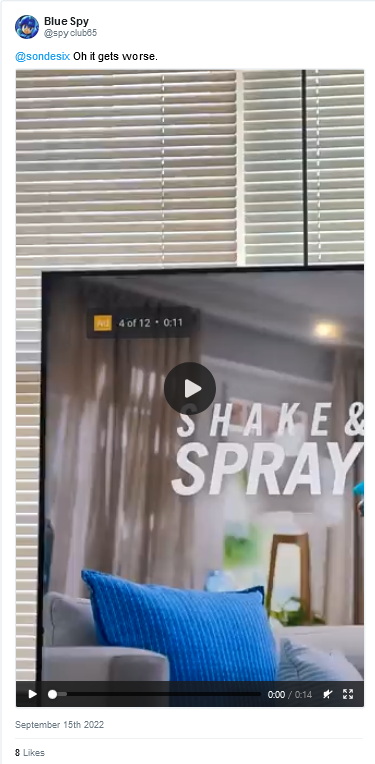
I’ve often thought it odd that many companies and publications seemingly believe that the way to charm customers, or ostensible customers, is to make them resent pretty much any interaction with their websites.

David Thompson commenting on “Thrilling Content Goes Here”, DavidThompson, 2021-08-30.

November 25, 2021

QotD: Corporate coercion can be just as dangerous as state coercion

So many libertarians […] have a simplistic, dare I say dualistic notion about bad-things-done-by-private-business and bad-things-done-by-the-state. One is met with “so start up a rival company” the other with “an outrageous example of state overreach that must be opposed politically.”

And in an ideal world, yes, that makes sense. We do not live in anything resembling an ideal world.

In an era when three (two really) credit card companies and a handful of payment processors have an off-switch for pretty much any on-line business they take a dislike to (unless they are called Apple or Amazon), as more and more of the economy goes virtual, what we have is turn-key tyranny for sale to the highest bidder, and the highest bidder is always going to be a state. I am uncertain what the solution is, but as we do not live in a “free market”, not convinced “so go set up your own global credit card and payment processing network” adds anything meaningful to the discussion. It is a bit like saying when the local electric provider turns off the power in your office (or home) because they disapprove of what you are doing “so go set up your own electric supply company”, as if that would be allowed to happen.

Perry de Havilland, “This is what so many libertarians cannot understand …”, Samizdata, 2021-08-22.

November 16, 2021

Mike Solana interviews Chris Best, the co-founder and CEO of Substack

Filed under: Business, Liberty, Media, Technology — Tags: , , , , — Nicholas @ 03:00

Not long after I started hearing about Substack, some of my favourite writers and bloggers began to move their work to the new platform. I now subscribe to more than a dozen Substack authors, although being a penniless blogger, I’m restricted to the free offerings in each case. Thus far I’m definitely seeing Substack as a positive influence in the online world, so this Mike Solana post was of some interest to me:

MIKE SOLANA: In your and Hamish McKenzie’s recent essay, “The internet needs better rules, not stricter referees”, you say Substack is changing the publishing model. Before we get into all that, how would you characterize the publishing landscape before Substack?

CHRIS BEST: My general story on this is we’re coming out of an age of attention-monster social media. People used to get bored. People used to have this problem of like, I don’t know what to do with my time. Then the internet, and especially the mobile internet, took over ALL of our time and attention. It filled up every crevice in our life.

In the first phase of that — the attention suck — it was like this giant land grab. If you were making something that competed for attention space, you wanted to grab as much as possible, as quickly as possible, because there’s only so much. You were competing for people’s 10 minutes while they were waiting in line at the grocery store or whatever. So publishers made content free, and they made it as broadly-compelling as possible. The goal was to grab as much attention as possible in the lowest friction way possible, and to turn that attention into money through advertising.

And listen, none of that was nefarious. None of that was like, people with tented fingers going, “Aha! This will create something bad!” But when you create a system like this, you end up with a certain incentive structure. Then, if you build your algorithms to serve your business model, the incentive structure you create for people participating in your network drives a certain sort of behavior.

The platforms all optimized for things that brought cheap engagement at all costs, that interaction weighed to some of the worst aspects of human nature, and drove emergent behavior that gave us many of the things we see today. The legacy media just got totally steamrolled by all of this, and lives in the world created by these platforms.

SOLANA: Do you really feel that Substack is completely protected from this scaled advertising dynamic with its subscription model? There are a lot of legacy media institutions that have subscriptions, and have had subscriptions for the last 10 or 20 years, in addition to running ads. Personally, I’m also getting requests to run ads on Pirate Wires fairly often. I’m not biting, which maybe answers my question before I’ve asked it, but … do you really see this all changing?

BEST: I think the subscription model is necessary, but not sufficient, right? First of all, as a writer, that you can actually make real money doing this is by itself a big deal. I’ve convinced a lot of people to do subscription instead of ads, and usually they come back to me later like, “Thank you, you changed my life. I can’t believe I was ever thinking the other thing.”

People tend to think about this like, “I could make money with ads. I could make money with subscriptions. Two moneys is better than one money.” But when you’re making the best possible product to drive subscriptions, what you end up having to write is qualitatively different — and better — than the thing you’d have to do to drive the most ad revenue.

If you want to earn and keep the trust of a relatively small number of people who value your writing really deeply, deeply enough to pay for it, and you want that number to grow, the work you do in that world is different than the work you do if you’re like, “I need to get as many people to hear my Casper mattress ad read as possible.”

However, to your point, it’s not enough. One of the big problems with Substack now is people are like, “Great, we’ve got this place where the incentive structure works differently, and I want create this better product to earn and keep the trust of my subscribers … but the way that people find out about my stuff is still on Twitter.”

So we’re kind of downstream from this, you know, attention sewage factory of incentives. I think for Substack to live up to the idea of letting readers take back their mind, and their attention, and helping us all create this kind of alternate universe of content with different laws of physics … we need to do more on that front.

October 14, 2021

The quasi-monopolies of the “web giants”

Arthur Chrenkoff runs afoul of automated “community standards” enforcement on social media, getting locked out of his Twitter account for something that any actual human being would be able to instantly decide was not at all any kind of violation of normal human interactions online or in-person. Of course, if you’ve been in this position yourself, you won’t be surprised to find that launching an appeal of the bot’s action does not get immediate response … and sometimes never gets any attention from a human. He’s aware of this, and he’s still of the belief that this does not call out for any kind of government intervention:

“Automotive Social Media Marketing” by socialautomotive is licensed under CC BY 2.0

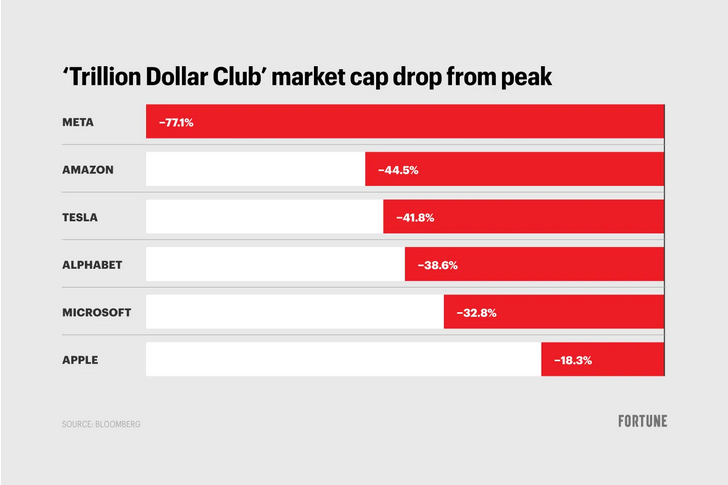
I remain broadly sympathetic to the free market argument that competition will, in time, cure any problems that business activity throws up from time to time, such as market domination or underhand practices. The mighty will be brought down low, new players will offer new products, consumer preferences will change, creative (or destructive) equilibrium will be restored. We can all argue, of course, to what extent free market and free competition exist in any particular setting at any particular time. If “real socialism” has never been tried, “real free market” (as opposed to capitalism, which is not necessarily the same thing) might be equally rare in practice. It is certainly true that comparing the lists of top 50 biggest companies one hundred, 50, 20 years ago and today will indicate a lot of economic change, but might not tell us very much about the reasons for that change, which can be quite complex.

The tech giants might not be historically unique as far as their size and power are concerned, but they’re not the norm either. They are not exactly monopolists, but their domination of their particular sections of the market elevates them from the domain of mere companies to something akin to public utilities. Google, Facebook and YouTube, for example, account for 80 per cent of digital advertising in Australia. There are alternatives to all these providers but they are so tiny by comparison as to defeat their main purpose for many users, which is to provide the biggest possible reach and exposure to the world. If you get demonetised or banned by YouTube, other video-sharing platforms can give you only a fraction of the traffic and the eyeballs, which impoverishes you literally and the internet users metaphorically, since they are now less likely to be exposed to the broad range of content. There are other social networks, but only Facebook has “everyone” on it, including your grandma, school friend from primary, and that couple you’ve met on the trip to Spain. Sure, if you get banned from Facebook, you can still try to keep in touch with all these people via many separate channels but it’s so much more difficult, disjointed and time consuming. For that same reason, Facebook’s Marketplace has a much better reach than other platforms that are focused exclusively on online ads. If Marketplace continues to shadow ban me, I can try Craigslist or Gumtree or Locanto, but – certainly in the categories I’m interested in – they all have significantly smaller audiences.

The traditional response to bad customer experience has been “try somebody/something else”. You don’t like Facebook – or Facebook doesn’t like you? Try another similar service. But I’m not sure if most of my friends would be able to name even one alternative to FB, and the chances they are on it are even slimmer. So telling people to stop whining and use an alternative to the tech giants is akin to telling someone “Oh, you can’t have a mobile (cell) phone? So what, no one is stopping you from writing a letter!” It’s the same but different. This is the consequence of the domination of the internet by the Googles and the Facebooks. And the internet now does play an essential role – for better or worse – in our lives and work. Hence the comparison to public utilities. Facebook might not be quite like electricity or running water, but it’s very close to, say, phone service. Yes, you can opt for another social network, but compared to Facebook this would be like a phone company that only makes it possible for you to contact one in twenty people instead of just about everyone, and even then maybe only once a week, at a time predetermined by the provider. It’s a service of sorts, but so inferior in every way to the main game in town as to be incomparable.

I’m not offering any solution to this problem. Many, both on the left and the right, are increasingly of a mind that, like Standard Oil of more than a century ago, the tech behemoths of today need to be broken down into smaller and less powerful units. That could solve some problems but won’t solve many others. Like mine, for example; a somehow “smaller” Twitter and Facebook can still be unresponsive and unaccountable. And as we know from other areas of economy, greater involvement and control by the supposedly impartial government does not guarantee better outcomes either. Big government, like big business, is run by human beings who, quite apart from their own characteristics as individuals, work within a particular culture, which has its own values, agendas and preferences. Government is a monopolist too in many ways, and for all the politics, is not necessarily responsive and accountable either.

September 9, 2021

When you mess around in a software testing environment … make sure it actually is a test

A British local government found out the hard way that they need to isolate their software testing from their live server:

A borough council in the English county of Kent is fuming after a software test on the council’s website led to five nonsensical dummy planning application documents being mistakenly published as legally binding decisions.

According to a statement from Swale Borough Council, staff from the Mid Kent Planning Support Team had been testing the software when “a junior officer with no knowledge of any of the applications” accidentally pressed the button on five randomly selected Swale documents, causing them to go live on the Swale website.

After learning what had happened, the council moved to remove the erroneous decisions from public display, but according to the statement: “Legal advice has subsequently confirmed they are legally binding and must be overturned before the correct decisions are made.”

Publishing randomly generated planning decisions is obviously bad enough, but the problems got worse for Swale when it was discovered that the “junior officer” who made the mistake had also added their own comments to the notices in the manner of somebody “who believed they were working solely in a test environment and that the comments would never be published,” as the council diplomatically described it.

So it was that despite scores of supportive messages from residents, the splendidly named Happy Pants Ranch animal sanctuary had its retrospective application for a change of land use controversially refused, on the grounds that “Your proposal is whack. No mate, proper whack,” while an application to change the use of a building in Chaucer Road, Sittingbourne, from a butchers to a fast-food takeaway was similarly denied with the warning: “Just don’t. No.”

The blissfully unaware office junior continued their cheerful subversion of Kent’s planning bureaucracy by approving an application to change the use of a barn in the village of Tunstall, but only on condition of the numbers 1 to 20 in ascending order. They also approved the partial demolition of the Wheatsheaf pub in Sittingbourne and the construction of a number of new flats on the site, but only as long as the project is completed within three years and “Incy Wincy Spider.”

Finally, Mid Kent’s anonymous planning hero granted permission for the demolition of the Old House at Home pub in Sheerness, but in doing so paused to ponder the enormous responsibility which had unexpectedly been heaped upon them, commenting: “Why am I doing this? Am I the chosen one?”

For their part, Swale Borough Council’s elected representatives were less than impressed by the work of their colleagues at the Mid Kent Planning Support Team and wasted no time in resolutely throwing them under the bus.

“These errors will have to be rectified but this will cause totally unnecessary concern to applicants,” thundered Swale councillors Roger Truelove, Leader and Cabinet Member for Finance, and Mike Baldock, Deputy Leader and Cabinet Member for Planning in a shared statement. “This is not the first serious problem following the transfer of our planning administration to Mid Kent shared services. We will wait for the outcome of a proper investigation and then consider our appropriate response as a council.”

August 21, 2021

Indigo in the red

Filed under: Books, Business, Cancon — Tags: , , , , — Nicholas @ 03:00

In the latest edition of his SHuSH newsletter, Kenneth Whyte looks at the dire financial situation of Canada’s big box bookstore chain:

“Indigo Books and Music” by Open Grid Scheduler / Grid Engine is licensed under CC0 1.0

Indigo just released its first-quarter financial results, covering the period April-June 2021, which can be compared to its pre-pandemic results from the same quarter in 2019.

Back then, Indigo had revenues of $193 million and no profit. Seventy percent of its revenue, or $136 million, came from the firm’s eighty-nine Chapters and Indigo superstores. Only $25 million came from its 115 smaller stores (Coles and Indigo Spirit), and another $29 million from online sales at chapters.indigo.ca. Not only did the company book no profit, but all three of those revenue channels were down from the previous year, with online sales falling the most (15%).

This is to say that Indigo, in financial terms, was immunocompromised before COVID-19 hit.

The decline in digital sales was especially alarming. It seemed that CEO Heather Reisman was giving up on the web, an impression reinforced by her frequent renovations of in-store environments and her not terribly successful launch of a so-called cultural department store […] in New Jersey, Indigo’s first international gambit. She was all about bricks and mortar.

One also got the sense that Heather was giving up on books. She was building up the candles and blankets side of the business — it represented almost 40% of 2019’s total revenue. She also launched Thoughtfull.co, an effort to graze on Hallmark grass, and another step away from the book business.

I’d certainly despaired of finding much in the way of actual books at Chapters or Indigo stores … more and more of the floorspace that used to be devoted to books had been given over to housewares, candles, hostess gift items, decorative throw cushions and other such non-book items. Even before the Wuhan Coronavirus shut down the western world, it had been at least a year since the last time I’d found anything worth buying in one of their stores.

Two years and several pandemic waves later, Indigo is down to 88 superstores and 88 small-format stores, a net reduction of twenty-eight. I don’t know the significance of 88. Maybe the company’s new retail guru — Indigo always has a new retail guru — is a pianist, or Chinese, or a white supremacist.

The remaining stores are now open to foot traffic, and the company is wrangling with its various landlords over how much rent it should pay for the pandemic months when most of its outlets were closed. Indigo received almost $3 million in federal emergency rent subsidies, and almost $4 million in payroll subsidies, which seems like a lot but isn’t for a company as big as Indigo. As we noted in an earlier post, Heather also received a $25 million “liquidity enhancement”, or bailout, from billionaire husband Gerry Schwartz.

Which brings us to the present. Revenues for Indigo’s most recent quarter are $172 million (down $21 million from two years ago), and it lost $15 million (before depreciation, amortization, etc.).

Indigo doesn’t release enough detail on its operations to give us a clear idea of how the company lost only $15 million when its revenue fell $21 million, but costs were down across the board, probably reflecting the closed stores, reduced staffing levels, and fewer books on the shelves, among other savings.

« Newer PostsOlder Posts »

Powered by WordPress