
The Tank Museum
Published 21 May 2021David Fletcher MBE looks at the rare and most interesting Guy Armoured Car, thought to be the first welded vehicle used by the British Army.
(more…)
September 30, 2021
Tank Chats #126 | Guy Armoured Car | The Tank Museum
Comments Off on Tank Chats #126 | Guy Armoured Car | The Tank Museum
September 25, 2021
“Steel Commanders” – Tanks and Panzer! – Sabaton History 106 [Official]
Sabaton History
Published 24 Sep 2021From the first landships of the Great War to the massive armor-battles of Prokhorovka and El-Alamein — the introduction of the tank to the battlefield had changed warfare forever. Impregnable to small-arms fire, they crushed barbed-wire and field fortifications underneath their tracks, paving the way for the infantry’s advance. In independent formations they surged forward at the head of the offensive, outmaneuvering the enemy’s defenses and wreaking havoc in their lines. From the Mark V to the T-34, from the Tiger to the Centurion — the evolution of armor is the history of Steel Commanders.
Support Sabaton History on Patreon: https://www.patreon.com/sabatonhistory
Watch the Official Music Video of “Steel Commanders” here: https://www.youtube.com/watch?v=peTCe…
Listen to Sabaton on Spotify: http://smarturl.it/SabatonSpotify
Official Sabaton Merchandise Shop: http://bit.ly/SabatonOfficialShopHosted by: Indy Neidell
Written by: Markus Linke and Indy Neidell
Directed by: Astrid Deinhard and Wieke Kapteijns
Produced by: Pär Sundström, Astrid Deinhard and Spartacus Olsson
Creative Producer: Maria Kyhle
Executive Producers: Pär Sundström, Joakim Brodén, Tomas Sunmo, Indy Neidell, Astrid Deinhard, and Spartacus Olsson
Community Manager: Maria Kyhle
Post-Production Director: Wieke Kapteijns
Editor: Iryna Dulka
Sound Editor: Marek Kaminski
Archive: Reuters/Screenocean – https://www.screenocean.com
Sources:
– IWM E 18376, IWM 357, Q 9249, IWM 1198, IWM 130-09+10, Q 107828, IWM 508-70, KID 109, UKY 502, E 7070, H 37169, MH4107
– wall by mara julieta G., Tree by Joni Ramadhan; from the Noun Project
All music by: SabatonAn OnLion Entertainment GmbH and Raging Beaver Publishing AB co-Production.
© Raging Beaver Publishing AB, 2019 – all rights reserved.
Comments Off on “Steel Commanders” – Tanks and Panzer! – Sabaton History 106 [Official]
September 24, 2021
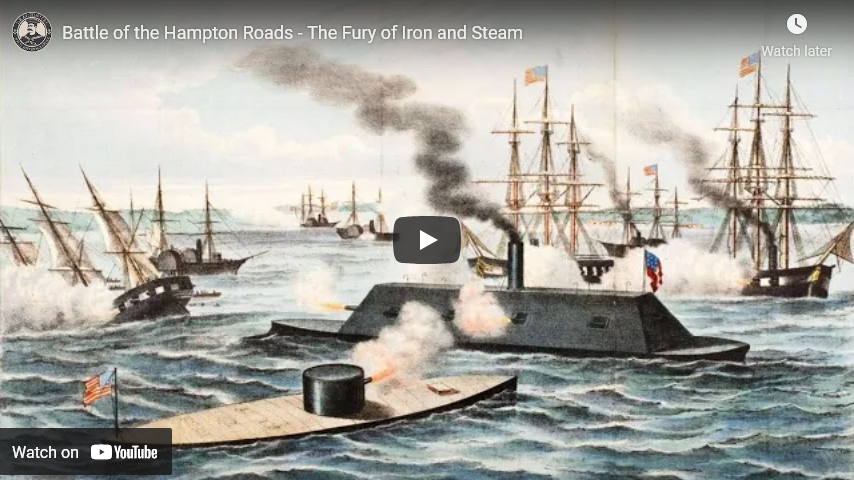
Battle of the Hampton Roads – The Fury of Iron and Steam
Drachinifel
Published 20 Feb 2019The first ironclad vs ironclad battle is reviewed, along with the origins of the ships and some of the myths and legends about this historic battle.
Want to support the channel? – https://www.patreon.com/Drachinifel
Want to talk about ships? https://discord.gg/TYu88mt
Comments Off on Battle of the Hampton Roads – The Fury of Iron and Steam
September 14, 2021
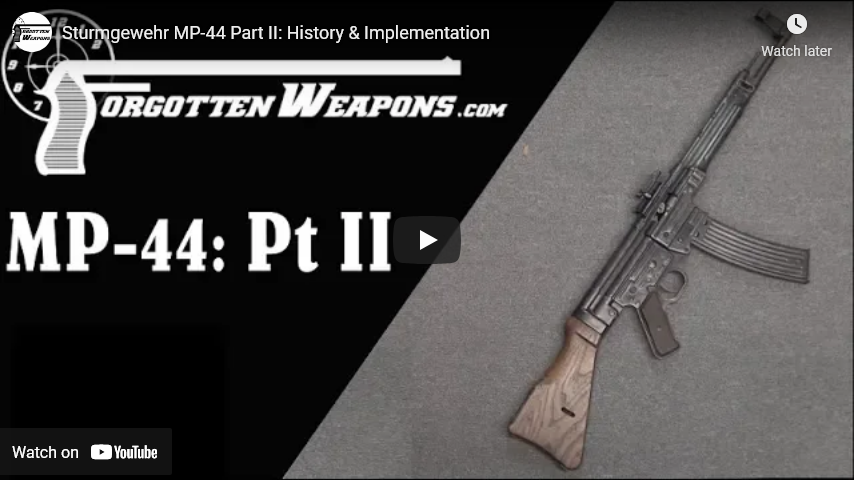
Sturmgewehr MP-44 Part II: History & Implementation
Forgotten Weapons
Published 27 Sep 2016Cool Forgotten Weapons Merch! http://shop.bbtv.com/collections/forg…
The Sturmgewehr was the result of a German intermediate cartridge development program that began in the mid-1930s. It was sidelined for a period as the focus of German Ordnance shifted to full-power rifles in 8x57mm with telescopic sights, but as the German fighting in Russia became more desperate, many Ordnance officers realized that the greater firepower offered by the Sturmgewehr concept was one of the few options that might be able to allow depleted German units to effectively hold ground against Russian attacks.
To this end, the guns were issued primarily in the East, with whole companies being equipped in order to focus a maximum amount of firepower, rather than spreading the new rifles piecemeal across all units. Ultimately, of course, this was insufficient to prevent the growing Soviet advance — but for the individual German soldier, an MP-43/44/StG-44 would have been a much more comforting weapon than a Kar98k Mauser!
Comments Off on Sturmgewehr MP-44 Part II: History & Implementation
September 11, 2021
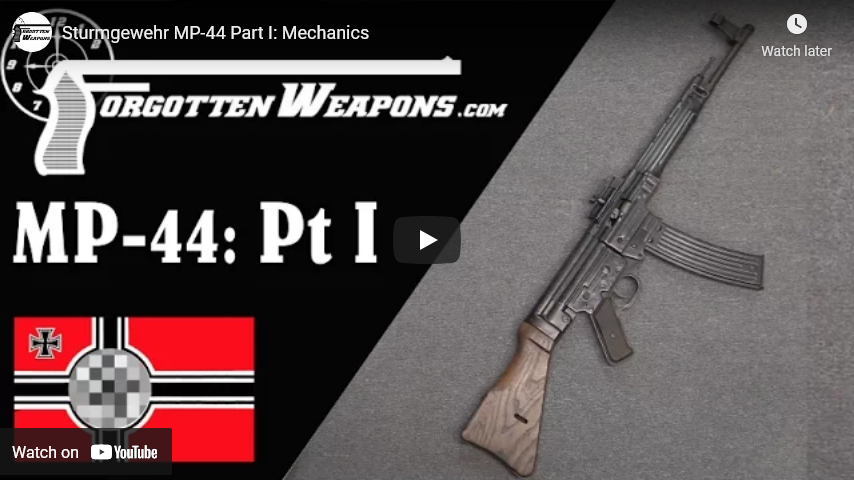
Sturmgewehr MP-44 Part I: Mechanics
Forgotten Weapons
Published 27 Sep 2016The MP-43 (which is mechanically identical to the MP-44 and StG-44; the differences are the subject for another video later) is a tilting bolt rifle with a long stroke gas piston. It was manufactured primarily from complex sheet steel stampings, as a way to minimize the amount of high-quality and thus difficult to acquire steels needed for its construction. The rifle is heavy by today’s standards, but remarkably ergonomic (except for the metal handguard, when heats up quickly). Its sights come right up to the eye when shouldering the rifle, and it disassembles quickly and easily.
It really is one of the best small arms developed during World War II.
Comments Off on Sturmgewehr MP-44 Part I: Mechanics
September 8, 2021
Making Hitler Transgender? – Early Operations of the CIA – WW2 – Spies & Ties 08
World War Two
Published 7 Sep 2021World War Two gave birth to a new American centralised intelligence agency: The OSS (Office of Strategic Services). Led by “Wild Bill” Donovan, it is the cradle of many outrageous plans, spy stories, and gadgets.
(more…)
Comments Off on Making Hitler Transgender? – Early Operations of the CIA – WW2 – Spies & Ties 08
August 31, 2021
Isambard Kingdom Brunel: The Genius of the Industrial Revolution
Biographics
Published 23 Mar 2020Check out Brilliant: https://brilliant.org/biographics
Check out Business Blaze: https://www.youtube.com/channel/UCYY5…
This video is #sponsored by Brilliant.
TopTenz Properties
Our companion website for more: http://biographics.org
Our sister channel TopTenz: https://www.youtube.com/channel/UCQ-h…
Our Newest Channel about Interesting Places: https://studio.youtube.com/channel/UC…Credits:
Host – Simon Whistler
Author – Morris M.
Producer – Jennifer Da Silva
Executive Producer – Shell HarrisBusiness inquiries to biographics.email@gmail.com
Source/Further reading:
Oxford National Dictionary of Biography: https://www.oxforddnb.com/view/10.109…
Interesting podcast on his life: https://www.bbc.co.uk/programmes/b04n…
Britannica: https://www.britannica.com/biography/…
History Today: https://www.historytoday.com/archive/…
The Thames Tunnel: https://www.smithsonianmag.com/histor…
The atmospheric railway: https://www.theguardian.com/science/t…
SS Great Britain accident: https://www.ssgreatbritain.org/about-…

Comments Off on Isambard Kingdom Brunel: The Genius of the Industrial Revolution
August 19, 2021
Hill SMG/Pistol: Inspiration for the FN P90
Forgotten Weapons
Published 28 Apr 2021http://www.patreon.com/ForgottenWeapons
https://www.floatplane.com/channel/Fo…
Cool Forgotten Weapons merch! http://shop.forgottenweapons.com
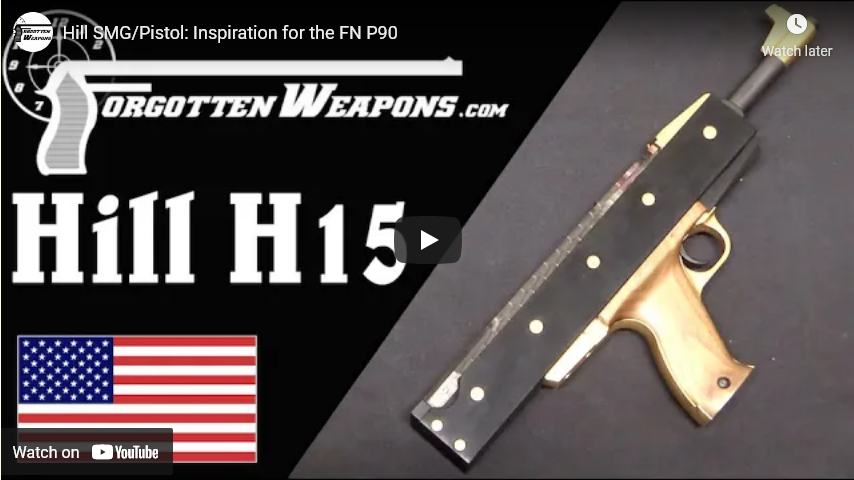
John L. Hill was a World War One fighter pilot [in the short-lived Canadian Air Force] who went into the oil and gas industry, and enjoyed tinkering with guns in his free time. In 1949 he got an idea for a new style of magazine and feed system, which he developed and patented in the early 1950s. Hill’s intention was to create a submachine gun for the military or police that held its magazine flat atop the action, instead of sticking out of the gun where it would get in the way. To do this, Hill designed the system that would be later used in the FN P90, with ammunition held perpendicular to the barrel, and a turret mechanism in the action to turn the cartridges 90 degrees for feeding in the chamber.
Hill built seven or eight fully automatic prototypes, which were examined by the US Army and the FBI. One was tested at Aberdeen Proving Grounds in 1953, and we still have some of the photos from that examination (that particular gun was built using an MP40 barrel, interestingly). Hill’s guns varied in pretty much all details, including different barrel lengths, stock configurations, and magazines. Some used single-stack and some double-stack magazines, but all were a simple blowback action.
At some point in the late 50s or early 60s, Hill sold his patent rights to a pair of Texas businessmen who built 90 or 100 more examples (mostly semiautomatic) under the name H&B Enterprises. They took one to FN in Belgium, who found it interesting but did not opt to license or produce it. Ultimately, nobody was interested enough to put the gun into production, and only a small number of the H&B guns survive today. The original Hill prototypes were donated to the Lone Star Flight Museum in Texas in 1993, although it is not clear where they are today.
When FN began to design the P90 in the early 1980s, Hill’s concept made a return. It is not known exactly how much direct link there was between the Hill prototype and the P90 concept, but the eventual patents filed on the P90 do reference Hill’s patents (among others). The P90 remains the only production firearm to use this clever rotary feeding system.
Hill’s patents:
https://patents.google.com/patent/US2…
https://patents.google.com/patent/US2…
https://patents.google.com/patent/US2…For more documents, see the Forgotten Weapons page on this design:
https://www.forgottenweapons.com/hill…Contact:
Forgotten Weapons
6281 N. Oracle 36270
Tucson, AZ 85740
Comments Off on Hill SMG/Pistol: Inspiration for the FN P90
August 17, 2021
Opening Battles of the Franco-Prussian War: Saarbrücken, Wissembourg, Wörth I GLORY & DEFEAT Week 4
realtimehistory
Published 5 Aug 2021Support Glory & Defeat: https://realtimehistory.net/gloryandd…
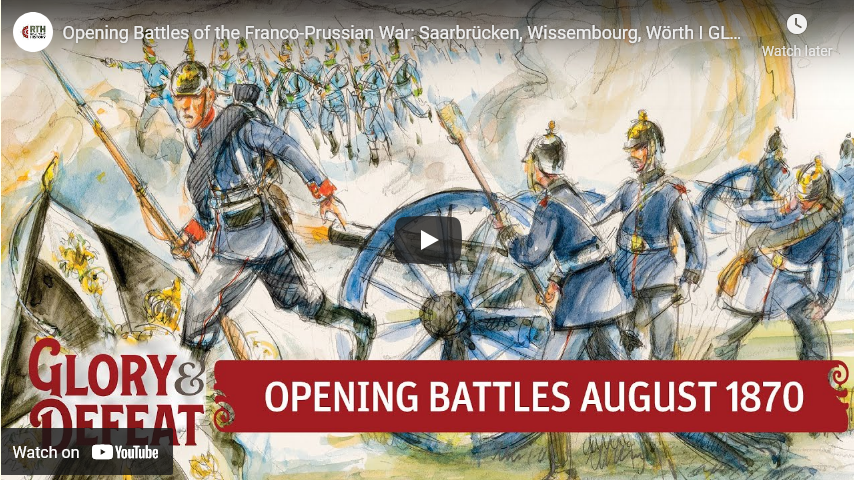
Early August 1870 saw the first series of opening battles of the Franco-Prussian War. The Battle of Saarbrücken was the only battle of the entire war fought on German soil, the following Battle of Wissembourg, the Battle of Wörth and the Battle of Spicheren happened right after and gave a glimpse of the carnage to come.
» THANK YOU TO OUR CO-PRODUCERS
John Ozment
James Darcangelo
Jacob Carter Landt
Thomas Brendan» OUR PODCAST
https://realtimehistory.net/podcast – interviews with historians and background info for the show.» LITERATURE
Arand, Tobias: 1870/71. Die Geschichte des Deutsch-Französischen Krieges erzählt in Einzelschicksalen. Hamburg 2018Bourguinat, Nicolas/Vogt, Gilles: La guerre franco-allemande de 1870. Une histoire globale. Paris 2020
Gall, Lothar (Hrsg.): Deutschland Archiv. Deutsche Geschichte in Dokumenten. O.O., o. J. (2007)
Mährle, Wolfgang: “Das württembergische Heer im Deutsch-Französischen Krieg 1870/71“, in: Nation im Siegesrausch. Württemberg und die Gründung des Deutschen Reichs 1870/71, hrsg.v. Wolfang Mährle. Stuttgart 2020. S. 45-64.
Milza, Pierre: L’année terrible. La guerre franco-prussienne septembre 1870 – mars 1871. Paris 2009
Roux, Georges: La Guerre de 1870. Paris 1966
» SOURCES
Bazaine, François-Achille: Episoden aus dem Krieg von 1870 und der Belagerung von Paris. Berlin 1884Chuquet, Arthur: La guerre 1870/71. Paris 1895
Engel, o.V.: Die Verluste der deutschen Armeen an Offizieren und Mannschaften im Kriege gegen Frankreich 1870 und 71. Berlin 1872
Engels, Friedrich: Der Deutsch-Französische Krieg. Sechzig Artikel aus der ‘Pall Mall Gazette’. Berlin (Ost) 1957
Goncourt, Edmond de: Journal. Bd. 5. 1869-1872. Leipzig 2013
Henderson, George: The battle of Spicheren, August 6th 1870, and the events that preceded it – a study in practical tactics. London 1891
Klein, Karl: Fröschweiler Chronik. Kriegs- und Friedensbilder aus dem Jahre 1870/71. Illustrierte Jubelausgabe. München 1897
Kriegsgeschichtliche Abtheilung des Großen Generalstabs (Hg.): Der deutsch-französische Krieg 1870/71. Erster Theil. Erster Band. Berlin 1874
Kühnhauser, Florian: Erinnerungen eines Soldaten des königlich bayerischen-Infanterie-Leib-Regiments. Partenkirchen 1898
Le Faure, Amédée: Atlas de la guerre 1870/71. Paris 1875
Meisner, Heinrich Otto (Hrsg.): Kaiser Friedrich III. Das Kriegstagebuch von 1870/71. Berlin, Leipzig 1926
Pietsch, Ludwig: Von Berlin bis Paris. Kriegsbilder 1870-1871. Berlin 1871
» OUR STORE
Website: https://realtimehistory.net»CREDITS
Presented by: Jesse Alexander
Written by: Cathérine Pfauth, Prof. Dr. Tobias Arand, Jesse Alexander
Director: Toni Steller & Florian Wittig
Director of Photography: Toni Steller
Sound: Above Zero
Editing: Toni Steller
Motion Design: Philipp Appelt
Mixing, Mastering & Sound Design: http://above-zero.com
Maps: Battlefield Design
Research by: Cathérine Pfauth, Prof. Dr. Tobias Arand
Fact checking: Cathérine Pfauth, Prof. Dr. Tobias ArandChannel Design: Battlefield Design
Contains licensed material by getty images
All rights reserved – Real Time History GmbH 2021
Comments Off on Opening Battles of the Franco-Prussian War: Saarbrücken, Wissembourg, Wörth I GLORY & DEFEAT Week 4
August 16, 2021
French and German Armies in 1870 – Dreyse and Chassepot Rifle Overview I GLORY & DEFEAT Week 3
realtimehistory
Published 29 Jul 2021Sign up for Curiosity Stream and get Nebula bundled in and SAVE 26%: https://curiositystream.com/realtimeh…
While the French and different German Armies are gathering we are taking the time this week to take a look at military organization and warfare in 1870. As a special guest we also have Cap And Ball on the show who introduces the famous Chassepot and Dreyse rifles which will be important in this conflict.
» THANK YOU TO OUR CO-PRODUCERS
John Ozment
James Darcangelo
Jacob Carter Landt
Thomas Brendan» OUR PODCAST
https://realtimehistory.net/podcast – interviews with historians and background info for the show.» LITERATURE
Arand, Tobias: 1870/71. Die Geschichte des Deutsch-Französischen Krieges erzählt in Einzelschicksalen. Hamburg 2018
Delpérier, Louis; Mirouze, Laurent: Der Deutsch-Französische Krieg 1870/71. Bd. 2. Uniformierung und Ausrüstung der französischen Armeen. Wien 2020
Herre, Franz: Kaiser Wilhelm I. Der letzte Preuße. Köln 1980
Milza, Pierre: L’année terrible. La guerre franco-prussienne. Septembre 1870 – mars 1871. Paris 2009
Stein, Markus; Bauer, Gerhard: Der Deutsch-Französische Krieg 1870/71. Bd. 1. Uniformierung und Ausrüstung der deutschen Armeen. Wien 2020» SOURCES
Fontane, Theodor: Der Krieg gegen Frankreich. Bd. 1. Berlin 1873
Kriegsgeschichtliche Abtheilung des Großen Generalstabs (Hg.): Der deutsch-französische Krieg 1870/71. Erster Theil. Erster Band. Berlin 1874
Pflugk-Harttung, Julius: Krieg und Sieg 1870-1871. Bd. 2 Berlin 1896» OUR STORE
Website: https://realtimehistory.net»CREDITS
Presented by: Jesse Alexander
Written by: Cathérine Pfauth, Prof. Dr. Tobias Arand, Jesse Alexander
Director: Toni Steller & Florian Wittig
Director of Photography: Toni Steller
Sound: Above Zero
Editing: Toni Steller
Motion Design: Philipp Appelt
Mixing, Mastering & Sound Design: http://above-zero.com
Maps: Battlefield Design
Research by: Cathérine Pfauth, Prof. Dr. Tobias Arand
Fact checking: Cathérine Pfauth, Prof. Dr. Tobias ArandChannel Design: Battlefield Design
Contains licensed material by getty images
All rights reserved – Real Time History GmbH 2021

Comments Off on French and German Armies in 1870 – Dreyse and Chassepot Rifle Overview I GLORY & DEFEAT Week 3
HMS Glamorgan – Computer Ship Of The Future (1967)
British Pathé
Published 13 Apr 2014English Channel.
Top shots of the guided missile destroyer
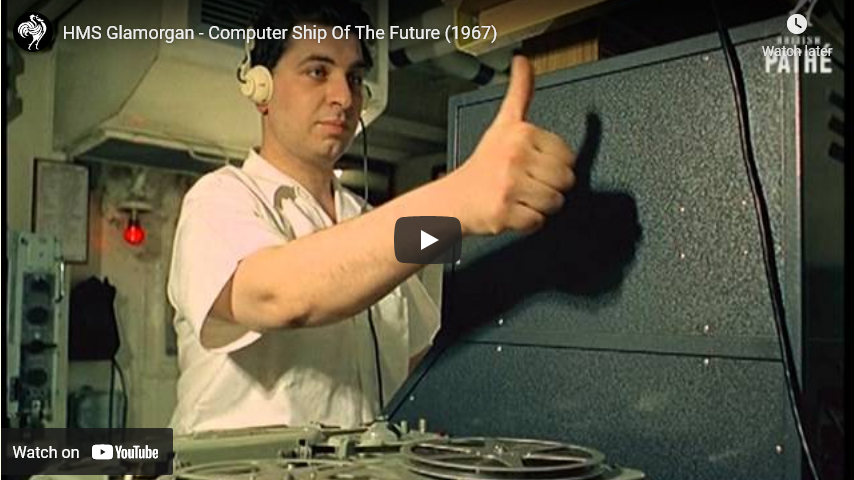
battleshipHMS Glamorgan at sea. In the control/computer room a man pulls out old-fashioned computer records [circuit packs, I believe] from a large control cupboard; officers on the bridge look at dials and through binoculars. Various shots in steering, control and engine rooms as the ship moves along. On the flight deck sailors play hockey while others watch and cheer them on. A navigator on deck looks through a sextant while another officer makes notes. A helicopter is moved from a hanger out onto the deck and prepared for takeoff; firemen in asbestos suits and helmets stand by with a hose; the chopper takes off.Three young men play guitars and banjos before a television camera in a tiny studio; we hear that the ship has its own closed circuit TV station; good shots of the filming; tape recording machines going round; picture being adjusted. Men in a mess room watch the performance on the television while they have a pint. Several shots of the sailors getting their rum rations. Various shots in the kitchens show food being prepared and served into the sailors mess tins; good canteen and catering shots (most of the food looks pretty unappetising) [the person writing the description clearly has no idea just how unappetizing British food could be in the 1960s … this looks well above average for the time]. In the sick bay a sailor gets a shot in the arm from the Medical Officer.
Several shots of the radar antennae on the ship and the men looking at the radar scanner screens in the control room. Men in protective gloves and hoods load shells in the gun turret; M/Ss of the main guns on the ship being fired. Several shots show the countdown for Seaslug missiles to be fired; men at control panels look at dials and radar screens; an officer counts down into a microphone (mute). Complicated boards of buttons show the location of the missiles, intercut with shots of the missiles moving into position by electronic instruction. The missiles move into the launchers on deck and are fired; men watch their progress on a radar screen. Another launcher moves into position; L/S of the ship as the missiles are fired.
Note: on file is correspondence and information about HMS Glamorgan. Cuts exist – see separate record. FILM ID:419.04
A VIDEO FROM BRITISH PATHÉ. EXPLORE OUR ONLINE CHANNEL, BRITISH PATHÉ TV. IT’S FULL OF GREAT DOCUMENTARIES, FASCINATING INTERVIEWS, AND CLASSIC MOVIES. http://www.britishpathe.tv/
FOR LICENSING ENQUIRIES VISIT http://www.britishpathe.com/
British Pathé also represents the Reuters historical collection, which includes more than 136,000 items from the news agencies Gaumont Graphic (1910-1932), Empire News Bulletin (1926-1930), British Paramount (1931-1957), and Gaumont British (1934-1959), as well as Visnews content from 1957 to the end of 1984. All footage can be viewed on the British Pathé website. https://www.britishpathe.com/
Comments Off on HMS Glamorgan – Computer Ship Of The Future (1967)
August 15, 2021
Denel NTW 20: A Multi-Caliber Anti-Materiel Rifle
Forgotten Weapons
Published 7 Sep 2018http://www.patreon.com/ForgottenWeapons
Cool Forgotten Weapons merch! http://shop.bbtv.com/collections/forg…
Created by noted South African gun designer Tony Neophytou, the NTW-20 is a bolt action anti-materiel rifle made in 20x82mm, 20x110mm, and 14.5x115mm. The weapon began as idea to use the large quantities of surplus 14.5mm ammunition available at the time, and a recognition that the 14.5mm Soviet cartridge was an excellent anti-armor round, with a really remarkably high muzzle velocity. To widen the rifle’s capabilities, it was decided to incorporate an easily interchangeable barrel, and also chamber it for the 20x82mm round used in the Inkunzi PAW individual weapon and Inkunzi Strike machine gun. The 20x82mm is low velocity compared to traditional 20mm cartridges, carrying the same explosive or incendiary payload but without the punishing recoil of what was originally an aircraft cannon cartridge.
Both of these cartridges are fed from a 3-round box magazine on the left side of the action. A single-shot version in the longer 20x110mm cartridge was also developed by request of a military client, but this cartridge is too long to fit the magazine. A version in .50 BMG was considered, but decided against on the basis of the 14.5mm being just as available and substantially more effective.
The gun is liberally sprinkled with clever engineering and design features — things like using the recoil-absorbing travel of the action to recock the hammer, and the use of both 20mm and 14.5mm cartridge cases as levers for unlocking the barrel. The optic was custom made for the rifle, an 8x56mm long eye relief scope to prevent any chance of the scope bell injuring the shooter during recoil. The trigger mechanism uses only a single spring, and is easily removed from the action. The bolt handle itself is on a pivot pin, and provides the primary extraction leverage to ensure easy cycling with the high-pressure 14.5mm cartridge.
From a military perspective, the NTW-20 is easily broken apart into barrel and action loads, and can be transported more easily than any comparable weapon by a two-man team. The use of a recoil buffer in the action and an effective muzzle brake makes it a remarkably pleasant 20mm rifle to fire. Of all the anti-material rifles I have fired (Lahti L39, Solothurn S18-1000, Mauser T-Gewehr), the NTW-20 was by far the most comfortable to shoot. It was also the only one in which I jumped at the chance to fire more rounds once the filming needs were met. It certainly has a kick, but not at all a painful one.
Many thanks to Denel Land Systems for allowing me to try out this very cool rifle!
If you enjoy Forgotten Weapons, check out its sister channel, InRangeTV! http://www.youtube.com/InRangeTVShow

Comments Off on Denel NTW 20: A Multi-Caliber Anti-Materiel Rifle
August 13, 2021
Spycraft and the Special Operations Executive – WW2 – Spies & Ties 07
World War Two
Published 12 Aug 2021Astrid talks about spying all the time, but what was it actually like for people on the ground? We look through the lens of the British Special Operations Executive (SOE) to find out!
(more…)
Comments Off on Spycraft and the Special Operations Executive – WW2 – Spies & Ties 07
August 6, 2021
QotD: The development of Madeira wine
The island of Madeira was often a last port of call from the 15th Century for sailing ships heading to the New World or the East Indies. The local wine loaded on to the ships would quite often spoil because of the heat and motion of the voyage. To prevent this from happening, a small amount of alcohol distilled from cane sugar was added to bring up the strength and kill unwanted bacteria.
The heat of the voyage, especially in the confined holds of the ships, plus the motion of the ship, transformed the wine, giving it the familiar tart edge that distinguishes it from port. One shipment was returned after the long round trip, and was found to be popular with customers, who preferred the new taste, so producers began sending the wine on the round trip to age it. It was known as vinho da roda, wine of the round trip, and initially could not be produced any other way. Thomas Jefferson was an early fan, and the Founding Fathers toasted the signing of the Declaration of Independence with it.
The long sea voyage was expensive, so the producers experimented with ways to reproduce the conditions of the voyage. At first they stored it in rooms exposed to the heat of the sun, then developed the modern method of heating the wine in steel vats heated by running hot water. This, they found, replicated the conditions of a tropical voyage and produced the widely admired wine we know as Madeira.
Dr. Madsen Pirie, “Some discoveries, like Madeira, are accidental”, Continental Telegraph, 2018-11-27.
Comments Off on QotD: The development of Madeira wine
August 2, 2021
Who is Colt? A History of the Colt Patent Firearms Manufacturing Company
Forgotten Weapons
Published 23 Feb 2017Today we will take a look at the history of the Colt company, from Sam Colt’s first efforts in Paterson (and before) to the West Hartford remnants that survive today. If you enjoy this type of history, please let me know in the comments!
http://www.patreon.com/ForgottenWeapons
Cool Forgotten Weapons merch! http://shop.bbtv.com/collections/forg…
If you enjoy Forgotten Weapons, check out its sister channel, InRangeTV! http://www.youtube.com/InRangeTVShow
Gun display racking provided by Matrix Armory: http://www.matrixarmory.com

Comments Off on Who is Colt? A History of the Colt Patent Firearms Manufacturing Company


