Quotulatiousness

September 13, 2025

“It was about control before green policy became popular, and it is about control now”

In the National Post, Carson Jerema identifies the common thread among all of Prime Minister Mark Carney’s efforts since becoming Liberal party leader:

Then-Governor of the Bank of Canada Mark Carney at the 2012 Annual Meeting of the World Economic Forum in Davos, Switzerland.
WEF photo via Wikimedia Commons.

Prime Minister Mark Carney may not be as obnoxiously progressive as Justin Trudeau, but that doesn’t mean he isn’t stubbornly left wing in his own right, though he has managed to convince many critics otherwise.

Over the past decade, the Liberals were particularly self-righteous over climate policy, so much so that the deviations made by Carney since assuming office have been met with praise — or, on the left, with scorn — that he is somehow pro-business and represents the return of the centre-right Liberals. Some even think he’s a conservative. Others have suggested that Conservative Leader Pierre Poilievre is now entirely redundant.

This narrative is just more proof of how utterly captured the media is in this country by the Liberal party. It is true that Carney gives the appearance that he is abandoning many of the government’s environmental policies. He set the carbon tax rate to zero, paused the EV mandate and, on Thursday, he refused to endorse his government’s own carbon-emissions targets.

None of this, however, should be taken as evidence that Carney represents some sort of rightward or pro-business shift in the Liberal party. He is not proposing to let markets determine what infrastructure projects get built. Nor is he proposing to minimize regulations to attract investment.

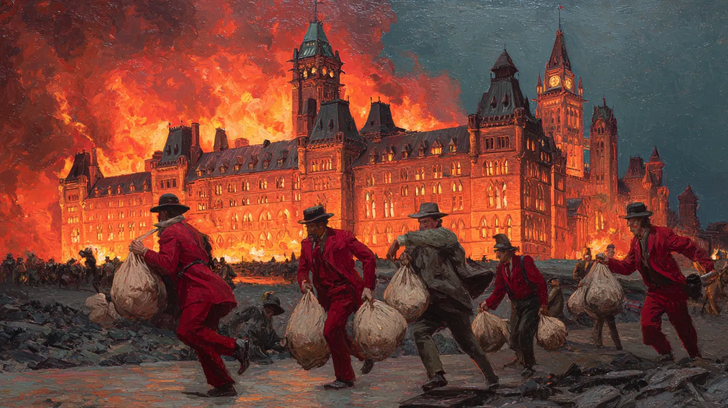
Instead, Carney wants to command the economy by himself, laying bare the reality that what attracts left-wing politicians to climate policy is not saving the planet from carbon, but using environmental objectives to manage the economy. It was about control before green policy became popular, and it is about control now. For Carney specifically, before he entered politics, “decarbonizing” markets was quite remunerative in his various banking roles.

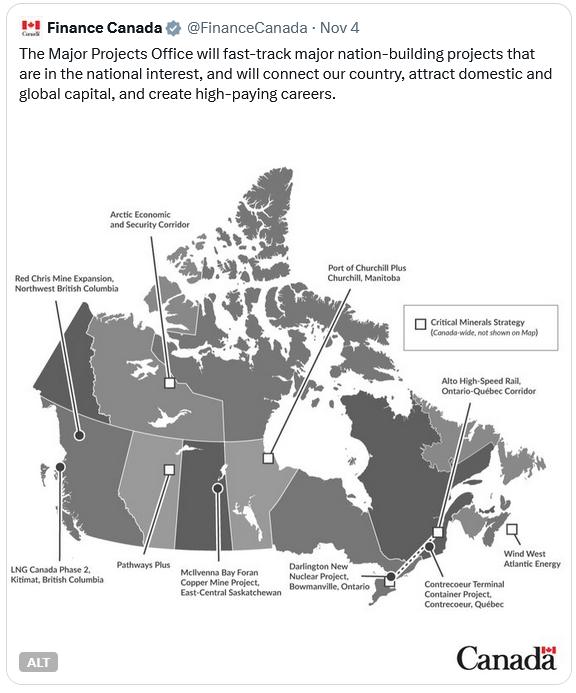
Noticeably absent from the five infrastructure projects that the prime minister said on Thursday would be fast-tracked under the Major Projects Office was an oil and gas pipeline. Also noticeable was the fact that all five of the projects had already been approved, but the government tried to pass them off as something new anyway.

Even if the projects had been all brand new, the lack of a pipeline would still be of no surprise, as what private investor would be willing to back a pipeline when the Liberals’ Impact Assessment Act, tanker ban and emissions cap all exist to conspire against energy projects of any kind?

One thing that became incredibly obvious early in Justin Trudeau’s premiership was that the prime minister — and his ministers in general — really did seem to believe that talking about doing something was as effective in solving problems as actually doing the thing. Many had hoped that Mark Carney would be different … but as Dan Knight points out, he may actually be worse:

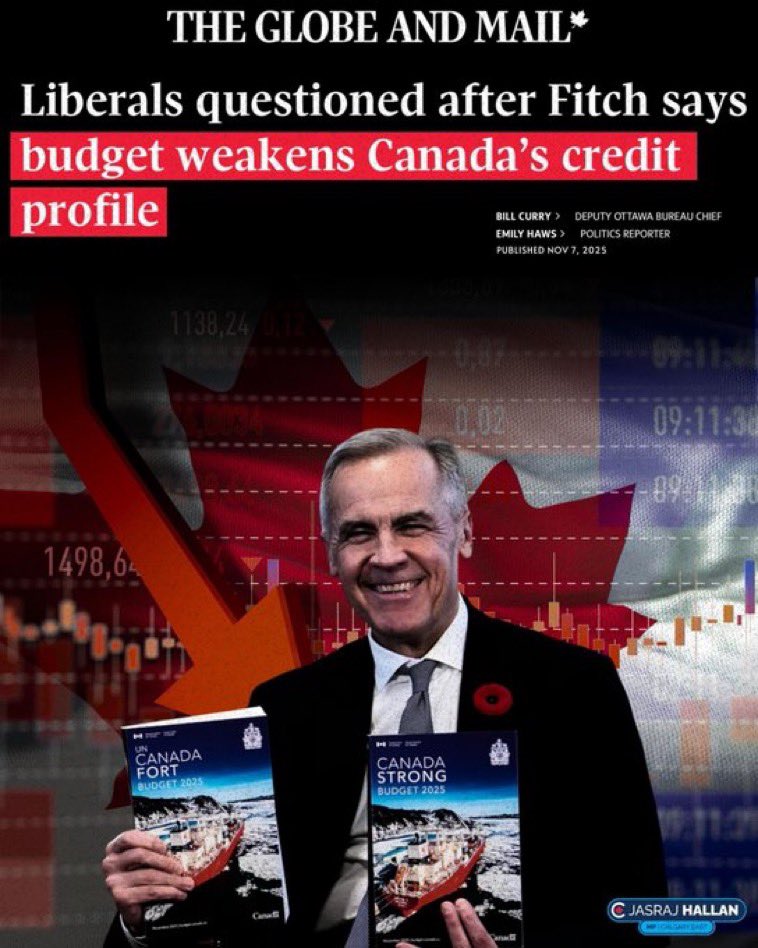
From there, [Poilievre] broadened the attack. He spoke of an entire generation priced out of homeownership, of immigration growing “three times faster than housing and jobs”, of crime rising, and of what he called “the worst economy in the G7”. And then he turned squarely on Carney: “Mr. Carney is actually more irresponsible than even Justin Trudeau was“, citing an 8% increase in government spending, 37% more for consultants, and 62 billion dollars in lost investment — the largest outflow in Canadian history, according to the National Bank.

The message was simple: Liberals talk, Conservatives build. Poilievre painted Carney as a man of speeches and promises, not results. “The mistake the media is making is they’re judging him by his words rather than his deeds“, he said.

It was an opening statement designed less to introduce policy — those details came later — and more to frame the battle. For Poilievre, Carney isn’t just Trudeau’s replacement. He’s Trudeau’s sequel, and in some ways worse.

[…]

Pierre Poilievre didn’t hold back when asked about Mark Carney’s record. His words: “Mr. Carney is actually more irresponsible than even Justin Trudeau was“. That’s not a throwaway line, he backed it with numbers.

According to Poilievre, Carney inherited what he called a “morbidly obese government” from Trudeau and made it worse: 8% bigger overall, 37% more for consultants, and 6% more bureaucracy. He says Carney’s deficit is set to be even larger than Trudeau’s.

Then the jobs number: 86,000 more unemployed people under Carney than under Trudeau. That, Poilievre argued, is the real measure, not the polished speeches Carney gives. His line: “The mistake the media is making is they’re judging him by his words rather than his deeds“.

August 20, 2025

California’s ever-receding High Speed Rail dream

Chris Bray provides an on-the-ground update of California’s ultra-expensive high speed rail project which still has yet to deliver a single passenger from one station to another after nearly 20 years of funding:

Start with a description: “In 2008, California voters approved $9.95 billion of state bond funding as seed money to build an 800-mile high-speed rail (HSR) network connecting Los Angeles and San Francisco, and the Central Valley to coastal cities, at speeds of up to 220 miles per hour, with an expected completion date of 2020.”

Construction started in 2015. Pause for a moment and really notice the date.

Ten years later, the project has consumed $18 billion, and an effort to connect Los Angeles and San Francisco has turned into a much more modest “Phase One” plan to connect the cities of the Central Valley, well east of the coast. The modest declared cost of the proposed LA-to-SF bullet train now looks like this for the much shorter line: “a cost range of $89 billion to $128 billion.” The Trump administration has declined to provide more federal funding for the project, but California is suing to try to keep the federal spigot open.

[…]

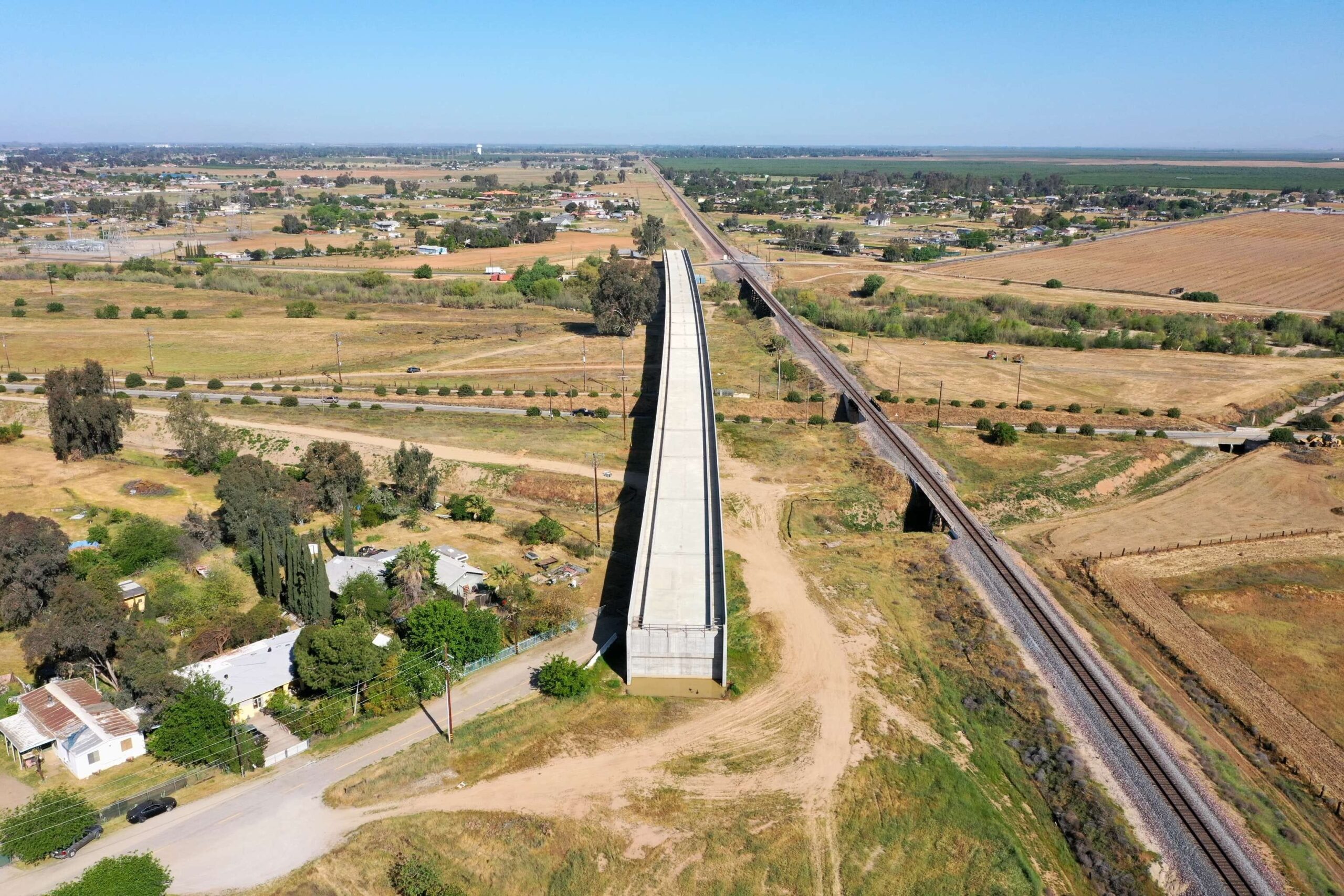
Famously, the California High-Speed Rail Authority has been posting pictures of its huge construction successes on social media:

See, that’s … almost a whole rail line for a bullet train. Obviously!

So!

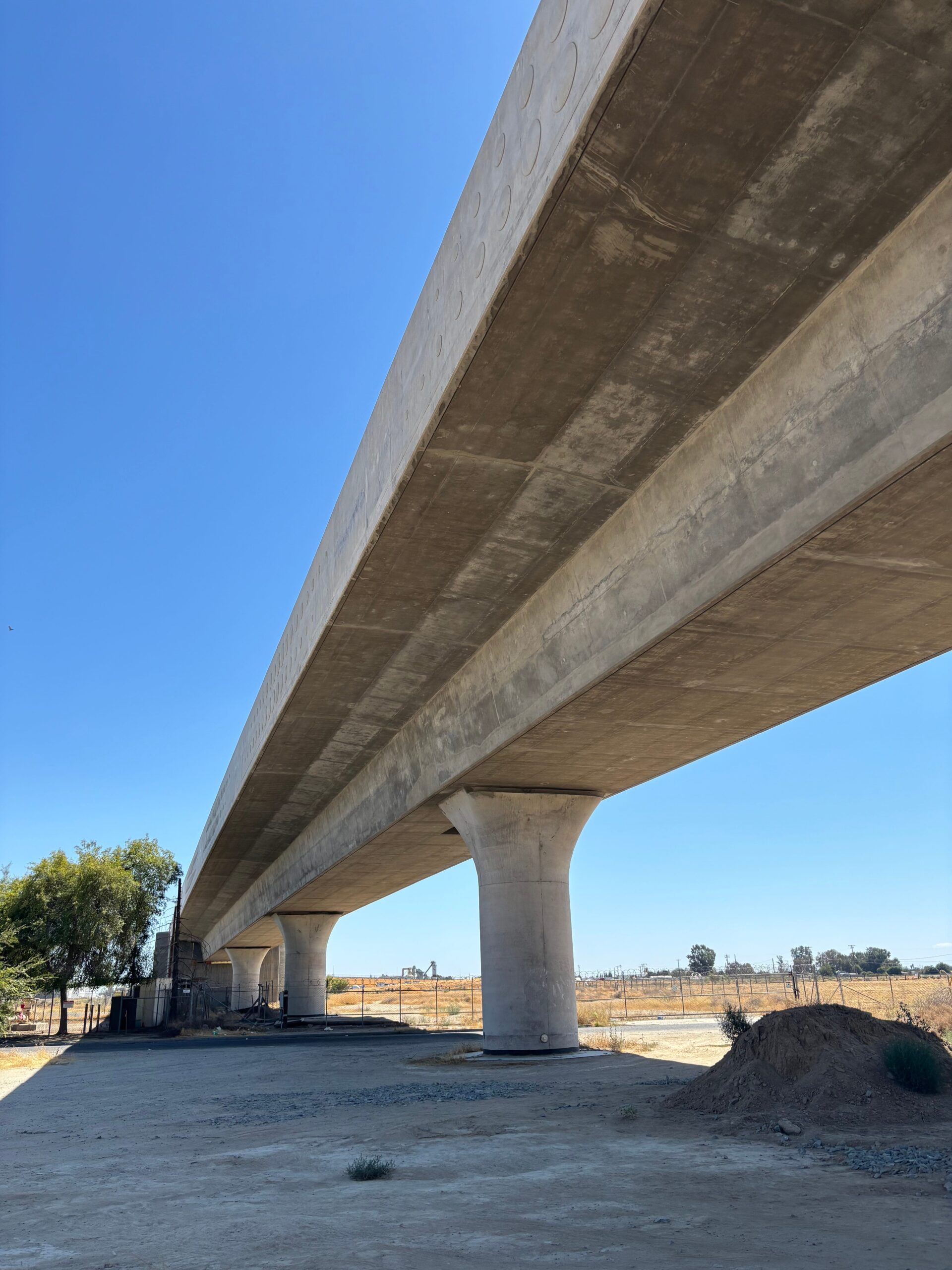
If you ever find yourself in Fresno, and I sincerely hope you don’t, the structures that have been built for “high-speed rail” are surprisingly easy to access. There are several places where those structures aren’t fenced in or guarded. At all. […] So when you see this:

…it’s not that hard to just head up onto the thing. It’s also very dangerous, legally dubious, and something you definitely shouldn’t do. Since it’s an elevated construction site, there are a lot of places without guardrails where you can just fall off the thing, and it’s a long way down.

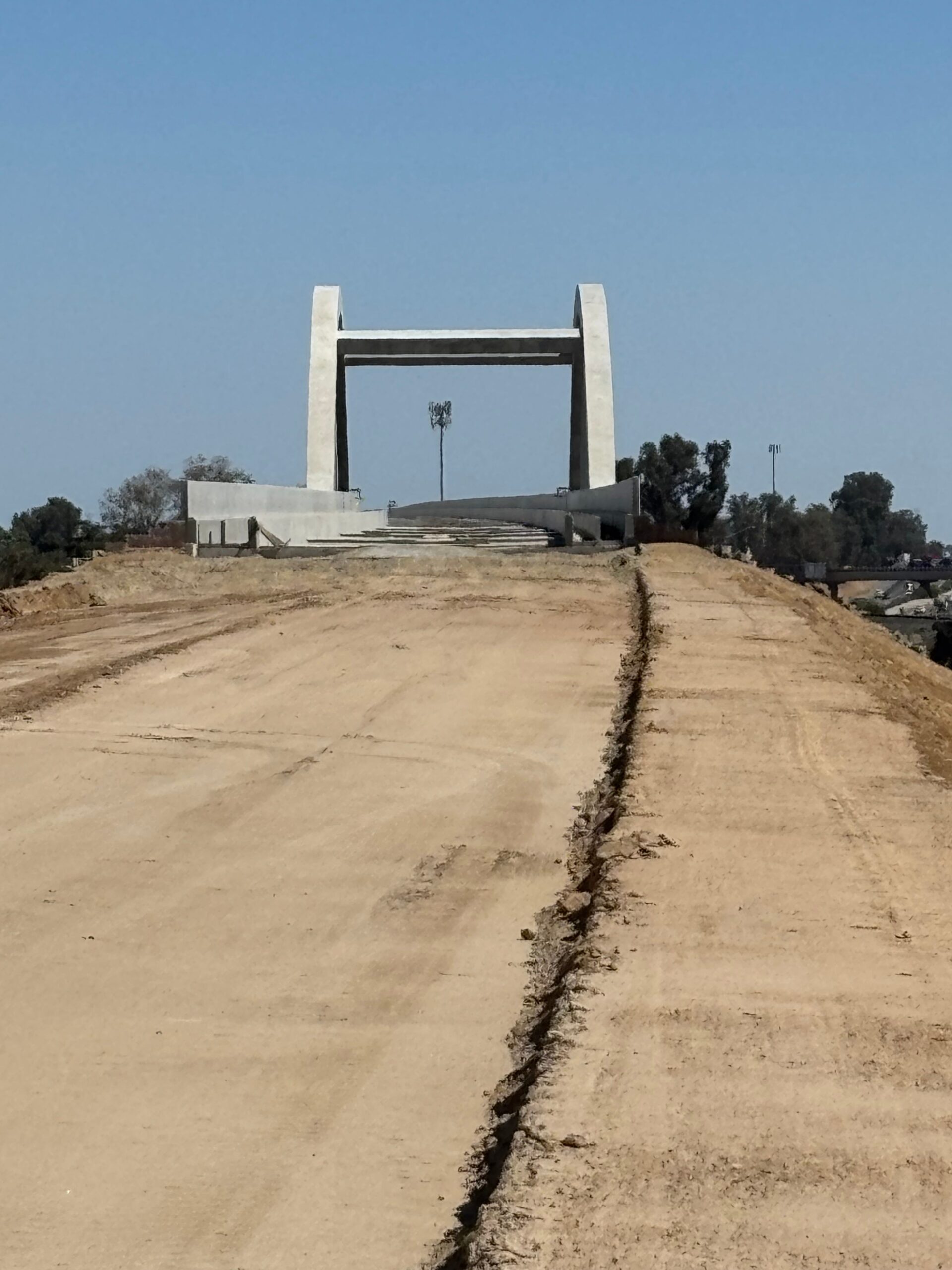
Everyone see this part: Don’t go up there. It’s dangerous. You can fall and die. […] But if you were to climb up onto the thing, which you absolutely should never do, you would see a whole bunch of this:

That’s a section at the northern end of Fresno, looking south.

Of course, California isn’t the only jurisdiction struggling to complete big infrastructure projects: Toronto’s long-awaited Crosstown LRT project got started in 2007 and still has no confirmed completion date, although a faint possibility exists that a portion of the line may open later in 2025.

May 19, 2025

The Roman Empire and climate change

Sebastian Wang considers “what we all know” about the rise and fall of the Roman Empire in the light of more recent research (not all of it politically motivated) into climate change:

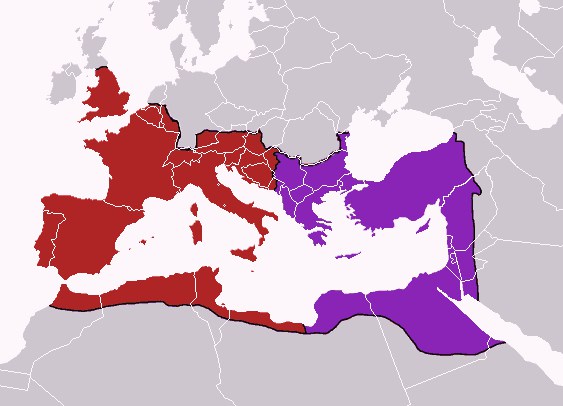
The approximate extent of the Roman empire circa 395AD.

Before we get into climate, and for those who tend to the wholly ignorant spectrum of my readers, we need a quick sketch of Roman history. The Empire officially began in 27 BC, when Octavian — better known as Augustus — became the first emperor. It ended in the west in AD 476, when the last western emperor was kicked out. As said, the eastern half, based in Constantinople, carried on for another thousand years.

Broadly, we can divide Roman history as follows:

  • 27 BC – AD 180: The golden age. Augustus and his successors took over and further expanded a huge empire. There was peace (mostly), trade flourished, and cities grew. People call it the “Pax Romana“.
  • AD 180 – 284: Everything starts to fall apart. This is called the Crisis of the Third Century. Civil wars, foreign invasions, plagues, and economic collapse all hit at once.
  • AD 284 – 395: The empire pulls itself together. Emperors like Diocletian and Constantine bring in reforms. But the empire is now divided for administrative convenience — east and west.
  • AD 395 – 476: The west goes under. It’s invaded. It’s conquered and broken up. Very quickly, it disappears. Though, once again, a parochial view of history, we call this the Fall of the Roman Empire.

The standard histories still blame bad rulers or too many wars. That’s fair enough. There were some very bad rulers, and the wars without number. But if you look at the climate data — tree rings, ice cores, sediment levels — you start to see another pattern underneath what may be called the political and economic superstructure of Roman history.

When Rome came to greatness, the climate was unusually good. From around 200 BC to AD 150, there was a long phase of stable, warm, and mostly wet conditions. Scientists call this the Roman Climate Optimum. In Egypt, the Nile flooded regularly and well. That meant lots of grain. In the Alps, glaciers shrank. In northern Europe, people were growing grapes in places too cold for vineyards today. In the Middle East, the Dead Sea stayed high, showing good rainfall.

This kind of weather made everything easier. Crops were reliable. Surpluses could be taxed. Cities could be fed. Roads and aqueducts could be built and maintained. And because the army was well supplied, the Empire was protected, and could even continue a modest expansion. But, as McCormick and his team point out, the high phase of Nile flooding correlates exactly with the high point of Roman prosperity — and once those floods became less predictable, problems followed.

The good times came to an end. By the mid-second century, a wave of volcanic eruptions thew great masses of dust into the atmosphere, blocking sunlight. Solar activity dropped. The climate became less stable. Then came the Antonine Plague in AD 166. It probably started in the east and spread quickly. Some think it was smallpox. Whatever it was in terms of microbiology, it was almost certainly brought on by changes in the climate. It may have killed a third of the Empire’s population.

Worse was coming. By AD 200, climate records show more erratic rainfall and cooling. In Gaul and the Balkans, harvests became less predictable. Glaciers began to advance again. Speleothem data from Austrian caves shows sharp shifts in rainfall patterns.

At the same time, the empire started to shake. Between 235 and 284, Rome had over twenty emperors. Most were generals who seized power, then got killed. Civil wars broke out. Trade declined. Foreign tribes pushed harder at the frontiers. Coin hoards — money buried for safety — increased in number. That’s usually a sign of fear and instability. Cities shrank. The economy shrivelled.

Was this all because of climate? No — not wholly. A good definition of historical crank is someone who tries to explain everything in terms of one cause or set of causes. But as McCormick et al. argue, bad weather made everything worse. It weakened agriculture, strained supplies, and made people more likely to panic or rebel. In a world without modern logistics, you couldn’t afford bad harvests two or three years in a row.

The empire buckled in the third century, but didn’t collapse. And its survival probably was an effect of human agency. A line of competent Emperors rose from the army and stabilised the frontiers. This line culminated in the reigns of Diocletian and Constantine, who restructured the Empire. They fixed taxes. They reorganised the army. Constantine built his new capital in the east. His successors found Constantinople safer and more strategically useful than Rome.

This being said, around AD 290, climate records suggest a small rebound. Warmer temperatures and better rainfall returned — especially in the east. That helped the eastern provinces recover faster. They had stronger governments and better infrastructure. But climate helped. Dead Sea levels remained relatively high, which meant steady rain in the Levant.

The west wasn’t so lucky. Italy and parts of Gaul stayed unstable. In Britain, pollen records show that farmland was being abandoned. The archaeology matches this, with fewer building projects and shrinking urban centres. The killing shock for the west came in the fifth century. In Central Asia, a long drought began around AD 370. Steppe tribes like the Huns were hit hard. They migrated west, pushing other tribes like the Goths ahead of them. In AD 376, the Goths crossed the Danube into Roman territory. Two years later, they crushed a Roman army at Adrianople. This all happened in the eastern half. But greater wealth and better leadership allowed the government in Constantinople to push the barbarians west. Over the next century, the western empire was hit again and again.

Meanwhile, the weather got worse. Europe cooled. Rainfall patterns shifted. Flooding and crop failures increased. Volcanic sulphur levels spike in the ice core record from Greenland.

Rome was sacked in AD 410. Again in 455. Finally, in 476, the last western emperor was deposed. That was it. The western Roman Empire was gone.

The east survived. But was hardly untroubled. In AD 536, a huge volcanic eruption darkened skies around the world. The sun barely shone. Crops failed. Famines spread.

A few years later, the Plague of Justinian broke out. It probably started in Egypt and spread through trade routes. Some say it killed half the population in affected areas.

Climate and disease worked together. Hunger weakened people. Infection finished them off. As McCormick et al. put it, the event of 536 and the plague that followed created one of the worst demographic shocks in recorded history.

May 12, 2025

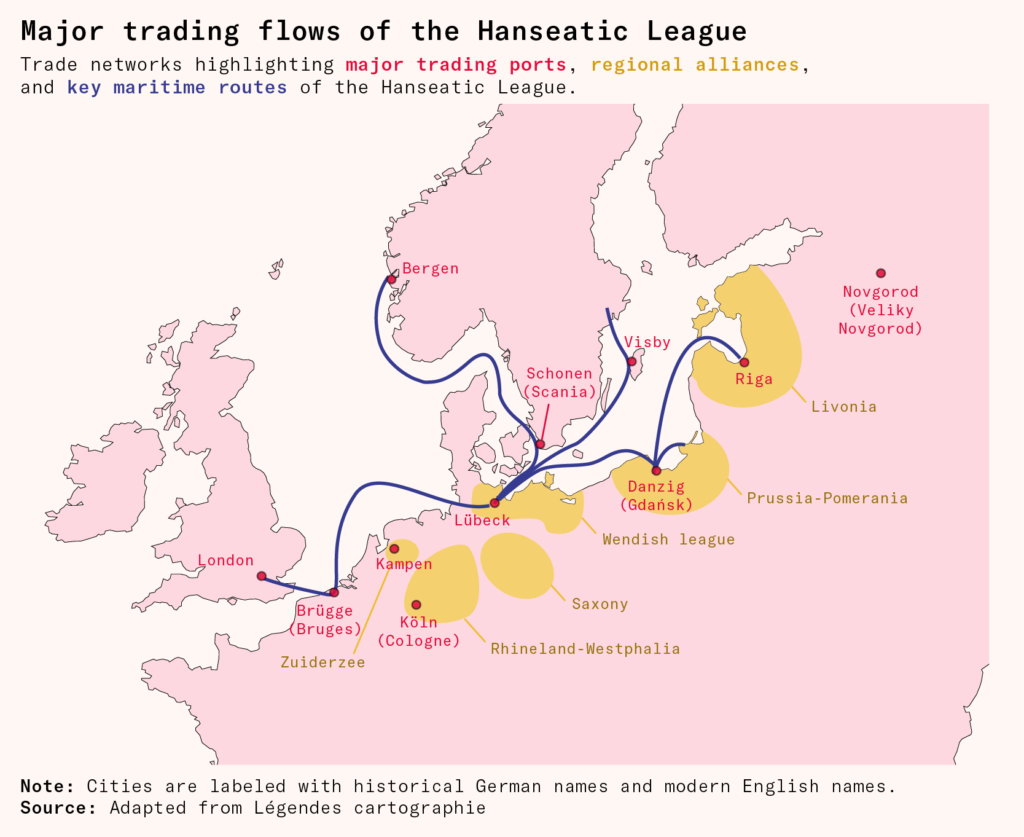
The rise of the Hansa

Filed under: Economics, Europe, Germany, History — Tags: , , , , , — Nicholas @ 05:00

At Works in Progress, Agree Ahmed describes the conditions in northern Europe in the Middle Ages that helped create the Hanseatic League:

Today, we typically think of coalitions in the context of modern electoral politics. So it might be surprising that one of the greatest case studies in the history of coalitions is a community of medieval German merchants known as the Hansa.

Starting as individual traveling traders, the Hansa built up coalitions for collective bargaining, collective action, and collective security. Through this process, they formed Northern Europe’s first ever long-distance trade network.

Without corporate structures, they built supply chains that distributed goods between Northern Europe’s major ports, with capillaries that spread into each city’s hinterlands. Without formal territory, their laws governed trading hubs spanning thousands of miles, from London all the way to Western Russia. And, despite being composed of hundreds of member cities, the Hanseatic League had no head of state. Yet the Hansa still managed to sign treaty after treaty with foreign rulers and, a few times, even fought (and won!) wars.

[…]

Better climate, more arable land, and better farming techniques lifted Europe’s crop yields to above subsistence levels for the first time since the Roman period. After several centuries of decline, Europe’s population grew from 18 million in the 600s to over 70 million by the 1300s – nearly triple the population of the Roman period. The nutritional surplus allowed for Europe’s first significant artisan class since the Roman empire. Each town had common craftsmen like blacksmiths, leatherworkers, and carpenters. But local skills and resources allowed for the emergence of specialized crafts, which were unique to specific regions and could therefore be traded.

Tax-hungry lords across Europe began to set up permanent marketplaces for their growing communities. And so hundreds of towns formed in Europe, filled with workers who had flocked from countryside manors. These towns were the first substantial permanent markets in Northern Europe’s history.

As production accelerated, so did shipping. The warmer climate meant waterways in the North and Baltic Seas were navigable for longer stretches of the year. Meanwhile innovations in boatmaking dramatically improved shipping capacity. Excavations of the few surviving ships from this era show that, in the span of a few centuries, vessels tripled their average tonnage from 10 to 30 while dropping the number of rowers required by a factor of four.

The breakthrough in tonnage starting in 900 can be credited to the knarr, a Viking-style ship that was shorter and wider than the longboat that preceded it, allowing it to load substantially more cargo with a smaller crew. Prior to the knarr, trade convoys had to carry cargo on longboats, which were agile but could only carry small fractions of what the knarr could.
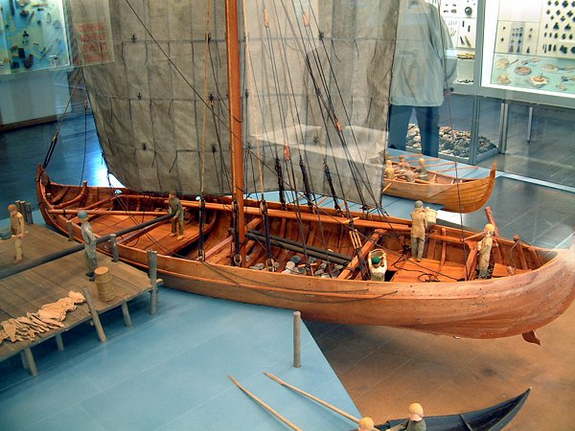
A model knarr in the Hedeby Viking Museum in Germany.
Image Source: Europabild via Wikimedia.

When Northern Europe’s first long-haul merchants set off on their voyages, they faced a world that had not yet been ordered for trade. Sailors had to worry about pirates in the Baltic and shipwrecks at icelocked winter ports.

Riverways gave merchants access to inland communities, where they could find products at lower prices to then sell for a profit in major port cities. But riverside towns were more interested in their own engineering projects or grinding their grain and so would block rivers with dams and water mills, and they would redirect water to irrigate fields.

And even if a river were clear of obstructive mills or dams, it might be heavily punctuated by toll stations. The Rhine River, a key shipping artery that connected inland Germany with the Baltic coast, had tolls approximately every five kilometers.

Under the laws of the Holy Roman Empire, the right to collect tolls on the Rhine could only be granted by the Emperor. But unauthorized tolling stations, or tolls levied in excess of what was authorized, were so rampant that the malpractice had a name: the lonia iniusta (Latin for “unjust tolls”). Some local authorities enforced toll collections along rivers by running chains from bank to bank, making it impossible for a boat to pass without paying. Others would patrol the river on their own boats and deny vessels passage until they paid up.

In the first four years of the Great Interregnum Period (1250–73), when the Empire had no emperor, the number of toll stations on the Rhine doubled to 20. This is the origin of the term “robber baron”: local barons, operating out of riverside castles, would set up illicit toll stations and demand significant shares of merchant cargo in order to pass.

The journey on land wasn’t much easier. Toll booths were similarly common. Nominally, these were to pay the landowner for the maintenance of the roads and bridges but in reality they were usually left dilapidated. Merchants voyaging on land had to load their wares on the backs of mules and horses (which were about a third the speed of ships). The narrow widths of medieval roads meant these caravans stretched out in long lines, leaving animals and cargo physically exposed. These vulnerable, slow moving, value-dense caravans attracted bandits who roamed the isolated roads between towns. It was nearly guaranteed a caravan would face an attempted robbery – either illegally by bandits or (somewhat) legally in the form of a toll shakedown – over the course of a sufficiently long trip.

As a matter of safety, Northern European merchants learned to move together in armed groups. These traveling merchant bands were called hansas, a Lower German word meaning “company” or “troop”. When a hansa formed for a trip, they elected an alderman (literally “elder man”) who would speak on behalf of the group to the various authorities – lords, princes, bishops, and other rulers – they might encounter along the way.

Once they completed the arduous journey, the merchants had to deal with the local governments of their destination cities, each of which had different and constantly changing laws. To protect the local merchants and craftsmen within their city walls from competition, princes might demand exorbitant taxes from foreign merchants or deny them access to the city altogether. Merchant bands had to negotiate collectively to secure the right to trade within each city in which they wished to conduct business. And if they made it into the city walls, they might not make it out: capricious lords might suddenly imprison foreign merchants (as happened to German merchants in England in 1468 and Novgorod in 1494), raid their offices, or seize their merchandise.

Local laws threatened foreign merchants more than they protected them. Most town courts, themselves newly formed, had minimal experience adjudicating long distance commercial disputes. When such disputes did arise, courts could take weeks or months to arbitrate them, and were heavily biased towards locals over foreign traders. Without sovereign states, merchants were left dealing with a fractured landscape of town courts, where each market had its own idiosyncratic laws. And because foreign traders could evade punishment by fleeing overseas, courts in England, France, Italy, and the Holy Roman Empire often collectively punished foreign merchant communities for the unpaid debts of their countrymen.

The lack of early medieval records makes it difficult to quantify just how much Northern European commerce grew as a result of continuous long distance trade. Before the late medieval period, Northern Europe’s archaeological record of trade shows just several dozen sites known as emporiums: small, temporary settlements outside of towns where foreign merchants traded with locals. But starting in the late medieval period (1300 to 1500), Lower German merchants began to change this.

H/T to Niccolo Soldo for the link.

May 8, 2025

Dambusters – Was It Worth It?

HardThrasher
Published 5 May 2025

The third and final part in a series on the Dambusters Raid; looking at the attacks themselves and their aftermath
(more…)

April 30, 2025

Low-energy Europe

Filed under: Britain, Economics, Europe — Tags: , , , , , — Nicholas @ 03:00

Depending on who you read, it appears that the massive power outage in southwestern Europe nearly expanded across the continent, as Spain and Portugal went dark taking parts of other neighbouring countries’ networks down as well. James Price explains that this sort of thing is likely to be a recurring phenomenon as Europe leans ever more heavily on unreliable sources of electricity:

In his 2017 book The Strange Death of Europe, Douglas Murray accused Western European nations of Geschichtsmüde, being weary of history. President Trump might translate this by recycling a sobriquet he used against Jeb Bush — being low-energy.

This is now literally the case in both the United Kingdom and Germany, who have the most expensive energy costs in the developed world. The consequences have been catastrophic, in economic, political, environmental, and even geostrategic terms.

The true tragedy is that so much of the pain is self-inflicted, the result of bad, rushed policy designed to make people feel warm and fuzzy inside, rather than actually keeping people warm.

Net Zero

The commitment in Britain to “net zero emissions by 2050” was signed into law in the dying days of Theresa May’s premiership, as an attempt to give her a “legacy” after three painful years as Prime Minister. That legacy is likely to be lost, like the works of Ozymandias, as the world comes crashing back to economic reality.

The debate over the introduction of net zero was conducted during the Conservative Party’s leadership contest to succeed May, and therefore all attention was away from what would prove to be the most impactful economic decision of the year. The debate lasted all of 90 minutes.

The results have been completely devastating for Britain’s economy in all sorts of corrosive ways. For one, 169 years after Henry Bessemer worked out how to mass-produce steel in Sheffield, Yorkshire, Britain almost lost its ability to make the stuff here in Britain. Global factors like Chinese dumping play a part, but the extent of environmental regulation on British industry is making it impossible to sustain any kind of heavy industry. And now, British Steel has been nationalized once more, lumping the taxpayer with the losses and liabilities, but without doing anything to address the root causes.

But the government meddling does not stop there. In agriculture, a cruel, ideological attack on farmers (over whether farms can be charged inheritance tax) is going to spur more prime farmland to be turned into solar panel fields in a country where the sun often doesn’t shine.

There are now many statutory requirements to push environmental policies in all sorts of areas, to the complete detriment of other requirements, namely economic prosperity, that would otherwise be carefully balanced. So new homes in Britain have to have small windows, to increase insulation efficiency.

HS2, a much delayed and hideously over-budget high speed rail line between London and Birmingham, is building a one-kilometer-long tunnel to prevent bats being harmed by high-speed trains. The tunnel will cost over £100 million to build. Not only is there no evidence that the trains would interfere with bats, but there is also some evidence that the bat tunnel may actually be a bat-killing tunnel.

Hinkley Point C, the only nuclear power station being constructed at the moment in Britain, is having to construct a “fish disco” at huge costs to push fish away from being sucked into the cooling system.

This kind of environmental “everythingism” is not just holding back progress, not just costing huge amounts; it is corrosive of every attempt by people who just want to get on with building and growing — even “green” enterprises. Orsted, an offshore wind company, had to fill in forms five times longer than Tolstoy’s War and Peace, and had to wait nearly three years for a decision to build one farm.

And specifically about the Spanish situation that nearly triggered a Europe-wide blackout, from the social media network formerly known as Twitter:

SPAIN BLACKOUTS: AN ANONYMOUS EXPERT VIEW

From a deep groupchat, last night, translated from Spanish, written by an expert in transmission and distribution of power. Not my words.

“What has happened on April 28 has a well-located origin: the Aragón-Catalonia corridor, which is one of the most important electric highways in Spain. There is not only the electricity produced by our solar and wind farms in the northeast, but also the electricity that we import from France. This international interconnection, although weak (it can only contribute 3% of our demand, well below the minimum of 10% that marks the EU), in times of stress is essential to balance the network.

“At 12:32 p.m., in that Aragón-Catalonia corridor there was an electric [shake]. What exactly does “shake” mean? It means that suddenly and abnormally, the power that flowed through those lines began to vary violently, rising and falling in a very short time. Such abrupt variability can be due to three main causes:

“1. That a relay or transformer on that electric highway detects an abnormal flow of current or voltage (higher or lower than expected) and automatically disconnected to avoid burning or [being] destroyed. This is called that “opens” a relay or switch: it jumps and cuts the passage of electricity to protect itself.

“2. That the enormous concentration of renewable energy in that area (mainly solar and wind) has created an electrical resonance: electronic inverters, which synchronize current, can sometimes be amplified between them if a small voltage alteration (for example, due to clouds, strong wind or a slight failure) extends like an echo to all devices, causing widespread oscillations.

“3. That a wrong control order has been sent (by mistake or attack) from the SCADA systems, disconnecting or reducing the generation of multiple hit plants. There is no confirmation of this possibility yet, but it is being investigated.

“What is known is that as a consequence of that shake, the interconnection with France jumped: we were isolated just at the worst time, when the peninsula needed external support to stabilize.

“Without that French help, the frequency of the peninsular network (which should always be 50 Hz exact) began to drop quickly. The frequency is like the heartbeat of the network: if it falls too much, the systems understand that the patient (the network) is collapsing and automatically disconnected so as not to self-destruct. Thus, in just five seconds, the solar and wind farms were turned off — [they are] very sensitive to frequency variations — 15 GW of power was lost suddenly (60% of all the electricity generated at that time), and the network could not take it anymore: it collapsed completely, showing the Redeia Platform (REE) a “0 MW” nationwide. That does not mean that all the turbines were physically turned off, but there was no generator synchronized at the common frequency of 50 Hz. It was, for practical purposes, a country [turned] off.

“To [restart] a completely dead network, one essential thing is needed: plants that can start in black, that is, without receiving energy from anywhere else. Spain has identified five large hydroelectric jumps capable of doing this. However, and here is one of the great negligences that are coming to light, three of those five groups were stopped in scheduled maintenance, by business decision supervised by the administration. Only two were operational. That made the recovery much slower and weaker than it should be in a normal contingency plan.

“The result is that, after almost 10 hours, only 35% to 40% of the national supply has been recovered, and there are still large areas in the dark or under scheduled cuts.

“The situation reveals a very serious underlying problem:

“Spain is still an energy island: it only has 3% foreign exchange capacity compared to its total demand.”

Part 2:

“The network depends a lot on variable renewables, which are disconnected quickly in the face of any instability.

“The lack of physical inertia reserves (i.e. large rotating masses such as thermal power plants or classic hydraulics) prevents the disturbances from damping.

“And poor maintenance planning left without enough hydraulic muscle to respond to a crisis.

“The most likely causes, with current data, are:

“A combination of technical failure in protection or in synchronization, added to a serious lack of operational forecast and maintenance (probability ≈ 40%).

“The possibility of an intentional cyber-physical attack remains in analysis (≈ 25% estimated probability).

“Other factors such as human error, punctual atmospheric phenomenon or mixed causes complete the rest.

“In short: an initial shake at the most sensitive point of the Spanish network — the Aragón-Catalonia corridor, door to Europe — left the peninsula isolated and vulnerable. The network could not sustain its own demand because it did not have sufficient assistance, nor stable physical reserve, nor enough bootable plants in black. Three of five hydroelectric jumps were out of service when they were most needed.

“For this reason, Spain went out in five seconds, and that is why it still continues to light little by little, fragile, slow and exposed.”

April 19, 2025

Notes on the English debate

In the National Post, Chris Selley explains the apparent utility of having Bloc Québécois leader Yves-François Blanchet included in the English-language leaders’ debate:

Bloc Québécois leader Yves-François Blanchet, 8 November, 2023.
Screencapture from a TVA Nouvelles video via Wikimedia Commons.

Wednesday evening’s French-language leaders’ debate kicked off with a video montage that mentioned President Donald Trump roughly 175 times. (I exaggerate somewhat.) Thursday evening’s English-language leaders’ debate was much less focused specifically on Trump, to an almost bizarre extent. When moderator Steve Paikin offered each leader a chance to ask a question of an opponent, Liberal Leader Mark Carney chose to ask Conservative Leader Pierre Poilievre about the security-clearance drama.

Carney’s campaign clearly believes Poilievre’s Achilles’ heel is Trump. One has to wonder how many Canadians even know the basics of the security-clearance issue. It was a baffling decision.

Ultimately, though, leaving Trump aside was a benefit. One of Carney or Poilievre will be prime minister in a month, and they essentially agree that Trump is too unpredictable to strategize against with any confidence from our current position as a semi-deadbeat country. (Again, I paraphrase.)

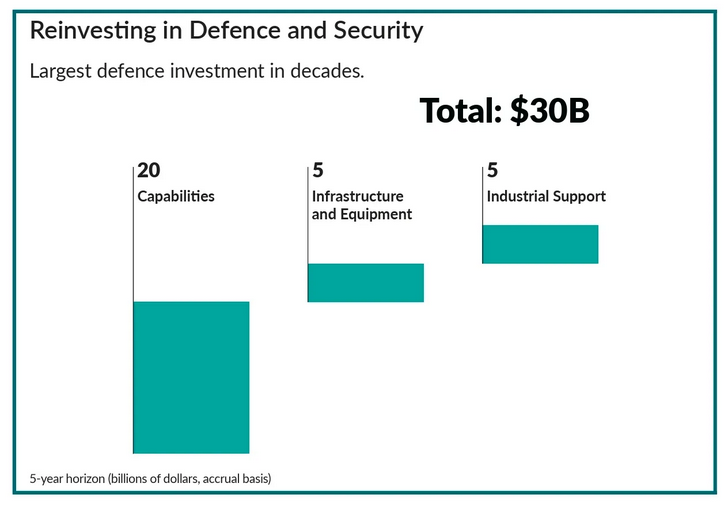
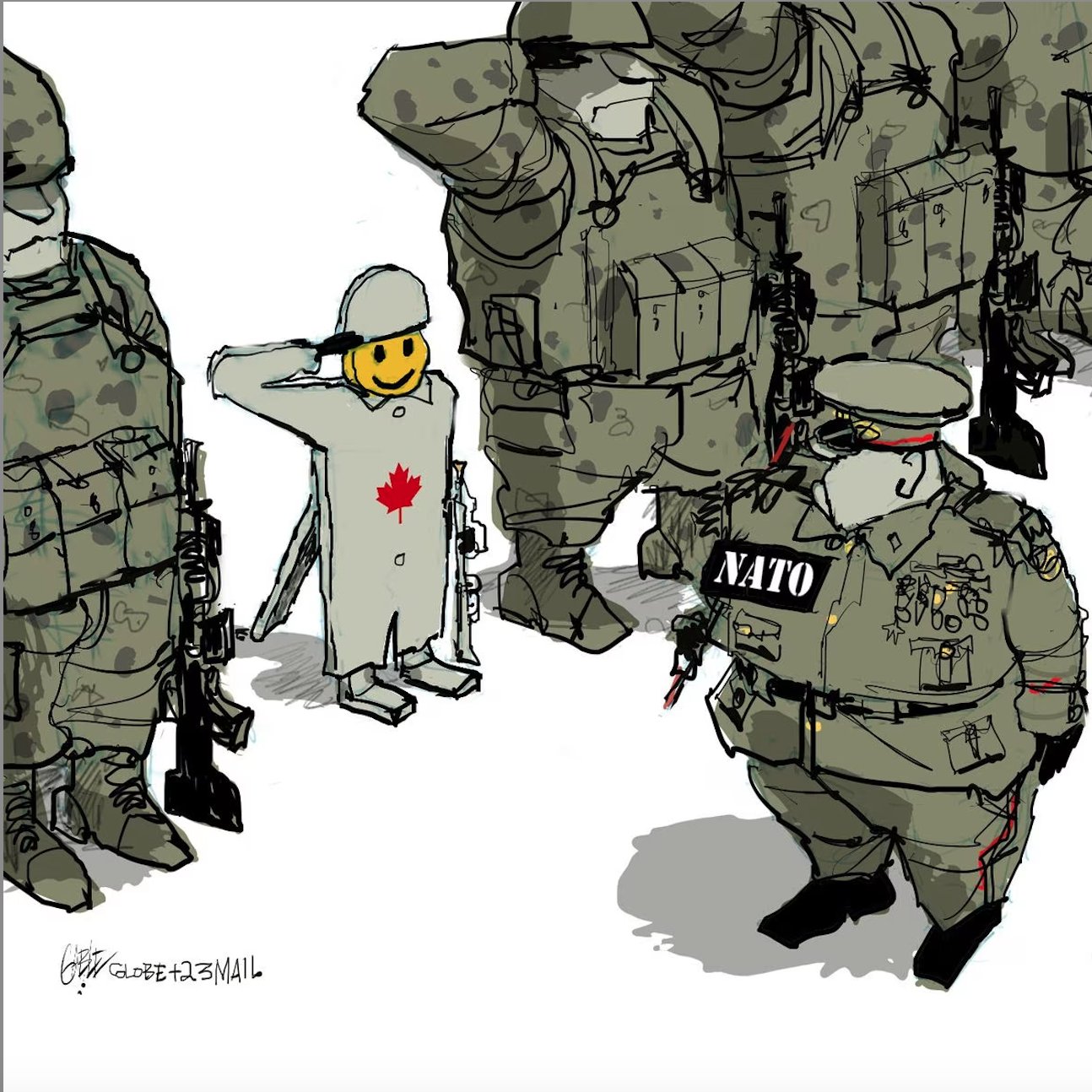
The only thing we can really do is focus on our own affairs in ways that would make us more prosperous, safe, happy and independent in every sense. In the long term: diversify our trade partners in every sector, including natural resources; improve border security, not to satisfy Trump’s fentanyl obsession but to prevent the northbound flow of illegal firearms (and because borders are supposed to be secure by definition); rebuild the military, not because Trump demands it but out of respect to our existing commitment to NATO and our self-styled reputation as An Important Country; fix health care; make housing affordable; get a handle on our own opioid crisis; fix our broken justice system. All that jazz.

You might think in a debate on those big national issues Bloc Québécois Leader Yves-François Blanchet would be extraneous on the stage. I saw plenty of people reacting in real time in that vein: Why is this man here? But in fact Blanchet served a very useful purpose: He was the voice of comfy Canadian inertia; the voice of Quebec continuing to plod along in its own way under Canada’s protective umbrella (ludicrous sovereignty-referendum threats notwithstanding).

Blanchet embodied how Canada might very plausibly abandon the opportunity that Trump’s kick in our rear end, however unjustified, offered us to live up to the greatness Canadian politicians always ascribe — often dubiously — to this country.

“The building of (new) pipelines will take at least 10 to 14 years. Mr. Trump will be 90 years old, not president … and somebody of course less terrible will be there before you can even dream of having oil through (a new) pipeline,” Blanchet said, kiboshing (as ever) the notion of any new pipeline running through Quebec.

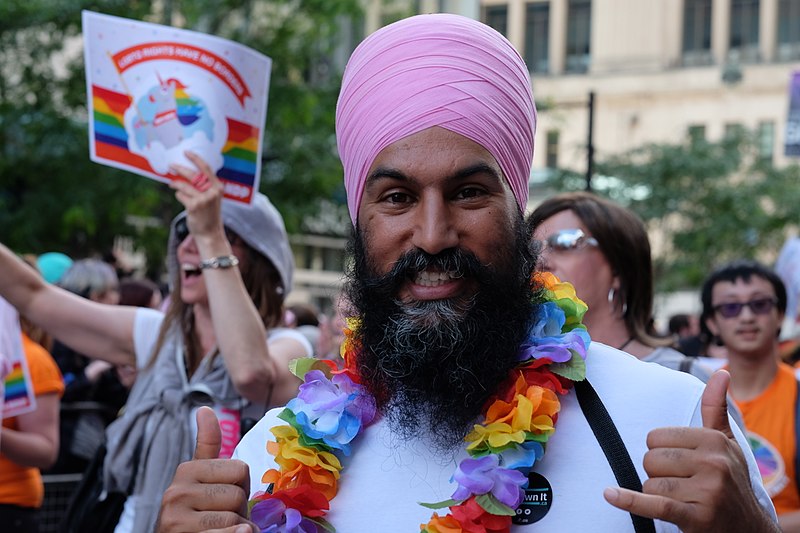
At Rigid Thinking, Damian Penny tries to explain Jagmeet Singh’s performance as the designated interrupter:

Federal NDP leader Jagmeet Singh taking part in a Pride Parade in June 2017 (during the leadership campaign).
Photo via Wikimedia.

I didn’t see the entire English-language, federal leaders debate on Thursday night, but from what I did see each of the leaders accomplished exactly what they set out to do:

  • Pierre Poilievre went on offence against the liberals and tried to show that, despite their new leader, it’s the same bunch that have been running the country for the past decade.
  • Mark Carney portrayed himself as much more measured and serious than either his main opponent or his predecessor.
  • The Bloc guy showed that his only concern is Quebec and by the way everything comes down to immigration.
  • And the NDP’s Jagmeet Singh did everything he had to do to lock down that cushy patronage appointment he’ll receive should Carney be elected Prime Minister on April 28.

    There was far more cross talk and interruptions during Thursday’s English debate compared to the French parlay the night before. Singh in particular seemed prone to interrupt his opponents.

    Poilievre was the main target of Singh’s interjections — so much so that at one point Carney told the NDP leader to let his Conservative rival finish his point.

    When Poilievre criticized the industrial carbon tax, Singh jumped in and accused the Conservatives of wanting to let everyone pollute. Poilievre spoke about border issues and Singh accused the former Conservative government of cutting border officers.

    Poilievre at one point tried to make an appeal to voters: “The question that Canadians have to ask…”

    “Why vote for Conservatives?” Singh jumped in before Poilievre could finish.

As of this writing, the venerable NDP is polling about as well in Canada as Marjorie Taylor Greene, and their only real shot at even maintaining major party status is to peel off voters from the Liberals, since no one even considering voting Conservative will vote for Singh’s party.

The Line‘s election Bullshit Bulletin overflowed with bullshit from the debates, including some Mark Carney blarney about pipelines:

Mark Carney had quite a few howlers during Thursday’s debate, one of which was aptly called out by Blanchet (hey, we like the guy, we just don’t think he should be in the debate). Carney wants to portray himself as strongly pro-pipeline, while still respecting Quebec’s ability to effectively veto national projects. That’s bullshit — and Carney should stop pretending otherwise.

Carney has been out of the country in recent years, so he may be unaware of how things are actually working. To sum up the last 10 years of internecine battles on this point: Pipelines absolutely fall under federal jurisdiction to approve or disapprove. However, provinces can hold up or significantly delay certain aspects of the process, either through legal challenges, or through sandbagging local permitting processes. The big lesson of the last 10 years is that absolute jackshit can actually get built when provincial governments try to encroach on federal authority to stall projects that fall under the national interest. Duties for First Nations consultation add another complicating step. Lastly, this country couldn’t build a goddamn supermarket (and Singh might try to stop it, even if we could) if conditions veer into the quasi-spiritual realm of “social license” — because nobody really knows what that means, or how the bar for “social license” can be cleared when any project at all is even remotely contested or controversial.

Add Bill C-69 to the mix, and what we’re facing is a regulatory quagmire in which the Liberals have made the approvals process practically impossible, and pissed everybody off while doing it. It’s worse than that almost nothing is getting built; the situation is now such a disaster that major projects are no longer even being seriously proposed. Even CEOs of Canadian companies know that their best return on investment is energy projects outside of Canada (see The Line Podcast episode from a week ago and our dispatch last Sunday for discussion of this).

In short, Blanchet is correct, here. A pipeline filled with Alberta oil is not getting through Quebec if Quebec gets a veto. Either we’re in a Confederation in which a federal government has the final say over these things, or Quebec has already separated, and that’s the end of it.

There was also an excellent dissection of the Liberal Party’s endless games with Canadian firearm laws, but it was too long to sensibly excerpt, but if you have any interest or curiosity about why so many Canadian gun owners are pissed off with the feds, it’s worth reading in full.

April 9, 2025

“South Africa is what happens when a country becomes ungovernable”

Niccolo Soldo’s weekend roundup includes some quotes from Lawrence Thomas on what he terms a “racketeer party state“, what the “Rainbow Nation” of South Africa has degenerated into since the end of Apartheid:

South Africa is what happens when a country becomes ungovernable. From endemic sexual crime to farm murders, rolling blackouts, and expropriation, the rest is just the details. What has come to be termed “South Africanization” is not the failed development of a Third-World nation such as Afghanistan or Somalia, but the structural de-development of a once fully modern state that had its own nuclear weapons program. President Trump’s support of Afrikaner farmers has brought global attention to the decaying state of the country and is perhaps the most high-level recognition yet that the 1990s “Rainbow Nation” dream is dead. What’s strange about it all is how much of it happened on purpose.

What may be worse is that the very system of law and government itself has become an instrument to be captured and used to further the mass looting of the country. South Africans of all races inherit a Western political culture and economy. The average South African experiences a strong civic identity, highly active political parties, popular national media networks, a market economy, and a parliamentary constitutional order. The last thirty years saw a coalition of political actors, patronage networks, and organized criminal gangs seize control of and use all the infrastructure of modern government for their own ends.

[…]

While songs like “Kill the Boer” at rallies tend to grab headlines, the most consequential development of late is the passing of expropriation without compensation into law by the supposedly moderate President Cyril Ramaphosa. In addition to further eroding property rights, it emboldens a widespread movement that sees land redistribution as the sole resolution to the country’s racial conflict and views the presence of any white population as fundamentally illegitimate. The radicalization of race politics is the means through which political fights are won, since it plays on the country’s major divides and wins over those who feel left out of the spoils.

On the ground, reports tell of ANC officials tacitly allowing invasions of private and public land by squatters. Occupations of this sort have sometimes preceded the farm murders which have gained media attention internationally, and squatters have now begun to invoke the Expropriation Act. Such groups become the shock troops of political pressure: they can harass and pressure the occupants of the lands they occupy, or worse, while becoming a media story about the “landless oppressed” used to justify broader government action. The broad facilitation of ground-level conflict and crime by those with political power is the defining feature of South Africanization.

[…]

In other words, decay is a burden without benefit. There is no “rock bottom”. Business, political organization, social fabric, and all other forms of Western cultural life just face increasing costs. Some are direct, while others are opportunity costs: how much doesn’t happen because almost no one can guarantee electricity? In a relatively developed country, there’s still much more to break down and expropriate.

The combination of social progressivism with an economic model of managed decline has become orthodoxy in many establishment parties across the developed world. South Africa is a study of the political phenomenon in its advanced stage and a demonstration of what is at stake in defeating it in the rest of the Western world. Flip Buys, leader of the Afrikaner trade union Solidariteit, was likely prophetic when he foresaw that South Africa would become home to the “first large grouping of Westerners living in a post-Western country”.

Emphasis from Niccolo’s excerpts.

April 8, 2025

Mark Carney explained how he viewed the world in his book Values

It’s worth considering what Mark Carney wrote about his beliefs before becoming prime minister and how he’s campaigning right now:

For those who haven’t had the misfortune of parsing through Mark Carney’s Values, it reads like a sermon from a high priest of globalism — polished, preachy, and packed with ideas that should send shivers down the spine of anyone who cares about Canada’s economy, especially Western energy producers.

Writing as the former Bank of Canada governor and a darling of the Liberal elite, Carney pitches a vision of “sustainable finance”, net-zero absolutism, and heavy-handed regulation. To the National Citizens Coalition, it’s clear: this isn’t a roadmap to prosperity, it’s a wrecking ball aimed at the heart of Canada’s resource sector and the West’s economic lifeline.

Start with Carney’s obsession with “revaluing value”. In Values, he argues markets should prioritize climate goals over profit, pushing financial institutions to choke funding for oil and gas.

For Alberta and Saskatchewan, where energy employs tens of thousands and pumps billions into the economy, this is a death knell dressed up as virtue.

Western producers aren’t just businesses; they’re the backbone of communities, powering schools, hospitals, and homes. Carney’s disdain for fossil fuels ignores their role in keeping Canada competitive while our allies and adversaries keep drilling. His plan? Starve the sector, stranding assets and jobs, all to appease international green lobbyists in European nations with nationalized economies on the road to being as disastrous as Canada’s.

Then there’s his love affair with regulation. Values champions policies just like Bill C-69 — the “No More Pipelines Bill” — which Carney has refused to repeal. He sees it as a tool to enforce his net-zero utopia, but for the West, it’s a padlock on progress. Pipelines that could carry Canadian oil to global markets sit stalled, leaving producers at the mercy of low prices, foreign competitors, and now, tariff threats.

Carney’s mental framework both then and now doesn’t just stop projects, it signals to investors that Canada’s energy sector is a no-go zone. The result? Capital flees, jobs vanish, and the West pays the price for the lofty ideals of a London and Manhattan banker, who spends only part of his time in Canada — specifically, Ontario and Quebec.

Dan Knight on Carney’s swing through some British Columbia ridings this week:

A mock campaign sign for the Liberals spotted on social media.

Mark Carney rolled into Victoria this week with the swagger of a man who’s never missed a wine-and-cheese reception in his life and delivered what the Liberal brain trust likely considers a “bold vision” for Canada. But peel back the banker buzzwords and Churchill cosplay, and what you really got was a cringeworthy display of delusion, detachment, and recycled globalist dogma.

He opened his mouth and immediately signaled his marching orders: “clean energy”. Not once. Not twice. It was practically every other sentence. Because when you’re out of ideas, just say “green transition” on repeat and hope nobody checks the receipts.

He’s not just pushing the same failed Liberal climate ideology — he’s doubling down on it.

Carney promised to turn Canada into a “clean energy superpower” — without explaining how, exactly, we get there when his party has spent years shutting down oil and gas, blocking pipelines, and handing our resource wealth to the Americans.

This wasn’t new policy. It was the same Liberal fantasy that has already gutted Alberta, choked investment, and driven electricity prices through the roof — just ask Europe how that’s going. And when it comes to reopening auto plants or restoring manufacturing jobs? Nothing. Not a plan, not a word, not a clue.

And don’t worry — when Trump’s tariffs hit our industries, Carney says we’ll respond with “retaliatory tariffs”. Sounds tough, until you remember who actually pays those. Working Canadians. Line workers. Parts manufacturers. People trying to keep the lights on while Ottawa plays global economic chicken.

Carney’s big idea for recovery? Just keep handing money to the Liberal-connected elite.

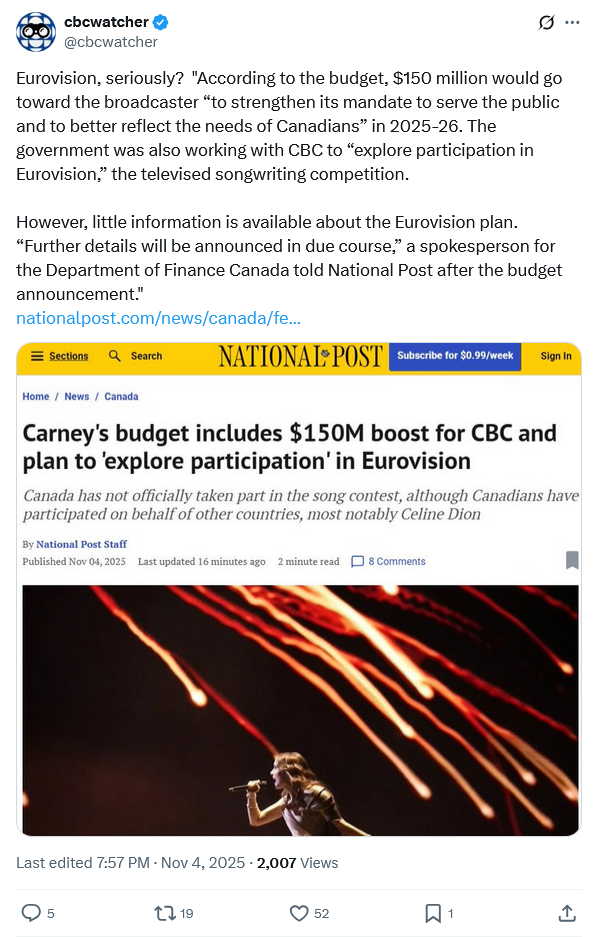
He promised to “give back” — and by that, he means pouring another $180 million into the CBC, the same taxpayer-funded mouthpiece that’s been running interference for the Liberals for nearly a decade. This comes after ArriveCAN, the $60 million QR code boondoggle funneled through Liberal contractors, and countless other slush funds masquerading as “public service”.

While the working class is bracing for a made-in-Ottawa recession, Carney’s pledging more green slogans, more centralized control, and more taxpayer money to keep the illusion alive.

April 4, 2025

Wine, Urine, Paperclips: America’s Secret Weapons of WWII

World War Two
Published 3 Apr 2025

Today Astrid and Anna explore the Simple Sabotage Field Manual, a top-secret WWII guide that taught ordinary people how to disrupt the Nazi war machine. From factory slowdowns to derailed trains, they show how small acts of sabotage targeted Hitler’s regime, and how resistance often came from unexpected places.
(more…)

March 20, 2025

Everyday Life in the Roman Empire – Demography, Income, Life Expectancy

seangabb
Published 12 Sept 2024

Part seven in a series on Everyday Life in the Roman Empire, this lecture discusses demography and life chances during the Imperial period. Here is what it covers:

Introduction – 00:00:00
Our Statistical Civilisation – 00:00:24
Ancient “Statistics” – 00:08:05
How Many Roman Citizens? – 00:18:04
Population of the Empire – 00:21:36
City Populations – 00:27:45
Average Incomes – 00:36:27
Life Expectancy – 00:35:37
Country Life – 00:52:06
Population of Rome – 00:54:39
Feeding Rome – 00:57:40
Roman Water Supply – 01:00:44
Bathing and Sanitation – 01:04:16
Hygienic Value – 01:04:16
Bibliography – 01:06:17
(more…)

February 21, 2025

QotD: Why does it cost so much to build modern infrastructure?

Now, obviously, there are reasons why building infrastructure is expensive. One is that politicians have taken unto themselves the power to decide what infrastructure should be built how and where. Therefore infrastructure is built by fuckwits, obvious, innit? We’ve also allowed far too many people to dip their ladle in the gravy — that £300 million planning inquiry into a tunnel under the Thames. And did I say fuckwits already — that £100 million bat tunnel.

But one reason all these things are so expensive is because we’re not doing them on terra nullius. If we start with a bare field a ground source heat pump might well not be that bad an idea. Communal heating systems into an entirely new development, maybe.

But putting ground heat pumps into central London? Can’t do that ‘ere mate, someone’s already built central London right where you want to dig up. HS2 goes right through some of the most expensive — and inhabited by the highly vocal — countryside in the nation. Edinburgh, minor though it is, still has that central London problem.

This also explains why Mercury Comms employed the ferrets. The tubes already existed and fibreoptic could be stuffed down them. They didn’t have to dig up central London, see?

Agreed, this isn’t one of the world’s truly great insights but it is something to keep in mind. The reason building the infrastructure for the next level of civilisation costs so much is because we already have a civilisation. The existence of which gets in the way of the building men …

Tim Worstall, “Why Is Infrastructure So Damn F’n Expensive?”, It’s all obvious or trivial except …, 2024-11-18.

February 13, 2025

From Ruins to Recovery: The Fight to Rebuild – W2W 004

Filed under: Britain, Economics, France, Germany, History, Japan, Military, USA — Tags: , , , , — Nicholas @ 04:00

TimeGhost History
Published 12 Feb 2025

In 1946, the world is struggling to rebuild from the devastation of WWII. Cities lie in ruins, economies are shattered, and millions are displaced. As the old powers of Britain and France weaken, the rising superpowers — the U.S. and USSR — compete to shape the new world order. Will reconstruction lead to stability, or is the world heading for another conflict?
(more…)

January 31, 2025

I Spent Over 12 Hours on an Amtrak Train (on purpose)

Filed under: Cancon, Railways, USA — Tags: , , , , , , — Nicholas @ 02:00

Not Just Bikes
Published 6 Oct 2024

Chapters
0:00 Intro
1:24 Leaving New York
3:04 On the train
4:03 The views
4:38 Freight trains & delays
5:37 The train is so much more comfortable
7:09 The border crossing
8:17 The Canadian side
9:24 Should you take this train?
10:20 Comparisons to Europe & Japan
11:20 We need more high-speed rail
12:02 VIA Rail is bad … and getting worse
12:58 VIA Rail is expensive!
14:11 The new VIA Rail baggage policy 🤦‍♂️
15:49 Better train service is important!
17:14 Concluding thoughts
(more…)

January 26, 2025

QotD: The map is not the territory, state bureaucrat style

… most bureaucrats aren’t evil, just ignorant … and as Scott shows, this ignorance isn’t really their fault. They don’t know what they don’t know, because they can’t know. Very few bureaucratic cock-ups are as blatant as Chandigarh, where all anyone has to do is look at pictures for five minutes to conclude “you couldn’t pay me enough to move there”. For instance, here’s the cover of Scott’s book:

That’s part of the state highway system in North Dakota or someplace, and though again my recall is fuzzy, the reason for this is something like: The planners back in Bismarck (or wherever) decreed that the roads should follow county lines … which, on a map, are perfectly flat. In reality, of course, the earth is a globe, which means that in order to comply with the law, the engineers had to put in those huge zigzags every couple of miles.

No evil schemes, just bureaucrats not mentally converting 2D to 3D, and if it happens to cost a shitload more and cause a whole bunch of other inconvenience to the taxpayers, well, these things happen … and besides, by the time the bureaucrat who wrote the regulation finds out about it — which, of course, he never will, but let’s suppose — he has long since moved on to a different part of the bureaucracy. He couldn’t fix it if he wanted to … which he doesn’t, because who wants to admit to that obvious (and costly!) a fuckup?

Add to this the fact that most bureaucrats have been bureaucrats all their lives — indeed, the whole “educational” system we have in place is designed explicitly to produce spreadsheet boys and powerpoint girls, kids who do nothing else, because they know nothing else. Oh, I’m sure the spreadsheet boys and powerpoint girls know, as a factual matter, that the earth is round — we haven’t yet declared it rayciss to know it. But they only “know” it as choice B on the standardized test. It means nothing to them in practical terms, so it would never occur to them that the map they’re looking at is an oversimplification — a necessary one, no doubt, but not real. As the Zen masters used to say, the finger pointing at the moon is not, itself, the moon.

Severian, “The Finger is Not the Moon”, Rotten Chestnuts, 2021-09-14.

« Newer PostsOlder Posts »

Powered by WordPress