The first function aircraft were put to in WWI was reconnaissance. In 1914, that might mean locating the enemy in a fast-moving battlefield, but as soon as the trench stalemate set in, reconnaissance mostly meant identifying enemy buildups along the line and – still more importantly – serving as spotters for artillery. It wasn’t a huge cognitive leap to go from having aircraft which identified targets for the artillery to thinking that the aircraft could be the artillery. But as with tanks, the technical limitations of the platforms in use meant that actually meaningful close air support was still two decades away when the war ended. The rapid development of aircraft in these early days means that there is a truly bewildering array of aircraft designs in use during the war, but the Farman F.50 is a good sample for what the most advanced bombers in common use looked like towards the war’s end. It carried a maximum of eight 44kg (totalling 352kg) bombs under the wings, which were dropped unguided. With a maximum speed of less than 100mph and a service ceiling under 5000m, it was also an extremely vulnerable platform: fragile, slow and with a relatively low flight ceiling. The French mainly used bombers at night for this reason.
But how much airpower does it take to really move a division out of position? In 1944, at the start of Operation Cobra as part of the Normandy breakout, it was necessary for US forces to move the powerful armored division Panzer Lehr out of its prepared positions outside of St. Lo. Over the course of an hour and a half, the U.S. Eighth Air Force hit Panzer Lehr with approximately three thousand aircraft, including 1,800 heavy bombers (each of which might have had bomb-loads of c. 2-3,500kg; the attack would have been the equivalent of about 13,000 Farman F.50s (of which only a hundred or so were built!)). By this point, even medium bombers carried bomb loads in the thousands of pounds, like the B-25 Mitchell medium bomber, with a bomb load of 3000lbs (1360kg). This was followed by a hurricane artillery barrage! Despite this almost absurdly awesome amount of firepower (which, to be clear, inflicted tremendous damage; by the end of Operation Cobra, Panzer Lehr – the heaviest and most powerful Panzer division in the west – had effectively ceased to exist), Panzer Lehr, badly weakened was still very capable of resisting and had to be pushed out of position by ground attack over the next three days.
Needless to say, nothing on offer in 1918 or for a decade or more after, was prepared to offer that kind of offensive potential from the air. That kind of assault would have required many thousands of aircraft with capabilities far exceeding what even the best late-war WWI bombers could do. Once again, while close air support doctrine was developed with one eye on the trench stalemate and the role airpower could play in facilitating a breakthrough and restoring maneuver (either by blasting the breakthrough or – as in Soviet Deep Battle doctrine – engaging enemy rear echelon units to bog down reinforcements). But the technology wasn’t anywhere near the decisive point by 1918. Instead, the most important thing aircraft could do was spot for the artillery, which is mostly what aircraft continued to do, even in late 1918.
Bret Devereaux, “Collections: No Man’s Land, Part II: Breaking the Stalemate”, A Collection of Unmitigated Pedantry, 2021-09-24.
May 28, 2022
QotD: Breaking the trench stalemate with tactical air power
February 21, 2022
D-Day – The Biggest Trick in History – WW2 Special
World War Two
Published 17 Feb 2022It’s 1943, the preparations for D-Day have already begun: deceive the Wehrmacht. Here at TimeGhost, we have begun to prepare our D-Day for 2023, and we want you to join us! Find out how in the pinned comment.
(more…)
June 6, 2021
Turning Point of History: D-Day Juno Beach
ch1201
Published 8 Nov 2014Examines Canada’s role on June 6th, 1944 and the advance through Normandy, France.
March 16, 2021
The horrors of British & US Logistics in WW2
TIK
Published 15 Mar 2021The Allies may have had a lot of resources, manpower and industry, but that didn’t mean that their logistics weren’t inefficient or a disorganized mess. Today, we’re going to look at how the British railways were disaster during WW2, how the Americans ran out of fuel on the way to Germany, and why Montgomery called the planning for the invasion of Sicily a “dog’s breakfast”.
⏲️ Videos EVERY Monday at 5pm GMT (depending on season, check for British Summer Time).
The thumbnail for this video was created by Terri Young. Need graphics? Check out her website here https://www.terriyoungdesigns.co.uk/
– – – – –
📚 BIBLIOGRAPHY / SOURCES 📚
Dunn, W. The Soviet Economy and the Red Army, 1930-1945. Praeger Publishers, 1995.
Garvey, J. Operation Husky: The Untold Story of the logistics of the Sicily Invasion. Farm Publications, Kindle 2019.
Hazlitt, H. Economics in One Lesson: The Shortest & Surest Way to Understand Basic Economics. Three Rivers Press, 1979.
MacDonald, J. Supplying the British Army in the Second World War. Pen & Sword Military, Kindle 2020.
Molony, C. The Mediterranean and Middle East, Volume V, The Campaign in Sicily 1943 and The Campaign in Italy 3rd September 1943 to 31st March 1944. The Naval & Military Press LTD 2004, first published in 1973.
Wolmar, C. Fire & Steam: How the Railways Transformed Britain. Atlantic Books, Kindle 2007.British Government, Railways Act 1921, https://www.legislation.gov.uk/ukpga/…
Full list of all my sources https://docs.google.com/spreadsheets/…
– – – – –
⭐ SUPPORT TIK ⭐
This video isn’t sponsored. My income comes purely from my Patreons and SubscribeStars, and from YouTube ad revenue. So, if you’d like to support this channel and make these videos possible, please consider becoming a Patreon or SubscribeStar. All supporters who pledge $1 or more will have their names listed in the videos. For $5 or more you can ask questions which I will answer in future Q&A videos (note: I’m behind with the Q&A’s right now, and have a lot of research to do to catch up, so there will be a delay in answering questions). There are higher tiers too with additional perks, so check out the links below for more details.
https://www.patreon.com/TIKhistory
https://www.subscribestar.com/tikhistoryThank you to my current supporters! You’re AWESOME!
– – – – –
ABOUT TIK 📝
History isn’t as boring as some people think, and my goal is to get people talking about it. I also want to dispel the myths and distortions that ruin our perception of the past by asking a simple question – “But is this really the case?”. I have a 2:1 Degree in History and a passion for early 20th Century conflicts (mainly WW2). I’m therefore approaching this like I would an academic essay. Lots of sources, quotes, references and so on. Only the truth will do.
This video is discussing events or concepts that are academic, educational and historical in nature. This video is for informational purposes and was created so we may better understand the past and learn from the mistakes others have made.
July 28, 2020
Tank Chats #76 Tetrarch Tank | The Tank Museum
The Tank Museum
Published 31 May 2019Tetrarch tanks were flown over on D-Day, 6th June, 1944, for the invasion of France during WW2. Find out more with David Fletcher.
Originally adopted by the British Army as a light tank it became the first British airborne tank.
Many thanks to Vitaly Kuzmin for providing the image of the Tetrarch at Kubinka https://www.vitalykuzmin.netSupport the work of The Tank Museum on Patreon: ► https://www.patreon.com/tankmuseum
Visit The Tank Museum SHOP: ► https://tankmuseumshop.org/
Twitter: ► https://twitter.com/TankMuseum
Tiger Tank Blog: ► http://blog.tiger-tank.com/
Tank 100 First World War Centenary Blog: ► http://tank100.com/ #tankmuseum #tanks #DDay75 #tankchats
July 10, 2020
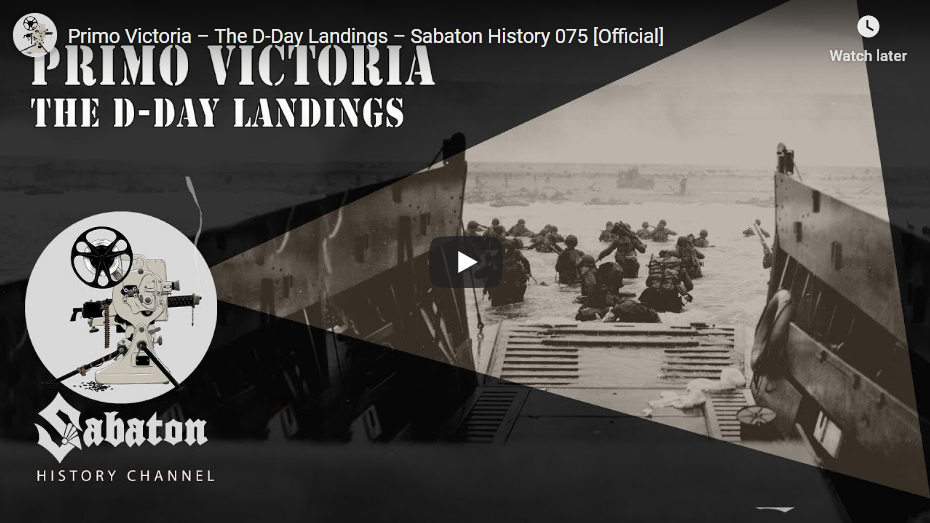
“Primo Victoria” – The D-Day Landings – Sabaton History 075 [Official]
Sabaton History
Published 9 Jul 2020On D-Day, 6th June 1944, Operation Overlord began. The Western Allies unleashed their gigantic amphibious landing on the coast of Normandy. Preluded by a nightly airborne attack and supported by a massive armada of bombers and fleet artillery, their landing-craft reached the fortified beaches. Against a hail of machine-gun bullets, the Allied soldiers stormed the beaches and overran the German bunkers and trenches. A new front was opened and the battle for France began.
Support Sabaton History on Patreon: https://www.patreon.com/sabatonhistory
Listen to “Primo Victoria” on the album Primo Victoria:
CD: http://bit.ly/PrimoVictoriaStore
Spotify: http://bit.ly/PrimoVictoriaSpotify
Apple Music: http://bit.ly/PrimoVictoriaAppleMusic
iTunes: http://bit.ly/PrimoVictoriaiTunes
Amazon: http://bit.ly/PrimoVictoriaAmzn
Google Play: http://bit.ly/PrimoVictoriaGooglePlayWatch the Official Lyric Video of “Primo Victoria” here: https://www.youtube.com/watch?v=qVHyl…
Listen to Sabaton on Spotify: http://smarturl.it/SabatonSpotify
Official Sabaton Merchandise Shop: http://bit.ly/SabatonOfficialShopHosted by: Indy Neidell
Written by: Markus Linke and Indy Neidell
Directed by: Astrid Deinhard and Wieke Kapteijns
Produced by: Pär Sundström, Astrid Deinhard and Spartacus Olsson
Creative Producer: Joram Appel
Community Manager: Maria Kyhle
Executive Producers: Pär Sundström, Joakim Broden, Tomas Sunmo, Indy Neidell, Astrid Deinhard, and Spartacus Olsson
Post-Production Director: Wieke Kapteijns
Edited by: Karolina Dołęga
Sound Editing by: Marek Kaminski
Maps by: Eastory – https://www.youtube.com/c/eastory
Archive by: Reuters/Screenocean – https://www.screenocean.com
Colorizations by: Julius Jääskeläinen – https://www.facebook.com/JJcolorization/
Music by: SabatonSources:
National Archives NARA
Bundesarchiv
US Holocaust Memorial Museum
Imperial War Museums: IWM H 39183, H38244 IWM, 1944_B5234, 944_TR1631, IWM A70 31-1, IWM A70 31-2,EA25734, B 5218, 1944_MH9509, IWM A70 29-1-2, B5225, B5089
Icons from The Noun Project by zidney and Norbert de GraaffAn OnLion Entertainment GmbH and Raging Beaver Publishing AB co-Production.
© Raging Beaver Publishing AB, 2019 – all rights reserved.
July 3, 2020
The History of: The British 1942 Battle Jerkin & Skeleton Battle Jerkin | Uniform History
Uniform History
Published 24 Mar 2020The start of another two parter, in this one we cover the British Battle Jerkin family as it helped inspire the US Normandy Assault Vest’s creation.
Music by: https://www.juliancrowhurst.com/
June 23, 2020
Defending Britain with a Bayonet | Hobart’s Pike | The Tank Museum
The Tank Museum
Published 24 May 2020Director Richard Smith looks at Percy Hobart and the incredible weapon he was issued on joining the Home Guard at the start of WW2; a bayonet welded to a pole. Major General Percy Hobart commanded the 79th Armoured Division and gave the revolutionary, specialised tanks used on D-Day their nickname “Hobart’s Funnies”.
https://tankmuseumshop.org/
Support the work of The Tank Museum on Patreon: ► https://www.patreon.com/tankmuseum
Visit The Tank Museum SHOP & become a Friend: ► https://tankmuseumshop.org/Twitter: ► https://twitter.com/TankMuseum
Instagram: ► https://www.instagram.com/tankmuseum/
Tiger Tank Blog: ► http://blog.tiger-tank.com/
Tank 100 First World War Centenary Blog: ► http://tank100.com/
June 8, 2020
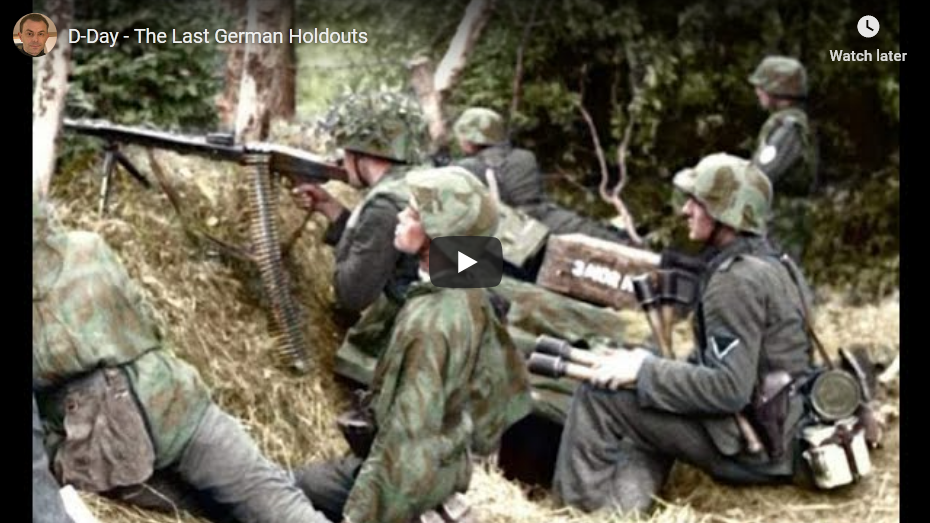
D-Day – The Last German Holdouts
Mark Felton Productions
Published 6 Jun 2020Some German coast defences managed to survive on D-Day and fought on behind Allied lines. One was the massive Douvres Radar Station bunker complex between Juno and Sword Beaches. It held out for 12 days after D-Day, and required a special operation to knock it out.
Visit my audio book channel ‘War Stories with Mark Felton’: https://youtu.be/xszsAzbHcPE
Help support my channel:
https://www.paypal.me/markfeltonprodu…
https://www.patreon.com/markfeltonpro…Disclaimer: All opinions and comments expressed in the ‘Comments’ section do not reflect the opinions of Mark Felton Productions. All opinions and comments should contribute to the dialogue. Mark Felton Productions does not condone written attacks, insults, racism, sexism, extremism, violence or otherwise questionable comments or material in the ‘Comments’ section, and reserves the right to delete any comment violating this rule or to block any poster from the channel.
Credits: YouTube Creative Commons; WikiCommons; Google Commons; Google Maps; Mark Felton Productions; Sartorlelg
May 5, 2020
Killer Tanks – The Cromwell
gusty9053
Published 12 Jul 2014
Confusingly, the tank shown in the thumbnail isn’t a Cromwell, and many later tanks are shown in footage that is supposed to be from the Dunkirk evacuation during the Battle of France in 1940 (including wrecked Churchill tanks on the beach at Dieppe in August 1942). The video covers the genesis of the tank in WW1 and the British interwar neglect of tanks, but almost completely ignores light tanks and infantry tanks to concentrate on “cruiser” tank development. Wikipedia has a useful summary of the Cromwell family of tanks:
The Cromwell tank, officially Tank, Cruiser, Mk VIII, Cromwell (A27M), was one of the series of cruiser tanks fielded by Britain in the Second World War. Named after the English Civil War leader Oliver Cromwell, the Cromwell was the first tank put into service by the British to combine high speed from a powerful and reliable engine (the Rolls-Royce Meteor), and reasonable armour. The intended dual-purpose high velocity gun could not be fitted in the turret and the medium velocity dual purpose gun fitted proved inadequate. An improved version with a high velocity gun became the Comet tank.
The name “Cromwell” was initially applied to three vehicles during development. Early Cromwell development led to the creation of the A24 Cavalier. Later Cromwell development led to the creation of the competing Tank, Cruiser, Mk VIII, Centaur (A27L) design. The Centaur tank was closely related to the Cromwell, both vehicles being externally similar. The Cromwell and Centaur tanks differed in the engine used; the Centaur had the 410 hp Liberty engine, the Cromwell had the significantly more powerful 600 hp Meteor.
The Cromwell first saw action in the Battle of Normandy in June 1944. The tank equipped the armoured reconnaissance regiments of the Royal Armoured Corps, in the 7th Armoured Division, 11th Armoured Division and the Guards Armoured Division. While the armoured regiments of the latter two divisions were equipped with M4 Shermans, the armoured regiments of the 7th Armoured Division were equipped with Cromwells. The Centaurs were not used in combat except for those fitted with a 95 mm howitzer, which were used in support of the Royal Marines during the amphibious invasion of Normandy.
[…]
Post war
After the war, the Cromwell remained in British service, and saw service in the Korean War with the 8th King’s Royal Irish Hussars.
Cromwell Tanks were used by Czechoslovakia and Israel.
Fifty-two Centaur I tanks were donated in early 1946 to the Greek Army, during the opening stages of the Greek Civil War but they were kept in storage due to the lack of trained personnel. In 1947, the first Greek officers returned from training courses in the United Kingdom and training of tank crews began. In April 1948, the Centaurs were organised in three Centaur tank companies initially numbered II, IX and XI, but a year later were renumbered 381, 382, 383 and temporarily attached to Reconnaissance Regiments 391, 392, and 393. The Centaurs saw limited service in the war because battles were fought mainly on mountainous areas, but proved useful in supporting infantry units and in defence of inhabited areas. After the end of the war, in October 1949, the three Centaur companies were organised into the 391 Tank Regiment. The Centaurs were replaced by US built M47s and in 1962 were sold and scrapped. One Centaur is preserved in the Greek Army Tank Museum.
The British army, Austria and Jordan used the upgraded Charioteer version of the Cromwell post-war. Jordanian vehicles saw action in conflicts in the Middle-East.
January 10, 2020
Tank Chats #58 Buffalo & Weasel | The Funnies | The Tank Museum
The Tank Museum
Published 28 Oct 2018Another episode in the Tank Chats Funnies Specials, with David Fletcher looking at the weird and wonderful vehicles of 79th Armoured Division led by Major General Percy Hobart, known as “Hobart’s Funnies”.
The Buffalo, or Landing Vehicle Tracked IV (LVT), is a lightly armoured tracked amphibious carrier. British “Buffaloes” were used in Northern Italy during WW2 and were issued to the 79th Armoured Division in Northwest Europe where they played an important role in the crossing of the Rhine, in 1945. This particular Weasel is amphibious and was used in muddy and wet conditions, rather than directly in water.
Support the work of The Tank Museum on Patreon: ► https://www.patreon.com/tankmuseum
Visit The Tank Museum SHOP: ► https://tankmuseumshop.org/
Twitter: ► https://twitter.com/TankMuseum
Tiger Tank Blog: ► http://blog.tiger-tank.com/
Tank 100 First World War Centenary Blog: ► http://tank100.com/ #tankmuseum #tanks #tankchats
January 2, 2020
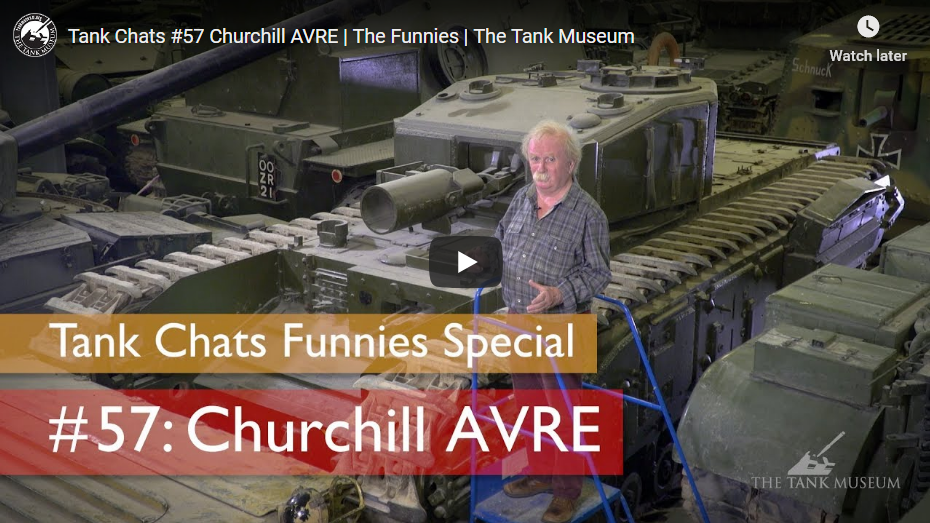
Tank Chats #57 Churchill AVRE | The Funnies | The Tank Museum
The Tank Museum
Published 20 Sep 2018Another episode in the Tank Chats Funnies Specials, with David Fletcher looking at the weird and wonderful vehicles of 79th Armoured Division led by Major General Percy Hobart, known as “Hobart’s Funnies”.
The Churchill AVRE (Armoured Vehicle Royal Engineers). The Churchill was the basis for a number of Funnies. David Fletcher looks at the Fascine, Bobbin, Small Box Girder bridge, Bullshorn plough, Conger, the Churchill ARK and Bridgelayer.
Support the work of The Tank Museum on Patreon: ► https://www.patreon.com/tankmuseum
Or donate http://tankmuseum.org/support-us/donateVisit The Tank Museum SHOP: ► https://tankmuseumshop.org/
Twitter: ► https://twitter.com/TankMuseum
Tiger Tank Blog: ► http://blog.tiger-tank.com/
Tank 100 First World War Centenary Blog: ► http://tank100.com/ #tankmuseum #tanks #tankchats
December 1, 2019
Tank Chats #56 Sherman DD | The Funnies | The Tank Museum
The Tank Museum
Published 7 Sep 2018Another episode in the Tank Chats Funnies Specials, with David Fletcher looking at the weird and wonderful vehicles of 79th Armoured Division led by Major General Percy Hobart, known as “Hobart’s Funnies”.
The Sherman DD, or Duplex Drive, was a term applied to Sherman tanks modified for amphibious operations. DD tanks were used by American, British and Canadian forces in WW2 on D-Day, 6 June 1944; by the Americans again in the south of France and by the Americans and British during the Rhine crossing.
Support the work of The Tank Museum on Patreon: ► https://www.patreon.com/tankmuseum
Or donate http://tankmuseum.org/support-us/donateVisit The Tank Museum SHOP: ► https://tankmuseumshop.org/
Twitter: ► https://twitter.com/TankMuseum
Tiger Tank Blog: ► http://blog.tiger-tank.com/
Tank 100 First World War Centenary Blog: ► http://tank100.com/ #tankmuseum #tanks #tankchats
November 26, 2019
Tank Chats #55 Churchill Crocodile | The Funnies | The Tank Museum
The Tank Museum
Published 18 Aug 2018Another episode in the Tank Chats Funnies Specials, with David Fletcher looking at the weird and wonderful vehicles of 79th Armoured Division led by Major General Percy Hobart, known as “Hobart’s Funnies”.
The Churchill Crocodile was a British flamethrower tank and a variant of the Churchill Mark VII tank. The Crocodile was developed in time for the D-Day landings and used during the Allied invasion of North-West Europe.
Support the work of The Tank Museum on Patreon: ► https://www.patreon.com/tankmuseum
Or donate http://tankmuseum.org/support-us/donateVisit The Tank Museum SHOP: ► https://tankmuseumshop.org/
Twitter: ► https://twitter.com/TankMuseum
Tiger Tank Blog: ► http://blog.tiger-tank.com/
Tank 100 First World War Centenary Blog: ► http://tank100.com/ #tankmuseum #tanks #tankchats
October 13, 2019
Tank Chats #52 Sherman Crab Flail | The Funnies | The Tank Museum
The Tank Museum
Published on 15 Jun 2018Tank Chats playlist https://www.youtube.com/playlist?list…
Another episode in the Tank Chats Funnies Specials, looking at the weird and wonderful vehicles of 79th Armoured Division led by Major General Percy Hobart.
The Flail tank was designed to clear mines and flails were operated in the 79th Armoured Division after D-Day.
Support the work of The Tank Museum on Patreon: ► https://www.patreon.com/tankmuseum
Or donate http://tankmuseum.org/support-us/donateVisit The Tank Museum SHOP: ►https://tankmuseumshop.org/
Press the little bell above to enable NOTIFICATIONS so you don’t miss the latest Tank Museum videos.
Twitter: ► https://twitter.com/TankMuseum
Tiger Tank Blog: ► http://blog.tiger-tank.com/
Tank 100 First World War Centenary Blog: ► http://tank100.com/ #tankmuseum #tanks #tankchats