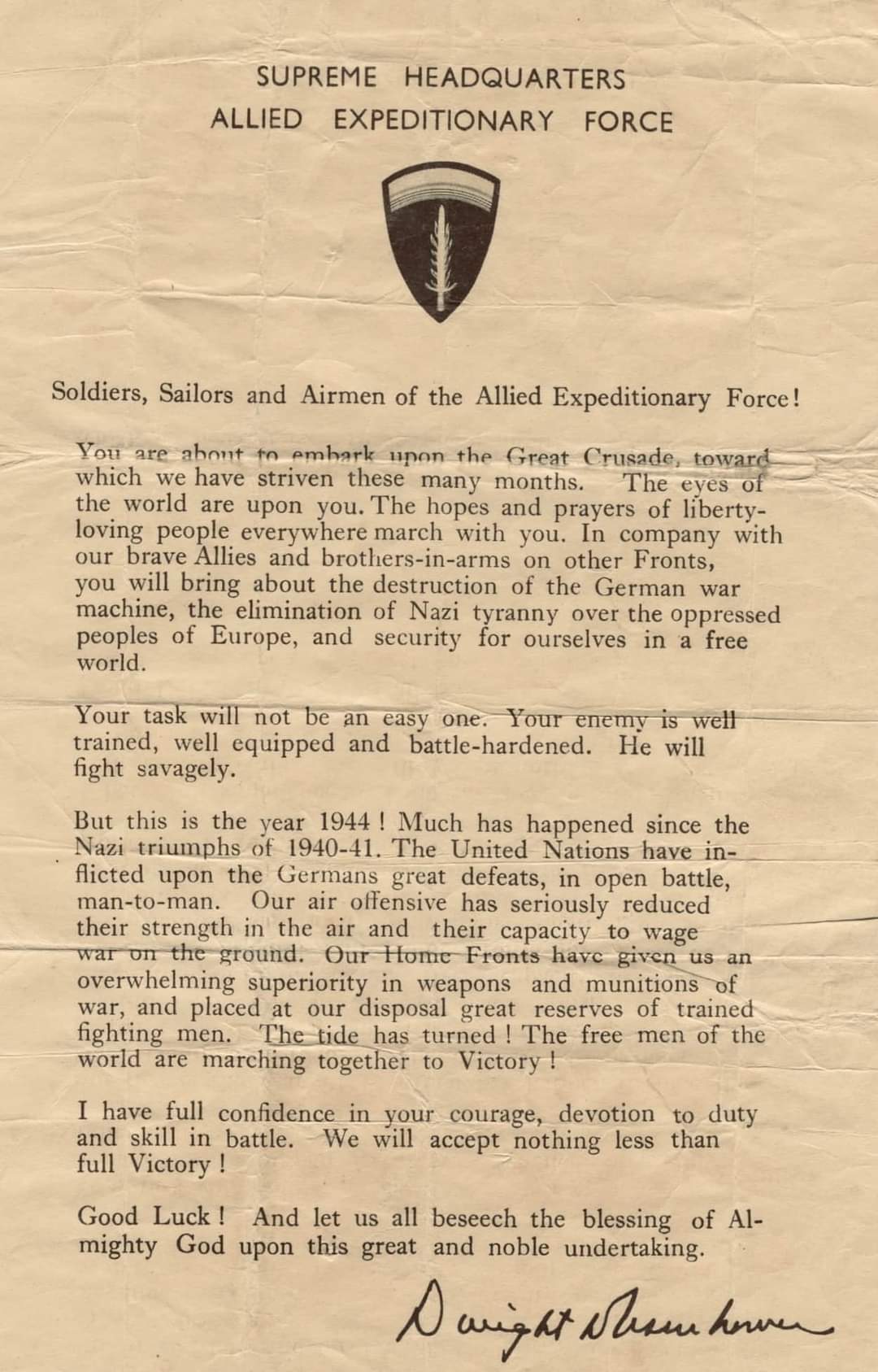
HardThrasher
Published 13 Aug 2025In which we use the @the_fat_electrician as an excuse to talk about the Mulberry Harbours, make a specific threat to a building in the United States and get to oogle at giant bits of floating concrete.
Primary Source – Codename Mulberry – Guy Hartcup, Pen & Sword Military. Kindle Edition 2014 (org. 1977)
(more…)
August 14, 2025
D-Day’s Flat Pack Ports OR Lord HT Gets Cross with The Fat Electrician
Comments Off on D-Day’s Flat Pack Ports OR Lord HT Gets Cross with The Fat Electrician
June 8, 2025
The Canadian Retribution at Normandy | History Traveler Episode 196
The History Underground
Published 16 Feb 2022Throughout the Battle of Normandy, the Canadians of the 3rd Infantry Division and the Germans of the 12th SS Panzer Division found themselves locked in a battle of attrition that would mark some of the most vicious fighting of the entire campaign. After suffering a blow at Buron and Authie (as seen in the last episode) the fight shifted over to a place that has now become legendary in Canadian military history: Bretteville-l’Orgueilleuse. In this episode, we’re joined by Paul Woodadge of @WW2TV to show a small part of one of the most epic fights in the battle to take Normandy.
(more…)
Comments Off on The Canadian Retribution at Normandy | History Traveler Episode 196
June 7, 2025
The 12th SS Massacre of the Canadians in Normandy | History Traveler Episode 195
The History Underground
Published 9 Feb 2022In the days after D-Day, the Canadians of the 3rd Infantry Division found themselves up against the German 12th SS Panzer Division as they were making their way south through Normandy. Tragically, some of these men would find themselves as the victims of one the battle’s worst atrocities at a place called Abbey Ardenne. In this episode, we’re joining Paul Woodadge of @WW2TV as we retrace the final steps of these men as they made their way to a tragic fate at the hands of Kurt Meyer and a division of the most fanatical fighters that Germany threw into the Battle of Normandy.
(more…)
Comments Off on The 12th SS Massacre of the Canadians in Normandy | History Traveler Episode 195
June 6, 2025
Juno Beach Landings | D-Day Normandy June 6, 1944
World War II – Epic Battles
Published 30 Jun 2021Juno Beach was assigned to the 3rd Canadian Infantry Division and the 2nd Canadian Armoured Brigade. It was one of the five invasion beaches of Normandy on D-Day and the second deadliest beach after Omaha.
(more…)
QotD: D-Day landing on Sword Beach
A few hours before the Canadians aboard the Prince Henry climbed into that landing craft, 181 men in six Horsa gliders took off from RAF Tarrant Rushton in Dorset to take two bridges over the River Orne and hold them until reinforcements arrived. Their job was to prevent the Germans using the bridges to attack troops landing on Sword Beach. At lunchtime, Lord Lovat and his commandos arrived at the Bénouville Bridge, much to the relief of the 7th Parachute Battalion’s commanding officer, Major Pine-Coffin. That was his real name, and an amusing one back in Blighty: simple pine coffins are what soldiers get buried in. It wasn’t quite so funny in Normandy, where a lot of pine coffins would be needed by the end of the day. Lord Lovat, Chief of Clan Fraser, apologized to Pine-Coffin for missing the rendezvous time: “Sorry, I’m a few minutes late,” he said, after a bloody firefight to take Sword Beach.
Lovat had asked his personal piper, Bill Millin, to pipe his men ashore. Private Millin pointed out that this would be in breach of War Office regulations. “That’s the English War Office, Bill,” said Lovat. “We’re Scotsmen.” And so Millin strolled up and down the sand amid the gunfire playing “Hieland Laddie” and “The Road to the Isles” and other highland favorites. The Germans are not big bagpipe fans and I doubt it added to their enjoyment of the day.
There was a fair bit of slightly dotty élan around in those early hours. As I mentioned during On the Town, I knew a chap who was in the second wave of gliders from England, and nipped out just before they took off to buy up the local newsagent’s entire stack of papers — D-Day special editions, full of news of the early success of the landings. He flew them into France with him, and distributed them to his comrades from the first wave so they could read of their exploits.
But for every bit of dash and brio there were a thousand things that were just the wretched, awful muck of war. Many of those landing craft failed to land: They hit stuff that just happened to be there under the water, in the way, and ground to a halt, and the soldiers got out waist-deep in the sea, and struggled with their packs — and, in the case of those men on the Prince Henry, with lumpy old English bicycles — through the gunfire to the beach to begin liberating a continent while already waterlogged and chilled to the bone.
The building on the other side of the Bénouville Bridge was a café and the home of Georges Gondrée and his family. Thérèse Gondrée had spent her childhood in Alsace and thus understood German. So she eavesdropped on her occupiers, and discovered that in the machine-gun pillbox was hidden the trigger for the explosives the Germans intended to detonate in the event of an Allied invasion. She notified the French Resistance, and thanks to her, after landing in the early hours of June 6th, Major Howard knew exactly where to go and what to keep an eye on.
Shortly after dawn there was a knock on Georges Gondrée’s door. He answered it to find two paratroopers who wanted to know if there were any Germans in the house. The men came in, and Thérèse embraced them so fulsomely that her face wound up covered in camouflage black, which she proudly wore for days afterward. Georges went out to the garden and dug up ninety-eight bottles of champagne he’d buried before the Germans arrived four years earlier. And so the Gondrée home became the first place in France to be liberated from German occupation. There are always disputes about these things, of course: some say the first liberated building was L’Etrille et les Goélands (the Crab and the Gulls), subsequently renamed — in honour of the men who took it that morning — the Queen’s Own Rifles of Canada house. But no matter: the stylish pop of champagne corks at the Café Gondrée was the bells tolling for the Führer‘s thousand-year Reich.
Arlette Gondrée was a four-year old girl that day, and she has grown old with the teen-and-twenty soldiers who liberated her home and her town. But she is now the proprietress of the family café, and she has been there every June to greet those who return each year in dwindling numbers […] The Bénouville Bridge was known to Allied planners as the Pegasus Bridge, after the winged horse on the shoulder badge of British paratroopers. But since 1944 it has been called the Pegasus Bridge in France, too. And in the eight decades since June 6th no D-Day veteran has ever had to pay for his drink at the Café Gondrée.
Mark Steyn, “June 6th, 1944”, SteynOnline, 2024-06-06.
Comments Off on QotD: D-Day landing on Sword Beach
June 5, 2025
D-Day and the Battle of Normandy on screen
Adrian Goldsworthy. Historian and Novelist
Published 4 Jun 2025Following on from the video about tank battles on screen, we look at the coverage of D-Day and the Battle of Normandy in movie and television dramas. This will be posted two days before the 81st anniversary of D-Day. As usual, this is a little about how good they are as drama and more about the historical background.
00.00 Introduction
02.50 Churchill
11.38 “Men on a mission” movies INTRO
16.45 Female Agents
20.20 The Dirty Dozen
32.06 The Big Red One
38.10 D Day: The Sixth of June
41.58 Patton
46.00 Night of the Generals
47.48 Breakthrough (1950)
49.36 Breakthrough (1971)
50.24 Pathfinders
57.48 Overlord
01.00.00 Storming Juno
01.04.48 My Way
01.12.12 They were not divided
01.17.24 Band of Brothers
01.51.00 Saving Private Ryan
02.33.45 The Longest Day
03.00.48 Conclusion and the “Ones that got away”For the discussion of the Pegasus Bridge project:
• Fighting On Film Podcast: Pegasus Bridge S…
Comments Off on D-Day and the Battle of Normandy on screen
June 3, 2025
Exercise Tiger: The WW2 Cover-Up Before D Day
The History Chap
Published 23 May 2024Exercise Tiger 1944, was a large-scale dress rehearsal for the D-Day landings, off the Slapton Sands in England, that went horribly wrong. Over 700 US servicemen were killed, more than were killed on Utah beach on D-Day itself! With D-Day imminent, Allied Supreme Commander, General Dwight Eisenhower, ordered the disaster to be hushed up.
Following a friendly fire incident on Slapton Sands on the 27th April 1944, a convoy carrying US troops was attacked in the early hours of the 28th by German E-Boats. In what is called the Battle of Lyme Bay, two ships in the convoy were sunk resulting in the loss of over 700 US servicemen. Whilst rumours suggest that there were many casualties resulting from the friendly fire on Slapton Sands, the US Army has always remained tight-lipped. To this day, the mystery remains as to what extent the casualty figures were covered up.
In the 1980’s, a Sherman tank was raised from the seabed. It now stands at the end of Slapton Sands (near the village of Torcross) as a memorial to the young men who died 6 weeks before D-Day during Exercise Tiger.
Chapters
0:00 Intro
0:42 D-Day 1944
1:40 Slapton Sands
2:30 Civilian Evacuation
3:22 Military Build-up
4:58 Exercise Tiger
6:07 Live Fire Disaster
7:37 Convoy T-4
9:15 Spotted by Germans
10:03 E-boat attack
11:41 Battle of Lyme Bay
14:06 Casualty Figures
14:43 D-Day Compromised?
15:37 Cover-up?
17:00 D-Day Success
18:08 Exercise Tiger Remembered
(more…)
Comments Off on Exercise Tiger: The WW2 Cover-Up Before D Day
December 3, 2024
Evolution of Airborne Armour
The Tank Museum
Published Jul 19, 2024Lightly armed airborne troops are at a huge disadvantage when faced with regular troops with heavy weapons and armour. In World War II this led to huge losses for paratroops on Crete and at Arnhem. Since then, many attempts have been made to level the playing field, to give airborne soldiers a fighting chance.
From the Hamilcar gliders of World War II to the C17 Globemaster, we look at how to make a tank fly.
00:00 | Intro
00:47 | The Origins of Airbourne Operations
02:34 | Gliders
07:20 | A Tank Light Enough to Fly?
09:02 | Success & Failure
14:24 | Post-War Solutions
17:41 | Better Aircraft – Better Tanks?
20:15 | Strategic Deployment
21:39 | ConclusionThis video features archive footage courtesy of British Pathé. This video features imagery courtesy of http://www.hamilcar.co.uk/
#tankmuseum
Comments Off on Evolution of Airborne Armour
October 3, 2024
D-Day 80th Anniversary Special, Part 2: Landings with firearms expert Jonathan Ferguson
Royal Armouries
Published Jun 12, 2024This year marks the 80th anniversary of D-Day, the Allied invasion of France which took place on 6th June 1944. From landing on the beaches of Normandy, the Allies would push the Nazi war machine and breach Hitler’s Atlantic Wall.
To commemorate this, we’re collaborating with IWM to release a special two-part episode as Jonathan will look at some of the weapons that influenced and shaped this historic moment in history.
Part 2 is all about the pivotal landings, including allied efforts to aid in its success.
0:00 Intro
0:25 Twin Vickers K Gun
2:03 Pointe du Hoc
2:45 Water off a DUKW’s back?
3:50 Magazines x3
4:07 Usage & History
5:50 Bring up the PIAT!
7:00 Dispelling (Or Projecting via Spigot) Myths
7:55 PIAT Firing Process
9:50 PIAT Details
10:31 Usage in D-Day
13:19 Pegasus Bridge
15:05 MG 42
15:41 Defensive Machine Gun
16:37 1200 RPM
17:35 Replaceable Barrel
19:08 Usage in D-Day
21:37 Sexton Self-Propelled Gun
21:33 Artillery in D-Day
22:15 Run-In Shoot
22:40 The Need for Mobile Artillery
23:25 Usage in D-Day
24:21 17-Pounder Gun
25:11 Function & Usage
26:05 Usage in D-Day
28:00 IWM at HMS Belfast
30:27 Outro
(more…)
Comments Off on D-Day 80th Anniversary Special, Part 2: Landings with firearms expert Jonathan Ferguson
September 19, 2024
D-Day Tanks: Operation Overlord’s Strangest Tanks
The Tank Museum
Published Jun 7, 2024An opposed beach landing is the most difficult and dangerous military operation it is possible to undertake. Anticipating massive casualties in the Normandy Landings, the British Army devised a series of highly specialized tanks to solve some of the problems – Hobart’s Funnies.
Named after General Sir Percy Hobart, commander of their parent unit, 79th Armoured Division, the Funnies included a mine clearing tank – the Sherman Crab, a flamethrower – the Churchill Crocodile and the AVRE – Assault Vehicle Royal Engineers which could lay bridges and trackways, blow up fortifications and much else besides.
In this video, Chris Copson looks at surviving examples of the Funnies and assesses their effectiveness on D Day and after.
00:00 | Introduction
01:24 | Operation Overlord
03:02 | Lessons from the Dieppe Raid
05:31 | The Sherman DD
07:21 | Exercise Smash
14:38 | Sherman Crab
17:38 | The AVRE
19:47 | Churchill Crocodile
23:15 | Did the Funnies Work?
28:49 | ConclusionThis video features archive footage courtesy of British Pathé.
#tankmuseum #d-day #operationoverlord
Comments Off on D-Day Tanks: Operation Overlord’s Strangest Tanks
September 18, 2024
D-Day 80th Anniversary Special, Part 1: Paratroopers, with firearms expert Jonathan Ferguson
Royal Armouries
Published Jun 5, 2024This year marks the 80th anniversary of D-Day, the Allied invasion of France which took place on 6th June 1944. From landing on the beaches of Normandy, the Allies would push the Nazi war machine and breach Hitler’s Atlantic Wall.
To commemorate this, we’re collaborating with Imperial War Museums to release a special two-part episode as Jonathan will look at some of the weapons that influenced and shaped this historic moment in history.
Part 1 is all about the “tip of the spear”, the Paratroopers.
0:00 Intro
0:55 STEN MK V
1:40 History of the Sten
3:00 Mark V Details
6:23 Usage in D-Day
8:38 M1A1 Carbine
10:38 M1A1 Details
14:09 Usage in D-Day
15:01 ACME ‘Cricket’ Clicker
17:31 The Longest Day
19:30 Outro[NR: I’m glad Jonathan discussed that bloody clicker scene in The Longest Day … it bugged me the very first time I watched the movie as a young army cadet in the mid-1970s.]
(more…)
Comments Off on D-Day 80th Anniversary Special, Part 1: Paratroopers, with firearms expert Jonathan Ferguson
June 9, 2024
Rishi Sunak “promised to run Britain like a start-up. On that account, he has delivered. Over one-third of start-ups crash and burn within two years.”
Christopher Gage pokes a bit of goodnatured fun at British Prime Minister Rishi Sunak’s awful start to his re-election campaign:
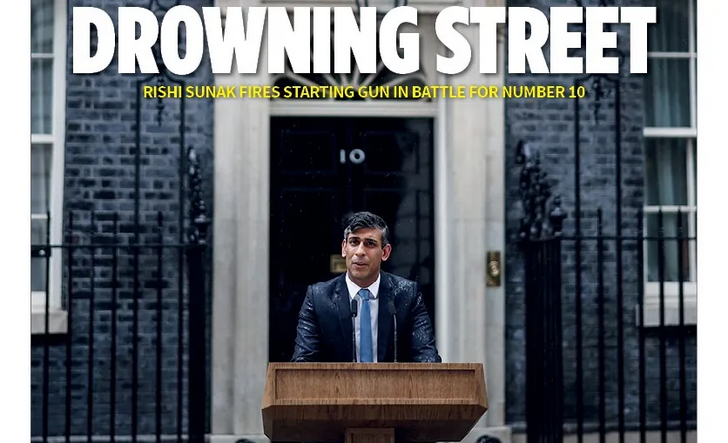
This week on the campaign trail might just enter the political history books. Rishi Sunak, the man who themed his cheese-melting campaign on national pride and security, slipped off home early from the D-Day commemorations in France.
World leaders gathered at the event on Thursday to honour the eightieth anniversary of the Normandy landings. You know, the one attended by a dwindling platoon of demigod veterans in what might be the final year graced by their presence. To riot in understatement, this Irish goodbye was inadvisable. Sunak might as well have fed Dame Judi Dench to a ravenous gang of XL bullies.
Our prime minister is one of life’s thoroughbred winners. From one of the most exclusive schools in the country, Sunak went on to Oxford and then to Stanford university. Cultured in our meritocratic petri-dish, Sunak has never failed a thing in his 44 years. Until now.
Twenty-odd points behind Sir Keir Starmer’s Labour, Sunak is on course to finish third in a two-horse race.
It gets worse. This week, Nigel Farage announced he would stand for election as the Reform Party candidate in Clacton. That Essex seat is the living, breathing symbol of pissed-off, left-behind, white-working-class, fucking furious Great Britain.
The polls have broken Tory brains. Clamped around the Conservative Party’s noodle neck is Reform’s roid-head paws. The right-wing upstarts trail the Tories by just two points. And that was before Sunak committed the social equivalent of tarmacking over the Princess Diana memorial garden on Mothering Sunday.
Sunak is a one-colour pie chart of hubris. After losing the Tory leadership election to the ludicrous Liz Truss, Sunak got handed the top job by knowing the right string-pullers.
Breathless commentary from back then christened Sunak as a Silicon Valley start-up guru, furnishing the boy wonder with LinkedIn adjectives such as “brilliant” and “dynamic”.
Sunak parrots the pediculous babble beloved of that skulk of Babbitts. With blue-sky thinking, and by sticking to core competencies, Sunak has a plan to deliver. He promised to run Britain like a start-up. On that account, he has delivered. Over one-third of start-ups crash and burn within two years.
What went wrong? Sunak’s indulgent reboots have crashed his operating system. Not so long ago, he was an anti-woke culture warrior reeling off tiresome jibes about trans people. Then came spartan Sunak, trusted centurion of the Telegraph comment section.
Too late. For the best part of two years, Sunak has circulated in meme-form around this teetering island, his existence a boundless source of second-hand embarrassment and ridicule.
With each reboot, Sunak sunk further. Ordinary people have a radar for bullshit. They don’t see such shapeshifting as necessary brand correction to meet market demands. They see duplicity and serpentine salesmanship bordering on fraud. In the plain English of my council-estate youth: Sunak is full of shit.
With his wings smeared in beeswax, Rishi Sunak is Icarus. And Nigel Farage is the sun.
Farage is more than the sun. Farage is Wetherspoon Man.
A quick image search for “Nigel Farage beer” provides lots of evidence for “Wetherspoon Man”During his visit to Clacton, Farage fittingly visited a Wetherspoon pub. For the unfamiliar, Wetherspoon pubs owe their undeniable success to their reliability and recognition. Wherever you may be in Britain, you know what you’ll get in one of Wetherspoons’ 800-odd cavernous boozers: A decent burger, chips, and a pint for half an hour on the minimum wage, alongside cheap, cheap booze.
Critics scoff. But they’ll never find a Wetherspoon empty at any time of day or on any day of the week.
Farage announced his plans and doubled the Reform vote in Clacton. His appeal relies on the Wetherspoon model. Farage is the same wherever he may be and to whomever he may talk. Dressed like a hobbyist gamekeeper, he sinks pints, smokes fags, and cracks jokes. “Nigel” says what a sizeable swathe of left-behind Britain thinks and wants to hear.
His many detractors don’t get it. How can a privately educated former metals trader claim to speak for the people? For the same reason that populist parties are lapping at the walls of power across Europe: their erstwhile champions are too busy peacocking their pronouns in their Twitter bios.

June 7, 2024
Battlefield Normandy – The battle of Authie D-DAY + 1
The AceDestroyer
Published Dec 20, 2018June 7, also known as D-Day +1 marked the first battle between the Canadians and the 12th SS Panzer Division Hitlerjugend during the Normandy campaign. When the Canadians attacked Authie, the German 12th SS counterattacked and a large tank on tank battle commenced. The first encounter between the two divisions was immediately a bloody one. The battle unfortunately had a barbaric end as members of the SS murdered several Canadian POW’s in cold blood. Here’s the battle of Authie.
(more…)
Comments Off on Battlefield Normandy – The battle of Authie D-DAY + 1
June 6, 2024
The reason Germany failed on D-Day (Ft. Jonathan Ferguson)
Imperial War Museums
Published Jun 5, 2024Adolf Hitler was looking forward to D-Day. His plan was simple. Reinforce the western defences, launch a furious counterattack, and “throw the Allies back into the sea”. After that, he could turn his full strength against the Soviet Union and end the war. For Hitler, the outcome of this campaign would be decisive.
In the previous episode of our D-Day series we looked at the air battle for Normandy. This time IWM Curator Adrian Kerrison covers the fighting on land. Why were some beaches bloodier than others? Why did German counterattacks fail? And why did it take so long for the Allies to breakout?
To help us answer some of those questions we’ve brought in the Royal Armouries’ Jonathan Ferguson to look at some of the most important weapons of D-Day.
(more…)
Comments Off on The reason Germany failed on D-Day (Ft. Jonathan Ferguson)