Quotulatiousness

November 23, 2025

John Cage’s 4’33” meets the anti-clanker protest song

Ted Gioia on Paul McCartney’s latest single — his first in several years — and what he’s protesting against … clankers in music and the arts:
Paul McCartney is releasing a new track. It’s his first new song in five years — so that’s a big deal. But there’s something even more significant about this 2 minute 45 second release.

The song is silent. It’s a totally blank track — except for a bit of hiss and background noise.

What’s going on? Has Paul McCartney run out of melodies at age 83? Is he nurturing his inner John Cage. Did he simply forget to turn on the mic?

No, none of the above.

Macca is releasing this track as a protest against AI.

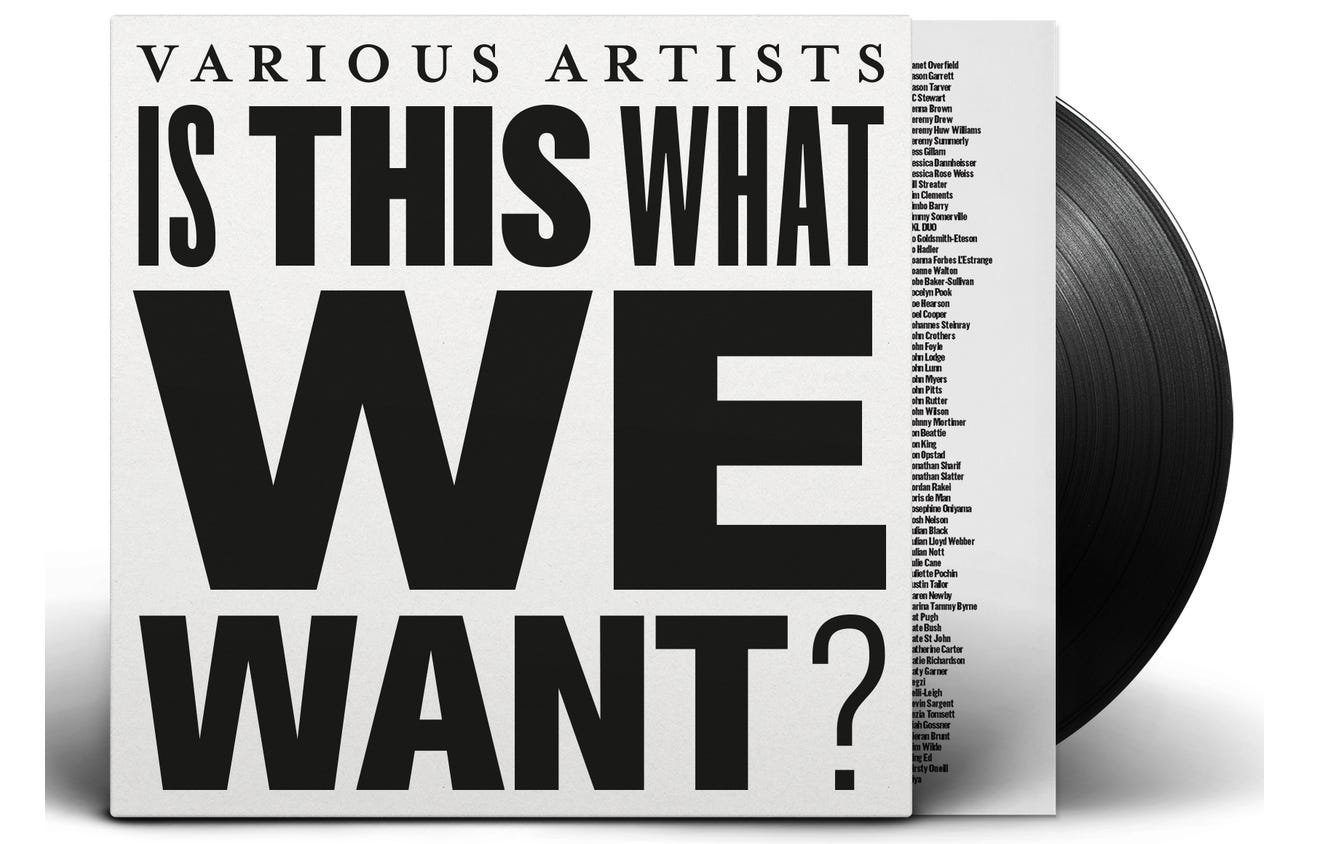
His new “music” is part of an album entitled Is This What We Want? It’s already available on digital platforms, and is now coming out on vinyl. All proceeds will go to the non-profit organization Help Musicians.

“The album consists of recordings of empty studios and performance spaces,” according to the website. In addition to McCartney, more than a thousand musicians are participating, including:

    Kate Bush, Annie Lennox, Damon Albarn, Billy Ocean, Ed O’Brien, Dan Smith, The Clash, Mystery Jets, Jamiroquai, Imogen Heap, Yusuf / Cat Stevens, Riz Ahmed, Tori Amos, Hans Zimmer, James MacMillan, Max Richter, John Rutter, The Kanneh-Masons, The King’s Singers, The Sixteen, Roderick Williams, Sarah Connolly, Nicky Spence, Ian Bostridge, and many more.

I keep hearing that protest music is dead — and has been losing momentum since the Vietnam War. But there’s now a new war, and it’s stirring up creators in every artistic idiom.

They are fighting for their livelihoods and IP rights. And, so far, it’s been a losing battle.

You can see the new battle lines across the entire creative landscape.

Vince Gilligan, one of the most brilliant minds in TV, admits that he “hates AI”. He calls it the “world’s most expensive plagiarism machine”. For his new show Pluribus, he has added this disclaimer to the credits:

    This show was made by humans.

AI represents the exact opposite of creativity, Gilligan warns. It steals the work of others. So any attempt to legitimize it as a creative tool is built on lies. A bank robber might just as well pretend to be a financier. Or an art forger claim to be Picasso.

[…]

This is the new culture war.

And it’s very different from the old culture war — which was a dim reflection of politics. This new battle is happening inside the culture world itself, and threatens to cut off artists from their own longstanding partners and support systems.

This new culture war will only escalate. The stakes are too high, and artists can’t afford to stay on the sidelines. But they face heavy odds, with the richest people on the planet opposed to their efforts.

How will this battle get decided? It really comes down to the audience. If they prefer AI slop, we will witness the total degradation of arts and entertainment.

I’d like to think that people are too smart to fall for this crude simulation of human creative expression. Who wants to hear a bot sing of love it has never experienced? Who wants a nature poem from a digital construct that exists outside of nature? Who wants a painting made by something with no eyes to see?

Will the public find this charming. Or even plausible? Maybe a few twelve year olds and fools, but not serious people. That’s my hunch.

In any event, we will soon find out.
June 24, 2025

Fandom Has Always Been UNHINGED

Jill Bearup
Published 23 Jun 2025

Listen, nobody asked for a history of fanfiction but here we are regardless. From Helen of Troy fix-it fic to Holmes fans unsubscribing en masse when the detective was killed in The Final Problem, fandom has always been this chaotic, and fanfiction has always been with us. In one form or another.

00:00 Did you ask for this? Nah.
01:20 Ancient authors ripping off other ancient authors
03:06 Virgil was a Homer fanboy
04:10 Dante was a Virgil fanboy
05:18 Don Quixote and the Case of the Unauthorised Sequel
08:01 The Statute of Anne
12:35 Gulliver’s Travels NSFW fanart
14:40 Geniuses and Originality
16:51 The Berne Convention
17:20 Character Vibes are not Copyrightable
20:46 The First Modern Fandoms (were Genuinely Unhinged)

Link to Der Spiegel article on copyright and innovation: https://www.spiegel.de/international/…

May 6, 2025

Online tools for the curious autodidact

Filed under: Books, Education, Technology — Tags: , , , — Nicholas @ 03:00

Like many people, I was generally not a good student and in primary and middle school, I was notorious for reading the “wrong” parts of books because they were closer to my interests than the assigned readings, but I generally was able to scrape together enough marks to pass the tests on the stuff I skimmed or ignored. This is hardly the way to make an academic career — not that I would ever have done so, unless they just let me study what I wanted to learn about. A useful Substack for my fellow autodidacts [Wiki] is a side project of military historian Bruce Ivar Gudmundsson called Extra Muros, and his latest post provides some information on tools for online research that you may find helpful:

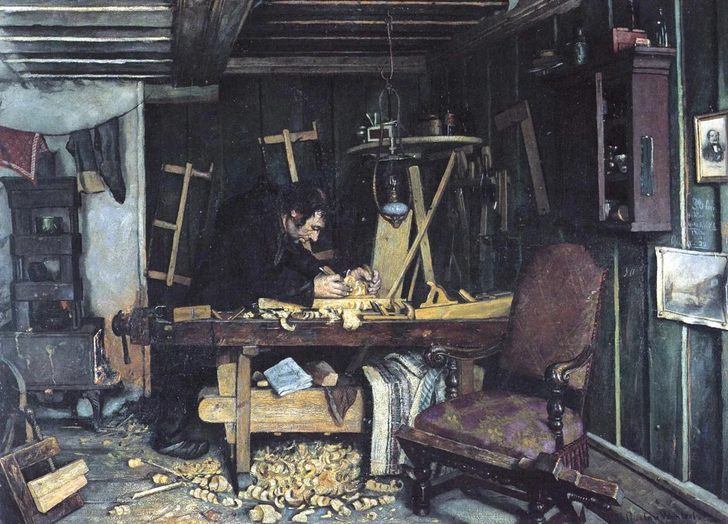
Gustav Wenzel – “A Carpenter’s Workshop” (1881)

The “advanced search” page of the Internet Archive allows you to …

  • download copies, in various electronic formats, of
  • – books and magazines published before 1929

    – works (such as those created by the US Federal Government) that have always belonged to the public domain

    – relatively recent works uploaded by people in countries (such as India) with less restrictive copyright laws

  • examine books that you might want to acquire for enjoyment the old-fashioned way
  • find higher-quality copies of items that you found on Google Books
  • obtain an overview of the works (to include foreign language translations)
  • – of a particular author

    – on a particular subject

The “advanced search” page on the website of the Hathi Trust allows you to do many of the things you might otherwise do on the Internet Archive. Alas (and, indeed, alack), the interface restricts the direct download of complete volumes to “participating institutions”. As a result, mere mortals must either seek the PDF in question on Google Books (to which Hathi provides a direct link) or use a bit of freeware called Hathi Download Helper.

The Hathi Trust search engine also makes it easy for you to search within books for specific words and phrases, as well as the mention of particular places and personalities. Doing the former turns the Hathi Trust database into a kind of dictionary, a way of discovering ways that people in various climes and times have used the expression. Doing the latter converts that cornucopia into an encyclopedia.

The NGram Viewer performs a similar service. However, as it sits atop a smaller collection and suffers from a number of irritating defects, it has proved less useful to me than the website of the Hathi Trust.

November 8, 2024

The McDonald’s ice cream machines are always broken because of bad IP laws

Even if you never to to a McDonald’s yourself, you’ve undoubtedly heard that the ice cream machines are always broken. I hadn’t really given it any thought — it’s been years since I visited one of the restaurants and I don’t eat much ice cream — but Peter Jacobsen explains the weird and infuriating reason for the phenomenon:

Image Credit: Magnus D via Wikimedia | CC BY 2.0

How could it be that the ice cream machines at McDonald’s are so consistently broken? It turns out that, until just recently, it was illegal to hire most people to fix them. To understand why, we’re going to have to take a detour into the world of intellectual property.

DMCA Woes

So why has it been illegal for McDonald’s to hire people to fix their ice cream machines? Well, that’s where the Digital Millennium Copyright Act (DMCA) comes in. If you’re familiar with the DMCA, this is probably confusing to you.

Generally the DMCA is a big concern on content creation platforms like YouTube. If someone uses copyrighted music, he or she gets DMCAed. This is slang for when a video gets its monetization redirected to the owner of whatever copyrighted content was used.

DMCA takedowns draw a lot of ire, because the law is clumsily applied and often even legitimate uses of copyrighted content (e.g., fair use) are punished.

But the DMCA extends beyond content creation, as chronicled by Elizabeth Chamberlain of iFixit, an organization dedicated to ensuring that product owners have the right and ability to fix their property. Many machines ranging from phones to ice cream machines utilize copyrighted software to function. Sometimes, this software limits product users more than they’d like.

For example, iPhone software locks users into particular user interfaces. If a user wants to customize past some point, he’s going to have to modify the software more than the company intends. This process, called jailbreaking, involves breaking through “digital locks”. The DMCA often interprets breaking these locks as a violation of the intellectual property of the copyright holder.

The problem gets even worse when you recognize that fixing things — say, McDonald’s ice cream machines — means breaking past those digital locks. This means anyone hired to repair the machine would need an official blessing from the manufacturer.

However, things have changed. As of October 18th, the opening of digital locks for “retail-level commercial food preparation equipment” is now exempt from this DMCA rule. McDonald’s will now be able to hire from a larger group of people to fix their ice cream machines.

DMCA has allowed a lot of intellectual property owners to collect unearned rents while neglecting the needs of the customers who’ve bought, leased, or rented things that incorporate their IP.

Note, this is only an exemption to the rule. The rule itself has not changed. Second, other regulations still hamper McDonald’s franchise owners from fixing their own machines. As Chamberlain points out:

    While it’s now legal to circumvent the digital locks on these machines, the ruling does not allow us to share or distribute the tools necessary to do so. This is a major limitation … few will be able to walk through it without significant difficulty.

    It is still a crime for iFixit to sell a tool to fix ice cream machines, and that’s a real shame … Without these tools, this exemption is largely theoretical for many small businesses that don’t have in-house repair experts.

So your chance of getting a McFlurry has improved, but you can’t quite celebrate a total win yet.

The battle against these DMCA laws isn’t limited to ice cream machines. The “right to repair” movement spearheaded by organizations including iFixit has already battled for exemptions for medical devices, consumer devices like phones and tablets, vehicles, and assistive technologies for people with disabilities.

August 5, 2024

Short-term technological forecast – “If I were a commercial pilot, I’d tell you to return to your seats and buckle up”

Most of this Ted Gioia post is behind the paywall (and if you can afford it, I’m sure you’d get your money’s worth for a subscription):

I anticipate extreme turbulence on every front for the remaining five months in 2024. You will see it in politics, business, economics, culture, world affairs, the stock market, and maybe even your own neighborhood.

That’s one of the themes of my latest arts and culture update below.

What happened to the AI business model last week?

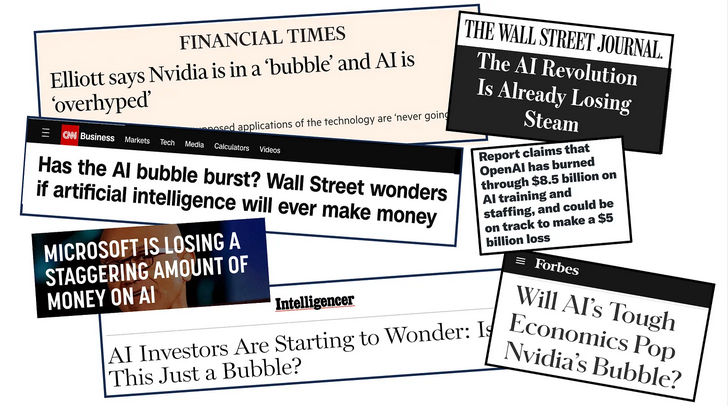
After almost two years of hype, the media changed its opinion on AI last week.

The hype disappeared almost overnight

All of a sudden, news articles about AI went sour like reheated 7-Eleven coffee. The next generation AI chips are delayed, and 70% of companies are behind in their AI plans. There are good reasons for this — most workers now say AI makes them less productive.

People are also noticing that AI businesses want to use the entire electricity grid to run their money-losing bots. Meanwhile AI companies are burning through cash at historic levels. Even under the best case scenario, this all feels unsustainable.

But the worst disclosure, in my opinion, came on July 24 — just eleven days ago.

A study published in Nature showed that when AI inputs are used to train AI, the results collapse into gibberish.

This is a huge issue. AI garbage is now everywhere in the culture, and most of it undisclosed. So there’s no way that AI companies can remove it from future training inputs.

They are caught in the doom loop I described last week.

That same day, the Chief Investment Officer at Morgan Stanley warned investors that AI “hasn’t really driven revenues and earnings anywhere”. One day later, Goldman Sachs quietly released a report admitting that the AI business model was in serious trouble.

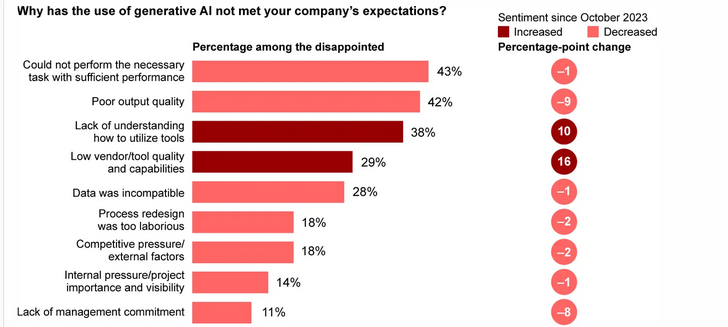
Even consulting firms, who make a bundle hyping this tech, are backtracking. Bain recently shared the following chart (hidden away at the end of a report) which explains why AI projects have failed.

These findings are revealing. They show that management is absolutely committed to AI, but the tools just don’t deliver.

And, finally, last week the media noticed all this.

They published dozens of panic-stricken articles. Investors got spooked too — shifting from greed to fear in a New York minute. Over the course of just two days, Nvidia’s stock lost around $400 billion in market capitalization.

In this environment, true believers quickly turn into skeptics. The whole AI business model gets scrutinized — and if it doesn’t hold up, investment cash flow dries up very quickly.

This is exactly what I predicted 6 months ago. Or even a year ago.

I expect that the next few weeks — or maybe even the next few days — will be extremely turbulent in the AI world.

Buckle up!


The dominant AI music company just admitted that it trained its bot on “essentially all music files on the Internet”.

Suno is a huge player in AI music — it tells investors it will generate $120 billion per year. Microsoft is already using its technology.

But there’s a tiny catch.

The company now admits in a court filing:

    Suno’s training data includes essentially all music files of reasonable quality that are accessible on the open internet, abiding by paywalls, password protections, and the like, combined with similarly available text descriptions

Hey, this is totally illegal — it’s like Napster all over again.

Suno will need to prove that all these copyrighted songs are “fair use” in AI training. I doubt that any court will take that claim seriously.

If the music industry is smart, they will use this violation to shut down AI regurgitation of copyrighted songs.

If the music industry is stupid — run according to my “idiot nephew theory” — they will drop charges in exchange for some quick cash.

January 19, 2024

Music journalism, RIP

Filed under: Business, Media — Tags: , , , — Nicholas @ 05:00

Ted Gioia explains why music journalism is collapsing and who committed the murder:

Just a few weeks ago, Bandcamp laid off 58 (out of 120) employees — including about “half of its core editorial staff“.

And Bandcamp was considered a more profitable, stable employer than most media outlets. The parent company before the recent sale (to Songtradr) and subsequent layoffs, Epic Games, will generate almost a billion dollars in income this year — but they clearly don’t want to waste that cash on music journalism.

Why is everybody hating on music writers?

Many people assume it’s just the same story as elsewhere in legacy media. And I’ve written about that myself — predicting that 2024 will see more implosions of this sort.

Sure, that’s part of the story.

But there’s a larger problem with the music economy that nobody wants to talk about. The layoffs aren’t just happening among lowly record reviewers — but everywhere in the music business.

Meanwhile, almost every music streaming platform is trying to force through price increases (as predicted here). This is an admission that they don’t expect much growth from new users — so they need to squeeze old ones as hard as possible.

As you can see, the problem is more than just music writers — something is rotten at a deeper level.

What’s the real cause of the crisis? Let’s examine it, step by step:

  1. The dominant music companies decided that they could live comfortably off old music and passive listeners. Launching new artists was too hard — much better to keep playing the old songs over and over.
  2. So major labels (and investment groups) started investing huge sums into acquiring old song publishing catalogs.
  3. Meanwhile streaming platforms encouraged passive listening — so people don’t even know the names of songs or artists.
  4. The ideal situation was switching listeners to AI-generated tracks, which could be owned by the streaming platform — so no royalties are ever paid to musicians.
  5. These strategies have worked. Streaming fans don’t pay much attention to new music anymore.

I’ve warned about each of these — but we are now seeing the long-term results.

This is why Pitchfork is in deep trouble. If people don’t listen to new music, they don’t need music reviews.

And they don’t need interviews with rising stars. Or best of year lists. Or any of the other things music writers do for their readers.

But this problem will get much, much worse. Even the people who made these decisions will suffer — because living in the past is never a smart business strategy.

If these execs were albums, they’d deserve a zero score on the Pitchfork scale.

September 13, 2023

Michael Geist on the “relentless misinformation campaign that ignores the foundational principles of copyright law”

Filed under: Books, Cancon, Education, Law — Tags: , , , — Nicholas @ 05:00

Michael Geist discusses a recent public statement from the Canadian Federation of Library Associations on how changes to copyright rules in Canada may seriously impact the public:

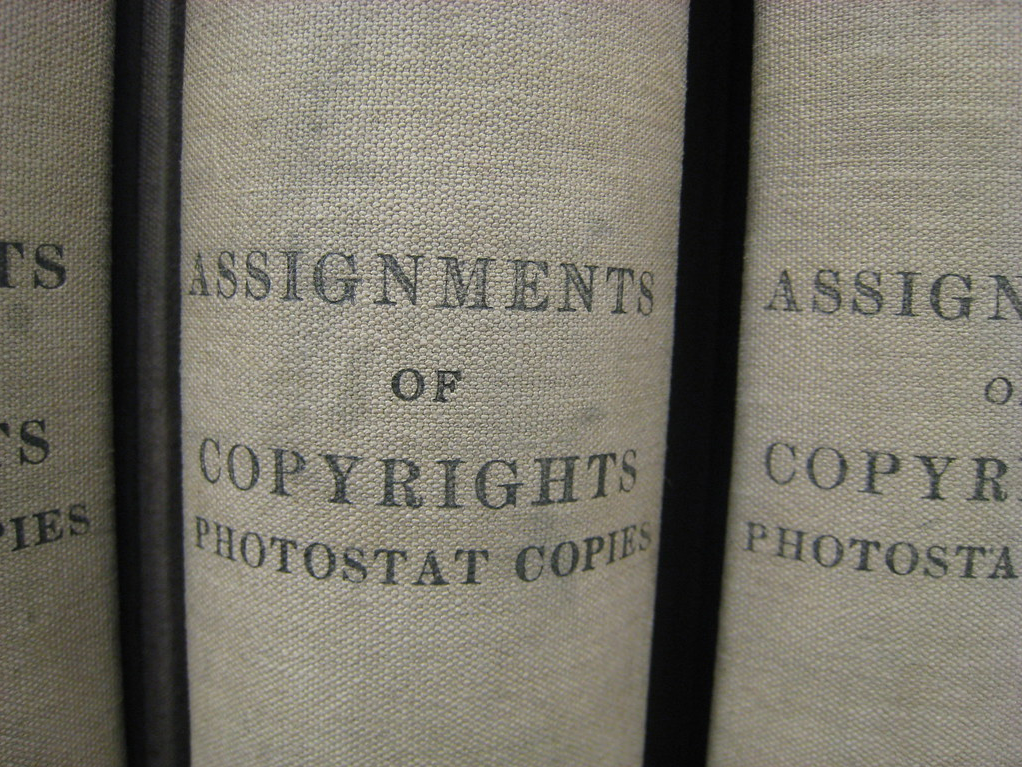
Assignments of copyrights photostat copies by mollyali (CC BY-NC 2.0) https://flic.kr/p/5JbsPE

Last month, the Canadian Federation of Library Associations released a much-needed statement that sought to counter the ongoing misinformation campaign from copyright lobby groups regarding the state of Canadian copyright and the extensive licensing by libraries and educational institutions. I had no involvement whatsoever with the statement, but was happy to tweet it out and was grateful for the effort to set the record straight on what has been a relentless misinformation campaign that ignores the foundational principles of copyright law. Lobby groups have for years tried to convince the government that 2012 copyright reforms are to blame for the diminished value of the Access Copyright licence that led Canadian educational institutions to seek other alternatives, most notably better licensing options that offer greater flexibility, access to materials, and usage rights. This is false, and when the CFLA dared to call it out, those same groups then expressed their “profound disappointment” in the library association.

Yet what has been disappointing is that despite repeated Supreme Court of Canada decisions that have eviscerated the foundation of those groups’ claims, they insist on running back the same failed strategy again and again. The reality of Canadian copyright isn’t complicated: libraries and the education community spend more than ever before on licences that provide the right to access and use materials for teaching, course materials, text and data mining, and a myriad of other purposes. When combined with the gradual disappearance of course packs, the emergence of open access materials, and a reasonable interpretation of fair dealing consistent with Canadian jurisprudence, education and libraries are fulfilling their mandate by responsibly using public dollars to maximize public access, enable student learning, and ensuring fair compensation for authors.

The lobbying efforts to convince government to restrict fair dealing by requiring unnecessary licences would increase student costs, make education less affordable, and render Canada less competitive. Further, it would mean less access to materials for Canadian students. Universities spend hundreds of millions of dollars on licences that grant both access to materials (purchasing physical books has declined dramatically) and the ability to use them. The outdated Access Copyright licences only grant rights to use already acquired works for a limited series of purposes. Reverting back to the unnecessary Access Copyright licence would mean access to fewer works and reduced investment by the education sector and libraries in new works.

I wrote a six-part series on these issues earlier the year including posts on setting the record straight, the shift to electronic licensing, transactional licences, the disappearance of course packs, the emergence of open text books, and a fair reading of fair dealing. Once you get past the rhetoric, the data leaves little doubt that education and libraries are still actively paying for copyright materials through licensing and the claims of mass illegal copying in education in 2023 is a fabrication unsupported by the evidence.

August 27, 2023

When the techno-utopians proclaimed the end of the book

Filed under: Books, Business, Economics, Media, Technology — Tags: , , — Nicholas @ 03:00

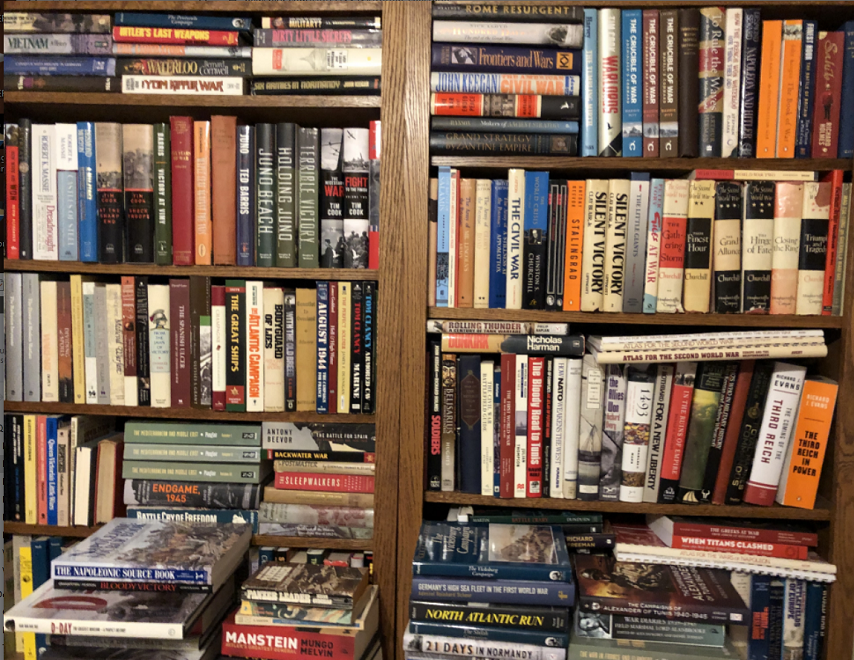
In the latest SHuSH newsletter, Ken Whyte harks back to a time when brash young tech evangelists were lining up to bury the ancient codex because everything would be online, accessible, indexed, and (presumably) free to access. That … didn’t happen the way they forsaw:

By the time I picked up Is This a Book?, a slim new volume from Angus Phillips and Miha Kova?, I’d forgotten the giddy digital evangelism of the mid-Aughts.

In 2006, for instance, a New York Times piece by Kevin Kelly, the self-styled “senior maverick” at Wired, proclaimed the end of the book.

It was already happening, Kelly wrote. Corporations and libraries around the world were scanning millions of books. Some operations were using robotics that could digitize 1,000 pages an hour, others assembly lines of poorly paid Chinese labourers. When they finished their work, all the books from all the libraries and archives in the world would be compressed onto a 50 petabyte hard disk which, said Kelly, would be as big as a house. But within a few years, it would fit in your iPod (the iPhone was still a year away; the iPad three years).

“When that happens,” wrote Kelly, “the library of all libraries will ride in your purse or wallet — if it doesn’t plug directly into your brain with thin white cords.”

But that wasn’t what really excited Kelly. “The chief revolution birthed by scanning books”, he ventured, would be the creation of a universal library in which all books would be merged into “one very, very, very large single text”, “the world’s only book”, “the universal library.”

The One Big Text.

In the One Big Text, every word from every book ever written would be “cross-linked, clustered, cited, extracted, indexed, analyzed, annotated, remixed, reassembled and woven deeper into the culture than ever before”.

“Once text is digital”, Kelly continued, “books seep out of their bindings and weave themselves together. The collective intelligence of a library allows us to see things we can’t see in a single, isolated book.”

Readers, liberated from their single isolated books, would sit in front of their virtual fireplaces following threads in the One Big Text, pulling out snippets to be remixed and reordered and stored, ultimately, on virtual bookshelves.

The universal book would be a great step forward, insisted Kelly, because it would bring to bear not only the books available in bookstores today but all the forgotten books of the past, no matter how esoteric. It would deepen our knowledge, our grasp of history, and cultivate a new sense of authority because the One Big Text would indisputably be the sum total of all we know as a species. “The white spaces of our collective ignorance are highlighted, while the golden peaks of our knowledge are drawn with completeness. This degree of authority is only rarely achieved in scholarship today, but it will become routine.”

And it was going to happen in a blink, wrote Kelly, if the copyright clowns would get out of the way and let the future unfold. He recognized that his vision would face opposition from authors and publishers and other friends of the book. He saw the clash as East Coast (literary) v. West Coast (tech), and mistook it for a dispute over business models. To his mind, authors and publishers were eager to protect their livelihoods, which depended on selling one copyright-protected physical book at a time, and too self-interested to realize that digital technology had rendered their business models obsolete. Silicon Valley, he said, had made copyright a dead letter. Knowledge would be free and plentiful—nothing was going to stop its indiscriminate distribution. Any efforts to do so would be “rejected by consumers and ignored by pirates”. Books, music, video — all of it would be free.

Kelly wasn’t altogether wrong. He’d just taken a narrow view of the book. He was seeing it as a container of information, an individual reference work packed with data, facts, and useful knowledge that needed to be agglomerated in his grander project. That has largely happened with books designed simply to convey information — manuals, guides, dissertations, and actual reference books. You can’t buy a good printed encyclopedia today and most scientific papers are now in databases rather than between covers.

What Kelly missed was that most people see the book as more than a container of information. They read for many reasons besides the accumulation of knowledge. They read for style and story. They read to feel, to connect, to stimulate their imaginations, to escape. They appreciate the isolated book as an immersive journey in the company of a compelling human voice.

May 28, 2023

Musical copyrights – crazy as they are now – were far worse in history

Filed under: Britain, Economics, Europe, France, History, Law, Media — Tags: , , , , — Nicholas @ 03:00

Ted Gioia outlines just how the concept of musical copyrights produced even more distortions in the past than they do today:

Assignments of copyrights photostat copies by mollyali (CC BY-NC 2.0) https://flic.kr/p/5JbsPE

People tell me it was never this bad before. But they’re wrong. The music copyright situation was even crazier 500 years ago.

The Italians took the lead in this, and it all started with Ottaviano Petrucci gaining a patent from the Venetian Senate for publishing polyphonic music with a printing press back in 1498. Andrea Antico secured a similar privilege from Pope Leo X, which covered the Papal States.

It’s hard to imagine a Pope making decisions on music IP, but that was how the game was played back then. In 1516, Pope Leo actually took away Petrucci’s monopoly on organ music, and gave it to Antico instead. You had to please the pontiff to publish pieces for the pipes.

Over time, this practice spread elsewhere. In a famous case, the composer Lully was granted total control over all operas performed in France. He died a very wealthy man — with five houses in Paris and two in the country. His estate was valued at 800,000 livres—some 500 times the salary of a typical court musician.

But the most extreme case of music copyright comes from Elizabethan England. Here the Queen gave William Byrd and Thomas Tallis a patent covering all music publishing for a period of 21 years. Not only did the two composers secure a monopoly over English music, but they also could prevent retailers or other entrepreneurs in the country from selling “songs made and printed in any foreign country.”

If anybody violated this patent, the fine was 40 shillings. And the music itself was seized and given to Tallis and Byrd. They probably had quite a nice private library of scores by the time the patent expired.

But that’s not all. Byrd and Tallis’s stranglehold on music was so extreme it even covered the printing of blank music paper. That meant that other composers had to pay Tallis and Byrd even before they had written down a single note. Not even the Marvin Gaye estate makes those kinds of demands.

Tallis died a decade after the patent was granted—putting Byrd in sole charge of English music. I’d like to tell you that he exercised his monopoly with a fair and open mind—especially because I so greatly esteem Byrd’s music, and also I’d like to think that composers are better at arts management than profit-driven businesses. But the flourishing of music publishing in England after the expiration of the patent — when, for a brief spell, anybody could issue scores — makes clear that Byrd did more to constrain than empower other composers.

January 1, 2023

Public Domain Day for 2023

Filed under: Books, Law, Media, USA — Tags: , , — Nicholas @ 03:00

Duke University School of Law’s Center for the Study of the Public Domain highlights just some of the creative works that have entered into the public domain (in the United States: other countries’ laws may vary substantially) today:

Here are just a few of the works that will be in the US public domain in 2023. They were supposed to go into the public domain in 2003, after being copyrighted for 75 years. But before this could happen, Congress hit a 20-year pause button and extended their copyright term to 95 years. Now the wait is over. (To find more material from 1927, you can visit the Catalogue of Copyright Entries.)

Books:

  • Virginia Woolf, To the Lighthouse
  • Arthur Conan Doyle, The Case-Book of Sherlock Holmes
  • Willa Cather, Death Comes for the Archbishop
  • Countee Cullen, Copper Sun
  • A. A. Milne, Now We Are Six, illustrated by E. H. Shepard
  • Thornton Wilder, The Bridge of San Luis Rey
  • Ernest Hemingway, Men Without Women (collection of short stories)
  • William Faulkner, Mosquitoes
  • Agatha Christie, The Big Four
  • Edith Wharton, Twilight Sleep
  • Herbert Asbury, The Gangs of New York (the original 1927 publication)
  • Franklin W. Dixon (pseudonym), The Tower Treasure (the first Hardy Boys book)
  • Hermann Hesse, Der Steppenwolf (in the original German)
  • Franz Kafka, Amerika (in the original German)
  • Marcel Proust, Le Temps retrouvé (the final installment of In Search of Lost Time, in the original French)

[…]

Movies Entering the Public Domain

  • Metropolis (directed by Fritz Lang)
  • The Jazz Singer (the first feature-length film with synchronized dialogue; directed by Alan Crosland)
  • Wings (winner of the first Academy Award for outstanding picture; directed by William A. Wellman)
  • Sunrise (directed by F.W. Murnau)
  • The Lodger: A Story of the London Fog (Alfred Hitchcock’s first thriller)
  • The King of Kings (directed by Cecil B. DeMille)
  • London After Midnight (now a lost film; directed by Tod Browning)
  • The Way of All Flesh (now a lost film; directed by Victor Fleming)
  • 7th Heaven (inspired the ending of the 2016 film La La Land; directed by Frank Borzage)
  • The Kid Brother (starring Harold Lloyd; directed by Ted Wilde)
  • The Battle of the Century (starring the comedy duo Laurel and Hardy; directed by Clyde Bruckman)
  • Upstream (directed by John Ford)

1927 marked the beginning of the end of the silent film era, with the release of the first full-length feature with synchronized dialogue and sound. Here are the first words spoken in a feature film from The Jazz Singer: “Wait a minute, wait a minute, you ain’t heard nothing yet.” Read about the transition from the silent film to the “talkie” era, and the quest to preserve some of the remarkable silent films on this list, here. Please note that while the original footage from these films will be in the public domain, newly added material such as musical accompaniment might still be copyrighted. If a film has been restored or reconstructed, only original and creative additions are eligible for copyright; if a restoration faithfully mimics the preexisting film, it does not contain newly copyrightable material. (Putting skill, labor, and money into a project is not enough to qualify it for copyright. The Supreme Court has made clear that “the sine qua non of copyright is originality.”) In the list above, while some of the titles were not registered for copyright until 1928 or 1929, the original version of the film was published with a 1927 copyright notice, so the copyright expires over that version in 2023.

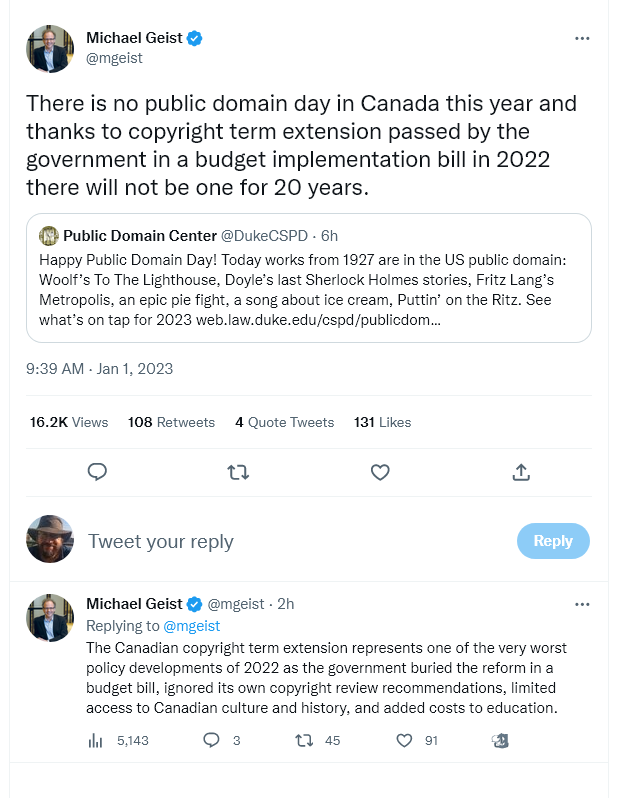
Update: Michael Geist explains why there’s no equivalent Public Domain day for Canada:

December 16, 2022

The Online News [Shakedown] Act passes the House of Commons

Filed under: Business, Cancon, Government, Media — Tags: , , , , , , , , — Nicholas @ 03:00

Michael Geist summarizes the farcical progress of Justin Trudeau’s legalized theft from the “tech giants”:

Later today, the House of Commons will vote to approve Bill C-18, the Online News Act, sending it to the Senate just prior to breaking for the holidays. While Canadian Heritage Minister Pablo Rodriguez and media lobbyists will no doubt celebrate the milestone, it should not go unremarked that the legislative process for this bill has been an utter embarrassment with an already bad bill made far worse. The government cut off debate at second reading, actively excluded dozens of potential witnesses, expanded the bill to hundreds of broadcasters that may not even produce news, denigrated online news services as “not real news”, and shrugged off violations of international copyright law. All the while, it acknowledged that mandated payments for links are the foundation of the bill with officials stating that individual Facebook posts accompanied by a link to a news story would be caught by the law. As for the purported financial benefits, the government’s own estimates are less than half those of the Parliamentary Budget Officer, who also concluded that more than 75% of the revenues will go to broadcasters such as Bell, Rogers, and the CBC. The end result is a bill that will undermine competition and pose a threat to freedom of expression, while potentially leading Facebook to block news sharing in Canada and Google to cancel dozens of existing agreements with Canadian news outlets.

As I’ve chronicled for months, Bill C-18 is the product of an intense lobbying campaign from some of Canada’s largest media companies. While the Globe and Mail broke from the pack at the last minute, years of one-sided editorials — even devoting full front pages to the issue — had its effect. Indeed, Canadian newspapers would be exhibit #1 for how government intervention in the media space has a direct impact on an independent press. From the moment of its introduction, the consequences were immediately obvious as payments for links serves as the foundation for a law that treats “facilitating access to news” as compensable. Canadians can be forgiven for thinking the bill is about compensating for reproduction of news stories. It is not, since the platforms don’t do that. Instead, it is about requiring payments for links, indexing or otherwise directing traffic to the news organizations who are often the source of the link itself. In most circumstances, recipients pay for the benefits that come from referral traffic. With Bill C-18, the entities providing the referrals pay for doing so.

Further, the bill is about far more than struggling Canadian newspapers as it expands eligibility into broadcasters such as the CBC, foreign news outlets such as the New York Times, and hundreds of broadcasters licensed by the CRTC that are not even required to produce news. The end goal is negotiated payments for links, backed by the threat of a one-sided arbitration process overseen by the CRTC in which the arbitration panel can simply reject offers if it believes it fails to meet the government’s policy objectives. That isn’t a commercial deal, it is a shakedown.

I’ve been operating on the assumption that the government is betting that the big internet companies won’t do the obvious and ban linking to any Canadian media outlet on their respective platforms, but the feds don’t have a great track record of predictions in recent years …

In a later post, Michael Geist illustrated the literal misinformation that was pushed by government MPs during Bill C-18’s path through to final reading by quoting some of Liberal MP Lisa Hepfner’s contributions:

Last month, Liberal MP Lisa Hepfner shocked Canadian online news outlets by stating that “they’re not news. They’re not gathering news. They’re publishing opinion only.” The comments sparked instant criticism from news outlets across the country, leading Hepfner to issue a quick apology. In the aftermath of the comments, Hepfner said nothing for weeks at Heritage committee studying Bill C-18. That bill passed third reading yesterday – I posted on the embarrassing legislative review – and Hepfner was back at it. Rather than criticizing online news outlets, this time she targeted the Internet platforms, saying the bill would make it “harder for big digital platforms like Facebook and Google to steal local journalists’ articles and repost them without credit.” 

[…]

Hepfner’s comment not only provide a troubling example of an MP engaging in misinformation about links who has effectively labelled her own Facebook posts as theft, but strikes at the heart of the problem with Bill C-18. As government officials have acknowledged, the entire foundation of the bill is based on paying for links. In fact, when a proposal to remove links from the bill was raised at committee, government MPs described the change as a loophole and voted against it. In the case of the CBC links, the government confirmed that Hepfner could write about the availability of children’s medications (ie. “Great news! CBC reports a million bottles of pain medication are on the way”) but once she added a link to provide a source for the claim, Bill C-18 is triggered.

These examples highlight the absurdity of a law that treats links as compensable and MPs who equate those links to theft. To be clear, there is nothing wrong with Hepfner or anyone else providing a link to a story on greater availability of children’s medicine. In fact, the CBC story has effectively already been paid for by the public and should be shared widely without the government creating barriers to sharing that information. What is wrong that is ill-informed MPs have voted for Bill C-18, creating a framework in which the government is imposing a mandatory payment scheme for some platforms for hosting links. The bill is now headed to the Senate which will hopefully make the necessary amendments to set Hepfner’s mind at ease that her own Facebook posts do not make her an accomplice to theft.

November 2, 2022

Bill C-18’s scheme to force payment for online links threatens freedom of expression

Filed under: Cancon, Government, Media — Tags: , , , , , , — Nicholas @ 03:00

Michael Geist considers the ways that the federal government’s Bill C-18 will suppress online freedom of expression in Canada:

“Automotive Social Media Marketing” by socialautomotive is licensed under CC BY 2.0

The study into the Online News Act continues this week as the government and Bill C-18 supporters continue to insist that the bill does not involve payment for links. These claims are deceptive and plainly wrong from even a cursory reading of the bill. Simply put, there is no bigger concern with this bill. This post explains why link payments are in, why the government knows they are in, and why the approach creates serious risks to the free flow of information online and freedom of expression in Canada.

[…]

Why is the government suspending the fair dealing rights of Internet platforms in the bill? Because it knows that the platforms don’t typically use the news in a manner that would be compensable. For example, the platforms may link to the news, feature a headline with the link or sometimes offer a one-or-two sentence summary or quote from the article. These uses are generally permitted under Canada’s fair dealing copyright law rules and do not require a licence or compensation. In other words, claiming that links might qualify for compensation requires setting aside the platforms’ copyright rights which places Canada in breach of its obligations under the Berne Convention, the international treaty that governs copyright law.

The government’s intervention into the final arbitration process is further evidence that it recognizes the weakness of the argument for payments for links. Bill C-18 mandates final offer arbitration, which encourages the parties to provide their very best final offer as part of the process since the arbitrator must select one or the other. Yet Section 39 gives the arbitration panel the right to reject an offer on several policy grounds. Why would such a provision be necessary in a final arbitration system that encourages submitting your best offer? It is only necessary if you fear one side will examine the evidence and proffer a low offer on the grounds that it does not believe that there has been a demonstration of compensable value. That is a real possibility in this case given that there should be no need to compensate for links and there is little else of value. In light of that risk, the government gives the arbitration panel the power to reject offers that do not meet the government’s policy objectives.

[…]

Aside from the obvious unfairness, the broader implications of this policy are even more troubling. Once government decides that some platforms must pay to permit their users to engage in certain expression, the same principle can be applied to other policy objectives. For example, the Canadian organization Journalists for Human Rights has argued that misinformation is akin to information pollution and that platforms should pay a fee for hosting such expression much like the Bill C-18 model. The same policies can also be expanded to other areas deemed worthy of government support. Think health information or educational materials are important and that those sectors could use some additional support? Why not require payments for those links from platforms. Indeed, once the principle is established that links may require payment, the entire foundation for sharing information online is placed at risk and the essential equality of freedom of expression compromised.

To be clear, supporting journalism is important. But Bill C-18’s dangerous approach ascribes value to links where there isn’t any, regulates which platforms must pay in order to permit expression from their users, and dictates which sources are entitled to compensation. This is an unprecedented government intervention into the media and freedom of expression. If the government believes that Facebook and Google should be paying more into Canada, tax them and use the funds for journalism support. If that isn’t enough, create a fund for participation in the news system with mandated contributions similar to the Cancon broadcast world. That may not be ideal, but it would at least keep the system arms length, remove the qualification issues, and reduce the market intervention.

I suspect the government fears that Canadians would easily recognize the risks associated with mandated payments for links and fundamental unfairness with the system envisioned by Bill C-18. It is why it has misled on the inclusion of link payments, rejected the Parliamentary Budget Officer’s estimates on who benefits, and sought to frame Facebook’s concerns as a threat, when the real threat lies in the bill itself. But despite those efforts, make no mistake: Bill C-18 is a law about forcing some platforms to pay for links. It gives the government the power to regulate who pays and which expression is worthy of payment. In doing so, it creates a threat to freedom of expression for all Canadians.

October 8, 2022

Faint glimmers of hope for Canadians’ “right to repair”?

Michael Geist on the state of play in modifying Canada’s digital lock rules to allow consumers a tiny bit more flexibility in how they can get their electronic devices repaired:

“The Self-Repair Manifesto from ifixit.com ‘If you can’t fix it, you don’t own it’. Hear, hear!” by dullhunk is licensed under CC BY 2.0 .

Canadian anti-circumvention laws (also known as digital lock rules) are among the strictest in the world, creating unnecessary barriers to innovation and consumer rights. The rules are required under the World Intellectual Property Organization’s Internet Treaties, but those treaties leave considerable flexibility in how they should be implemented. This is reflected in the countless examples around the world of countries adopting flexible anti-circumvention rules that seek to maintain the copyright balance. Canada was pressured into following the restrictive U.S. approach in 2012, establishing a framework is not only more restrictive than required under the WIPO treaties, but even more restrictive than the U.S. system.

One of the biggest differences between Canada and the U.S. is that the U.S. conducts a review every three years to determine whether new exceptions to a general prohibition on circumventing a digital locks are needed. This has led to the adoption of several exceptions to TPMs for innovative activities such as automotive security research, repairs and maintenance, archiving and preserving video games, and for remixing from DVDs and Blu-Ray sources. Canada has no such system as the government instead provided assurances that it could address new exceptions through a regulation-making power. In the decade since the law has been in effect, successive Canadian governments have never done so. This is particularly problematic where the rules restrict basic property rights by limiting the ability to repair products or ensure full interoperability between systems.

The best policy would be to clarify that the anti-circumvention rules do not apply to non-infringing uses. This would enable the anti-circumvention rules to work alongside the user rights in the Copyright Act (also known as limitations and exceptions) without restricting their lawful exercise. This approach was endorsed by the 2019 Canadian copyright review, which unanimously concluded:

    it agrees that the circumvention of TPMs should be allowed for non-infringing purposes, especially given the fact that the Nintendo case provided such a broad interpretation of TPMs. In other words, while anti-circumvention rules should support the use of TPMs to enable the remuneration of rights-holders and prevent copyright infringement, they should generally not prevent someone from committing an act otherwise authorized under the Act.

The government has not acted on this recommendation, but two private members bills are working their way through the House of Commons that provide some hope of change. First, Bill S-244 on the right of repair. Introduced by Liberal MP Wilson Miao in February, the bill this week passed second reading unanimously and has been referred to the Industry committee for further study. The lack of a right of repair exception in Canadian digital lock rules has hindered both consumers and Canadian innovation significantly, leaving consumers unable to repair their electronic devices and farmers often locked out of their farm equipment. After farmers protested against similar copyright restrictions, the U.S. established specific exceptions permitting digital locks to be circumvented to allow repair of software-enabled devices.

Given the impact on consumers, the agricultural sector, and the environment, a provision that explicitly permits circumvention for purposes of the right of repair in Canada is long overdue. Indeed, such an approach is consistent with the 2019 copyright review recommendation:

    Recommendation 19

    That the Government of Canada examine measures to modernize copyright policy with digital technologies affecting Canadians and Canadian institutions, including the relevance of technological protection measures within copyright law, notably to facilitate the maintenance, repair or adaptation of a lawfully-acquired device for non-infringing purposes.

March 13, 2021

The Paperback Revolution

Filed under: Books, Britain, History, Railways, USA, WW2 — Tags: , , , , — Nicholas @ 04:00

The History Guy: History Deserves to Be Remembered
Published 12 Mar 2021

Sponsored by Blinkist. The first 100 people who go to https://www.blinkist.com/thehistoryguy​ are going to get unlimited access for one week to try it out. You’ll also get 25% off if you want the full membership.

Today, the most popular book format in the world is not a traditional hardcover book, nor an ebook, but a paperback — a format that changed the what, how, when and how much the world reads. It is history that deserves to be remembered.

This is original content based on research by The History Guy. Images in the Public Domain are carefully selected and provide illustration. As very few images of the actual event are available in the Public Domain, images of similar objects and events are used for illustration.

You can purchase the bow tie worn in this episode at The Tie Bar:
https://www.thetiebar.com/?utm_campai…​

All events are portrayed in historical context and for educational purposes. No images or content are primarily intended to shock and disgust. Those who do not learn from history are doomed to repeat it. Non censuram.

Find The History Guy at:

Patreon: https://www.patreon.com/TheHistoryGuy​
Please send suggestions for future episodes: Suggestions@TheHistoryGuy.net

The History Guy: History Deserves to Be Remembered is the place to find short snippets of forgotten history from five to fifteen minutes long. If you like history too, this is the channel for you.

Awesome The History Guy merchandise is available at:
teespring.com/stores/the-history-guy​

Script by THG

#history​ #thehistoryguy​ #Books

November 20, 2019

Activist court watch – Federal Court of Canada judge creates new website blocking rules

Filed under: Cancon, Law, Media — Tags: , , , , — Nicholas @ 03:00

Michael Geist on the precedent-setting decision from the Federal Court of Canada:

A Federal Court of Canada judge issued a major website blocking decision late Friday, granting a request from Bell, Rogers, and Groupe TVA to block access to a series of GoldTV streaming websites. The order covers most of the Canada’s large ISPs: Bell, Eastlink, Cogeco, Distributel, Fido, Rogers, Sasktel, TekSavvy, Telus, and Videotron. The case is an important one, representing the first extensive website blocking order in Canada. It is also deeply flawed from both a policy and legal perspective, substituting the views of one judge over Parliament’s judgment and relying on a foreign copyright case that was rendered under markedly different legal rules than those found in Canada.

Perhaps most troubling is that the judge has created a substantive new policy framework for site blocking, an issue that given the many complex policy issues (including copyright enforcement, freedom of expression, net neutrality, and telecom competition) is best left to Parliament. Indeed, the activist judicial approach explicitly engages in an analysis that considers many of the policy issues but arrives at its own conclusion about how best to balance competing interests. These are issues that are best left to elected officials. The Standing Committee on Industry, Science and Economic Development, which completed the comprehensive copyright review earlier this year, heard extensive submissions from groups calling for reforms to the law to include site blocking. It instead recommended:

    Following the review of the Telecommunications Act, that the Government of Canada consider evaluating tools to provide injunctive relief in a court of law for deliberate online copyright infringement and that paramount importance be given to net neutrality in dealing with impacts on the form and function of Internet in the application of copyright law.

In other words, the committee recommended holding off on a site blocking rule until further study is conducted. Moreover, it concluded that “paramount importance be given to net neutrality.” The judge in GoldTV acknowledged that there were net neutrality concerns (rejecting claims that “net neutrality is of no application where a site blocking order is sought.”), but concluded that the net neutrality issues did not tip the balance against granting the injunction. Not only is that inconsistent with the copyright review emphasis of paramountcy for net neutrality, but it represents the judge making a policy choice best left to elected officials.

The CRTC, which rejected a proposal for an administrative site blocking system in the FairPlay case, also thought the issue was best left to the government. Its ruling specifically cited the copyright review and the review of the Broadcasting and Telecommunications Act as avenues to address the issue. In other words, the appropriate venue to consider site blocking was government, not an administrative agency.

Older Posts »

Powered by WordPress